Counting on … day 67

21st  May 2025

Food security even in the UK is tenuous. The action group Sustain observes that “the 2023 National Risk Register only conceives of one direct food impact, that of food supply contamination. In terms of other potential disruption, the current advice to the public is to store 3 days’ worth of food at home.  While there are already 7.2 million people experiencing food insecurity in the UK, with people unable to afford to feed themselves for one day let alone to stockpile, we need to be leaning toward community-scale food storage and systems over a “preppers” mentality.” 

In the UK most of our food comes via supermarket chains and their large scale distribution networks which makes us all vulnerable if just one part of that system fails – flood, fire, illness etc. We don’t have a local network of food supplies that could provide us with emergency food. More locally based – and therefore likely smaller – farms, and community gardens, allotments  and orchards etc would help improve local resilience. Do read this item from Sustain detailing how local authorities etc could achieve this.

2nd Sunday before Lent

Could we withstand seven years with no harvests? 

The UK imports 60% of its food – and amazingly if viewed by sector we import 45% of our vegetables and 83% of our fruit! As many of the countries from whom we import fruit and vegetables are prone to the adverse effects of climate change, food security for us as a nation is a concern. And for us as part of a global population, the adverse impacts of climate change of food security for many vulnerable communities should be an even greater concern.

What about our food security as individual households? Unlike in the past, many of us do not bottle, dry or otherwise preserve food to see us through the rest of the year. Nor do we tend to stock large quantities of staples such as flour, oats and rice.  If they were a snow storm or flood such that the shops were closed for even a week, would we have enough food in our homes? 

God has created a world which is constantly producing edible plants, fruits and seeds which serve to feed all manner of fauna including humans. Our love for God should be expressed in the grateful caring and sharing of this harvest – and that surely includes safeguarding the soil and the climate upon which the plants depend, and ensuring that throughout the seasons and during times of sufficiency and insufficiency, that food is fairly shared.

Jesus is quite clear in his teachings that love is not something that we reserve just for ourselves and our nearest and dearest. Echoing the challenge of last Sunday’s readings about the blessings of feeding the hungry rather than the woes of stashing away private wealth, today’s gospel tells us to love our enemies. To do good to those who hate and abuse us. To give without expecting anything in return – and in fact to give in an outrageously extravagant manner, giving more than is asked. 

This may seem counter-intuitive to those of us who brought up to look after ourselves, to be self-sufficient, to safely garner wealth so that we won’t be needy. It is hard to give generously if we feel we can not trust that our own future needs will be met – and for me the fear is that even if I am generous, the financial institutions are not and will persist with their greater power to hoard more and more of the world’s wealth. But is that a self fulfilling approach that does not allow us to try the alternative of being truly generous now so that everyone can have enough – the poor as well as the rich, the bad as well as the good? 

Each time we say the Lord’s Prayer we say ‘Your kingdom come, your will be done.’ God’s kingdom is surely the one where everyone shares generously what they have been given, so that all may have enough regardless of their merits? How do we get to that situation? 

What will change global systems so that those with power and wealth can’t get and take more and more?

What will change global systems so that the needs of the poor and vulnerable are met? So that everyone can get enough food, live in a safe comfortable home, have access to education, employment and health care, have quality leisure time with access to green spaces and community events?

What will change global systems so that all nations and communities are treated with respect?

What will change global systems so that justice and peace prevail, so that we all cooperate for the common good?

Can we as Christians, who know we are weak and compromised, act upon Jesus’s instruction and be overwhelmingly generous with what we have to share? Can we respond to the words of the prayer he taught us and work to change systems – at what ever level: family/local/ community/ national – to enable God’s kingdom, God’s reign to prevail?

Genesis 45:3-11, 15

Joseph said to his brothers, “I am Joseph. Is my father still alive?” But his brothers could not answer him, so dismayed were they at his presence.

Then Joseph said to his brothers, “Come closer to me.” And they came closer. He said, “I am your brother, Joseph, whom you sold into Egypt. And now do not be distressed, or angry with yourselves, because you sold me here; for God sent me before you to preserve life. For the famine has been in the land these two years; and there are five more years in which there will be neither plowing nor harvest. God sent me before you to preserve for you a remnant on earth, and to keep alive for you many survivors. So it was not you who sent me here, but God; he has made me a father to Pharaoh, and lord of all his house and ruler over all the land of Egypt. Hurry and go up to my father and say to him, ‘Thus says your son Joseph, God has made me lord of all Egypt; come down to me, do not delay. You shall settle in the land of Goshen, and you shall be near me, you and your children and your children’s children, as well as your flocks, your herds, and all that you have. I will provide for you there–since there are five more years of famine to come–so that you and your household, and all that you have, will not come to poverty.'”

And he kissed all his brothers and wept upon them; and after that his brothers talked with him. 

Psalm 37:1-12, 41-42

1 Do not fret yourself because of evildoers; *
do not be jealous of those who do wrong.

2 For they shall soon wither like the grass, *
and like the green grass fade away.

3 Put your trust in the Lord and do good; *
dwell in the land and feed on its riches.

4 Take delight in the Lord, *
and he shall give you your heart’s desire.

5 Commit your way to the Lord and put your trust in him, *
and he will bring it to pass.

6 He will make your righteousness as clear as the light *
and your just dealing as the noonday.

7 Be still before the Lord *
and wait patiently for him.

8 Do not fret yourself over the one who prospers, *
the one who succeeds in evil schemes.

9 Refrain from anger, leave rage alone; *
do not fret yourself; it leads only to evil.

10 For evildoers shall be cut off, *
but those who wait upon the Lord shall possess the land.

11 In a little while the wicked shall be no more; *
you shall search out their place, but they will not be there.

12 But the lowly shall possess the land; *
they will delight in abundance of peace.

41 But the deliverance of the righteous comes from the Lord; *
he is their stronghold in time of trouble.

42 The Lord will help them and rescue them; *
he will rescue them from the wicked and deliver them,
because they seek refuge in him. 

1 Corinthians 15:35-38,42-50

Someone will ask, “How are the dead raised? With what kind of body do they come?” Fool! What you sow does not come to life unless it dies. And as for what you sow, you do not sow the body that is to be, but a bare seed, perhaps of wheat or of some other grain. But God gives it a body as he has chosen, and to each kind of seed its own body.

So it is with the resurrection of the dead. What is sown is perishable, what is raised is imperishable. It is sown in dishonour, it is raised in glory. It is sown in weakness, it is raised in power. It is sown a physical body, it is raised a spiritual body. If there is a physical body, there is also a spiritual body. Thus it is written, “The first man, Adam, became a living being”; the last Adam became a life-giving spirit. But it is not the spiritual that is first, but the physical, and then the spiritual. The first man was from the earth, a man of dust; the second man is from heaven. As was the man of dust, so are those who are of the dust; and as is the man of heaven, so are those who are of heaven. Just as we have borne the image of the man of dust, we will also bear the image of the man of heaven.

What I am saying, brothers and sisters, is this: flesh and blood cannot inherit the kingdom of God, nor does the perishable inherit the imperishable.

Luke 6:27-38

Jesus said, “I say to you that listen, Love your enemies, do good to those who hate you, bless those who curse you, pray for those who abuse you. If anyone strikes you on the cheek, offer the other also; and from anyone who takes away your coat do not withhold even your shirt. Give to everyone who begs from you; and if anyone takes away your goods, do not ask for them again. Do to others as you would have them do to you.

“If you love those who love you, what credit is that to you? For even sinners love those who love them. If you do good to those who do good to you, what credit is that to you? For even sinners do the same. If you lend to those from whom you hope to receive, what credit is that to you? Even sinners lend to sinners, to receive as much again. But love your enemies, do good, and lend, expecting nothing in return. Your reward will be great, and you will be children of the Most High; for he is kind to the ungrateful and the wicked. Be merciful, just as your Father is merciful.

“Do not judge, and you will not be judged; do not condemn, and you will not be condemned. Forgive, and you will be forgiven; give, and it will be given to you. A good measure, pressed down, shaken together, running over, will be put into your lap; for the measure you give will be the measure you get back.”

Counting on … day 18

27th January 2025

Last September the UN Climate Change News reported that “In 2022, a staggering 1.05 billion tons of food were wasted, while 783 million people went hungry and a third of the global population faced food insecurity…Food loss and waste account for 8-10% of annual global greenhouse gas emissions – nearly five times the total emissions from the aviation sector – and contribute to substantial biodiversity loss, using up almost a third of the world’s agricultural land.” (1) 

Reducing food waste is something we can all do that will help address the climate and biodiversity crises and improve global food security. 

Useful advice can be found here – https://www.ethicalconsumer.org/food-drink/climate-action-10-steps-reduce-food-waste

Counting on …day 

22nd April 2024

Today is Earth Day. The first Earth Day was celebrated in the USA in 1970. It is now an international day of celebration (always 2nd April) calling on people to protect the planet. 

Do we understand and value the importance of the earth to our continued life and wellbeing? 

For example do we care about the health of the soil? A healthy soil has:- 

1. Good structure: A healthy soil has a crumbly texture with a good balance of air, water, and pore space. This allows water, nutrients, air, plant roots and microorganisms to move through it.

2. Nutrient content: A healthy soil contains the right balance of nutrients essential for plant growth. These can include nitrogen, phosphorus, potassium, calcium, and magnesium.

3. Organic matter: Decaying plant and animal material improves soil structure, water retention and nutrient cycling.

4. Good soil pH: A pH range between 6.0 to 7.5 is ideal for plant growth.

5. Active soil microbiology: A healthy soil contains a diverse range of microorganisms, including bacteria, fungi, protozoa and nematodes. All of which play important roles in nutrient cycling, soil structure and plant health.

6. Low levels of soil compaction: A compacted soil can restrict root growth and reduce water infiltration.

7. Low levels of soil erosion: A healthy soil is not easily eroded by wind or water, which can lead to loss of topsoil and nutrients.

8. Good water-holding capacity: A healthy soil can hold water, preventing it from running off the surface or being lost through deep percolation. (https://insight.study.csu.edu.au/healthy-soil/)

If we use our farm soils in such a way that it diminishes or destroys these attributes, then we will not be able to grow enough food to feed ourselves. Further we will find that we have also diminished or destroyed local ecosystems leading to a reduction in biodiversity – ie of wild plants, birds, animals and insects. And that will have a knock on effect increasing risks of flooding, of accelerating climate change, and – particularly with the loss of pollinators- further risks to food security.

Earth Day reminds us that we must live in harmony with the earth and its natural systems.

See also – https://greentau.org/2024/04/01/prayer-walk-for-earth-day/

Food insecurity & what we can do

28th March 2023

1. Ensuring people have a sufficient income to buy the food they need.


1b.. Growing our own food and enabling others to do likewise.


2. Taking action to limit keep rising global temperatures below 1.5C – curbing climate change will improve the chances of better harvests.


3.  Paying  a fair price for the food we eat. You might buy direct from a farm or a group of  farms, or via a local vegetable box scheme. You might support a local farmers’ market. You might buy from a local independent green grocer. Similarly you might buy milk etc from a milk round where the price reflects the cost to the farmer. For cheeses, look to buy from small scale producers via a local cheese shop. And again buying fair trade options for imported foods can help ensure a fair price for the producer. Alternatively look out for products – coffee beans and chocolate in particularly – that have been  sourced directly from the grower. These  are often available through local independent shops and cafés.

Another option would be to subscribe to the OddBox fruit and veg scheme which buys food stuffs that would otherwise go to waste because they are misshapen, because the supermarket doesn’t want the crop, or because the crop has been too large or too small for the supermarket buyer –  https://www.oddbox.co.uk/ 

4. Buying from local producers and local retailers helps to improve local supply chains. 

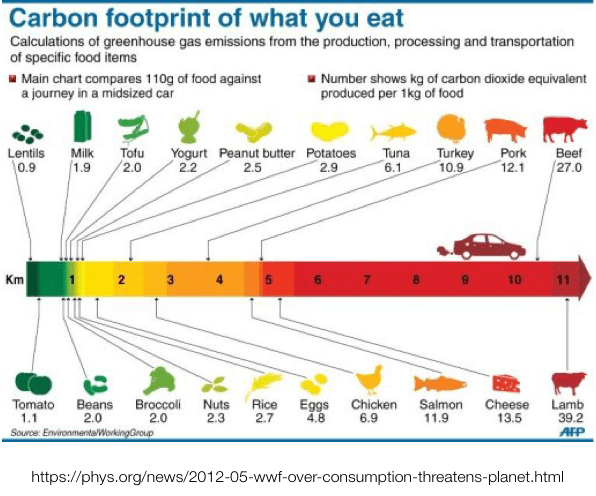
5. Again the best approach to improving global food security and ensuring there is enough food for everyone is to reduce – or cut out completely – animal products.

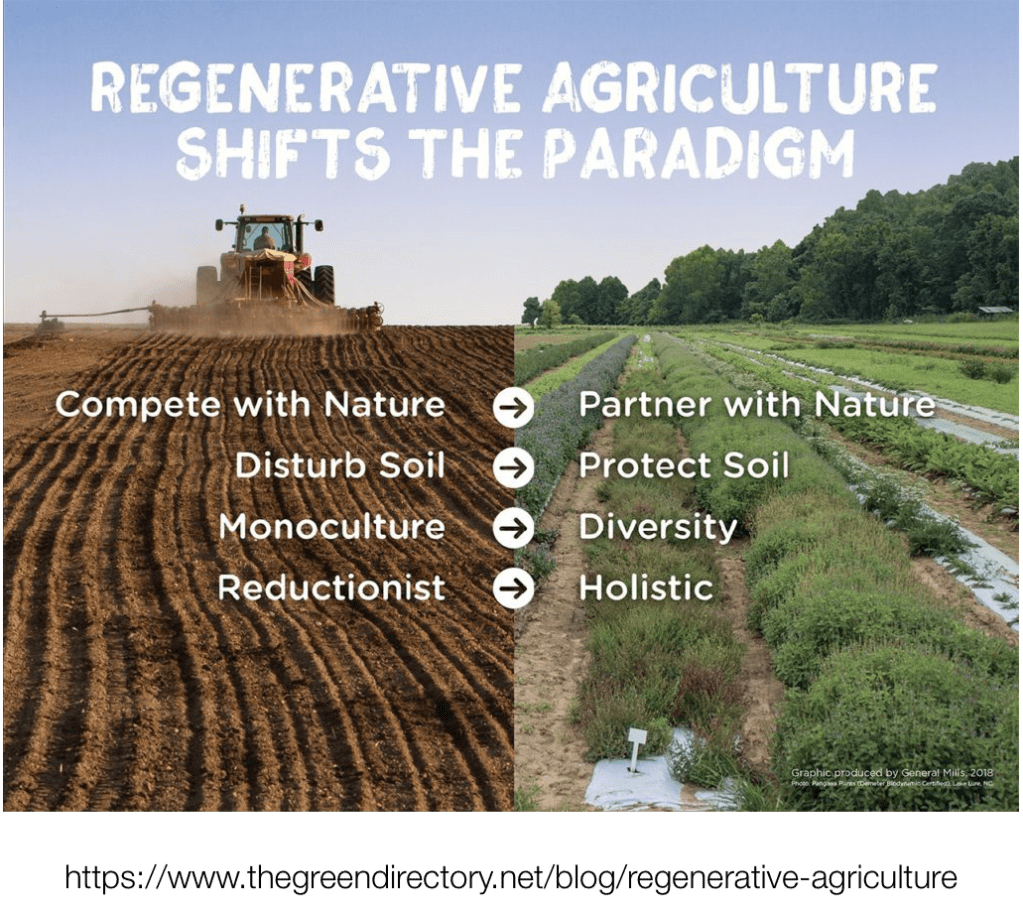
6. To support and encourage the maintenance of healthy soil, you might choose to buy organic produce (https://www.soilassociation.org/ ), or source items produced using  regenerative farming practices (https://regenerativefoodandfarming.co.uk/)

7. To improve the  security of our food supplies  through diversity, expand the range of foods you eat. Try different sorts and fruit and vegetables, different types of grain – emmer, einkorn, spelt, black barley  – and different sorts of nuts, spices etc. This can also improve your health – it is recommended that our diets should include 30 or more different types of fruit, vegetables, nuts, grains etc per week. See for example https://www.theguthealthdoctor.com/how-to-get-your-gut-loving-30-plant-points-a-week and https://www.theguardian.com/lifeandstyle/2022/may/15/go-with-your-gut-tim-spector-power-of-microbiome?CMP=Share_iOSApp_Other

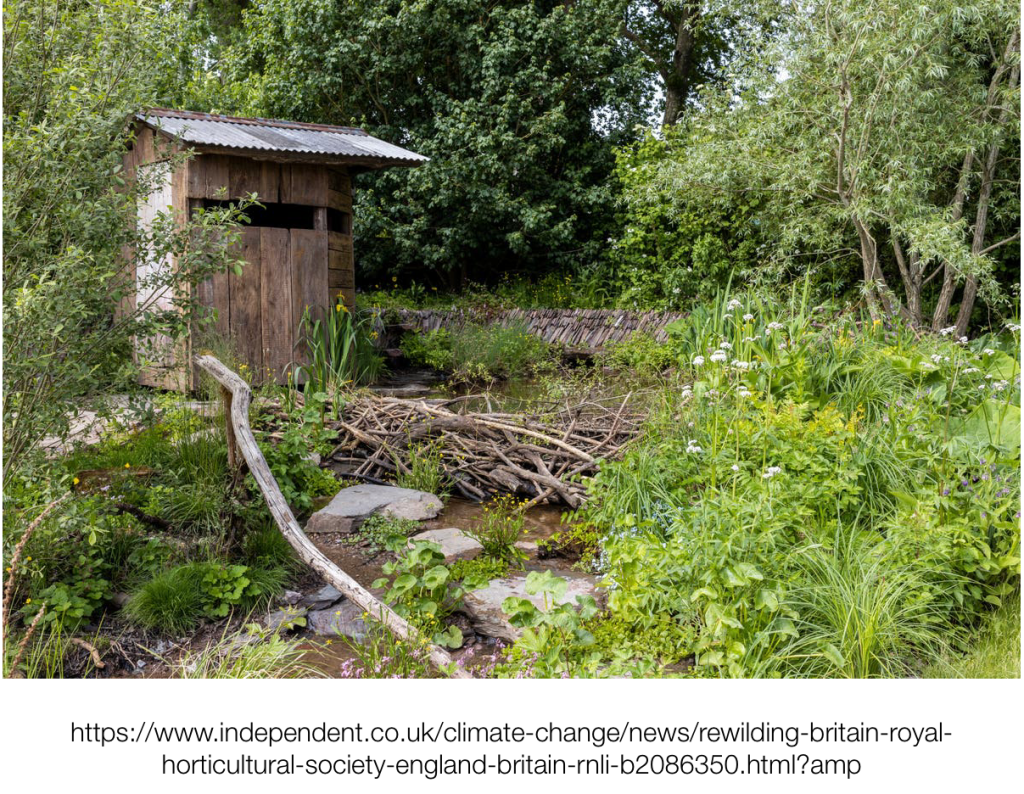
Improving biodiversity as a whole is a good preventative against diseases that could ravaged farm production. You might therefore choose to grow more wild/ native plants in your garden, or choose plants that support and encourage biodiversity in terms of birds, insects, butterflies, and bats etc. many web sites have suggestions about improving the biodiversity of your garden including those of the RSPB and the Natural History Museum. You might want to support charities and organisations that encourage biodiversity and even extend that to the re-wilding of land, both in the UK – eg https://www.rewildingbritain.org.uk/explore-rewilding/what-is-rewilding – and overseas – https://www.cleanupthetropicaltimbertrade.org/about ,   https://wwf.panda.org/discover/our_focus/forests_practice/importance_forests/tropical_rainforest/ ,   http://savetheorangutan.org.uk/

Green Tau: issue 66

23rd March 2023

Food security

Having enough food to eat is a necessity for life, and a human right. 

The right to adequate food is realised when every man, woman and child, alone or in community with others, has the physical and economic access at all times to adequate food or means for its procurement. – General Comment 12 (Committee on Economic, Social and Cultural Rights, CESCR, 1999).

Yet looking around the world this is not the case. For many people food security is not a reality. Why?

1. Food insecurity can arise because a person cannot afford to buy sufficient food – this might be in absolute terms of calories or in the equally important terms of sufficiently healthy food needed to avoid malnutrition. The issue is not a lack of food, but the lack of money to buy it. 

Sadly this scenario is true even in countries such as the UK. “The UK’s food poverty rate is among the highest in Europe. In 2020-21 Government statistics record that 4.2 million people (6 per cent) were living in food poverty. (https://www.bigissue.com/news/social-justice/food-poverty-in-the-uk-the-causes-figures-and-solutions/)

The pay and/ or benefits that people receive is insufficient to pay for a healthy diet.  This is compounded by the fact that food inflation is running higher than the average rate of inflation. That people  with less money are affected more significantly  has been highlighted by Jack Monroe (https://www.theguardian.com/business/2022/jan/26/cost-of-living-crisis-ons-inflation-jack-monroe?CMP=Share_iOSApp_Other)

It is an even more widespread problem across the world where 40% of people cannot afford a healthy diet.  

Pay-related food insecurity can be a particular problem in urban areas. In rural areas it is possible that people will have access to land such that they can grow their own food. This is often referred to as subsistence farming as it does not necessarily produce additional income to spend on other things. 

“The world’s smallholder farmers produce about a third of the world’s food according to detailed new research [June 2021] by the Food and Agriculture Organisation of the United Nations (FAO). Five of every six farms in the world consist of less than two hectares, operate only around 12 percent of all agricultural land, and produce roughly 35 percent of the world’s food” – https://www.fao.org/news/story/en/item/1395127/icode/

Whilst for many people, subsistence farming does ensure they have food to eat, it can be a precarious existence.  In Kenya smallholder farmers are being forced to buy commercial seed which then needs both fertilisers and pesticides to ensure a good harvest. Previously these farmers would collect and swop seeds from their own crops, but this has been made illegal  as the Kenyan Government tries to ensure that all seeds are certified.

2. Food insecurity can arise because of a failure of one or more harvests. This particularly affects poor countries who struggle to pay the cost of importing food to make up local losses, and subsistence farmers who may not have the capacity to grow and store food to cover more than one year’s needs. 

Food security is particularly sensitive to climate change. Climate change is increasing the frequency of both droughts and heavy – destructive – rainfall, raising temperatures and increasing the frequency and intensity of winds, all of which are potentially damaging for crops and for livestock. 

Somalia, Ethiopia and Kenya are now facing the sixth consecutive year of drought conditions. Hunger is widespread: an estimated 43,000 people died last year in Somalia as a consequence of an inadequate diet. The affects of failed harvests has been accentuated by the rising cost of food that could potentially be imported.

On a far smaller scale, shoppers in the UK have been faced with shortages of cauliflowers, tomatoes and salad ingredients. In part this has been because farmers in the UK and the Netherlands have cut back on the amount of crops grown under glass because of rising energy costs, plus sharp frosts which damaged brassica crops, and in part because of unseasonal cold weather in southern Europe and North Africa damaging crops grown there. Last summer’s drought across Europe led to many harvests being reduced by 30% and which has been felt by consumers in the form of higher prices for risotto rice, olive oil durum wheat pasta. 

3. Food insecurity may arise because the farmers cannot afford to grow the usual amounts of food. Whilst consumers need enough money to buy food, producers need to earn enough to cover there expenses. The last 18 months have seen soaring costs for energy (baby chicks for example need to be kept at a temperature of 30C), fertilisers, and for basic labour. Many farmers in the UK are tied into contracts with supermarkets with fixed prices, making it hard for them to over their costs. Equally as rising costs are not always reflected in rising prices because of supermarket competition, many farmers are reducing the amount of crops their will grow for the coming season. It is better financially not to grow the crop than to grow it and then sell at a loss. 

4.  Distribution systems can also affect food security. We have seen this recently with exports from Ukraine. Without access to the Black Sea ports, there was no effective way of shipping grain from the Ukraine to countries such as Egypt, where it was most needed. Delays in the distribution system may mean that food perished before it reaches its market. Partly due to distribution issues, but also  mismatches in the supply chain between what the supermarkets order and what the consumers buy, as much as 17% of the world’s food production goes to waste.

An average block of cheese or loaf of bread produces less than a penny for farmers, and fruit producers do not fare much better, making just 3p from each kilo of apples.” https://www.theguardian.com/environment/2022/dec/02/uk-farmers-making-tiny-profits-as-supermarkets-boast-record-takings?CMP=Share_iOSApp_Other

5. Global food security would be greatly enhanced if meat production was reduced. 

Livestock takes up nearly 80% of global agricultural land, yet produces less than 20% of the world’s supply of calories … This means that what we eat is more important than how much we eat in determining the amount of land required to produce our food.” https://ourworldindata.org/agricultural-land-by-global-diets

 Eating less meat and using the land instead to grow food for direct human consumption would provide the food needed for the world’s growing population (subject to affordability and distribution issues).

6. Food production is ultimately reliant on healthy soils. Yet it is reported that ‘more than a third of the world’s soil is already degraded, and the IPCC estimates that could rise to 90% by 2050 if nothing is done. Even moderately degraded soil produces 30% less food and stores around half the water of healthy soil.’ https://www.weforum.org/agenda/2020/12/a-tangible-plan-to-restore-soil-health-in-the-next-ten-years/

“The UK is 30 to 40 years away from “the fundamental eradication of soil fertility” in parts of the country, the environment secretary Michael Gove has warned.“We have encouraged a type of farming which has damaged the earth …. If you have heavy machines churning the soil and impacting it, if you drench it in chemicals that improve yields but in the long term undercut the future fertility of that soil, you can increase yields year on year but ultimately you really are cutting the ground away from beneath your own feet. Farmers know that.” https://www.theguardian.com/environment/2017/oct/24/uk-30-40-years-away-eradication-soil-fertility-warns-michael-gove?CMP=Share_iOSApp_Other

7. Food security can be potentially threatened by diseases – whether diseases that affect crops or diseases that affect livestock. Recently in the UK we have seen the impact of avian flu on supplies of chicken and egg. Whilst in the Mediterranean the Xylella pathogens is infecting olive trees across the region – it can also infect similar plants such as  cherry, almond and plum trees. It was first discovered in  olives trees in Puglia in 2013. The spread of the disease have been devastating, with an estimated 60% decline in crop yields in Italy since the first discovery in 2013. The world food supply is particularly vulnerable to the affects of disease because our food supply is dominated by a very limited number of species.  Of the 6,000 different plant species used as food, only nine (sugarcane, wheat, rice, maize, potatoes, sugar beet, cassava, oil palm and soybean) contribute 66% of total crop production. Increasing the diversity of plants we grow and eat as food is essential. It is also equally essential that we safeguard our food security by improving biodiversity as a whole for the ecosystem is highly interconnected.

“Biodiversity for food and agriculture is all the plants and animals – wild and domesticated – that provide food, feed, fuel and fibre. It is also the myriad of organisms that support food production through ecosystem services – called “associated biodiversity”. This includes all the plants, animals and micro-organisms (such as insects, bats, birds, mangroves, corals, seagrasses, earthworms, soil-dwelling fungi and bacteria) that keep soils fertile, pollinate plants, purify water and air, keep fish and trees healthy, and fight crop and livestock pests and diseases…Less biodiversity means that plants and animals are more vulnerable to pests and diseases. Compounded by our reliance on fewer and fewer species to feed ourselves, the increasing loss of biodiversity for food and agriculture puts food security and nutrition at risk,” added Graziano da Silva.” https://www.fao.org/news/story/en/item/1180463/icode/

What can we do? See the next Eco Tips

Counting on … day 1.077

20th  March 2023 

“As the risks from the climate crisis and global conflict increase, seed banks are increasingly considered a priceless resource that could one day prevent a worldwide food crisis. Two in five of the world’s plant species are at risk of extinction, and though researchers estimate there are at least 200,000 edible plant species on our planet, we depend on just three – maize, rice and wheat– for more than half of humanity’s caloric intake. There are roughly 1,700 seed banks, or gene banks, around the world housing collections of plant species that are invaluable for scientific research, education, species preservation and safeguarding Indigenous cultures.

The Svalbard Global Seed Vault, dubbed the “doomsday vault” or the “Noah’s ark of seeds”, aims to contain a duplicate of every seed housed in other banks across the globe. Its location is deliberately remote, sited in the Svalbard archipelago, halfway between mainland Norway and the north pole. The hope is that the permafrost and dense rock into which the vault has been sunk will ensure that seed samples remain frozen – although it was breached in 2017 by meltwater after high temperatures in the region.” https://www.theguardian.com/environment/2022/apr/15/seed-banks-the-last-line-of-defense-against-a-threatening-global-food-crisis?CMP=Share_iOSApp_Other

Protecting biodiversity and food security are critically important. 

Counting on … day 1.075

18th March 2023

Growing your own food can mean survival for some people. In Africa many people are what one might call indigenous farmers, people who grow traditional crops using traditional methods. The plants they grow are often well suited to the local soils and the local vagaries of the climate. It is a type of farming that has little in the ways of cost inputs – no artificial fertilisers, no highly mechanised equipment, not even expensive seed. Rather seeds are collected from one season to use at the next or to swop with neighbours to improve fertility. In Kenya 80 – 90% of farmers use and share indigenous home grown seeds.

However the Kenyan government wishes to control the quality of seeds by prohibiting the sale of exchanging of any seeds other than those that have been licensed Licensing is expensive – only 20% of the seeds regularly used have been licensed – and this has limited the number of legal seeds sellers to a few large concerns. Often these seeds suppliers are also in the market of selling fertilisers and pesticides, and may opt to sell seeds that need such additional inputs. 

It is now illegal to sell or swop unlicensed seeds in Kenya  with the potential punishment of 2 years in jail and or a fine.

Greenpeace Africa is challenging this law. 

For more information see https://www.greenpeace.org/africa/en/publications/51807/whose-interest-does-the-kenyan-seeds-law-protect/