
Counting on … day 106

10th July 2025

Using waste water. Is rain water from the roof waste water or a valuable resource? Collected in a rainwater butt it is ideal for watering plants. Rainwater butts are also useful in terms of preventing flood because the flow of storm water is delayed before it enters the drainage system and therefore helps the system cope with peaks.

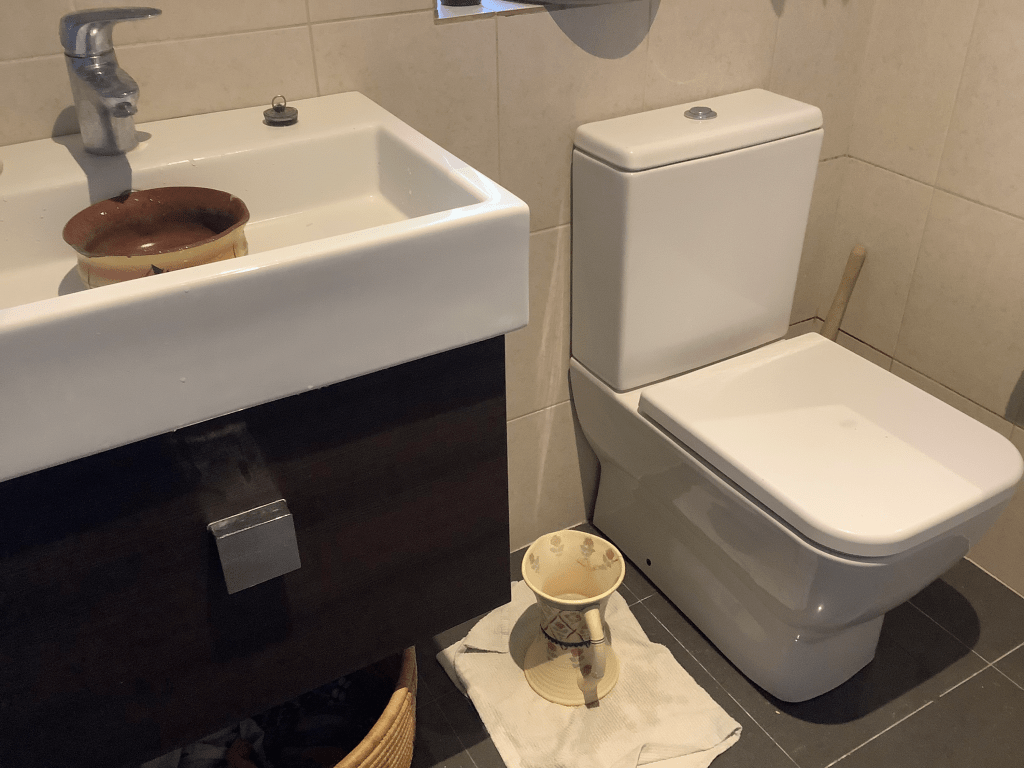
Mains water coming into our homes is drinking water quality. We don’t need that same quality of water with which to flush toilets. ‘Grey water’ – ie water that has been used to wash hands or shower,  launder clothes, etc – is perfectly adequate for flushing toilets. Grey water is waste water that can be reused. We have a small bowl under the taps in the wash basins to collect hand wash water and a jug to empty it into. This jug of grey water is used for flushing the toilet (unless a bigger flush is needed). We also collect water in a larger bowl from the shower when waiting for the hot water. 

A jug by the kitchen sink collects water from cleaning or boiling vegetables, rinsing plates etc and goes to water the garden.

Households are asked to keep a 2-3 day supply of drinking water on hand in case of emergencies. Not wanting to stock up on bottled water – which will in time have to be replaced – I keep two demijohn jars full of drinking water. I empty one (into the pond) and refill it each day so that that our emergency stock of water is constantly fresh without wasting the water.
Counting on … day 32

14th February 2025

Grey water is water that has been used for washing hands, bathing, washing clothes, washing vegetables etc. Grey water systems that collect and treat grey water, often combining it with collected rainwater, can be plumbed in to flush toilets but these can be expensive, especially when retrofitted. 

In summer months, we may already practice grey water harvesting – collecting water from showers and washing machines to water the garden. Ideally such water should not be stored from more than a day because pathogens from what we have washed may multiply especially when the water is warm.

The Centre for Alternative Technologies has this advice about washing machine water – “If you wish to irrigate with water from a washing machine then use a low-sodium detergent, because sodium damages plants and degrades soil (liquid detergents usually contain less salt than powders). Avoid phosphorus as well, because this causes algal blooms if it collects in ponds or rivers. Otherwise, the water has only very small and well diluted quantities of pathogens or grease and therefore these should not be of concern.” https://cat.org.uk/info-resources/free-information-service/water-and-sanitation/rain-and-grey-water/

And the RHS says – “Plants can be watered with shower, bath, kitchen and washing machine water (from rinse cycles), collectively referred to as ‘grey’ water. It varies in quality and may contain contaminants such as soap and detergent. Fortunately, soil and potting composts are effective at filtering them out, and the residues can sometimes act as a mild fertiliser. To minimise bacterial growth, grey water should be saved for only 24 hours, unless filtered through a reed bed or professionally designed system. It is best applied by watering can; grease and fibres can clog irrigation systems.” https://www.rhs.org.uk/science/gardening-in-a-changing-world/water-use-in-gardens/using-grey-water

In our home, we collect hand wash water and use it to flush the toilet when ‘yellow’ and use the toilet flush when ‘brown’. 

Counting On … day 108

16th May 2024

With dry summers and water shortages, we have cut back on our use of water. We boil water for dish washing – one kettle is sufficient per wash – as this saves drawing several kettle’s worth of water from the hot water cylinder to get to the hot water. We boil water likewise for a daily body wash and then only need to heat the hot water cylinder when we shower which we typically do once a week. Showering once a week doesn’t leave us smelly or dirty! Realising this, also makes us less likely to put clothes in the laundry basket after one or two uses (although my running shirt does need regular washing). Laundering less often again reduces water – and energy – consumption.

We collect dish washing water for use on the garden when the ground is dry. Hand washing water we collect and use to quickly flush the loo – using the cistern flush as necessary.  

Rain water is collected for watering the garden and for keeping the pond topped up.

Although our water is metered we have yet to have a bill based on how much we use as opposed to an estimate! 

 Counting on … day 354

20th October 2022

Again to conserve water, we recycle grey water. Water for hand washing collects in a bowl and is saved in a jug and/or flushed down the toilet. Water from flannel washes and from the hot water bottle are also recycled. At more expense you can install a tank, some form of water treatment and a pump to recycle the water to toilet cisterns and/ or a garden tap. 

Counting on …day 264 

2nd August 2022

As plants shrivel and trees prematurely drop their leaves, we are seeing the damaging effects of climate change on our own environment. Periods of drought and heat waves are going to be an ongoing feature of daily life and something we need now to plan for. In our gardens it may be looking to see which plants are still surviving and which are suffering so that we know what to plant in the future. As we eke out water for our plants, it may be in setting up systems to collect grey water – even a bucket by the sink into which to our used washing up water. It may be in installing more water butts to,collect more water when it does rain. The  Mains to Rains project has more helpful suggestions – https://mains2rains.uk/