Getting to net zero is highly dependent on positive action from governments, which makes the intransigence of our UK government so devastating. There is a group of organisations who comprise Fossil Free Politics, and assert,
“We can no longer afford to let the fossil fuel industry undermine our democracy as we try and halt climate chaos, fix our energy system, and protect people and planet. To tackle the climate emergency, and ensure that climate policy is conducted entirely in the public interest, we must cut fossil fuel interests out of politics, similar to existing restrictions on the tobacco industry. Before it’s too late.”
They recently produced a report on the fossil fuel industry’s sustained lobbying effort to undermine the windfall tax.
It is good to be reminded that the need to cut our use of fossil fuels is still pressing and urgent!
The Imagine newsletter reported on the IEA’s update of its report, Net Zero by 2050: A Roadmap for the Global Energy Sector. The report concludes that by 2030:
– fossil fuel demand must fall 25%
– the energy efficiency of homes, vehicles and other appliances must double
– methane emissions from the oil and gas sector must fall 75%
– and renewable energy capacity must triple and replace coal, oil and as at a rapid pace!
In 2019 the Oil & Money conference was renamed the Energy Intelligence Forum. Reuters at the time reported “One of the world’s leading oil and gas conferences, Oil & Money, will change its name to the Energy Intelligence Forum to reflect the world’s shift to cleaner energy in the fight against climate change, its organisers said on Tuesday.”
The Forum in relation to its remit says “We are proud that the conference has been a platform for open and unbiased debate for the energy industry since 1979, …The world needs energy, but the energy industry must find ways to meet those needs in a more sustainable way. The mission of the Energy Intelligence Forum will be to provide a place where energy leaders can come together to debate, collaborate and find low-carbon solutions for the world’s energy challenges.” (1)
However looking at their web site for this year’s conference, whilst one of the main issues being addressed is the effect of climate change on the energy business, it is not with a view to finding low carbon solutions. Rather the objective would seem to be maintaining the profitability of those supplying fossil fuels. Speakers are almost universally from the oil industry or have close links.
Some of the particular topics of discussion includes the following agenda items (my numbering):
i. “Climate Divisions and COP – Can The World Move Forward Together (and What Happens If It Doesn’t?)
“The Western world has driven much of the climate agenda to date, but will a more assertive East and Global South change the debate? Is the COP process still relevant or has technology and country-level policy come to the fore? Who will pay for the transition and how?”
ii. “Building the Future- Constructing Tomorrow’s Energy System Today
“How will the world construct an energy system that can deliver reliable, affordable and clean energy in the next 30 years? What might look the same and what will have to evolve as we think about energy sources as varied as fossil fuels, renewables and nuclear power? Is there enough industrial capacity and raw materials to realise our grand ambitions?”
iii. “The Changing Face of ESG* – Will Net Zero Remain the Standard?
“How are public and private capital looking at exposure to carbon, and what does this mean for companies in the energy business? Will “net zero” remain the touchstone for climate-focused investors or will it be replaced by other metrics? How will ideas about sustainable approaches to investment change, as we move through a rocky energy transition?”
(*ESG – environmental, social and governance)
iv. “Winning Energy Strategies – How Best to Navigate Climate, Supply Security and Shareholder Returns
“How can oil and gas companies best navigate the competing priorities of supply security, transition, shareholder demands and portfolio limits? Can companies move faster through the transition than consumers? Should they get more involved in shifting demand? What do shareholders and stakeholders want from incumbent energy players?”
v.“The Geopolitics of the New Energy Economy – The emerging contests, opportunities and risks of the low-carbon transition
“The low-carbon transition is reshaping global geopolitics as nations jostle for position in the energy economy. How will tensions between the US and China, and between producers and consumers, play out? Will demand for minerals, metals and other materials create new tensions? What happens to countries that are left behind? What other sources of instability could arise, like migration?” (2)
These are all important topics which ought to be discussed with a broad spectrum of participants including those from the fields of renewable energy, climate science and biodiversity, as well as participants from across the globe. It is important to consider the role and importance of non-western countries in determining the climate agenda. Especially so when we are considering who is going to pay for the costs of transitioning. Climate justice campaigners have long called for the greater burden to be born by the richer countries both to reimburse those most affected by the adverse affects of the crisis and to create a level playing field for the future.
‘Constructing tomorrow’s energy system today’ is what all countries should have been doing for the last 50 years. Here governments have been most remiss leaving these decisions to those in the industry with the most power (the fossil fuel producers) rather than evening out the power balance to enable smaller, newer, renewable producers to have a viable voice. Too often governments have only listened to the voices of the big oil producers rather than listening to climate scientists and those developing alternative energies.
It is important that ‘net zero’ remains the standard for that is the only coherent target that provides a pathway to reducing carbon emissions to a safer level. It must remain a constant, unchangeable standard if it is both to be effective vis a vis the climate crisis, and to provide fairness and stability in a global economy where everyone is looking for the competitive edge. We have just recently seen in the UK that, arbitrarily and at short notice, changing the cut off date for ending the production of cars with petrol engines, is as destabilising for manufacturers as it is for customers – and thus also for investors. Equally we have seen that when the government does not gear its energy subsidies towards net zero, that we end up, in the UK certainly, with government money further subsidising new oil whilst failing to boost wind farm construction.
‘Can companies move faster through the transition than consumers?’ One hopes so, otherwise we consumers are forced to buy unsustainable products. In fact companies are not always keeping up with customers – and again this may be due to lack of government support or encouragement. Recently it has been reported that the cost of insuring electric vehicles has rocketed because the infrastructure for the repair of damaged vehicles and batteries is not yet to scale. This means that the costs for repairs are higher and therefore the cost of insurance cover too is higher. In the area of solar panels and heat pumps, the rate of manufacture and supply is way behind customer demand. Many customers have a long wait or are forced into buying a less climate friendly alternative. In an ideal world energy companies would be pioneering and investing in these industries. Octopus Energy – which is in the business of selling rather than producing energy – by comparison, is currently promoting the sale of domestic heat pumps, starting from £500 for a complete installation.
Where fossil fuel companies are gambling – and perhaps their gamble looks safe given the power of the companies and the lack of government intervention – is that they are continuing to invest heavily in new oil and gas projects where the fuel won’t come on line for 5 to 10 years and for which the pay back period is going to be even longer. Will there still be a strong market for fossil fuels in 20 or 30 years time? Worryingly for the environment, they, at present, seem to be successfully making that case with shareholders that that will be so.
The Geopolitics of the low-carbon transition is relevant not just with regard to fossil fuels, but also in the growing markets for minerals such as lithium and cobalt for the manufacture of batteries. This gives countries with these raw materials the opportunities for increased wealth or more likely, increased exploitation. Just as large oil companies have been able to manipulate and control supply and demand for fossil fuels, so equally powerful mineral companies are able to so the same. Invariably this is at the expense of the environment and of the local workforce and of the rights of indigenous people. The size of the multi national companies and their control over what are becoming key raw materials, seems to prevent any effective global policing of welfare, environmental and safety standards.
And as the agenda blurb suggests, there is a real risk that the shift in geopolitics will lead to conflict between countries or between rival groups within countries. On the last day of the conference one agenda item in particular highlights the close link between the power of large industries, economic power and conflict.
“The New Geopolitics – The Messy Shift Toward a Multipolar World and the New Middle East
“How has the conflict in Ukraine accelerated the geopolitical and economic shifts away from a unipolar world and toward a multipolar order? What does the rise of China mean for US dominance? How will large emerging countries like Saudi Arabia, India and Brazil assert their own independent path, while balancing their traditional alliances. What does this mean for energy companies and commodities which flourished over the past 20 years of steady globalisation?” (2)
Should such self serving conferences as the Energy Intelligence Forum be held without reference to or inclusion of other groups representing the interests of the environment, sustainable development, fair trade, and global well being? The decisions made at the Forum will potentially have major impact on the lives of everyone – and everything – in the world.
A final word from Laudate Deum, Pope Francis’s most recent encyclical, paragraph 23:
“It is chilling to realise that the capacities expanded by technology “have given those with the knowledge and especially the economic resources to use them, an impressive dominance over the whole of humanity and the entire world. Never has humanity had such power over itself, yet nothing ensures that it will be used wisely, particularly when we consider how it is currently being used… In whose hands does all this power lie, or will it eventually end up? It is extremely risky for a small part of humanity to have it”. [Laudate Si 104: AAS 107 (2015), 888-889.]”
Exploring (and hopefully understanding) the terminology and acronyms of the investment world used in and around the issue of climate change. Many of the changes we are going to need to both reduce and to live with, the impacts of climate change require considerable sums of money. If that money doesn’t come through government from taxation, it has to come from the financial markets.
“Climate change is having an ever-increasing impact on global capital markets. It presents a wide and complex range of risks from physical impacts such as flooded factories, to regulation risk such as the imposition of expected carbon taxes, litigation risk and transition risk as company cash flows and profits are affected by the move to a low-carbon economy. There is also mounting evidence that companies who care about their broader eco-systems, tend to financially outperform those who do not. ” https://www.transitionpathwayinitiative.org/investors
IPCC – Intergovernmental Panel on Climate Change, organised by the United Nations. The UN currently has a membership of 193 nations.
COP – conference of the parties being “the supreme governing body of an international convention (treaty, written agreement between actors in international law). It is composed of representatives of the member states of the convention and accredited observers. Scope of the COP is to review the “implementation of the Convention and any other legal instruments that the COP adopts and take decisions necessary to promote the effective implementation of the Convention” https://en.wikipedia.org/wiki/Conference_of_the_parties
The 28th United Nations Climate Change Conference will take place in Dubai in November this year and is commonly referred to as COP28. Other COPs also take place such as the 15th United Nations Biodiversity Conference which met in Montreal in December 2022.
Paris Agreement (sometimes referred to as the Paris Accords) – “an international treaty on climate change. Adopted in 2015, the agreement covers climate change mitigation, adaptation, and finance. The Paris Agreement was negotiated by 196 parties at the 2015 United Nations Climate Change Conference in Paris. The Paris Agreement’s long-term temperature goal is to keep the rise in mean global temperature to well below 2 °C above pre-industrial levels, and preferably limit the increase to 1.5 °C, recognising that this would substantially reduce the effects of climate change. Emissions should be reduced as soon as possible and reach net-zero by the middle of the 21st century. To stay below 1.5 °C of global warming, emissions need to be cut by roughly 50% by 2030. This is an aggregate of each country’s nationally determined contributions.” https://en.wikipedia.org/wiki/Paris_Agreement
Net zero targets – a zero target would reduce carbon/ greenhouse gas emissions to absolute zero. Net zero would reduce emission on balance to zero – ie remaining emissions that could not be avoided being offset by processes that absorb unwanted emissions. If the desired effect of curtailing global warming is be achieved, these offset amounts need to be minimal.
Offsetting – a process whereby one invests in a project that will remove greenhouse gas emissions from the atmosphere and absorb them in such a way that they are not re-released. This removal might be achieved through planting trees which over their life time will absorb CO2 (the main greenhouse gas) from the atmosphere via their leaves and ‘lock’ them away in the trunk, roots and branches of the tree. It might equally be achieved by growing other plants including seaweeds. Greenhouse gases can also be ‘locked’ into the soil by developing peat bogs, by creating grasslands (that will not be tilled as this will release the gases from the soil) or by pursuing regenerative methods of farming. Some offsetting projects don’t plant new forests but rather concentrate on maintaining existing forests where trees will not be routinely cut for timber. This may particularly apply in regions of virgin rainforest where the investment can be an alternative income to that obtained from clearing the forest for agriculture. The idea behind offsetting is that where emissions from an operation cannot be reduced to zero, that the residual amount of produced by the operator is offset by an equivalent re- capturing of gases. To be of value, carbon offsetting schemes need to be scientifically proven to be effective, and to be certified so that the offsetting cannot be resold. Offsetting should always be a last resort.
Climate Transition Plan – an action plan that outlines how an organisation will develop or change its use of assets and resources, and its entire business plan to meet agreed climate targets – typically halving greenhouse gas emissions by 2030 and reducing them to net zero by 2050. In November 2021 the UK Government set up a Transition Plan Taskforce (TPT). As of 2023 listed UK companies are required to publish transition plans with guidance from the TPT using rules agreed with the Financial Conduct Authority (FCA) – although apparently it doesn’t have to have net zero as its target.
Just Transition – “ A ‘just transition’ means moving to a more sustainable economy in a way that’s fair to everyone – including people working in polluting industries.“ Greenpeace. In the financial world the Impact Investment Institute this year produced a set of Just Transition Criteria to enable investors make better judged investments that will fulfil the objectives of a just transition – https://www.impactinvest.org.uk/wp-content/uploads/2023/05/Just-Transition-Criteria.pdf (This pdf is an interesting read)
IEA – International Energy Agency is an “autonomous intergovernmental organisation, established in 1974, that provides policy recommendations, analysis and data on the entire global energy sector. The 31 member countries and 13association countries of the IEA represent 75% of global energy demand. The IEA was set up under the framework of the Organisation for Economic Co-operation and Development (OECD) in the aftermath of the 1973 oil crisis to respond to physical disruptions in global oil supplies, provide data and statistics about the global oil market and energy sector, promote energy savings and conservation, and establish international technical collaboration on innovation and research. Since its founding, the IEA has also coordinated use of the oil reserves that its members are required to hold.” https://en.wikipedia.org/wiki/International_Energy_Agency. In May 2019 the IEA reported that investors should not fund new oil, gas and coal supply projects if the world wants to reach net zero emissions by mid-century – “The pathway to net zero is narrow but still achievable. If we want to reach net zero by 2050 we do not need any more investments in new oil, gas and coal projects,” said Fatih Birol, the IEA’s executive director. “It is up to investors to chose whatever portfolio they prefer but there are risks and rewards.”
Transition Pathway Initiative (TPI) – supported by research from the LSE and the Grantham Research Institute, this scheme assesses the performance of major companies using publicly available data so as to rate the companies on their Management Quality (ie how well their business plans relate to measuring and controlling their greenhouse gas emissions) and Carbon Performance (how well their business plans align with the UN Paris Agreement goals). This information is then made available to anyone who is interested and in particular to investors who want to ensure that the companies they invest in are transitioning appropriately to net zero. https://www.transitionpathwayinitiative.org/
NIBs – National Investment Bodies – the Church of England has three such bodies comprising:-
Church of England Pensions Board – “We provide retirement housing and pensions, set by the Church of England, for those who serve or work for the Church. We assist over 42,000 people across almost 700 employers with their pensions, carefully stewarding the funds under our care of around £3.2 billion.
Church Commissioners for England – “ The Church Commissioners manages a £10.3bn investment fund. The money it makes from those investments contributes to the cost of mission projects, dioceses in low-income areas, bishops, cathedrals, and pensions. The Church Commissioners also provides administrative support for the Church. We contribute about £1.2bn every three years to various parts of the Church of England, around 20% of the Church’s annual running costs, which makes us one of the largest charitable givers in the UK.”
CBF funds which are managed by CCLA (Churches, Charities and Local Authorities (CCLA) Investment Management Limited). These are the fund managers who look after most parish investment monies.
Fiduciary Duty – A fiduciary is someone who has undertaken to act for and on behalf of another in a particular matter in circumstances which give rise to a relationship of trust and confidence — Lord Millett, Bristol and West Building Society v Mothew A fiduciary duty in terms of finance sense exist to ensure that those who manage other people’s money act in their beneficiaries’ interests, rather than serving their own interests. (https://en.wikipedia.org/wiki/Fiduciary) For example, money given by its congregations and other donors must be managed for the benefit of the Church of England, and within that for example, many given to the Pensions Investment Board must be managed to benefit present and future C of E pensioners.
TCFD – Task Force on Climate-related Financial Disclosures: when buying and selling investments one needs accurate information that enable you to assess the risk of making or loosing money. A new risk is that of climate change, and investors need accurate and standardised information so that they can fairly value what they are buying and selling. Ensuring such information is forthcoming – is disclosed – is the function of the TCFD. https://www.fsb-tcfd.org/about/
Climate Action 100+ is a group of 700 global investors – including the Church of England Pensions Board – who undertake to to engage with the major companies* that will play a significant role in the transition to a net-zero emissions economy. Individual or small groups of these investors engage with a particularly company to monitor performance, and develop and implement company specific strategies that will ensure they meet the necessary targets on the route to net zero. https://www.climateaction100.org/about/
Paris Aligned Investment Initiative -“ Paris Aligned Asset Owners are a global group of 56 asset owners, with over $3.3 trillion in assets. They have committed to transitioning their investments to achieve net zero portfolio GHG emissions by 2050, or sooner, drawing on the Net Zero Investment Framework to deliver these commitments”. The Church of England Pensions Board is a member of this group. https://www.parisalignedassetowners.org/ The Initiative is delivered by four investor networks covering the different regions of the globe. The network for Europe is The Institutional Investors Group on Climate Change (IIGCC).
Net Zero Investment Framework – The Net Zero Investment Framework, published in March 2021, provides a common set of recommended actions, metrics and methodologies through which investors can maximise their contribution to achieving global net zero global emissions by 2050 or sooner. Its primary objective is to ensure investors can decarbonise investment portfolios and increase investment in climate solutions, in a way that is consistent with a 1.5°C net zero emissions future.
Net Zero Climate – an Oxford University based which “brings together principles and policies, practical tools, and progress tracking to help businesses and policymakers achieve that [net zero emissions] goal.” https://netzeroclimate.org/ As well as hosting the Net Zero Asset Owners alliance, they provide tools for organisations including ‘How to set a net zero target’ :
1. Pledge at the head-of-organization level to reach net zero GHGs as soon as possible, and by mid-century at the latest, in line with global efforts to limit warming to 1.5C. Recognise that this requires phasing out all unabated fossil fuels as part of the transition.
Set an interim target to achieve in the next decade, which reflects maximum effort toward or beyond a fair share of the 50% global reduction in CO2 by 2030.
Targets must cover all GHGs, including Scopes 1, 2, and 3 for businesses and other organisations, all territorial emissions for cities and regions, all portfolio/financed/facilitated/insured emissions for financial entities, and all land-based emissions.
2. Plan Within 12 months of joining, publicly disclose a Transition Plan, City/Region Plan, or equivalent which outlines how all other Race to Zero criteria will be met
Include what actions will be taken within the next 12 months, within 2-3 years, and by 2030.
3. Proceed Take immediate action through all available pathways toward achieving net zero, consistent with delivering interim targets specified.
Where relevant, contribute to sectoral breakthroughs.
4. Publish Report publicly both progress against interim and long-term targets, as well as the actions being taken, at least annually.
Report in a standardised, open format, and via platforms that feed into the UNFCCC Global Climate Action Portal.
5. Persuade Within 12 months of joining, align external policy and engagement, including membership in associations, to the goal of halving emissions by 2030 and reaching global net zero by 2050.
Net Zero Engagement Initiative – launched by this Initiative expands the number of companies with whom investors are actively engaging vis a vis net zero targets beyond the Climate Action 100+ list. This should enable mot investors to develop portfolios where an even greater number of the companies they invest in, are aligned with the Paris Agreement. For more details visit their website – https://www.iigcc.org/resource/net-zero-engagement-initiative/
Net Zero Standard for Oil and Gas – Convened by members of IIGCC and informed by the Transition Pathway Initiative (TPI), this standard “sets minimum expectations for what must be included in net zero transition plans from oil and gas companies, to create a level playing field in corporate reporting and meet investor expectations for credible and comparable company net zero transition plans.” https://www.iigcc.org/resource/net-zero-standard-for-oil-and-gas-companies/
The standard notes “time is very much against all of us and we need to accelerate the pace and scale of commitments… These calls to action from industry groups and scientists alike, must translate into real, drastic, and immediate emissions reductions in all sectors. Emissions reductions across the board means significant fossil fuel demand destruction… Therefore it is essential that oil and gas company boards know that those with credible independently verified net zero* strategies will be supported by their investors. Equally important sis that this without will be challenged.” *Further on the standard specifies that these net zero strategies should include scope 3 emissions as well as scopes 1 and 2.
How well is the United Kingdom doing vis a vis climate action?
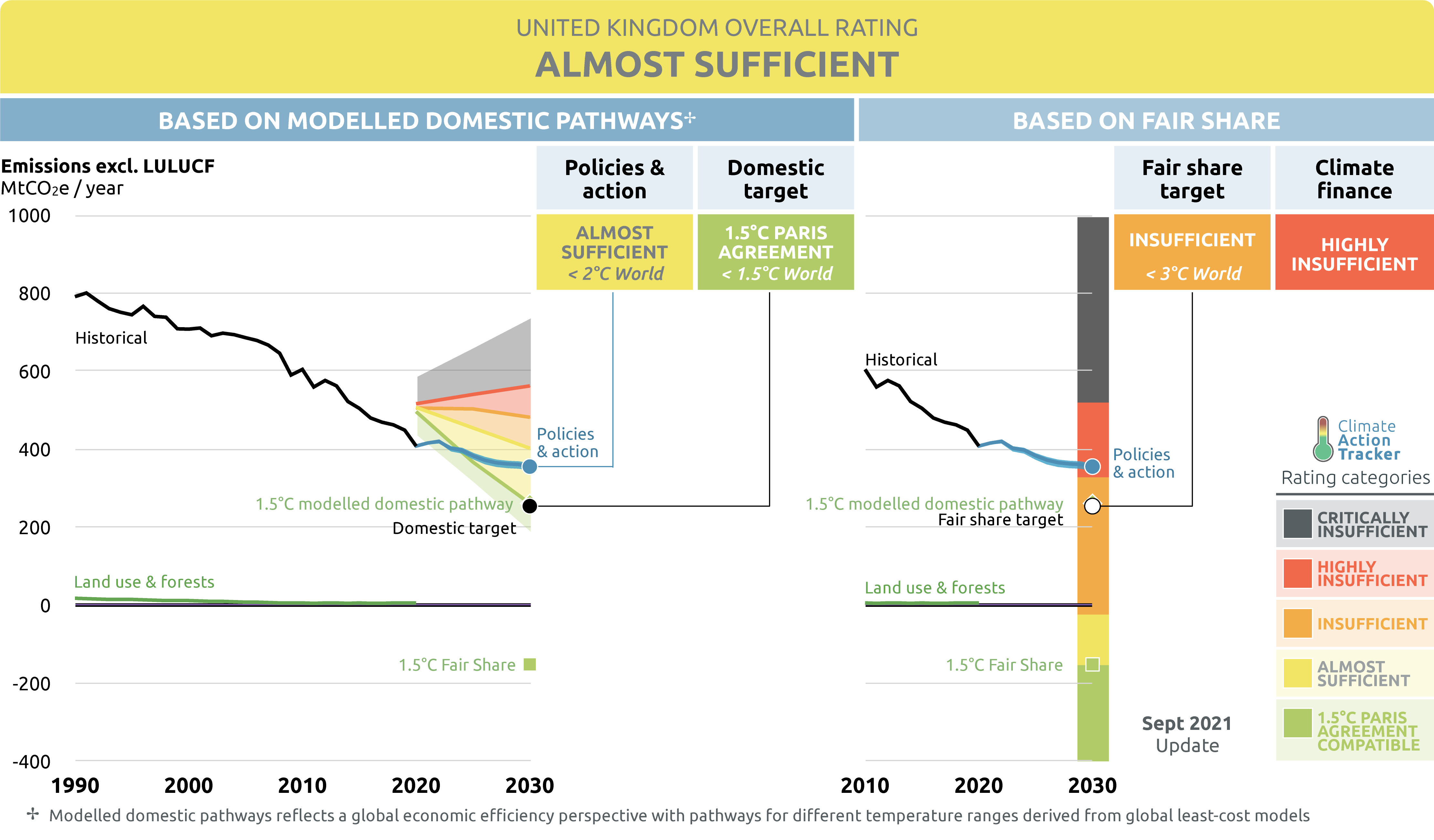
The Climate Action Tracker prepares reports on just this thing, nation by nation. With reference to the UK their report (in summary) says: “The UK’s climate action is not consistent with the Paris Agreement. While the UK’s NDC and long-term targets are broadly aligned with cost-effective domestic pathways, they do not represent a fair share of the global effort to address climate change. The UK’s current approach is therefore incompatible with the principles of equity and common but differentiated responsibilities which are central to the Paris Agreement.
“In addition, while the UK government has adopted many new policies in the past two years, critical policy gaps remain in a range of areas such as energy efficiency in buildings, heat pump uptake and agricultural decarbonisation. Without increasing the ambition of the UK’s domestic climate targets, implementing policy to achieve these goals, and providing sufficient climate finance to support emissions reductions in less wealthy countries, the UK cannot be seen as compliant with the Paris Agreement. At the moment, under 40% of the emissions reductions required to meet the UK’s NDC are supported by policies with proven delivery mechanisms and sufficient funding.”
Global temperatures have fluctuated considerably over the geological lifetime of the plants, and indeed in the past have been at much higher levels than we are currently experiencing. What is different now is the rate at which global temperatures are rising – far faster than at any previous time. The current rise in temperatures is not ‘natural’ but anthropogenic- human-made. The cause of this rise in temperatures has been the increasing quantity of greenhouse gases (principally carbon dioxide) that through human activity has been released into the atmosphere. These act like an insulation jacket on a hot water cylinder keeping in the sun’s heat.
The earth’s ecosystem can cope with a certain degree of fluctuation in global temperatures and still stay pretty much the same – with snow and glaciers on mountain tops, ice sheets at the poles, a stable Gulf Stream in the Atlantic and an equally stable jet stream in the high atmosphere – both ensuring reliable weather patterns. However there comes a point at which increases in global temperatures causes changes that are irreversible and/ or which accelerate further temperature rises.
A 1.5C temperature rise is one such tipping point. Exceeding this will likely lead to the loss of the Greenland ice sheet and the Western Antarctic ice sheet. Both will expose ground that unlike the ice sheet, absorbs rather than reflects the sun’s rays, and will thus accelerate rising temperatures. Whilst the sudden thawing of the northern permafrost which will release large amounts of methane which in the short term has an even greater greenhouse (warming) effect than carbon dioxide. The 1.5C tipping point is also likely to see the death of many coral reefs which would otherwise be absorbing carbon dioxide, again leading to further increases in temperature. These will all be irreversible events in our human timescale.
The need for action
For many decades scientists have been arguing for a reduction in carbon dioxide and other greenhouse gases – and this has not gone un-noticed by governments and communities. Here in the UK, the Climate Change Act was passed in 2008 and sets out legally binding emissions targets, initially aiming for an 80% reduction from 1990 levels by 2050. The Act also established a series of national carbon budgets, with a decreasing cap on emissions for succeeding five year time spans. (These budgets exclude emissions from aviation, shipping and from imported goods).
In 2016 nearly 174 nations plus the EU signed up to the 2015 Paris Agreement that tasked them with reducing emissions to a level that would keep the global temperature rise well below 2C and ideally no more then 1.5C. The agreed target was that the world – as represented by the parties at COP21 that had produced the agreement – should seek to half greenhouse gas emissions by 2030 and to cut them to net zero by 2050 (at the latest).
By this time there was a growing grassroots movement of climate activists calling on governments and institutions to take action. Across the world the demands from climate activists led to many institutions and authorities declaring a ‘climate emergency’. The first such declaration was made by the City of Darebin in Melbourne, Australia in 2016. Bristol City Council, in 2018, became the first local authority to do so in the UK, and in 2019 the UK Parliament itself declared an environment and climate emergency. This latter following 10 days of protests by Extinction Rebellion.
Terminology Net zero is the end reference point rather than absolute zero because it is recognised that there will always be some areas of human activity that produce carbon and other greenhouse gas emissions – simply breathing produces carbon dioxide – but that these can be offset by increasing activities that absorb carbon dioxide. Such activities includes creating maintaining woodlands, peat lands, sea grasses etc.
Carbon neutral is a similar term related to net zero. It is used when an organisation/ production process etc has neutral balance vis a vis carbon produced and carbon absorbed. Another term in use is carbon negative. This is when an organisation/ production process removes more carbon dioxide than it produces. A well maintained forest could achieve this. Net zero on the other hand assumes that as far as possible all greenhouse gas emissions have been reduced with offsetting only used to compensate for a small and impossible to remove residue.
Net zero for nations
Since 2016, more nations have signed up to the Paris Agreement, with now just under 200 signatories. Each nation is tasked with working out its own plan to achieve the global net zero by 2050 target, producing a quota that is their Nationally Determined Contribution. Each NDC is added to a register at the UN, and at each subsequent Climate COP, they are invited to review and ideally improve upon their NDC.
The UK chooses to distinguish between emissions produced from within the UK borders and those from without. The UK’s measure includes thus emissions produced by companies who export products from the UK (which are often in the form of financial services which tend to have a lower footprint) and excludes emissions produced elsewhere on items that are imported (which are often manufactured goods coming in from China, India etc). The UK’s measure has also excluded emissions from aviation and shipping, but this is going to being adjusted in relation to proposals for future decades.
To help nations predict the effectiveness of their plans, and to enable their progress to be independently monitored, The Climate Action Tracker scrutinises nation’s climate actions and measures them against the globally agreed Paris Agreement aim of “holding warming well below 2°C, and pursuing efforts to limit warming to 1.5°C.” They report publicly the progress being made by leading countries. The most recent assessment grades the UK’s rating as ‘almost sufficient’. (Costa Rica has the same rating whilst New Zealand is rated as ‘highly insufficient’. https://climateactiontracker.org/media/images/CAT_2021-09_Graph_SplitSummary_UK.original.png
CAT also draws data together to give a global overview of policies to determine likely trends in temperatures over the coming century. For example in November 2022 CAT reported on the future shape of liquified natural gas production based on future projects (approved and proposed) and showed that the projected increase in production was well outside the scenario needed to keep with it the net zero target. https://climateactiontracker.org/press/dash-for-gas-a-serious-threat-to-the-paris-agreements-warming-limit/
Net zero policies in the UK
The 2019 Environment and Climate Emergency Declaration itself has no legally binding requirements, rather the legal obligation to reduce UK emissions lies with the 2008 Climate Change Act. This, in the light of the Paris Agreement, was amended such that the end target for 2050 is now set to be net zero. And action has been taken:- UK terrestrial (ie emissions that occur within the UK borders) have fallen from 800million tonnes of CO2 in 1990 to 424.5 Mt CO2e in 2021.
The 2008 Climate Change Act also set up the Climate Change Committee as an independent statutory body which advises the Government on achieving its emissions targets. To this end the CCC produces a five yearly carbon budget. The most recent, the Sixth Carbon Budget, covers the period 2033-2037. It includes the following four key steps:
Enabling people and businesses to choose low-carbon solutions, as high carbon options are progressively phased out. By the early 2030s road transport and home heating will be largely electrical. Industry too will shift to using largely non fossil fuel energy.
UK electricity production will be zero carbon by 2035 with offshore wind the main source. With new and expanding uses for electricity (arising from the above) electricity demand is likely to increase by 50%. Hydrogen production will also increase to fuel shipping and industry.
Reducing demand for carbon-intensive activities through insulating buildings, reducing air and car travel, and reducing meat and diary consumption. These will additionally improve health and well being!
Increasing the absorption of greenhouse gas through transforming agriculture, increasing tree planting and restoring peat lands.
The effect of these steps would be to reduce greenhouse gas emissions in 2035 to 20% of their level in 1990, putting the UK on track to meet the objectives of the Paris Agreement.
The Climate Change Committee is also tasked with reviewing and reporting back to Government the progress being made. The most recent assessment published in March 2023 covered the period of 2018 – 2023. The CCC stated that the “found very limited evidence of the implementation of adaptation at the scale needed to fully prepare for climate risks facing the UK across cities, communities, infrastructure, economy and ecosystems.” https://www.theccc.org.uk/publication/progress-in-adapting-to-climate-change-2023-report-to-parliament/
Net zero for businesses and organisations
However it is not just governments that have pledged to take action to achieve the net zero 2050 target. Educational institutions, businesses, health providers, local authorities, service providers, financial institutions etc too have drawn up climate action plans. As of 2022 75% of UK universities committed to net zero targets under scopes 1 and 2 (see below to learn more about scopes).
Unilever has a Climate Transition Action Plan which aims to achieve zero emissions by 2030 for their operations (eg manufacturing products – scope 1 emissions) and net zero across their supply chain by 2039 (scope 2 emissions) and are working on reducing the emissions arising from when their products are used by customers (eg when they consume energy having a shower or running a washing machine scope 3 emissions).
Of course it is in everyone’s long term interests to take such action. Every activity whether it’s teaching a class of 5 year olds, running a train service, or producing bread will become much harder as the climate crisis escalates. How do you teach 30 children when temperatures rise to 40C? How do you run a train service when floods and landslides block the line? How do you produce bread when high temperatures and extended droughts halve the wheat crop?
Monitoring emissions and what is included.
Just as the Government has it advisory committee, so businesses, institutions and others have advisers – some commercial, some not for profit and others operating as charities. The UN is backing the global campaign ‘Race to Zero’ helping companies, cities, regions, financial and educational institutions, to halve global emissions by 2030 and to net zero by 2050. https://racetozero.unfccc.int/ , and the Science Based Targets initiative (SBTi): The SBTi is a partnership between CDP, the United Nations Global Compact, World Resources Institute (WRI) and the World Wide Fund for Nature (WWF) that drives ambitious climate action in the private sector by enabling companies to set science-based emissions reduction targets: https://sciencebasedtargets.org/
About a third of Britain”s largest businesses have signed up for the Race to Zero campaign, pledging to eliminate their contribution to carbon emissions by 2050.
The UK government records its net zero progress by measuring greenhouse gases emitted within its borders. (This means incidentally that it does not include in its assessment emissions that arise from items consumed in the UK but produced elsewhere such as China). Businesses likewise have to determine which emissions they are going to ‘own’. To assist this, emissions are categorised as falling into three areas –
Scope 1 emissions which are directly related to their business – eg burning gas to smelt steel, burning petrol to run a bus.
Scope 2 emissions which are generated off-site such as electricity which is produced in a regional power station but which is used to power a café‘s coffee machine, the emissions generated when your staff/ pupils travel to work school.
Scope 3 emissions which includes emissions relating to the products you use upstream of your business – eg the emissions arising from growing, transporting and roasting the coffee beans bought by the café; the emissions arising from manufacturing the bus; emissions arising in extracting the iron ore that is used at the steel works – and those expended downstream – the emissions arising from recycling or otherwise disposing of used coffee cups, the emissions that arise from running a shower for someone using Unilever’s soap, or in the case of an oil refinery, the emissions arising when that oil is burnt to run someone’s boiler.
Of these, scopes 1 and 2 are relatively easy for businesses to identify and adapt to achieve a net zero target. It maybe that they will have to shop around and find alternative suppliers for some items – eg a green electricity supplier, someone who grows organic coffee beans etc, or provide staff with bicycles. Scope 3 emissions can be trickier to adjust, and may involve a lot of working with suppliers to change the carbon footprint of what they produce – a café might work with both coffee roasters and coffee bean growers to grow, roast and ship a bean with a smaller footprint – or may mean finding new suppliers. Equally a café might look at the waste they produce – paper cups, plastic packaging, used coffee grounds – and work out ways of ensuring that the resulting emissions are reduced by for example, replacing single use cups with reusable ones, replacing plastic packaging with paper bags, or finding ways of recycling coffee grounds.
There is obviously an overlap between the different scopes – scope 3 emissions from one organisation being the scope 2 emissions of another. Working together is a key part of achieving net zero targets. This includes us as individuals as we make choices about how to travel to work/ school, whether to bring a keep cup for our take out coffees, or how long we spend in the shower.
For some organisations such as fossil fuel companies, reducing scope 3 emissions can be a challenge to the raison d’être of the company: their whole business is all about extracting and selling greenhouse gas emitting products. One such company, Ørsted, faced this challenge head on: “In the late 2000s we were one of the most coal intensive power generators in Europe with an expanding oil and gas production business. But we took a strategic decision to become a green energy company, as we were convinced it was the right approach strategically, financially and environmentally. To drive our transformation, we invested heavily in renewable energy, particularly offshore wind; exited our fossil fuel businesses, and formulated our vision of creating a world that runs entirely on green energy. We are now one of the largest renewable energy companies by capacity globally and the leading offshore wind company. Financial performance has significantly improved whilst we have reduced our carbon emissions by 86%.” https://orsted.com/en/insights/white-papers/green-transformation-lessons-learned
Other fossil fuel companies however are trying to combine fossil fuels with renewables such that they can continue to extract and sell oil and gas (which still remain highly lucrative). Is this compatible with a net zero target? There are at least three ways in which this can be orchestrated.
One is to set the net zero target for 2050, and to sit lightly to any interim targets such as halving emissions by 2030. In theory a company could continue its high emissions production until 2049 and then cut all production in the last year and achieve its net zero target.
Second, it could mask its emissions in the interim by adding renewable energy production to its portfolio, and thus show a reduced intensity of their overall emissions without cutting back on fossil fuels.
Third it could invest in carbon absorbing projects – such as planting trees – or invest in carbon capture projects – where carbon dioxide emissions are trapped as they are produced and ‘locked away’ through physically storing the gas underground or by mixing it with other materials to store it as different chemical compound. The former take time to become effective: trees need to grow before they become efficient stores of CO2 and managed to ensure a long and useful life; whilst as regards carbon capture, much of that is based in untested technology that is not yet available at the necessary scale needed.
Net zero targets and green washing
Investopedia defines green washing as “the process of conveying a false impression or misleading information about how a company’s products are environmentally sound. Greenwashing involves making an unsubstantiated claim to deceive consumers into believing that a company’s products are environmentally friendly or have a greater positive environmental impact than they actually do. In addition, greenwashing may occur when a company attempts to emphasise sustainable aspects of a product to overshadow the company’s involvement in environmentally damaging practices”.
Reliable monitoring and certification schemes are critical if ‘green washing’ is to be avoided.
In 2022 the Uk government passed legislation that requires Britain’s largest companies to report on the climate risks they face and their strategies to overcome these. In other words they must have thought through climate transition plan that shows how they will transition to a low carbon future in line with the Government’s net zero target. As well as having a duty under the UK companies Act 2006 to promote the success of the company, company directors must also have regard to the impact of the company’s operations on the environment and the community. (For more info see https://www.allenovery.com/en-gb/global/news-and-insights/publications/risks-for-directors-in-the-spotlight-climate-litigation)
Having legislated for the requirement to disclose and for the directors’ responsibilities vis a vis the environment, it is now possible for interested parties (principally share holders) to challenge companies at law to prove that they are indeed shifting their businesses in the direction needed to address the climate crisis.
In February 2023, the environmental law organisation ClientEarth announced that it was taking Shell to court. ClientEarth. “The shift to a low-carbon economy is not just inevitable, it’s already happening.”But the Shell board is persisting with a transition strategy that is “fundamentally flawed,” Benson claims. He says it leaves the company seriously exposed to the risks climate change poses to their success in the future – “despite the board’s legal duty to manage those risks”. Shell says its ‘Energy Transition Strategy’ – including its plan to be net zero by 2050 – is consistent with the 1.5C temperature goal of the Paris Agreement. The company also claims its plan to halve emissions by 2030 is “industry-leading”. But ClientEarth says this covers less than 10 per cent of its overall emissions and independent assessments have found that Shell’s climate strategy is not Paris-aligned.
This year’s Shell AGM faced a shareholder vote backed by big pension funds and investors to set carbon emission reduction targets for 2030, while dozens of protesters called for an immediate end to fossil fuel production – https://www.theguardian.com/business/2023/may/23/shell-agm-protests-emissions-targets-oil-fossil-fuels However the level of objection was insufficient to win a resounding vote against the Shell board.
Interim conclusion
The pursuit of net zero targets by governments and organisations will continue to be live issue.
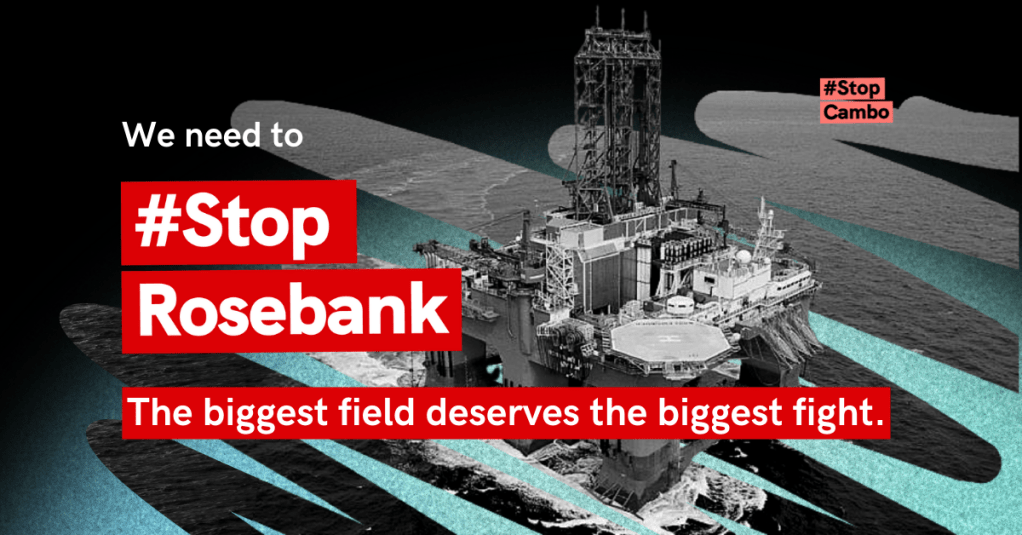
Despite understandings made at last year’s COP26 to reduce the carbon emissions – halving them by 2030 and achieving net zero by 2050 – the UK government is preparing to approve the Rosebank oil field – thebiggest undeveloped oil field in the North Sea. If these two seem totally irreconcilable to you, do sign this petition:- https://actionnetwork.org/petitions/stoprosebank/?link_id=11&can_id=a3029987c1ac6171de26390e6aabf63f&source=email-thats-a-wrap-stopjackdaw-week-of-action-2&email_referrer=email_1671196&email_subject=we-have-a-new-fight-on-our-hands-_-stoprosebank
In response to COP26 the five leading supermarkets – Tesco, Sainsbury’s, Waitrose, Co-op and M&S – said they would reduce carbon emissions, deforestation and the food waste and packaging they produce.The chief executives of the supermarkets, which together serve more than half of UK food shoppers, said in a joint statement: “We recognise that a future without nature is a future without food. By 2030 we need to halt the loss of nature.” Before the end of next year(2022), they also promised to set science-based targets for how they would help to limit global warming to 1.5C above pre-industrial temperatures. https://www.bbc.co.uk/news/uk-59184278
Write to your local supermarket and ask if they are in track to meet climate change prevention targets.
Last year we were counting down to COP26 which was being held at Glasgow with the United Kingdom as host. I posed the following questions:- Are the nations, the leaders, the civil servants, the interested parties, ready? Are they equipped with ideas and proposals? Are they ready to negotiate and encourage and take bold steps to reach an agreement that will see carbon emissions reduced to net zero by 2050? Will they be sufficiently pragmatic to be generous in funding support to enable poorer countries to be part of the movement to net zero? Will they be clear sighted, seeing the bigger global issues rather than being blinkered or distracted by individual agendas? Are they going to be supported by overwhelming popular support for those policies and actions that safeguard our shared future?
The outcome was perhaps better than might have been feared, but certainly not as proactive as it might have been. One of the outcomes was that, in recognition of the severity of the crisis we face, all parties should meet again a year later to review progress and restate targets to keep the process of net zero on track. Thus it is that in 100 days from now, on 6th November, all the parties will be convening in Sharm El-Sheikh for COP27. This time the hosts will be Egypt.
Last year I also posed some questions for ourselves and I propose to repeat/ review these this year.
Can we be part of that popular support? Can we also take action regarding our own lifestyle to contribute to the net zero emissions target? Are there 100 actions we can take between now and the Conference?
Action 1: Write to your MP and let them know why you think this Conference is important and why you hope it will be a turning point in addressing the global climate crisis.
NB What does ‘net zero’ mean? Net zero refers to achieving a balance between the amount of greenhouse gas emissions produced and the amount removed from the atmosphere. There are two different routes to achieving net zero, which work in tandem: reducing existing emissions and actively removing greenhouse gases.
A gross-zero target would mean reducing all emissions to zero. This is not realistic, so instead the net-zero target recognises that there will be some emissions but that these need to be fully offset, predominantly through natural carbon sinks such as oceans and forests. (In the future, it may be possible to use artificial carbon sinks to increase carbon removal, research into these technologies is ongoing.)
The term carbon bomb has been widely used in climate circles for the past decade to describe large fossil fuel projects or other big sources of carbon, but more recently has been given a more specific definition: projects capable of pumping at least 1bn tonnes of CO2 emissions over their lifetimes.
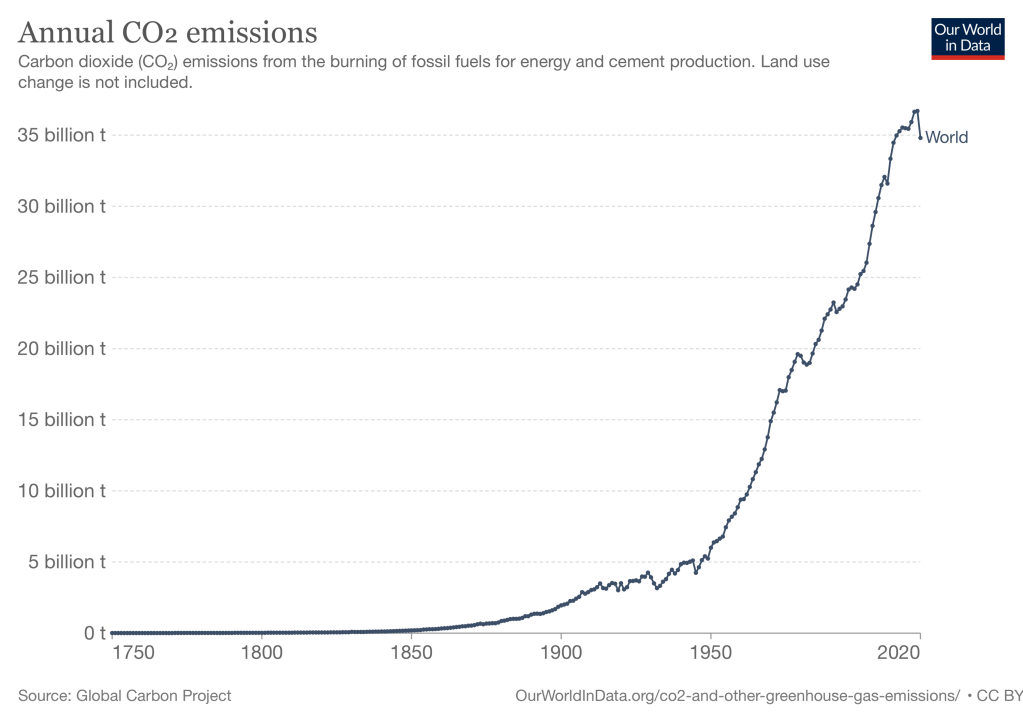
To put this figure in context, just before Covid, annual CO2 emissions peaked at about 36bn tonnes.
The IPCC report on Mitigation of Climate Change published on 4 April, specifies that emissions should peak no later then 2025 and be reduced by 43% by 2030 if we are to contain climate change and global heating at tolerably safe level. If that peak in 2025 is, say, 40bn tonnes, then globally we would need to be reducing carbon emissions by 4bn tonnes per year.
The International Energy Agency has already stated that the existing oil, gas and coal fields already in operation will provide all that is necessary to meet our demands for fossil fuels. In other words, if we are to meet our emissions reduction targets there is no need to open up new fields. This surely begs the question why anyone is investing money in expanding fossil fuel extraction or in exploring new fields? In part it may the fear of being the first to opt out – will they be exposed to risk? Will they loose out on profits? If everyone moved together it would be safer and fairer.
A recent report by the Guardian estimates that the current expansion plans of the fossil fuel industry includes 195 carbon bombs, and that the dozen biggest oil companies are on track to spend $103m a day for the rest of the decade exploiting new fields of oil and gas that cannot be burned if global heating is to be limited to well under 2C. These companies – and those investing in them – are betting that by 2030 governments will not have achieved the 43% reduction in emissions and will still be in the market to buy oil and gas. If their bet wins the world temperatures will have risen by more than 2C and we will all be suffering the worst impacts of the climate crisis. https://www.theguardian.com/environment/2022/may/18/carbon-bombs-inside-the-20-may-guardian-weekly
On the other hand what could $103m a day achieve if it were invested in renewable energy? How many wind farms? How many tidal energy schemes? How many solar panels on buildings? How many heat pumps? What could it achieve if invested in climate adaptation projects? How many buildings could be insulated (against heat as well as the cold)? How many trees could be planted to absorb water and lower temperatures? How many efficient public transport schemes? How many new farming techniques, new varieties of seeds, and advanced weather ?



 Author
 The Green Tau