Falling in Love 19

Peg’s Pond, Isabella Plantation, Richmond Park

Still waters run deep. Ponds, deep and not so deep, are niche habitats for a whole variety of plants, insects, amphibians, and fish. But looking into the water it is the world above that we see again in a near perfect reflection. It is as if the pond chooses to hide its inner life.

The world around us is full of curious, beautiful and amazing things. As small children our curiosity and our amazement knew no bounds. Every day would produce novelties- things to see, things to chew or eat, things to grab and hold, things to poke and explore. 

As we have grow older we have often lost that sense of wonder. Things that were new have become mundane. In the rush to be busy, small things flop below the radar. Decorum dictates that we shouldn’t prod or lick things and, unless we’re wine tasters, swirling stuff around our mouth and spitting are frowned upon. Stopping suddenly just to look is discouraged – it interrupts the flow of traffic. Daily routines take over. 

And our love for the world wains and falters. 

The season of creation-tide runs from 1st September till 4th October, the Feast of St Francis. Let’s fall in love again with creation. 
Falling in Love 17

Bright winter sun on frozen water on a frozen river. Isn’t it amazing that there can be both sun – the source of all warmth and light – and ice, a frozen lattice work of water molecules, that only forms when temperatures drop below 0C. Movement goes into suspension, holding what was previously fluid into a solid whole until the sun’s warmth eventually releases its bonds. For now the ice glints and glows as it reflects the sun’s heat away from its surface.

The world around us is full of curious, beautiful and amazing things. As small children our curiosity and our amazement knew no bounds. Every day would produce novelties- things to see, things to chew or eat, things to grab and hold, things to poke and explore. 

As we have grow older we have often lost that sense of wonder. Things that were new have become mundane. In the rush to be busy, small things flop below the radar. Decorum dictates that we shouldn’t prod or lick things and, unless we’re wine tasters, swirling stuff around our mouth and spitting are frowned upon. Stopping suddenly just to look is discouraged – it interrupts the flow of traffic. Daily routines take over. 

And our love for the world wains and falters. 

The season of creation-tide runs from 1st September till 4th October, the Feast of St Francis. Let’s fall in love again with creation. 

Falling in Love 16

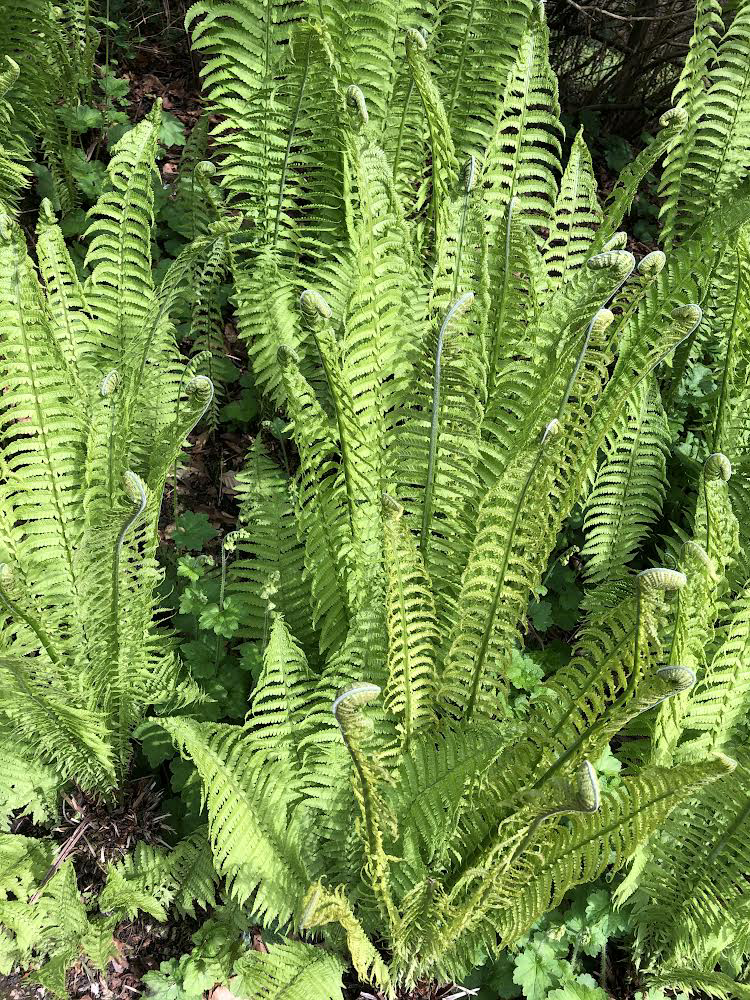
This is fern is a ‘male fern’ or dryopteris filix-mas and is native to Britain. Each leaf unfurls from a tightly wound coil known as a fiddlehead or crosier. The latter also being the name of the staff carried by a bishop which has a curled top similar to that of a shepherd’s crook. Whilst still young and small these fiddleheads can be cooked and eaten and are rich in omega fatty acids and iron. But left in situ each fiddlehead uncurls and stretches out into a tall arching frond. Oh that our spines were as flexible!

The world around us is full of curious, beautiful and amazing things. As small children our curiosity and our amazement knew no bounds. Every day would produce novelties- things to see, things to chew or eat, things to grab and hold, things to poke and explore. 

As we have grow older we have often lost that sense of wonder. Things that were new have become mundane. In the rush to be busy, small things flop below the radar. Decorum dictates that we shouldn’t prod or lick things and, unless we’re wine tasters, swirling stuff around our mouth and spitting are frowned upon. Stopping suddenly just to look is discouraged – it interrupts the flow of traffic. Daily routines take over. 

And our love for the world wains and falters. 

The season of creation-tide runs from 1st September till 4th October, the Feast of St Francis. Let’s fall in love again with creation. 

Lord, who controls my life?

The Sun that wakes me in the morning, 

or the dark that lets me sleep at night?

The seasons that provide times for growing and harvesting, 

food to eat and food to store?

The cycle of the years that moves me from infant vulnerability 

to mature accountability – and back?

Shop windows, supermarket displays and the internet browser 

that urge me to ‘Buy! Buy! Buy!’?

Businesses who use my money to fund their profits 

yet cheat on wages and despoil the earth?

Financiers who see only the £ sign 

and neither the beauty nor the poverty of the world?

Governments who make the rules they then bend, 

who promise a future they won’t deliver?

Is it me – sometimes misguided, sometimes mistaken – 

with the choices I can make?

Or could it be you Lord God, 

if I would trust, if I would open my heart to you?

Falling in Love 15


A woodland path in the Yorkshire Dales, spring time. What can be more relaxing than to wander beneath a lacy canopy of lime green leaves, over a carpet of dappled shade and bluebells? Weather worn stones and ageing tree trunks alongside fresh grass and spring growth: both old and new are intrinsically part of life.

The world around us is full of curious, beautiful and amazing things. As small children our curiosity and our amazement knew no bounds. Every day would produce novelties- things to see, things to chew or eat, things to grab and hold, things to poke and explore. 

As we have grow older we have often lost that sense of wonder. Things that were new have become mundane. In the rush to be busy, small things flop below the radar. Decorum dictates that we shouldn’t prod or lick things and, unless we’re wine tasters, swirling stuff around our mouth and spitting are frowned upon. Stopping suddenly just to look is discouraged – it interrupts the flow of traffic. Daily routines take over. 

And our love for the world wains and falters. 

The season of creation-tide runs from 1st September till 4th October, the Feast of St Francis. Let’s fall in love again with creation. 

Falling in Love 14

The dog rose in full bloom is a thing of great beauty. And later in the autumn when its flowers are replaced with equally beautiful bright red hips – the ripening seed pods which are popular with wild birds. From classical times, its root is said to offer a cure for dog bites and this is the origin of its botanical name, rosa canina. During the Second World War its fruits were collected to make rosehip syrup which, being high in vitamins A, C, D  and E, was a useful addition for keeping the nation healthy. 

The world around us is full of curious, beautiful and amazing things. As small children our curiosity and our amazement knew no bounds. Every day would produce novelties- things to see, things to chew or eat, things to grab and hold, things to poke and explore. 

As we have grow older we have often lost that sense of wonder. Things that were new have become mundane. In the rush to be busy, small things flop below the radar. Decorum dictates that we shouldn’t prod or lick things and, unless we’re wine tasters, swirling stuff around our mouth and spitting are frowned upon. Stopping suddenly just to look is discouraged – it interrupts the flow of traffic. Daily routines take over. 

And our love for the world wains and falters. 

The season of creation-tide runs from 1st September till 4th October, the Feast of St Francis. Let’s fall in love again with creation. 
Falling in Love 13


A small lady bird, possibly a five spot ladybird. Ladybirds are welcomed by gardeners as one of their favourite foods is aphids. Ecosystems can be finally balanced between the numbers of predators and the numbers of prey. For ladybirds to thrive, they need an ongoing supply of aphids – ie aphids that have not been killed off by ‘super efficient’ garden sprays!

The world around us is full of curious, beautiful and amazing things. As small children our curiosity and our amazement knew no bounds. Every day would produce novelties- things to see, things to chew or eat, things to grab and hold, things to poke and explore. 

As we have grow older we have often lost that sense of wonder. Things that were new have become mundane. In the rush to be busy, small things flop below the radar. Decorum dictates that we shouldn’t prod or lick things and, unless we’re wine tasters, swirling stuff around our mouth and spitting are frowned upon. Stopping suddenly just to look is discouraged – it interrupts the flow of traffic. Daily routines take over. 

And our love for the world wains and falters. 

The season of creation-tide runs from 1st September till 4th October, the Feast of St Francis. Let’s fall in love again with creation. 
Falling in Love 12

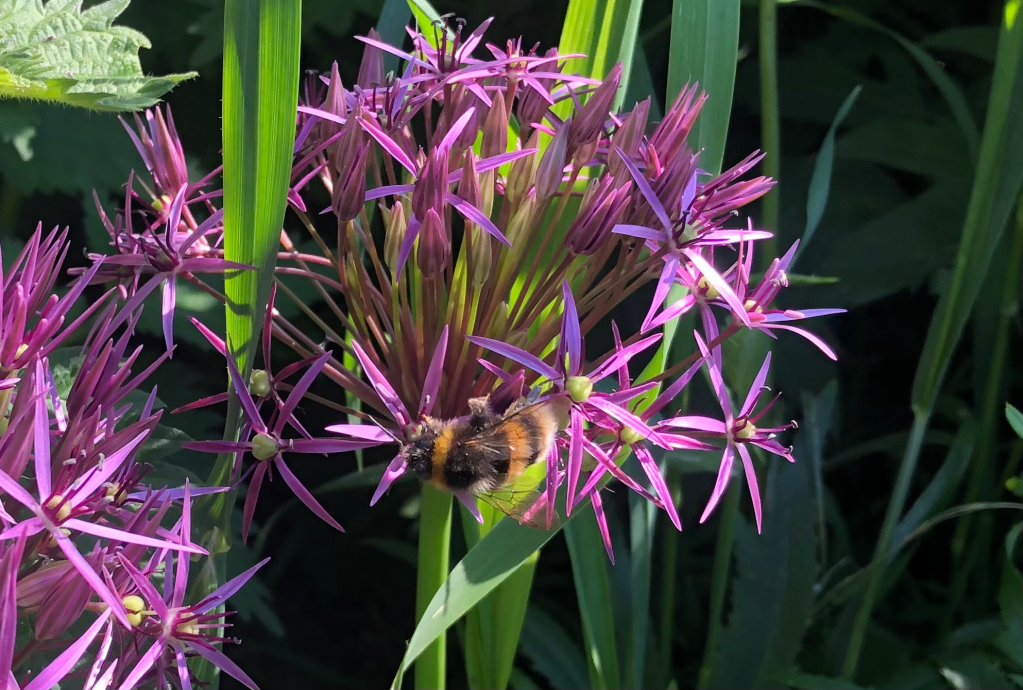
This is probably a buff-tailed bumblebee. These are sociable bees. Each year a new queen is hatched and she alone will sit out the winter. She will be one of the large bumblebees we see seeking out winter flowering plants such as mahonia and crocuses. In the spring she will feed up on pollen and nectar such that she has the renewed strength to begin a new, small, colony. Initially the larvae will develop as female workers but as the summer progresses some will emerge as males. One will successfully mate and so the cycle will begin again. 

Such persistence!

The world around us is full of curious, beautiful and amazing things. As small children our curiosity and our amazement knew no bounds. Every day would produce novelties- things to see, things to chew or eat, things to grab and hold, things to poke and explore. 

As we have grow older we have often lost that sense of wonder. Things that were new have become mundane. In the rush to be busy, small things flop below the radar. Decorum dictates that we shouldn’t prod or lick things and, unless we’re wine tasters, swirling stuff around our mouth and spitting are frowned upon. Stopping suddenly just to look is discouraged – it interrupts the flow of traffic. Daily routines take over. 

And our love for the world wains and falters. 

The season of creation-tide runs from 1st September till 4th October, the Feast of St Francis. Let’s fall in love again with creation. 
Falling in Love 11

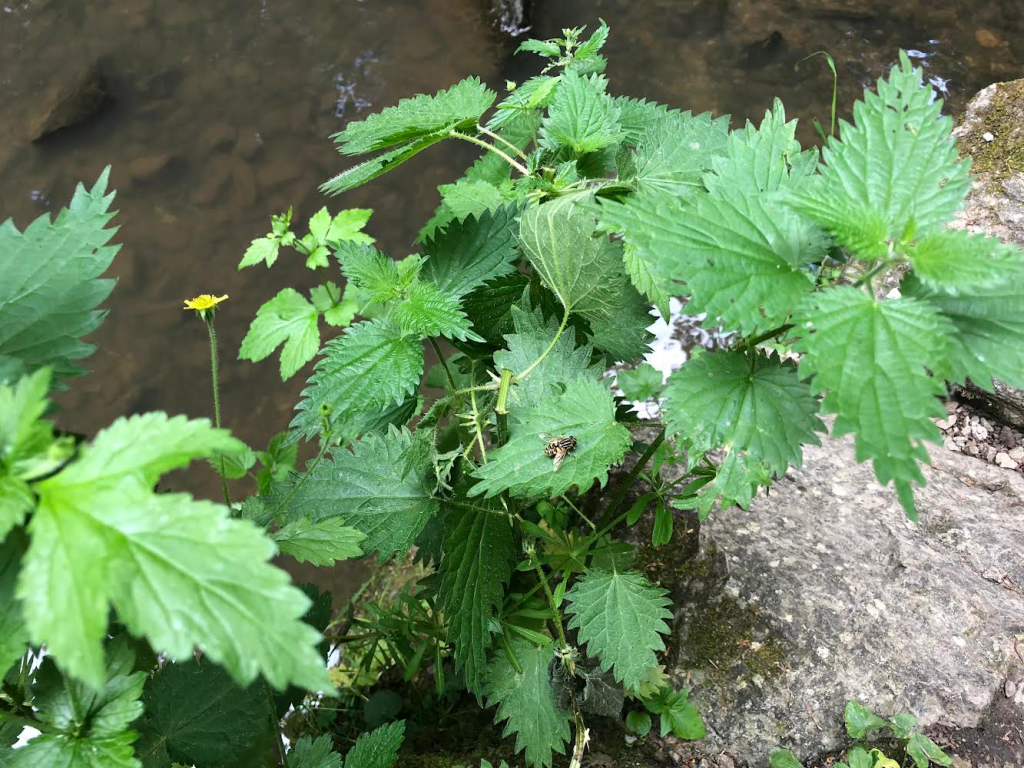
Nettles are often seen with irritation or distaste because they sting – roses of course have sharp thorns! Nettles however are an excellent food source for various insects, especially for caterpillars. Red admiral, peacock, small tortoiseshell and comma caterpillars are all fans of nettles. Young nettles are popular with aphids and therefore with ladybirds too. Nettles can be a key plant in wild life friendly gardens. 

Nettles are also good for humans to eat, especially when the  leaves are young and tender, and are a good source of vitamins A, C and D as well as minerals such as calcium, magnesium and iron. 

The world around us is full of curious, beautiful and amazing things. As small children our curiosity and our amazement knew no bounds. Every day would produce novelties- things to see, things to chew or eat, things to grab and hold, things to poke and explore. 

As we have grow older we have often lost that sense of wonder. Things that were new have become mundane. In the rush to be busy, small things flop below the radar. Decorum dictates that we shouldn’t prod or lick things and, unless we’re wine tasters, swirling stuff around our mouth and spitting are frowned upon. Stopping suddenly just to look is discouraged – it interrupts the flow of traffic. Daily routines take over. 

And our love for the world wains and falters. 

The season of creation-tide runs from 1st September till 4th October, the Feast of St Francis. Let’s fall in love again with creation. 
Falling in Love 10

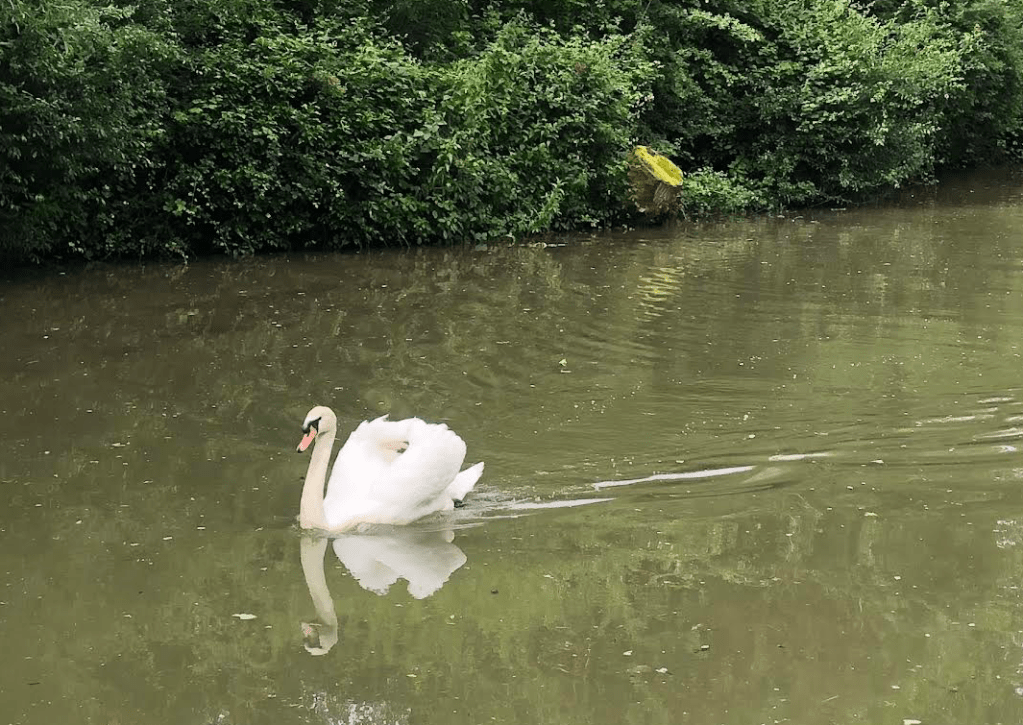
Swan on the Grand Union Canal, leamington

We often see swans as birds of great beauty but we know that both beneath their calm demeanour is a pair of fast paddling feet, and that their initial appearance as cygnet underplays what they will finally be like. 

Things are not always as they first appear.


The world around us is full of curious, beautiful and amazing things. As small children our curiosity and our amazement knew no bounds. Every day would produce novelties- things to see, things to chew or eat, things to grab and hold, things to poke and explore. 

As we have grow older we have often lost that sense of wonder. Things that were new have become mundane. In the rush to be busy, small things flop below the radar. Decorum dictates that we shouldn’t prod or lick things and, unless we’re wine tasters, swirling stuff around our mouth and spitting are frowned upon. Stopping suddenly just to look is discouraged – it interrupts the flow of traffic. Daily routines take over. 

And our love for the world wains and falters. 

The season of creation-tide runs from 1st September till 4th October, the Feast of St Francis. Let’s fall in love again with creation.