Weekly Green Tau

Green Tau reflection

15th October 2022

The ways of protest.

Last week I took part in the Earth Vigil outside Parliament. Participants sit on the pavement, backs against the wall that surrounds the building, and between 11 and 3pm a prayerful presence is maintained holding the needs of creation before God.

When we arrived a young police constable asked what we were doing. 

“Praying for the earth”  

“Well if you need anything …” he replied. 

We take up our places and quietly began to pray as tourists and workers and parties of school children walked by – a back and forth, crisis-crossing flood of human life. ‘Lord help us change our lifestyle and our priorities and safeguard the next generation.’ Abruptly the murmur of urban life is broken by loud, upbeat music (via an amplifier) whilst a commentary is loud-hailered by a one man protest group, hurling abuse at the Tory party. 

Restore focus once more on our silent prayer. Behind the many legs of the passersby, waves of traffic slide past by as traffic lights regulate their flow. Buses in twos and threes, black cabs swinging round tight curves, delivery vans and construction trucks, SUVs that are certainly not for utility and bikes which are! ‘Lord help us shape a better future, a better use of people’s skills and resources; a cleaner, kinder world.’ From the opposite side of the square another amplifier sets off in competition with the first. The music is more classical in tone. These protestors are women speaking out against the oppression of their comrades in Iran. They are wrapped in flags. 

Refocus, centre down, pray. A trickle of people come and go through the chicane that gives access to Parliament, inside whose doors policy is worked on, debated, argued, and often fudged.  ‘Lord help change the systems that shape our economy. So often they damage the lives of ordinary people and the health of the environment – bring wisdom and humility to the hearts of minds of those in power.’ A kerfuffle in the middle of the road – police are rushing forwards – has someone fallen over? No not fallen down but sat down. Not one but a dozen or more sat or lying in the road, odd hands glued down, other hands grasping ‘Insulate Britain’ banners. 

The frenzy of the moment is heart stopping. Brave? Vulnerable? Safe? The faces look confident. Now the road swarms with police and journalists – where did they all come from? More activists and members of the public add to the melee. Traffic grinds to a halt. It takes a while for the police to restart the traffic, directing them along the unoccupied traffic lane – a rogue motorcyclist tries to take an alternative route and is reprimanded.

A degree of order returns. Traffic moves in waves controlled by the lights.

Pedestrians continue to cross-cross the pavement, now and then stopping to take photos. Tourists add pictures of both the Houses of Parliament and the freedom to protest to their phones. More police vans, more police officers arrive and a slow process of note taking and questioning, surveying and evidence collecting starts. ‘Lord be with those who risk their comfort to stand up for the cause of justice. Be with those in other parts of the world who risk their lives in this cause. Challenge our churches to recognise what is happening and what needs to happen.’

A quick reconnoitre confirms we know some of the glued on protestors. Both they and the women of Iran are held in prayer. ‘Lord surround them with your protection that they may know they are loved. May their endeavours for justice be fruitful.’

Person by person the road protest is slowly – almost tediously – dismantled as the protestors are conveyed to the back of police vans and driven away. The media presence holds strong filming and interviewing the protestor in the road – they have certainly caught the attention of the press. And the public too. Passers by continue to stand and stare and take photos – what will they say when they get home or when they share these images on social media? Will their sensibilities about the current crisis of climate and justice have been raised? Only 2 or 3 shout abuse or remonstrate with the protestors.

Pray, think, reflect. ‘Lord transform the hearts and minds of all who pass by today. Fill them with compassion and a desire for justice. Safeguard the earth that it be not destroyed by our folly.’

And tomorrow and next week and next month …. the protests will go on for we need justice in our world and there are many willing to demand it. ‘Lord have mercy.’

Counting on … day 350

15th October 2022

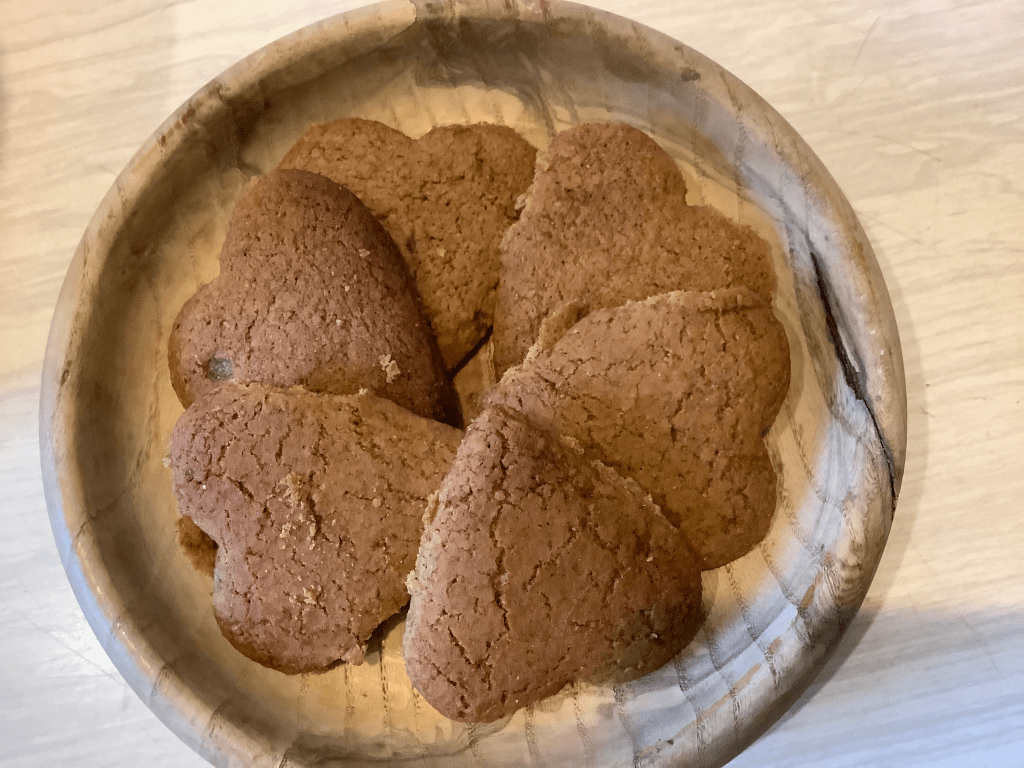
Baking without using the oven. Ovens use a lot of energy, so  if you can avoid using them it helps reduce your carbon footprint. Instead you can use a heavy frying pan as a griddle and bake foods such as Welsh cakes, soda farls and potato farls, drop scones, griddle scones and Staffordshire oatcakes. 

Welsh cakes

250g plain or half and half plain and wholemeal plus baking powder

75g vegan butter

75g currants/ raisins

1 tbsp chia seeds soaked in a cup of hot water

1 tsp Nutmeg

A little oat milk

Lightly oil a flat based frying pan and set over a medium heat to warm up.

Rub the butter into the flour and add the remaining ingredients using enough oat milk to bind to a dough. Roll out about the thickness of a thumb and cut into rounds. 

Place the rounds into the pan. When they are browned on one side turn them over. 

Green Tau: issue 54

14th October 2022

Biodiversity 

The natural world and its ecosystems are our life support system providing us  with oxygen, clean air, water, food, medicines etc that keeps us all alive. They reduce flooding, even out extreme temperatures, and ensure rainfall. They maintain our well-being – being in nature, seeing blue and/ or green landscapes are known to improve mental and physical health. To diminish the natural world is to diminish what makes life enjoyable and possible. To severely diminish the natural world is to severely compromise life to the point of extinction.

The natural world depends for its vitality on its biodiversity – those the numerous and varied life forms that co-exist in an interconnected web. Reducing biodiversity – whether through the diminution in number of any  species or through the extinction of individual species – reduces the health of the  natural world and thus the viability of life on this planet.

Do we value the natural environment and its biodiversity? In economic terms do we ascribe to the natural environment – to its natural resources on which we are so dependent – an appropriate financial value? When we build a road do we put a sufficient price on what we will loose through the initial and ongoing damage to the natural environment that it will cause? If we did we might be shocked at how expensive road building is! The WWF calculates the value globally of nature as a capital benefit as being at least US$125 trillion every year. A UK Government study in 2010 reported:-  

  • The benefits that inland wetlands bring to water quality are worth up to £1.5billion per year to the UK;
  • Pollinators are worth £430million per year to British agriculture;
  • The amenity benefits of living close to rivers, coasts and other wetlands is worth up to £1.3billion per year to the UK; and
  • The health benefits of living with a view of a green space are worth up to £300 per person per year.

Are we, as a nation and a world, encouraging biodiversity and caring for the natural environment?  Sadly no.

Scientists working with the Natural History Museum have carried out a survey to measure biodiversity levels across the globe. 100% represents areas where the natural level of biodiversity is intact, where human interaction has not diminished the number or diversity of species. Such areas of pristine biodiversity only exist in remote parts of the Arctic plus a few isolated pockets in the rain forests. At the other extreme there are many areas in, for example the USA, Argentina and New Zealand, where biodiversity has been diminished by nearly 50%. The global average stands at 75%. The safe level – sufficient to guarantee the health and well-being of humans – is 90%!


What causes this loss of biodiversity? 

Changes in land use 

This includes clearing forests to create plantations or farm land; clearing pasture to create arable land; switching to monocultural farming; digging up hedges; using large tracts of grassland for sheep or cattle (another form of monoculture); clearing vegetation to create mines and quarries. In many places, particularly in Europe the initial change from wild to farm land will have happened a thousand plus years ago – since the 1500s 133 species have become extinct in the UK.  However in the last hundred years there has been a marked acceleration in the loss of biodiversity. The State of Nature  2019 report revealed a 41% decline amongst UK species since 1970.

Urbanisation 

This is a particular variation of changing land use, and includes not just building houses, commercial and industrial buildings but also transport infrastructure. In Britain the swift population has declined by  38% since 1985 as new and modernised buildings no longer provide suitable nesting spaces. 

Buildings and infrastructure not only diminish wildlife habitats, they also fragment existing habitats so preventing species from migrating and/or limiting their gene pools. A rising to the Biologist magazine, everywhere volunteers in Henley on Thames carry upwards of 5000 toads across the A4155 from the ponds where they overwinter to the ponds where they spawn. (https://thebiologist.rsb.org.uk/biologist-features/toads-on-roads)

Pollution

Pollution damages or kills species. Pollution includes not just pollution of water, land and air but also noise pollution. This particularly affects marine creatures. Swift populations have also been affected by the decline in insects. A German study found that insect numbers had declines by 76% since 1990, undoubtably affected by the increasing use of pesticides. The river Wye suffers from excess quantities of phosphates leaking into the river from factory-sized chicken farms that populate the valley. This by-product of chicken faeces kills plants such as water crowfoot, and by taking oxygen from the water, kills local fish and the wildlife that relies on these fish for food, such as kingfishers and otters.

Overkill

Whether hunting or fishing, overkill diminishes numbers right up to the point of extinction, as was seen with beavers (16th century) and wolves (18th century) in the UK. Globally the great auk became extinct in the 1850s (last two were killed in Iceland) and the western black rhino was declared extinct in 2011, whilst only two northern white rhino still exist – both female. 

Invasive species

With global travel, non native species have spread around the globe and often proof invasive in their new locations. Japanese knotweed is a particular problem in Britain, whilst rats have threatened wildlife on the Scilly Isles.

Global warming 

Many species are sensitive to climate change, and whilst they might overtime be able to adapt or migrate, the speed of change is such that many cannot adapt fast enough and instead decline rapidly in number. Such species include the Adélie penguin in the Antarctic and the North Atlantic cod, as well as alpine plants such as snow pearlwort, drooping saxifrage and mountain sandwort which are all nature to Scotland.

Armed conflict

This is not something we often think of, but armed conflict destroys not just infrastructure but wildlife too and often expended armaments lead to long term pollution of soil, air and water. In marine situations, conflict is a cause of noise pollution too. The Eastern gorilla, which inhabits Congo, Rwanda, and Uganda, is at risk due to fighting in the region. The Ukraine is critical resting spot for migratory birds like the curlew sandpiper. Russia’s invasion of Ukraine coincided with the springtime migration. Fighter jets roared over nature refuges and birds, susceptible to sound, were scared away from their normal resting grounds. 

At the Earth Summit held in Rio de Janeiro in 1992 then Convention on Biological Diversity was set up having three main goals: the conservation of biodiversity; the sustainable use of its components; and the fair and equitable sharing of its benefits. In 2010 the signatories of the CBD agreed a set of 20 global targets, with a 10 year time frame, to halt global loss. The Government’s Sixth National Report, published in  2019, showed the UK had missed 14  of its 20 targets. 

In 2021 Natural England, Natural Resources Wales,  NatureScot, Northern Ireland Environment Agency and the Joint Nature Conservation Committee launched a new report – Nature Positive 2030 – which laid out how the rate of biodiversity loss could be reversed. It called on national and local governments, landowners, businesses and others to:- 

  • protect existing wildlife habitats – Meadows are one of the rarest habitats in the UK, with 97% of this habitat lost in Britain since World War II. English Heritage properties have some of the last remaining  meadows, and is maintaining these to provide much needed habitat for a wide range of flora and fauna such as wildflowers and butterflies. In the Royal Parks, land is being established as wildlife meadows including areas in both Green Park and Hyde Park in central London.
  • invest in new habitat restoration projects – of the south coast England’s largest seagrass restoration project has planted around 3.5 hectares of seagrass, whilst another project has  planted approximately 1.2 million seagrass seeds across 20,000m2 in Pembrokeshire, Wales.  Seagrass provides a vital habitat for a diversity of marine life and an excellent absorber of CO2. 
  • create nature networks – the Somerset Wildlife Trust recently bought  Honeygar Farm in the Avalon Marshes. The aim is to rewild the land as wetland enhancing its biodiversity and increasing the connectivity between nearby nature reserves. The land now forms part of the newly designated  “super nature reserve” covering 15,000 acres of the Somerset landscape. 
  • integrate biodiversity as an integral part of all development plans – the NHBC Foundation, with the RSPB and Barratt Developments has produced a report ‘Biodiversity in new housing developments: creating wildlife-friendly communities’ to show how design concepts, practical solutions and best practice case studies can ensure that new homes are built in a way that enhances wildlife, develops climate resilience, and improves people’s health and wellbeing. 
  • give preference at every opportunity for nature-based solutions for climate change mitigation – In Richmond’s Old Deer Park, land which regularly floods is to be rewilded  with a network of creeks, wetlands, bogs, and reedbeds, a mosaic of wet habitats that could sustain more wildlife and better hold excess river water. This is part of the Thames Landscape Strategy and aims to reduce the extent and impact of flooding in the Thames valley. 

Similar projects are and need to be taking place at scale across the globe.

COP15

However many countries lack the necessary funding. For others the short-term economics may make it more attractive to sell licenses to rich companies who will exploit the land, than to conserve the biodiversity and natural richness of their land. The provision of external funding for the countries is one of the issues that is to be addressed at the concluding part of COP15 which is due to take place in Montreal this December (the biodiversity COP as opposed to the climate change COP27 taking place in November in Egypt).

It is equally important that wealthy nations do not export its biodiversity loss to lower-income countries – ie if in the UK we rewild agricultural land, we need to ensure that at the same time we  restructure our food production to maintain – and ideally improve – our home-grown production rather than just importing more food from other countries to make up any shortfall. In particular this will mean increasing  plant based foods and reducing our consumption of animal products. (The former requires far less arable land than the latter). 

There is a lot for government and big businesses to do to achieve the necessary improvements in biodiversity but we as individuals through volunteering and fundraising, through petitions and protests, as gardeners and as consumers, can be part of the solution too.

Counting on … day 349

14th October 2022

Tomorrow is International Repair Day!
Right to Repair Europe suggests we ‘Try a fix’  

https://repair.eu/

Counting on … day 348 

13th October 2022

An observation: when I was a child every household had a single dustbin of size that could be lifted to empty it in to the dustbin lorry. There were no recycling bins or garden waste bins. Now households all  have a wheelie bin which is at least 50% bigger plus two or more recycling bins, a food waste bin and, as required, a garden waste bin. How come we produce so much more to discard? 

 Counting on … day 345

10th October 2022

Green Christian advocates ‘Joy in Enough’. Enough is about what is sustainable for the planet ; joy is about pleasure and fun and contentment. Christmas is a couple of months away but now may be a good time to plan for a joyously sustainable Christmas. Talk to family and friends what this might look like for Christmas is a time of coming together. 

Proper 23

9th October 2022

Reflection (readings are below)

Today’s readings seem to have an overall theme of living lives worthy of God wherever and whoever and with whoever you are. 

Previously we have noted that Jeremiah bought a piece of land in Jerusalem to show his confidence that in the long run God’s people would return to that city. But before that would happen, Jeremiah knew the people would end up in exile. The people could just live mournful tragic lives waiting for the time to return to come – but that would be a waste of God’s gift of life. Instead Jeremiah counsels them to make themselves at home in their new place, to live to the full and to do so for the good of that land. By so doing God’s people will be showing in their lives the best that comes from God. They will be showing that whatever the circumstances God’s people are always positive and confident in their faith in God. And always appreciative of the gift of life.

In the Letter to Timothy, the writer is stressing the importance of Jesus Christ as being at the heart of the gospel. Whatever they endure, whatever circumstances they find themselves in, they can be confident that Jesus will stand by them – and even if they fail Jesus will still be there for them. They should always present themselves in the best possible way as faithful servants of Christ, and not wrangling over the how and the why between themselves. 

Whilst in today’s gospel, it is the least likely person who does the right thing, who honours God in the right way. 

And what might this say to us? Whoever and wherever we find ourselves we should seek to live life to the full following the ways of God, in union with – in step with – Jesus Christ. For us today that is in a country in which many people are facing a bleak winter with a real threat of being cold and hungry and unsure of the certainty of a roof over their head. We need to pray and act to care for our communities, being generous with what we have, showing solidarity with those in need, and campaigning to persuade those in positions of leadership to act with greater responsibility and compassion. 

We find ourselves in a country where biodiversity is under renewed threat – we hear of rivers being polluted, of woodlands being lost, of wildlife facing extinction, of soils loosing their ability to produce crops. We need to pray and act to care for our ecosystems , being generous with what we have, showing solidarity with those working to protect them, and campaigning to persuade those in positions of leadership to act with greater responsibility and compassion. 

We find ourselves in a world where many are facing hunger and starvation, homelessness and destitution arising from climate change, trade inequalities and a lack of justice. We need to pray and act to care for the most vulnerable – especially remembering how much of their suffering stems from our previous greed – being generous with what we have, showing solidarity with their demands  and campaigning to persuade those in positions of leadership to act with greater responsibility and compassion. 

Looking back over the last few Sundays, there is the call to promote the gospel, knowing that it stands for the kingdom values of love and mercy, justice and humility. There is the encouragement to trust in God, to hold on to hope – to be confident of the rightness of the values of God’s kingdom. There is the reminder to live joyful and find contentment with what we have. 

Jeremiah 29:1, 4-7

These are the words of the letter that the prophet Jeremiah sent from Jerusalem to the remaining elders among the exiles, and to the priests, the prophets, and all the people, whom Nebuchadnezzar had taken into exile from Jerusalem to Babylon.

Thus says the Lord of hosts, the God of Israel, to all the exiles whom I have sent into exile from Jerusalem to Babylon: Build houses and live in them; plant gardens and eat what they produce. Take wives and have sons and daughters; take wives for your sons, and give your daughters in marriage, that they may bear sons and daughters; multiply there, and do not decrease. But seek the welfare of the city where I have sent you into exile, and pray to the Lord on its behalf, for in its welfare you will find your welfare.

Psalm 66:1-11

1 Be joyful in God, all you lands; *
sing the glory of his Name;
sing the glory of his praise.

2 Say to God, “How awesome are your deeds! *
because of your great strength your enemies cringe before you.

3 All the earth bows down before you, *
sings to you, sings out your Name.”

4 Come now and see the works of God, *
how wonderful he is in his doing toward all people.

5 He turned the sea into dry land,
so that they went through the water on foot, *
and there we rejoiced in him.

6 In his might he rules for ever;
his eyes keep watch over the nations; *
let no rebel rise up against him.

7 Bless our God, you peoples; *
make the voice of his praise to be heard;

8 Who holds our souls in life, *
and will not allow our feet to slip.

9 For you, O God, have proved us; *
you have tried us just as silver is tried.

10 You brought us into the snare; *
you laid heavy burdens upon our backs.

11 You let enemies ride over our heads;
we went through fire and water; *
but you brought us out into a place of refreshment.

2 Timothy 2:8-15

Remember Jesus Christ, raised from the dead, a descendant of David– that is my gospel, for which I suffer hardship, even to the point of being chained like a criminal. But the word of God is not chained. Therefore I endure everything for the sake of the elect, so that they may also obtain the salvation that is in Christ Jesus, with eternal glory. The saying is sure:

If we have died with him, we will also live with him;
if we endure, we will also reign with him;
if we deny him, he will also deny us;
if we are faithless, he remains faithful–
for he cannot deny himself.

Remind them of this, and warn them before God that they are to avoid wrangling over words, which does no good but only ruins those who are listening. Do your best to present yourself to God as one approved by him, a worker who has no need to be ashamed, rightly explaining the word of truth.

Luke 17:11-19

On the way to Jerusalem Jesus was going through the region between Samaria and Galilee. As he entered a village, ten lepers approached him. Keeping their distance, they called out, saying, “Jesus, Master, have mercy on us!” When he saw them, he said to them, “Go and show yourselves to the priests.” And as they went, they were made clean. Then one of them, when he saw that he was healed, turned back, praising God with a loud voice. He prostrated himself at Jesus’ feet and thanked him. And he was a Samaritan. Then Jesus asked, “Were not ten made clean? But the other nine, where are they? Was none of them found to return and give praise to God except this foreigner?” Then he said to him, “Get up and go on your way; your faith has made you well.”

Counting on … day 343

9th October 2022

I was introduced to a lovely idea yesterday to help us grow more aware of the natural environment in which we live. It simply involves chalking up a label on the pavement wherever you find a wild plant growing.