Living Sustainably; Protecting the Earth; Loving God
Author: Judith Russenberger
Environmentalist and theologian, with husband and three grown up children plus one cat, living in London SW14.
I enjoy running and drinking coffee - ideally with a friend or a book.
I recently mended the vacuum cleaner – where the hose connects into the body, the plastic collar had broken – and the charging cable for the iPad – which was showing signs of cracking – using Sugru. This malleable silicone substance can be moulded to the required shape or location and then left to harden binding to the substrate. So far it seems to have been effective! I have previously used it to mend the clay birdbath which had cracked in half.
Repairing anything that can be repaired is always a good option as it prolongs its useful life.
Earth Overshoot Day – the day when we have used up a year’s supply of the earth resources – occurred this year on 28th July. The date has been occurring earlier and earlier each year since 1970 (apart from 2020 when the covid lockdown caused a measurable reduction in consumption). Each year we are consuming more than can be restored by the earth, meaning that many natural resources are being depleted such as the fertility of soils- without that fertility crop yields will fall – or the land area covered by trees – essential for moderating the climate – or fish in the oceans – with a knock on effect on both biodiversity and on the ability of the oceans to absorb carbon dioxide.
If human life is to continue, we need to adjust our lives so that what we consume is sustainable – and that almost certainly means for most of us in the western world, consuming less.
What might that look like?
Food
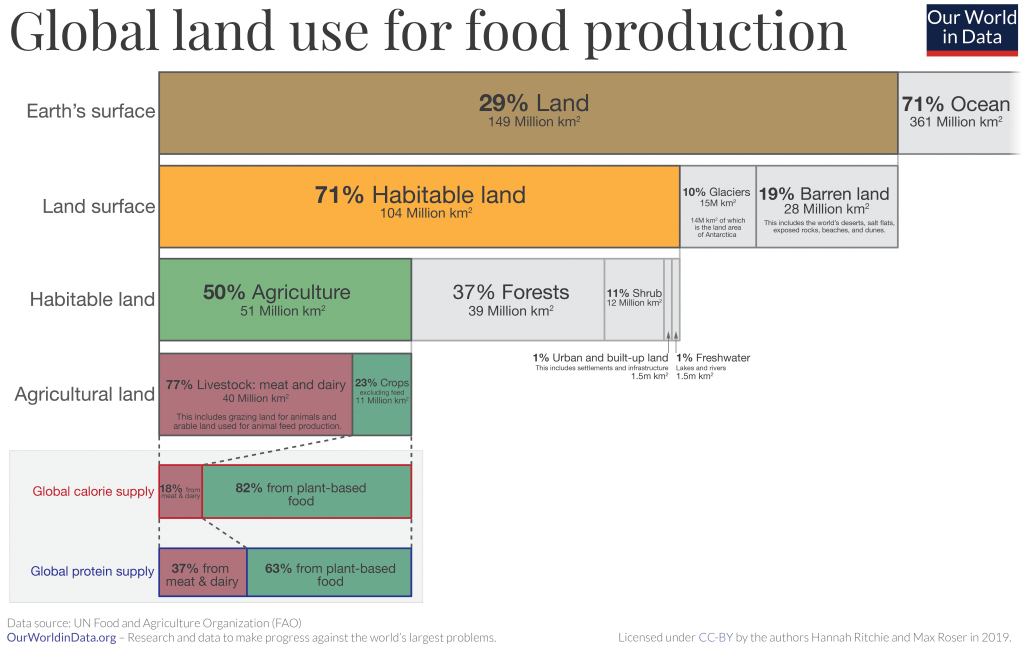
Our diets will need to change replacing most of our meat and dairy consumption with plant based foods. 77% of the world’s agricultural land is used to raise livestock (including the land need to grow their feed crops). Yet this 77% of land only provides 18% of the world’s calories. In many cases this livestock farming involves deforestation, artificial irrigation and large inputs of chemical fertilisers as the natural fertility of the soil is depleted. Pollution from both animal sewage and fertilisers damages water supplies and reduces natural biodiversity. Clearly this is not a sustainable way of using the earth’s resources.
The change in our diets will change both the food we cook at home, the ready meals we buy in the supermarket and the food we buy in cafés and restaurants. The food will still be varied and delicious using a huge diversity of fruits and vegetables, nuts and legumes and grains. At present we eat only a limited range of vegetables – typically peas and carrots. What about cardoon, salsify and winter radish? How often do we eat red kiwi, quince or wineberries? How often do we cook with buckwheat, teff or red millet?
Eating a greater variety of plants is good for our health. It is also good for food security – the greater the variety of plants we grow, the less vulnerable our food supplies are to pests, viruses or adverse weather. Currently about 15 crops provide 90% of the global plant based food intake.
But what would the impacts of these changes be on employment and incomes? Will a shift from livestock to arable farming lead to a smaller agricultural workforce? Or can we use the change to develop new employment opportunities? For example where a hedge can quickly be cut with a mechanical cutter, could we see people being trained in hedge laying skills which develops a stronger hedge capable of supporting greater biodiversity? Rather than importing cheap seasonal labour to harvest crops, could we see more full time jobs with living wages – even if that led to an increase in prices? Arguably the price we pay at present is an unfair and unreasonable price as it does not cover a living wage for those who produce it.
On the other hand there will equally be a shift from cereal crops (much of which is grown to feed livestock) to fruit and vegetable production – and the latter is more labour intensive. Again the same question about paying a fair wage is important. Sustainability is also about the wellbeing of people.
New farming priorities would also include re-wilding some of the land to increase biodiversity, limit the risk of flooding, absorb carbon dioxide and improve air quality, and create more green spaces where people can relax and improve their health.
Clothes and furnishings
At present a single pair of jeans uses 3,781 litres of water to make and has a carbon footprint of 33.4 kg. This includes growing the cotton, producing and dying the cotton fabric and the manufacturing. The average European buys 26 kg and disposes 11 kg of clothing away every year. Every year a half a million tons of plastic microfibres from synthetic clothes end up in the oceans.
In an alternative future we will be buying a small number of well made items of clothing that we will wear for many years, carrying out repairs as necessary. Clothes will be past on as children grow. Fashion will be considered not transient or disposable. ‘New’ clothes may well be second hand and many fabrics will be made from recycled fibres. The same will be true of furniture and furnishings. In the US alone, 12 million tonnes of furniture are discarded every year. Discarding furniture adds to the quantity not just of wood that goes to waste but also of fabrics, stuffing and metal work.
We will buy good quality pieces of furniture that we genuinely like and want to keep for life. The same will be so in commercial settings – no more discarding of office desks and chairs just to furnish a new look! Much will be second hand for many pieces of furniture easily outlive their owners. There will be more skilled repairers and restorers of furniture. Similarly with furnishings. Simply discarding one set of soft furnishings for another to create a new look will be a thing of the past. Rather there will be swop shops where things can be exchanged and re-sold.
If we buy fewer items of clothing and furnishings, will this impact adversely on jobs and pay? Will it have a disproportionate affect on people in other parts of the world from where we have often imported cheaply made fabric as we as finished items? Would we be willing and – if we are buying less – able to pay more for better made, longer lasting items? We could see a growth in employment for people skilled at repairing and altering clothes and furnishings.
Would these changes impact on employment in the countries where cotton is grown? Would we be prepared to pay more for better managed cotton growing where farming practices conserve the fertility of the soil and water levels in rivers and lakes? Might we see a switch to the growing of less environmentally demanding crops such as flax and hemp? Both these use much less water, fertilisers and pesticides than cotton.
In terms of furniture, better made, longer lasting items are going to be more costly that those quickly made from cheaper less durable materials. The former will involve the input of a more skilled and higher paid workforce but again if we are buying less we will be able to pay more. And if we are buying something that will last and whose company we will enjoy for any years, we may choose individually designed items of furniture that will encourage the growth of even more highly skilled people. At the same time we may choose to be more selective about the types of wood that are used encouraging the cultivation of a diversity of trees. Rather than just pine furniture, we may seek furniture made from walnut or maple wood, elm or alder. We may seek furniture made from locally grown timber.
As with clothing, so with furniture we could envisage a growing number of businesses offering repair and restoration services.
Transport – daily and intermittent
Even if all car were powered by electricity, the world cannot sustain the present level of car consumption. Car tyres generate significant quantities of micro particulates that contribute to air pollution, the volume of cars leads to congestion and gridlock, and the manufacture of cars and their batteries is costly in use of energy and raw materials. For most people daily transport will involve walking, cycling or public transports – but this will be in the context of good infrastructure. There will be wide and shady footpaths, a network of cycle routes and places to park, and an interconnected well timetabled public transport system integrating bus, train and tram. We will all have weatherproof outdoor clothes that will be long lasting and repairable.
Urban planning will ensure local and well – serviced neighbourhoods after the manner of the 15 minute city. Rural areas will be enriched with local shops rather than out of town supermarkets, medical centre, schools, day centre etc. Where populations are scarce there will be hail and ride bus transport to connect people and neighbourhoods.
Longer distance intermittent travel such as for business meetings, visiting relatives, going on holidays will primarily be by train with sleeper services on the long routes. Air travel will be minimal because of its huge carbon footprint.
Less cars will mean less jobs in the car manufacturing industry and less jobs in garages, car washes and service stations etc. Equally it could also mean less jobs making steel and plastic etc used in making cars. On the other hand there would be more jobs in public transport, and in cycle manufacture and maintenance. There would also be a cost saving for the health service – in 2015 the health benefits of cycling were assessed as in excess of £1 billion.
If a change in transports systems produced more local businesses that too would produced higher employment, higher job satisfaction and a higher degree of levelling up between areas.
Electronic devises and white goods
Again the focus of design will be products built to last, easily repaired and/ or upgraded as necessary. Items as disposable fashion statements will be a thing of the past. Currently the the average life span of a mobile phone is about 2.5 years. An LED television has an average life span of 6-7 years but a well made model could in theory have a life of 30+ years. As with so many items bought nowadays, replacement may arise not because of the item has worn out but because tastes have changed or a smarter technology is available.
A washing machine may have a life span of only 6 years at the cheaper end of the market but up to 20+ at the high end of the market. Kettles have an even shorter life span of about 4 years and they along with irons and vacuum cleaners are the electrical items most frequently thrown away.
On average each person in the UK throws away 24kg of electrical goods every year. This is an unnecessary waste of energy and resources. Un -recycled household electrical items cost the UK over £370m a year in lost materials like gold, copper, aluminium and steel.
In a sustainable future all such goods will be designed to have long lives, be easily repairable, be economical in their use of energy and – where appropriate – water, and easily recycled. We, as customers, will buy to keep or, if what we need will only be in the short term, rent, share or borrow. There is already a growing number of Library of Things as well as web sites such as ‘Nextdoor’ that enable borrowing between neighbours.
Energy
Renewable energy is more sustainable than that derived from fossil fuels and causes less damage to the environment. It is also cheaper – the price of onshore wind and solar PV-generated power costing $0.05/kWh and fossil fuel-fired power generation costing between $0.05/kWh and $0.18/kWh (2020 data). However we live in an economic system which was built around fossil fuels with large vested interests held by a small number of powerful businesses. Most of our homes are fitted out with gas boilers, our transport system is designed around petrol cars, and our investment markets apparently dependent on fossil fuel dividends. Making the necessary shift to a renewable energy economy is proving hard.
In a sustainable future, energy will come from multiple renewable sources with many communities having their own power plant. Both these features will ensure better energy security. At the same time energy consuming processes – whether that is cooking a meal or smelting steel – will be more energy efficient. Likewise buildings will be well insulated against extremes of temperature and this requiring a lower energy input.
Logically jobs in the oil industry should stopped for jobs in renewables – and already skills used in building and maintaining North Sea oil rigs are being used in creating offshore wind farms. Similarly businesses that install and service gas and oil fired boilers should be switching to installing and servicing heat pumps and solar installations, and in insulating buildings – and not just homes, but schools, offices, commercial units etc.
A future in which we consume less doesn’t preclude us from doing more of those things which have no material cost – listening to someone singing or telling a story, walking in a nearby park, taking a nap, playing hide and seek, visiting a neighbour, weeding a flowerbed, watching the birds, growing and eating homegrown fruit and vegetables. Consuming less may involve us in spending less – although individual items may cost more or rather may bear a more realistic cost – and thereby allowing us to work fewer hours and have more time for leisure or volunteering and doing those things that matter most to us. A sustainable future really could be a far better future for everyone!
Professor Kate Fletcher of the Centre for Sustainable Fashion, London College of Fashion recommends caution when clothing companies claim green credentials for their garments. “The most powerful thing we can do “ she told Positive News, “is not to run out to the shops, but just to really want what we’ve already got..”
This sentiment applies not just to clothes but all the things we surround ourselves with.
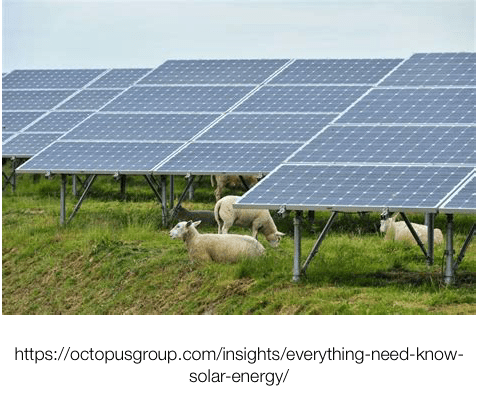
Liz Truss was dead set against solar farms but it is not a sentiment shared by those who farm the land. Mark Tufnell, the president of the Country Land and Business Association told The Gaurdian: “We have members who say these are temporary sites if needs be, they are then able to concentrate on growing more food on their other land. The solar would be on their less good land, and … if that is what they so choose to do, why shouldn’t they be allowed to do it?” He added that the land was not lost to agriculture as the sties were easy to remove, and the area could be grazed with sheep. “There is no reason as to why the area underneath it couldn’t be grazed with sheep, but it could also provide very good habitat for farmland birds and increase biodiversity so help the environment.”
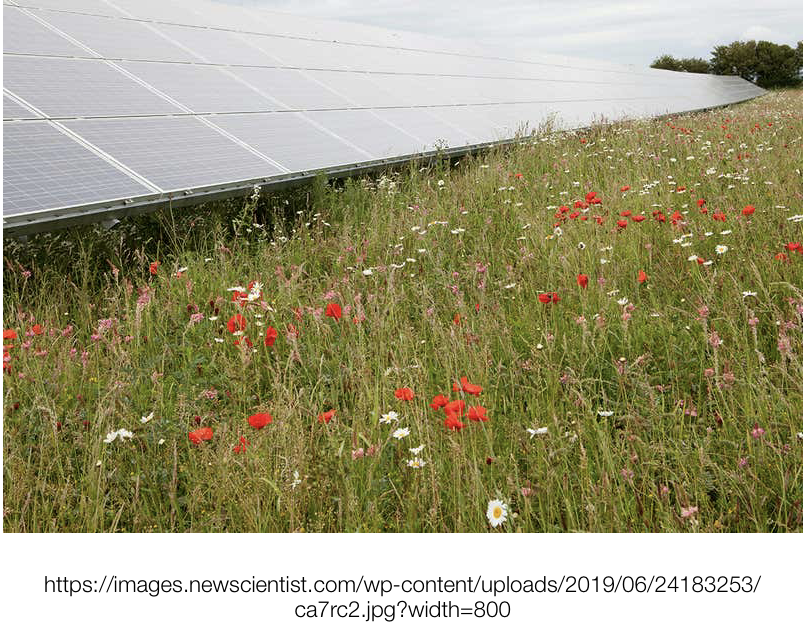
Solar farms in the UK are also producing a diversity of additional benefits. Creacombe solar farm in Devon reports “ In essence, a solar farm is a nature reserve that is left largely untouched for 25 years, resulting in huge benefits for wildlife and biodiversity [and will] help to reverse the decline in wildlife due to intensive farming practices [with]
Wildflower meadows sown across the site,
Bee hotels and hives for honey bees and solitary bees to take advantage of the pollen and nectar.
Hibernacula for small mammals and birds, with areas outside the fence line being left as coarse grassland.
Today is Bible Sunday making it a good time to reflect why we think the Bible is important (assuming that you do). The Bible (from biblos in Greek meaning books) is a collection of books written over many centuries by different people using different genres, edited and rewritten, and collated into a collection. Which books are included in that collection varies from church body to church body with the Orthodox having the largest and the Protestants the slimmest version. At root the Bible recounts people’s experiences of encountering God.
I would like to suggest that the Bible is important for four reasons: salvation, instruction, glory and encouragement.
The central story running through the Bible is of salvation: God saving his people. It is a salvation that heals, restores and overflows with mercy – from the drama in the Garden of Eden, through the journey from Egypt to the land of Canaan and the exile to and return from Babylon, to the life, death and resurrection of Jesus. We focus on the salvation of our own kind but there is an underlying current that tells us that God’s salvation is the salvation of all creation:
‘Turn to me and be saved, all the ends of the earth!’
It is a book of instruction. Every Sunday we hear and explore the Bible discovering anew or hearing again the guidance, the instruction, it gives us. We learn of the importance of prayer and hope, faith and love. We are reminded to be both penitent and merciful, to heal and set free. We are challenged to walk the talk, to respond to the cry of the earth – its people, its creatures, its rivers and soils, its plant and wildlife. We are exhorted to be radical – not conforming to the ways of the ‘world’ but adhering to the values of the kingdom of God. The message comes from both what we call The Old Testament – maybe First Testament would be better – and The New Testament.
‘The Spirit of the Lord is upon me, because he has anointed me to bring good news to the poor’.
It is a book that celebrates the glory of God. It recounts and retells the amazing things God does. It raises a paean of praise that comes both from the people of God as well as from all the creaturely and non-creaturely parts of creation. It celebrates the harmony that comes when we live according to God’s wishes.
‘In the Lord all the offspring of Israel shall triumph and glory.’
It is a book of encouragement. In its pages we see how people before us have struggled, often failed, and been restored by hope. We see our mistakes and shortcomings echoed in theirs. And we find encouragement when we realise that we are not alone, that God has always, will always and is always there for us. We find encouragement knowing that Jesus has laid out the way before us.
And Jesus said ‘Today this scripture has been fulfilled in your hearing.’
The people of Nazareth are both amazed by what they hear and sceptical. Can they believe that God has chosen a carpenter’s son to be the fulfilment of the scripture, the fulfilment of all their hopes for salvation? He is someone they have known since childhood. He is one of them!
I wonder if sometimes the words of the Bible seem too familiar to us – especially if we heard them oft repeated since childhood. Do we sometimes fail to hear quite how powerful and radical the words are? Do we sometimes fail to hear both the challenge and the opportunity they present?
Isaiah 45:22-end
Turn to me and be saved, all the ends of the earth! For I am God, and there is no other.
By myself I have sworn, from my mouth has gone forth in righteousness a word that shall not return: ‘To me every knee shall bow, every tongue shall swear.’
Only in the Lord, it shall be said of me, are righteousness and strength; all who were incensed against him shall come to him and be ashamed.
In the Lord all the offspring of Israel shall triumph and glory.
Romans 15:1-6
We who are strong ought to put up with the failings of the weak, and not to please ourselves.Each of us must please our neighbour for the good purpose of building up the neighbour. For Christ did not please himself; but, as it is written, ‘The insults of those who insult you have fallen on me.’ For whatever was written in former days was written for our instruction, so that by steadfastness and by the encouragement of the scriptures we might have hope. May the God of steadfastness and encouragement grant you to live in harmony with one another, in accordance with Christ Jesus, so that together you may with one voice glorify the God and Father of our Lord Jesus Christ.
Luke 4:16-24
When he came to Nazareth, where he had been brought up, he went to the synagogue on the sabbath day, as was his custom. He stood up to read, and the scroll of the prophet Isaiah was given to him. He unrolled the scroll and found the place where it was written:
‘The Spirit of the Lord is upon me, because he has anointed me to bring good news to the poor. He has sent me to proclaim release to the captives and recovery of sight to the blind, to let the oppressed go free,
to proclaim the year of the Lord’s favour.’
And he rolled up the scroll, gave it back to the attendant, and sat down. The eyes of all in the synagogue were fixed on him.Then he began to say to them, ‘Today this scripture has been fulfilled in your hearing.’ All spoke well of him and were amazed at the gracious words that came from his mouth. They said, ‘Is not this Joseph’s son?’He said to them, ‘Doubtless you will quote to me this proverb, “Doctor, cure yourself!” And you will say, “Do here also in your home town the things that we have heard you did at Capernaum.”’And he said, ‘Truly I tell you, no prophet is accepted in the prophet’s home town’s .
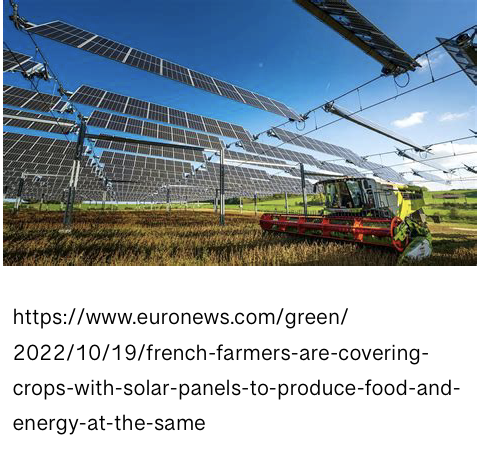
Euronews Green reported on an interesting solar panel scheme. The solar panels are suspended above a field at a height that allows farm vehicles to pass underneath to tend and harvest the crops. The solar panels are fixed such that they can rotate through 360 degrees to catch as much sun as possible. When it rains they can be set to vertically to water the crop – or in the case of hail, horizontally. The panels can also be used to shade the crop during high temperatures and when frost is a risk.
O what joy! The first baby bison in thousands of years has be born in the UK at the Knepp rewilding project. The three female bison arrived at the project in July but unknown to everyone one was carrying a calf.
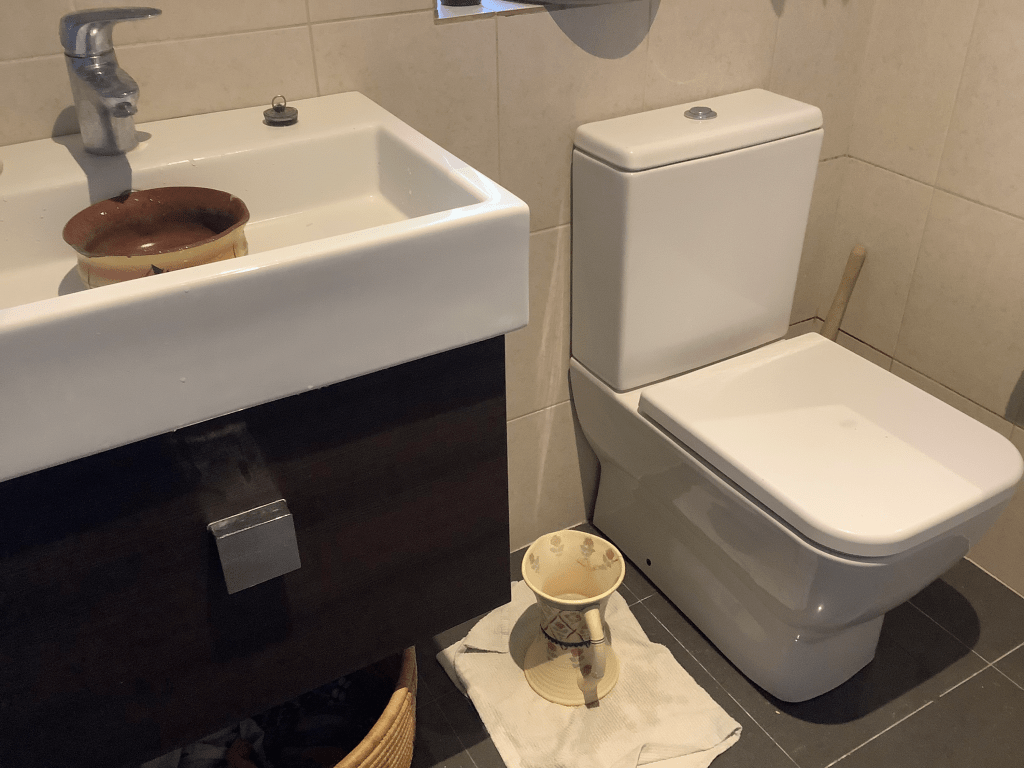
Again to conserve water, we recycle grey water. Water for hand washing collects in a bowl and is saved in a jug and/or flushed down the toilet. Water from flannel washes and from the hot water bottle are also recycled. At more expense you can install a tank, some form of water treatment and a pump to recycle the water to toilet cisterns and/ or a garden tap.




 The Green Tau