Proper 14

– 7th August 2022

Reflection:

“Faith is the assurance of things hoped for, the conviction of things not seen” says the writer of Hebrews. Whilst in the Gospel Jesus says “‘Do not be afraid, little flock, for it is your Father’s good pleasure to give you the kingdom.”

What are ‘things hoped for … things not seen’? Something that will happen or be present or exist in the future? Something good, something desirable? Something that fulfils our dreams? The fulfilment of our heart’s desire?

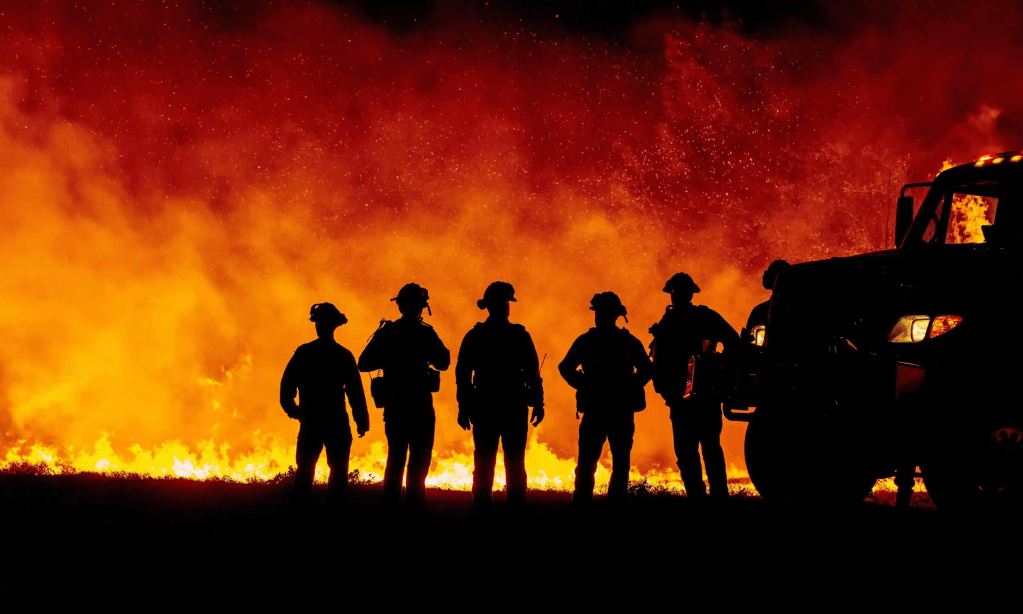
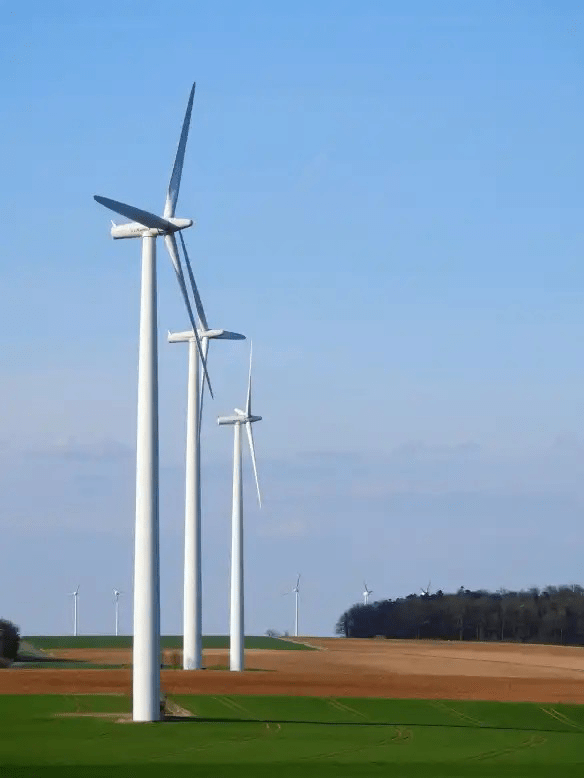
For me, the things hoped for would be an end of the climate crisis. A rapid replacement of fossil fuels with renewable energy. A cooperative approach by all governments, nations and businesses to take action to half carbon emissions by 2030 and zero them by 2050.  A compassionate and neighbourly sharing of resources – especially finance – to ensure all communities can cope with the climate change that is already built into our future. A concerted undertaking by all parties to use nature friendly solutions, to protect and enhance biodiversity across the planet. I would be hoping for the churches to be taking a significant lead in framing this hope and galvanising all parties into action. And yes from where I am now, this is a hope for something as yet unseen. 

So do I have faith, faith that these are not empty hopes? I am really not sure. It is difficult to have such hope, such faith, when all around the problems of the climate crisis are growing and the actions being taken, diminishing. Here in the UK the current exceptionally hot and dry summer is not leading to urgent action to replace fossil fuels with renewable energy, nor with action to shade and insulate buildings. Instead new permits are being handed out for the further expansion of oil and gas fields. And  money is to be paid to customers to ease for a while the increasingly expensive fuel bills – and perversely that money will maintain both the high prices and the oil companies’ profits. 

The writer of Hebrews refers us to Abraham as an example of someone who lived by faith, having very little in the way of knowing what was the hope that lay ahead. Abraham had faithfully left his family and his home country. He had travelled over mountains and through deserts, faced hunger and the threat of starvation. He had built up wealth for future generations even though he lacked a son. He had continued to pray and to worship an unseen God, a God who offered him as blue print the image that his descendants would be as numerous as the stars in the sky, or as numerous as the grains of sand on the beach – in other words a vision that was too big to comprehend! Abraham had faith and Abraham kept walking along the path that lay before him, living as if that future would happen.

So maybe that is what my faith has to look like – and maybe yours too. Walking and living as if the future God promises – the future where life on earth is lived as it is in heaven – will happen. Living as is necessary for the climate crisis to be tackled. Living as is necessary for resources to be shared freely and fairly. Living as is necessary for biodiversity to be replenished. Living as is necessary for the church to give the lead. 

I shall continue to minimise by carbon footprint. I shall continue to give time and money to support those whose resources are lacking. I shall continue to live gently on the earth, protecting and enhancing the natural environment. I shall continue to speak out and challenge the church to lead the way forwards to God’s kingdom on earth. 

Isaiah 1:1, 10-20

The vision of Isaiah son of Amoz, which he saw concerning Judah and Jerusalem in the days of Uzziah, Jotham, Ahaz, and Hezekiah, kings of Judah.
Hear the word of the Lord,
   you rulers of Sodom!
Listen to the teaching of our God,
   you people of Gomorrah!
What to me is the multitude of your sacrifices?
   says the Lord;
I have had enough of burnt-offerings of rams
   and the fat of fed beasts;
I do not delight in the blood of bulls,
   or of lambs, or of goats. 


When you come to appear before me,
   who asked this from your hand?
   Trample my courts no more;
bringing offerings is futile;
   incense is an abomination to me.
New moon and sabbath and calling of convocation—
   I cannot endure solemn assemblies with iniquity.
Your new moons and your appointed festivals
   my soul hates;
they have become a burden to me,
   I am weary of bearing them.
When you stretch out your hands,
   I will hide my eyes from you;
even though you make many prayers,
   I will not listen;
   your hands are full of blood.
Wash yourselves; make yourselves clean;
   remove the evil of your doings
   from before my eyes;
cease to do evil,
   learn to do good;
seek justice,
   rescue the oppressed,
defend the orphan,
   plead for the widow. 

Come now, let us argue it out,
   says the Lord:
though your sins are like scarlet,
   they shall be like snow;
though they are red like crimson,
   they shall become like wool.
If you are willing and obedient,
   you shall eat the good of the land;
but if you refuse and rebel,
   you shall be devoured by the sword;
   for the mouth of the Lord has spoken.

Psalm 50: 1-8, 23, 24

The mighty one, God the Lord,
   speaks and summons the earth
   from the rising of the sun to its setting.
2 Out of Zion, the perfection of beauty,
   God shines forth. 


3 Our God comes and does not keep silence,
   before him is a devouring fire,
   and a mighty tempest all around him.
4 He calls to the heavens above
   and to the earth, that he may judge his people:
5 ‘Gather to me my faithful ones,
   who made a covenant with me by sacrifice!’
6 The heavens declare his righteousness,
   for God himself is judge.
          Selah 


7 ‘Hear, O my people, and I will speak,
   O Israel, I will testify against you.
   I am God, your God.
8 Not for your sacrifices do I rebuke you;
   your burnt-offerings are continually before me. 

‘Mark this, then, you who forget God,
   or I will tear you apart, and there will be no one to deliver.
Those who bring thanksgiving as their sacrifice honour me;
   to those who go the right way
   I will show the salvation of God.’

Hebrews 11: 1-3, 8-16

Now faith is the assurance of things hoped for, the conviction of things not seen. Indeed, by faith our ancestors received approval. By faith we understand that the worlds were prepared by the word of God, so that what is seen was made from things that are not visible.

By faith Abraham obeyed when he was called to set out for a place that he was to receive as an inheritance; and he set out, not knowing where he was going. By faith he stayed for a time in the land he had been promised, as in a foreign land, living in tents, as did Isaac and Jacob, who were heirs with him of the same promise. For he looked forward to the city that has foundations, whose architect and builder is God. By faith he received power of procreation, even though he was too old—and Sarah herself was barren—because he considered him faithful who had promised. Therefore from one person, and this one as good as dead, descendants were born, ‘as many as the stars of heaven and as the innumerable grains of sand by the seashore.’

All of these died in faith without having received the promises, but from a distance they saw and greeted them. They confessed that they were strangers and foreigners on the earth, for people who speak in this way make it clear that they are seeking a homeland. If they had been thinking of the land that they had left behind, they would have had opportunity to return. But as it is, they desire a better country, that is, a heavenly one. Therefore God is not ashamed to be called their God; indeed, he has prepared a city for them.

Luke 12: 32-40

‘Do not be afraid, little flock, for it is your Father’s good pleasure to give you the kingdom. Sell your possessions, and give alms. Make purses for yourselves that do not wear out, an unfailing treasure in heaven, where no thief comes near and no moth destroys. For where your treasure is, there your heart will be also.

‘Be dressed for action and have your lamps lit; be like those who are waiting for their master to return from the wedding banquet, so that they may open the door for him as soon as he comes and knocks. Blessed are those slaves whom the master finds alert when he comes; truly I tell you, he will fasten his belt and have them sit down to eat, and he will come and serve them. If he comes during the middle of the night, or near dawn, and finds them so, blessed are those slaves.

‘But know this: if the owner of the house had known at what hour the thief was coming, he would not have let his house be broken into. You also must be ready, for the Son of Man is coming at an unexpected hour.’

 Counting on …day 268

6th August 2022

22% of the UK’s carbon  emissions come from domestic use (Energy Savings Trust, 2021). Changing your energy supplier to one who specialises in producing and supplying green – ie renewable – energy will help reduce your domestic carbon emissions. Leading  green energy suppliers include Ecotricity, Good Energy Group, Green Energy and Octopus.

 Counting on ….day 267

5th August 2022

With climate change a reality we have to find ways of living with droughts. There are many ways of using less water in the house – washing up with a kettle of hot water rather than drawing off water from the hot water cylinder before it runs hot. Having a wash rather than a shower. Washing clothes less often and use a quick wash setting.  Washing the floor with a damp cloth rather than a bucket of water. Another significant water saving action is to flush the toilet less often – after a quick pee just close the lid.

At the same time, if you can, save the water you have used – known as grey water – and use it on the garden. 

The Green Tau: issue 46

System Change?

4th August 2022

Steam Punk is based on the scenario of an alternative history in which steam power, steam engines and hand cranked machines reigned supreme, preventing the development of electrical power and the petrol engine. Might there be scope for Cycle Punk, an alternative history in which peddle power dominates with pedal powered kettles and mobile phones as well as the straightforward two wheel mode of transport?

The way economies and societies work -a product of convenience, economies of scale and inertia – is such that a preferred system will prevail whether that is the energy system, transport system, voting system, or  communications system. The systems or products that are not adopted are not necessarily a worse choice, just different as was the case between VHS and Betamax for video recorders. But once a system is established it is hard to change, because everything is geared to it, business and society have bought into it, lifestyles are built around it, and investment perpetuates it as the safe bet.

In the UK we have favoured a transport system based on private cars over one based on public cars, buses and trains. Our infrastructure favours the former. Our lifestyles have been shaped by the former. Our businesses are geared to the former. Our investment is predicated on its continuation. To change the system would need radical change in all these areas. 

Our energy system is based on the use of cheap fossil fuels. Our agricultural system is based on the production of cheap food, especially cheap animal products. Our manufacturing system is based in the use of cheap labour – as is our hospitality sector. Our investment system on the other hand is based on maximising profits for the few. 

The size and scale of such systems prevent us from seeing or experiencing anything different. Their market share precludes new entrants with alternative ideas. The systems prevent the use of better, more appropriate technologies.

In the UK fuel bills are rising out of all proportion to the cost of production, yet swopping to an alternative system seems nigh impossible. For people struggling financially, there is no spare cash to replace a gas boiler with a heat pump. There is no spare cash to install double glazing and reduce dependency on central heating. There is no comprehensive public transport network to remove reliance on the private car. There is insufficient investment in alternative energy and the odds are increasingly stacked against such investments as the return on fossil fuel investment sky rockets as fuel prices – but not costs – continue to rise.

The Democratic Republic of the Congo drawing on the power of the River Congo has the capacity to generate 100,00MW of hydro electric power compared with its existing capacity of 2792MW (https://www.usaid.gov/powerafrica/democratic-republic-congo). Yet this requires investment. The DRC is a nation struggling to meet the needs of its people, and the government is currently auctioning fossil fuel rights to explore and extract oil from under its rainforests, a move that will generate money now rather than longer term pay back of hydro power.

Africa as a whole has great potential for the generation of solar power, and which if provided via small scale projects can provide electricity to areas far removed from the grid. Yet whilst solar power has still to be developed in countries such as Algeria, Angola, Egypt, Ethiopia, Ghana, Morocco, Namibia, Nigeria and Tanzania (https://commodityinside.com/reports/solar-energy-market-in-africa/) the big oil companies are developing new oil and gas fields in Angola, South Africa, Ghana, Gabon, Egypt, Namibia and Kenya. 

Understanding that we are to a greater or lesser extent trapped in a system lets us be realistic about our situation, our predicament. It also helps us understand what will be needed to bring about change. 

Changes in government policy to favour the new system and tax changes and rules  to discourage the old.

Changes in global policies as advocated by the World Bank, the UN etc.

Changes in investment strategies and business plans.

Developments in new technology.

Changes in public opinion that will support all these. 

This is where we come in. We can, even in small ways, be the trigger or the irritant that initiates and propels change. We can make a difference – by talking with friends and neighbours, by loving as if we were already part of the new system, by campaigning, by pressing businesses and politicians, by voting with our money, by investing and by pestering those institutions investing on our behalf, by supporting charities, by standing up. As Christians we are well suited to this. We have that calling to be different, to be countercultural, to be willing to go the extra mile, to act for the wellbeing of the other.

The global system of slavery did come to an end when public opinion had changed. They did it then. We can do it now. 

Counting on …day 266 

4th August 2022

It is surprising that more cafes don’t serve vegan food. Many cakes and biscuits can as easily be made with margerine as with butter and would instantly become vegan – flapjack and Anzac biscuits for example.  And egg is an easily replaces ingredient in brownies and tray bakes. It maybe the perception that people might avoid foods labelled vegan but research shows that the more vegan options available, the more people will choose vegan items! So make a point of asking for vegan food when in cafés and restaurants and ease the change: we will all benefit!

Counting on …day 265

3rd August 2022

Rather than expecting farmers both here and globally to produce an ever growing amount of animal based food – which is adding to the crises of both the climate and biodiversity – we would all benefit far more from adopting a largely plant-based diet. 

Courgette, Dill and Almond Soup (serves 4)

Chop and gently fry 1 onion and a clove of garlic in some oil. Cover pan so it doesn’t burn.

Chop into chunks 500g (thereabouts) of courgette and add to the pan. Stir well. Add more oil if  necessary.

Add a teaspoon of dried dill or a handful of fresh dill, and a little black pepper.

Add 100g almonds. Stir well.

Cook for a few minutes so that everything is beginning to soften and cover with water. 

Cook for 10-15 minutes.

Blitz with a hand blender till smooth.

Stir in half a carton of vegan cream (about 100ml)

Either serve hot, or cool before chilling, to serve cold..

Counting on …day 264 

2nd August 2022

As plants shrivel and trees prematurely drop their leaves, we are seeing the damaging effects of climate change on our own environment. Periods of drought and heat waves are going to be an ongoing feature of daily life and something we need now to plan for. In our gardens it may be looking to see which plants are still surviving and which are suffering so that we know what to plant in the future. As we eke out water for our plants, it may be in setting up systems to collect grey water – even a bucket by the sink into which to our used washing up water. It may be in installing more water butts to,collect more water when it does rain. The  Mains to Rains project has more helpful suggestions – https://mains2rains.uk/

Counting on …day 263

1st August 2022

Last year I suggested the following action: “Being self-informed, being curious about what is happening, where and why, helps us to have a better understanding of climate change. This week cut out any articles you find in the newspaper (cut and past if you read on line) about climate change and make a display with them. Looking at the overall picture may give you new insights.”

Below is the collage I produced – it feels as if not much has changed but I’ll do the same this week and see.

Proper 13

31st July 2022

Reflection (scroll down for readings)

Last week we heard how Hosea  chose as Gomer, a prostitute, as his wife and how their family rapidly grew in size as Gomer gave birth to two sons and a daughter. We can imagine then that Hosea had some experience of the trials and tribulations of parenthood, how as a parent you want the best for your children, and yet you know that if you are too rigid, imposing your own way,  it will lead to rebellion. It is hard as a parent to stand by and let your children go their own way and make their own mistakes. And often there comes a point where your compassion as a parent pushes to you to dive in and rescue your children. You forgive and forget their mistakes and offer instead love and help.

So it is, observes Hosea, with God: “My people are bent on turning away from me…[yet] my compassion grows warm and tender.” 

Hearing those words fills me with hope that we are not doomed because of our human rebelliousness (quite what our future will look like, I am not sure and it may not be that rosy for some time time to come). The psalmist too offers hope: “Give thanks to the Lord, for he is good, and his mercy endures for ever.” The Hebrew word “חַסְדּֽוֹ׃” (chesed) here translated as mercy, has the meaning of kindness and steadfast love, of loyalty and of truth. It is not a word that might simply mean withholding due punishment, but rather a more proactive remedying of the situation. God wants the best for all of creation. The psalmist goes on to talk of how God does this, delivering those who ask for help, putting their feet on a straight path, feeding the hungry and satisfying the thirsty. 

Why is it that we do not seek God’s help? Why do we not attune our hearing and listen to God? Do we forget that in Jesus we have the lived out expression of God’s will, the Word?

The writer of the letter to the Colossians sees a divided world, a world in which some do good things and some bad. He contrast those things that are from above – heavenly – with those that are earthly.  In this I think he is drawing out the difference between those who consciously follow God’s way and those who do not. In this sense earthly things are not what God has created, but that way of living that ignores God, that does not wish to accept that God – like parents – knows best. 

In today’s gospel reading we don’t know what the parents of the two brothers have said or done, but there appears to be a dispute as to how what they have inherited should be shared. As is often the case, Jesus doesn’t give a straight forward answer but rather poses another question: this wealth that you are craving, is it going to make you happy? 

It seems as if this family’s accumulation of wealth might make one or other of the brothers happy, but more likely it will make both of them unsatisfied. Neither wants to forgo what they see as their rightful share of the wealth. 

When we look around the world today, both between regions and nations, and within our own country, we see a great inequality in the distribution of wealth. And when it comes to a question of sharing out that wealth more equitably, those who have are very reluctant to be generous with what they have – even though they can see that others are suffering from lack. We in the global north have accumulated great national wealth from years of industrial development that has relied upon the cheap import of labour and resources from the global south, and yet we are unwilling to share that wealth with people suffering hunger and starvation in east Africa. We are unwilling to share it with indebted nations such as Zambia and Sri Lanka. We are unwilling to share it with small islands communities in the Pacific whose lands are threatened by rising sea levels. We are unwilling to share it with people in Afghanistan, in Peru and Columbia whose livelihoods are being washed away by the affects of climate change. 

Instead we are like the farmer, with our multi national oil companies, continuing to build larger and larger oil producing sites, whilst ignoring that the scale of this greed is diminishing our chances of enjoying a comfortable future. Jesus in his parables, and the prophets before, all spoke of the foolishness of pursing wealth at the expense of others, and still we do not listen, still we do not change our behaviour. We persist with an ‘earthly’ rather than a heavenly mindset. 

Lord may our prayer that ‘your kingdom come’ be genuinely meant. 

Hosea 11:1-11

When Israel was a child, I loved him,
and out of Egypt I called my son.

The more I called them,
the more they went from me;

they kept sacrificing to the Baals,
and offering incense to idols.

Yet it was I who taught Ephraim to walk,
I took them up in my arms;
but they did not know that I healed them.

I led them with cords of human kindness,
with bands of love.

I was to them like those
who lift infants to their cheeks.
I bent down to them and fed them.

They shall return to the land of Egypt,
and Assyria shall be their king,
because they have refused to return to me.

The sword rages in their cities,
it consumes their oracle-priests,
and devours because of their schemes.

My people are bent on turning away from me.
To the Most High they call,
but he does not raise them up at all.

How can I give you up, Ephraim?
How can I hand you over, O Israel?

How can I make you like Admah?
How can I treat you like Zeboiim?

My heart recoils within me;
my compassion grows warm and tender.

I will not execute my fierce anger;
I will not again destroy Ephraim;

for I am God and no mortal,
the Holy One in your midst,
and I will not come in wrath.

They shall go after the Lord,
who roars like a lion;

when he roars,
his children shall come trembling from the west.

They shall come trembling like birds from Egypt,
and like doves from the land of Assyria;
and I will return them to their homes, says the Lord.

Psalm 107:1-9, 43

1 Give thanks to the Lord, for he is good, *
and his mercy endures for ever.

2 Let all those whom the Lord has redeemed proclaim *
that he redeemed them from the hand of the foe.

3 He gathered them out of the lands; *
from the east and from the west,
from the north and from the south.

4 Some wandered in desert wastes; *
they found no way to a city where they might dwell.

5 They were hungry and thirsty; *
their spirits languished within them.

6 Then they cried to the Lord in their trouble, *
and he delivered them from their distress.

7 He put their feet on a straight path *
to go to a city where they might dwell.

8 Let them give thanks to the Lord for his mercy *
and the wonders he does for his children.

9 For he satisfies the thirsty *
and fills the hungry with good things.

43 Whoever is wise will ponder these things, *
and consider well the mercies of the Lord.

Colossians 3:1-11

If you have been raised with Christ, seek the things that are above, where Christ is, seated at the right hand of God. Set your minds on things that are above, not on things that are on earth, for you have died, and your life is hidden with Christ in God. When Christ who is your life is revealed, then you also will be revealed with him in glory.

Put to death, therefore, whatever in you is earthly: fornication, impurity, passion, evil desire, and greed (which is idolatry). On account of these the wrath of God is coming on those who are disobedient. These are the ways you also once followed, when you were living that life. But now you must get rid of all such things– anger, wrath, malice, slander, and abusive language from your mouth. Do not lie to one another, seeing that you have stripped off the old self with its practices and have clothed yourselves with the new self, which is being renewed in knowledge according to the image of its creator. In that renewal there is no longer Greek and Jew, circumcised and uncircumcised, barbarian, Scythian, slave and free; but Christ is all and in all!

Luke 12:13-21

Someone in the crowd said to Jesus, “Teacher, tell my brother to divide the family inheritance with me.” But he said to him, “Friend, who set me to be a judge or arbitrator over you?” And he said to them, “Take care! Be on your guard against all kinds of greed; for one’s life does not consist in the abundance of possessions.” Then he told them a parable: “The land of a rich man produced abundantly. And he thought to himself, `What should I do, for I have no place to store my crops?’ Then he said, `I will do this: I will pull down my barns and build larger ones, and there I will store all my grain and my goods. And I will say to my soul, `Soul, you have ample goods laid up for many years; relax, eat, drink, be merry.’ But God said to him, `You fool! This very night your life is being demanded of you. And the things you have prepared, whose will they be?’ So it is with those who store up treasures for themselves but are not rich toward God.”

Counting on … day 262

31st July 2022

Talking about the climate crisis doesn’t have to be always upbeat and optimistic. There are times when that is not how we feel. Times when we feel anxious, overwhelmed and out of our depth. There may be times when we feel that no one else understands how we feel, that we are alone carrying these worries. Don’t bottle these feelings up but share them with someone you trust, someone who you know will be sympathetic. You might find a locally run climate cafés – https://climatecafes.org/ – or may be form an informal local group. You might talk with your spiritual director (where I live we have https://spidir.org.uk/). You might want to write down your thoughts. You might try or find out more about, the Deep Waters course run by Green Christian – https://greenchristian.org.uk/deep-waters-a-project-of-borrowed-time/