Counting on …day 199 

31st May 2022

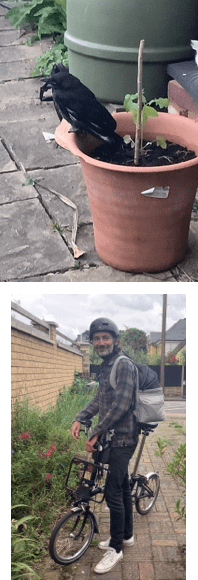
Much to my surprise I found a crow sat on a plant pot surveying our cat, who stared back with equal bemusement. The crow was a fearless youngster whose wing feathers were not yet fully fledged, rendering the bird flightless. I caught the crow in a box and placed him in the shed overnight away from any passing fox. The vet suggested leaving the bird in  a safe place where the parents might find it. As our gardens home to several cats a safe place was not to hand. The RSPB look after birds on the larger scale of providing reserves etc rather than rescuing individuals. I contacted the London Wildlife Protection who quickly offered to collect and care for crow junior. https://www.londonwildlifeprotection.org/

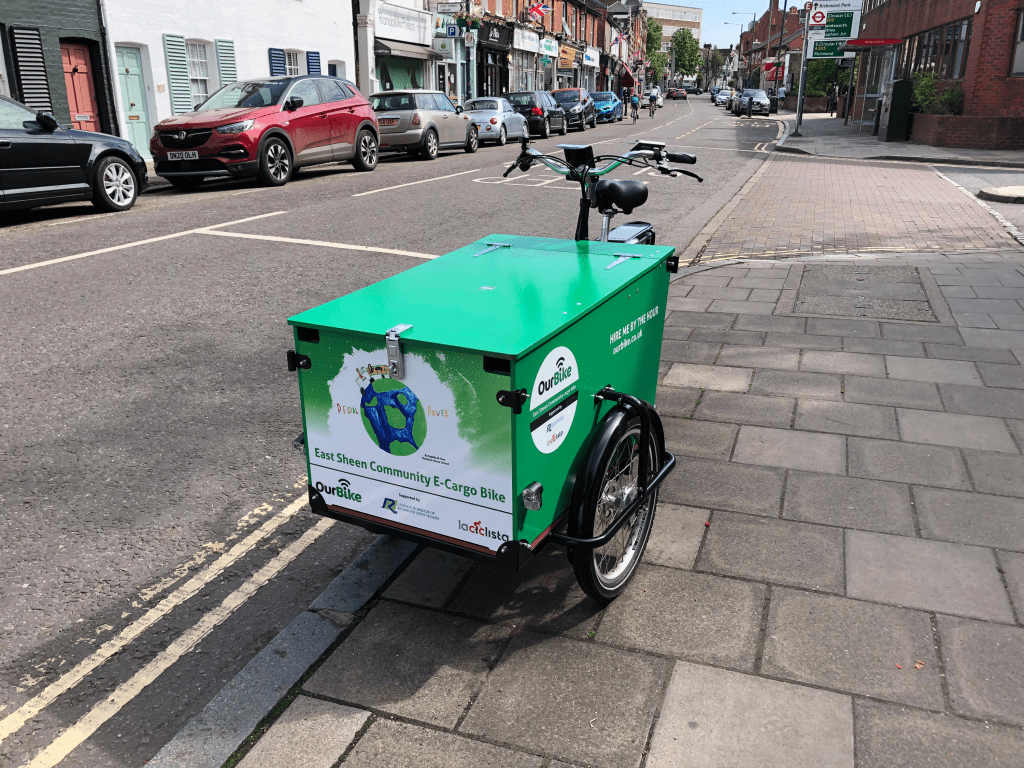
I was highly delighted when crow junior’s rescuer arrived on a bicycle with a specially adapted backpack for transporting birds and other small creatures – highly ecological!

Seventh Sunday of Easter

29th May 2022

Reflection.

I spent a couple of hours on Monday and a few more on Tuesday with Christian Climate Action who had organised a 24 hour vigil outside the Methodist Central Hall where the Shell AGM was taking place. Like Paul and his companions, their vigil reflected their conviction that they were acting in the service of Jesus Christ, that they were witnessing to his love for the world and his wish for all to share in the gift of salvation. Whilst there were no earthquakes, there were frequent heavy outbreaks of thunder, lightning and torrential rain – umbrellas only have a limited effectiveness!

There were many passers by, some oblivious to the plight of the earth and the acute necessity of the protest, others vaguely or deeply interested, whilst others were clearly affronted by anything that threaded the status quo – all responses with which Paul as an evangelist would have been familiar. Not that Paul, nor Climate Christian Action, supported anarchy. The security guards and the police ‘supervising’ the demonstration responded in kind to the politeness of those taking part.

What really stands out in the passage from Acts and amongst those taking part at the vigil was the commitment to serving God. Note the words of the slave girl, “These are slaves of the Most High God, who proclaim to you a way of salvation”. For Paul that salvation meant equality of all – free and slave, Jew and Gentile, rich and poor – and the vision of a world in which love and care for one other was universal. These are the very same aims of those protesting against the leadership and direction of Shell and other oil companies. For the continuing and expanding production of fossil fuels is the cause of global heating and climate change which is already killing and harming people across the world – from excess heat in the Indian sub-continent, from flooding in South Africa, Australia and Brazil, from droughts in the Sehal, Kenya, Argentina and California, to name but a few – and is decimating bio-diversity, melting icecaps and glaciers whilst at the same time creating huge profits for investors and shareholders. As Christians we are tasked with calling out inequality and injustice when we see it. We are tasked with responding to the needs of others, even or rather especially, those trapped in places where life is hard and support is limited. As last week we heard how Paul responded to the cry for help from the people of Macedonia, so today we we are called to respond to the cry for help that comes from Bangladesh and the Maldives, from Venezuela and the Lebanon and so many more countries. Jesus said that just as he and his Father were one, so they and we should be as one so that the world may see glory of God, see the salvation that is possible, know the power of love to heal and restore all things anew. 

Acts 16:16-34

With Paul and Silas, we came to Philippi in Macedonia, a Roman colony, and, as we were going to the place of prayer, we met a slave girl who had a spirit of divination and brought her owners a great deal of money by fortune-telling. While she followed Paul and us, she would cry out, “These men are slaves of the Most High God, who proclaim to you a way of salvation.” She kept doing this for many days. But Paul, very much annoyed, turned and said to the spirit, “I order you in the name of Jesus Christ to come out of her.” And it came out that very hour.

But when her owners saw that their hope of making money was gone, they seized Paul and Silas and dragged them into the marketplace before the authorities. When they had brought them before the magistrates, they said, “These men are disturbing our city; they are Jews and are advocating customs that are not lawful for us as Romans to adopt or observe.” The crowd joined in attacking them, and the magistrates had them stripped of their clothing and ordered them to be beaten with rods. After they had given them a severe flogging, they threw them into prison and ordered the jailer to keep them securely. Following these instructions, he put them in the innermost cell and fastened their feet in the stocks.

About midnight Paul and Silas were praying and singing hymns to God, and the prisoners were listening to them. Suddenly there was an earthquake, so violent that the foundations of the prison were shaken; and immediately all the doors were opened and everyone’s chains were unfastened. When the jailer woke up and saw the prison doors wide open, he drew his sword and was about to kill himself, since he supposed that the prisoners had escaped. But Paul shouted in a loud voice, “Do not harm yourself, for we are all here.” The jailer called for lights, and rushing in, he fell down trembling before Paul and Silas. Then he brought them outside and said, “Sirs, what must I do to be saved?” They answered, “Believe on the Lord Jesus, and you will be saved, you and your household.” They spoke the word of the Lord to him and to all who were in his house. At the same hour of the night he took them and washed their wounds; then he and his entire family were baptised without delay. He brought them up into the house and set food before them; and he and his entire household rejoiced that he had become a believer in God.

Psalm 97

1 The Lord is King;
let the earth rejoice; *
let the multitude of the isles be glad.

2 Clouds and darkness are round about him, *
righteousness and justice are the foundations of his throne.

3 A fire goes before him *
and burns up his enemies on every side.

4 His lightnings light up the world; *
the earth sees it and is afraid.

5 The mountains melt like wax at the presence of the Lord, *
at the presence of the Lord of the whole earth.

6 The heavens declare his righteousness, *
and all the peoples see his glory.

7 Confounded be all who worship carved images
and delight in false gods! *
Bow down before him, all you gods.

8 Zion hears and is glad, and the cities of Judah rejoice, *
because of your judgments, O Lord.

9 For you are the Lord,
most high over all the earth; *
you are exalted far above all gods.

10 The Lord loves those who hate evil; *
he preserves the lives of his saints
and delivers them from the hand of the wicked.

11 Light has sprung up for the righteous, *
and joyful gladness for those who are truehearted.

12 Rejoice in the Lord, you righteous, *
and give thanks to his holy Name.

Revelation 22:12-14,16-17,20-21

At the end of the visions I, John, heard these words:

“See, I am coming soon; my reward is with me, to repay according to everyone’s work. I am the Alpha and the Omega, the first and the last, the beginning and the end.”

Blessed are those who wash their robes, so that they will have the right to the tree of life and may enter the city by the gates.

“It is I, Jesus, who sent my angel to you with this testimony for the churches. I am the root and the descendant of David, the bright morning star.”

The Spirit and the bride say, “Come.”
And let everyone who hears say, “Come.”
And let everyone who is thirsty come.
Let anyone who wishes take the water of life as a gift.

The one who testifies to these things says, “Surely I am coming soon.”

Amen. Come, Lord Jesus!

The grace of the Lord Jesus be with all the saints. Amen.

John 17:20-26

Jesus prayed for his disciples, and then he said. “I ask not only on behalf of these, but also on behalf of those who will believe in me through their word, that they may all be one. As you, Father, are in me and I am in you, may they also be in us, so that the world may believe that you have sent me. The glory that you have given me I have given them, so that they may be one, as we are one, I in them and you in me, that they may become completely one, so that the world may know that you have sent me and have loved them even as you have loved me. Father, I desire that those also, whom you have given me, may be with me where I am, to see my glory, which you have given me because you loved me before the foundation of the world.

“Righteous Father, the world does not know you, but I know you; and these know that you have sent me. I made your name known to them, and I will make it known, so that the love with which you have loved me may be in them, and I in them.”

Counting on …day 197 

29th May 2022

We can recognise ancient buildings like castles and cathedrals quite easily. We can probably recognise old houses quite easily too – especially those that are large and grand! We expect such buildings to be protected – perhaps under the auspices of the National Trust or English Heritage, or to be a listed building. But what about trees? The oldest tree in the world is probably a 4m wide  Patagonia cypress in Chile which could be up to 5,484 years old (https://theguardian.com/environment/2022/may/26/worlds-oldest-tree-cypress-chile). And that is older even than the pyramids in Egypt! According to the Woodland Trust, the oldest tree in the UK is said to be the Fortingall yew in Perthshire. It’s estimated to be between 2,000 and 3,000 years old, although some believe it could be 5,000 years old. Such trees are historic landmarks and deserved to be protected in the same way that we protect historic buildings. The Woodland Trust has instigated just such a campaign! 

https://www.woodlandtrust.org.uk/protecting-trees-and-woods/campaign-with-us/tree-protection-campaign/

Counting on … day 196 

28th May 2022

Glyphosate and other herbicides are variously used – or not – by local councils to manage weeds in public spaces such as streets, parks, play grounds and pavements. In June 2020 Amanda Tuke asked thirty two London Boroughs (not including City of London) for information about:

  • their Councillors responsible for weed management
  • their weedkiller policies in particular relating to glyphosate
  • their weedkiller contractors and contracts. 

The results show that whilst some councils do not use glyphosate at all, others allow its application up to three times a year. https://freelancenaturewriter.com/2020/07/15/london-councils-use-of-weedkiller-policies-and-reduction-initiatives/

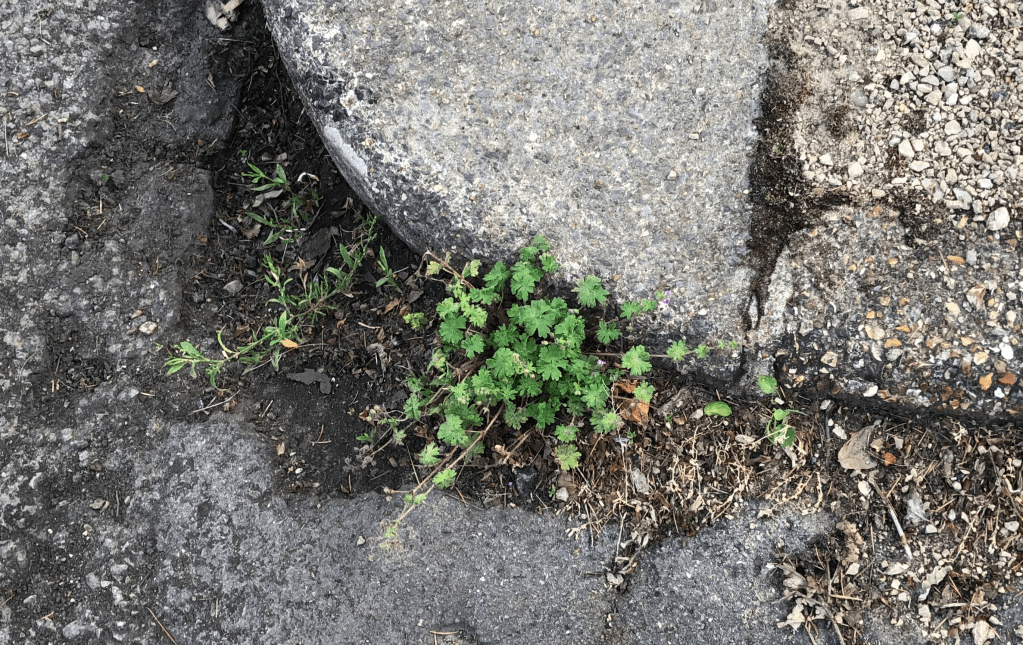
Where less herbicides are used, you may well notice a growing number of small plants along the edges of the pavements – a greening of the environment that pollinators may well appreciate!

You might like to ask your local  council about their policy.

  Counting on …day 195

27th May 2022

“Pesticides are poisons and there should be no place for them on supermarkets shelves. We should not be using these chemicals in our gardens and allotments, where our children and pets play, and where our wildlife should be thriving. In any case there is no need for them – it is easy to garden without pesticides.” Professor Dave Goulson, University of Sussex https://www.pan-uk.org/take-pesticide-products-off-supermarket-shelves/

PAN UK believes that there should be a ban on selling glyphosate to the public and is leading a campaign to press supermarkets to stop selling pesticides in their stores. Both the Co-op and Waitrose no longer stock high risk synthetic pesticides.

safe to use?

For gardeners who wish to avoid using pesticides, PAN UK provides guidance on combating pests without the use of pesticides  – https://www.pan-uk.org/gardening-without-pesticides/

Counting on …day 194 

26th May 2022

Chemical residues from pesticides and herbicides can affect human health. When applying these chemicals it important to follow the appropriate protective protocols. Residues can contaminate fruit and vegetables and thus put those who handle and eat the food at risk. Glyphosate  for example is now considered as carcinogenic and its  use is currently being phased out in Luxemborg, Italy,  Austria, the Czech Republic, the Netherlands, France and Germany.  The EU (as opposed to individual countries)  has, disappointingly, postponed its decision over whether to renew the licence for glyphosate from this December to 2023. Under post-Brexit government policy this could see the weedkiller approved for use in Britain until at least July 2026. https://www.fwi.co.uk/news/farm-policy/eu-delays-glyphosate-renewal-decision-until-2023

PAN (Pesticide Action Network) UK is calling for a rapid phase-out of glyphosate in agriculture and support to help farmers adopt safer approaches to managing weeds. We can add consumer-based weight by asking UK producers – eg producers of oil seed rape who routinely use glyphosate to kill the ripe plants as this makes harvesting easier – why they still use glyphosate. 

Green Tau reflection: prayer and hope

25th May 2022

Over the last 24 hours I spent about 6 hours supporting the Christian Climate Action vigil outside the Methodist Central Hall, the venue for this year’s Shell AGM. I didn’t stay overnight as some brave souls did but came and went in stints. My companions were deeply committed to the environmental cause: that we humans need to wake up to the damage we are causing to the wonderful creation God has provided and of which we are an integral part: truly we are brothers and sisters, kith and kin with every other living thing. Yet our human unabated consumption of fossil fuels is producing carbon dioxide in such quantities that we are changing the climate, wiping out plant and animal species, melting ice caps and glaciers, and consigning our fellow humans to poverty, ill health and death. 

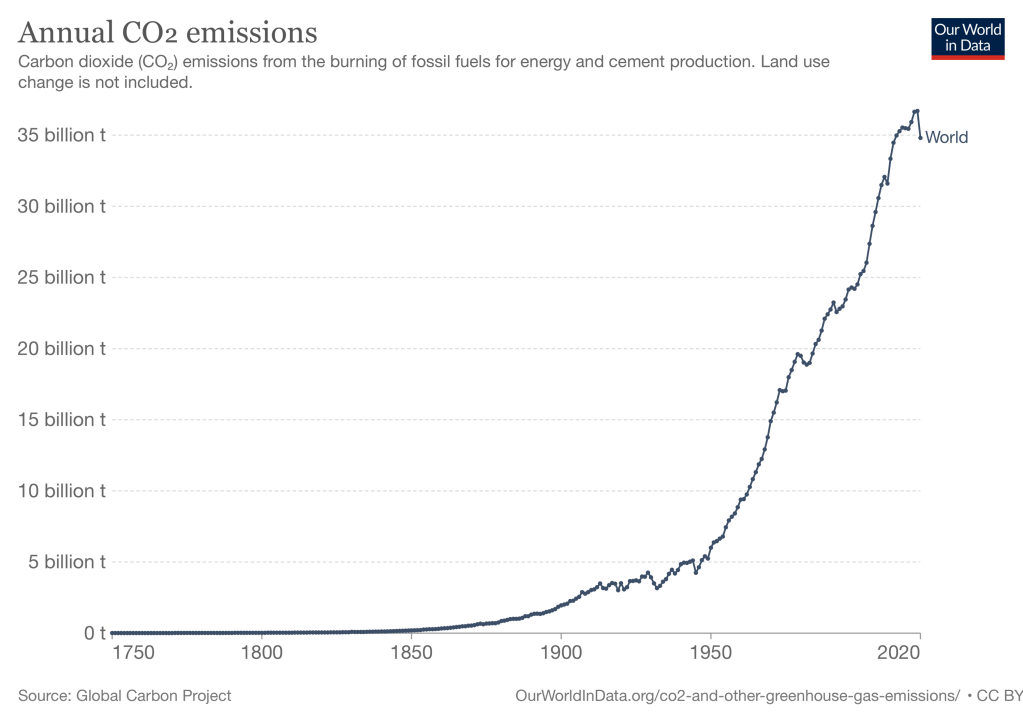
Our presence, as well as being peaceful and prayerful, was intended to raise people’s awareness of the climate crisis and the role that large oil companies, such as Shell, play. To put this in context,  CO2 emissions for the entire globe in 2021 were 36.3 bn tonnes, and of this Shell contributed 1.299 bn tonnes. To avert the worsening affects of climate change, CO2 emissions need to be reduced by 43% by 2030, and to zero by 2050. This is a huge challenge for us all but one which will be hard to achieve if the fossil fuel industries continue to invest in expanding oil and gas production rather than shifting to the production of renewable energy. 

As I prayed, I admit I had little hope that my prayers were going to effect an about-turn on the plans that Ben van Beurden, the Shell CEO, has for the company. However I did have a slither of hope that our prayers and our presence might influence the hearts and minds of the shareholders. Perhaps there might be a stirring in their conscience about the effects that fossil fuel are having on the planet. Perhaps they might begin to ask questions about the sense of pursuing profits from oil if it results in a world that becomes uninhabitable. Perhaps they might question why the company was not protecting their future by investing in renewable energy. Perhaps they would question the leadership being offered when such a large CO2 producer choose not to follow the global strategy agreed at COP26? 

So I prayed. In my mind I envisaged the Holy Spirit like a dove flying around above the heads of the shareholders in the Methodist Central Hall, perhaps pausing to whisper in someone’s ear. I envisaged a scene similar to that of Pentecost, of  the room where all the disciples were gathered, with the wind of the Spirit inspiring and energising those present. I imagined little flames might hover above people’s heads and that they might have the experience of the disciples on the road to Emmaus, of something warm burning within them. 

Outside the building drums and the call and reply of protestors rose and fell like a storm. Inside the hall, the sound would, I guess, be deadened and I thought of the still small voice in the storm encounter by Elijah. And I thought of the story of Jonah and the storm he encountered and which manhandled him (with the help of a whale)  to the shores of Nineveh. There to his surprise and chagrin, the people listened to the message and repented.

And I prayed. I envisaged the call of the evangelists, repent and believe. Repent – a change of heart, a turning around of the way we think, a conversion of the way we do things – and believe. Believe that there is a better future, that we can look forward to a new and brighter future, where things will be green and beautiful, just and fair, where we will live in peace together. As well as seeking a new way of living – repentance – we need to offer a vision of the better world in which we can all live: the kin-dom of God.

 Counting on …day 193

25th May 2022

Pesticides and herbicides not only kill pests and weeds, they are also kill others higher up the food chain such as ladybirds, frogs, and birds. In the recent review, the  State of the World’s Birds it has been noted that across the globe more than half of bird species are in decline with farmland birds in Europe declining by 57%  since 1980.

“‘This is due to the intensive agriculture that supplies cheap food, Lees said, adding: “If we want farmers to farm wildlife, we have to pay for that as a society.”’ https://www.theguardian.com/environment/2022/may/05/canaries-in-the-coalmine-loss-of-birds-signals-changing-planet

There are two things we can do: first opt where possible for organic produce, and second, avoid using pesticides and herbicides in our own gardens. 

Green Tau: issue 42

Bomb Scare! 

24th May 2022

The term carbon bomb has been widely used in climate circles for the past decade to describe large fossil fuel projects or other big sources of carbon, but more recently has been given a more specific definition: projects capable of pumping at least 1bn tonnes of CO2 emissions over their lifetimes. 

To put this figure in context, just before Covid, annual CO2 emissions peaked at about 36bn tonnes.

The IPCC report on Mitigation of Climate Change published on 4 April, specifies that emissions should peak no later then 2025 and be reduced by 43% by 2030 if we are to contain climate change and  global heating at tolerably safe level. If that peak in 2025 is, say, 40bn tonnes, then globally we would need to be reducing carbon emissions by 4bn tonnes per year. 

The International Energy Agency has already stated that the existing oil, gas and coal fields already in operation will provide all that is necessary to meet our demands for fossil fuels. In other words, if we are to meet our emissions  reduction targets there is no need to open up new fields.  This surely begs the question why anyone is investing money in expanding fossil fuel extraction or in exploring new fields?  In part it may the fear of being the first to opt out – will they be exposed to risk? Will they loose out on profits? If everyone moved together it would be safer and fairer. 

A recent report by the Guardian estimates that the current expansion plans of the fossil fuel industry includes 195 carbon bombs, and that the dozen biggest oil companies are on track to spend $103m a day for the rest of the decade exploiting new fields of oil and gas that cannot be burned if global heating is to be limited to well under 2C. These companies – and those investing in them – are betting that by 2030 governments will not have achieved the 43% reduction in emissions and will still be in the market to buy oil and gas. If their bet wins the world temperatures will have risen by more than 2C and we will all be suffering the worst impacts of the climate crisis. https://www.theguardian.com/environment/2022/may/18/carbon-bombs-inside-the-20-may-guardian-weekly

On the other hand what could $103m a day achieve if it were invested in renewable energy? How many wind farms? How many tidal energy schemes? How many solar panels on buildings? How many heat pumps? What could it achieve if invested in climate adaptation projects? How many buildings could be insulated (against heat as well as the cold)? How many trees could be planted to absorb water and lower temperatures? How many efficient public transport schemes? How many new farming techniques, new varieties of seeds, and advanced weather ?