Counting on … day 1.188

6th October 2023

Grass or rather grass lands as grass is seldom just grass but a collection of different plants inc,using grasses, is often overlooked when thinking about biodiversity. Perhaps cause grass sounds rather boring. But grasses come in different sorts and heights and colours.  Mixed with companion plants they create a variety of meadows and grasslands. This variety is created by and supports a diversity of wildlife. The height of the grass and the selection of companion plants at be determined by who is grazing the land. Land grazed by sheep will have a different range of plants from land grazed by cattle.   And then depending on what grasses and plants thrive, so a variety of different insects are accommodated and with them a further variety of birds and small animals. 

In gardens we can maintain different areas of grass at different levels and see how the variety of other plants and wildlife varies.

https://www.plantlife.org.uk/our-work/incredible-grasslands/
Counting on … day 1.187

5th October 2023

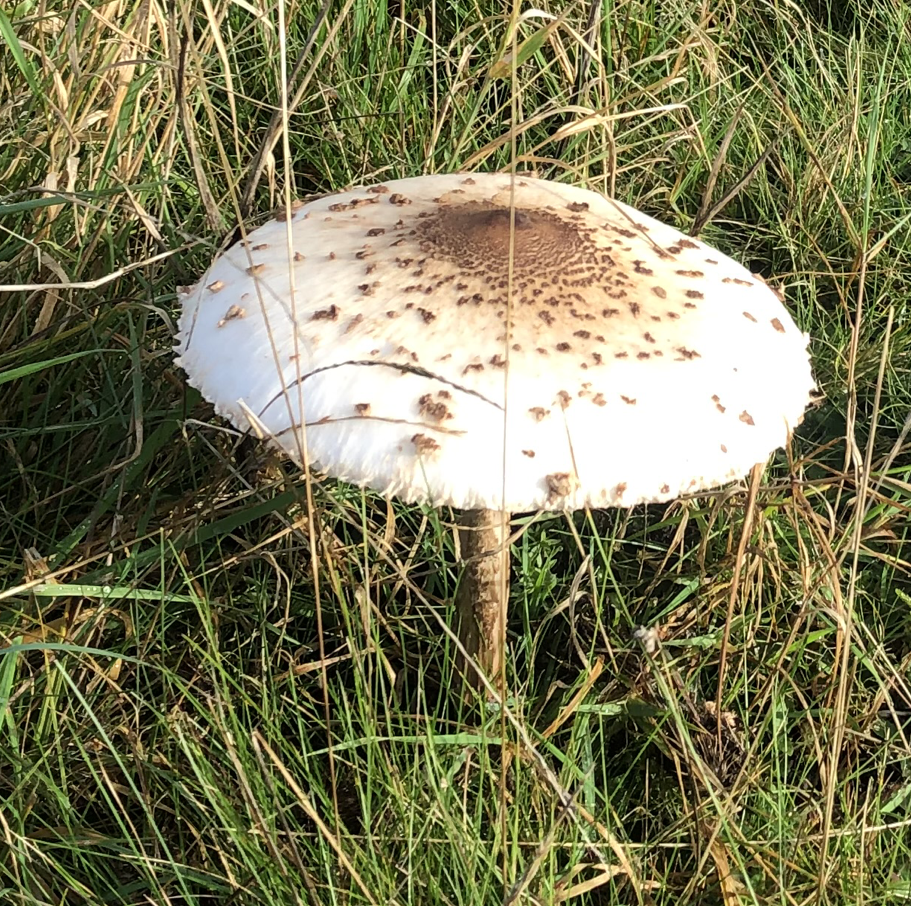
I came across a tip from the RSPB yesterday that cutting grass in early autumn will enable the fungi to grow and fruit. And today I noticed in Richmond Park where the still green bracken had been cut back, that some beautiful parasol mushrooms had popped up!

 I last cut the front lawn in July so I will now set about doing this again. It will also benefit the crocus bulbs that are planted here.

Counting on … day 1.186

4th October 2023

Today is the Feast of St Francis. He is well known for his insight that all of creation is interconnected and equal in the sight of God. Thus he spoke of brother Sun and sister Mother Earth.  Not surprisingly St Francis is names the patron saint of the environment. St Francis was equally concerned about peace making, calling for peace whether that was between neighbours or between the saracens and the crusaders.  

Caring for the environment and peace making go hand in hand. Failure to care for the environment leads to conflict; conflict damages the environment. 

To be an environmentalist is to be a peacemaker.

 Counting on … day 1.185

3rd October 2023

One approach to help us improve biodiversity might be to pursue “the 3-30-300 rule”: that everyone should have sight of three trees, every neighbourhood should have 30% canopy cover, and everyone should live within 300 metres of a park or green space. This concept is the work of a group crammed Creat Streets and last month they published a report on Greening Up our streets – https://www.createstreets.com/wp-content/uploads/2023/09/Greening_Up_Executive_Summary.pdf

The report is full of facts illustrating the health and well-being effects of green urban areas, and outlines policies and ideas that would promote the greening of our streets. Such greening also has  benefits in tackling the climate crisis and in mitigating some of the effects of climate change.

Counting on … day 1.184

2nd October 2023

It is now 9 months since the Biodiversity COP15 that took place in Montreal. Its call to “take urgent action to halt and reverse biodiversity loss” by 2030 was a closely fought but positive outcome. One of  the targets sets the goal that by 2030 at least 30% of habitats should be protected, which is significantly more than what is currently protected – 17% of land and 10% of marine areas, across the globe. (1) 

To achieve will involve not just governments, but businesses, local authorities, farmers and landowners, and we, the public, through out support of wildlife charities and projects.

(1) https://www.theguardian.com/environment/2022/dec/20/cop15-montreal-did-it-deliver-for-natural-world-aoe?utm_term=64256bb9d4f54d3271076a78f8c14e49&utm_campaign=DownToEarth&utm_source=esp&utm_medium=Email&CMP=greenlight_email

Counting on … day 1.183

29th September 2023

When did you last here a cuckoo? When did you last watch swifts somersault in the air? In the skies above Sheen this summer, I didn’t see any swifts. 

The Natural History Museum reported this year ‘Bird populations in the UK continue to freefall as the government moves further away from achieving its own targets to protect nature. Between 2015 and 2020 almost half of all bird species declined, with woodland bird species being the most affected… Campaigners say the government is in danger of missing out on their own targets set out in the Environment Act, which was passed into law in 2021 and requires a halt in species decline by 2030.’ (1)

Cuckoos and swifts are not included in this as they are migratory birds,  coming here to breed in the summer, but they face the same problems as our resident birds: habitat loss especially in rural areas with more intensive farming practices, use of pesticides and herbicides, and climate change.

We can be part of the solution by ensuring that our gardens are wildlife friendly places and by supporting organisations such as the RSPB and WWT in creating wildlife reserves.

https://www.rspb.org.uk/birds-and-wildlife/advice/gardening-for-wildlife/creating-a-wildlife-friendly-garden/

(1) https://www.nhm.ac.uk/discover/news/2023/april/almost-half-of-all-uk-bird-species-in-decline.html

Counting on … day 1.182

28th September 2023 

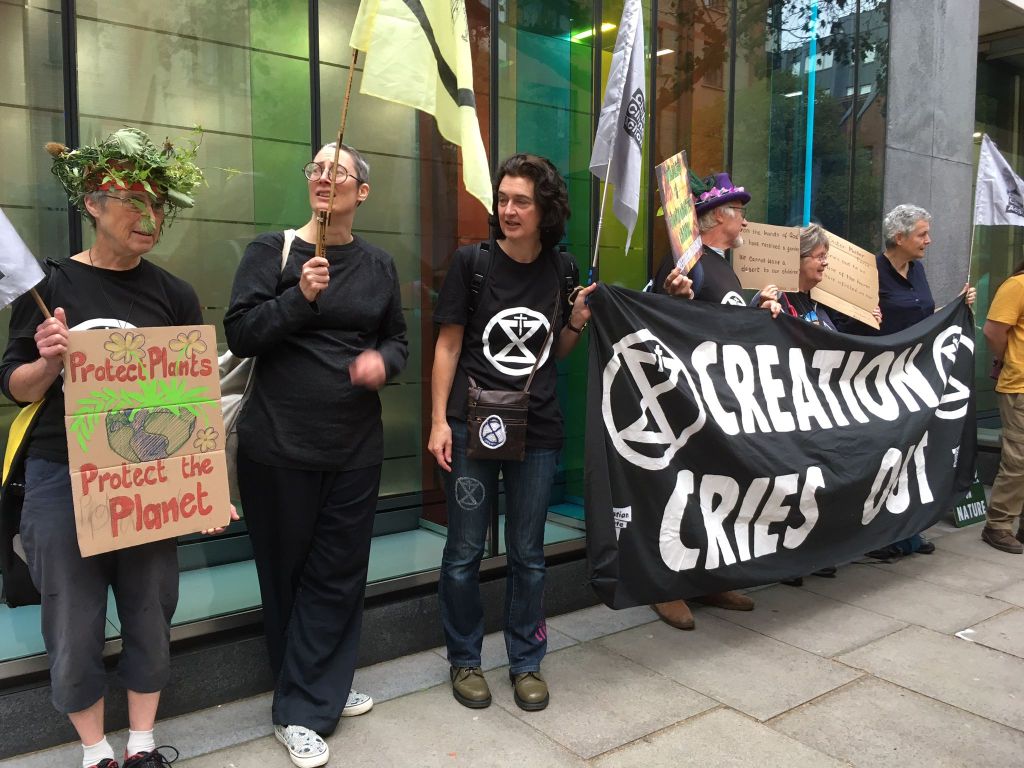
Today there is to be a RESTORE NATURE NOW rally outside DEFRA’s HQ calling on the Government to take action to restore nature in that face of its dramatic downward spiral. Those taking part will include  birdwatchers, ramblers, ecologists, pond dippers, river swimmers, ramblers, no-mow-mayers, anglers, scientists, butterfly counters, spring-watchers, hunt saboteurs, gardeners, rewilders, conservationists… and members of Christian Climate Action. 

CCA’s presence

Counting on … day 1.181

27th September 2023

It is not just butterflies that are declining in number but all insects. If you can go that far back, do you remember how in the 1970s car windscreens would have to be washed after each journey to remove the insects splattered across the glass? That is no longer a problem for drivers and that is not just because of more aerodynamically designed vehicles. A study carried out by Bug Life and Kent Wildlife Trust in 2022 reported a 60% declines in insect numbers since 2002. This is worrying because many plants rely on insects for pollination and because other creatures – especially birds – rely on insects for food. What might be causing the decline? The use of pesticides and herbicides on crops and in gardens; climate  change; habitat loss and fragmentation. 

Can we be part of the solution? As gardeners we can create insect friendly habitats; we can support wild life organisations; we can opt for organic produce; we can ask our local council not to use pesticides and herbicides; we  can campaign for government action.

For further info – https://www.nhm.ac.uk/discover/news/2022/may/uks-flying-insects-have-declined-60-in-20-years.html

Counting on … day 1.180

26th September 2023

Biodiversity loss is not just measured in terms of extinction, but also in loss of numbers within a species. However if the loss of numbers takes place over years or decades, do we register that it is happening? If we still see butterflies each summer, do we necessarily twig that their numbers have been greatly diminished? How few do we need to see, before we begin to worry?

The Big Butterfly Count data over the last 13 years reveals numbers of the once ubiquitous small tortoiseshell have fallen by 30%, with even larger declines for the speckled wood (-38%), ringlet (-41%), common blue (-44%) and green-veined white (-61%)…[whilst] other species appear to be thriving in an era of big climatic changes, with long-term increases over 13 years for the red admiral (up 78%),  painted lady (up 113%), the holly blue (+41%), large white (+27%) and small copper (+66%) – https://www.theguardian.com/environment/2023/sep/15/uk-butterfly-numbers-bounce-back-after-last-years-all-time-low?CMP=Share_iOSApp_Other

By choosing what we grow in our gardens, we can help support butterfly populations. I specifically grow nettles as they provide food and nursery space for the commas’ caterpillars. I try and have plants that are in flower throughout the year – at the moment sedum and the last of the nasturtiums are proving popular for various insects.

For more information on plants and gardening techniques see https://butterfly-conservation.org/how-you-can-help/get-involved/gardening/gardening-for-butterflies

Counting on … day 1.179

25th September 2023

‘Mutilating the tree of life’ said the Guardian’s headline. It was reporting on a study that found that at least 73 species groups (genera) have become extinct since 1500. Without human impact the extinction rate would probably have been just two such groups. Prof Ceballos, who led the research said “By losing all these genera, we are losing the foundations of the planet to have life in general and human life in particular. If you have a wall made of bricks, if you lose some, it won’t collapse but it won’t be as strong. If you lose many bricks, eventually it will collapse. The combination of the gases in the atmosphere that allows us to have life on the planet depends on plants, animals and organisms…”

https://www.theguardian.com/environment/2023/sep/19/mutilating-the-tree-of-life-wildlife-loss-accelerating-scientists-warn?CMP=Share_iOSApp_Other

The biodiversity crisis is as much a threat to the wellbeing of life on earth as the climate crisis. Both need to be addressed of either crisis is to be averted.

You might like to support the Zero Hour campaign which does focus on both crises – https://www.zerohour.uk/bill/