Counting on … day 205

6th June 2022 

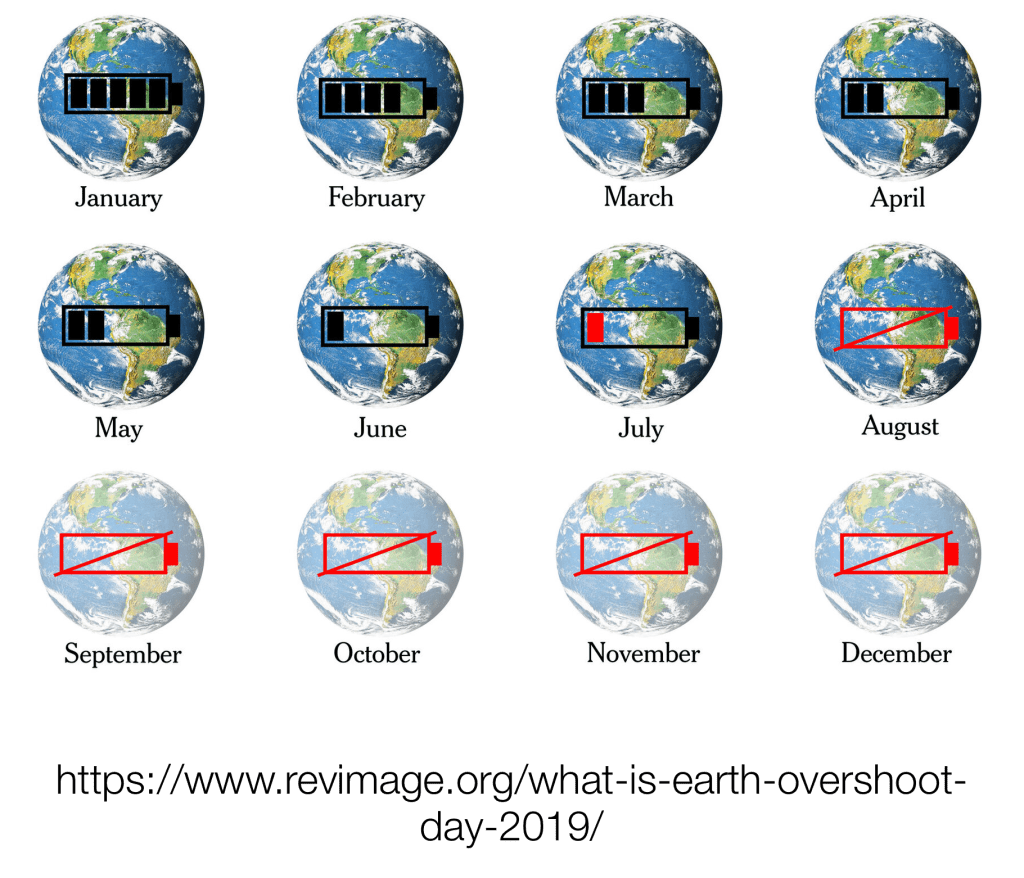
The Cambridge Dictionary defines sustainability as ‘the quality of causing little or no damage to the environment and therefore able to continue for a long time.’ Earth Overshoot Day marks the critical point each year when we have consumed that sum of resources that can be replenished in the course of the year. Beyond that point we are consuming more than can be replaced and are therefore indelibly damaging the environment. Last year Earth Overshoot Day fell on 21st July: in seven months we had consumed a year’s worth of resources! The situation can be worse if we look at our individual countries: Earth Overshoot Day for the UK this year was 19th May. Sustainable living for most of us has to focus on consuming less.

 Counting on …day 204

5th June 2022

Today is World Environment Day, organised by the UN. This year’s strap line is MAKING SUSTAINABLE LIVING THE DEFAULT OPTION. This has to be a motto by which  we live: when ever we make a choice, we need to chose that which is most sustainable. Choices will not be clear cut – imported organic carrots versus homegrown non organic ones – but will always be better than options that clearly damage the environment and with it our well being. Is this something we can share with our friends, our neighbours, our employers, the places where we shop? Can users and consumers change the world?

Counting on …day 202

3rd June 2022

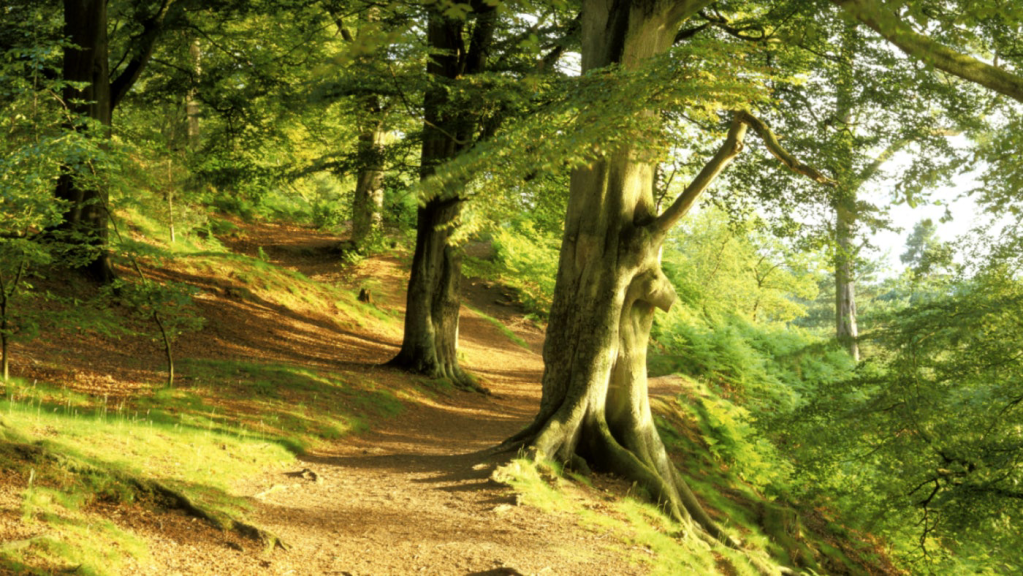
Forest bathing is the Japanese practice of immersing oneself in nature, especially in forests and paying particular attention to how that environment engages the five senses. Kate Bast, writing for Mental Health Today (https://www.mentalhealthtoday.co.uk/blog/awareness/forest-bathing-how-returning-to-the-trees-can-decrease-symptoms-of-anxiety) says forest it is like a “balm” for mental health and that it has the ability to slow down the fight, flight or freeze response, which is so often on high alert for those with anxiety.  Forest bathing, Bast said also softens the intensity of symptoms such as ‘rumination’ which is something that often plagues those living with depression.

The  Forest Bathing Institute offers guided sessions, including ones at Kew Gardens – https://tfb.institute/. The National Trust also offers a guide for self guided sessions –https://www.nationaltrust.org.uk/lists/a-beginners-guide-to-forest-bathing

Why not have a gentle walk in your nearest area of woodland?

Counting on …day 201

2nd June 2022

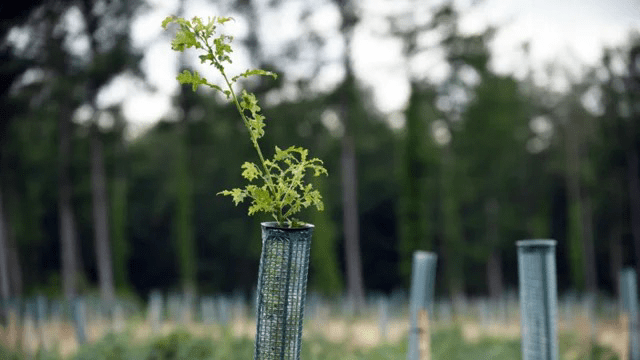
“The Queen’s Green Canopy (QGC) is a unique tree planting initiative created to mark Her Majesty’s Platinum Jubilee in 2022 which invites people from across the United Kingdom to “Plant a Tree for the Jubilee”. With a focus on planting sustainably, the QGC will encourage planting of trees to create a  legacy in honour of The Queen’s leadership of the Nation, which will benefit future generations.” 

https://queensgreencanopy.org/

If you haven’t a garden or sufficient space for a tree, you can sponsor the planting of  a tree via the National Trust –

https://www.nationaltrust.org.uk/features/plant-a-tree?intcmp=plant_atree_autumn20_inmemorypage_teaser

Or you can sponsor a tree via the NHS where it will form part o the NHS Forest – https://nhsforest.org/get-involved/sponsor-a-tree/

Counting on … day 200  

1st June 2022

Walking in woodlands or even just having a tree to look at when you are ill is known to be beneficial – promoting both mental well-being and speeding up recovery from sickness. 

A report produced last December by Forest Research and funded by the Forestry Commission, Scottish Forestry and the Welsh Government, recorded that visits to the UK’s woodlands do indeed boost mental health and save an estimated £185 million in treatment costs annually. 

Counting on …day 198

30th May 2022

Ancient trees are not only valuable in their own right, they also support a wide and diverse ecosystem – beetles, insects, birds, fungi, small mammals, plants etc – and are key in maintaining biodiversity. The Ancient Tree Forum has a booklet exploring this topic – https://www.ancienttreeforum.org.uk/wp-content/uploads/2015/02/ancient-tree-guide-6-special-wildlife.pdf

Looking after old trees and woodlands matters!

Counting on …day 199 

31st May 2022

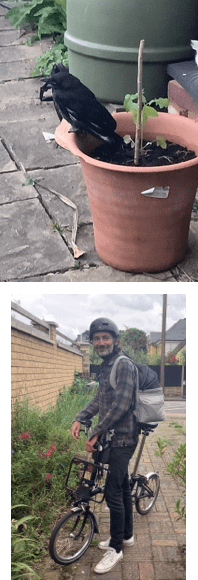
Much to my surprise I found a crow sat on a plant pot surveying our cat, who stared back with equal bemusement. The crow was a fearless youngster whose wing feathers were not yet fully fledged, rendering the bird flightless. I caught the crow in a box and placed him in the shed overnight away from any passing fox. The vet suggested leaving the bird in  a safe place where the parents might find it. As our gardens home to several cats a safe place was not to hand. The RSPB look after birds on the larger scale of providing reserves etc rather than rescuing individuals. I contacted the London Wildlife Protection who quickly offered to collect and care for crow junior. https://www.londonwildlifeprotection.org/

I was highly delighted when crow junior’s rescuer arrived on a bicycle with a specially adapted backpack for transporting birds and other small creatures – highly ecological!

Counting on …day 197 

29th May 2022

We can recognise ancient buildings like castles and cathedrals quite easily. We can probably recognise old houses quite easily too – especially those that are large and grand! We expect such buildings to be protected – perhaps under the auspices of the National Trust or English Heritage, or to be a listed building. But what about trees? The oldest tree in the world is probably a 4m wide  Patagonia cypress in Chile which could be up to 5,484 years old (https://theguardian.com/environment/2022/may/26/worlds-oldest-tree-cypress-chile). And that is older even than the pyramids in Egypt! According to the Woodland Trust, the oldest tree in the UK is said to be the Fortingall yew in Perthshire. It’s estimated to be between 2,000 and 3,000 years old, although some believe it could be 5,000 years old. Such trees are historic landmarks and deserved to be protected in the same way that we protect historic buildings. The Woodland Trust has instigated just such a campaign! 

https://www.woodlandtrust.org.uk/protecting-trees-and-woods/campaign-with-us/tree-protection-campaign/

Counting on … day 196 

28th May 2022

Glyphosate and other herbicides are variously used – or not – by local councils to manage weeds in public spaces such as streets, parks, play grounds and pavements. In June 2020 Amanda Tuke asked thirty two London Boroughs (not including City of London) for information about:

  • their Councillors responsible for weed management
  • their weedkiller policies in particular relating to glyphosate
  • their weedkiller contractors and contracts. 

The results show that whilst some councils do not use glyphosate at all, others allow its application up to three times a year. https://freelancenaturewriter.com/2020/07/15/london-councils-use-of-weedkiller-policies-and-reduction-initiatives/

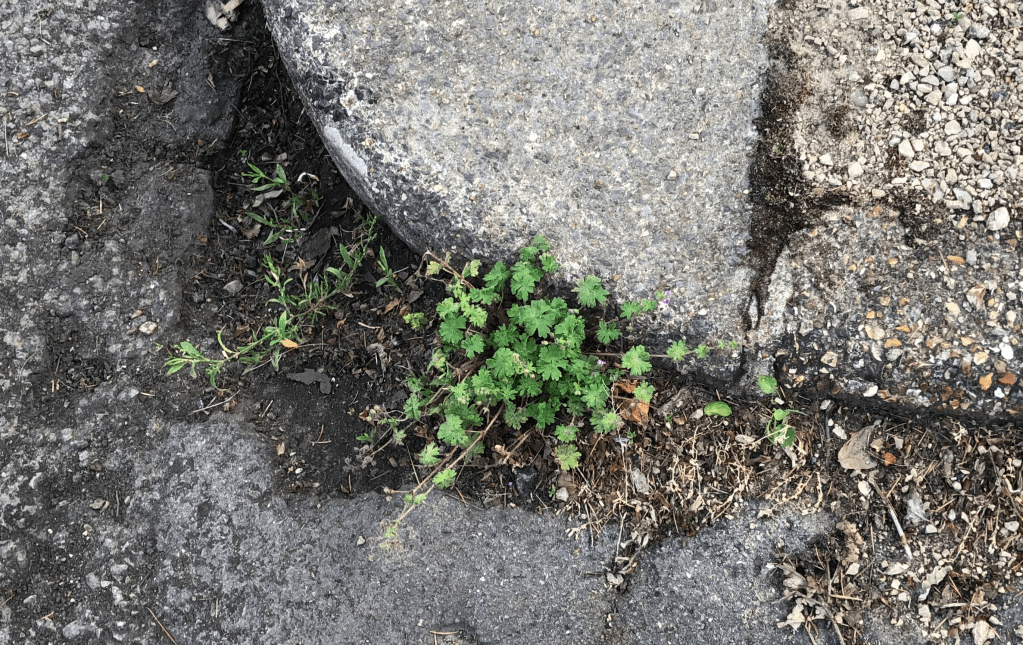
Where less herbicides are used, you may well notice a growing number of small plants along the edges of the pavements – a greening of the environment that pollinators may well appreciate!

You might like to ask your local  council about their policy.