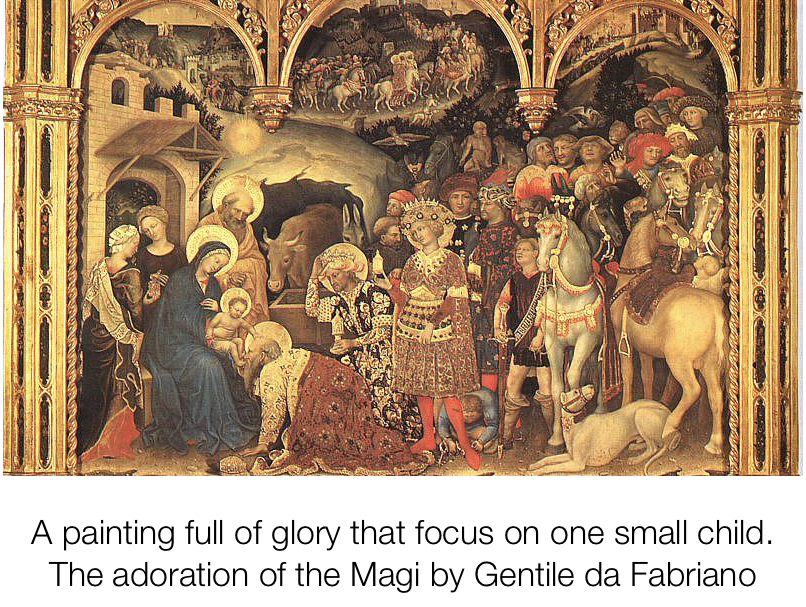
Epiphany 2

16th January 2022

Isaiah 62:1-5

For Zion’s sake I will not keep silent,
and for Jerusalem’s sake I will not rest,

until her vindication shines out like the dawn,
and her salvation like a burning torch.

The nations shall see your vindication,
and all the kings your glory;

and you shall be called by a new name
that the mouth of the Lord will give.

You shall be a crown of beauty in the hand of the Lord,
and a royal diadem in the hand of your God. 

You shall no more be termed Forsaken,
and your land shall no more be termed Desolate;

but you shall be called My Delight Is in Her,
and your land Married;

for the Lord delights in you,
and your land shall be married.

For as a young man marries a young woman,
so shall your builder marry you,

and as the bridegroom rejoices over the bride,
so shall your God rejoice over you.

Psalm 36:5-10

5 Your love, O Lord, reaches to the heavens, *
and your faithfulness to the clouds.

6 Your righteousness is like the strong mountains,
your justice like the great deep; *
you save both man and beast, O Lord.

7 How priceless is your love, O God! *
your people take refuge under the shadow of your wings.

8 They feast upon the abundance of your house; *
you give them drink from the river of your delights.

9 For with you is the well of life, *
and in your light we see light.

10 Continue your loving-kindness to those who know you, *
and your favour to those who are true of heart.

1 Corinthians 12:1-11

Now concerning spiritual gifts, brothers and sisters, I do not want you to be uninformed. You know that when you were pagans, you were enticed and led astray to idols that could not speak. Therefore I want you to understand that no one speaking by the Spirit of God ever says “Let Jesus be cursed!” and no one can say “Jesus is Lord” except by the Holy Spirit.

Now there are varieties of gifts, but the same Spirit; and there are varieties of services, but the same Lord; and there are varieties of activities, but it is the same God who activates all of them in everyone. To each is given the manifestation of the Spirit for the common good. To one is given through the Spirit the utterance of wisdom, and to another the utterance of knowledge according to the same Spirit, to another faith by the same Spirit, to another gifts of healing by the one Spirit, to another the working of miracles, to another prophecy, to another the discernment of spirits, to another various kinds of tongues, to another the interpretation of tongues. All these are activated by one and the same Spirit, who allots to each one individually just as the Spirit chooses.

John 2:1-11

On the third day there was a wedding in Cana of Galilee, and the mother of Jesus was there. Jesus and his disciples had also been invited to the wedding. When the wine gave out, the mother of Jesus said to him, “They have no wine.” And Jesus said to her, “Woman, what concern is that to you and to me? My hour has not yet come.” His mother said to the servants, “Do whatever he tells you.” Now standing there were six stone water jars for the Jewish rites of purification, each holding twenty or thirty gallons. Jesus said to them, “Fill the jars with water.” And they filled them up to the brim. He said to them, “Now draw some out, and take it to the chief steward.” So they took it. When the steward tasted the water that had become wine, and did not know where it came from (though the servants who had drawn the water knew), the steward called the bridegroom and said to him, “Everyone serves the good wine first, and then the inferior wine after the guests have become drunk. But you have kept the good wine until now.” Jesus did this, the first of his signs, in Cana of Galilee, and revealed his glory; and his disciples believed in him.

Reflection 

Today’s gospel is one of my favourite stories as it about enjoying life and creating an abundance out of very little. It is on a par with the feeding of the 5000. And with the two, you have the Eucharist – a story which does not explicitly appear in John’s gospel.

The first reading from Isaiah begins with the voice of the prophet shouting out; not keeping silent. Sometimes we are reluctant to shout out either loud enough or often enough for those in need of salvation? For the people of Afghanistan? For those children in the UK who don’t have beds to sleep in? For people whose wages are so low, they have to rely on food banks? For those struggling with mental ill health because of the pandemic?

In Isaiah’s case there is a back story. Jerusalem had sinned, had erred and strayed from God and had suffered the consequences. Having learnt from their mistakes, the time had now come for the restoration of Jerusalem,  a returning to their union with God. The people had been physically exiled but now they were returning to their God, to their land, to their roots. 

We in the 21st century have strayed from God’s ways, have become separated from the land and are seeing around us the effects of that rift. As we accept that our lifestyles  are the prime cause of the climate crisis, and our greed the prime cause of world wide injustices, so we are able to repent, to make reparations and to seek restoration and reconciliation – with God, with the land and with each other. Isaiah uses the concept of marriage to describe the strength and  joy that comes from the  renewed relationship between and God and the people. It is a relationship that abounds with delight. 

The writer of psalm 36 echoes the same sentiments, extolling the strength and the abundance that come from a relationship built of love and faithfulness. Here is an abundance of good living that delights both humans and beasts. It is a relationship that grows through the gift of  light – or as we might say, wisdom.

Last Sunday we recalled the baptism of Jesus and the moment at which he was filled with the Holy Spirit, a gift that came from above. Paul’s letter to the followers of Jesus  in Corinth reminds them of the gifts they have received through the Holy Spirit: gifts of wisdom and discernment, of healing and miracles, of prophesy and discernment. The gifts of the Spirit are a sign of their union with God; those who speak or live in way that separates them from that relationship, cannot speak well of Jesus and vice versa. It is the gifts of the Spirit that will enable us to live lives that restore the world.

Finally to the Gospel. This story of transformation and abundance, and it is also a story about the celebration of restoration. We are not given any details about the bride and groom, although in a later passage we will hear John referring to Jesus as the bridegroom. The idea of marriage is often used in  the Bible as a metaphor for the relationship between God and people. So we might imagine that this wedding celebrates the restoration of the relationship between God and humanity, manifested in the union between Jesus and the community of those who love him.  It is a celebration that ends up overflowing with wine: each stone jar is filled with upwards of 100 litres of the best wine!

Notice the role Jesus’s mother plays. It is she who points out to Jesus what is needed, and it is she who prompts the servants to play their part. As followers of Jesus we are not automatons, but have differing gifts that we expected to use. And for some of us they may be the gift of observation, of discerning what is needed, of prompting or inspiring  others to action. The good news is about action and  transformation. Here a new use is found for the water jars; their former use may have been for cleansing rituals (maybe outdated rituals) but now they have been upcycled as wine vats. There had been a tradition of serving the best wine first, but now there is a new one: saving the best till last! This wedding reveals the  glory of Jesus. It is a wedding that is not going to be forgotten: indeed it is a union which continues to be celebrated every time we share the Eucharist.

First Sunday of Epiphany

9th January 2022

Isaiah 43:1-7 

Thus says the Lord,
he who created you, O Jacob,

he who formed you, O Israel:

Do not fear, for I have redeemed you;
I have called you by name, you are mine.

When you pass through the waters, I will be with you;
and through the rivers, they shall not overwhelm you;

when you walk through fire you shall not be burned,
and the flame shall not consume you.

For I am the Lord your God,
the Holy One of Israel, your Saviour.

I give Egypt as your ransom,
Ethiopia and Seba in exchange for you.

Because you are precious in my sight,
and honoured, and I love you,

I give people in return for you,
nations in exchange for your life.

Do not fear, for I am with you;
I will bring your offspring from the east,
and from the west I will gather you;

I will say to the north, “Give them up,”
and to the south, “Do not withhold;

bring my sons from far away
and my daughters from the end of the earth–

everyone who is called by my name,
whom I created for my glory,
whom I formed and made.”

Psalm 29

1 Ascribe to the Lord, you gods, *
ascribe to the Lord glory and strength.

2 Ascribe to the Lord the glory due his Name; *
worship the Lord in the beauty of holiness.

3 The voice of the Lord is upon the waters;
the God of glory thunders; *
the Lord is upon the mighty waters.

4 The voice of the Lord is a powerful voice; *
the voice of the Lord is a voice of splendour.

5 The voice of the Lord breaks the cedar trees; *
the Lord breaks the cedars of Lebanon;

6 He makes Lebanon skip like a calf, *
and Mount Hermon like a young wild ox.

7 The voice of the Lord splits the flames of fire;
the voice of the Lord shakes the wilderness; *
the Lord shakes the wilderness of Kadesh.

8 The voice of the Lord makes the oak trees writhe *
and strips the forests bare.

9 And in the temple of the Lord *
all are crying, “Glory!”

10 The Lord sits enthroned above the flood; *
the Lord sits enthroned as King for evermore.

11 The Lord shall give strength to his people; *
the Lord shall give his people the blessing of peace.

Acts 8:14-17

When the apostles at Jerusalem heard that Samaria had accepted the word of God, they sent Peter and John to them. The two went down and prayed for them that they might receive the Holy Spirit (for as yet the Spirit had not come upon any of them; they had only been baptised in the name of the Lord Jesus). Then Peter and John laid their hands on them, and they received the Holy Spirit.

Luke 3:15-17, 21-22

As the people were filled with expectation, and all were questioning in their hearts concerning John, whether he might be the Messiah, John answered all of them by saying, “I baptise you with water; but one who is more powerful than I is coming; I am not worthy to untie the thong of his sandals. He will baptise you with the Holy Spirit and fire. His winnowing fork is in his hand, to clear his threshing floor and to gather the wheat into his granary; but the chaff he will burn with unquenchable fire.”

Now when all the people were baptised, and when Jesus also had been baptised and was praying, the heaven was opened, and the Holy Spirit descended upon him in bodily form like a dove. And a voice came from heaven, “You are my Son, the Beloved; with you I am well pleased.”

Reflection 

Last week, Epiphany Sunday, we heard of the glory of God that rises above us when we are in darkness and which draws together the peoples of all nations along with the abundance that the earth has to offer. And we had the image of the star shining down over Bethlehem where God had become incarnate as a human child, attracting the attention and the worship of kings and the offering of gifts on such as scale as to unnerve the then Judean King, Herod. 

Today’s psalm looks to the natural world to describe the glory of God. This glory – this weightiness, this honourableness, this splendour, this abundance and dignity (recall how rich the Hebrew  word is) – is like the thunder of falling water, the breaking of cedar branches (think of the strength needed and the loud cracking noise), the liveliness of hills and calves, the energy of fire and storms! This description of glory sounds both energising and terrifying. Yet Isaiah also talks about the glory of God. He tells us that we humans are loved by God, that God knows us and calls us by name, and that he has made us for his glory! We should not underestimate how wonderful humanity can be, nor the the power of God’s presence. God knows how risky and dangerous and unpredictable life can be, and therefore God will always be there for us.

The ministry of John the Baptist was equally electrifying and terrifying. A figure standing out in the wilderness challenging people to reflect on the quality, the rightness of their lives, to be honest and own up to their failings, their greed, their apathy. His earnest desire was that they should not be going unprepared when the glory of God would appear in their midst. He doused those who were repentant with water to assure them that their past sins were expunged – but he also warned them of complacency. 

‘I may be washing your sins away, he said, but beware that  you do reform your lives, because there is one who is coming who will deal not in water but with fire! His will baptise with the Holy Spirit!’

The writer of the gospel then tells us of Jesus’s own baptism. The heavens break open and he is filled with the Holy Spirit and a voice from heaven  You are my Son, the Beloved; with you I am well pleased.” 

To be baptised with the Holy Spirit is to filled by – engulfed by – the glory of God. It is to experience that God know us and call us by name. It is to be empowered to live life as God’s children. 

The word Greek word translated as open also has the meaning of disclose which is a reminder to us that this is the season of Epiphany. Let us be willing this season to be open to the wonder – even the shock – of the glory of God that is being revealed to us. And to let that glory transform the way we respond both to God, to our neighbour and to the world around us. 

Second Sunday of Christmas

2nd January 2022

Isaiah 60: 1-6 

Arise, shine; for your light has come,
   and the glory of the Lord has risen upon you.
For darkness shall cover the earth,
   and thick darkness the peoples;
but the Lord will arise upon you,
   and his glory will appear over you.
Nations shall come to your light,
   and kings to the brightness of your dawn. 


Lift up your eyes and look around;
   they all gather together, they come to you;
your sons shall come from far away,
   and your daughters shall be carried on their nurses’ arms.
Then you shall see and be radiant;
   your heart shall thrill and rejoice,
because the abundance of the sea shall be brought to you,
   the wealth of the nations shall come to you.
A multitude of camels shall cover you,
   the young camels of Midian and Ephah;
   all those from Sheba shall come.
They shall bring gold and frankincense,
   and shall proclaim the praise of the Lord.

Psalm 84: 1-8

1 How dear to me is your dwelling, O Lord of hosts! *
My soul has a desire and longing for the courts of the Lord;
my heart and my flesh rejoice in the living God.

2 The sparrow has found her a house
and the swallow a nest where she may lay her young; *
by the side of your altars, O Lord of hosts,
my King and my God.

3 Happy are they who dwell in your house! *
they will always be praising you.

4 Happy are the people whose strength is in you! *
whose hearts are set on the pilgrims’ way.

5 Those who go through the desolate valley will find it a place of springs, *
for the early rains have covered it with pools of water.

6 They will climb from height to height, *
and the God of gods will reveal himself in Zion.

7 Lord God of hosts, hear my prayer; *
hearken, O God of Jacob.

8 Behold our defender, O God; *
and look upon the face of your Anointed.

Ephesians 3:1-12

This is the reason that I Paul am a prisoner for Christ Jesus for the sake of you Gentiles— for surely you have already heard of the commission of God’s grace that was given to me for you, and how the mystery was made known to me by revelation, as I wrote above in a few words, a reading of which will enable you to perceive my understanding of the mystery of Christ. In former generations this mystery was not made known to humankind, as it has now been revealed to his holy apostles and prophets by the Spirit: that is, the Gentiles have become fellow-heirs, members of the same body, and sharers in the promise in Christ Jesus through the gospel.

Of this gospel I have become a servant according to the gift of God’s grace that was given to me by the working of his power. Although I am the very least of all the saints, this grace was given to me to bring to the Gentiles the news of the boundless riches of Christ, and to make everyone see what is the plan of the mystery hidden for ages in God who created all things; so that through the church the wisdom of God in its rich variety might now be made known to the rulers and authorities in the heavenly places. This was in accordance with the eternal purpose that he has carried out in Christ Jesus our Lord, in whom we have access to God in boldness and confidence through faith in him.

Matthew 2: 1-12

In the time of King Herod, after Jesus was born in Bethlehem of Judea, wise men from the East came to Jerusalem, asking, ‘Where is the child who has been born king of the Jews? For we observed his star at its rising, and have come to pay him homage.’ When King Herod heard this, he was frightened, and all Jerusalem with him; and calling together all the chief priests and scribes of the people, he inquired of them where the Messiah was to be born. They told him, ‘In Bethlehem of Judea; for so it has been written by the prophet:
“And you, Bethlehem, in the land of Judah,
   are by no means least among the rulers of Judah;
for from you shall come a ruler
   who is to shepherd my people Israel.” ’

Then Herod secretly called for the wise men and learned from them the exact time when the star had appeared. Then he sent them to Bethlehem, saying, ‘Go and search diligently for the child; and when you have found him, bring me word so that I may also go and pay him homage.’ When they had heard the king, they set out; and there, ahead of them, went the star that they had seen at its rising, until it stopped over the place where the child was. When they saw that the star had stopped, they were overwhelmed with joy. On entering the house, they saw the child with Mary his mother; and they knelt down and paid him homage. Then, opening their treasure-chests, they offered him gifts of gold, frankincense, and myrrh. And having been warned in a dream not to return to Herod, they left for their own country by another road.

Reflection 

The glory of the Lord has risen, the glory of the Lord has appeared. It is a light shines in dark places and summons people. Not a search light seeking the intruder or the escapee. Not a light house beam flashing up warnings of danger. But like a light over the door way that says ‘Welcome, come in’. Like a street light that illuminates the road you should follow. Like a neon advertisement that says ‘Come! Be amazed! Be persuaded!’

The word used in Hebrew of glory is ‘kabod’ or ‘kavod’. The original meaning of the word was weight, but also has meanings of abundance, importance  and dignity. It was the ‘kavod’ of the Lord that filled the tabernacle. It was the ‘kavod’ of the Lord that went ahead of the people in the form of a pillar of cloud by day and  of fire by night. It was the ‘kavod’ of the Lord that enveloped Mount Sinai. In the days of Moses the glory of the Lord leads the people through the wilderness to the promised land. Now, here in the words of Isaiah, the glory of the Lord is not only  bringing light to the Israelites, but to the leaders of the nations across the world. As the peoples and nations come together, they will gather an abundance of the earth’s gifts. ‘Lift up your eyes and see!’ says Isaiah. 

Is it that sometimes we don’t see the glory of God in the world around us, that we do not realise the abundance that the world has to offer us?  If only we had the eyes to see? If only we perceived that by caring for the soil by understanding the importance of its micro-organisms, it would produce bountiful crops. Instead we damage these by flooding the soil with fertilisers and pesticides. If only we perceived that by sharing resources equitably, we would remove the causes of war and migration. If only we perceived that by sharing vaccines and vaccine patents,  we could end the threat that covid poses.

The psalmist cries out his – or maybe her – earnest desire to be at one, to be at home with God. To live in God’s presence is to be happy! Happy are those who find their strength in God, who follow the pilgrim way. This seems to echo the idea of the Israelites following God through the wilderness. The pilgrims’ way is not necessarily straight forward but God will reveal his presence  to them, will hear the prayers of those who seek him, and will defend them.

The epistle reading today comes from the Letter to the Ephesians. Whilst it is probably not the writing of Paul himself, it is written as if from him because of his significant role in taking the gospel to people outside the Jewish faith. The good news, the Christian faith is for everyone! It is good news because it brings  to everyone the boundless riches (an echo of the glory of God?) that come through Christ. The writer explains that it is a mystery that was previously kept hidden but which now it is revealed beings a wisdom that will benefit in rich variety all leaders and authorities.

So to today’s gospel. Here we have people of wisdom who can read the signs of the times, who discern their significance of their pilgrimage as it unfolds. They think logically at first and go to the court of Herod to find the newly born king. 

Herod too has a certain amount of wisdom. These visitors have come from the east – outside the bounds of the Roman Empire. Do they perhaps perceive that this king is not just going to have influence in Judea but further afield too? Maybe both in their home land but in the lands currently controlled by Rome? Maybe a new world wide reign? If so, this is not a message Herod wants to hear. His wisdom may not extend to understanding God’s plan – or maybe he hopes to thwart God. Certainly he acts with cunning hiding his plan from his own advisers and instead using the services of the wise men to further his own objectives. 

The pilgrims from the east continue following the light, seeking the place where they might find God’s glory. On entering the house where Jesus dwells, they are filled with joy and ‘proclaim their praise’ showering one who is  Emmanuel – God with us – with rich gifts.

This Sunday’s readings are proclaiming the good news – the glory of God – that is there for all who lift their eyes to see. It is good news that, like Paul, we are urged to share with everyone.

Fourth Sunday of Advent

19th December 2021

Micah 5:2-5a

You, O Bethlehem of Ephrathah,
who are one of the little clans of Judah,

from you shall come forth for me
one who is to rule in Israel,

whose origin is from of old,
from ancient days.

Therefore he shall give them up until the time
when she who is in labor has brought forth;

then the rest of his kindred shall return
to the people of Israel.

And he shall stand and feed his flock in the strength of the Lord,
in the majesty of the name of the Lord his God.

And they shall live secure, for now he shall be great
to the ends of the earth;

and he shall be the one of peace.

Canticle: The Magnificat, Luke 1:46-55

My soul proclaims the greatness of the Lord,

my spirit rejoices in God my Savior; *
for he has looked with favour on his lowly servant.

From this day all generations will call me blessed: *
the Almighty has done great things for me, and holy is his Name.

He has mercy on those who fear him *
in every generation.

He has shown the strength of his arm, *
he has scattered the proud in their conceit.

He has cast down the mighty from their thrones, *
and has lifted up the lowly.

He has filled the hungry with good things, *
and the rich he has sent away empty.

He has come to the help of his servant Israel, *
for he has remembered his promise of mercy,

The promise he made to our fathers, *
to Abraham and his children for ever.

Hebrews 10:5-10

When Christ came into the world, he said,

“Sacrifices and offerings you have not desired,
but a body you have prepared for me;

in burnt offerings and sin offerings
you have taken no pleasure.

Then I said, ‘See, God, I have come to do your will, O God’
(in the scroll of the book it is written of me).”

When he said above, “You have neither desired nor taken pleasure in sacrifices and offerings and burnt offerings and sin offerings” (these are offered according to the law), then he added, “See, I have come to do your will.” He abolishes the first in order to establish the second. And it is by God’s will that we have been sanctified through the offering of the body of Jesus Christ once for all.

Luke 1:39-45

In those days Mary set out and went with haste to a Judean town in the hill country, where she entered the house of Zechariah and greeted Elizabeth.

When Elizabeth heard Mary’s greeting, the child leaped in her womb. And Elizabeth was filled with the Holy Spirit and exclaimed with a loud cry, “Blessed are you among women, and blessed is the fruit of your womb. And why has this happened to me, that the mother of my Lord comes to me? For as soon as I heard the sound of your greeting, the child in my womb leaped for joy. And blessed is she who believed that there would be a fulfilment of what was spoken to her by the Lord.”

Reflection 

The prophet Micah describes the Bethlehem as one of the smallest of the clans of Judah – as if each town in the lands belonging  to Judah was a subset – or in terms of the Scottish clan system, a ‘sept’ – of the tribe of Judah. This would for example make Joseph, who was a of the tribe of Judah, a member of the  sept of Bethlehem being his home town. 

God’s chosen one, says Micah, will come from this little clan – we might thus describe him as  one of the little people. But despite this, he will establish his rule and will bring together all his fellows – all the other little people – and, shepherd-like, feed them. And for feed, we might understand this to be not just with food but with the all that will sustain them. And  who are these  little people? Those whose work is often overlooked, who do not wield power  or influence, those who are not valued, who are seen as dispensable – labourers and factory workers, carers and shop staff, those with mental or physical disabilities,  those who are homeless, jobless, stateless , and children especially those from poor backgrounds. And there are others who are also ‘little people’. Those who are humble, self deprecating, those who are child-like and transparent, those who do not boss others around, who do not think they have an inherent superiority or importance, those who willingly relinquish power and wealth. These are the little people that Christ comes for, these are the ones he calls to be his people, his sheep. 

And it seems to me, that anyone can become a little person. For we can all become child-like, become humble and open, we can all let go of power and wealth, of our sense of status and self importance. 

And when everyone becomes a little person, then will we have peace! 

The Magnificat reminds us that Mary was one of the little people. A woman – not even with the status of being a wife, a young person with no special status, a resident of Nazareth (a not very important place).. Someone who could describe themselves as a lowly  servant, but equally sufficiently honest to see that in God eyes they were important. In this paean, Mary understands that God plans for the ‘big’ people – those who are self important, proud, privileged, powerful, the rich, those indifferent to others – to be transformed – reformed – as little people. And this is how the hungry will be fed. This is how God’s will from the beginning of time is to be fulfilled. 

We have only to look around the world and see that if all the ‘big’ people became little people, then there would be food and resources for everyone. Will this happen this Christmas? 

The writer of Hebrews tells us that Christ was not to be the recipient of sacrifices and burnt offerings, but to be the recipient of a body. The human body is a gift we have all been given, from Adam onwards. It is a gift to be treasured and to be used aright: ‘See, God, I have come to do your will, O God’ says Christ. This response echoes that of Mary – ‘let it be to me according to your word.’- and contrary to Adam’s ignoring of God’s will. We too are invited to respond like Mary, like Christ,  and to offer ourselves – in our bodies – to be incarnate doers of God’s will. The writer of Hebrews further reminds us, that as Christ has shared our humanity, so our bodies too have been made holy. 

And in the passage from Luke’s gospel, we hear how Christ in the process of becoming full  incarnate –  a growing embryo in Mary’s womb. – is already transforming the world. The unborn John leaps in Elizabeth’s womb – just as I am sure, Elizabeth too leapt, if not physically, then metaphorically, recognising intuitively the astounding fact of God’s presence with them in human form. Will we leap with joy this Christmas as once again we re-member that God is present with us in our human body?

Sunday Reflection: third in Advent

12th December 2021

The Collect 

Stir up your power, O Lord, and with great might come among us; and, because we are sorely hindered by our sins, let your bountiful grace and mercy speedily help and deliver us; through Jesus Christ our Lord, to whom, with you and the Holy Spirit, be honour and glory, now and for ever. Amen.

Zephaniah 3:14-20

Sing aloud, O daughter Zion;
shout, O Israel!

Rejoice and exult with all your heart,
O daughter Jerusalem!

The Lord has taken away the judgments against you,
he has turned away your enemies.

The king of Israel, the Lord, is in your midst;
you shall fear disaster no more.

On that day it shall be said to Jerusalem:

Do not fear, O Zion;
do not let your hands grow weak.

The Lord, your God, is in your midst,
a warrior who gives victory;

he will rejoice over you with gladness,
he will renew you in his love;

he will exult over you with loud singing
as on a day of festival.

I will remove disaster from you,
so that you will not bear reproach for it.

I will deal with all your oppressors
at that time.

And I will save the lame
and gather the outcast,

and I will change their shame into praise
and renown in all the earth.

At that time I will bring you home,
at the time when I gather you;

for I will make you renowned and praised
among all the peoples of the earth,

when I restore your fortunes
before your eyes, says the Lord.

Canticle: Isaiah 12:2-6

Surely, it is God who saves me; *
I will trust in him and not be afraid.

For the Lord is my stronghold and my sure defence, *
and he will be my Saviour.

Therefore you shall draw water with rejoicing *
from the springs of salvation.

And on that day you shall say, *
Give thanks to the Lord and call upon his Name;

Make his deeds known among the peoples; *
see that they remember that his Name is exalted.

Sing the praises of the Lord, for he has done great things, *
and this is known in all the world.

Cry aloud, inhabitants of Zion, ring out your joy, *
for the great one in the midst of you is the Holy One of Israel.

Philippians 4:4-7

Rejoice in the Lord always; again I will say, Rejoice. Let your gentleness be known to everyone. The Lord is near. Do not worry about anything, but in everything by prayer and supplication with thanksgiving let your requests be made known to God. And the peace of God, which surpasses all understanding, will guard your hearts and your minds in Christ Jesus.

Luke 3:7-18

John said to the crowds that came out to be baptised by him, “You brood of vipers! Who warned you to flee from the wrath to come? Bear fruits worthy of repentance. Do not begin to say to yourselves, ‘We have Abraham as our ancestor’; for I tell you, God is able from these stones to raise up children to Abraham. Even now the ax is lying at the root of the trees; every tree therefore that does not bear good fruit is cut down and thrown into the fire.”

And the crowds asked him, “What then should we do?” In reply he said to them, “Whoever has two coats must share with anyone who has none; and whoever has food must do likewise.” Even tax collectors came to be baptised, and they asked him, “Teacher, what should we do?” He said to them, “Collect no more than the amount prescribed for you.” Soldiers also asked him, “And we, what should we do?” He said to them, “Do not extort money from anyone by threats or false accusation, and be satisfied with your wages.”

As the people were filled with expectation, and all were questioning in their hearts concerning John, whether he might be the Messiah, John answered all of them by saying, “I baptise you with water; but one who is more powerful than I is coming; I am not worthy to untie the thong of his sandals. He will baptise you with the Holy Spirit and fire. His winnowing fork is in his hand, to clear his threshing floor and to gather the wheat into his granary; but the chaff he will burn with unquenchable fire.”

So, with many other exhortations, he proclaimed the good news to the people.

Reflection 

The collect calls out to God, “Stir up your power!” This is not about Christmas puddings. It has a feeling of a whirl wind, a tornado, that will rip through us. A feeling of an electrical force that will spin things into motion. A centrifuge that will separate pure from dross. In the gospel John summons up the same prospect: Now is the time to act! Something is coming for which you have not yet prepared! That which is fruitless, that which shows no penitence or regret, will be cut away and destroyed. Radically alter your lives now before it is too late! For the messiah is coming with wind and fire and will stir up and sift you, shaking out all that is chaff – separating it from what is good. 

Think how that can transform not just us, but the whole world! At the same time, does this sound rather too scary? Do we want to be stripped of our chaff? Do we want to radically change the way we live? Do we feel that there is anything in us worthy enough to remain?

The words from Zephaniah sound equally radical but in a different way for Zephaniah tells us that God will rejoice over us! God’s love for us must be incredibly huge and incredibly forgiving. Looking at the state of the world, the ways in which we have damaged it, the ways in which we harm our selves and one another through our failure to love, through our greed and selfishness, is it credible that God will rejoice over us? Yes says Zephaniah, God will rejoice over us and will renew us with love, restore

Ing what has been  lost, healing what has been damaged and making us a praiseworthy part of creation. 

Where John suggests practical actions people can take – being generous with what we have, not being greedy, not abusing any power or authority we have – the writer of Philippians commends attitudes: being gentle, joyful and prayerful. Let’s be guided by both these figures and let the transformative power of God work in ourselves and the world we inhabit. 

Sunday Reflection

Second Sunday in Advent: 5th December 2021

Malachi 3:1-4 

See, I am sending my messenger to prepare the way before me, and the Lord whom you seek will suddenly come to his temple. The messenger of the covenant in whom you delight– indeed, he is coming, says the Lord of hosts. But who can endure the day of his coming, and who can stand when he appears?

For he is like a refiner’s fire and like fullers’ soap; he will sit as a refiner and purifier of silver, and he will purify the descendants of Levi and refine them like gold and silver, until they present offerings to the  Lord in righteousness. Then the offering of Judah and Jerusalem will be pleasing to the Lord as in the days of old and as in former years.

The Song of Zechariah     Luke 1: 68-79

Blessed be the Lord, the God of Israel; *
he has come to his people and set them free.

He has raised up for us a mighty savior, *
born of the house of his servant David.

Through his holy prophets he promised of old,

that he would save us from our enemies, *
from the hands of all who hate us.

He promised to show mercy to our fathers *
and to remember his holy covenant.

This was the oath he swore to our father Abraham, *
to set us free from the hands of our enemies,

Free to worship him without fear, *
holy and righteous in his sight
all the days of our life.

You, my child, shall be called the prophet of the Most High, *
for you will go before the Lord to prepare his way,

To give his people knowledge of salvation *
by the forgiveness of their sins.

In the tender compassion of our God *
the dawn from on high shall break upon us,

To shine on those who dwell in darkness and the shadow of death, *
and to guide our feet into the way of peace.

Philippians 1:3-11

I thank my God every time I remember you, constantly praying  with joy in every one of my prayers for all of you, because of your sharing in the gospel from the first day until now. I am confident of this, that the one who began a good work among you will bring it to completion by the day of Jesus Christ. It is right for me to think this way about all of you, because you hold me in your heart, for all of you share in God’s grace with me, both in my imprisonment and in the defence and confirmation of the gospel. For God is my witness, how I long for all of you with the compassion of Christ Jesus. And this is my prayer, that your love may overflow more and more with knowledge and full insight to help you to determine what is best, so that in the day of Christ you may be pure and blameless, having produced the harvest of righteousness that comes through Jesus Christ for the glory and praise of God.

Luke 3:1-6

In the fifteenth year of the reign of Emperor Tiberius, when Pontius Pilate was governor of Judea, and Herod was ruler of Galilee, and his brother Philip ruler of the region of Ituraea and Trachonitis, and Lysanias ruler of Abilene, during the high priesthood of Annas and Caiaphas, the word of God came to John son of Zechariah in the wilderness. He went into all the region around the Jordan, proclaiming a baptism of repentance for the forgiveness of sins, as it is written in the book of the words of the prophet Isaiah,

“The voice of one crying out in the wilderness:

‘Prepare the way of the Lord,
make his paths straight.

Every valley shall be filled,
and every mountain and hill shall be made low,

and the crooked shall be made straight,
and the rough ways made smooth;

and all flesh shall see the salvation of God.'”

Reflection

What all the readings today share in common is the change that will or is happening to people, that leads to salvation. Here we might thinks of salvation as healing and cleansing  process that restores, or even creates anew, the wholeness and goodness of life. 

In the words of the prophet Malachi it is God’s messenger who will so categorically refine and purify us  that we will feel that we can’t withstand the change it makes in us. But we will come through, changed utterly so that what we have to offer will be completely pleasing to God. 

In the words of another prophet – and father to be – Zechariah, the message is one of freedom: freedom from fear, freedom from enemies (and here we might think not only of people, but of big businesses, institutions and even governments).  We will be saved, we will be healed and made holy, and it will be by God’s own doing, by God’s compassion.

The passage from Philippians echoes the message received last week from Paul, that there is so much joy and happiness that arises from being part of a growing fellowship of Christians, active in telling the good news and in their love one for another. Such a group of Christians is seen as producers of a rich harvest of righteousness!

And finally the message of the prophet John, John the Baptist, who will be telling everyone who hears what they must do – and it is a totally transformative process if we are to travel along God’s way  – to see God’s salvation at work. 

We know from the gospel stories that salvation included both physical and mental healing; it included food for the hungry; restoration by those who had gained too much, the repayments of debts, the challenging of unjust laws and social practices, the humble reassessment of life that understood that humans didn’t have all the answers, that we must have faith in God and in the innate wisdom of creation, it valued the lowly and marginalised, and put love at the heart of everything. 

If we truly believed that salvation was coming to the world this Christmas, how would this new world order look like? Here are just three examples:-

Justice for refugees and migrants meaning that they would not fear persecution, or hunger, or ill health or  disrespect either in their home land or in their new home.

Justice for birds and animals, for plants and insects meaning that their natural habitats would not be destroyed, that they would not be diminished by pollution and other poisons, by over consumption or poaching.

Justice for those who are persecuted because of the colour of their skin, the sound of their voice, the shape of their face, the texture of the hair, their sexual orientation, meaning that everyone would be valued as unique and equally important individuals.

The world could indeed be a wonderful place! Yet I think the prophets were right to suggest that to get humankind there would be hard graft. Humankind, people and societies, individuals and organisations, need to be overhauled and purified,; the means and systems for getting things done need to be straightened and levelled up. 

Where do we come in? What can we do?

As with last week’s epistle, we should aspire to match the example of the early church.  We should be zealous in loving one another and in building up that fellowship produces boundless joy. That would be good of itself and will witness to good news of following Jesus. We need to come together, to stand together and to be a visible -large and numerous – body that speaks out for justice.

We also need to  be messengers calling people to turn their lives round and to live according  to God’s ways – ways that involve the examples of justice we have just imagined and more. More often than not the people to whom we must call out  are businesses, organisations, and governments. This we will do more effectively as one body. Whilst as individuals we can both set the example of how one should live, and then with greater effect  talk to friends, family and neighbours.

Now is the time for change!

Sunday Reflection

28th November 2021, first Sunday of Advent

Jeremiah 33:14-16

The days are surely coming, says the Lord, when I will fulfil the promise I made to the house of Israel and the house of Judah. In those days and at that time I will cause a righteous Branch to spring up for David; and he shall execute justice and righteousness in the land. In those days Judah will be saved and Jerusalem will live in safety. And this is the name by which it will be called: “The Lord is our righteousness.”

Psalm 25:1-9

1 To you, O Lord, I lift up my soul;
my God, I put my trust in you; *
let me not be humiliated,
nor let my enemies triumph over me.

2 Let none who look to you be put to shame; *
let the treacherous be disappointed in their schemes.

3 Show me your ways, O Lord, *
and teach me your paths.

4 Lead me in your truth and teach me, *
for you are the God of my salvation;
in you have I trusted all the day long.

5 Remember, O Lord, your compassion and love, *
for they are from everlasting.

6 Remember not the sins of my youth and my transgressions; *
remember me according to your love
and for the sake of your goodness, O Lord.

7 Gracious and upright is the Lord; *
therefore he teaches sinners in his way.

8 He guides the humble in doing right *
and teaches his way to the lowly.

9 All the paths of the Lord are love and faithfulness *
to those who keep his covenant and his testimonies.

1 Thessalonians 3:9-13

How can we thank God enough for you in return for all the joy that we feel before our God because of you? Night and day we pray most earnestly that we may see you face to face and restore whatever is lacking in your faith.

Now may our God and Father himself and our Lord Jesus direct our way to you. And may the Lord make you increase and abound in love for one another and for all, just as we abound in love for you. And may he so strengthen your hearts in holiness that you may be blameless before our God and Father at the coming of our Lord Jesus with all his saints.

Luke 21:25-36

Jesus said, “There will be signs in the sun, the moon, and the stars, and on the earth distress among nations confused by the roaring of the sea and the waves. People will faint from fear and foreboding of what is coming upon the world, for the powers of the heavens will be shaken. Then they will see ‘the Son of Man coming in a cloud’ with power and great glory. Now when these things begin to take place, stand up and raise your heads, because your redemption is drawing near.”

Then he told them a parable: “Look at the fig tree and all the trees; as soon as they sprout leaves you can see for yourselves and know that summer is already near. So also, when you see these things taking place, you know that the kingdom of God is near. Truly I tell you, this generation will not pass away until all things have taken place. Heaven and earth will pass away, but my words will not pass away.

“Be on guard so that your hearts are not weighed down with dissipation and drunkenness and the worries of this life, and that day catch you unexpectedly, like a trap. For it will come upon all who live on the face of the whole earth. Be alert at all times, praying that you may have the strength to escape all these things that will take place, and to stand before the Son of Man.”

Reflection

Today is the first day in Advent and the first day in the church’s year when we embark once more on the journey of expectation that brings us to the mystery of the incarnation and a season of revelations about the amazing nature of God; the journey of repentance and new beginnings that brings us to the mystery of both death and life, and a season of growing in faith as we come to realise the breadth, length and depth of God’s kin-dom of love. 

The reading from Jeremiah sets us off with the notion of expectation: a certain expectation that God’s promises will be fulfilled. Jeremiah points to the coming of someone who will stand up for justice and righteousness in the world, and specifically that that righteousness will be the righteousness – the right way of living, the right way in which to inhabit this earth – of God. How can we go wrong if we use God as the measure or pattern of what is right?

In the epistle Paul is writing to the fledgling community at Thessalonica. A community of people whose love for God and devotion to serving and following God in Jesus Christ is such that it bubbles over with joy. Simply through knowing them, Paul is filled with joy. It sounds like an infectious joy! 

I wonder how often we get say to someone in church, ‘Your faith, your love of the Lord, fills me with joy!’?

Where does that joy spring from? What nurtures it? Love, says Paul, love for one another and ‘for all’ – is this ‘all’ the all of creation: plants and animals, ecosystems and microcosms? A love that is reciprocated one to another. A love that builds up strength and holiness ready for the coming of Jesus.

That love is the way of God, the way to overcome adversity, the way to ride out threats of embarrassment and humiliation. Love, says the psalmist, is what God teaches us; it is the way of righteousness.

The passage from Luke’s gospel reminds us that times of threat and uncertainty are nothing new, and that they can lead to fear and confusion when people cannot make sense of what is a happening. Don’t be frightened, says Jesus, rather stand up and understand that redemption is at hand, that the power and glory – the way of life and joy – of Jesus will prevail.

Then Jesus tells a parable about a fig tree: learn to read the signs. Learn to understand what these signs, these events are telling you. Study how they should inform the way you live. Is that not what we should be doing faced as we are now with droughts and storms, wild fires and floods; with a growing greed among some that impoverishes and destroys the lives of others; with increasing global temperatures because we can not curb of production of carbon dioxide; with a blinkered view of the world that does not see that excessive consumption cannot be maintained from a world of finite resources?

If we can read the signs and understand what they say about the right and wrong ways of living, and adapt the way we live – and the way we love – then we will not be caught out! Be on your guard, says Jesus. Do not allow your worries to weigh you down. Don’t try and hide from your fears by simply consuming more and more – that is the way of drunkenness and dissipation. Rather be alert. Be prayerful. Seek the strength that comes from God – strength that comes through love.

Postscript/ action

This week our daughter has been protesting outside one of the Amazon fulfilment warehouses. Amazon does in many ways stand for what is wrong in the world. It makes huge profits at the expense of its workers and subcontractors – and without paying its fare share of taxes. It promotes the concept that the more you buy the happier you will be. It disregards any awareness that the world’s resources are finite – and returned and unwanted items are thrown away unused! It encourages long supply chains and severs connections between producer and consumer  so that the latter can buy oblivious to any damage that is being caused to the environment on their behalf. And with its huge size and financial clout, it seeks to remove all other sources of commerce. Here in East Sheen, where we have no lack of food shops, it has introduced its own form of fresh food store with the idea that we cannot/ should not have to spend time pausing to pay for what we buy!

We personally as a household choose now to boycott Amazon: we choose not to buy through their markets – we choose not to contribute to Amazon’s  profits; we choose not to be sucked into their  online shopping malls that offer anything and everything at the mere click of a button.

We choose to be ‘Amazon Free for the wellbeing of the world’. 

Sunday Reflection

21st November 2021: Feast of Christ the King

Daniel 7:9-10, 13-14

As I watched,

thrones were set in place,
and an Ancient One took his throne,

his clothing was white as snow,
and the hair of his head like pure wool;

his throne was fiery flames,
and its wheels were burning fire.

A stream of fire issued
and flowed out from his presence.

A thousand thousands served him,
and ten thousand times ten thousand stood attending him.

The court sat in judgment,
and the books were opened.

As I watched in the night visions,

I saw one like a human being
coming with the clouds of heaven.

And he came to the Ancient One
and was presented before him.

To him was given dominion
and glory and kingship,

that all peoples, nations, and languages
should serve him.

His dominion is an everlasting dominion
that shall not pass away,

and his kingship is one
that shall never be destroyed.

Psalm 93

1 The Lord is King;
he has put on splendid apparel; *
the Lord has put on his apparel
and girded himself with strength.

2 He has made the whole world so sure *
that it cannot be moved;

3 Ever since the world began, your throne has been established; *
you are from everlasting.

4 The waters have lifted up, O Lord,
the waters have lifted up their voice; *
the waters have lifted up their pounding waves.

5 Mightier than the sound of many waters,
mightier than the breakers of the sea, *
mightier is the Lord who dwells on high.

6 Your testimonies are very sure, *
and holiness adorns your house, O Lord,
for ever and for evermore.

Revelation 1:4b-8

Grace to you and peace from him who is and who was and who is to come, and from the seven spirits who are before his throne, and from Jesus Christ, the faithful witness, the firstborn of the dead, and the ruler of the kings of the earth.

To him who loves us and freed us from our sins by his blood, and made us to be a kingdom, priests serving his God and Father, to him be glory and dominion forever and ever. Amen.

Look! He is coming with the clouds;
every eye will see him,

even those who pierced him;
and on his account all the tribes of the earth will wail.

So it is to be. Amen.

“I am the Alpha and the Omega,” says the Lord God, who is and who was and who is to come, the Almighty.

John 18:33-37

Pilate entered the headquarters again, summoned Jesus, and asked him, “Are you the King of the Jews?” Jesus answered, “Do you ask this on your own, or did others tell you about me?” Pilate replied, “I am not a Jew, am I? Your own nation and the chief priests have handed you over to me. What have you done?” Jesus answered, “My kingdom is not from this world. If my kingdom were from this world, my followers would be fighting to keep me from being handed over to the Jews. But as it is, my kingdom is not from here.” Pilate asked him, “So you are a king?” Jesus answered, “You say that I am a king. For this I was born, and for this I came into the world, to testify to the truth. Everyone who belongs to the truth listens to my voice.”

Reflection 

Today is the feast of Christ the King, and our readings have the theme of dominion and kingdom. 

In science the world of living organisms is divided into five kingdoms using a system devised by Carl Linnaeus. These are the  kingdoms of animals (all multicellular creatures), plants, fungi, protists (Amoeba, Chlorella and Plasmodium) and prokaryotes (bacteria, blue-green algae). The classification system then recognises that each kingdom can be further subdivided. The kingdom of animals subdivides into phylum one of which – Chordata – includes all creatures with back bones. Phylum can then be subdivided into classes. Chordata for example has the subdivision of mammals. And so on. 

This plurality of Kingdoms and subdivisions overlap and co-exist and are dependent on each other for survival. In today’s readings we hear of the kingdoms of heaven and of earth, and it would seem that they too incorporate differences and interdependencies. Earth is not separate from heaven, but through the presence and involvement of God are interdependent – this seems to me to be what John is grappling with as he records this speech between Pilate and Jesus. 

In the Psalm we hear how the Lord – God – is king. God’s kingdom is what God has created and the strength of  God’s dominion, power, rule, comes from the firmness, the immovability of the earth – and yet even the strength God has created there cannot over come God. God is more than strength. Divine dominion comes from the excellence of God’s truth and holiness. The  response of the earth (here it is specifically the waves) is to lift up its voice – presumably in joy and praise and admiration  and honour. 

From the reading from the Book of Daniel we learn that the difference between God’s dominion and that of earthly dominions, is that whilst the latter may pass away, the former will not. This is echoed at the end of the passage from Revelation: for God is the beginning and the end, the alpha and omega. 

The Book of Daniel presents the kingdom, the realm of God as a place of hierarchy. There are many – lesser – thrones and the one throne of God. This heavenly throne is at the centre from which flows fire  – a divine emanation  – and around the oneness of God are thousands upon thousands of those who serve, and even more thousands of thousands who attend/ worship God. These thousands are dwellers of the heavenly realm. It is in this place, this court that we see the one, like a human, to whom all power and dominion in earth – the place of peoples, nations and languages – is given. For us as Christian readers, this is Jesus, the anointed one, who is bringing together the dominions of earth and heaven. This relationship between the kingdoms and heaven and earth and the intertwining role of Jesus is also being explored in today’s reading from Revelation. 

It is good for us to be reminded that we are not the rulers of any of the kingdoms whether of earth or heaven. Rather we need to be ones who serve and and worship God.

Reflection for Remembrance Sunday

Sunday 14th November 2021

Collect: God, our refuge and strength, bring near the day when wars shall  cease and poverty and pain shall end, that earth may know the peace of heaven, through Jesus Christ our Lord, amen.

Daniel: 12:1-3  https://bible.oremus.org/?ql=503649379

Hebrews 10:11-14, 19-25 https://bible.oremus.org/?ql=503649490

Mark 13:1-8.  https://bible.oremus.org/?ql=503649562

Reflection 

Michael the great prince is more usually (for us) known as St Michael or as one of  the four archangels. These archangels are said to stand round the throne of God from where they watch over the four corners of the earth. Michael  also appears in the Book of Revelation where he engages in battle with a dragon which is Satan, ‘the great deceiver of the whole world’ and  drives him out of heaven. In pictures and statues Michael is often depicted with a sword or spear as he attacks Satan. 

Michael the archangel – on the basis of this passage from Daniel – has the particular role of protector of God’s people.  For the readers of the Book of Daniel the people of God were the Jews, and perhaps in particular those  exiled to Babylon and their descendants. For me,  God’s people are all people for all are part of God’s creation. If we were to create a contemporary representation of Michael  as the archangel who watches over the earth and protects God’s people, I wonder what symbols we use? 

Would we still see military arms as a way of protecting people?  Would we see confrontation as the way of subduing the great deceiver?

Or would we want tools that suggestion negotiation or justice? Mobile phones and cans of Irn Bru? Rainbow flags and circular seating plans? 

Would we want items that could protect people and build peaceable communities?  Things like food supplies, tents and roads, sanitation and drinking water, medicines and vaccines, seeds and solar panels?

Would we want arguments and adverts to reveal the deceits and green wash that hold sway across the world? Just and equal access to decision making processes? Scientific explanations rather  than political spin and one-up-manship?

Would we want words and actions that united people so that efforts to avoid war and distaste could flourish? 

Can we together tackle the crises that beset the world? Can we help each other, value and protect each other? 

Can we live and work within the divine plan that establishes heaven on earth?

The  passage from Hebrews , like that from Daniel, is imagining a time of salvation, of deliverance, when heaven on earth will be a reality. In Daniel it is a future event; in Hebrews it is an event that has taken place – a promise that has become a certainty through the life, death and resurrection of Jesus. As in previous weeks’ readings, this heavenly realm, this place where God’s rule prevails, is depicted as  being a heavenly of which the one reverenced by the Israelites during their time in the wilderness was but a temporal version. It is a sanctuary that all, having been sanctified by Jesus’s blood, may enter. It is a sanctuary in which all may be washed clean,  consciences cleared of evil. And such is the wellbeing that this destination  gives, that the writer urges us ‘provoke one another to love and good deeds, not neglecting to meet together, as is the habit of some, but encouraging one another…’  Just as we have the image  of Micheal intervening to thwart  the great deceiver and to actively protect God’s people, so here we have Jesus as the beacon encouraging us to nurture one another’s well being for that is how the rule of heaven is made real.

In Mark’s gospel the disciples are overwhelmed by the scale of the temple and the security and magnificence it projects. They are persuaded – maybe even conned/ brain washed – into see it as the 

promise of their salvation and security. Jesus attempts to help them to see things differently. He tells them that those stones, that temple, will not stand for ever and will not protect them. If Jesus is talking about the end of days, the disciples seem perhaps to imagine that they will be whisked out of the way of any impending danger. Not so. Rather they will be faced with famines and earthquakes and all manner of disasters before the kingdom, the rule of heaven becomes a reality. 

It can be easy or perhaps simplistic, to think when we hear of disasters, earthquakes and famines, to stand by and wait to see what happens. But I think the example of the archangel Michael, and the words of the writer of Hebrews, tell us that we must face down the deceptions of the great deceiver (in what ever form they may arise) and must proactively encourage good and loving deeds in all people. 

Today is Remembrance Sunday and we remember with love and sorrow those who lost their lives because of war. But war is not an acceptable disaster, it is not the acceptable answer to danger and sin. Remembrance Sunday is the occasion that prompts us to build peace, to be brought under the rule of heaven, and to encourage, in and for all, good and loving deeds.

Sunday Reflection

7th November 2021, Third Sunday before Advent

Jonah 3:1-5, 10 (https://bible.oremus.org/?ql=503219101)

Hebrews 9:24-28 https://bible.oremus.org/?ql=503219165

Mark 1:14-20 https://bible.oremus.org/?ql=503219236

Reflection 

The next few weeks leading up to Advent Sunday and the start of a new church year, are called the Kingdom Season. In Greek (the language of the Gospels and Letters) the word typically translated as kingdom is βασιλεία/ basileia. Whilst the word can be translated as kingdom, it can equally be translated as sovereignty, rule, authority or reign. I prefer these alternatives partly because they are not gender specific, but also because they are not familiar and therefore make us think about what is being meant.

We only have part of the story of Jonah, but enough to understand its message. This reading has been specifically chosen for the season when we are reflecting on the theme of rule or sovereignty, but who is the ruler of Nineveh? What is the nature of the authority that holds sway in this city? Is there a human ruler? One is not mentioned. Rather it is God’s rule that ultimately prevails – even if here it does so by dint of threat. 

It is interesting that in this story  God expects a prophet to preach not only to those people who saw themselves as God’s people, but also to those who might have other ‘gods’. In God’s eyes they are all God’s people, worthy of God’s concern and love. That to me says two things that are important about God’s ‘kingdom’, God’s reign. First where God reigns, where God’s rule prevails, there is always scope for repentance and a fresh start. Second, God’s rule is there to benefit those who acknowledge God as their God and those who do not: God’s love and concern is for everyone – and that includes I believe, our flora and fauna brethren too. Indeed why would that love and concern not extend to all that God has created?

As this Sunday occurs in the middle of the COP26 global climate conference we might pause and reflect whether this passage from Jonah might be a direct message to us today. If we are familiar with the whole story, we will know that God had judged the behaviour of the people of Nineveh as having fallen short of the mark, such that they were in imminent threat of total destruction. Does that not echo our situation today? Will we respond with similar alacrity, repenting of the wrong of our past ways of life and eager to live a reformed life that will protect us from annihilation?

As noted previously, the writer of Hebrews focuses on the tabernacle, and its customs and custodians, (rather than the later temple) as the earthly and imperfect model of what is God’s intention for the world. The tabernacle in Exodus was certainly the earthly place where God resided – and in Ancient Greek, basileia means a royal palace. The tabernacle is an earthly token representing God’s kingdom/ rule/ reign. And so it is that the sanctuary/ the palace that Jesus enters is not earthly but heavenly. Jesus has opened the way to a heavenly rule, an era – or rather an eternity – in which God reigns. The assurance of sins forgiven, has already been given by Jesus; now we await that time when Jesus will save us by establishing God’s reign as a universal given. 

So to Mark’s gospel with its clarion call.

 ‘The time is completed and the reign of God is approaching. Revise your thinking and trust in the good news.’ 

How do we respond to that message? Are we ready to rethink the way we live in terms of God’s ways, God’s rule? Are we willing to trust in the good news that Jesus brings rather than the news told by our politicians, by financiers and economists, by business leaders and advertisers, by trend setters and Instagram? Could we with alacrity leave behind our previous way of living, our previous mode of employment and simply follow the example, the teaching of Jesus?

That I think is the challenge of the ‘kingdom season’ rather than it being a season when we imagine that in the future there may be a wonderful kingdom of peace and light. What might the fulfilment of this season look like?