Sunday Reflection

31st October 2021, 4th before Advent

Deuteronomy 6:1-9 https://bible.oremus.org/?ql=502594426 Hebrews 9:11-14 https://bible.oremus.org/?ql=502594518 Mark 12:28-34 https://bible.oremus.org/?ql=502594610

Reflection 

The text of Deuteronomy offers the people a quid pro quo: if you obey this command, then your days will be long, all will go well with you and you will multiply – ie dwell in growing number – in a land flowing with milk and honey. Wow! Who would not want that?

And what is the the qualifying command? That you love God with your total being, with the totality of your existence. The lawyerly minded might then ask for clarification: what is it to love God? For the writer of Deuteronomy, the answer has already been given. It is to keep all God’s statutes and ordinances which Deuteronomy details. To love God is to do that which God wants, to live life the way God directs. There is a great simplicity and logic in this. It is what one might expect when we read the creation stories, for they tell us that God created a world that was good, which was full of life and which was created so that that life in all its forms might multiply and flourish. To live in harmony in such a creation is surely to live in accordance with the creator’s intentions. 

Yet the fact that something is highly desirable and is straightforward to achieve, doesn’t necessarily mean that is what will happen. We know from reading the rest of the Bible that the people of Israel had great difficulty in sticking to following the ways of God. And we can clearly see when we look around the world now and see suffering, war, greed, destruction, deceit … that humanity still finds this a hard task. 

The Letter to the Hebrews uses much of the imagery and ideas of the Pentateuch, envisaging Jesus as the ultimate high priest – the one who mediates between humans (and indeed not just humans but creation too as we will see later) and God. The writer describes Jesus as the high priest of ‘the good things that have come’. Again the message that what God is and does give us, is good! He is also the high priest who, through his own death, has redeemed us for all ‘dead works’ so that we can worship the living God. Again a message that picks up the same message as that in Deuteronomy:  the desire that we should be in tune with God. To worship is to recognise the worth God, to offer our understanding of God’s nature. Jesus enables us to worship God not only because he embodies the nature of God in human form, but also because he redeems us from ‘dead works’: those things that come between us and God and between us and the rest of creation – those things that lead to suffering, war, greed, destruction, deceit. Jesus both aids our relationship with God and the resulting enjoyment of what is good in the world, and removes those stumbling blocks that damage that relationship. 

The passage from Mark continues on the theme of the kingdom of God and how one might access it. (A few weeks ago we heard of the rich man whose love of his wealth impeded his access). In today’s episode, the dialogue between the scribe and Jesus probe what  is involved in coming close to – and entering – the kingdom of heaven. The answer is two fold: loving God and loving neighbour. If we were to return to the creation stories, and in particular that set in the Garden of Eden, we would see that these as the subtext of that story. Whilst Adam and Eve and their companions – all the creatures God had created and which Adam had named – followed that two fold lifestyle, they enjoyed the fruitful life in the Garden. And maybe that too was a land flowing with milk and honey. But when they all respectively failed to love God and their neighbours, their companions, they found themselves living in a place of hardship and pain and enmity. 

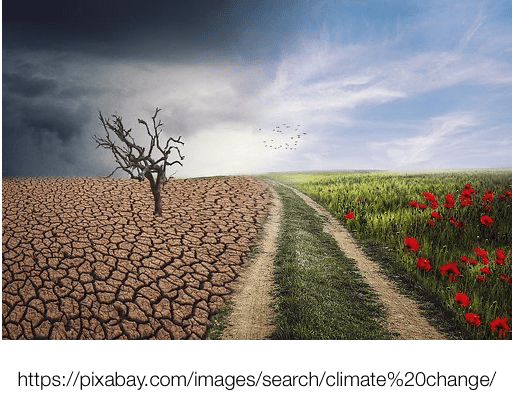
And isn’t that still where we find ourselves today? As the delegates gather for COP26 and all the non delegates arrive in person or via zoom, we come to a crunch point in the wellbeing of the world. Over the decades and indeed the centuries, we have not loved our fellow neighbours, both our human brothers and sisters, and our creaturely brothers and sisters. We have not loved our common home but have allowed greed and cruelty, envy and ignorance to damage and despoil the land where we live. 

Let us pray earnestly that our global leaders will make the right decisions. Equally let us pray that we too as responsible individuals will do all we can to live penitent lives, truly loving God and neighbour  with all our being.

Sunday Reflection

24th October 2021, Proper 25

Jeremiah 31:7-9 (https://bible.oremus.org/?ql=501918569) Hebrews 7:23-28 (https://bible.oremus.org/?ql=501918639) Mark 10: 46-52 (https://bible.oremus.org/?ql=501913875)

Reflection 

The reading from Jeremiah is so upbeat and full of joy. God is bringing together all God’s people, from the very ends of the earth, those who have been disadvantaged and sidelined, the marginalised, the young and the old. God will bring them back together, console and lead them, caring for them as a loving parent. The passage begins with a call to the leaders that they should praise God and pray for salvation. Will our nations’ leaders do the same for us at COP26? There are plenty of people around the world waiting for a time of celebration!

The Letter to the Hebrews reminds us that we have in Jesus the ultimate companion, guide and priest. The one who will always be with us, who will always be the means of our salvation, and who will always intercede on our behalf. At times of seeming hopelessness, we need to be reminded of this certainty.

It is not often we learn the names of the people that Jesus encounters. We hear of the woman with haemorrhage but not her name, of the paralysed man – ditto, the Syro-Phonecian woman, Peter’s mother-in-law: all are anonymous. But here we know the man’s name and that of his father too, and we know where he lives: he is Bartimaeus, son of Timaeus, resident of Jericho.  He is a beggar so maybe life’s opportunities have passed him by. As a crowd gathers along the road side, people are less than generous towards Bartimaeus. They scold him for calling out to Jesus – are they embarrassed by him? Do they think people like him should be kept in the background? Do they think Jesus should only meet upright, ‘proper’ people?

If so, they have not been paying attention. Jesus is often sought out by the vulnerable, the excluded, the despised, and each time his response to them is always focused on their needs, full of love and compassion. Once Jesus has responded to Bartimaeus’s call, the crowd shifts its approach and now encourages Bartimaeus to get up and meet Jesus. How fickle a crowd can be!

Jesus’s question to Bartimaeus is interesting. He doesn’t assume that what Bartimaeus wants is sight – indeed may be Bartimaeus’s first desire was to be heard. People labelled as disabled, don’t always see their difference as something unwanted, as something they wish to be rid of. Rather what they may want acceptance and understanding, an place of equal standing in society. In this instance, Bartimaeus does want to regain his sight, he wants to see again. It transpires that what Bartimaeus doesn’t want to do is to stay where he is. He doesn’t want to remain by the roadside on the way into Jericho, the butt of people’s shifting opinions. He wants to go with Jesus, to follow him and become part of the transformative society that Jesus is creating. 

In that there is a message for us. What do we want, both for ourselves and our society – our world?  And can we be part of the change? Next Sunday sees the start of COP26 in Glasgow. Decisions made there have the potential to transform for the better, the lives of so many. Let us make sure our voices are heard, our wishes declared.

Sunday Reflection 

17th October 2021, proper 24

Isaiah 53:4-12 https://bible.oremus.org/?ql=501459221

Psalm 91:9-16 https://bible.oremus.org/?ql=501459312

Hebrews 5:1-10 https://bible.oremus.org/?ql=501459357

Mark 10:35-45 https://bible.oremus.org/?ql=501459405

Reflection

At the heart of today’s readings are two themes: suffering and service. 

‘He bore our infirmities, our diseases and was wounded because of our transgressions’, to paraphrase Isaiah. This passage from Isaiah, reveals the prophet’s understanding of how society can behave, how it deals with the little people when the rich and wicked hold sway. 

Today we can look around the world and see a myriad of little people, of plants and creatures that  bear the infirmities, diseases and wounds caused by our transgressions. Our failure to care for the planet, our failure to curb carbon emissions, our over-consumption of finite resources, our inability to share the earth’s bounty, our failure to protect habitats and ecosystems, our greed and hardness of heart that leads to conflict. Suffering is invariably caused by human failings, human greed, human ignorance and disinterest – now, back then in the days of the Jewish Exile, back in first century Palestine and in all the years since.

Yet Isaiah’s insight also reveals God’s commitment to the world, the suffering and injustice that God is willing to endure to bring about healing and redemption. No matter how much suffering human sinfulness causes, God does not give up on us but bears with us. This is a prophecy that is relived in the life of Jesus – and thereafter in the lives of his followers: for Jesus, the living word, is there alongside each person in their pain and suffering. He is with us in our darkest places and it is he who can bring us hope and consolation. 

“The righteous one, my servant, shall make many righteous” says the passage from Isaiah. And the passage from today’s gospel concludes “For the Son of Man came not to be served but to serve, and to give his life a ransom for many”. To serve is the vocation of the Son of Man. The word in Greek is ‘diakaneo’ and it is a word used frequently in the gospels. When Jesus heals Peter’s mother in law, she gets up and  ‘diakaneo’ or serves them, or as I have always imagined, cooks them a meal for I am sure that at the end of a sabbath spent healing and teaching, they were both hungry.

It is what the angels do for Jesus when the devil has finished tempting him in the wilderness, which again I am sure involved food and drink as well perhaps attending to his tired feet.

In the parable of the sheep and goats, in Matthew’s gospel, it is what the goats failed to do, when they do not see Jesus in the one who was hungry and thirsty, who was the stranger, who was naked, sick or in prison.

It is what the women disciples did for Jesus when they provided financial support. It is what Martha complained about when left to do it by herself while Mary just sat and listened. 

To serve – to diakaneo – is putting oneself at the disposal of another, to minister to their needs.  This suggests that to serve is also about being aware and sensitive to what people might be in need of – something Jesus was good at. He was able to intuit what someone needed and sometimes knowing what they needed, even though they themselves didn’t know: forgiving the sins of the paralysed man, knowing that Zacchaeus needed to be wanted, or persuading Martha that there were times when preparing a meal wasn’t the most important thing. 

What serving is not, is lording it over others, nor is it pulling rank, nor basking in glory. That is the way of tyrants – and sadly, it is nowadays often the way of politicians (not all) or of rich business leaders (again not all). Just for a moment imagine what the world would be like if all politicians and all business leaders saw their role as one of service, serving not just their nearest and dearest, but serving all. And what if we all equally saw our role as one of service too, serving both are fellow human beings and our fellow creatures, from earth worms to orang-utans. Would this not begin to look like heaven in earth? A world where each is served by and serves the needs of, others.

Jesus is realistic with his followers. He sees the mismatch between those who wish to lord it over others and those who wish to serve the common good. He knows the likelihood of pain and suffering to which the latter will be subject. For most of us who would wish to see service as the basis of life, such suffering will be the stress and anguished felt when we look at what is happening around the world: people stranded in the wrong side of the Afghan border, people caught in the cross fire in Lebanon, people stabbed to death for being of the wrong colour or creed, the continued investment in fossil fuels instead of renewables, people facing hunger for lack of money in a world of billionaires. Cor others the pain and suffering will be physical and sometimes fatal. 

When we are baptised, we are baptised into the death of Jesus; in baptism we are buried with him; and in baptism we are raised to newness of life (Romans 6:3,4). In baptism we take on the calling both to serve and to suffer, but we do so knowing that in all we do we share with Jesus, and that we are ceaselessly loved by God. In the words of today’s psalm, slightly adjusted, 

“They are bound to me in love,

therefore will I deliver them; 

I will protect them, because they know my Name.

They shall call upon me, and I will answer them; 

I am with them in trouble;

I will rescue them and bring them to honour.”

Sunday Reflection

10th October 2021, proper 23

Amos 5:6-7,10-15,   https://bible.oremus.org/?ql=500800588, Psalm 90:12-17,     https://bible.oremus.org/?ql=500800660, Hebrews 4:12-16,   https://bible.oremus.org/?ql=500800726, Mark 10:17-31,   https://bible.oremus.org/?ql=500800772

Reflection 

Finance Coin Home Business Investment Money Bank

How true! God’s word is sharper than a two edge sword! It can probe that join between the bone and flesh, it can pierce the gap between thought and deed, it can lay open the difference between dream and reality. God’s word strikes at the heart of the matter. And so it is when the rich man comes to a Jesus for advise.

This man wants to inherit eternal life – which almost sounds as if he wants it to be something he can receive as of right rather than by effort. In response to Jesus’s questioning, he confirms he has lived his life according to the law, he has not done anything that steps over the line. Yet when Jesus questions him about his wealth, it seems that his love for his wealth is more than his love for his neighbour.

Curiously Jesus doesn’t ask if he has kept the first of the Ten Commandments, those that relate to our relationship with God. 

And the man goes away disappointed, with no assurance of gaining  eternal life.  Jesus comments how hard it is for the wealthy to enter the kingdom of God: for that is to have eternal life. And I think it is not just wealth here that is meant, but also power and privilege for the three are interlinked. Those with privilege are more likely to acquire wealth and power. Those with wealth are more likely to acquire power and privilege. Those with power to gain wealth and privilege. It is as if there is a set of rules that makes this so. We have heard so much in the news about people with money who can access government ministers to push their causes;  of multinationals who can use their power to promote use of products that harm the planet; of people who can hide their wealth to avoid paying taxes; of wealthy nations who can privilege vaccines for their citizens over those of poorer nations; of economic systems where the top 1%  holds 25% of all wealth (that’s in the UK) or 46% of the wealth when measured globally; of the longer life span that accrues to those who live in wealthier areas; or of privileged pupils who could access better education during the covid lockdown.

 From what we read in the gospels, the kingdom of God is radically different from any other kingdom, any other world-order, or any other culture. In God’s kingdom life is lived according to God’s ways, God’s logic, God’s culture. And even if squeezing a camel through the eye of needle seems impossible, for God, says Jesus, anything is possible. 

Why is it that the rich man could have so strictly followed all the rules, and yet been unable to share his wealth? Was it – and indeed is it – that wealth insulates us from the problems that other people face, that it blinkers our eyes so we don’t see the poverty that is out there, that it prevents us from understanding how hard life can be without power or privilege? 

Things were no different in the 8th century BCE in the days of Amos. Amos lambasted the people with the message God gave him. “Seek the Lord and live! … hate evil and love God, establish justice.” Amos warns that those who gained their wealth through taxing the poor and trampling on them, who deny the truth and scorn justice, who take bribes, rubbish the righteous, and push the needy aside. They will get their comeuppance and will not live in the grand houses they have built, nor drink the wines from their vineyards. 

I wonder what it would look like today to hate evil and love God and to establish justice?

Would it be in truthful journalism that exposes tax avoidance and wealth havens? Would it be in demanding the insulating of homes so that those least able to pay rising fuel bills can keep warm? Would it be in demanding government policies that would actually reduce carbon emissions? Would it be in ensuring equal access across the globe to covid vaccines? Would it be in avoiding goods produced by cheap labour? Would it be in ensuring we don’t buy products which involve the destruction of rainforests and mangroves? Would it be in curbing our carbon footprint to ensure a safe future for our children?

If all this sounds impossible, let’s ask God to help us. If giving up our wealth, our power, our privilege seems too hard, let’s ask God for help. If following Jesus seems too demanding, let’s ask God for help. For all things are possible for God. 

May God prosper the work of our hands – not to garner wealth, but to build God’s kingdom. 

Sunday Reflection

3rd October 2021, fifth Sunday in creationtide

Genesis 2:18-24

Then the Lord God said, ‘It is not good that the man should be alone; I will make him a helper as his partner.’ So out of the ground the Lord God formed every animal of the field and every bird of the air, and brought them to the man to see what he would call them; and whatever the man called each living creature, that was its name. The man gave names to all cattle, and to the birds of the air, and to every animal of the field; but for the man there was not found a helper as his partner. So the Lord God caused a deep sleep to fall upon the man, and he slept; then he took one of his ribs and closed up its place with flesh. And the rib that the Lord God had taken from the man he made into a woman and brought her to the man. Then the man said,

‘This at last is bone of my bones

   and flesh of my flesh;

this one shall be called Woman,

   for out of Man this one was taken.’ 

Therefore a man leaves his father and his mother and clings to his wife, and they become one flesh.

Hebrews 1:1-4, 2: 5-12

Long ago God spoke to  our ancestors in many and various ways by the prophets, but in these last days he has spoken to us by a Son, whom he appointed heir of all things, through whom he also created the worlds. He is the reflection of God’s glory and the exact imprint of God’s very being, and he sustains all things by his powerful word. When he had made purification for sins, he sat down at the right hand of the Majesty on high, having become as much superior to angels as the name he has inherited is more excellent than theirs.

Now God did not subject the coming world, about which we are speaking, to angels. But someone has testified somewhere,

‘What are human beings that you are mindful of them,

   or mortals, that you care for them? 

You have made them for a little while lower than the angels;

   you have crowned them with glory and honour, 

   subjecting all things under their feet.’

Now in subjecting all things to them, God left nothing outside their control. As it is, we do not yet see everything in subjection to them, but we do see Jesus, who for a little while was made lower than the angels, now crowned with glory and honour because of the suffering of death, so that by the grace of God he might taste death for everyone.

It was fitting that God, for whom and through whom all things exist, in bringing many children to glory, should make the pioneer of their salvation perfect through sufferings. For the one who sanctifies and those who are sanctified all have one Father. For this reason Jesus is not ashamed to call them brothers and sisters, saying,

‘I will proclaim your name to my brothers and sisters,

   in the midst of the congregation I will praise you.’

Mark 10:2-16

Some Pharisees came, and to test him they asked, ‘Is it lawful for a man to divorce his wife?’ He answered them, ‘What did Moses command you?’ They said, ‘Moses allowed a man to write a certificate of dismissal and to divorce her.’ But Jesus said to them, ‘Because of your hardness of heart he wrote this commandment for you. But from the beginning of creation, “God made them male and female.” “For this reason a man shall leave his father and mother and be joined to his wife, and the two shall become one flesh.” So they are no longer two, but one flesh. Therefore what God has joined together, let no one separate.’

Then in the house the disciples asked him again about this matter. He said to them, ‘Whoever divorces his wife and marries another commits adultery against her; and if she divorces her husband and marries another, she commits adultery.’

People were bringing little children to him in order that he might touch them; and the disciples spoke sternly to them. But when Jesus saw this, he was indignant and said to them, ‘Let the little children come to me; do not stop them; for it is to such as these that the kingdom of God belongs. Truly I tell you, whoever does not receive the kingdom of God as a little child will never enter it.’ And he took them up in his arms, laid his hands on them, and blessed them.

Reflection

At the moment I am each week creating a short film for a series called Space on Sunday. These episodes are for young families in the temporary absence of Sunday School, and each week include a story related to the Sunday’s readings. I looked at this Sunday’s selection and it occurred to me that their overall theme was asking the question, What is it to be human? And for what purpose did God create us?

I think God, who loves the world they created, wanted to create a being that could love the world too. And in many ways God created a being that was God-like: humans have the ability to love the whole of creation; we can learn to understand and comprehend its diversity and its interconnectedness. Humans have the ability to be creative and imaginative, and we can take pleasure from things of beauty.  We can visualise what things were like in the past and what they could be like in the future. Humans can create and value relationships. We can not only produce off-spring but can plan and work to create a better future for them. 

 I think God created us to be co-creators of the ongoing development of the world as a living organism. And I think God created us as beings who can be in relationship with God. 

Turning to the readings. The extract from Genesis tells us that humans were not created to be either alone/ lonely nor to be left to cope on their own. Instead it is God’s intention that we should have helpers and partners. Helpers are not restricted to fellow humans, but include creatures – to which we could also add inanimate things such as the sun, wind and water which provide us with the power. 

The passage from Hebrews reminds us that in Jesus we have the perfect pattern or model of what a human should be. Further it reminds us that in Jesus we see the image of God, and that through his death and resurrection, Jesus redeems, or resurrects, that bit of God’s glory that exists somewhere in all of us, and so we are all called brothers and sisters of the one Heavenly Father. 

 Mark’s gospel gives us an example of the difference between how humans can be and how they should be; the difference between human weakness and God’s ambition for us. This is followed by an example of human narrowness and God’s openness. To be truly human is to be truly open to God.

Sunday Reflection

26th September 2021: fourth Sunday of Creation-tide

Logo of the Climate Coalition

Ecclesiastes 3:1-8

For everything there is a season, and a time for every matter under heaven: 

a time to be born, and a time to die;

a time to plant, and a time to pluck up what is planted; 

a time to kill, and a time to heal;

a time to break down, and a time to build up; 

a time to weep, and a time to laugh;

a time to mourn, and a time to dance; 

a time to throw away stones, and a time to gather stones together;

a time to embrace, and a time to refrain from embracing; 

a time to seek, and a time to lose;

a time to keep, and a time to throw away; 

a time to tear, and a time to sew;

a time to keep silence, and a time to speak; 

a time to love, and a time to hate;

a time for war, and a time for peace.

Romans 8:14-25

For all who are led by the Spirit of God are children of God. For you did not receive a spirit of slavery to fall back into fear, but you have received a spirit of adoption. When we cry, ‘Abba! Father!’ it is that very Spirit bearing witness with our spirit that we are children of God, and if children, then heirs, heirs of God and joint heirs with Christ—if, in fact, we suffer with him so that we may also be glorified with him.

I consider that the sufferings of this present time are not worth comparing with the glory about to be revealed to us. For the creation waits with eager longing for the revealing of the children of God; for the creation was subjected to futility, not of its own will but by the will of the one who subjected it, in hope that the creation itself will be set free from its bondage to decay and will obtain the freedom of the glory of the children of God. We know that the whole creation has been groaning in labour pains until now; and not only the creation, but we ourselves, who have the first fruits of the Spirit, groan inwardly while we wait for adoption, the redemption of our bodies. For in hope we were saved. Now hope that is seen is not hope. For who hopes for what is seen? But if we hope for what we do not see, we wait for it with patience.

Mark 4:26-32

He also said, ‘The kingdom of God is as if someone would scatter seed on the ground, and would sleep and rise night and day, and the seed would sprout and grow, he does not know how. The earth produces of itself, first the stalk, then the head, then the full grain in the head. But when the grain is ripe, at once he goes in with his sickle, because the harvest has come.’

He also said, ‘With what can we compare the kingdom of God, or what parable will we use for it? It is like a mustard seed, which, when sown upon the ground, is the smallest of all the seeds on earth; yet when it is sown it grows up and becomes the greatest of all shrubs, and puts forth large branches, so that the birds of the air can make nests in its shade.’

Reflection 

The passage from Ecclesiastes is probably very familiar to us. It has a certain poetry to it that makes it easy to remember. It also has a sense of being down to earth and pragmatic. The writer is reminding us that these things will happen in the course of life; that we should expect them, anticipate and prepare for them. Preparing for things that one might reasonably expect to happen is something our current government is very bad at and we are suffering the consequences. 

Much of the writings in the Bible are about cause and effect. If you do A, B will happen, but if you do X, Y will happen. If you follow God’s wisdom, you will be blessed; if you ignore God’s wisdom – if you mistreat your fellow humans, the land which you occupy or the creatures you live with – then you will bring suffering on your head. Yet it is a lesson we find hard to learn. 

Collectively we have not ensured that all who work receive a fair wage, and now when we short of  people willing to take on tough low paid jobs – in abattoirs, driving trucks, picking vegetables – we realise how important those workers to the smooth running of our economy. We have not cared for the soil we farm, and now find that all the fertilisers we have to add, are polluting our streams and rivers. We have not cared for the air we breathe, and now realise that air pollution is harming our health: 7 million people a year die from air pollution. We have not heeded the warnings of our scientists – those who study the way God’s world is responding to human activity – and continue to over consuming filling the atmosphere with excess quantities of carbon dioxide.

Cause and effect: these things are happening. 

In the passage from the letter to the Romans, we have a somewhat involved argument from Paul. As he writes to the religious communities in Rome, he reminds them that all who are led by the Spirit of God – the Holy Spirit – are children of God. And it is a spirit of freedom not slavery. 

As children of God, we are likewise co heirs, siblings with Christ, and are expected, like him, to share with the suffering in the world. Jesus did not ignore or deny the suffering that was in the world; rather he  sought it out. He sought to understand where suffering came from, how it grew and persisted. And then he sought to transform it – healing the sick, feeding the hungry, releasing those held captive, and ultimately transforming death into resurrection. Paul writes not just of humans suffering, but of creation suffering. He talks of the ‘futility’ of creation. The Greek word can also be translated as ineffectiveness or emptiness. 

Last week we noted the barrenness, the emptiness of the earth that revealed the need for water and for a tiller, in order that it might become a verdant garden. Unless the right resources and the right action are brought together, the progress of creation is ineffective or futile. In the same way our efforts to be fully human are futile unless we are led by the Spirit of God. Only with God’s Spirit, God’s wisdom can either we as humans or the earth as God’s amazing creation develop their potential – the potential that reveals God’s glory. 

Paul goes on to write they ‘hope that is seen is not hope’ but I can’t help feeling that it helps to have some imagining, some image, of what it is you hope for. Jesus’s kingdom parables give us metaphorical but highly visual images of what the kingdom of God might look like. The mustard seed tree is one filled with hope. It portrays the kingdom as capable of immense growth and size such that all the birds of the air – everyone and everything – finds a place to lodge and live. It is an image of the kingdom as one of peaceful and sustainable co existence. 

So let us be led by God’s wisdom, seek out and acknowledge the suffering in the world and act to transform them so that creation can flourish.

Sunday Reflection

19th September 2021

Third Sunday of creationtide: Deuteronomy 8. 7-18, Matthew 6.25–33

Reflection 

The writer of Deuteronomy describes a landscape that is rich, verdant and bountiful. A land so well stocked with natural resources that the people will not have to worry about living fulfilled, sustainable lives. Surely nothing could threaten such a well endowed life style?

Yet the writer gives them three warnings.

  1. Don’t forget God by failing to keep God’s commandments. It is only by sticking to those commands, those ways of living, that the people will be able to maintain their relationship with God.
  2. Don’t forget that when you lived in a place of scarcity- ie the wilderness – it was only through God’s intervention that you had enough to eat and drink.
  3. Don’t credit yourselves with your success. It is not because of your efforts that you now love lives of  riches and comfort. It comes from God’s doing.

We, like the Israelites, have been blessed with a beautiful world with vast resources sufficient to meet our needs. Certainly I am sure that has been God’s intention in creating this world with its wonderful interconnected ecosystems. But somewhere, somehow we have strayed from the path, from the right way of doing things. We have failed to keep God’s commandments. 

Every year since 1987 scientists have calculated how much of the world’s resources we are consuming  and the amount by which the earth can renew those resources, and setting one against the other they have determined the date each year at which we are consuming more than the earth can replenish. If the earth was bank account, this would be the day at which we would go into the red. In 1987 Earth Overshoot Day was 23rd October. Since then Earth Overshoot Day has occurred earlier and earlier. This year it was 29th July!

It is hard to comprehend that in little more than half a year we have consumed a full year’s worth of the resources that the earth can generate. It is patently not sustainable. Can it be reversed if we limited our consumption? The answer is certainly yes if we have the will, or if we are forced by circumstances. In 2020, the year of the pandemic, the date did recede – by a good three weeks to 22nd August. 

The passage from Matthew’s gospel asks us if life is more than food and clothes? I wonder what life means for you? 

I wonder what life means for a family dependent on food aid in Afghanistan? I wonder what life means for a family in the UK who is relying on the £20 top up to Universal Credit?I wonder what it means for the person forced to use a food bank? 

The United Nations tells us that the world produces more than enough food to feed the its population, but poverty and other barriers to access leave many people unable to afford or obtain food. Problems with markets forces and distribution networks means that food rots in the field or is otherwise wasted, without reaching the consumer.  There are real problems about poverty and equality and over consumption that arise from our current unsustainable  lifestyles, political policies and business practices.  Sadly even the birds are loosing out. Habitat loss and climate change are both conspiring to limit food and places to nest for many bird species. 

Four times in today’s gospel Jesus says, Do not worry! Worrying does not help. It will neither add an hour to your life nor a inch to your height (translations vary). Instead says Jesus, Strive for the kingdom of God. If we live according to God’s ways, if we can bring God’s rules into play, if we can establish heaven on earth, then will everyone have food and clothes and all the necessities of life. The we will fairly share the earth’s resources, not plundering them but sustaining them. 

Let’s spend some time this week considering what we eat, the clothes we wear, the resources we use. Are they sustainable, do they prejudice the access of others to their fair share? Does our lifestyle meet God’s injunction that we should tend and care for the earth? Does it meet God’s injunction that we should love our neighbour as ourself? Does it meet the command that we should with all our being love God?

Sunday Reflection

12th September 2021, Creationtide

Genesis 2: 4-7, 15-24; 1 John 1:1-4; John 2:1-11

Reflection

Christ Church is observing the Sunday between 1st September and 4th October as Creationtide and so is using a different set of readings for these Sundays. According to the Cambridge Dictionary creation is ‘the act or process of making, producing, or building something, or something that has been made, built, or produced’. It is a word that means both process and the result. God, in giving us the gift of creation, gives us something that both is, and is on going. God invites us to value and participate both in the existence of creation and in the process of creation. 

Today’s set of readings includes two of my favourites.

The first reading from the Book of Genesis (which means the Book of Beginnings) starts with insufficiency – the insufficiency of the bare earth to be productive, to fulfil its potential. God sees what could be and what is needed to get there. 

First of all God provides water and then someone to till the ground. With those key elements in place, the garden that God plants (in verse 8), can now thrive – transforming what was barren into a verdant landscape. God’s vision sees yet more scarcity and more untapped potential. The human needs company, both as a helper and as a partner. God therefore creates all manner of animals as helpers and a fellow human as a partner. Now there is potential for creation – animals and humans – to do even more tilling (creating) of the earth. 

This story sees creation as a process of teamwork and cooperation and – on God’s part, vision. It is a story about developing relationships and bonds between God and plants and creatures and humans. It is a story about the creation of a creative ecosystem. As the story progresses beyond today’s reading, we know that it is a finely balanced ecosystem which breaks apart when humans ignore God’s words.

The gospel story is similar. It is a story about insufficiency and abundance. It is a story about co working, of God  and humans (here I am thinking of the servants who have to fill those heavy stone jars with water and take them to the steward) working together to create something amazing. In it Jesus’s   glory is revealed and his disciples believe in him. 

In between these two we have the Letter of John in which the word of life is described as being visible, audible and tangible. This word that comes from God and produces eternal life, echos the breath of God that gives life to the living beings in the Garden of Eden. It is a word that generates fellowship and joy – something envisaged in the Garden when God saw the need for companionship and co- workers, and in the Gospel, where the wine rejuvenates the wedding feast – itself symbolising the relationship between God and humanity, and which we would now add ‘and creation’. 

In the Autumn of 2021 we find ourselves facing a ecological emergency caused by climate change and human incompetence. Through God’s wisdom, we know we can restore harmony, that we can replace insufficiency with abundance, yet we are fearful that we will not. We are fearful of making changes, of risking our own sense of security, of reaching out to help others in order to help ourselves. 

Can we re-find the word of life, can we re-new our fellowship one with another and with all of creation, and re-discover true joy?

Sunday Reflection

5th September 2021, Proper 18

Isaiah 35:4-7, Psalm 14, James 2:1-10, [11-13], 14-17, Mark 7:24-37

Be strong, do not fear! Here is your God.

Words we have desperately wanted to hear this week, whether that was as protestors trying to draw the attention of the Government and the financial world to the dire emergency of the climate crisis and of the need to ‘act now!’ Or whether it has been as those watching helplessly as families and individuals tried to to flee from Afghanistan. 

Yes – we want them to be saved, we want ourselves to be saved, from harm and hurt and fear. And we want to be saved from ourselves – I think we know that the cause of war and extremism, of failed diplomacy, rising global temperatures and the increased frequency of extreme weather events, is all of human making. 

Was that the feeling of the people in Isaiah’s community? Did they feel trapped in the space between feeling helpless and knowing that their predicament was the result of their own failures? They were a people surrounded by war; a people being swayed to go with this side or that side, as superpowers fought over their land. A people who feared defeat and heard the words of the diverging words of the false prophets and of God’s prophets. A people who did know that they had sinned against God and against their neighbours. Would God be able to – indeed would God save them? What would the future look like? Isaiah is giving them words of hope, reminding them of God’s greatness and creating for them a vision of the world God desired for them: heaven on earth. The psalmist echoes this with words encouraging and exhorting us to hope and trust in God. 

Yet I sense that God is not just going to intervene and wave, as it were a magic wand, and everything will be tip top fine. That certainly was not the experience of Isaiah’s audience: they suffered the humiliation of defeat and exile, and it was only during that time of exile that they learned to live once again in a renewed relationship with God and neighbour. It is at this point we turn to the epistle of James. 

Do we really believe in Jesus Christ? What a question! Not do we believe, but do we really believe? For if we truly believed then we would live as Jesus lived, act as Jesus acted. We would see the flaws in human systems that Jesus saw – and sees today – and would work to transform them. We would like Jesus, be able to say ‘the kingdom of heaven is at hand’. 

But, says the writer of James, we seem to have been hoodwinked by the rich and powerful. We have been drawn into their mindset that says wealth, riches and fine clothes are the indicators that show who is most important, who should be in power, whose words should be believed. 

Instead we should be turning to the scripture and the royal law: love your neighbour as yourself. Here there is no hierarchy, no space of prejudice nor favouritism. Further more to love is not just to mouth the words; it is to enact them.  The epistle writer is quite clear: if we do not act, we cannot save ourselves. Our faith is only of use if it is enacted. A life jacket only saves you if you inflate it and put it on! Just having faith that a life jacket can save lives is not enough.

It seems to me that what Jesus so clearly demonstrated for us is that with faith in God, we can do all that is required to love our neighbours, to create heaven on earth, to save the world.

In today’s reading from the Gospel of Mark, we see that there is not a time when Jesus cannot find himself called upon to do the work of God. Even when he goes outside the the Jewish territories of Judea and Galilee, there are people who need help. There are foreigners who are still neighbours. There are people who don’t expect much but still ask. There are people trapped by poverty and people trapped by disabilities. When the onlookers saw what Jesus was doing, they were astounded beyond measure.

Can we be as astounding? Can our belief in Jesus be such that we let ourselves be empowered by the strength and hope that comes from God? Can we put that faith into action so that by loving our neighbour, by creating heaven in earth, the world will be saved?

Sunday Reflection

29th August 2021

Proper 17: Deuteronomy 4:1-2, 6-9, Psalm 15, James 1:17-27, Mark 7:1-8, 14-15, 21-23

Reflection 

Today’s passage from Deuteronomy talks in terms of statutes and ordinances, but what the people are being urged to do is to embrace the Torah as the key non negotiable summation of their life. Whilst we often translate the word ‘Torah’ as law it is something more fluid in meaning than the rigidity that law suggests. The word in Hebrew has the meaning of instruction or  guidance, or of teaching – of that which flows, say, from the teacher to the disciple, from the parent to the child or above all, from God to God’s people.  It can be seen as a concept that describes the relation between God and God’s people. Through the Torah God’s expresses the desire that people should live lives that are good, happy, loving, wise and productive. 

The Torah is also used to name the first five books of the Hebrew Bible: Genesis, Exodus, Leviticus, Numbers and Deuteronomy. These five books lay out the story of Gods early relationships with the earth and with human kind and with the Hebrew people in particular. As well as describing this history, it  includes laws – statutes and ordinances – that concern both daily life and community life, worship and relationships with God, farming practices, justice etc. Further on in Deuteronomy we hear of the very practical requirements such as setting aside a portion of all they produced – a tithe – to support the vulnerable in their communities and those unable to provide for themselves (Deut 14:28-29). And we hear very spiritual commands: You shall love the Lord your God with all your heart and with all your soul and with all your might. (Deut 6:4)

Whilst today’s passage talks about statutes and rules as if they were rigid, un-moveable, it helps in our understanding of the overarching nature of the Torah, if we remember that the Book of Deuteronomy is itself a revision of the laws written in Exodus, Leviticus and Numbers, written for the needs of the nation in the 8th century BCE. It is the loving relationship that God desires that is eternal, whilst the nature of rules is to evolve. In today’s psalm the Psalmist looks at how one finds a right relationship between God and human by observing the characteristics of a person who is living close to Go’s. That person is the one who live ‘a blameless life and does what is right, who speaks the truth from his heart’. The Psalmist then adds some flesh to this describing how this person lives their life. 

Here we might also recall from last week’s Gospel the words of Simon Peter, “Lord, to whom can we go? You have the words of eternal life. We have come to believe and know that you are the Holy One of God.”

This thought is echoed in the words of the Letter of James, for ‘every generous act of giving, with every perfect gift, is from above, coming down from the Father of lights, with whom there is no variation or shadow due to change. In fulfilment of his own purpose he gave us birth by the word of truth, so that we would become a kind of first fruits of his creatures’. The gifts of loving and learning and all that shapes our lives, flows to us from God so that we may live as God’s intended creation. 

James sees this as a gift that is only of benefit if it is acted upon, if it is built into the fabric of life. If it remains just as words, its benefit is non-existent. This seems to be at the nub of the argument between Jesus and his opponents in today’s gospel. If the law is honoured just as a set of words, but has no impact on the quality of life, has no positive impact on the way we love one another, has no benefit in sustaining our creation as God’s people, the it is of not being observed in the way God intends. The gift that comes from God is pure and undefiled and when received and acted upon, produces blessings. It is how the gift is received and acted upon that is important  and when we hear the passage from Mark’s Gospel that is the difference between Jesus’ response and that of his opponents. 

It is when we spurn God’s gifts, ignore God’s teaching, that our lives become compromised by fornication, theft, murder, adultery, avarice, wickedness, deceit, licentiousness, envy, slander, pride and folly. It is when we see other humans, and other creatures, as opportunities for profit, that we cease to feel God’s love. It is when we ignore the needs of the vulnerable – the orphan and the widow, the refugees and the migrant, the wild bee and the tiger, the bluebell and the Amazon rainforest, the contract worker and the carer – that we see lives destroyed and habitats lost; deceit and prevarication in government and big businesses; short term economic policies that fail to address the climate crisis; a lack of vision and determination create polices that ensure protection of the environment, or set up a  sustainable care system.

Holy God, through Jesus you show us how to truly live life, how to fill our hearts with love so that love may shape the world in which we live, so bringing your kingdom on earth to be as it is in heaven. 

Amen. 

Inspirational Quotes Motivation Quotes Inspirational