There are a number of small ways in which we as householders, and more especially those of us with gardens, can increase the amount of rainwater our domain can retains. This can reduce the risk of flooding in two ways.
By keeping water out of, or by delaying the water entering into, the storm water drains we can help prevent them from overflowing – a common cause of flooding in urban areas.
By increasing the water absorbency of our grounds, we can delay the time and speed with which rainwater enters local streams and/ or the water table. This will reduce the pressure on the capacity of local streams and rivers, so reducing the risk of flooding.
How can we do this?
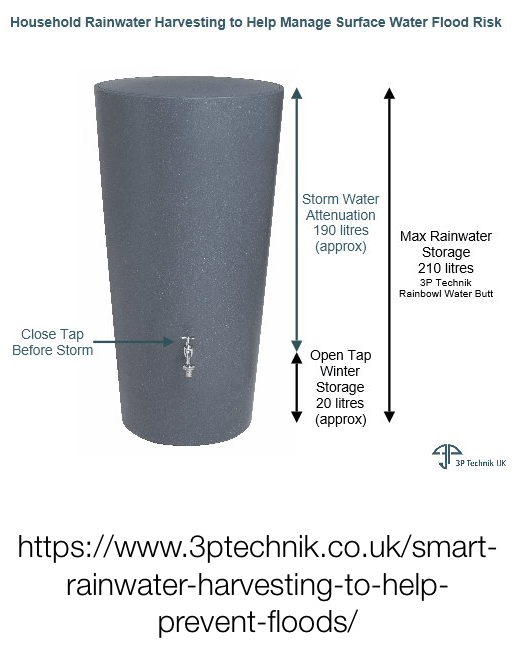
Install water butts. These collect water before it enters either the ground of storm water drains. If, advance of heavy rainfall, the butts are empty, then corresponding volumes of water can be held back from entering the ground or drains. Whilst one single butt may not make difference, a 1000 water butts each with a capacity of 200litres can hold back 200,000 litres – 200 cubic meters – of water. This does require some focus by the householder on rain forecasts. A less precise solution would be to leave the water butt tap half open or it to a leaky hose. Either way it is important that you ensure the empty butt is weighted down to stop it blowing over – either leave some water in the bottom or put in some bricks or out a heavy lid on top.
The RHS suggests using rainwater from butts to wash cars and paths in the winter and plants in the summer.
Avoid areas of bare earth. Ground that is covered with plants will slow the passage of rainwater into the water table. Rainfall will be interrupted by leaves and rainwater will absorbed by roots and by any mulch covering the ground.
Compacted soil is less able to absorb rainwater – where the ground is regularly trafficked create a path that uses porous materials – eg gravel, bark, stepping stones.
Ensure a range of planting so that there are always some plants covering the ground and some plants with leaves.
Cover areas of bare earth – eg before planting begins or in the autumn after harvesting – with a mulch or with a quick growing green crop – otherwise known as green manure – such as alfalfa, clover, mustard. https://www.rhs.org.uk/soil-composts-mulches/green-manures
Avoid hard surfaces if possible. Where a hard surface is needed (as a patio, for car parking etc) you can opt for a porous hard surface such as gravel or paving stones spaced out with gaps for drainage. You could also incorporate a soak-away to catch and collect water that runs off the area.
If you have a pond, keep it filled up with rain water. Run a hosepipe from a water butt so that when it rains the pond benefits from rain gathered over a larger area.
This is the time of year when I start to empty and reshape my compost heaps. I hope to find inside the compost bins well rotted vegetable matter, with red worms and wood lice wriggling around the edges where the material is not so well decomposed. I scoop out what is ready for use, placing it around the base of fruit trees, under the raspberry canes, around currant bushes and on top of the rhubarb patch. I make sure it is not piled up against the trunks of the trees. Then I leave it for the worms in the soil to pull the compost down into the soil where it will nourish the plants for the coming season.
Last year we put in the compost bins the compostable ‘plastic’ bags and compostable ‘plastic’ food bowls. Whilst I can see that they are breaking down, the decay process is much slower than it is for plant materials. What hasn’t decayed has gone back into the bin for a second season.
If you haven’t the space for a compost bin, you might like to try a worm bin. See the Urban Worm’s website for instructions on making a worm bin and for the offer of free tiger worms to live in it –
Recently Londoners we’re given health warnings about air pollution: the elderly and those with breathing difficulties were advised to listen strenuous exercise and to stay inside. A spell of high pressure weather mean that the air over London had remained static for several days: no winds had been moving the air on and bringing in fresh. As the air wasn’t moving nor were the noxious chemicals and small particulates moving. Instead concentration levels of these pollutants were rising.
Where do these pollutants come from in the first place? Exhausts from vehicles, dust from brake blocks and tyres, smoke from wood burning fires, exhausts from gas and oil boilers, dust from construction sites, exhausts from waste incinerators and from industrial plants. Of all the sources of pollution generated in London, over 50% comes from vehicles! It would seem that we Londoners are the cause of much of the problem. Can we drive less? Can we become less reliant on polluting vehicles to deliver goods and services? Can we encourage active travel – walking and cycling?
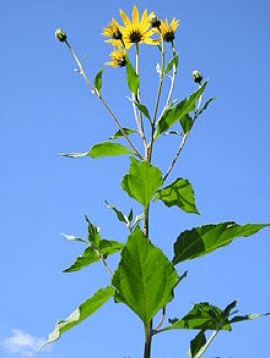
Jerusalem artichokes are in season. These are tubers that in the summer produce tall plants with sunflower like flowers. They are easy to grow. Simply take an existing tuber, even one you have bought from the vegetable shop or supermarket, and plant it in the soil at a depth of about 5cm. The plant may need staking as it grows to stop it blowing over.
Jerusalem Artichoke Pasta Sauce
Jerusalem artichokes about 150g per person Cashew nuts about 25g per person Oil Garlic and sage to taste
Scrub the tubers clean and chop.
Heat the oil and sautée the garlic.
Add the artichokes and sage. Stir well. Add the cashew nuts.
Cover the pan and cook gently til soft and golden.
Blitz the mixture adding a little hot water as necessary to achieve a creamy sauce.
For Zion’s sake I will not keep silent, and for Jerusalem’s sake I will not rest,
until her vindication shines out like the dawn, and her salvation like a burning torch.
The nations shall see your vindication, and all the kings your glory;
and you shall be called by a new name that the mouth of the Lord will give.
You shall be a crown of beauty in the hand of the Lord, and a royal diadem in the hand of your God.
You shall no more be termed Forsaken, and your land shall no more be termed Desolate;
but you shall be called My Delight Is in Her, and your land Married;
for the Lord delights in you, and your land shall be married.
For as a young man marries a young woman, so shall your builder marry you,
and as the bridegroom rejoices over the bride, so shall your God rejoice over you.
Psalm 36:5-10
5 Your love, O Lord, reaches to the heavens, * and your faithfulness to the clouds.
6 Your righteousness is like the strong mountains, your justice like the great deep; * you save both man and beast, O Lord.
7 How priceless is your love, O God! * your people take refuge under the shadow of your wings.
8 They feast upon the abundance of your house; * you give them drink from the river of your delights.
9 For with you is the well of life, * and in your light we see light.
10 Continue your loving-kindness to those who know you, * and your favour to those who are true of heart.
1 Corinthians 12:1-11
Now concerning spiritual gifts, brothers and sisters, I do not want you to be uninformed. You know that when you were pagans, you were enticed and led astray to idols that could not speak. Therefore I want you to understand that no one speaking by the Spirit of God ever says “Let Jesus be cursed!” and no one can say “Jesus is Lord” except by the Holy Spirit.
Now there are varieties of gifts, but the same Spirit; and there are varieties of services, but the same Lord; and there are varieties of activities, but it is the same God who activates all of them in everyone. To each is given the manifestation of the Spirit for the common good. To one is given through the Spirit the utterance of wisdom, and to another the utterance of knowledge according to the same Spirit, to another faith by the same Spirit, to another gifts of healing by the one Spirit, to another the working of miracles, to another prophecy, to another the discernment of spirits, to another various kinds of tongues, to another the interpretation of tongues. All these are activated by one and the same Spirit, who allots to each one individually just as the Spirit chooses.
John 2:1-11
On the third day there was a wedding in Cana of Galilee, and the mother of Jesus was there. Jesus and his disciples had also been invited to the wedding. When the wine gave out, the mother of Jesus said to him, “They have no wine.” And Jesus said to her, “Woman, what concern is that to you and to me? My hour has not yet come.” His mother said to the servants, “Do whatever he tells you.” Now standing there were six stone water jars for the Jewish rites of purification, each holding twenty or thirty gallons. Jesus said to them, “Fill the jars with water.” And they filled them up to the brim. He said to them, “Now draw some out, and take it to the chief steward.” So they took it. When the steward tasted the water that had become wine, and did not know where it came from (though the servants who had drawn the water knew), the steward called the bridegroom and said to him, “Everyone serves the good wine first, and then the inferior wine after the guests have become drunk. But you have kept the good wine until now.” Jesus did this, the first of his signs, in Cana of Galilee, and revealed his glory; and his disciples believed in him.
Reflection
Today’s gospel is one of my favourite stories as it about enjoying life and creating an abundance out of very little. It is on a par with the feeding of the 5000. And with the two, you have the Eucharist – a story which does not explicitly appear in John’s gospel.
The first reading from Isaiah begins with the voice of the prophet shouting out; not keeping silent. Sometimes we are reluctant to shout out either loud enough or often enough for those in need of salvation? For the people of Afghanistan? For those children in the UK who don’t have beds to sleep in? For people whose wages are so low, they have to rely on food banks? For those struggling with mental ill health because of the pandemic?
In Isaiah’s case there is a back story. Jerusalem had sinned, had erred and strayed from God and had suffered the consequences. Having learnt from their mistakes, the time had now come for the restoration of Jerusalem, a returning to their union with God. The people had been physically exiled but now they were returning to their God, to their land, to their roots.
We in the 21st century have strayed from God’s ways, have become separated from the land and are seeing around us the effects of that rift. As we accept that our lifestyles are the prime cause of the climate crisis, and our greed the prime cause of world wide injustices, so we are able to repent, to make reparations and to seek restoration and reconciliation – with God, with the land and with each other. Isaiah uses the concept of marriage to describe the strength and joy that comes from the renewed relationship between and God and the people. It is a relationship that abounds with delight.
The writer of psalm 36 echoes the same sentiments, extolling the strength and the abundance that come from a relationship built of love and faithfulness. Here is an abundance of good living that delights both humans and beasts. It is a relationship that grows through the gift of light – or as we might say, wisdom.
Last Sunday we recalled the baptism of Jesus and the moment at which he was filled with the Holy Spirit, a gift that came from above. Paul’s letter to the followers of Jesus in Corinth reminds them of the gifts they have received through the Holy Spirit: gifts of wisdom and discernment, of healing and miracles, of prophesy and discernment. The gifts of the Spirit are a sign of their union with God; those who speak or live in way that separates them from that relationship, cannot speak well of Jesus and vice versa. It is the gifts of the Spirit that will enable us to live lives that restore the world.
Finally to the Gospel. This story of transformation and abundance, and it is also a story about the celebration of restoration. We are not given any details about the bride and groom, although in a later passage we will hear John referring to Jesus as the bridegroom. The idea of marriage is often used in the Bible as a metaphor for the relationship between God and people. So we might imagine that this wedding celebrates the restoration of the relationship between God and humanity, manifested in the union between Jesus and the community of those who love him. It is a celebration that ends up overflowing with wine: each stone jar is filled with upwards of 100 litres of the best wine!
Notice the role Jesus’s mother plays. It is she who points out to Jesus what is needed, and it is she who prompts the servants to play their part. As followers of Jesus we are not automatons, but have differing gifts that we expected to use. And for some of us they may be the gift of observation, of discerning what is needed, of prompting or inspiring others to action. The good news is about action and transformation. Here a new use is found for the water jars; their former use may have been for cleansing rituals (maybe outdated rituals) but now they have been upcycled as wine vats. There had been a tradition of serving the best wine first, but now there is a new one: saving the best till last! This wedding reveals the glory of Jesus. It is a wedding that is not going to be forgotten: indeed it is a union which continues to be celebrated every time we share the Eucharist.
We count on the recycling crews to take away our recyclable waste and our landfill waste. To ease their workload we can help by ensuring that what we place in the recycling bin is clean, compacted (squashed, flatten, stacked) to prevent stuff overflowing, and in the correct bin.
Is there a ‘Maria Kondo’ tidy recycling bin award?
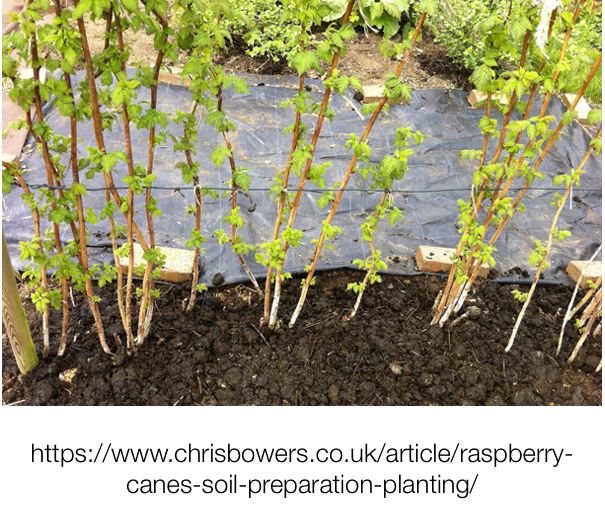
January is the month for planting raspberry plants – usually known as ‘raspberry canes’. There are two main types, those that produce fruit in the summer and those that fruit in the autumn. They are easy to grow and are suitable for growing in pots – one cane per pot.
Flooding in the Thames is a threat that comes from both upstream and downstream
12th January 2022
World wide action to avert the worst effects of the climate crisis are aiming to keep global temperature rises to 1.5C. Whilst that is the target spoken about by governments and businesses, Climate Action Tracker, analysing actual actions being taken, predict that we are on track for a global temperature rise of 2.7C (https://www.bbc.co.uk/news/science-environment-59220687). This level of temperature rise will lead to a faster melting of ice caps and glaciers, causing sea levels to rise and more extremes bouts of weather, increasing the severity and frequency of floods.
Here in south east England sea levels are projected to rise by approximately 1.4m – a little under a meter if the temperature rise is brought below 1.5C (https://www.metoffice.gov.uk/research/news/2019/uk-sea-level-projections-to-2300). The Met office also predicts that 1 in 10,000-year flood events are likely to occur more than once a year by 2300.
The Thames is tidal all the way up to Teddington Lock. At present the Thames Barrier is raised when ever there is a high tide that threatens to flood London. High tides are caused not just by the movement of the moon, nor by rising global sea levels. They are are also affected by weather systems. For example the height of a tide coming in from the North Sea can be increased by an on shore wind or by a low pressure system over the sea. Rising global temperatures that are causing rising sea levels and more frequent and intense weather systems means that the time will come when the Barrier will no longer be able to hold back an incoming high tide. The Corporation of London is considering plans to tackle this, including increasing the height of the Barrier and raising the height of the walls that bound the Thames – eg along The Embankment – by a further meter. There is debate as to whether this should be with glass so as not to obstruct the view of or from the river.
When the Barrier is raised to slow an incoming high tide, the water that is held back has to go somewhere – that is somewhere in the Thames estuary downstream of the Barrier. There is a flood storage area at Tilbury and on both sides of the Estuary there are area of marshland and farmland where flood waters can flow. These are in between other at risk built-up areas which have their own flood defences. Such provision will need to be reviewed as tide levels rise.
The Thames Barrier is also closed when there is a risk of flooding upstream. The Thames has a large drainage basin that extends all the way up into Oxfordshire and the Cotswolds. Heavy and/ or persistent rain anywhere in the area can raise river levels such that places such as Windsor, Thames Ditton, Richmond, Hammersmith risk being flooded. In such circumstances the Barrier can be raised at low tide, to prevent sea waters entering the lower part of the Thames so creating a reservoir where high volumes of water from upstream and be stored until the risk of flooding is lowered. The protection offered by this scheme is not going to be sufficient to cope with predicted rises in water levels due to the climate crisis.
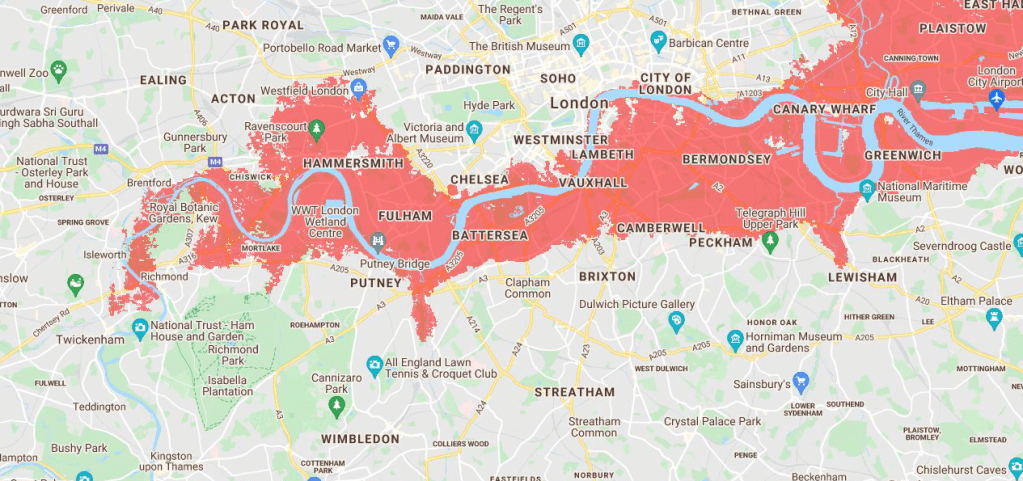
The following map shows areas of London that will lie below the anticipated annual flood level based on the IPCC’s climate change forecasts. (https://sealevel.climatecentral.org/maps/)
Boroughs along the Thames, such as Richmond, are having to develop plans to both limit or avert factors that contribute towards the risk of flooding and to constrain the adverse effects such flooding will cause. In part they will be dependant upon actions take by other people and organisations further upstream. For example, if further a.one the Thames, houses are built on the flood plain, then water that might otherwise be held or absorbed by that flood plain, will instead flow on down stream exacerbating the problem in Richmond. Similarly if surfaces that are currently – eg covered with grass and other vegetation – are replaced by hard surfacing such as tarmac, then again more water will flow more rapidly off the land and into the river. In a similar way areas of woodland are cleared, then less water will held in the land and instead will add to the volume in the river. Conversely recreating water meadows to allow flood waters to accumulate safely up stream, replacing hard surfaces with soft one, and planting trees, can all help reduce the volume and speed with which water drains off the land and into the river. In the Old Deer Park there are plans for the ‘re-wilding ’ of the land allowing formation of seasonal ponds/ lagoons and the growth of water-loving plants that increase the water absorbing capacity of the land. You can read more about this here – http://thames-landscape-strategy.org.uk/what-we-do/rewilding-arcadia/
It is widely acknowledged that the peaceful protests made by environmental and justice groups, including Extinction Rebellion, Fridays for Future school strikes, the Climate Action Coalition, the RSPB, Green Peace, Christian Aid etc, have raised public and government awareness of the climate crisis from being a very minor issue to one of the most pressing of the decade. Would we be where we are without such protests? The Government’s new policing bill currently being reviewed by the House of Lords before returning to the House of Commons is designed to severely restrict the right to peaceful protest. https://www.theguardian.com/world/2022/jan/13/green-activists-urge-labour-to-vote-against-policing-bill-climate-catastrophe
Monday and Tuesday are our local recycling days when the lorries and crew collect paper, & card, food waste, metal, glass and some plastics – as well as unrecycled waste that goes to landfill. It is a job the crew do in all weathers, pulling and lifting boxes and bins into the back of the lorry, and in summer the food waste can be pretty smelly. It is a pretty thankless job: we would all be lost without it, but we are seldom out and about when the crew comes by to say thanks. We used to call them dustbin men, then refuse collectors, but neither of those describe their current role nor the important that role has in tackling climate change and ensuring scarce materials are recycled for future use.







 The Green Tau