Count Down

Action 46: Knit something warm for winter: wrist warmers and beanies are  easiest if you are a beginner. You could try a beret, leg warmers, scarf or, if you have the time, a jumper. You might like to use yarn made from recycled cotton (t-shirts!) linen or silk,  or wool that comes from one of Britain’s rare breeds of sheep. 

Sunday Reflection

5th September 2021, Proper 18

Isaiah 35:4-7, Psalm 14, James 2:1-10, [11-13], 14-17, Mark 7:24-37

Be strong, do not fear! Here is your God.

Words we have desperately wanted to hear this week, whether that was as protestors trying to draw the attention of the Government and the financial world to the dire emergency of the climate crisis and of the need to ‘act now!’ Or whether it has been as those watching helplessly as families and individuals tried to to flee from Afghanistan. 

Yes – we want them to be saved, we want ourselves to be saved, from harm and hurt and fear. And we want to be saved from ourselves – I think we know that the cause of war and extremism, of failed diplomacy, rising global temperatures and the increased frequency of extreme weather events, is all of human making. 

Was that the feeling of the people in Isaiah’s community? Did they feel trapped in the space between feeling helpless and knowing that their predicament was the result of their own failures? They were a people surrounded by war; a people being swayed to go with this side or that side, as superpowers fought over their land. A people who feared defeat and heard the words of the diverging words of the false prophets and of God’s prophets. A people who did know that they had sinned against God and against their neighbours. Would God be able to – indeed would God save them? What would the future look like? Isaiah is giving them words of hope, reminding them of God’s greatness and creating for them a vision of the world God desired for them: heaven on earth. The psalmist echoes this with words encouraging and exhorting us to hope and trust in God. 

Yet I sense that God is not just going to intervene and wave, as it were a magic wand, and everything will be tip top fine. That certainly was not the experience of Isaiah’s audience: they suffered the humiliation of defeat and exile, and it was only during that time of exile that they learned to live once again in a renewed relationship with God and neighbour. It is at this point we turn to the epistle of James. 

Do we really believe in Jesus Christ? What a question! Not do we believe, but do we really believe? For if we truly believed then we would live as Jesus lived, act as Jesus acted. We would see the flaws in human systems that Jesus saw – and sees today – and would work to transform them. We would like Jesus, be able to say ‘the kingdom of heaven is at hand’. 

But, says the writer of James, we seem to have been hoodwinked by the rich and powerful. We have been drawn into their mindset that says wealth, riches and fine clothes are the indicators that show who is most important, who should be in power, whose words should be believed. 

Instead we should be turning to the scripture and the royal law: love your neighbour as yourself. Here there is no hierarchy, no space of prejudice nor favouritism. Further more to love is not just to mouth the words; it is to enact them.  The epistle writer is quite clear: if we do not act, we cannot save ourselves. Our faith is only of use if it is enacted. A life jacket only saves you if you inflate it and put it on! Just having faith that a life jacket can save lives is not enough.

It seems to me that what Jesus so clearly demonstrated for us is that with faith in God, we can do all that is required to love our neighbours, to create heaven on earth, to save the world.

In today’s reading from the Gospel of Mark, we see that there is not a time when Jesus cannot find himself called upon to do the work of God. Even when he goes outside the the Jewish territories of Judea and Galilee, there are people who need help. There are foreigners who are still neighbours. There are people who don’t expect much but still ask. There are people trapped by poverty and people trapped by disabilities. When the onlookers saw what Jesus was doing, they were astounded beyond measure.

Can we be as astounding? Can our belief in Jesus be such that we let ourselves be empowered by the strength and hope that comes from God? Can we put that faith into action so that by loving our neighbour, by creating heaven in earth, the world will be saved?

Count Down

 Action 45: Sign the ‘Time is Now’ petition. Join the UK’s largest climate action campaign group – a mix of individuals plus over 130 charities and climate change organisations. “Use your voice to tell politicians that you want a cleaner, greener, fairer future at the heart of plans to rebuild a strong economy.”

https://thetimeisnow.uk/

Falling in Love 5


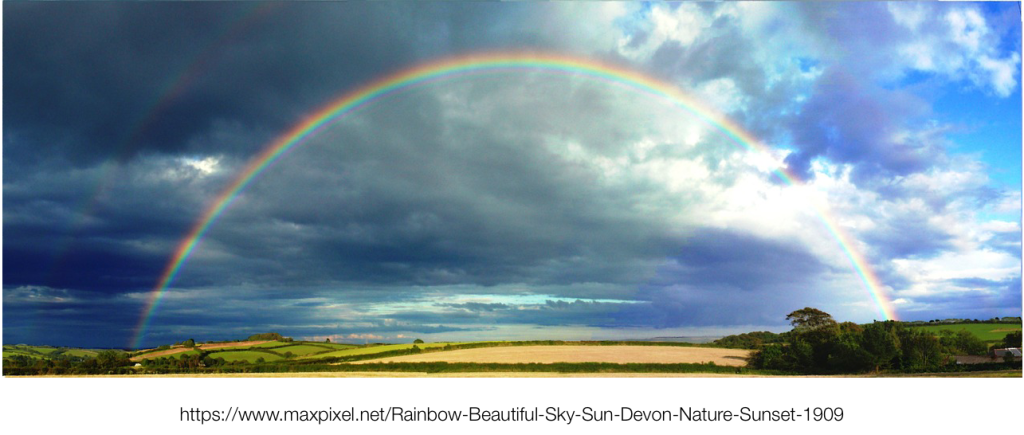
The rainbow is always so fleeting but isn’t that part of its wonder? It’s clearly there in the sky, yet untouchable, visible as an arc but one with no fixed position: as we move it moves. Its beauty promises something that is more than reality.

The world around us is full of curious, beautiful and amazing things. As small children our curiosity and our amazement knew no bounds. Every day would produce novelties- things to see, things to chew or eat, things to grab and hold, things to poke and explore. 

As we have grow older we have often lost that sense of wonder. Things that were new have become mundane. In the rush to be busy, small things flop below the radar. Decorum dictates that we shouldn’t prod or lick things and, unless we’re wine tasters, swirling stuff around our mouth and spitting are frowned upon. Stopping suddenly just to look is discouraged – it interrupts the flow of traffic. Daily routines take over. 

And our love for the world wains and falters. 

The season of creation-tide runs from 1st September till 4th October, the Feast of St Francis. Let’s fall in love again with creation. 

Falling in Love 4


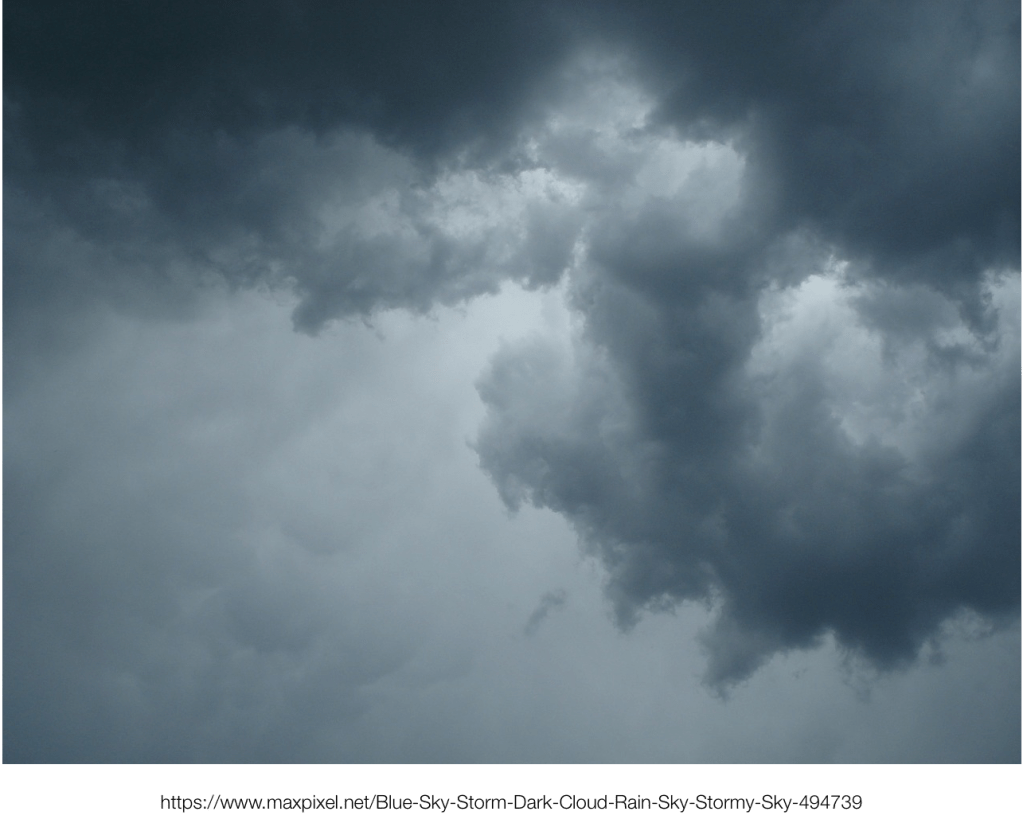
Dark oppressive rain clouds warn us to put up our umbrellas, to hasten our pace and shelter inside where we can shut out the unwanted elements.

Stop. Pause. Look. See how the clouds blossom and bloom, how their mass grows. Contemplate the intensity of colour, the shades of blue and grey, shifting  and rolling as the occupy the sky. See the trailing edges where rain is already falling, the veils of water that wash across the air. 

The world around us is full of curious, beautiful and amazing things. As small children our curiosity and our amazement knew no bounds. Every day would produce novelties- things to see, things to chew or eat, things to grab and hold, things to poke and explore. 

As we have grow older we have often lost that sense of wonder. Things that were new have become mundane. In the rush to be busy, small things flop below the radar. Decorum dictates that we shouldn’t prod or lick things and, unless we’re wine tasters, swirling stuff around our mouth and spitting are frowned upon. Stopping suddenly just to look is discouraged – it interrupts the flow of traffic. Daily routines take over. 

And our love for the world wains and falters. 

The season of creation-tide runs from 1st September till 4th October, the Feast of St Francis. Let’s fall in love again with creation. 

Count Down

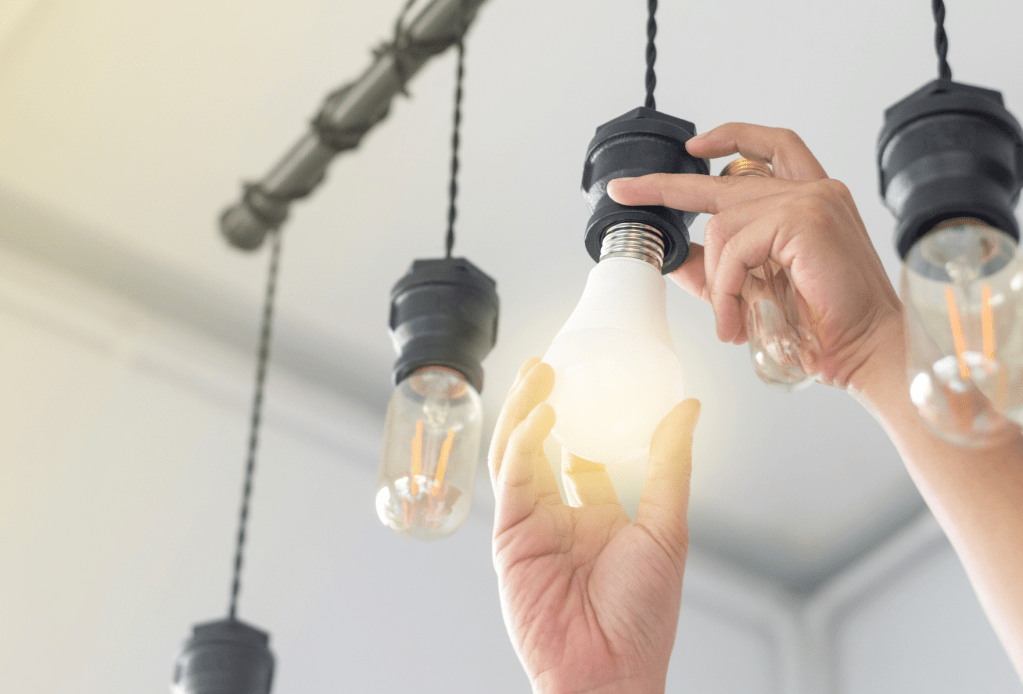
 Action 44: Change any high energy light bulbs. Replace them with LED bulbs – these use the least amount of electricity  and yet produce high levels of light (measured in lumen). The Energy Saving Trust provides a useful guide about LED  lighting. https://energysavingtrust.org.uk/how-get-best-out-energy-efficient-lighting/ And they also remind us that turning lights off when not in use is another easy way of saving energy.

Green Tau: issue 15

Varodrig took this photo from the Ula platformFirst – gas from the Oselvar module burns on the flare of the BP Ula oil platform in the North Sea on April 14th, 2012

3rd September 2021 – revised 11th January 2023

Heating homes without carbon?

Domestic energy use, ie for heating, lighting and electrical appliances, generates around 22% of the UK’s carbon footprint. The majority of that 22% comes from heating our homes. This is not surprising when you consider that 90% of homes are heated using gas boilers. Gas, one of the main fossil fuels, is burnt to heat water to warm our homes. As it burns, carbon dioxide is released. A three bedroom house with a 30KW condensing boiler will, for every hour the boiler is running, will emit around 7kg of CO2 or over the course of year around 3.65 tonnes of CO2.

It is obvious that we cannot continue to heat our homes using gas (or oil or coal) if we are to prevent the catastrophic rise in global temperatures. The Paris Agreement signed by parties at the Paris COP in 2015 set as it goal that participants should reduce carbon emissions so as to keep the rise in mean global temperature to below 2 °C .

In April 2021 the UK’s sixth Carbon Budget set the goal of cutting emissions by 78% by 2035. This time the Budget was set to also include the UK’s share of international aviation and shipping emissions. This revised budget should put us three-quarters of the way to achieving net zero by 2050.

Parties at COP27 in November 2021 agreed that this target should be reduced further to just 1.5 °C. To achieve this target the means by which we heat our homes will have to be radically transformed. 

This can happen in surprising ways. In Islington waste heat from the Northern Line is being soused to heat 1350 homes, a primary school and two leisure centres. In addition the heat is also generating electricity that powers lifts and communal lighting in a nearby tower block. Similar district heating solutions are being developed in other parts of the country too, for example heat  extracted from a flooded coal mine in Durham will heat 1500 homes. 

Both these projects use heat pump technology. This is the most promising solution for drastically reducing carbon emission whether heating a large office block or the average house. A heat pump is a scaled up fridge that works in reverse. Its refrigerant liquid absorbs heat from the air – or the ground – outside the building. This is compressed and transfers inside the building  where it is released as heat via warm air or via warm water (for radiators or underfloor heating). The heat pump is powered by electricity. Heat pumps, in terms of energy used and heat produced, are at least 3 times as efficient as gas boilers. In terms of running costs, the carbon footprint of a heat pump will depend on the source of the electricity it uses. Electricity from a wind farm has a carbon footprint of 10-20g/KWh compared with 450g/KWh for electricity from a gas fired power station. 

The Government’s net zero carbon targets anticipates the installing of 600,000 heat pumps a year by 2028. However in 2021 only 42,779 heat pumps were installed make this target look questionable.

There needs to be an expansion of both the production capacity of heat pump manufacturers and of the number of qualified heat pump installers, as well as improved Government finance to make the switch affordable for everyone.

The other approach to reducing the carbon footprint arising from heating our homes, is to insulate them. The better insulated a property is, the less additional heat is needed to achieve a comfortable level of warmth. Thus less energy is needed and one’s carbon footprint is reduced. A well insulated home also reduces draughts and cold spots which makes spaces feel warmer. 

Home insulation options include:

  • cavity wall insulation 
  • External wall insulation suitable for buildings with solid walls
  • Loft insulation 
  • Draught proofing doors and windows 
  • Double – or even triple – glazing windows
  • Underfloor insulation
  • Thermal external doors
  • Fully enclosed porches

Information on the potential cost savings of upgrading home insulation plus available grants can be viewed in various websites including https://www.which.co.uk/reviews/home-grants/article/insulation-grants-aGAZv8p9hGkY

NB Relevant information is constantly changing.

Falling in Love 3

Sparrows are seen as common place birds, birds of the dusty street or the old fashioned gutter. Insignificant birds in drab shades of brown. Their call is a repetitive  banter rather than a melodious song. Whilst still numerous their overall population is worryingly in decline. 

Look more closely. The delicate shades of taupe and bronze, flashes of russet. A beady eye and playful nature. Thronging together they are lovers of communal living. 

The world around us is full of curious, beautiful and amazing things. As small children our curiosity and our amazement knew no bounds. Every day would produce novelties- things to see, things to chew or eat, things to grab and hold, things to poke and explore. 

As we have grow older we have often lost that sense of wonder. Things that were new have become mundane. In the rush to be busy, small things flop below the radar. Decorum dictates that we shouldn’t prod or lick things and, unless we’re wine tasters, swirling stuff around our mouth and spitting are frowned upon. Stopping suddenly just to look is discouraged – it interrupts the flow of traffic. Daily routines take over. 

And our love for the world wains and falters. 

The season of creation-tide runs from 1st September till 4th October, the Feast of St Francis. Let’s fall in love again with creation. 

Falling in Love 2

Dandelion flowers are like gold medallions. They face up towards the sun, capturing its warmth and opening their petals to passing insects so they may feast on the nectar within. Later their seeds provide a popular food for goldfinches.

The world around us is full of curious, beautiful and amazing things. As small children our curiosity and our amazement knew no bounds. Every day would produce novelties- things to see, things to chew or eat, things to grab and hold, things to poke and explore. 

As we have grow older we have often lost that sense of wonder. Things that were new have become mundane. In the rush to be busy, small things flop below the radar. Decorum dictates that we shouldn’t prod or lick things and, unless we’re wine tasters, swirling stuff around our mouth and spitting are frowned upon. Stopping suddenly just to look is discouraged – it interrupts the flow of traffic. Daily routines take over. 

And our love for the world wains and falters. 

The season of creation-tide runs from 1st September till 4th October, the Feast of St Francis. Let’s fall in love again with creation.