The Glory of Creation and our Failings

24th January 2026

The earth is the LORD’s and the fullness thereof, the world and those who dwell therein. Psalm 24:1

You Lord, are the source of all good things: 

We praise you.

You call us to tend and care for your creation: 

May we strive to do your will.

You have made us as brothers and sisters with all that lives: 

May we live together in peace.

A Reading Ephesians 2:8-10 (The Living Bible)

Because of God’s  kindness, you have been saved through trusting Christ. And even trusting is not of yourselves; it too is a gift from God. Salvation is not a reward for the good we have done, so none of us can take any credit for it. It is God himself who has made us what we are and given us new lives from Christ Jesus; and long ages ago God prepared that we should spend these lives in helping others.

Glory to God,

Creator of rivers and streams, lakes and mountains. 

We praise you for the majesty of the Alps, their glittering snowy peaks 

and the frozen waters stored in their glaciers. 

Glory to God, 

Creator of forests and plains:

We thank you for the vast lands where we can grow crops, for hillsides where we grow vines, and for meadows where sheep and cattle may graze.

Glory to God

Creator of rocks and minerals:

We thank you for the wealth of raw materials with which we can make so much; 

we thank you for fast flowing waters that provide us with energy.

Glory to God, 

Creator of  curiosity and ingenuity:

We thank you for the wisdom we have learnt from the study of your world; 

thank you for the skills we have learnt in harnessing the resources you have given us.

Forgive us when we have misused that wisdom; 

forgive us when we have used those skills for ill. 

Merciful God,

Creator of human kind, 

Forgive our greed that has mined land and sea for fossil fuels, jeopardising our future.

Forgive our greed that industrialises farming, destroying soils and draining lakes. 

Forgive our greed that turns animals into commodities and disregards their sentient nature. 

Forgive our greed for consumer goods that strips the earth’s reserves.

Merciful God,

Creator of our brothers and sisters:

Forgive the casualness with which we let the rich grow richer 

and the poor poorer.

Forgive the casualness with which we let the rich break the laws 

and yet still penalise the poor.

Forgive the carelessness with which we discard what we buy 

ignoring the meagre pay of those who labour. 

Guiding God,

Source  of all wisdom, 

Transform our hearts and minds, turn the direction of our hands and feet 

so that with alacrity and commitment we will reform our lives 

and live only in harmony with your creation. 

Amen.

The Grace

Counting on 2026 … day 13

22nd January

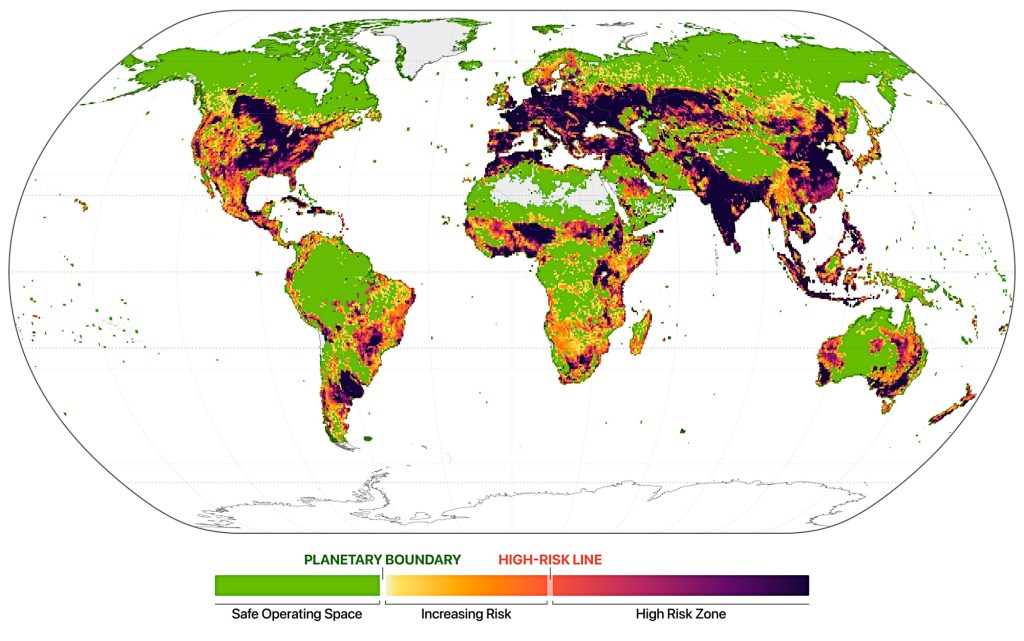
In restoring a sustainable balance vis a vis land use across the globe, whilst most attention is focused on ending deforestation and promoting reforestation, restoring wetlands is also important.  Whilst wetlands (including peatlands, marshes, floodplains and mangrove swamps) may only cover 5-8% of the Earth’s surface, they are critical as absorbers of carbon dioxide, as defences against erosion, and as preventers of excess flooding. They are also areas that have been drained and used for other purposes.

“Wetlands are critically important ecosystems that support biodiversity, climate mitigation and adaptation, food production, freshwater availability, recreation, wellbeing, and so much more. Yet we are losing our wetlands three times faster than forests.” (1)  

In the UK the Fen Lands have been drained so that the peat rich soils can be used as high grade farm land but with the disadvantage that as the land dries out, so it shrinks,  becoming increasingly at risk of flooding,  and with the effect of destabilising the foundations of roads and infrastructure across the region.

Elsewhere in the UK peatlands have suffered from the effects of burning and grouse shooting, overstocking with livestock, planting for commercial forestry, extraction for peat compost, and pollution. (2) Overall some 80% of the UK’s peatlands have been degraded.

One way of restoring peatlands and maintaining their agricultural use, is through paludiculture. Here lowland peatland is rewetted and used to grow crops that thrive in wet conditions such as Norfolk Reed used for thatching; bulrushes (typha) used as a building material, as a bioenergy crop and in clothing; sphagnum moss which can be used as a peat substitute as well as for biomecidal and industrial chemical uses; food crops such as celery, bilberries and cranberries, watercress, sweet grass grains, rice etc. (3) 

  1. https://www.stockholmresilience.org/research/research-news/2022-02-02-we-need-to-talk-about-wetlands-and-how-to-save-them.html
  2. https://www.iucn-uk-peatlandprogramme.org/about-peatlands/peatland-damage
  3. https://naturalengland.blog.gov.uk/2022/09/30/paludiculture-the-future-of-farming-on-peat-soils/ and https://www.paludiculture.org.uk/

Counting on 2026 … day 12

21st January

One of the issues with the loss of a sustainable balance in land use (as highlighted by transgressing this planetary boundary) is the loss of soil fertility – and in some cases the loss of the soil itself, being washed or blown away. One solution is to restore the fertility and structure of the soil of the soil and to adopt farming methods that healthy soil. Regenerative farming is a widely used term to describe this process. This is a broad term and can mean many things in different situations. Unlike organic farming, it doesn’t come with any form of certification.  Nevertheless, any methods that improve soil fertility are to be encouraged. 

Generally regenerative farming will encompass some or all of the following principles:-

  • limiting soil disturbance
  • maintaining soil cover
  • fostering agricultural diversity and rotations
  • keeping living roots in the soil
  • integrating livestock and arable systems (1) 

What regenerative farming does not address is altering the balance of land use to one that is more sustainable – and which as outlined in the previous entry – should include restoring tree cover, as well as restoring peatlands.

  1. https://www.wildlifetrusts.org/blog/vicki-hird/what-regenerative-farming

Counting on 2026 … day 9

19th  January 

Tree planting is key to restoring sustainable human lifestyles within safe  Planetary Boundaries. Yet disturbingly the UK is falling g behind with its tree planting targets. 

“New analysis from the Energy & Climate Intelligence Unit (ECIU) found that the UK is falling behind its tree planting targets, warning that the nation could miss the “critical window” for woodland creation needed to meet its climate and nature targets.

“The report found that more than 70 per cent of carbon removal from new trees up to 2050 will come from those that have been planted within the next five years. This is due to the time lag between when a tree is planted and when it has reached its peak carbon removal potential.

“However, if current planting rates are maintained, the total area of missed planting will be an area equivalent to three times the size of Greater London, with a third less carbon sequestered than on the Climate Change Committee’s (CCC) Balanced Pathway. This is equivalent to all residual industrial emissions in 2050.

“The CCC Balanced Pathway is the UK’s blueprint for reaching net-zero emissions by 2050, which calls for an 87 per cent emissions cut by 2040 as well as boosted efforts in renewable energy, energy efficiency and carbon capture.”

Second Sunday After Epiphany

17th January 2026

Reflection and readings below 

From our Christian perspective, the passage from Isaiah confirms Jesus as God’s chosen one, God’s servant who is the light to the world. But in the words we can also hear our own calling to be God’s servants, whose cause is to be for God here in earth. In the words of the Psalm we are called to do God’s will, to proclaim, from experience, God’s righteousness and faithfulness. And this is repeated in Paul’s letter – albeit with slightly different words, for now our experience has increased through our relationship with Jesus. We have been enriched through the grace that has been gifted to us in Jesus. 

John the Baptist is in no doubt who Jesus is. He tells us that he saw the Holy Spirit descending on him and asserts that it is with that same Spirit that Jesus enfolds us in our baptism. 

John is not preaching his message of repentance – his call for people to turn again and prepare anew the way for God – alone. He has gathered around him a band of disciples, his committed followers. Indeed this group of followers stay true to John throughout Jesus’s ministry and beyond so that in the Book of Acts we hear that Peter comes across followers of John who have not even heard of Jesus. The strength of John’s following is also attested to by contemporary writers. 

 In today’s passage we hear that the day after Jesus baptism, Jesus is again walking by the Jordan and when John says, “Look, here is the Lamb of God”, two of John’s disciples are sufficiently intrigued to want to know more. And in a story that perhaps has echoes of the Emmaus story, the two disciples (one of whom is Andrew but might the other unnamed one be a woman?) spend the day with Jesus, staying where Jesus is staying. And by the end of the day, they know that Jesus is the messiah – and not just that, they need to share what they now know. And so Andrew goes and brings his brother Simon to meet Jesus.

We too like the disciples can spend time staying with – the Greek can also mean abiding or resting – with Jesus so that we may see – or again looking at the Greek breadth of the word – experiencing Jesus. We live in a world where being busy is a virtue – and being so busy we can’t stop, is an absolute paragon of virtue! But that is not what comes to us from the scriptures. What is important is to know God, to experience God’s love, God’s faithfulness, God’s mercy – and be able to proclaim that knowledge, that enlightenment for the benefit of – and as an invitation to share the same – with others.

Isaiah 49:1-7

Listen to me, O coastlands,
pay attention, you peoples from far away!

The Lord called me before I was born,
while I was in my mother’s womb he named me.

He made my mouth like a sharp sword,
in the shadow of his hand he hid me;

he made me a polished arrow,
in his quiver he hid me away.

And he said to me, “You are my servant,
Israel, in whom I will be glorified.”

But I said, “I have laboured in vain,
I have spent my strength for nothing and vanity;

yet surely my cause is with the Lord,
and my reward with my God.”

And now the Lord says,
who formed me in the womb to be his servant,

to bring Jacob back to him,
and that Israel might be gathered to him,

for I am honoured in the sight of the Lord,
and my God has become my strength–

he says,

“It is too light a thing that you should be my servant
to raise up the tribes of Jacob
and to restore the survivors of Israel;

I will give you as a light to the nations,
that my salvation may reach to the end of the earth.”

Thus says the Lord,
the Redeemer of Israel and his Holy One,

to one deeply despised, abhorred by the nations,
the slave of rulers,

“Kings shall see and stand up,
princes, and they shall prostrate themselves,

because of the Lord, who is faithful,
the Holy One of Israel, who has chosen you.”

Psalm 40:1-12

1 I waited patiently upon the Lord; *
he stooped to me and heard my cry.

2 He lifted me out of the desolate pit, out of the mire and clay; *
he set my feet upon a high cliff and made my footing sure.

3 He put a new song in my mouth,
a song of praise to our God; *
many shall see, and stand in awe,
and put their trust in the Lord.

4 Happy are they who trust in the Lord! *
they do not resort to evil spirits or turn to false gods.

5 Great things are they that you have done, O Lord my God!
how great your wonders and your plans for us! *
there is none who can be compared with you.

6 Oh, that I could make them known and tell them! *
but they are more than I can count.

7 In sacrifice and offering you take no pleasure *
(you have given me ears to hear you);

8 Burnt-offering and sin-offering you have not required, *
and so I said, “Behold, I come.

9 In the roll of the book it is written concerning me: *
‘I love to do your will, O my God;
your law is deep in my heart.'”

10 I proclaimed righteousness in the great congregation; *
behold, I did not restrain my lips;
and that, O Lord, you know.

11 Your righteousness have I not hidden in my heart;
I have spoken of your faithfulness and your deliverance; *
I have not concealed your love and faithfulness from the great congregation.

12 You are the Lord;
do not withhold your compassion from me; *
let your love and your faithfulness keep me safe for ever.

1 Corinthians 1:1-9

Paul, called to be an apostle of Christ Jesus by the will of God, and our brother Sosthenes,

To the church of God that is in Corinth, to those who are sanctified in Christ Jesus, called to be saints, together with all those who in every place call on the name of our Lord Jesus Christ, both their Lord and ours:

Grace to you and peace from God our Father and the Lord Jesus Christ.

I give thanks to my God always for you because of the grace of God that has been given you in Christ Jesus, for in every way you have been enriched in him, in speech and knowledge of every kind– just as the testimony of Christ has been strengthened among you– so that you are not lacking in any spiritual gift as you wait for the revealing of our Lord Jesus Christ. He will also strengthen you to the end, so that you may be blameless on the day of our Lord Jesus Christ. God is faithful; by him you were called into the fellowship of his Son, Jesus Christ our Lord.

John 1:29-42

John saw Jesus coming toward him and declared, “Here is the Lamb of God who takes away the sin of the world! This is he of whom I said, ‘After me comes a man who ranks ahead of me because he was before me.’ I myself did not know him; but I came baptising with water for this reason, that he might be revealed to Israel.” And John testified, “I saw the Spirit descending from heaven like a dove, and it remained on him. I myself did not know him, but the one who sent me to baptise with water said to me, ‘He on whom you see the Spirit descend and remain is the one who baptises with the Holy Spirit.’ And I myself have seen and have testified that this is the Son of God.” 

The next day John again was standing with two of his disciples, and as he watched Jesus walk by, he exclaimed, “Look, here is the Lamb of God!” The two disciples heard him say this, and they followed Jesus. When Jesus turned and saw them following, he said to them, “What are you looking for?” They said to him, “Rabbi” (which translated means Teacher), “where are you staying?” He said to them, “Come and see.” They came and saw where he was staying, and they remained with him that day. It was about four o’clock in the afternoon. One of the two who heard John speak and followed him was Andrew, Simon Peter’s brother. He first found his brother Simon and said to him, “We have found the Messiah” (which is translated Anointed). He brought Simon to Jesus, who looked at him and said, “You are Simon son of John. You are to be called Cephas” (which is translated Peter).

The water of eternal life

 17th January 2026

(Part of the underlying stress in Iran is a lack of water. Tehran and other cities are on the verge of ‘Day Zero’ – when there will literally be no water in the pipes. This is a result of climate change, over consumption and a failure to maintain traditional means of collecting and storing water).

Jesus said … “Indeed, the water I give them will become in them a spring of water welling up to eternal life.” John 4:14b

You Lord, are the source of all good things: 

We praise you.

You call us to tend and care for your creation: 

May we strive to do your will.

You have made us as brothers and sisters with all that lives: 

May we live together in peace.

A reading Ezekiel 47:1-12 

Now he brought me back to the entrance to the Temple. I saw water pouring out from under the Temple porch to the east (the Temple faced east). The water poured from the south side of the Temple, south of the altar. He then took me out through the north gate and led me around the outside to the gate complex on the east. The water was gushing from under the south front of the Temple. He walked to the east with a measuring tape and measured off fifteen hundred feet, leading me through water that was ankle-deep. He measured off another fifteen hundred feet, leading me through water that was knee-deep. He measured off another fifteen hundred feet, leading me through water waist-deep. He measured off another fifteen hundred feet. By now it was a river over my head, water to swim in, water no one could possibly walk through. He said, “Son of man, have you had a good look?”

Then he took me back to the riverbank. While sitting on the bank, I noticed a lot of trees on both sides of the river. He told me, “This water flows east, descends to the Arabah and then into the sea, the sea of stagnant waters. When it empties into those waters, the sea will become fresh. Wherever the river flows, life will flourish—great schools of fish—because the river is turning the salt sea into fresh water. Where the river flows, life abounds. Fishermen will stand shoulder to shoulder along the shore from En Gedi all the way north to En-eglaim, casting their nets. The sea will teem with fish of all kinds, like the fish of the Great Mediterranean.

“The swamps and marshes won’t become fresh. They’ll stay salty. But the river itself, on both banks, will grow fruit trees of all kinds. Their leaves won’t wither, the fruit won’t fail. Every month they’ll bear fresh fruit because the river from the Sanctuary flows to them. Their fruit will be for food and their leaves for healing.”

In the beginning

it was a mere drop of water, 

a slight dampness on the ground:

It will become in us a spring of water welling up to eternal life.

The wetness gathers, 

soaks into the ground, 

bubbles up and becomes a spring:

It will become in us a spring of water welling up to eternal life.

Overflowing, 

the spring gives birth to a stream, 

slipping and sliding and a journey begins:

It will become in us a spring of water welling up to eternal life.

Meeting with others, 

joining forces, growing in magnitude,

the stream becomes a river:

It will become in us a spring of water welling up to eternal life.

From youth to maturity 

the river grows in girth and presence, 

bearing an ever growing load:

It will become in us a spring of water welling up to eternal life.

Spilling over, spreading out, 

the river branches out into a delta 

disbursing its fertility across the land:

It will become in us a spring of water welling up to eternal life.

Returning, homing in on the tideline, 

the river pours out unhesitatingly 

into the greater depth of the sea:

It will become in us a spring of water welling up to eternal life.

From cradle to grave, may our lives be channeled by God’s wisdom.

From beginning to end, may our lives serve God’s kingdom.

From source to sea, may our lives overflow with God’s love.

Amen. 

The Lord’s Prayer 

Counting on 2026 … day 8

16th  January

Reversing land system change needs to include both reforestation and the adoption of regenerative farming methods – ie methods that restore the fertility of the soil, restores fresh water cycles, protects the environment from pollutants such as pesticides, fertilisers, slurry etc, that promotes increasing biodiversity and produces healthy food. Somehow nations  need to find ways of valuing the role that trees and good agricultural practice play in maintaining the wellbeing of the earth systems on which we rely. 

This might be by levying a rate or tax to cover the cost similar to the water rate we used to pay for clean water – and which could be used to pay for planting trees and/or  for setting aside land for woodlands. In the UK farmers can be paid by the Government (and thus ultimately paid for by the tax payer) to protect and enhance the natural environment – eg through the Sustainable Farming Incentive – https://www.farmingadviceservice.org.uk/category/funding-support

In a similar vein, consumers can actively chose to support environmentally friendly farming by paying a premium for the products thus produced – eg organic fruit and vegetables, grass fed meat, wild flower honey. 

It might be by levying a fee on those whose businesses pollute the environment – eg levied against beef and dairy products, or against industrial chicken farms. Denmark – https://www.bbc.co.uk/news/articles/c20nq8qgep3o

Governments and other institutions- like health bodies, schools etc – might promote a switch to largely plant based diets (as per the Planetary Health Diet). Denmark is developing a concerted switch to a largely plant based diet with support for farmers as well as encouragement for consumers. https://rethinkpriorities.org/research-area/plant-based-diet-shift-initiative-case-studies-denmarks-plant-based-food-grant/

Governments and farming bodies can encourage a switch to crops better suited to the changing climate in their region – eg switchIng from olives and almonds to pistachios in the dryer Spanish climate, introducing agroforestry, replacing cotton with hemp (as is happening in Turkey – https://egedeniztextile.com/turkish-hemp/) etc. https://inspain.news/spains-green-gold-rush-and-why-pistachios-are-the-future-of-farming/

Governments could mandate that public purchasing should favour sustainably produced products – both food and timber based products. This report urges the use of timber in the construction industry: https://www.gov.uk/government/publications/timber-in-construction-roadmap-2025/timber-in-construction-roadmap-2025

Conversely governments can implement legislation to limit or end land use and farming practices that damage planetary boundaries. The UK and the European Union have both introduced legislation that requires companies to ensure through the length of the supply chains that not products are derived from sources where deforestation is involved: https://www.clydeco.com/en/insights/2025/02/spotlight-on-deforestation-regulations-in-uk-eu

NB both sets of policies have yet to be fully implemented.

Green Tau: Agriculture and land use – part 1 climate mitigation 

14th January 2026

Approximately 12% (47.7 MtCO2e as of 2022) of the UK’s greenhouse gas emissions come from farming. Of that 58% is methane from livestock,  a further 28% is nitrous oxides from fertilisers etc and 16% CO2 from motor vehicles etc. (1).  Agriculture therefore has a significant part to play in reducing the UK’s greenhouse gas emissions to net zero. To achieve this changes – a transition – in agricultural methods and in the balance between livestock and arable land farming, and between food production and enabling the land to contribute in other ways to the maintenance of a healthy environment, will be necessary. This is noted in the SRUC report submitted in support of the UK’s 7th carbon budget: “The increasing need to reduce agricultural and food related emissions underlines the importance of estimating the mitigation potential in agricultural production in the wider context of emission reductions achievable with changing dietary patterns, land use and the agricultural production mix.” (2) 

As the UK moves to a net zero economy, it is obvious that emissions from agriculture need to be reduced – the Climate Change Committee’s target is 21 MtCO2 by 2050. (Agriculture – including deliberate none cultivation of the land – offers opportunities to increase natural carbon absorption which should more than offset this remaining 21Mt of CO2). Every five years the CCC produces a carbon budget. The budget for the current period is the fourth carbon budget (2023-2027). The fifth carbon budget (2028-2032) was approved in 2016.  The sixth carbon budget (2033-2037) whilst an amended version was  initially approved by government, it was challenged in the courts as being insufficient and a revised budget submitted by the government in October 2025. The seventh carbon budget (2028-2042) was submitted by the CCC in 2025 for review and an agreed version should be ready approval by Parliament in June 2026.

The following infographic dates from 2020 and was produced by the CCC as part of their report,  Land use: Policies for a Net Zero UK, which explored how policies could be implemented vis a vis agriculture to achieve the 2050 net zero target. It is gives useful overview of what changes will – are –  being required of the  agricultural sector. (3)

 (NB the updated  Land Use Framework (LUF) is still be worked on and is already at least a year late! This policy document won’t per-se specify what land should be used for what but will encourage informed decisions that hopefully produce a win-win solution where there are competing demands -eg food production and housing, nature restoration and new infrastructure. (4))

The seventh budget forecasts that emissions from agriculture should fall to  29.2 MtCO2e by 2040 to 26.4 MtCO2e by 2050 at which point this sum will be balanced by the land-based carbon sequestration which will have been increasing year on year as the impact of planting more trees, restoring peatlands etc takes effect.  

The budget envisages a reduction in numbers of livestock, releasing land for growing other uses  – eg horticulture, woodlands, and bio-energy crops (for use as a short term transition fuel) etc.  This also envisages a reduction in consumption of meat and dairy products by consumers. There is no specific mention of growing beans and pulses but this would be essential to provide a sustainable plant based alternative to meat and dairy products.

The budget also envisages an increase in woodlands (mix of broadleaf and coniferous trees) to cover 16% of the UK, as well as year on year increase in  agroforestry (this is still novel in the UK). To meet sequestration targets much of this tree planting needs to happen by 2030. The budget also relies on a 40% increase in hedgerows by 2050 as another boost for carbon sequestration and for biodiversity. 

The budget envisages rewetting and restoring both upland and lowland peatlands – 3% of the latter by 2040 and 56% by 2050. Again this adaptation needs to implemented sooner rather than later to maximise  the benefits of carbon sequestration. This  critical adaptation will include rewetting significant areas of peatlands in East Anglia currently used  for growing vegetables. Alternative areas of the country would have to be developed for vegetable growing. The budget also envisages 10% of horticulture will be taking place under glass by 2050. 

The budget recognises that farmers will need financial support as they negotiate this transition. It will be important that farmers have longer term  certainty as regards these changes and the support they will receive. 

Government policies also need to promote the switch by consumers from meat and dairy to plant based alternatives. This could promote the health benefits of eating a richer plant-based diet. 

As part of the process of producing the seventh carbon budget, the CCC convened a citizens’ panel to explore how these changes would impact households. It was generally accepted that there was a need to make changes in diet with the proviso that information should be made available showing the different impacts of alternative foods. The panel favoured a shift to healthier, home cooked foods and envisages that education could play a role in enabling plant-based meal preparation. There was  agreement that plant-based foods needed to be competitively priced compared with alternatives – especially for those on low incomes. This is something that may require government directives for the food industry – especially as many of the panelist’s were uneasy about replacing meat and dairy with highly processed options such as precision fermentation. The panel was also concerned that policies should ensure the proper remuneration of farmers. 

To read either a summary of the seventh carbon budget or the full report  see :- 

Further reading – https://www.sustainweb.org/news/feb25-seventh-carbon-budget-climate-change-committee/

However how is this transition to be financed or effected? 

(1) https://www.gov.uk/government/statistics/agri-climate-report-2024/agri-climate-report-2024

(2) https://www.theccc.org.uk/wp-content/uploads/2025/02/Greenhouse-gas-abatement-in-UK-agriculture-2024-2050-Scotlands-Rural-College.pdf

(3) https://www.theccc.org.uk/publication/land-use-policies-for-a-net-zero-uk/

(4) https://www.nffn.org.uk/resources/land-use-framework-for-england-what-is-it-and-what-does-it-mean-for-farming

Counting on 2026 … day 6

14th  January 

Atmospheric aerosol loading is another planetary boundary that we should avoid crossing. The global concentration of aerosol particles has more than doubled since pre-industrial times. The effect that excessive aerosol concentration could have in human health and the climate that established the need for a safe limit.

What are these particles? – salt condensed from ocean waters, fine sand from desert dust storms, ice crystals over the poles and ash from fires as well as volcanic eruptions, carbon and sulphur dioxide from fossil fuel power statist and industrial smoke stacks, hydrocarbons from combustion engines and stratospheric vapour crystals from aircraft. (1)

It is another boundary where we are currently within the safe limits and in fact the concentration of aerosol particles in the atmosphere is declining as we are across the globe tackling and reducing air pollution, providing alternatives to open cookings fires, ending crop the burning of stubble after crop harvesting, reducing pollution levels from road vehicles and from commercial cargo ships. Taking action to stay within planetary boundaries is good for the planet and for our wellbeing! (2( 

  1. https://www.esa.int/Applications/Observing_the_Earth/Space_for_our_climate/Aerosols
  2. https://www.planetaryhealthcheck.org/boundary/increase-in-atmospheric-aerosol-loading/

Counting on 2026 … day 5

13th  January 

Stratospheric ozone depletion is one planetary boundary* where we did cross into the danger zone and through concerted global action, pulled back from into the safe limits of the boundary. Regulations curbing what chemicals could be used, for example, in fridges and aerosols, had a real effect!

“”In the face of a triple planetary crisis – climate, nature and pollution – the Montreal Protocol is one of the best examples we have that showcases the positive and powerful outcome of multilateralism,”

Meg Seki, Executive Secretary of UNEP’s Ozone Secretariat. (1)

(1) https://www.unep.org/news-and-stories/story/rebuilding-ozone-layer-how-world-came-together-ultimate-repair-job Do read this full article and/or watch the YouTube clip.

* NB What are the planetary boundaries? https://greentau.org/2025/10/22/counting-on-170/