Counting on 2026 … day 4

12th January 

Data centres – which includes those that provide AI – use large amounts of water, principally in providing cooling., but also (depending on the source of their electricity) from the water needed at fossil fuelled power plants where water is again needed for cooling. It is estimated that the water footprint of AI in 2025 was somewhere between 313 and 765 billion litres which apparently is roughly the same as the amount of bottled water consumed globally. (1)  

This consumption of water is going to increase as our use of and development of AI continues to expand. By 2027 experts predict global water use by could reach 4.2–6.6 trillion litres annually – equivalent to about half the UK’s annual water consumption. (2) 

In a world where freshwater is already in short supply, this is a serious issue as highlighted in this comment from a UK Government blog:  

“AI has potential to address challenges in healthcare, inequality and climate monitoring. However, these benefits must be weighed against the full environmental impact of building and running AI systems. This requires development of a comprehensive and transparent series of metrics that include, carbon emissions, energy consumption, water usage, biodiversity and social impact. Only by looking at AI through these combined lenses can we ensure it delivers net benefit rather than widening inequality or disproportionately impacting communities and regions.” (3)

A UK government report ‘Water use in AI and Data Centre’ highlights the issue of the 2050 projected daily 5 billion litre water deficit versus the expansion of date centres in the UK. It notes with concern that in coming to its projection of a 5 billion litre water shortage, the Environment Agency has not included any figures for the anticipated increased water demands that will be made as data centres expand. This is aggravated by a lack of information as data centres are not required to be transparent about the amount of water and electricity that are and will be using. Mandating transparency would encourage data centre to find ways of minimising the resources they need and would enable the relevant authorities to make better decisions as to where new data centres could or should not be located. (They should not for example be located in areas already prone to water shortages). (4)

Equally if information about the likely consumption of scarce resources were more readily available, it would enable a better discussion as to whether we should be encouraged the unrestricted growth of AI and data centre, and have the ability to weigh up the benefits of AI against its detriments.

  1. https://www.theguardian.com/technology/2025/dec/18/2025-ai-boom-huge-co2-emissions-use-water-research-finds
  2. https://www.aidrinkswater.com/report.html
  3.  https://sustainableict.blog.gov.uk/2025/09/17/ais-thirst-for-water/
  4. https://assets.publishing.service.gov.uk/media/688cb407dc6688ed50878367/Water_use_in_data_centre_and_AI_report.pdf

First Sunday after Epiphany 

11th January 2026

Reflection with readings below

The Orthodox Church understands that as Jesus entered the water of the River Jordan to be baptised, he sanctified all rivers and seas. Icons of the baptism sometimes show pagan gods or spirits fleeing from his presence in the water. And this is also why, it is common practice in the Orthodox Church – but also in other traditions too – of blessing rivers or seas on the feast of the Epiphany, which often involves throwing a wooden cross into the water. This Sunday representatives from Southwark Cathedral and St Magnus the Martyr (their church buildings being on opposite banks) will gather midday on London Bridge to bless the Thames. 

This line of thought goes further. Jesus by being baptised himself, sanctified baptism. When we were baptised we entered into an event where Jesus had preceded us. Just as Jesus was filled with the Holy Spirit at his baptism, so are we. Just as Jesus in his baptism was proclaimed as God’s beloved, so are we. And just as Jesus’s baptism marked the beginning of his vocation, so our baptism sets us out on that same vocation – to bring forth justice; to be a light in the world; to heal the sick and free the oppressed. It is a vocation we do not do alone but together with all our brothers and sisters as the community – or body – of Christ.

This is a vocation that was recognised by Isaiah and by St Paul. It is a vocation that began on the banks of the Jordan in the sight of John the Baptist. It is a vocation that continues here and now – in us. It is a vocation that calls not just for thought, nor even just for prayer,but emphatically for action. As we hear again the story of Jesus’s own ministry, how he pursued this vocation in 1st century Palestine, we are reminded that his was an active ministry. 

Jesus healed people. He released them from physical and emotional and spiritual bonds. He fed the hungry. He persuaded those with more than enough to share what they had with those in need. He challenged the religious authorities when they placed tradition or expediency over the needs of the people. He challenged them verbally. He challenged them by sticking to his counter cultural lifestyle. He challenged them by blocking roads and creating crowds that became a public nuisance. He challenged them by physically tipping over tables and spilling goods and money across the ground. He challenged them by his silence and by his acceptance of death. He surprised them by his resurrection. 

What are we going to do this year? How will we transform the society we live in so that it reflects the values of God’s kingdom? How will we take care of the planet that God created and gifted to us? How will we challenge unjust systems? How will we speak truth to power?

Isaiah 42:1-9

Here is my servant, whom I uphold,
my chosen, in whom my soul delights;

I have put my spirit upon him;
he will bring forth justice to the nations.

He will not cry or lift up his voice,
or make it heard in the street;

a bruised reed he will not break,
and a dimly burning wick he will not quench;
he will faithfully bring forth justice.

He will not grow faint or be crushed
until he has established justice in the earth;
and the coastlands wait for his teaching.

Thus says God, the Lord,
who created the heavens and stretched them out,
who spread out the earth and what comes from it,

who gives breath to the people upon it
and spirit to those who walk in it:

I am the Lord, I have called you in righteousness,
I have taken you by the hand and kept you;

I have given you as a covenant to the people,
a light to the nations,
to open the eyes that are blind,

to bring out the prisoners from the dungeon,
from the prison those who sit in darkness.

I am the Lord, that is my name;
my glory I give to no other,
nor my praise to idols.

See, the former things have come to pass,
and new things I now declare;

before they spring forth,
I tell you of them.

Psalm 29

1 Ascribe to the Lord, you gods, *
ascribe to the Lord glory and strength.

2 Ascribe to the Lord the glory due his Name; *
worship the Lord in the beauty of holiness.

3 The voice of the Lord is upon the waters;
the God of glory thunders; *
the Lord is upon the mighty waters.

4 The voice of the Lord is a powerful voice; *
the voice of the Lord is a voice of splendour.

5 The voice of the Lord breaks the cedar trees; *
the Lord breaks the cedars of Lebanon;

6 He makes Lebanon skip like a calf, *
and Mount Hermon like a young wild ox.

7 The voice of the Lord splits the flames of fire;
the voice of the Lord shakes the wilderness; *
the Lord shakes the wilderness of Kadesh.

8 The voice of the Lord makes the oak trees writhe *
and strips the forests bare.

9 And in the temple of the Lord *
all are crying, “Glory!”

10 The Lord sits enthroned above the flood; *
the Lord sits enthroned as King for evermore.

11 The Lord shall give strength to his people; *
the Lord shall give his people the blessing of peace.

Acts 10:34-43

Peter began to speak to them: “I truly understand that God shows no partiality, but in every nation anyone who fears him and does what is right is acceptable to him. You know the message he sent to the people of Israel, preaching peace by Jesus Christ–he is Lord of all. That message spread throughout Judea, beginning in Galilee after the baptism that John announced: how God anointed Jesus of Nazareth with the Holy Spirit and with power; how he went about doing good and healing all who were oppressed by the devil, for God was with him. We are witnesses to all that he did both in Judea and in Jerusalem. They put him to death by hanging him on a tree; but God raised him on the third day and allowed him to appear, not to all the people but to us who were chosen by God as witnesses, and who ate and drank with him after he rose from the dead. He commanded us to preach to the people and to testify that he is the one ordained by God as judge of the living and the dead. All the prophets testify about him that everyone who believes in him receives forgiveness of sins through his name.”

Matthew 3:13-17

Jesus came from Galilee to John at the Jordan, to be baptised by him. John would have prevented him, saying, “I need to be baptised by you, and do you come to me?” But Jesus answered him, “Let it be so now; for it is proper for us in this way to fulfil all righteousness.” Then he consented. And when Jesus had been baptised, just as he came up from the water, suddenly the heavens were opened to him and he saw the Spirit of God descending like a dove and alighting on him. And a voice from heaven said, “This is my Son, the Beloved, with whom I am well pleased.”

Psalm 19 – where we fall short

19th January 2026

And the glory of the Lord has risen upon you. Isaiah 61:1b

Lord you created the world in love:

Glory to you.

Lord you sustain the world through love:

Glory to you.

Lord you invite us to share that love: 

Glory to you .

A reading from Psalm 19:1-5

The heavens are telling the glory of God;
    and the firmament proclaims his handiwork.

Day to day pours forth speech,
    and night to night declares knowledge.

There is no speech, nor are there words;
    their voice is not heard;

yet their voice goes out through all the earth,
    and their words to the end of the world.

In the heavens he has set a tent for the sun,

which comes out like a bridegroom from his wedding canopy,
    and like a strong man runs its course with joy.

Response 

Is  it in the coal pits and oil fields 

that we see God’s glory?

Or is  it in the wind, the sun and the sea?

Is it in the soya plantation and the chicken factory 

that we see God’s glory?

Or is it in in the vegetable plot and the meadow?

Is it  in the fumes of the combustion engine 

or in the exhaust from the coal-fired power station 

that we see God’s glory?

Or is it in the uphill slog and the down hill rush of the cycle wheel?

Is it in the land cleared of people to make way for luxury flats and runways 

that we see God’s glory?

Or is it in the primeval forest and the indigenous village.

Is it in the spoil heap and stagnant stream 

that we see God’s glory?

Or is it in the free running caribou and the eager beaver?

Is it in the slave to the workplace and the gig economy conscript 

that we see God’s glory? 

Or is it in the community of friends and neighbours? 

Heavenly God, 

Help us strip away the blinkers and disguises 

that prevent us and others from seeing your glory.

Help us clear away the rules and expectations 

that separate us from your glory.

Help us break down the indebtedness and inequalities 

that so weigh us down that we cannot look up. 

In simplicity let us know you.

In freedom let us follow you.

In joy let us celebrate your glory.

Amen.

But we all, with unveiled face, beholding as in a mirror the glory of the Lord, are being transformed into the same image from glory to glory, just as from the Lord, the Spirit. 2 Corinthians 3:18

Counting on 2026 … day 3

9th January 

How do we protect and preserve fresh water supplies – part 4

As consumers we can use less water  by reducing the amount we literally take from our taps, but we can also reduce the amount we consumer by reducing some of the things we buy. Everything we consume has a water footprint. Here again there is a strong argument for eating less meat and dairy and more nuts, seeds and pulses, and locally produced, in-season fruits and vegetables. 

1kg of beef uses 15,415 litres of water, milk 1020 litres and vegetables an average of 322 litres. (1) Dried beans use 5053 litres , lentils 5874 litres and shelled walnuts 9280litres. (2)  (NB a portion of beef will typically be twice the weight or more of a portion of beans or pulses). 

Another significant item of consumption that can impact our water footprint, is clothing. Making clothes – growing cotton, manufacturing threads and dying the fabrics – uses a significant amount of water.

To produce a T-shirt can use 2000litres of water, a pair of jeans 11,000 litres, a pair of leather shoes 8000 litres. (3)

If we buy fewer items of clothes – buying items we know we like and they we know will last – rather than buying lots of new  items which we may wear once and discard, we will make an impact on reducing water consumption and save money too! Clothes will last longer of we take care of them, mending and cleaning them as necessary. And if we no longer need or want them, we can give/ sell them as preloved items. Equally we can save water and money by ourselves buying preloved items.

Further reading – 

  1. https://www.foodunfolded.com/article/calculating-water-footprint-of-food
  2. https://evgenii.com/water-footprint/en/
  3. https://sustainability.decathlon.com/why-does-it-take-so-much-water-to-make-a-cloth

Counting on 2026 … day 2

8th January 

How do we protect and preserve fresh water supplies – part 3 

Using less water! 

This is something for businesses and farmers and domestic consumers to respond too – and feels particularly pertinent as decisions are made about AI and data centres generally (see tomorrow’s blog).

In the UK at our continued rate of water consumption there will be a daily  shortfall of 5 billion litres (about a third of current consumption) by 2050. This takes into account the need to extract less water from rivers, aquifers etc where it negatively impacts the natural environment, a growing population, the need to cope with increasingly frequent droughts, the impact of climate change (eg changing rainfall patterns) and increased use by businesses. (1) 

Per capita household water consumption in the UK is already falling, from an average of 169.53 litres per day in 2005/2006 to an average of 139.47 litres in 2023/2024. (2) However there is clearly a need for consumption levels to fall further. A survey across Europe in 2020 varied daily domestic consumption varied from 300 litres in Switzerland to 100 litres in Belgium and even less in Estonia and Slovakia. (3) In some instances the difference maybe due to a lower volume toilet flush, or the frequency and duration and rate of flow of showers, or the frequency of use and water efficiency of appliances such as washing machines. 

Websites with water saving tips

This earlier blog is about saving and reusing grey water around the house – https://greentau.org/2025/07/10/counting-on-day-106-3/

And this one about showering less and more efficiently – https://greentau.org/2025/02/13/counting-on-day-31-3/

  1. https://commonslibrary.parliament.uk/research-briefings/cbp-10248/
  2. https://oifdata.defra.gov.uk/themes/natural-resources/E8/
  3. https://smartwatermagazine.com/news/locken/water-ranking-europe-2020

Counting on … day 1

7th January 2026

How do we protect and preserve fresh water supplies – part 2

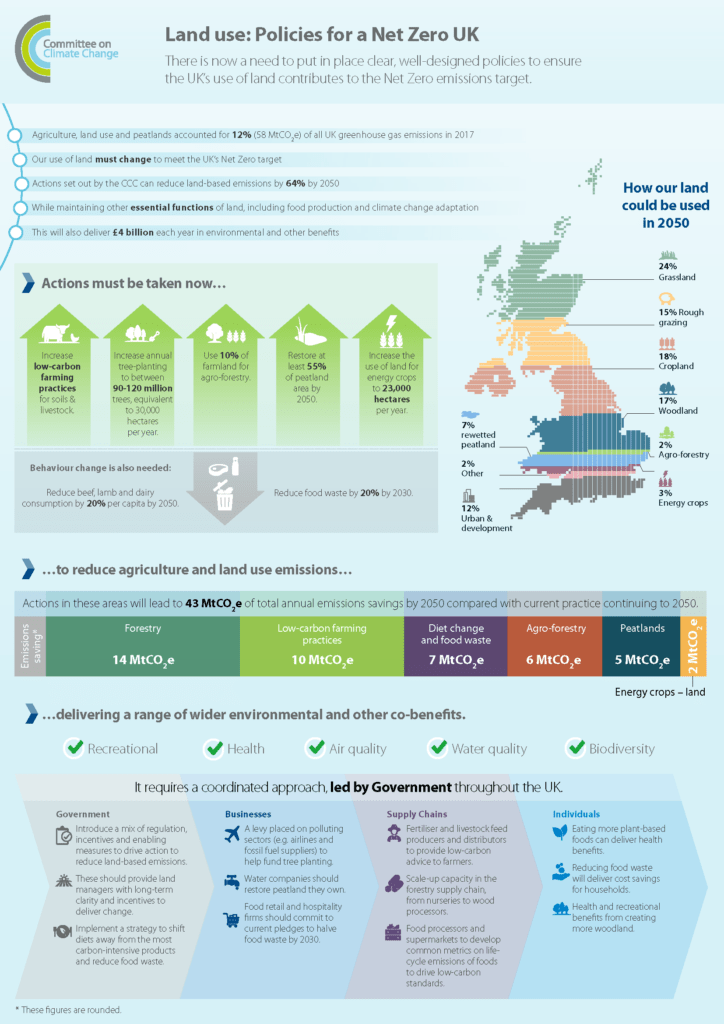
Land use changes, especially things such as deforestation and urbanisation, have aggravated the problem – 

“Deforestation, agriculture, and urban expansion have greatly changed the way land stores and moves water. When forests are cleared or soils are sealed under concrete, they lose their ability to hold green water — the moisture that plants rely on. This weakens local rainfall, increases runoff, and can intensify both floods and droughts. Changes to land systems also affect regional weather patterns, such as monsoons, and create feedback loops that further influence the climate.” (1)

Reducing or indeed eliminating such land use changes is clearly beneficial for the wellbeing of the planet. We can go further by reversing the changes by both protecting and increasing land uses that capture and store – eg through reforestation,  restoring peatlands and wetlands, re-wriggling  rivers (ie allowing them to flow freely and more slowly across a greater expanse of the flood plain, re-establishing water meadows, limiting the extraction of water to protect lakes and aquifers etc.

These nature based solutions not only protect supplies of fresh water, they also protect and enhance biodiversity and reduce the risk of flooding, creating a better environment for us to enjoy.

(1) https://www.planetaryhealthcheck.org/boundary/freshwater-change/

Feast of the Epiphany

4th January 2026

Reflection with readings below 

I have just finished reading Philip Pullman’s second trilogy about dust and rose oil. Dust seems to be a metaphor for consciousness – a consciousness that encompasses the ability to think for yourself and not be swayed or controlled by another authority. It is the ability to be imaginative, to think laterally, to think playfully, to be open minded. The rose oil’s contribution is in enhancing that imagination, clearing the eye to see better – and to see deeper.

For those who are authoritarian, dust is something to be limited and controlled. If not there would be the risk of anarchy. In this world view things should be structured and predictable and rule bound. People should not have to think for themselves but adhere to the wisdom of those who know better. It produces a world where anything not rational – and that includes imagination and dreams, and even soul.

For those less controlling – and yes maybe more anarchic – dust is to be valued because it is creative and because it allows people to explore what is truth. People can and should  be diverse and idiosyncratic. Nothing is hide bound. Towards the end of the last book, the Rosefield, Pullman presents big business, the power of corporate-speech, the division of people into those whose work is directed (and for whom life is an unimaginative drudgery) and those with power whose motivation is solely profit. He contrasts this with an earlier order of things where the scale of business and indeed of any organisation was local, where work was differentiated according to ability and skills, where people enjoyed feasting rather than profiteering.  The former can only succeed when imagination is dulled and people become mere things. 

That there are different ways of seeing things, and different ways of organising and doing things, is very much a gospel message – and not just as message of the New Testament, but of the Hebrew Testament too. 

In today’s gospel reading we have two different ways of understanding the world. For the magi their understanding  comes through discerning the movement of the  stars – throigh observing the natural world. For Herod’s chief priests and scribes, it comes through discerning meaning in the words of the prophets. Neither approach gives the full picture – but in combination they present a clearer answer as to where the new king will be found. But having gained this answer, there are also two ways of responding. 

The magi continue their journey of exploration and find and worship the child Jesus. They continue to be openminded in seeking what is true and in following the further  advice that comes from God.

Herod sees the information as a means to ensuring his own ends. He uses deceit to take advantage of the willingness of the magi. And as we know from reading on beyond today’s reading, when his initial plan of getting rid of the child backfires, he overreacts and kills all the young children in Bethlehem. 

Openness and discernment versus self interest and control.

The passage from Isaiah begins, “Arise, shine; for your light has come, and the glory of the Lord has risen upon you.” And I’m sure that in our mind’s eye as we then read/ hear today’s gospel we see rays of starlight beaming down on the child Jesus so as to reveal to the the Magi where Jesus was but also who Jesus was. 

So I also wonder what in our imagination the world would look like we could see God’s glory shining on it now? Would it reveal things we didn’t want to know and / or would it reveal to us a transformed – a glorified – world? A world full of promise?

The Psalmist points us to a world where righteousness and justice serve to meet the needs of the poor, the lowly and the oppressed. So maybe we imagine a world where everyone has a home; where everyone has the mutual support of neighbours and family; where everyone has access to clean air and green and blue spaces; where everyone has access to schools and learning, to healthy foods and clean water, to health care; where everyone has access a job or a mode of employment that gives them value; where there is no war, no oppression, no persecution. Maybe it is a world where well-being not profit directs actions, where nature is both cared for and where nature cares for us. (And I don’t think it’s a world where super powers fly in bomb civilians and kidnap leaders simply to take charge of their oil industry!)

Certainly I imagine this is the sort of world that God both envisages and desires.  It is, I think, the sort of world that Jesus teaches about – and tells stories about. And I believe it is the sort of world that will appear as God’s reign is established and embedded here on Earth. And I am sure that we are called,  as we enter another new year, to live imaginatively and to free ourselves from the traditions and systems that tell us that nothing can change. That we are called to be creative and open hearted and inclusive in shaping our lives. That we are called to see things differently – not according to the ‘world of profit’ but according the world of the gospel. Indeed maybe the gospel is the rose-oil that helps us see God’s glory at work.

Isaiah 60:1-6 

Arise, shine; for your light has come,
and the glory of the Lord has risen upon you. 

For darkness shall cover the earth,
and thick darkness the peoples; 

but the Lord will arise upon you,
and his glory will appear over you. 

Nations shall come to your light,
and kings to the brightness of your dawn.

Lift up your eyes and look around;
they all gather together, they come to you; 

your sons shall come from far away,
and your daughters shall be carried on their nurses’ arms. 

Then you shall see and be radiant;
your heart shall thrill and rejoice, 

because the abundance of the sea shall be brought to you,
the wealth of the nations shall come to you.

A multitude of camels shall cover you,
the young camels of Midian and Ephah;
all those from Sheba shall come. 

They shall bring gold and frankincense,
and shall proclaim the praise of the Lord. 

Psalm 72:1-7,10-14

1 Give the King your justice, O God, *
and your righteousness to the King’s Son;

2 That he may rule your people righteously *
and the poor with justice;

3 That the mountains may bring prosperity to the people, *
and the little hills bring righteousness.

4 He shall defend the needy among the people; *
he shall rescue the poor and crush the oppressor.

5 He shall live as long as the sun and moon endure, *
from one generation to another.

6 He shall come down like rain upon the mown field, *
like showers that water the earth.

7 In his time shall the righteous flourish; *
there shall be abundance of peace till the moon shall be no more.

10 The kings of Tarshish and of the isles shall pay tribute, *
and the kings of Arabia and Saba offer gifts.

11 All kings shall bow down before him, *
and all the nations do him service.

12 For he shall deliver the poor who cries out in distress, *
and the oppressed who has no helper.

13 He shall have pity on the lowly and poor; *
he shall preserve the lives of the needy.

14 He shall redeem their lives from oppression and violence, *
and dear shall their blood be in his sight.

Ephesians 3:1-12

This is the reason that I Paul am a prisoner for Christ Jesus for the sake of you Gentiles– for surely you have already heard of the commission of God’s grace that was given me for you, and how the mystery was made known to me by revelation, as I wrote above in a few words, a reading of which will enable you to perceive my understanding of the mystery of Christ. In former generations this mystery was not made known to humankind, as it has now been revealed to his holy apostles and prophets by the Spirit: that is, the Gentiles have become fellow heirs, members of the same body, and sharers in the promise in Christ Jesus through the gospel.

Of this gospel I have become a servant according to the gift of God’s grace that was given me by the working of his power. Although I am the very least of all the saints, this grace was given to me to bring to the Gentiles the news of the boundless riches of Christ, and to make everyone see what is the plan of the mystery hidden for ages in God who created all things; so that through the church the wisdom of God in its rich variety might now be made known to the rulers and authorities in the heavenly places. This was in accordance with the eternal purpose that he has carried out in Christ Jesus our Lord, in whom we have access to God in boldness and confidence through faith in him.

Matthew 2:1-12 

In the time of King Herod, after Jesus was born in Bethlehem of Judea, wise men from the East came to Jerusalem, asking, “Where is the child who has been born king of the Jews? For we observed his star at its rising, and have come to pay him homage.” When King Herod heard this, he was frightened, and all Jerusalem with him; and calling together all the chief priests and scribes of the people, he inquired of them where the Messiah was to be born. They told him, “In Bethlehem of Judea; for so it has been written by the prophet:

`And you, Bethlehem, in the land of Judah,
are by no means least among the rulers of Judah; 

for from you shall come a ruler
who is to shepherd my people Israel.'” 

Then Herod secretly called for the wise men and learned from them the exact time when the star had appeared. Then he sent them to Bethlehem, saying, “Go and search diligently for the child; and when you have found him, bring me word so that I may also go and pay him homage.” When they had heard the king, they set out; and there, ahead of them, went the star that they had seen at its rising, until it stopped over the place where the child was. When they saw that the star had stopped, they were overwhelmed with joy. On entering the house, they saw the child with Mary his mother; and they knelt down and paid him homage. Then, opening their treasure chests, they offered him gifts of gold, frankincense, and myrrh. And having been warned in a dream not to return to Herod, they left for their own country by another road.

Prayers for the New Year

3rd January 2026

“As long as the earth endures, seedtime and harvest, cold and heat, summer and winter, day and night will never cease.” Genesis 8:22

You Lord, are the source of all good things: 

We praise you.

You call us to tend and care for your creation: 

May we strive to do your will.

You have made us as brothers and sisters with all that lives: 

May we live together in peace.

A reading – Ecclesiastes 3:1-4,8

For everything there is a season, 

and a time for every matter under heaven:

a time to be born, and a time to die;
a time to plant, and a time to pluck up what is planted;

a time to kill, and a time to heal;
a time to break down, and a time to build up;

a time to weep, and a time to laugh;
a time to mourn, and a time to dance;

a time to love, and a time to hate;
a time for war, and a time for peace.

Creator God,

As one year follows another, 

open our hearts and minds 

to hear your word and know your will.

There is a time wait and a time to act:

Give us patience when we must wait 

and courage when we must act.

There is a time to buy and a time to make do:

Help us buy wisely thinking of the welfare of others, 

and not be snared by the wiles of advertising.

There is a time to mend and a time to recycle:

Enable our hands to mend with dexterity 

and to recycle with equal care.

There is a time to invest and a time to divest:

May our money support renewable resourcing, 

and not damage the environment. 

There is a time to grow and time to leave fallow:

 May our use of the land follow the seasons, 

enabling regeneration and new growth.

There is a time renew and a time to replace:

Give us the humility to dismantle systems that are harmful,

and the wisdom to create anew those that are beneficial. 

There is a time to restore and a time to rewild:

Help us to be generous in sharing both land and water, 

making space for the natural world with whom we are as one.

There is a time for fighting and a time for making peace:

Strengthen us to be fight for justice 

and equip us to be peace makers.

Creator God,

As one year follows another, 

open our hearts and minds 

to hear your word and know your will.

Amen.

And God said, ‘Let there be lights in the dome of the sky to separate the day from the night; and let them be for signs and for seasons and for days and years, and let them be lights in the dome of the sky to give light upon the earth.’ And it was so. Genesis 1:14-15

Green Tau: Food insecurity & what we can do

28th March 2023 update 2nd January 2026

1. Ensuring people have a sufficient income to buy the food they need.


1b.. Growing our own food and enabling others to do likewise.

2. Taking action to limit keep rising global temperatures below 1.5C – curbing climate change will improve the chances of better harvests.

3.  Paying  a fair price for the food we eat. You might buy direct from a farm  – eg https://www.riverford.co.uk/ – or a group of  farms, or via a local vegetable box scheme. You might support a local farmers’ market. You might buy from a local independent green grocer. Similarly you might buy milk etc from a milk round where the price reflects the cost to the farmer. For cheeses, look to buy from small scale producers via a local cheese shop. And again buying fair trade options for imported foods can help ensure a fair price for the producer. Alternatively look out for products – coffee beans and chocolate in particularly – that have been  sourced directly from the grower. These  are often available through local independent shops and cafés.

Another option would be to subscribe to the OddBox fruit and veg scheme which buys food stuffs that would otherwise go to waste because they are misshapen, because the supermarket doesn’t want the crop, or because the crop has been too large or too small for the supermarket buyer –  https://www.oddbox.co.uk/ 

4. Buying from local producers and local retailers helps to improve local supply chains. 

5. Again the best approach to improving global food security and ensuring there is enough food for everyone is to reduce – or cut out completely – animal products.

6. To support and encourage the maintenance of healthy soil, you might choose to buy organic produce (https://www.soilassociation.org/ ), or source items produced using  regenerative farming practices (https://regenerativefoodandfarming.co.uk/)

7. You might read about and take on board the ideals of the  Planetary Health Diet – a diet devised by the Eat-Lancet Commission as the most healthy diet for humans and for the planet: https://eatforum.org/eat-lancet/the-planetary-health-diet/

8. To improve the  security of our food supplies  through diversity, expand the range of foods you eat. Try different sorts and fruit and vegetables, different types of grain – emmer, einkorn, spelt, black barley  – and different sorts of nuts, spices etc. This can also improve your health – it is recommended that our diets should include 30 or more different types of fruit, vegetables, nuts, grains etc per week. See for example https://www.theguthealthdoctor.com/how-to-get-your-gut-loving-30-plant-points-a-week.

9. Improving biodiversity as a whole is a good preventative against diseases that could ravaged farm production. You might therefore choose to grow more wild/ native plants in your garden, or choose plants that support and encourage biodiversity in terms of birds, insects, butterflies, and bats etc. many web sites have suggestions about improving the biodiversity of your garden including those of the RSPB and the Natural History Museum. You might want to support charities and organisations that encourage biodiversity and even extend that to the re-wilding of land, both in the UK – eg https://www.rewildingbritain.org.uk/explore-rewilding/what-is-rewilding – and overseas – https://www.cleanupthetropicaltimbertrade.org/about ,   https://wwf.panda.org/discover/our_focus/forests_practice/importance_forests/tropical_rainforest/ ,   http://savetheorangutan.org.uk/

Prayers for New Year’s Eve

31st December 2025

The heavens proclaim his righteousness; and all the peoples behold his glory. Light dawns for the righteous, and joy for the upright in heart. Psalm 97:6,11

Let’s seek God with all our heart
Amen. Christ be our still-point.
Let’s seek God with all our soul
Amen. Christ be our vision.
Let’s seek God with all our mind
Amen. Christ be our wisdom.
Let’s seek God with all our strength
Amen. Christ be our souls’ companion.

(Adapted from Our Common Prayer)

A reading from Daniel 7:9-10

While I was looking, thrones were put in place. One who had been living forever sat down on one of the thrones. His clothes were white as snow, and his hair was like pure wool. His throne, mounted on fiery wheels, was blazing with fire, and a stream of fire was pouring out from it. There were many thousands of people there to serve him, and millions of people stood before him. The court began its session, and the books were opened. 

Year’s End

As the old year turns to the new, 

as days past give way to days to come 

there is time for remembering and for hoping, 

for forgiving and for planning.

It is a time of reckoning, 

a time to open the books 

and review the record.

Has the year past profited the poor?

Have the rich relinquished their wealth?

Have the young been uplifted 

– and the old respected?

Have strangers been welcomes

– and outsiders embraced?

Have resources been equitably garnered

– and shared?

Have soils been replenished 

– and water supplies restored?

Has the number of endangered species reduced 

– and the number of wild habitats increased?

How will future generations judge us?

How will the earth reward us 

  • or punish us?

Is there time for amendment? 

Is there yet time 

to rebalance the accounts?

God of all time and space, God of eternity and mercy, 

draw a line under what has happened – 

and yet show us, again, how to start over, 

to make good what we have destroyed,

 to replenish the world with love, 

 to live wisely, in harmony, in unity 

with one another and with you.


Pause to reflect


As one year ends, let us give thanks for all that has been good:

For the establishing of a Just Transition Work Programme at COP30, 

For the coming together of the National Emergency Briefing,

For the activists who have made the well-being of the planet a world priority;

For conservation and re-wilding projects that restore life to the earth;

For the individuals who have switched to more sustainable lifestyles; 

For businesses who have focus on ethics above profits;

For churches and faith communities who celebrated creation-tide.

As a new year begins, we pray for renewed commitment by

Leaders and peoples,

Activists and individuals 

Conservationists and farmers

Businesses and investors 

Churches and faith communities.

As we make new year resolutions, 

we ask for vision and strength that we may determined

to live and work together, 

to cherish the earth, 

to protect its flora and fauna, 

and ensure an equal sharing of opportunities and resources.

The Grace