Counting on … day 262

31st July 2022

Talking about the climate crisis doesn’t have to be always upbeat and optimistic. There are times when that is not how we feel. Times when we feel anxious, overwhelmed and out of our depth. There may be times when we feel that no one else understands how we feel, that we are alone carrying these worries. Don’t bottle these feelings up but share them with someone you trust, someone who you know will be sympathetic. You might find a locally run climate cafés – https://climatecafes.org/ – or may be form an informal local group. You might talk with your spiritual director (where I live we have https://spidir.org.uk/). You might want to write down your thoughts. You might try or find out more about, the Deep Waters course run by Green Christian – https://greenchristian.org.uk/deep-waters-a-project-of-borrowed-time/

Counting on ….day 261

30th July 2022

Yesterday I added an extra Count Down entry marking 100 days until COP27, and in these next 99 days I will be repeating some of the actions I noted last year. We are relying on governments and big businesses to effect the system change need to address climate change, but such organisations are ultimately responsive to social trends. In the hustings for the new Conservative party leader, we are seeing the two candidates trying to match what they have to offer with what they sense their voters (Conservative party members) want. If we want governments and businesses to take positive action vis a vis the climate crisis, then that needs to be the desire of society at large. As much as we petition and push governments and businesses to change, we must enthuse society in the same direction. Last year’s “action 2” was talking about the climate crisis with friends – raise awareness and interest, make the topic interesting and pertinent, make the need for action desirable. 

Count Down to COP27

Day 100: 29th July 2022

Last year we were counting down to COP26 which was being held at Glasgow with the United Kingdom as host. I posed the following questions:-
Are the nations, the leaders, the civil servants, the interested parties, ready? Are they equipped with ideas and proposals? Are they ready to negotiate and encourage and take bold steps to reach an agreement that will see carbon emissions reduced to net zero by 2050? Will they be sufficiently pragmatic to be generous in funding support to enable poorer countries to be part of the movement to net zero? Will they be clear sighted, seeing the bigger global issues rather than being blinkered or distracted by individual agendas? Are they going to be supported by overwhelming popular support for those policies and actions that safeguard our shared future?

The outcome was perhaps better than might have been feared, but certainly not as proactive as it might have been. One of the outcomes was that, in recognition of the severity of the crisis we face, all parties should meet again a year later to review progress and restate targets to keep the process of net zero on track. Thus it is that in 100 days from now, on 6th November, all the parties will be convening in Sharm El-Sheikh for COP27. This time the hosts will be Egypt. 

Last year I also posed some questions for ourselves and I propose to repeat/ review these this year.

Can we be part of that popular support? Can we also take action regarding our own lifestyle to contribute to the net zero emissions target? Are there 100 actions we can take between now and the Conference?

Action 1: Write to your MP and let them know why you think this Conference is important and why you hope it will be a turning point in addressing the global climate crisis.

NB What does ‘net zero’ mean?
Net zero refers to achieving a balance between the amount of greenhouse gas emissions produced and the amount removed from the atmosphere. There are two different routes to achieving net zero, which work in tandem: reducing existing emissions and actively removing greenhouse gases.

A gross-zero target would mean reducing all emissions to zero. This is not realistic, so instead the net-zero target recognises that there will be some emissions but that these need to be fully offset, predominantly through natural carbon sinks such as oceans and forests. (In the future, it may be possible to use artificial carbon sinks to increase carbon removal, research into these technologies is ongoing.)

When the amount of carbon emissions produced are cancelled out by the amount removed, the UK will be a net-zero emitter. The lower the emissions, the easier this becomes. 
https://www.instituteforgovernment.org.uk/explainers/net-zero-targetAuthor Judith RussenbergerPosted on Categories Count downUncategorizedTags climate crisisenvironmentLeave a comment

 Counting on …day 260

29th July 2022

Our local council is aiming to end the sale of single use disposable barbecues – at least in the short term. They pose a serious fire risk in the current very dry weather. In addition they cannot readily be recycled make them an unsustainable product.

Perhaps this is a summer for chilled soups like gazpacho, pea and mint or Ajo blanco – a Spanish almond soup. Or maybe a savoury sorbet.

There is a petition asking Government to ban the sale of disposable barbecues – https://www.change.org/p/uk-parliament-ban-disposable-bbq-s

More notes on plastic & recycling

Greenpeace has drawn attention to the very small, proportion of plastic that is actually collected and recycled in the UK: a mere 12%. 17% is sent overseas for recycling. In an era when we are seeking to reduce carbon emissions, cutting out unnecessary journeys should be a sine qua non. A further problem is that not all the material  exported is actually recycled; in some countries it is burnt or put into landfill sites – https://www.theguardian.com/environment/2021/may/17/uk-plastics-sent-for-recycling-in-turkey-dumped-and-burned-greenpeace-finds?CMP=Share_iOSApp_Other)

According to the London Borough of Richmond’s web site, plastic is recycled as follows:-

After initial sorting first in Twickenham and then in Mansfield Derbyshire,  plastics are transported for further sorting at a plant in Leeds: this plant separates high Density Polyethylene (HDPE) and Polyethylene Terephthalate (PET, a type of polyester) bottles from PET pots, tubs and trays and any plastic films present. 

HDPE plastic flakes are recycled in either UK or Belgium becoming injection moulded products including plastic packaging and containers, and cable protection covers.

Mixed plastic bottles are recycled in Turkey, Germany, and Spain where they maybe recycled into plastic bags and other plastic products.

PET bottles are recycled as fresh bottles.

Pots, tubs and food trays are recycled in the UK or else where in Europe where they may become imitation wood products e.g. garden furniture and other plastic products

Contaminated recycling is incinerated. 

https://www.richmond.gov.uk/services/waste_and_recycling/household_recycling/ what_happens_to_your_recycling

Only PET bottles are solely recycled here in the UK, having been on quite a journey around England. These PET bottles are recycled as new plastic bottles – known as closed loop recycling. This is not to say that we should rush out and buy drinks in PET bottles. How many  of the plastic bottles on the shelves are actually made of recycled plastic (rPET)? Most still are made from virgin plastic.

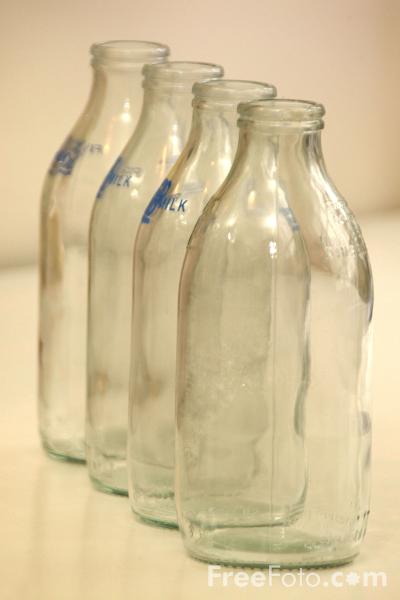
Consider the alternatives. You could refill your own refill bottle from the tap which would be both economical and ecological. You could be given the option of buying a drink in a refillable glass or plastic bottle, perhaps one with a deposit to encourage reuse. (Heavy duty PET bottles can be refilled as per a glass milk bottle).

Greenpeace is petitioning the Government on the following points.

  1. Set a target for eliminating single use plastics by 2037 and halving such use by 2025. (There would be exemptions such as for medical items).
  2. Ban on the export of plastic recycling by 2025, including an immediate ban on their export to non OECD countries. 
  3. Implement a deposit return scheme for bottles
  4. Moratorium on expanding  incineration capacity in the UK. 

You can support this petition here – https://www.greenpeace.org.uk/challenges/plastic-pollution/?utm_source=SS (scroll down for the petition) or use this link:

https://act.gp/3ytd3QF

We too can be part of the change. 

*We can contact our local council and ask for them to reconsider where their plastic recycling goes. We can ask them to ban single use plastics within their organisation. 

*We can contact manufacturers and suppliers and ask them to reduce single use plastic, ditto cafes and food outlets.

  • We can avoid single use plastics by using our own keep cup/ flask for coffee etc, water bottle for drinks, sandwich box for pack lunches etc

*We can simply not buy things that use or come packed in plastic. 

Counting on …day 258 

27th July 2022

It is only a week since we endured a two day extreme heatwave but is it already passing out mind, out of sight? Let’s continue to talk about climate change and how it is already affecting us. Let’s plan now for how we will help each other cope better during the next heatwave. This may come this summer, or maybe next, but it will certainly come.

The Green Tau: issue 45

Earth Overshoot Day 28th July 2022

Leviticus 25 explains that the land should have a sabbath rest every seventh year. In that year no crops would be sown and the people would live off the surplus of previous years. Farmers over the millennia have learnt that you cannot constantly expect the land to keep on producing crops year on year without fail. The land either needs to lay fallow (rest), or it needs to be sown with a restorative crop such as nitrogen fixing beans or clover, or it needs the input of artificial fertilisers, so that it may recuperate its productivity. It is a lesson we are sometimes reluctant to heed. The Dust Bowl disaster of 1930s in the USA destroyed vast acres of farm land because farming practices did not maintain the fertility of the soil. An equivalent story can be told about the Aral Sea. This inland lake, once the fourth largest area of fresh water in the world,  has been reduced to nothing because more water has been extracted year on year – to irrigate local cotton crops – than the rate at which water flowing in fills the lake.

Ideally what we consume from the natural world – crops, timber, drinking water, clean air, energy – is balanced by the earth’s ability to regenerate. Prior to 1970 that was the case. Since then we have been using up the earth’s renewable resources at a rate faster than they are replenished. Scientists each year calculate that point  when we pass from credit to deficit. This is called Earth Overshoot Day. This year the predicted date is 28th July. Seven months into the year and we have already – globally – consumed as much as the earth can replenish in one year! 

Surely this state of affairs can not continue? What can we do about it and why aren’t we doing it? 

Since 1970, Earth Overshoot Day has been falling earlier and earlier each year. Only in 2020 did it reverse: the reduction in world wide consumption because of Covid gave the earth a three week reprieve. Consuming less has to be the answer which means consuming more carefully and more sustainably. If we could do that in 2020 whilst coping with a pandemic, surely we could do it every year? 

The Earth Overshoot website has details of various ways in which the global community could do this. https://www.overshootday.org/ Meantime we as individuals can make changes to our own lives  and  patterns of consumption. And we can ask or push for our churches, places of work, sports clubs, local authorities, museums, retailers, and government, to make similar reductions in consumption. We need change to happen at all levels.  

28th July is 2022’s Earth Overshoot Day at the global level. That date is the average  of each nation’s own Overshoot Day. These dates range from 20th December for Jamaica (ie Jamaica pretty much balances its books,  consuming only slightly more than it can regenerate in a year) to 10th February for Qatar. The UK’s Overshoot Day  was 19th May. We would need three United Kingdom’s to satisfy our current consumption levels, whereas in reality we rely on other countries to help make up the shortfall.  

Not only should we be addressing the conservation and safe use of resources here in the UK, we should also be offering  support to those other countries on whom we rely to ensure we don’t deplete their resources and rather enable them to develop economies that benefit their own ecosystems. 

 Counting on …day 257

26th July 2022

The Guardian reports that plans are ahead to make it illegal for shops to run the air conditioning whilst there doors are open, and already a by law exists in Paris resulting in  €150 fines. Can we ask our local authorities to take action too?

French retailers have agreed to switch off illuminated signs when their premises close for the day.

https://www.theguardian.com/world/2022/jul/25/france-air-conditioned-shops-doors-shut-energy-saving?CMP=Share_iOSApp_Other

Counting on … day 256 

25th July 2022

Ten plus years ago there was a report on the Guardian complaining of shops that keep their doors open in the winter whilst leaving the heating full on (https://www.theguardian.com/environment/2010/nov/29/shop-doors-shut-save-energy?CMP=Share_iOSApp_Other) Now we to be asking the same question of shop keepers/ store managers when they leave doors open with the air conditioning running full blast. Note which stores in your high street do this and email their head office.