Counting on …day 103

23rd February 2022

As well as counting on ourselves to take action, we count on others too. Our local council, the Borough of Richmond upon Thames has recently review it progress vis a vis its climate emergency strategy. An independent assessment of all councils, ranked Richmond as eleventh overall, and third highest within the London Boroughs. Richmond scored particularly highly on ‘Community, engagement and communications’ and well above average on ‘Ecological emergency’. For full details see 

https://www.richmond.gov.uk/news/february_2022/cllr_neden_watts_on_richmond_council_climate_emergency_action_plan_annual_update

 Counting on… day 100

20th February 2022

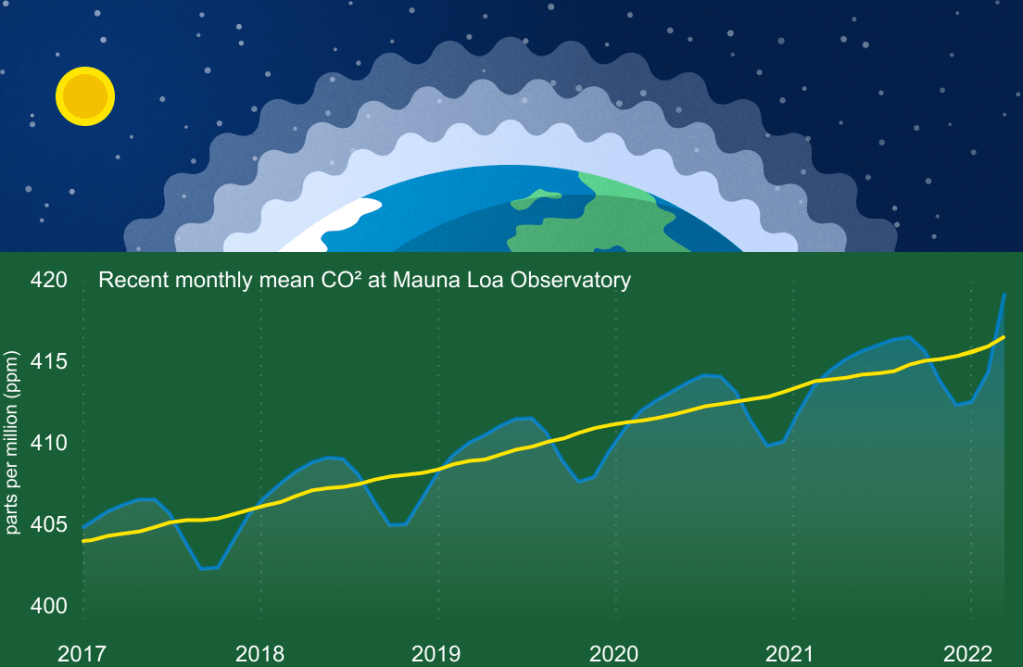
The Guardian posts a daily note of global CO2 levels. They are a stark reminder of the seriousness of the crisis that we are facing. 

C02 weekly averages
6 February, 2022: 418.38ppm
This time last year: 417.04ppm
1 Year Change: 1.38ppm (0.32%)
10 years ago: 393.99ppm
Safe level: 350ppm” 

Second Sunday before Lent

20th February 2022

Genesis 2:4b-9, 15-25In

In the day that the Lord God made the earth and the heavens, when no plant of the field was yet in the earth and no herb of the field had yet sprung up—for the Lord God had not caused it to rain upon the earth, and there was no one to till the ground; but a stream would rise from the earth, and water the whole face of the ground— then the Lord God formed man from the dust of the ground, and breathed into his nostrils the breath of life; and the man became a living being. And the Lord God planted a garden in Eden, in the east; and there he put the man whom he had formed. Out of the ground the Lord God made to grow every tree that is pleasant to the sight and good for food, the tree of life also in the midst of the garden, and the tree of the knowledge of good and evil.

The Lord God took the man and put him in the garden of Eden to till it and keep it. And the Lord God commanded the man, ‘You may freely eat of every tree of the garden; but of the tree of the knowledge of good and evil you shall not eat, for in the day that you eat of it you shall die.’

Then the Lord God said, ‘It is not good that the man should be alone; I will make him a helper as his partner.’ So out of the ground the Lord God formed every animal of the field and every bird of the air, and brought them to the man to see what he would call them; and whatever the man called each living creature, that was its name. The man gave names to all cattle, and to the birds of the air, and to every animal of the field; but for the man there was not found a helper as his partner. So the Lord God caused a deep sleep to fall upon the man, and he slept; then he took one of his ribs and closed up its place with flesh. And the rib that the Lord God had taken from the man he made into a woman and brought her to the man. Then the man said,
‘This at last is bone of my bones
   and flesh of my flesh;
this one shall be called Woman,
   for out of Man this one was taken.’
Therefore a man leaves his father and his mother and clings to his wife, and they become one flesh. And the man and his wife were both naked, and were not ashamed.

Psalm 65 

To the leader. A Psalm of David. A Song.
Praise is due to you,
   O God, in Zion;
and to you shall vows be performed,
   O you who answer prayer!
To you all flesh shall come.
When deeds of iniquity overwhelm us,
   you forgive our transgressions.
Happy are those whom you choose and bring near
   to live in your courts.
We shall be satisfied with the goodness of your house,
   your holy temple. 


By awesome deeds you answer us with deliverance,
   O God of our salvation;
you are the hope of all the ends of the earth
   and of the farthest seas.
By your strength you established the mountains;
   you are girded with might.
You silence the roaring of the seas,
   the roaring of their waves,
   the tumult of the peoples.
Those who live at earth’s farthest bounds are awed by your signs;
you make the gateways of the morning and the evening shout for joy. 


You visit the earth and water it,
   you greatly enrich it;
the river of God is full of water;
   you provide the people with grain,
   for so you have prepared it.
You water its furrows abundantly,
   settling its ridges,
softening it with showers,
   and blessing its growth.
You crown the year with your bounty;
   your wagon tracks overflow with richness.
The pastures of the wilderness overflow,
   the hills gird themselves with joy,
the meadows clothe themselves with flocks,
   the valleys deck themselves with grain,
   they shout and sing together for joy.

Revelation 4

After this I looked, and there in heaven a door stood open! And the first voice, which I had heard speaking to me like a trumpet, said, ‘Come up here, and I will show you what must take place after this.’ At once I was in the spirit, and there in heaven stood a throne, with one seated on the throne! And the one seated there looks like jasper and cornelian, and around the throne is a rainbow that looks like an emerald. Around the throne are twenty-four thrones, and seated on the thrones are twenty-four elders, dressed in white robes, with golden crowns on their heads. Coming from the throne are flashes of lightning, and rumblings and peals of thunder, and in front of the throne burn seven flaming torches, which are the seven spirits of God; and in front of the throne there is something like a sea of glass, like crystal.

Around the throne, and on each side of the throne, are four living creatures, full of eyes in front and behind: the first living creature like a lion, the second living creature like an ox, the third living creature with a face like a human face, and the fourth living creature like a flying eagle. And the four living creatures, each of them with six wings, are full of eyes all around and inside. Day and night without ceasing they sing,
‘Holy, holy, holy,
the Lord God the Almighty,
   who was and is and is to come.’
And whenever the living creatures give glory and honour and thanks to the one who is seated on the throne, who lives for ever and ever, the twenty-four elders fall before the one who is seated on the throne and worship the one who lives for ever and ever; they cast their crowns before the throne, singing,
‘You are worthy, our Lord and God,
   to receive glory and honour and power,
for you created all things,
   and by your will they existed and were created.’

Luke 8:22-25

One day Jesus  got into a boat with his disciples, and he said to them, ‘Let us go across to the other side of the lake.’ So they put out, and while they were sailing he fell asleep. A gale swept down on the lake, and the boat was filling with water, and they were in danger. They went to him and woke him up, shouting, ‘Master, Master, we are perishing!’ And he woke up and rebuked the wind and the raging waves; they ceased, and there was a calm. He said to them, ‘Where is your faith?’ They were afraid and amazed, and said to one another, ‘Who then is this, that he commands even the winds and the water, and they obey him?’

Reflection

The small fishing boat caught in the midst of a storm is at risk of capsizing and its crew of drowning. At Jesus’s word the storm is calmed and the danger averted. His disciples are astonished. They had not expected this outcome: perhaps in waking Jesus they had been hoping for some words of comfort before they drowned. Or may they had woken him so that he too might have time to prepare for his death. ‘Who is this,’ they ask, ‘that he commands even the winds and the water and they obey?’ 

The control of the elements belongs to God. Yet as this story reminds us, Jesus, as much as he is of human flesh, he is also of God. 

 All our readings today remind us that God is the creator, the one who created the earth and all life that flourishes therein. And it reminds us of our role as humans and God’s expectation of us. The story from Genesis tells us that God specifically created humans to till and keep the earth, to ensure its continuing flourishing. Gods has created a regenerative earth that abounds with life such that it is self sustaining providing food and nourishment for all. 

The psalm exhorts  us that to God is due both praise and the performance of vows. This is balanced by the reminder that God is the source of our hope and  salvation – and then describes the wonder and bounty of nature with which Gods has endowed the world. This is a world of joyful abundance . 

Even the passage from Revelation extols the wonders of God’s creation. Seen through the lens of a spiritual vision, the writer sees heaven as a place where God is endlessly praised by and for all that is created.

So what of our world in the 21st century? Destructive winds and storms we certainly know about even here in London. Earlier this month Boston, USA, received a record snowfall of over 60cm with gusting winds that brought temperatures down to -28C. In Australia monsoon rains resulted in 381mm falling over night in Queensland. Tropical Storm Ana caused nearly 80 deaths in Madagascar, Mozambique, and Malawi  as well as displacing 160, 000 people. Whilst this week heavy rains in Brazil caused a landslide that has killed at least 94 people. In California 66 of the state is now affected by severe drought, and the risk of further wild fires. 

All around we are seeing the affects of human-made climate change. We cannot control the wind and the waves, but we can wreak devastation. Where is God in this? Does God hear our cries that we are perishing?

Yes, God does here our cries, and the cries of creation. God knows the fear and pain being suffered. God does not will storms or destruction, floods or droughts. God does not override the wind and the waves. God does not control humans as if we were automatons. Rather God desires that we tend and care for the world around us, that we learn from and understand the workings of creation, that we cease those activities that cause harm and damage.  Scientists have been studying the causes of climate change over the last 50 plus years. They have been modelling future effects of human activity and how we can alter our behaviour to constrain the worsening effects of the crisis. International groups, even governments, have accepted the validity and necessity of achieving net zero carbon emissions by 2050 – not to stop extreme weather events but to keep them within such limits that those who are vulnerable  can be protected. God is certainly there at the heart of these endeavours. 

‘Where is your faith?’ Jesus asked his companions. And today that is still his question: Where is our faith? Do we place our faith in God, in the wisdom of creation, in the knowledge discerned by scientists? If so, then why are we not taking all necessary steps to reduce our carbon emissions, to achieve net zero? Why are we not providing the finances to enable everyone to take part, whether that is those in this country who cannot meet the cost of insulating their houses, or buy sustainably produced food, or afford the cost of rail travel? Why are we not providing the finance marginalised countries who don’t have the capital to switch to renewables, who are ill-equipped to cope with storms and floods, who can’t meet the cost of adaptation, who can’t afford to develop new farming techniques? 

Or is it that we place our faith in human ego, in human independence? Is it that we place our faith in the motivation of profit? Is it that we find ourselves trapped in the iniquity of systems? Systems that promote short term gain over long term well being? Systems that trap the poor and the vulnerable? Systems that can’t envisage change?

Let us resolve to place our faith in God. God created the world, and as part of it, humanity. By studying how the world works, how ecosystems develop and thrive, we learn how to live sustainably and in harmony with creation. We learn how to live as God desires. Continuing to live lives that destroy habitats, that diminish the world’s biodiversity, that consume resources faster than they can be renewed, is to live in opposition to God’s will. Where we struggle is that as individuals, however much we try to live sustainably and in harmony with God, we cannot outweigh the contri effects of those who choose not to live sustainably, who choose to ignore God’s will. Often these are not individuals but are companies, governments and systems. 

We need to pray for these situations, to pray for for a softening of hearts and a change of disposition. To pray for those who are suffering. To pray for the strengthening of those who strive to do what is right.  We need to be prophetic, to call out the wrong where we see it, to challenge misplaced convention and tradition, to raise awareness of what is right and what is wrong. We need to join forces one with another to make our voices heard and make our message credible. And for this we need faith.  Like yeast in dough, like the mustard seed in the soil, faith can grow and work miracles.

Counting on …day 93 

13th February 2022

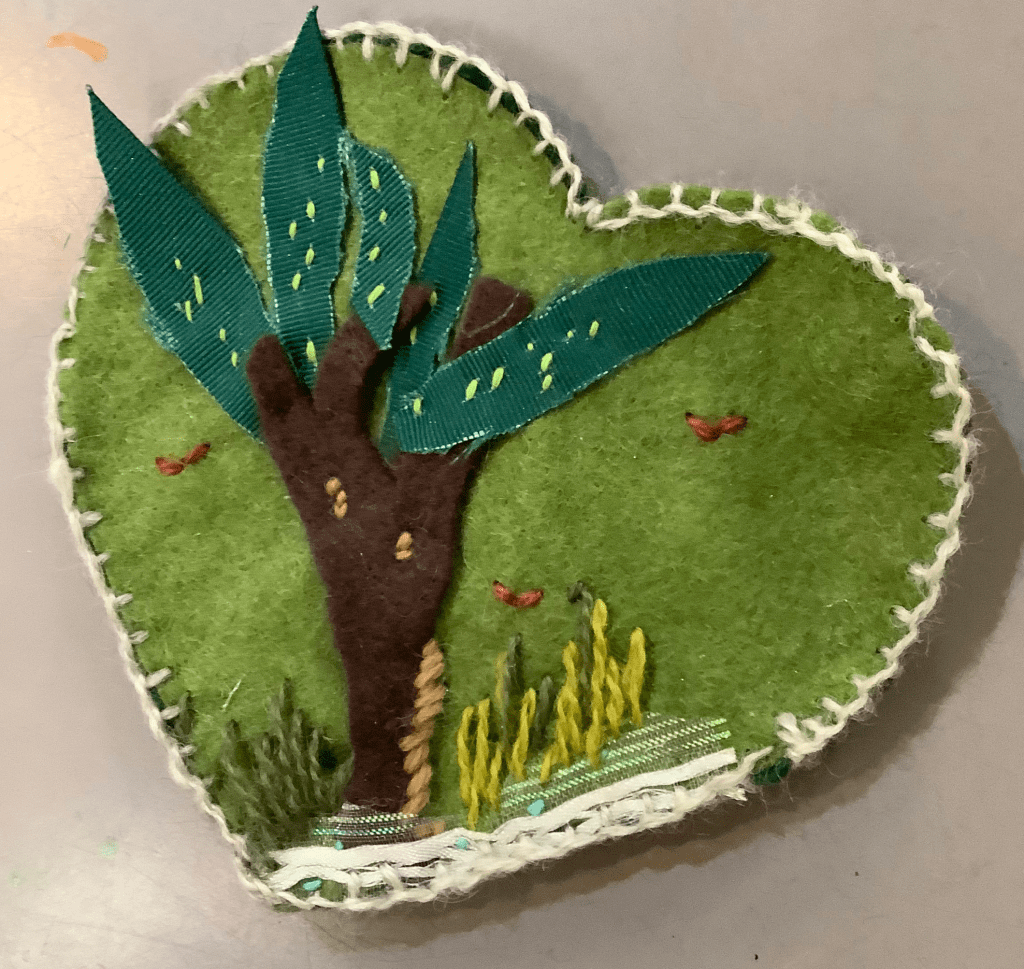
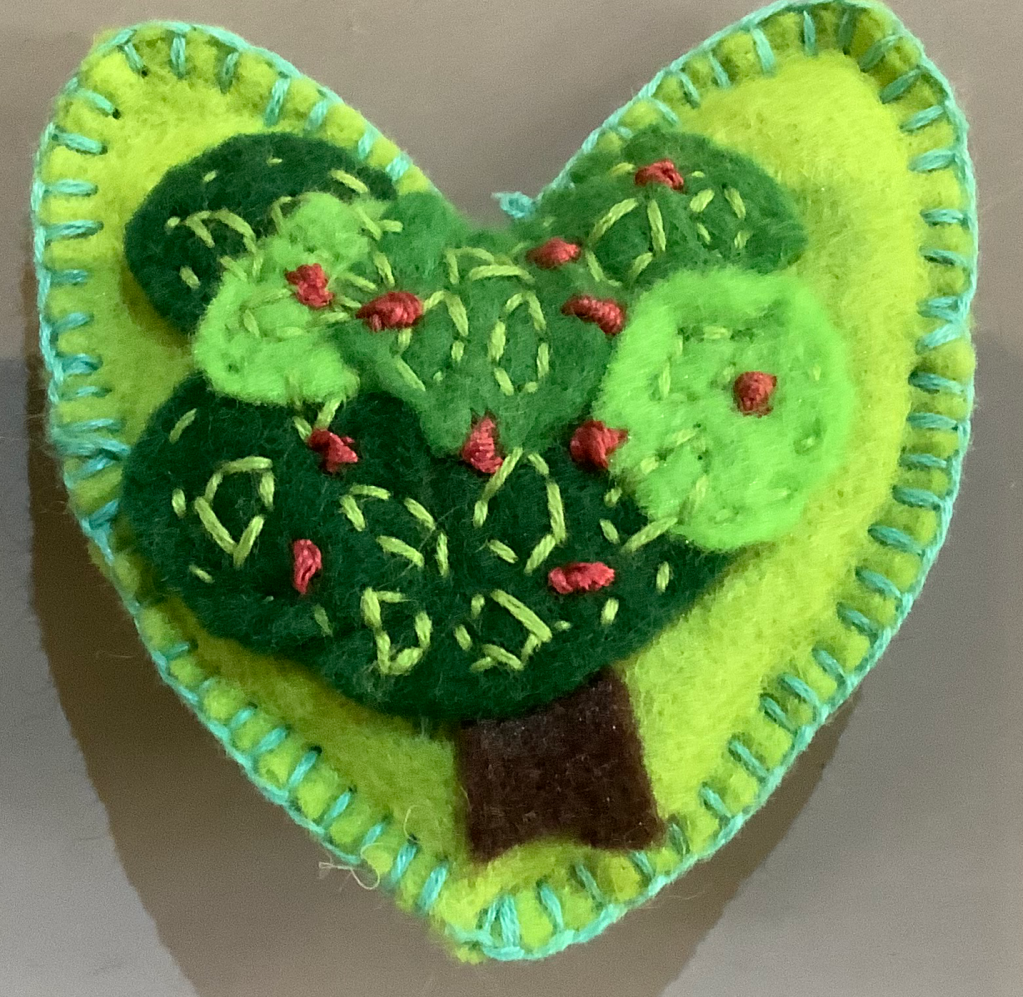
To “Show the Love” two hearts that were made yesterday are being dispatched, one to our local MP and one to our Local Councillor. The  hearts are a reminder to those who make them and those who receive them of the importance of caring for creation and of what we loose if we do not. 


Follow this link to take part https://www.theclimatecoalition.org/show-the-love

Third Sunday before Lent 

13th February 2022

Jeremiah 17:5-10

Thus says the Lord:

Cursed are those who trust in mere mortals
and make mere flesh their strength,
whose hearts turn away from the Lord.

They shall be like a shrub in the desert,
and shall not see when relief comes.

They shall live in the parched places of the wilderness,
in an uninhabited salt land.

Blessed are those who trust in the Lord,
whose trust is the Lord.

They shall be like a tree planted by water,
sending out its roots by the stream.

It shall not fear when heat comes,
and its leaves shall stay green;

in the year of drought it is not anxious,
and it does not cease to bear fruit.

The heart is devious above all else;
it is perverse–
who can understand it?

I the Lord test the mind
and search the heart,

to give to all according to their ways,
according to the fruit of their doings.

Psalm 1

1 Happy are they who have not walked in the counsel of the wicked, *
nor lingered in the way of sinners,
nor sat in the seats of the scornful!

2 Their delight is in the law of the Lord, *
and they meditate on God’s law day and night.

3 They are like trees planted by streams of water,
bearing fruit in due season, with leaves that do not wither; *
everything they do shall prosper.

4 It is not so with the wicked; *
they are like chaff which the wind blows away.

5 Therefore the wicked shall not stand upright when judgment comes, *
nor the sinner in the council of the righteous.

6 For the Lord knows the way of the righteous, *
but the way of the wicked is doomed.

1 Corinthians 15:12-20

Now if Christ is proclaimed as raised from the dead, how can some of you say there is no resurrection of the dead? If there is no resurrection of the dead, then Christ has not been raised; and if Christ has not been raised, then our proclamation has been in vain and your faith has been in vain. We are even found to be misrepresenting God, because we testified of God that he raised Christ–whom he did not raise if it is true that the dead are not raised. For if the dead are not raised, then Christ has not been raised. If Christ has not been raised, your faith is futile and you are still in your sins. Then those also who have died in Christ have perished. If for this life only we have hoped in Christ, we are of all people most to be pitied.

But in fact Christ has been raised from the dead, the first fruits of those who have died.

Luke 6:17-26

Jesus came down with the twelve apostles and stood on a level place, with a great crowd of his disciples and a great multitude of people from all Judea, Jerusalem, and the coast of Tyre and Sidon. They had come to hear him and to be healed of their diseases; and those who were troubled with unclean spirits were cured. And all in the crowd were trying to touch him, for power came out from him and healed all of them.

Then he looked up at his disciples and said:

“Blessed are you who are poor,
for yours is the kingdom of God.

“Blessed are you who are hungry now,
for you will be filled.

“Blessed are you who weep now,
for you will laugh.

“Blessed are you when people hate you, and when they exclude you, revile you, and defame you on account of the Son of Humanity. Rejoice in that day and leap for joy, for surely your reward is great in heaven; for that is what their ancestors did to the prophets.”

“But woe to you who are rich,
for you have received your consolation.

“Woe to you who are full now,
for you will be hungry.

“Woe to you who are laughing now,
for you will mourn and weep.

“Woe to you when all speak well of you, for that is what their ancestors did to the false prophets.”

Reflection 

Considering the news we hear and read and see each day, who would place much trust in mere mortals?

We seem, on the one hand, to be good at destroying the good things around us, and, on the either hand, to be completely oblivious to this. The net result being that we continue to destroy the world. We  have the misplaced belief that we mortals are doing the right thing!

Jeremiah’s description is that we are like a shrub in a desert – one that can’t  recognise relief when it comes. We are facing a climate crisis, an energy crisis and a poverty crisis. We could find relief by switching from fossil fuels to renewables; by shifting our investments, taxes, and subsidies from the ones that are  causing the problem to the other. We could insulate people’s homes, instal solar panels on their roofs and supply the cheaper green energy to make life easier for the poor. BUT we don’t! Instead we struggle trying to be a healthy in a place where there is no water and where the soil has been contaminated with salt. 

We pay people less than they need to survive  so that companies can sell their goods more cheaply and rake in the profits. We expect cheap food, and let supermarkets harass farmers to short change the soil and exploit their livestock. and then resent them being given subsistence benefits. We want things to be cheaper, happily ignoring the exploitation of workers. We avoid taxing the rich less they take their money elsewhere, yet complain when there aren’t enough nurses and teachers. We resent paying more for things that last, instead allowing the world to be a dumping ground for plastics, and electronic waste, uneaten food and hardly worn clothes.

Jeremiah is right: those who rely in mere mortals are cursed. We fail to realise that if it were not for our misplaced trust, we could be like trees growing by streams, like shrubs in a well water land, where the leaves would be green, providing shade from the heat. 

We could be living in a world where the poor are blessed; Where the hungry are fed; Where the distraught are consoled. We could be living in a world where resources are shared and the future protected, where health and opportunity are givens, a world of joy and contentment. A world where the word of God is followed and the Son is esteemed. 

Our challenge is to believe that with God, all this is possible. To believe is to act in accordance with that belief. If we believe that paying people a pittance is wrong, we should say so. If we believe people should be paid more, we must be willing to pay more. If we believe that God’s world is for everyone, we should share resources equally and willing taking less if we find we have been consuming too much.

“Blessed are those who trust in the Lord, whose trust is the Lord.”

 Counting on…day 92

12th February 2022

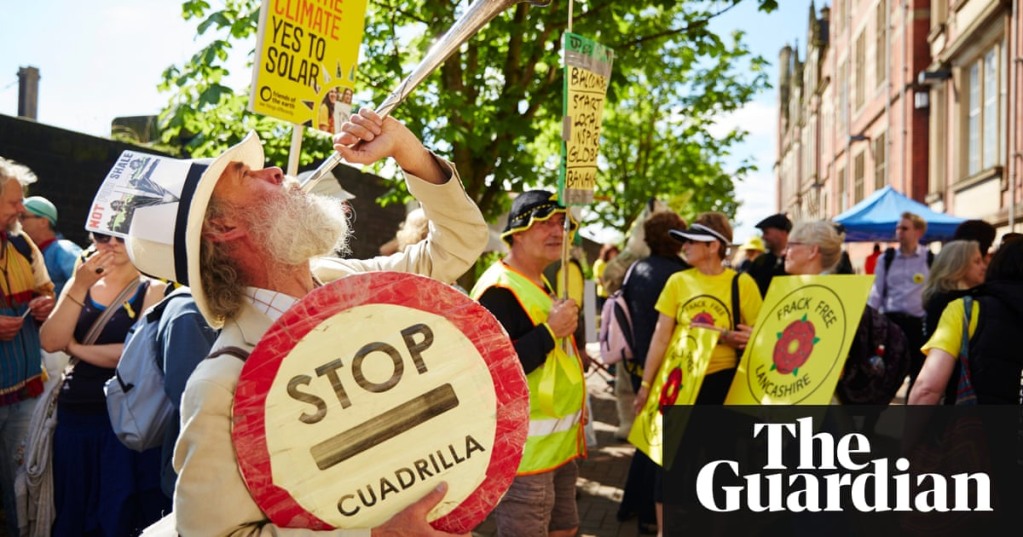
An end to fracking in the UK! The Guardian reports that “Cuadrilla will permanently plug and abandon its two shale wells in Lancashire, drawing a line on Britain’s failed fracking industry.” https://www.theguardian.com/environment/2022/feb/10/fracking-firm-cuadrilla-to-permanently-abandon-controversial-uk-sites

Protests and sound arguments again help protect the environment. 

 Counting on ….day 89

9th February 2022

Just as paper handkerchiefs and kitchen towels cannot be recycled, so too is the same for paper napkins/ serviettes. Cafés routinely add a paper serviette to every order. Rather than throwing them straight away, you can use them as a base for growing mustard and cress before finally adding them to your compost heap. 

Replace paper serviettes with washable, reusable cotton ones.

Counting on …day 88 

8th February 2022

Each time paper is recycled, the fibres become shorter and shorter and the potential for further recycling gets less. Paper towels are usually made from fibres that are already very short. For the paper towel recycling is no longer an option. Paper towels  are likely to have absorbed grease, food or other substances, which again makes them unsuitable candidates for recycling. In small numbers they can be added to your compost bin. 

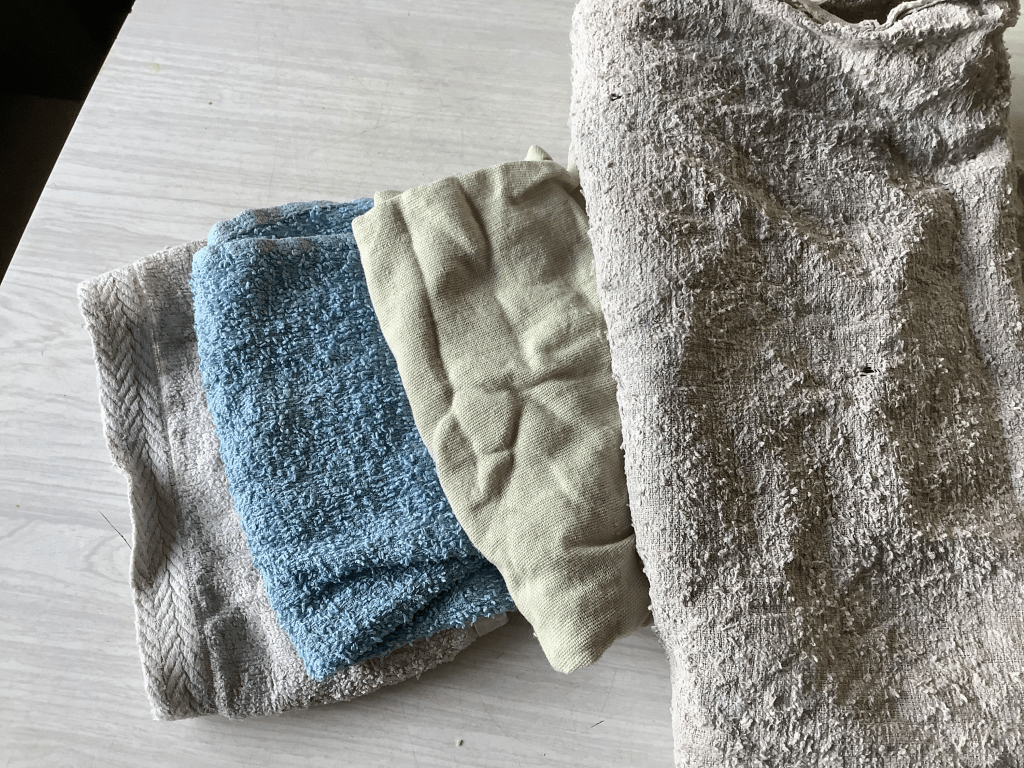
Do we need paper towels in the kitchen? Why not use cloths that can be washed and reused to wipe up spills?  Hand/ bath towels/ tea towels that become to worn for be serviceable, can be cut down and repurposed as cleaning clothes. And when they become too worn, they can go as rags for recycling – charity shops usually welcome bags of rags. 

Fourth Sunday before Lent

6th February 2022

Isaiah 6:1-8

In the year that King Uzziah died, I saw the Lord sitting on a throne, high and lofty; and the hem of his robe filled the temple. Seraphs were in attendance above him; each had six wings: with two they covered their faces, and with two they covered their feet, and with two they flew. And one called to another and said:

“Holy, holy, holy is the Lord of hosts;
the whole earth is full of his glory.”

The pivots on the thresholds shook at the voices of those who called, and the house filled with smoke. And I said: “Woe is me! I am lost, for I am a man of unclean lips, and I live among a people of unclean lips; yet my eyes have seen the King, the Lord of hosts!”

Then one of the seraphs flew to me, holding a live coal that had been taken from the altar with a pair of tongs. The seraph touched my mouth with it and said: “Now that this has touched your lips, your guilt has departed and your sin is blotted out.” Then I heard the voice of the Lord saying, “Whom shall I send, and who will go for us?” And I said, “Here am I; send me!” 

Psalm 138

1 I will give thanks to you, O Lord, with my whole heart; *
before the gods I will sing your praise.

2 I will bow down toward your holy temple
and praise your Name, *
because of your love and faithfulness;

3 For you have glorified your Name *
and your word above all things.

4 When I called, you answered me; *
you increased my strength within me.

5 All the kings of the earth will praise you, O Lord, *
when they have heard the words of your mouth.

6 They will sing of the ways of the Lord, *
that great is the glory of the Lord.

7 Though the Lord be high, he cares for the lowly; *
he perceives the haughty from afar.

8 Though I walk in the midst of trouble, you keep me safe; *
you stretch forth your hand against the fury of my enemies;
your right hand shall save me.

9 The Lord will make good his purpose for me; *
O Lord, your love endures for ever;
do not abandon the works of your hands.

1 Corinthians 15:1-11

I would remind you, brothers and sisters, of the good news that I proclaimed to you, which you in turn received, in which also you stand, through which also you are being saved, if you hold firmly to the message that I proclaimed to you–unless you have come to believe in vain.

For I handed on to you as of first importance what I in turn had received: that Christ died for our sins in accordance with the scriptures, and that he was buried, and that he was raised on the third day in accordance with the scriptures, and that he appeared to Cephas, then to the twelve. Then he appeared to more than five hundred brothers and sisters at one time, most of whom are still alive, though some have died. Then he appeared to James, then to all the apostles. Last of all, as to one untimely born, he appeared also to me. For I am the least of the apostles, unfit to be called an apostle, because I persecuted the church of God. But by the grace of God I am what I am, and his grace toward me has not been in vain. On the contrary, I worked harder than any of them–though it was not I, but the grace of God that is with me. Whether then it was I or they, so we proclaim and so you have come to believe.

Luke 5:1-11 

Once while Jesus was standing beside the lake of Gennesaret, and the crowd was pressing in on him to hear the word of God, he saw two boats there at the shore of the lake; the fishermen had gone out of them and were washing their nets. He got into one of the boats, the one belonging to Simon, and asked him to put out a little way from the shore. Then he sat down and taught the crowds from the boat. When he had finished speaking, he said to Simon, “Put out into the deep water and let down your nets for a catch.” Simon answered, “Master, we have worked all night long but have caught nothing. Yet if you say so, I will let down the nets.” When they had done this, they caught so many fish that their nets were beginning to break. So they signalled their partners in the other boat to come and help them. And they came and filled both boats, so that they began to sink. But when Simon Peter saw it, he fell down at Jesus’ knees, saying, “Go away from me, Lord, for I am a sinful man!” For he and all who were with him were amazed at the catch of fish that they had taken; and so also were James and John, sons of Zebedee, who were partners with Simon. Then Jesus said to Simon, “Do not be afraid; from now on you will be catching people.” When they had brought their boats to shore, they left everything and followed him.

Reflection 

The over arching theme of today’s readings is of being called by God. For Isaiah it seems to be a unique calling, as if Isaiah’s role is going to be unusual, out of the ordinary. When we get to the days of Paul, the number of people being called by God is growing exponentially. Paul doesn’t say so, but one senses that Paul anticipates that his readers will be the next generation of those commissioned by God to continue the spread of the good news. 

Isaiah, Paul and Simon are all clearly aware of their shortcomings, their failures, their sins. In calling them, God both recognises this,  absolves them and at the same time enables their transformation into spreaders of the good news, of salvation.  

In the ‘pericope’ or clip that Luke gives us, Jesus is preaching the good news to the crowds. But then it is as if he demonstrates this by way of a physical parable. He has chosen to borrow Simon’s boat. Simon’s overnight fishing expedition had failed. Normally Simon would have expected to make a worthwhile  catch of fish, but on this occasion the haul had been nil. Things had not been how they should have been. 

Jesus invites Simon try once more, and this time the haul of fish is beyond Simon’s expectation. Jesus has not just restored things the way they should be, he has transformed them spectacularly. The good news that God’s salvation can and does restore and transform life in all its fullness is made visible.

Isaiah was called to warn the people of Judea of the threat posed by the Babylonians to their future as a nation. This threat stemmed from the breakdown in their relationship with God, their arrogance  and their failure to listen to, and act upon, the wisdom of God. They needed to repent and change direction, to transform discern the ways in which they lived and how they should related to God. This transformation was, as recorded in the Book of Isaiah, a work in progress. 

Jesus called Simon to completely change career. He was to forgo his fishing job and instead to draw people into a new way of understanding God, of realising that the promised Messiah was Jesus, and that with him they would find healing and fulfilment of life. This was a calling that was to shared with a growing number of his contemporaries.

Paul’s calling also involved a change in direction, from persecuting anyone who threatened the age-old, traditional and exclusive understanding of the God of Israel, to that of  preaching a message that invited everyone, whatever their status or background, to participate in the salvation that God offered through the living presence of Jesus Christ. Again this was a calling that was shared by others, both then and through each subsequent generation, right down to us today.

I wonder what your calling might be? For me, it is endeavouring to honour God’s desire that we should care for creation, by  sharing the ways of living fairly and sustainably, and endeavouring to win the hearts and minds of others to be  equally enthused and engaged with God’s hopes for creation. Loving sustainably according to God’s wishes, God’s wisdom, will I believe restore and transform the world, over coming all the crises with which we are beset. 

 Counting on …day 85

5th February 2022

We consumers can make a difference: the way we shop can and does change the way supermarkets and smaller stores operate. 

Harry Rose, editor of Which?, said: “We know that consumers increasingly want to shop sustainably and our in-depth analysis of three key areas shows that all the big supermarkets could be looking to make some improvements. The good news is shoppers can make a big difference themselves by adopting more sustainable habits, such as buying loose fruit and vegetables, buying seasonal local produce, eating less meat and dairy and limiting their own food waste.” 

https://www.theguardian.com/business/2022/feb/04/waitrose-lidl-eco-friendly-supermarkets-which-plastic-waste