Green Tau: issue 27

15th December 2021

“Palm oil piece”

Palm oil comes from the palm oil tree which grows in tropical regions of the world. Its fruit – both flesh and kernel – are processed to extract the oil. The oil is attractive for many reasons. 

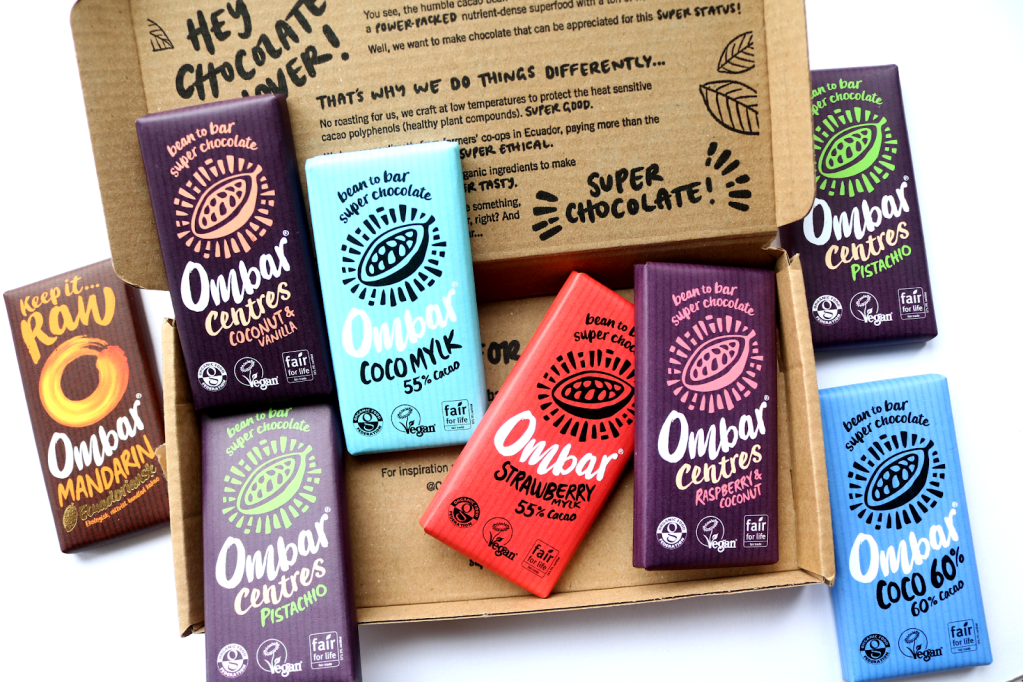
It contains no trans fats making it healthier than other oils.  It is a good (and affordable) source of vitamins A and E and antioxidants. It is resistant to oxidisation giving it, and things made with it, a long shelf life. It is a highly productive crop: where sunflowers produce 0.7 tonnes of oil per hectare, palm oil produces 4 or more tonnes. It can be used to make a wide range of products from soap to biscuits, toothpaste to icecream, lipsticks to pizzas, pet foods to chocolate. Some is also used as a bio fuel.

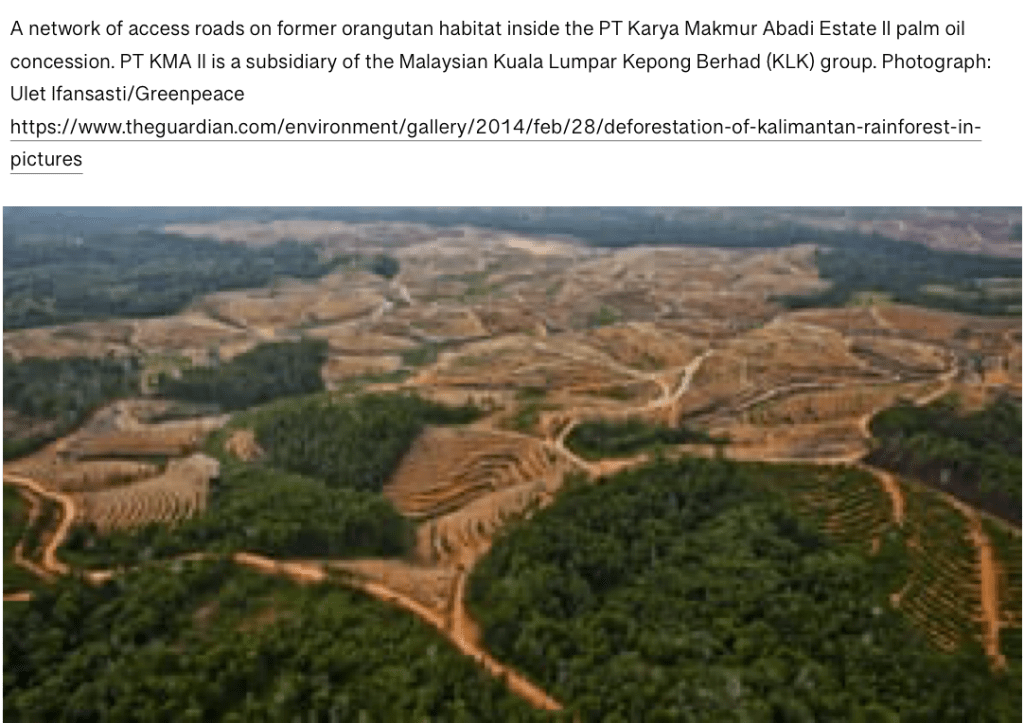
Not surprisingly it is in high demand. Global production has increased from about 2 million tonnes in 1960 to 70 + tonnes in 2018 (https://ourworldindata.org/palm-oil). Production on this scale has led to vast areas of land being repurposed for palm oil plantations – with individual plantations covering 10,000 hectares (approximately 10,000 international rugby pitches or a little smaller than Jersey).  

Monoculture on this scale comes with many environmental issues, that lead to droughts, wild fires and flooding – and require widespread use of fertilisers and pesticides which pollute both water supplies and the air.  These detrimental effects are further compounded when the land cultivated involves the destruction of native forests. An estimates 5% of tropical deforestation is attributable directly to oil palm plantations  although on a positive note, the annual loss is decreasing as countries and companies respond to public criticism (https://palmoilalliance.eu/palm-oil-deforestation/).

In places such as Borne and Sumatra much of the land is covered with virgin forest which is home to many plant and animal species and notable home to large mammals such as orangutans, tigers, rhinos and elephants. Expansion of human enterprises removed the equivalent large mammals many centuries ago. One hopes that we will not allow the same to happen again.

On the other hand palm oil production is an important cash crop for many developing economies. As with the cultivation of cocoa beans (https://greentau.org/2021/12/11/green-tau-issue-26/) the profitability of this crop often does not benefit the workers on the ground. In response to both this and the threat to biodiversity – especially orangutans – some consumers and manufacturers actively avoid palm oil. The following logos are used  by

https://www.palmoilfreecertification.org/

Iceland Foods and the https://orangutanalliance.org/

Ethical Consumer has produced a list of manufacturers who avoid the use of palm oil – or use  sustainably sourced palm oil: https://www.ethicalconsumer.org/palm-oil/palm-oil-free-list

The main industry certification scheme for sustainable palm oil is provided by

The Roundtable on Sustainable Palm Oil. However its scheme is not always transparent, and includes companies who are working towards sustainable production. As with cocoa beans, companies can use the certification if they pay the premium that pays for sustainable production somewhere within the supply chain. For more information see https://www.ethicalconsumer.org/food-drink/what-rspo

Traidcraft for one, did not feel that RSPO assured a fair trade product. They have established their own small scale certification platform, Fair Palm through their work with Serendipalm in Ghana. Here oil palm growers use regenerative farming techniques growing a mix of trees and shrubs that provides a range of sustainable – organically grown – crops. In addition the processing of the palm oil fruits is kept small scale so as to employ people rather than automated machines. This video clip shows the process of change from monoculture to agroforestry:  https://youtu.be/moRmOu634rk

If consumer power has already seen a reduction in the rate of deforestation , continuing consumer power should be able to demand truly sustainable and fairly traded palm oil. Careful research will be needed  as the presence of palm oil products may not always be obvious. Palm oil may be hidden under the general title of ‘vegetable oil’ or may be given a chemical name such as aluminium stearate, ammonium Lauretta sulphate, capric glyceride, or ascobyl palmitate. Ethical Comsumer’s palm oil list will help you evaluate which products you wish to buy and which you might prefer to avoid. 

Counting on … day 31

14th December 2021

It is a month since the end of COP26  on climate change. It can seem as if it was something that happened in a different time. It can feel as if it was blip that changed nothing.  Various environmental and faith groups have since then held reflections, trying to evaluate what happened. One of these took place at the the a Franciscan friary at Hilfield. Below is a link to a YouTube recording of their gathering. The first part by Andy Lester of A Rocha gives a very concise overview of what the COP objectives were and how they were and were not met. Both A Rocha and Franciscans are identified by their concern for the world and its environment,  and  for justice. Both agree that faith groups have an important role to play in standing up for the well-being of the environment and all our brethren. 

Counting On … day 30

13th December 2021

Shop small, shop locally. Supporting small and local businesses is good for the local community and for the environment. Local book shops, for example, are more likely to treat staff suppliers and customers with respect, to pay their taxes – and their shop window also to certainly brightens up the high street! These are the shops and local businesses we count on to make life good. Much more rewarding than buying books from Amazon. 

Ethical Consumer recommends using local food suppliers in their recent report on eating at Christmas.  

https://www.ethicalconsumer.org/ethical-christmas/eat-ethically-christmas

Sunday Reflection: third in Advent

12th December 2021

The Collect 

Stir up your power, O Lord, and with great might come among us; and, because we are sorely hindered by our sins, let your bountiful grace and mercy speedily help and deliver us; through Jesus Christ our Lord, to whom, with you and the Holy Spirit, be honour and glory, now and for ever. Amen.

Zephaniah 3:14-20

Sing aloud, O daughter Zion;
shout, O Israel!

Rejoice and exult with all your heart,
O daughter Jerusalem!

The Lord has taken away the judgments against you,
he has turned away your enemies.

The king of Israel, the Lord, is in your midst;
you shall fear disaster no more.

On that day it shall be said to Jerusalem:

Do not fear, O Zion;
do not let your hands grow weak.

The Lord, your God, is in your midst,
a warrior who gives victory;

he will rejoice over you with gladness,
he will renew you in his love;

he will exult over you with loud singing
as on a day of festival.

I will remove disaster from you,
so that you will not bear reproach for it.

I will deal with all your oppressors
at that time.

And I will save the lame
and gather the outcast,

and I will change their shame into praise
and renown in all the earth.

At that time I will bring you home,
at the time when I gather you;

for I will make you renowned and praised
among all the peoples of the earth,

when I restore your fortunes
before your eyes, says the Lord.

Canticle: Isaiah 12:2-6

Surely, it is God who saves me; *
I will trust in him and not be afraid.

For the Lord is my stronghold and my sure defence, *
and he will be my Saviour.

Therefore you shall draw water with rejoicing *
from the springs of salvation.

And on that day you shall say, *
Give thanks to the Lord and call upon his Name;

Make his deeds known among the peoples; *
see that they remember that his Name is exalted.

Sing the praises of the Lord, for he has done great things, *
and this is known in all the world.

Cry aloud, inhabitants of Zion, ring out your joy, *
for the great one in the midst of you is the Holy One of Israel.

Philippians 4:4-7

Rejoice in the Lord always; again I will say, Rejoice. Let your gentleness be known to everyone. The Lord is near. Do not worry about anything, but in everything by prayer and supplication with thanksgiving let your requests be made known to God. And the peace of God, which surpasses all understanding, will guard your hearts and your minds in Christ Jesus.

Luke 3:7-18

John said to the crowds that came out to be baptised by him, “You brood of vipers! Who warned you to flee from the wrath to come? Bear fruits worthy of repentance. Do not begin to say to yourselves, ‘We have Abraham as our ancestor’; for I tell you, God is able from these stones to raise up children to Abraham. Even now the ax is lying at the root of the trees; every tree therefore that does not bear good fruit is cut down and thrown into the fire.”

And the crowds asked him, “What then should we do?” In reply he said to them, “Whoever has two coats must share with anyone who has none; and whoever has food must do likewise.” Even tax collectors came to be baptised, and they asked him, “Teacher, what should we do?” He said to them, “Collect no more than the amount prescribed for you.” Soldiers also asked him, “And we, what should we do?” He said to them, “Do not extort money from anyone by threats or false accusation, and be satisfied with your wages.”

As the people were filled with expectation, and all were questioning in their hearts concerning John, whether he might be the Messiah, John answered all of them by saying, “I baptise you with water; but one who is more powerful than I is coming; I am not worthy to untie the thong of his sandals. He will baptise you with the Holy Spirit and fire. His winnowing fork is in his hand, to clear his threshing floor and to gather the wheat into his granary; but the chaff he will burn with unquenchable fire.”

So, with many other exhortations, he proclaimed the good news to the people.

Reflection 

The collect calls out to God, “Stir up your power!” This is not about Christmas puddings. It has a feeling of a whirl wind, a tornado, that will rip through us. A feeling of an electrical force that will spin things into motion. A centrifuge that will separate pure from dross. In the gospel John summons up the same prospect: Now is the time to act! Something is coming for which you have not yet prepared! That which is fruitless, that which shows no penitence or regret, will be cut away and destroyed. Radically alter your lives now before it is too late! For the messiah is coming with wind and fire and will stir up and sift you, shaking out all that is chaff – separating it from what is good. 

Think how that can transform not just us, but the whole world! At the same time, does this sound rather too scary? Do we want to be stripped of our chaff? Do we want to radically change the way we live? Do we feel that there is anything in us worthy enough to remain?

The words from Zephaniah sound equally radical but in a different way for Zephaniah tells us that God will rejoice over us! God’s love for us must be incredibly huge and incredibly forgiving. Looking at the state of the world, the ways in which we have damaged it, the ways in which we harm our selves and one another through our failure to love, through our greed and selfishness, is it credible that God will rejoice over us? Yes says Zephaniah, God will rejoice over us and will renew us with love, restore

Ing what has been  lost, healing what has been damaged and making us a praiseworthy part of creation. 

Where John suggests practical actions people can take – being generous with what we have, not being greedy, not abusing any power or authority we have – the writer of Philippians commends attitudes: being gentle, joyful and prayerful. Let’s be guided by both these figures and let the transformative power of God work in ourselves and the world we inhabit. 

Green Tau: issue 26 

11th December 2021

The ethics of chocolate 

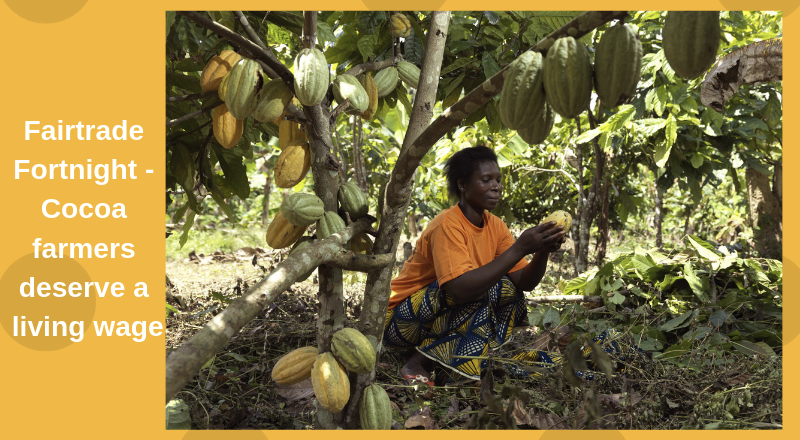
One of the many treats we associate with Christmas is chocolate. In the UK we spend about £325 a year, supporting an industry worth around £4 billion. However at the other end of the story cocoa farmers in Ghana and the Côte d’Ivoire (the largest producers of cocoa beans) may earn as little as 75p a day – or about half what is needed to cover the essentials of food, housing, health car and education – and some cocoa plantations are known to use child slave labour.  This hardly seems fair! Why is it so?

  • Large cocoa companies buy through a global commodity supply system – a sort of global wholesale market. This system is designed to ensure a stable cocoa supply at the lowest possible price. It is not designed to have regard for the sustainability and well being of individual cocoa growers.
  • Whilst cocoa companies can opt to buy certified eco or sustainable beans. This certification process does not mean that the beans they actually buy is eco/ sustainable but that somewhere an equivalent amount of beans has been so produced. This process lacks transparency.
  • Few large cocoa companies have direct links with the bean growers so there are no shared or common interests. 
  • Global cocoa prices do, despite the global commodity supply system, fluctuate as intermediate  traders buy and sell cocoa options. Such traders operate on a short term basis whilst bean growers must operate on a minimum five year basis: it takes five years before a cocoa tree produces its fruit.
  • Poorly paid bean growers do not have money to invest in fertilisers or to learn new farming techniques so as to improve their productivity. Often they themselves are poorly educated because they too grew up in times of poverty when free education etc was not widely available.
  • The impact of climate change – hotter and wetter weather – damages productivity. The changes in weather allows new pests and diseases to develop which damage the crop. 
  • Large cocoa plantations are focused on the  profit made from their sole crop. Such plantations do not diversify into other cash crops that can be grown along side cocoa trees nor into crops that produce food for the workers. Both of these options could help workers survive poor harvests and down turns in commodity prices. Instead workers from large plantations are  readily sacked when these things happen.
  • Small scale growers do not have the money to invest in new  cocoa  varieties that are more productive and/ or more adapted to the changing climate.
  • Much of the profit derives from the sale of chocolate comes from the value added during the manufacture of the chocolate rather than from the production of the beans. However the economies of many cocoa growing countries is still shaped by the patterns of the colonial era which sees these countries as exporters of raw commodities to the west. 
  • Chocolate manufacturing involves a high level of investment in factories, machinery and transport, including refrigeration. Chocolate manufacture also relies on accessing supplies of sugar and milk which may need to be imported with the possibility of additional tariffs. 
  • Climate change is causing bean growers to move to land at higher altitudes. Here existing forest cover is destroyed to plant cocoa trees.
  • When cocoa tree age and productivity declines, many growers simply plant clear existing forest cover and plant new trees which thrive initially on the fresh soil. Long term however the loss of this forest exacerbates both  the climate crisis and the loss of biodiversity which adversely impacts the health and wellbeing of the local population. 

In a recent report, the Ethical Consumer magazine recommends that consumers should check up on the chocolate they buy: 

Does it come from a company where the manufacturer of the chocolate is closely linked to the grower of the cocoa beans?

Is it made from organically grown cocoa and sugar?

Is the production of the beans linked to deforestation and/ or slave labour?

Are the producers of the cocoa beans paid a fair income?

Is the chocolate manufactured in the country where the beans are grown?

The Rain Forest Alliance and Fair Trade are both organisations  set up to ensure the welfare of those who grow the beans and to ensure the environmental sustainability of the farming methods used. They can provide a direct link between supplier and producer. They also provide a certification system which helps the consumer to buy sustainable chocolate products. 

Sustainably  and fairly produced chocolate will cost more than the cheaper alternatives, but this is just  one way in which we can make our money work to improve and protect life on the earth.

For more information watch this informative YouTube programme: https://youtu.be/-XbP4cn8xhU

Further reading: https://newrepublic.com/article/156569/challenge-sustainable-chocolate

https://www.bbc.co.uk/news/world-africa-56687427

https://www.ethicalconsumer.org/food-drink/shopping-guide/ethical-chocolate

Counting On …. Day 27 

10th December 2021

On average about 18% of the food we buy at Christmas is thrown away! According to Marija Rompani, director of ethics and sustainability at John Lewis Partnership “The reality is food waste creates six times more greenhouse gases than aviation. When we throw food away, we waste the precious resources taken to grow, package and transport it – and as it rots in landfill, it produces methane, a greenhouse gas more potent than carbon dioxide. So the simple action of throwing food in the bin has more of a negative impact on our planet than people often realise.” (https://www.theguardian.com/lifeandstyle/2021/dec/04/avoid-food-waste-christmas-climate)

The means to avoiding such waste is two pronged: don’t buy more than you actually need, and make sure you do use all that you do buy. For more tips on how to reduce food waste see  https://greentau.org/2021/08/09/eco-tips-4/

 Counting on … day 26

9th December 2021

Pens can be recycled at Ryman stores who participate in the Terra Cycle scheme. This includes all writing instruments (except for wooden pencils and chalk) are accepted : Any brand of pen, felt tip, highlighter, marker, correction fluid pot, correction tape, mechanical pencil and eraser pen regardless of their composition.

The Green Tau: issue 25

Murdo Madleod/ The Guardian

8th December 2021

The first issue of Green Tau included a quote from  Paul’s Letter to the Romans – “Hope does not disappoint us, because God’s love has been poured into our hearts through the Holy Spirit that has been given to us” (Romans 5:5). – and a quote from the Guardian: “Change is Possible. hope is Power.”

This issue was written looking forwards – without much optimism – to COP26. Six month later I am not sure much has changed. 

But there still has hope. As long as we have hope, however small, then there is something to strive for. Later in his letter Paul suggests that by its nature what we hope for is something we can’t see, for if we could see it, what would our hope be about? (Romans 8:24). Here I think I disagree with Paul. I think in order to have hope we have to have some idea of what it is we are hoping for, however vague or indistinct that vision might be. If our hope is for life after death, we have to have some – however tenuous – understanding of what that life might be: eg a life free of fear and pain, a life of joy etc.

In terms of the climate crisis, I think we have to have some kind of vision, some sort of imagination, of what the world would be like if we could alleviate the crises. Perhaps a vision of  a world where there are great expanses and multiple pockets of re wilded landscape; a world teeming with different plant and animal species; a world of clean air and un-polluted water; a world where there are no extremes of wealth and poverty; a world where there is neither industrial farming nor industrial fishing … and so on. If we didn’t have any such vision, then we what would be hoping for? And if we had nothing to hope for, why would we bother trying to change things?

Hope is important because it becomes our inspiration, a catalyst, a source of energy. And hope that is shared multiplies it’s effect. As a group sharing one hope, we can share the burden of keeping that little flame of hope alive. We can share the load of working for change. We can back each other. We can become each other’s supporters. We can take turns carry each other when the effort becomes too overwhelming. 

It is therefore important that we come together with our neighbours, with our church and faith communities, with local campaign groups, business groups – and work together and share the vision . 

One such group of local businesses came together in Glasgow to create a visual sign, a sculpture, of what hope was, post COP26. “The Hope Sculpture started as a conversation with Ramboll and became a gift from 50 companies to Glasgow. It is a testament to the power of collaboration and dedication to deliver a better future” said the artist Steuart Padwick. His sculpture comprises a 20m tall beacon, on top of which is a child. The child’s arms reach out as if embracing its surroundings, hopeful of a green, better future. It is constructed using low carbon, reclaimed, recycled or sustainable materials, of which, almost all were locally sourced. (https://ramboll.com/media/rgr/gift-of-hope-low-carbon-sculptures-legacy-to-glasgow-and-cop26)

We are often reminded in the Bible how cause and effect spread between generations. From the Book of Exodus when the people are embarking on a new life travelling with God into a new land, a journey surrounded by threat but focused on a great hope for a better future: “I, the LORD, am a God who is full of compassion and pity, who is not easily angered and who shows great love and faithfulness. I keep my promise for thousands of generations and forgive evil and sin; but I will not fail to punish children and grandchildren to the third and fourth generation for the sins of their parents.” Exodus 34: 6-7. And in the prophetic words of Mary in the Gospel of Luke, as once again humanity begins a new journey and a new relationship with God: “He shows mercy from generation to generation to all who honour him”. Luke 1: 50 

What we do now in our time will have consequence for generations to come. And maybe that is where  our hope does the environment, for the world, has to lie. We will not turn round the crises we face in one generation. We can only be the instigators of a new way of life, a new journey, that will have repercussions for generations to come. To keep our hope alive, maybe we also need some short term projects where we will be able to see effort rewarded. One of the Advent readings from Isaiah was not a prophesy for the long term, foretelling the coming of the saviour, and for the short term, foretelling a time of peace that would come about in a matter of years.  

“Therefore the Lord himself will give you a sign. Look, the virgin is with child and shall bear a son, and shall name him Immanuel.  He shall eat curds and honey by the time he knows how to refuse the evil and choose the good.  For before the child knows how to refuse the evil and choose the good, the land before whose two kings you are in dread will be deserted”. Isaiah 7:13-16.

Maybe we need to focus too on changes that we can bring about by the time this year’s new borns are  eating solid foods – or maybe at primary school learning about right and wrong, giving us a five year time frame. Reducing the numbers of petrol and diesel vehicles on our roads and this reducing air pollution. Changing our UK diets such that eating meat is an occasional treat, leading to a reduction in the factory farming of animals, and an increase in land set aside for rewilding. Halving our carbon footprints, such that global temperature rises are still below 1.5C.

Together let’s us maintain – and work for – the hope of  better, greener future.

Counting on … day 25

8th December 2021

Following on from yesterday’s thoughts, what happens to people who do stand up and protest? And why do they take the risk of ending up in prison? 

The following piece comes from one of XR’s newsletters:

Emma Smart, 44, from Weymouth, Dorset, has been on hunger strike since 16th November. On Friday 26th November Emma was moved out of her cell onto the hospital wing at HMP Bronzefield.

Speaking from the prison, Emma said:

“The window of my cell in the hospital wing is blocked up and there is little natural light, in my previous cell I could see the birds and trees that line the prison fence. I have less time to go outside in the prison yard for exercise now. All of this is testing my resolve to continue, but I feel that not eating is the only thing I can do from prison to draw attention to those who will have to make the choice between heating and eating this winter.

“Not standing by while our government commits treason against the people of this country feels like the most important thing I will do in my life.”

Counting on… day 24

7th December 2021

https://www.flickr.com/photos/shefftim/
51075999778/in/album-72157718795475528


Often we count on others to demonstrate on our behalf. We may agree with the sentiments of the protestors but may be don’t have the time or the ability to join in. Not all the women who wanted the vote were able to protest. Not everyone who opposed the war against Iraq were able to protest. Not everyone who wants the Government to give better leadership over the climate crisis is able to protest.

But what do we do if the Government determines to curtail the right to protest?

The following article comes from the Campaign Against Climate Change:

In contempt for the democratic process, Priti Patel has added to the Police, Crime, Sentencing and Courts Bill an additional 18 pages of amendments after the Bill has gone through the House of Commons and after second reading in the House of Lords. This is a clear attempt to bypass Parliamentary scrutiny. The Bill as it stood was already a dangerous assault on the right to protest. The new amendments turn it into something which which you would expect to see in a dictatorship, not a democracy.

Protest to #KillTheBill

Next Wednesday, 8th December, the House of Lords will begin amending the Bill. A protest has been called for 5-7pm in Victoria Tower Gardens, Westminster.

We’ll update our website with details and links to solidarity protests in other cities as we hear about them. If you are on social media, check your local campaigns for news, search #KillTheBill, and there are also national accounts for Kill the Bill on TwitterInstagram.and Facebook.

Can’t make a protest? See below for information about writing to your MP etc: ‘What you can do

Further information including Liberty’s useful summary can be found on their web site https://www.campaigncc.org/police_bill_new_threat