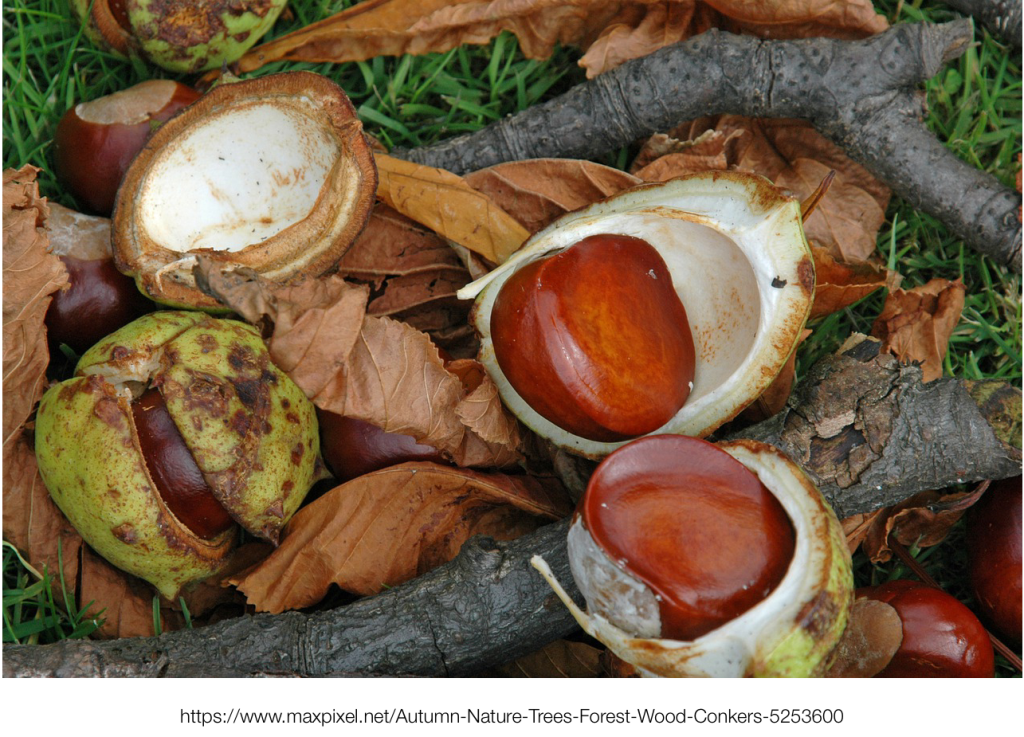
Conkers are a children’s favourite, to be collected and hoarded. Its smooth highly polished skin and round shape is irresistible
Even for adults – aren’t we just grown up children – the appeal remains. The conker comes with an apt lesson: the shiny beauty is short lived – beauty can not be hoarded.
The world around us is full of curious, beautiful and amazing things. As small children our curiosity and our amazement knew no bounds. Every day would produce novelties- things to see, things to chew or eat, things to grab and hold, things to poke and explore.
As we have grow older we have often lost that sense of wonder. Things that were new have become mundane. In the rush to be busy, small things flop below the radar. Decorum dictates that we shouldn’t prod or lick things and, unless we’re wine tasters, swirling stuff around our mouth and spitting are frowned upon. Stopping suddenly just to look is discouraged – it interrupts the flow of traffic. Daily routines take over.
And our love for the world wains and falters.
The season of creation-tide runs from 1st September till 4th October, the Feast of St Francis. Let’s fall in love again with creation.
Action 49: This is the season for apples. If you – or your neighbour – has a surplus, use some to make mincemeat. It will have matured nicely by Christmas.
Chop 500g of apples into small pieces – leave the skin on but discard the core – and place in a large bowl. Add the juice of 2 lemons. Add a teaspoon each of nutmeg, mace and cinnamon – or use ready mixed spice. Add 800g of dried fruit: use a mixture of raisins, figs and apricots. Chop the figs and apricots into small chunks: this is easily done using a pair of scissors. Add 250g of sugar.
Traditionally mincemeat includes suet – vegetarian or otherwise but I choose to omit this as there is usually plenty ty of fat in the pastry and the brandy butter.
You can also add a couple of tablespoons of brandy but this is optional. Mix all together. Leave the mixture in the bowl for 3 or 4 days stirring each day – cover with a tea-towel. Put into jars and it will keep for several months. We keep some back to make for triangle mince pies for Trinity Sunday.
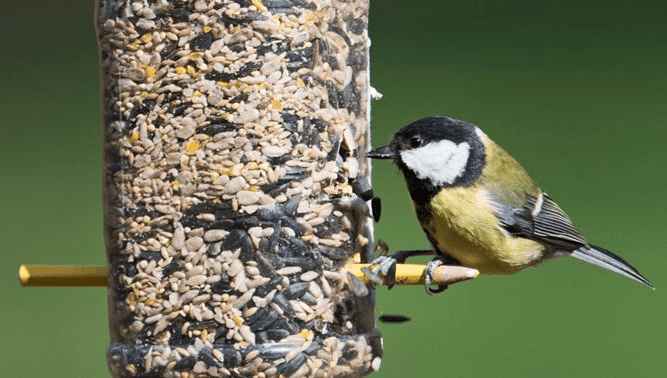
Action 46: Set up a bird feeding station in your garden. Use a selection of bird feeders that will hold different sorts of bird food – suet cakes, seeds, peanuts etc. These will need to be hung from a pole or the branches of a tree. You can include a bird table for those birds prefer to eat from a flat surface but you may find everything gets eaten by pigeons – try a table with a roof to lift access. Locate your bird feeders where they cannot readily be accessed by cats but can be accessed by you, as you will need both to keep them filled and to regularly take them down for a good clean. Mouldy food is not good for birds. The RSPB has instructions for DIY bird feeders: https://www.rspb.org.uk/fun-and-learning/for-kids/games-and-activities/activities/make-a-recycled-bird-feeder/
Also include a shallow bowl for water. Birds need fresh drinking water.
Action 47: Green your pension: this article comes from The Guardian There’s an estimated £2.6tn invested in UK pensions. You might not know it, but much of it funds environmentally harmful industries and activities such as fossil fuels or deforestation. Your pension may not seem like a powerful eco tool, but according to research by Make My Money Matter, Aviva and Route2, getting a green pension can be 21 times more effective in cutting your carbon footprint than giving up flying, going veggie, and switching to renewable energy combined. In fact, this research shows it’s the most powerful step an individual can take to reduce their carbon. And it’s not just a high-impact activity – it’s also popular. More than two-thirds of us want our money to support people and the planet. By pressuring your provider to invest more sustainably, or finding a more climate-friendly option, you’ll be able to sleep easier knowing your pension is now a force for good.
Action 44: Change any high energy light bulbs. Replace them with LED bulbs – these use the least amount of electricity and yet produce high levels of light (measured in lumen). The Energy Saving Trust provides a useful guide about LED lighting. https://energysavingtrust.org.uk/how-get-best-out-energy-efficient-lighting/ And they also remind us that turning lights off when not in use is another easy way of saving energy.
Varodrig took this photo from the Ula platformFirst – gas from the Oselvar module burns on the flare of the BP Ula oil platform in the North Sea on April 14th, 2012
3rd September 2021 – revised 11th January 2023
Heating homes without carbon?
Domestic energy use, ie for heating, lighting and electrical appliances, generates around 22% of the UK’s carbon footprint. The majority of that 22% comes from heating our homes. This is not surprising when you consider that 90% of homes are heated using gas boilers. Gas, one of the main fossil fuels, is burnt to heat water to warm our homes. As it burns, carbon dioxide is released. A three bedroom house with a 30KW condensing boiler will, for every hour the boiler is running, will emit around 7kg of CO2 or over the course of year around 3.65 tonnes of CO2.
It is obvious that we cannot continue to heat our homes using gas (or oil or coal) if we are to prevent the catastrophic rise in global temperatures. The Paris Agreement signed by parties at the Paris COP in 2015 set as it goal that participants should reduce carbon emissions so as to keep the rise in mean global temperature to below 2 °C .
In April 2021 the UK’s sixth Carbon Budget set the goal of cutting emissions by 78% by 2035. This time the Budget was set to also include the UK’s share of international aviation and shipping emissions. This revised budget should put us three-quarters of the way to achieving net zero by 2050.
Parties at COP27 in November 2021 agreed that this target should be reduced further to just 1.5 °C. To achieve this target the means by which we heat our homes will have to be radically transformed.
This can happen in surprising ways. In Islington waste heat from the Northern Line is being soused to heat 1350 homes, a primary school and two leisure centres. In addition the heat is also generating electricity that powers lifts and communal lighting in a nearby tower block. Similar district heating solutions are being developed in other parts of the country too, for example heat extracted from a flooded coal mine in Durham will heat 1500 homes.
Both these projects use heat pump technology. This is the most promising solution for drastically reducing carbon emission whether heating a large office block or the average house. A heat pump is a scaled up fridge that works in reverse. Its refrigerant liquid absorbs heat from the air – or the ground – outside the building. This is compressed and transfers inside the building where it is released as heat via warm air or via warm water (for radiators or underfloor heating). The heat pump is powered by electricity. Heat pumps, in terms of energy used and heat produced, are at least 3 times as efficient as gas boilers. In terms of running costs, the carbon footprint of a heat pump will depend on the source of the electricity it uses. Electricity from a wind farm has a carbon footprint of 10-20g/KWh compared with 450g/KWh for electricity from a gas fired power station.
The Government’s net zero carbon targets anticipates the installing of 600,000 heat pumps a year by 2028. However in 2021 only 42,779 heat pumps were installed make this target look questionable.
There needs to be an expansion of both the production capacity of heat pump manufacturers and of the number of qualified heat pump installers, as well as improved Government finance to make the switch affordable for everyone.
The other approach to reducing the carbon footprint arising from heating our homes, is to insulate them. The better insulated a property is, the less additional heat is needed to achieve a comfortable level of warmth. Thus less energy is needed and one’s carbon footprint is reduced. A well insulated home also reduces draughts and cold spots which makes spaces feel warmer.
Home insulation options include:
cavity wall insulation
External wall insulation suitable for buildings with solid walls
Action 38: Create a bank holiday vegan icecream sundae! Choose one or more of your favourite icecream flavours – I like Hackney Gelato’s chocolate sorbet – add some fruit, nuts or crumbled biscuits, jam or sauce, chocolate shavings, and maybe finish with a whipped vegan cream.
The world has several natural carbon cycles all of which function to maintain a balance between carbon dioxide in the atmosphere and carbon locked away within element earth and its inhabitants. During in the geological time span of the earth there have been peaks and troughs giving rise to to eras when the earth is climate was positively tropical and eras when much of the earth was trapped in an ice age. But since the last true ice age, fluctuations in global temperature have been small scale and prior to the start of the Industrial Age carbon dioxide levels in the atmosphere stood at around 278 ppm.
Some of the earths carbon cycles are short term: eg plants absorb carbon dioxide from the air during the process of photosynthesis to cellulose which becomes the building blocks for stems, leaves, roots etc. As the plant respires it will release a small portion of carbon dioxide back,into the atmosphere. When the plant dies, these parts of the plant fall to the ground and decay. As the plant decays some of the carbon is released into,the atmosphere as CO2 whilst some is drawn down into the soil where it remains.
This short term cycle does vary in length. If the plant life consists of, say, grass it can be an annual cycle. If the plant life is an oak tree, the cycle can last in excess of 1000 years. The cycle can be lengthened if the plant is eaten by a creature that will use the carbon products to provide both energy for the creature and to build up its own body using the carbon to form bones and muscles etc. Whilst some carbon will be released back into the atmosphere as the creature breathes, most is locked away until the creature dies and its body goes through the process of decay.
Others are long term cycles: eg volcanic eruptions emit carbon dioxide into the atmosphere that may originally have kicked started basic plant life. Decaying plant remains and the bones and shells of creatures (which have a significant carbon content) build up as layers in the soil or on ocean beds. Over time these carbon based materials become compressed into rock strata eg chalk, coal and oil. Here carbon is locked away for millennia until is released through erosion or volcanic action.
However things have changed with the onset of the Industrial Age when initially coal, and then later oil, have been extracted from the earth and burnt releasing large amounts of carbon dioxide into the atmosphere at a rate faster than could be absorbed by natural processes. The increased levels of carbon dioxide in the atmosphere led to an increase in global temperatures for carbon dioxide acts like a blanket keeping warmth trapped within the earth’s biosphere. This increase was initial small and gradual but as fossil fuel based energy and products have increased, has rocketed. As of July 2021 carbon dioxide levels in the atmosphere stood at 417 ppm.
Our current global climate crisis arises from this rapid increase in carbon dioxide levels in the atmosphere and its consequential affect on global temperatures. The current consensus is that if carbon dioxide emissions (and other similar gases that caused global warming) can be brought to a level of net zero by 2050, it may be possible that the rise in global temperatures will be limited to between 1.5 and 2C.
This problem can be tackled from two angles: limiting our carbon emissions and increasing the earth’s capacity to absorb carbon dioxide. Most of the earth’s carbon is already locked away in rock strata. Our interest here is with those parts of the earth where increasing amounts of carbon dioxide can be stored. These are called carbon sinks and include:
Oceans
Boreal forests and rain forests,
Grasslands and peatlands
Coral reefs
Wetlands and lakes
Salt marshes
Each of these habitats can and does absorb significant amounts of carbon dioxide. Some are under threat of destruction due to human operations, including expanding requirements for land to be used for farming and construction. In South America large areas of the rain forest have been cleared to make way for cattle ranches. In the UK significant areas of ancient woodland have been cleared or are under threat from the contraction of HS2.
Two courses of action are needed. Firstly to preserve and maintain existing habitats that are significant and effective carbon sinks. This must include stopping the destruction of such habitats and alongside this, ending further extraction of coal and oil deposits. Secondly to restore and expand such habitats to increase the earth’s capacity to absorb carbon dioxide.
13.2% of the UK’s land surface is covered by trees but this compares with 35% across the EU. 30 year old woodland can store approximately 250 tonnes of carbon per hectare and 100 year old woodland approximately 450 tonnes per hectare.
Peatlands cover about 10% of the UK’s land surface but of these 80% have been severely damaged by mismanagement such as draining the land for planting trees or other farming purposes, burning on grouse moors, and overgrazing by sheep and deer. Peatlands can store up to 2000 tonnes of carbon per hectare.
Various charities and other bodies are involved in maintaining and expanding natural habitats in the UK which are effective carbon sinks – eg Woodlands Trust, the RSPB, the National Trust, various local Wild Life Trusts including the Cumbrian Wild Life Trust which is busy restoring Lakeland peatlands. We can support their work through donations and volunteering. The Peatland Action Programme for Scotland estimates that it costs a little over £2000 to restore a hectare of peatland.













 The Green Tau