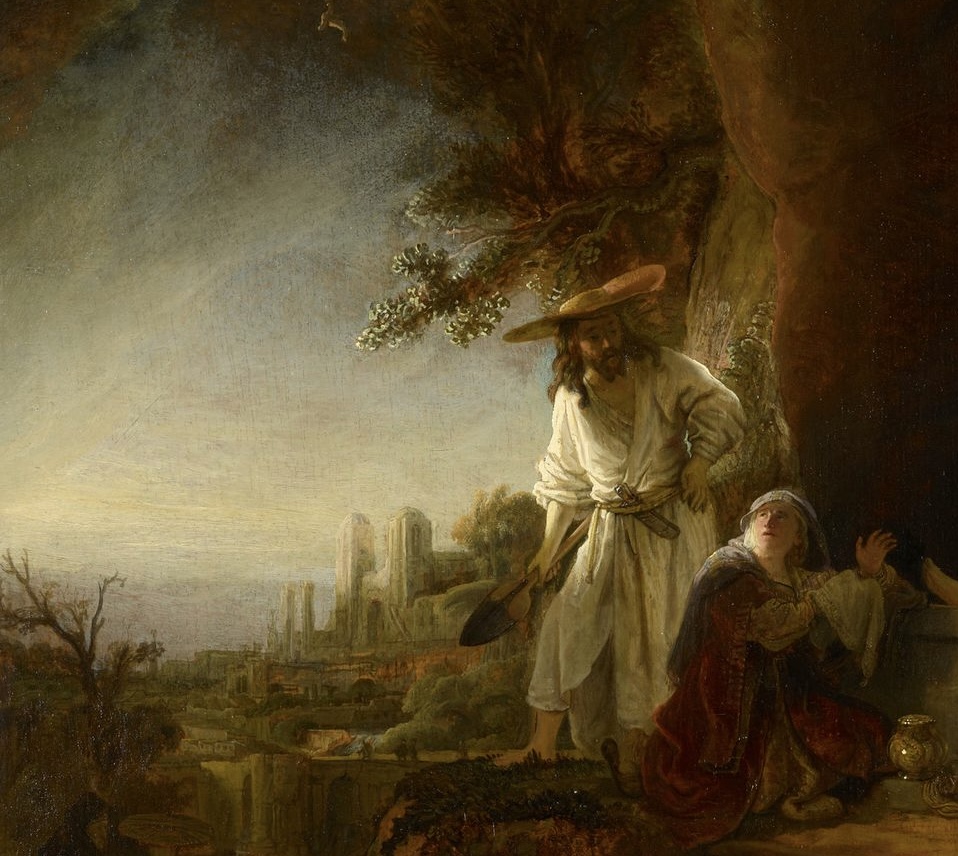
Second Sunday of Easter

12th April 2026

Reflection with readings below

Appreciating and taking on board the novelty of the resurrection takes time. In the writings according to Luke The first disciples needed the full 50 days of realisation, acceptance and internalisation, before they were ready to receive the empowering of the Holy Spirit – the gift that comes through the resurrection. 

It was  – is – a unique event. Everyone will react differently. Indeed that is what we see in the stories from the gospels and from Paul’s own account. Some like the women on Mark’s gospel, are frightened. Some like the two on the road to Emmaus are elated. Some like Peter in Luke’s Gospel are initially doubtful and then – on seeing the discarded shroud – amazed. Some like Mary Magdalene initially suspect grave robbers until Jesus calls her by name. Thomas in today’s gospel is no different. He too has his own way of believing – accepting – the resurrection.

But what is the resurrection? Why is it important?

Earlier this week I was reading a poem called The Resurrection by Joy Cowley in which she says it is not an insurance policy. It is not a get out of jail card, nor is it a magic blanket that protects you from any harm. Rather it is an assertion of an eternal truth –  that God overrules death; that death is never the end but a means of a new beginning. In God death, is an event which does not end but simply changes life. In God, life is eternal. 

The Prologue in John tell us that the Word was from the beginning, was in the beginning when life came into being, and is the light of life that darkness can never overcome. As it so often the case in John’s gospel, this tells us an amazing truth but also a truth that we cannot fully grasp and so also remains a mystery.

.

We are always living in the light of the resurrection. For the last 2000 years the fact of the resurrection has been a reality. It didn’t change change events over night: it didn’t transform the the religious life of the Temple, or the authoritarian power of the Romans, it didn’t remove evil, or make poverty history. But it did change the lives of those who engaged with it. Those who made a personal commitment to follow Jesus and opened up to receive the power of the Spirit.

And it is through the lives of such people that we see the power of the resurrection, the ability to change situations, to transform religious organisation and other power structures, to over come evil, to feed the hungry – to bring in the kingdom of God that was – and still is – Jesus’s mission. It is still a work in progress. It is still a mission being pursued by an ever growing number of disciples. It is still a challenge blessed by God. 

I was also struck by a line from a reflection on the Centre for Action and Contemplation web site: “Easter joy is the grace of being able to say: This is hard. I am still waiting. And God is still good.”

In the light of all that is happening around the world at the moment, it is perhaps interesting to note that the gospels do not record any instance of the disciples attacking or calling down abuse on the Romans or the temple officials. There is no record of them speaking ill of those who had called for Jesus’s death. Nor is there  any record of them taking revenge. The resurrection gospel is one of peace and reconciliation.

Acts 2:14a,22-32

Peter, standing with the eleven, raised his voice and addressed the crowd, “You that are Israelites, listen to what I have to say: Jesus of Nazareth, a man attested to you by God with deeds of power, wonders, and signs that God did through him among you, as you yourselves know— this man, handed over to you according to the definite plan and foreknowledge of God, you crucified and killed by the hands of those outside the law. But God raised him up, having freed him from death, because it was impossible for him to be held in its power. For David says concerning him, 

‘I saw the Lord always before me,
for he is at my right hand so that I will not be shaken; 

therefore my heart was glad, and my tongue rejoiced;
moreover my flesh will live in hope. 

For you will not abandon my soul to Hades,
or let your Holy One experience corruption.

You have made known to me the ways of life;
you will make me full of gladness with your presence.’ 

“Fellow Israelites, I may say to you confidently of our ancestor David that he both died and was buried, and his tomb is with us to this day. Since he was a prophet, he knew that God had sworn with an oath to him that he would put one of his descendants on his throne. Foreseeing this, David spoke of the resurrection of the Messiah, saying, 

‘He was not abandoned to Hades,
nor did his flesh experience corruption.’ 

This Jesus God raised up, and of that all of us are witnesses.” 

Psalm 16

1 Protect me, O God, for I take refuge in you; *
I have said to the Lord, “You are my Lord,
my good above all other.”

2 All my delight is upon the godly that are in the land, *
upon those who are noble among the people.

3 But those who run after other gods *
shall have their troubles multiplied.

4 Their libations of blood I will not offer, *
nor take the names of their gods upon my lips.

5 O Lord, you are my portion and my cup; *
it is you who uphold my lot.

6 My boundaries enclose a pleasant land; *
indeed, I have a goodly heritage.

7 I will bless the Lord who gives me counsel; *
my heart teaches me, night after night.

8 I have set the Lord always before me; *
because he is at my right hand I shall not fall.

9 My heart, therefore, is glad, and my spirit rejoices; *
my body also shall rest in hope.

10 For you will not abandon me to the grave, *
nor let your holy one see the Pit.

11 You will show me the path of life; *
in your presence there is fullness of joy,
and in your right hand are pleasures for evermore.

The Epistle

1 Peter 1:3-9

Blessed be the God and Father of our Lord Jesus Christ! By his great mercy he has given us a new birth into a living hope through the resurrection of Jesus Christ from the dead, and into an inheritance that is imperishable, undefiled, and unfading, kept in heaven for you, who are being protected by the power of God through faith for a salvation ready to be revealed in the last time. In this you rejoice, even if now for a little while you have had to suffer various trials, so that the genuineness of your faith– being more precious than gold that, though perishable, is tested by fire– may be found to result in praise and glory and honor when Jesus Christ is revealed. Although you have not seen him, you love him; and even though you do not see him now, you believe in him and rejoice with an indescribable and glorious joy, for you are receiving the outcome of your faith, the salvation of your souls.

John 20:19-31

When it was evening on that day, the first day of the week, and the doors of the house where the disciples had met were locked for fear of the Jews, Jesus came and stood among them and said, “Peace be with you.” After he said this, he showed them his hands and his side. Then the disciples rejoiced when they saw the Lord. Jesus said to them again, “Peace be with you. As the Father has sent me, so I send you.” When he had said this, he breathed on them and said to them, “Receive the Holy Spirit. If you forgive the sins of any, they are forgiven them; if you retain the sins of any, they are retained.”

But Thomas (who was called the Twin), one of the twelve, was not with them when Jesus came. So the other disciples told him, “We have seen the Lord.” But he said to them, “Unless I see the mark of the nails in his hands, and put my finger in the mark of the nails and my hand in his side, I will not believe.”

A week later his disciples were again in the house, and Thomas was with them. Although the doors were shut, Jesus came and stood among them and said, “Peace be with you.” Then he said to Thomas, “Put your finger here and see my hands. Reach out your hand and put it in my side. Do not doubt but believe.” Thomas answered him, “My Lord and my God!” Jesus said to him, “Have you believed because you have seen me? Blessed are those who have not seen and yet have come to believe.”

Now Jesus did many other signs in the presence of his disciples, which are not written in this book. But these are written so that you may come to believe that Jesus is the Messiah, the Son of God, and that through believing you may have life in his name.

Christ is risen: alleluia! 

6th April 2026

This is part of a larger picture by Rembrandt. It is dawn on Easter morning. Few people see the dawn every day; most of us are either still asleep or busy working. Few people saw Jesus that morning, and quite likely only a few of those recognised that it was Jesus – the risen Jesus!

Jesus’s resurrection happens quietly, secretly, and is revealed personally only to a few. And even those few, who indeed are his followers, struggle to understand what has happened. It takes time to process it’s Jesus’s resurrection and therefore his gospel message. For the early disciples, the resurrection becomes a vindication of both Jesus’s message and their own continued faith as his followers. Jesus’s resurrection becomes a focal point about which his followers gather. And with Ascension and Pentecost, it becomes the spark that creates the church empowering his followers as a community of strength, wisdom and fellowship that seeks to live and share the gospel values.

Jesus’s death and resurrection, like the seed that dies and becomes a fruitful plant, invigorating new life. As Rowan Williams wrote in his book ‘Resurrection’, “to believe in the risen Jesus is to trust that the regenerative power of God is active in the human world” and he continues  “it can only be experienced as transformation and recreation and empowerment…”

Yet when we look around the world we see a mix of images and stories. 

In our gardens we observe the blooming of tulips and daffodils, the jewelled presence of lady birds, the songs of birds that are busy matin and nesting. Over the Easter weekend gatherings with family and friends and with happy congregations in our churches, allow us to celebrate new life.  While chocolate eggs and other culinary delights provide a culinary marker. 

At the same time however others are traumatised by war, by persecution, by the loss of homes and livelihoods. And others struggle with hunger, poverty and economic and environmental impacts of a world in crisis.

Where now is the Easter message? The encouragement to be joyful?

Is it rather an indicator of the ongoing need for salvation? Not just the personal salvation that reassures me that I am loved by God, but the salvation of the world that seeks to establish God’s will here on earth as in heaven? The latter is – and always has been – a work in progress; a work that relies on the cooperation of humans with God. A work that is enhanced when we let God’s spirit work through us. 

John’s gospel is full of glimpses of glory – times and instances when God’s glory (salvation) is glimpsed. Jesus’s message is presented through metaphors and riddles. It is a message that implies that the kingdom is something that is going to emerge over time, that it will be a work in progress, that it will be worked at by people, but those people can find strength through the gifts that Jesus offers – such as enlightenment, live-giving water, the bread of life, community.

Jesus’s resurrection is still to be celebrated as a vindication of the life giving power of his gospel – and as a reminder that we his disciples are the means by which salvation can become a reality. 

“So Christ is risen!

Risen again 

in the midst of it all – 

that in some amazing way 

we too may be a people of hope 

who walk in the light, 

imbued with the Spirit.” Peter Millar

Easter Day

5th April 2026

A small thought on a glorious day!

John’s gospel doesn’t have parables but metaphors. 

One is that unless a seed dies it will not bear fruit. The grain of wheat sown ceases to be a seed but morphs into a root and a shoot from which a whole new plant grows, bearing a rich head of multiple grains.

This is a metaphor for Jesus’s own death.

The earth-bound Jesus is one person. From his death comes the resurrection and the growth of a new form of Jesus which is that community of Christians – Christ -bearers – that we call both church and the body of Christ. 

It is also a metaphor for us as individuals. Time and again through out John’s gospel Jesus challenges people to see things differently, to let go of old life destroying ways and embrace new life enriching ways.

We are called to let go of – to discard – ways of living, traditions and habits that constrain and restrict and maybe even fossilise us, so that we can receive the life giving force of the risen Jesus and become fruitful ourselves.

In us is the seed of resurrection – of Christ – the seed that will grow and multiply: love flourishing.

Jeremiah 31:1-6

At that time, says the Lord, I will be the God of all the families of Israel, and they shall be my people.

Thus says the Lord:

The people who survived the sword
found grace in the wilderness; 

when Israel sought for rest,
the Lord appeared to him from far away. 

I have loved you with an everlasting love;
therefore I have continued my faithfulness to you.

Again I will build you, and you shall be built,
O virgin Israel! 

Again you shall take your tambourines,
and go forth in the dance of the merrymakers. 

Again you shall plant vineyards
on the mountains of Samaria; 

the planters shall plant,
and shall enjoy the fruit. 

For there shall be a day when sentinels will call
in the hill country of Ephraim: 

“Come, let us go up to Zion,
to the Lord our God.” 

Psalm 118:1-2, 14-24

1 Give thanks to the Lord, for he is good; *
his mercy endures for ever.

2 Let Israel now proclaim, *
“His mercy endures for ever.”

14 The Lord is my strength and my song, *
and he has become my salvation.

15 There is a sound of exultation and victory *
in the tents of the righteous:

16 “The right hand of the Lord has triumphed! *
the right hand of the Lord is exalted!
the right hand of the Lord has triumphed!”

17 I shall not die, but live, *
and declare the works of the Lord.

18 The Lord has punished me sorely, *
but he did not hand me over to death.

19 Open for me the gates of righteousness; *
I will enter them;
I will offer thanks to the Lord.

20 “This is the gate of the Lord; *
he who is righteous may enter.”

21 I will give thanks to you, for you answered me *
and have become my salvation.

22 The same stone which the builders rejected *
has become the chief cornerstone.

23 This is the Lord’s doing, *
and it is marvellous in our eyes.

24 On this day the Lord has acted; *
we will rejoice and be glad in it.

Acts 10:34-43

Peter began to speak to Cornelius and the other Gentiles: “I truly understand that God shows no partiality, but in every nation anyone who fears him and does what is right is acceptable to him. You know the message he sent to the people of Israel, preaching peace by Jesus Christ–he is Lord of all. That message spread throughout Judea, beginning in Galilee after the baptism that John announced: how God anointed Jesus of Nazareth with the Holy Spirit and with power; how he went about doing good and healing all who were oppressed by the devil, for God was with him. We are witnesses to all that he did both in Judea and in Jerusalem. They put him to death by hanging him on a tree; but God raised him on the third day and allowed him to appear, not to all the people but to us who were chosen by God as witnesses, and who ate and drank with him after he rose from the dead. He commanded us to preach to the people and to testify that he is the one ordained by God as judge of the living and the dead. All the prophets testify about him that everyone who believes in him receives forgiveness of sins through his name.”

John 20:1-18

Early on the first day of the week, while it was still dark, Mary Magdalene came to the tomb and saw that the stone had been removed from the tomb. So she ran and went to Simon Peter and the other disciple, the one whom Jesus loved, and said to them, “They have taken the Lord out of the tomb, and we do not know where they have laid him.” Then Peter and the other disciple set out and went toward the tomb. The two were running together, but the other disciple outran Peter and reached the tomb first. He bent down to look in and saw the linen wrappings lying there, but he did not go in. Then Simon Peter came, following him, and went into the tomb. He saw the linen wrappings lying there, and the cloth that had been on Jesus’ head, not lying with the linen wrappings but rolled up in a place by itself. Then the other disciple, who reached the tomb first, also went in, and he saw and believed; for as yet they did not understand the scripture, that he must rise from the dead. Then the disciples returned to their homes.

But Mary stood weeping outside the tomb. As she wept, she bent over to look into the tomb; and she saw two angels in white, sitting where the body of Jesus had been lying, one at the head and the other at the feet. They said to her, “Woman, why are you weeping?” She said to them, “They have taken away my Lord, and I do not know where they have laid him.” When she had said this, she turned around and saw Jesus standing there, but she did not know that it was Jesus. Jesus said to her, “Woman, why are you weeping? Whom are you looking for?” Supposing him to be the gardener, she said to him, “Sir, if you have carried him away, tell me where you have laid him, and I will take him away.” Jesus said to her, “Mary!” She turned and said to him in Hebrew, “Rabbouni!” (which means Teacher). Jesus said to her, “Do not hold on to me, because I have not yet ascended to the Father. But go to my brothers and say to them, ‘I am ascending to my Father and your Father, to my God and your God.’” Mary Magdalene went and announced to the disciples, “I have seen the Lord”; and she told them that he had said these things to her. 

Sixth Sunday of Easter

25th May 2025

Reflection with readings below

We live in a world that seems increasingly distant from the peace and harmony we associate with the idea of God’s kingdom. The world we live in is dominated by economic pressures, the pursuit of profit, aggressive demands for national security, the overriding influence of wealth and big business, the cult of the individual and the adoration of the dictator. The world we live in places limited value on nature – indeed nature is often pitched as the opposite of progress and wealth creation – and has little concern for the poor other than to tax them all the more because of their failure to boost the economy.

It is a world in which  we are reluctant to invest in the future unless we can do so on the cheap – or unless we’re building yet another flagship office complex.  It is a world in which we are reluctant to challenge greed, injustice, poverty and prejudice. It is a world in which we refuse to listen to the cry of the Earth, to recognise the damage we are wilfully inflicting on the environment in which we live and on which we rely for our survival.

Yet here we are in the season of Easter – the season of new beginnings, the inauguration of a new relationship between God and creation that is shaped by the power of the resurrection. 

Our first reading tells us Paul’s response to a vision where in response he takes the gospel to the people of Macedonia. This is a message that brings new life to those who are ready to receive it. This is a new way of life that is lived according to the values of the kingdom of God that Jesus has taught. Let’s imagine for a moment how different the world would be if everyone lived in that way, or (and this may be harder) if all of us in our church lived in that way. What if we, in the words of Lydia, might be  ‘judged to be faithful to the Lord’?

Both today’s Psalm and the reading from the Book of Revelation, tells us that God’s ways give rise to health and harmony: ‘Let your ways be known upon earth, your saving health among all nations’ and ‘the tree of life with its twelve kinds of fruit [whose] leaves … are for the healing of the nations.’ The implication is that if we live as physical beings in harmony with the physicality of creation, then we will experience this wellbeing. Such a lifestyles relies on us paying attention to the Earth – and when we do this will enable all the people to praise God. No more war and suffering, no more oppression nor prejudice – justice and love and mercy will overcome greed and selfishness and aggression.

And finally in our gospel reading, Jesus tells us to hear – to listen to – and keep his word, knowing that that word comes from God, and that it is the Holy Spirit that will teach us to understand that word. It is a word that will enable us to understand and address all the ways in which the way we live on Earth falls short of the ways of the Kingdom of God – the Easter Kingdom. We need, as Pope Francis wrote in Laudate Si, to listen to ‘the cry of the earth and the cry of the poor’.

It is with some relief that this week it seems as if our Government is finally responding to the cry of poor in Gaza. And that can be a further prompt to us to continue to pray for the people of Gaza,

to contribute financially to their need, and to write to our MPs to both thank them and press them for further action. 

May we all know Christ’s peace in our hearts and in the world around us.

Acts 16:9-15

During the night Paul had a vision: there stood a man of Macedonia pleading with him and saying, “Come over to Macedonia and help us.” When he had seen the vision, we immediately tried to cross over to Macedonia, being convinced that God had called us to proclaim the good news to them.

We set sail from Troas and took a straight course to Samothrace, the following day to Neapolis, and from there to Philippi, which is a leading city of the district of Macedonia and a Roman colony. We remained in this city for some days. On the sabbath day we went outside the gate by the river, where we supposed there was a place of prayer; and we sat down and spoke to the women who had gathered there. A certain woman named Lydia, a worshiper of God, was listening to us; she was from the city of Thyatira and a dealer in purple cloth. The Lord opened her heart to listen eagerly to what was said by Paul. When she and her household were baptised, she urged us, saying, “If you have judged me to be faithful to the Lord, come and stay at my home.” And she prevailed upon us. 

Psalm 67

1 May God be merciful to us and bless us, *
show us the light of his countenance and come to us.

2 Let your ways be known upon earth, *
your saving health among all nations.

3 Let the peoples praise you, O God; *
let all the peoples praise you.

4 Let the nations be glad and sing for joy, *
for you judge the peoples with equity
and guide all the nations upon earth.

5 Let the peoples praise you, O God; *
let all the peoples praise you.

6 The earth has brought forth her increase; *
may God, our own God, give us his blessing.

7 May God give us his blessing, *
and may all the ends of the earth stand in awe of him.

Revelation 21:10, 22-22:5

In the spirit the angel carried me away to a great, high mountain and showed me the holy city Jerusalem coming down out of heaven from God.

I saw no temple in the city, for its temple is the Lord God the Almighty and the Lamb. And the city has no need of sun or moon to shine on it, for the glory of God is its light, and its lamp is the Lamb. The nations will walk by its light, and the kings of the earth will bring their glory into it. Its gates will never be shut by day– and there will be no night there. People will bring into it the glory and the honour of the nations. But nothing unclean will enter it, nor anyone who practices abomination or falsehood, but only those who are written in the Lamb’s book of life.

Then the angel showed me the river of the water of life, bright as crystal, flowing from the throne of God and of the Lamb through the middle of the street of the city. On either side of the river is the tree of life with its twelve kinds of fruit, producing its fruit each month; and the leaves of the tree are for the healing of the nations. Nothing accursed will be found there any more. But the throne of God and of the Lamb will be in it, and his servants will worship him; they will see his face, and his name will be on their foreheads. And there will be no more night; they need no light of lamp or sun, for the Lord God will be their light, and they will reign forever and ever.

John 14:23-29

Jesus said to Judas (not Iscariot), “Those who love me will keep my word, and my Father will love them, and we will come to them and make our home with them. Whoever does not love me does not keep my words; and the word that you hear is not mine, but is from the Father who sent me.

“I have said these things to you while I am still with you. But the Advocate, the Holy Spirit, whom the Father will send in my name, will teach you everything, and remind you of all that I have said to you. Peace I leave with you; my peace I give to you. I do not give to you as the world gives. Do not let your hearts be troubled, and do not let them be afraid. You heard me say to you, `I am going away, and I am coming to you.’ If you loved me, you would rejoice that I am going to the Father, because the Father is greater than I. And now I have told you this before it occurs, so that when it does occur, you may believe.”

Third Sunday of Easter

4th May 2025

Reflection with readings below

What is our calling in the new age of the resurrection?

Jesus after that first Easter morning, is the same but not the same. His physical appearance is the same or perhaps not; his physical abilities are the same but also not the same. And his relationship with his disciples is the same but not the same.

Last week we heard of Mary Magdalene’s encounter with the risen Jesus. She recognised who he was when he spoke her name. Thomas recognised the risen Jesus when he was shown Jesus’s wounds. And where as Thomas was invited to touch Jesus and feel his reality, Mary was told ‘Don’t touch, don’t cling to me.’ And whilst Mary has a unique personal encounter with the risen Jesus, Simon Peter and the beloved disciple don’t get to meet the risen Jesus until several hours later and then in the company of the whole group of the disciples. 

In today’s gospel reading, the disciples – certainly those whose trade was fishing – have gone back to Galilee and back to their old jobs. Although as chance would have it, without much success! Close to dawn, they see Jesus on the shore – but as with Mary Magdalene – not  recognising who he is. Then, whether it is because of his voice or because of the super abundant catch they make, the beloved disciple realises who it is. And Peter is overwhelmed and, in his desire to once more be with Jesus, jumps overboard the faster to get to the shore and Jesus. 

As Jesus gives them breakfast, sharing the bread and fish with them, all the disciples know for true, that this is the risen Jesus. Then Jesus asks Peter three times ‘Do you love me?’. And because Peter does, Jesus gives him a task that will take a life time to complete – to feed, to care, to ‘shepherd’ all those who are or will become Jesus’s followers. Peter and his fellow companions are not going to return to their previous fishing careers. These disciples who had journeyed with Jesus back and forth between Galilee and Jerusalem, who had witnessed the signs Jesus had performed, healing the sick, feeding the hungry, lubricating a wedding; who had listened to Jesus debate with the scribes and Pharisees and win the argument; who had seen Jesus befriend the outcast and the despised – these disciples were now being called take on this mantle that had been Jesus’s and to share the gospel far and wide.  This is their new calling in the new age of the resurrection. 

Our first reading from the Book of Acts, tells of the conversion experience of Saul (also known as Paul).   As dedicated but short-sighted Pharisee, Saul does what he thinks is right and with his trademark vigour, sets out to persecute any who have become followers of Jesus – followers of from Saul’s viewpoint, of a dead and gone renegade. But on the road to Damascus, Saul has a resurrection encounter with Jesus which transforms his vocation. Now, within the resurrection age into which he has, so as to speak, been born from above/ again, Saul (or Paul) becomes one of the most ardent missioners taking the gospel to many people and all the time deepening his relationship with the risen Jesus and expanding on the theological understanding of the church.

So for us in the 21st century when some people are still persecuted for holding onto the wrong faith, where some people are still despised and abused, when there is still hunger and suffering, when there is still greed and the abuse of power, when the natural world is being destroyed by the hour, what is our calling as people of the resurrection age? What is our relationship with the risen Jesus? 

Do we feed and tend the sheep? Do we share the gospel? Do we continue to explore and develop our relationships with Jesus and our theological understanding of our mission? 

Yes! And in particular I would suggest that one thing the world especially needs to hear is truth – the truth about the climate and ecological crisis; the truth about the widening gap between rich and poor; the truth about the injustices that many people face across the world; the truth about the failure of war as a means of establishing peace. And that that the message of truth should be backed up by actions. 

For example, the level of biodiversity in the UK makes us one of the most nature depleted countries in the world, yet a rich biodiversity is essential for pollinating crops, for keeping the soil fertile, for limiting the effects of flooding, for cleaning the air. Improving and maintaining biodiversity is a key part of Jesus’s  call that we should ‘feed my sheep’. Yet is this a truth widely spoken about or heard?

We should talk about the importance of nature, of biodiversity, of its importance for human flourishing. Both with friends and family, with local authorities and businesses, with government and corporations. 

And then there are many ways we can then act in response. By promoting wildlife in our gardens, church yards, etc. By eating a richer plant based diet. By supporting groups such as the RSPB, the Wild Life Trusts, the National Trust. By campaigning, pressing the government to properly fund the agricultural sector so that farmers can care for the land sustainably and to support rewilding. Indeed the UK government has signed an international treaty pledging to rewild 30% of the land and sea for for the benefit of nature by 2030. By campaigning for the Church of England to give a lead by rewilding 30% of the land in its care – including that held as an investment. And what better investment than securing a rich biodiverse environment!

Acts 9:1- 20

Saul, still breathing threats and murder against the disciples of the Lord, went to the high priest and asked him for letters to the synagogues at Damascus, so that if he found any who belonged to the Way, men or women, he might bring them bound to Jerusalem. Now as he was going along and approaching Damascus, suddenly a light from heaven flashed around him. He fell to the ground and heard a voice saying to him, “Saul, Saul, why do you persecute me?” He asked, “Who are you, Lord?” The reply came, “I am Jesus, whom you are persecuting. But get up and enter the city, and you will be told what you are to do.” The men who were traveling with him stood speechless because they heard the voice but saw no one. Saul got up from the ground, and though his eyes were open, he could see nothing; so they led him by the hand and brought him into Damascus. For three days he was without sight, and neither ate nor drank.

Now there was a disciple in Damascus named Ananias. The Lord said to him in a vision, “Ananias.” He answered, “Here I am, Lord.” The Lord said to him, “Get up and go to the street called Straight, and at the house of Judas look for a man of Tarsus named Saul. At this moment he is praying, and he has seen in a vision a man named Ananias come in and lay his hands on him so that he might regain his sight.” But Ananias answered, “Lord, I have heard from many about this man, how much evil he has done to your saints in Jerusalem; and here he has authority from the chief priests to bind all who invoke your name.” But the Lord said to him, “Go, for he is an instrument whom I have chosen to bring my name before Gentiles and kings and before the people of Israel; I myself will show him how much he must suffer for the sake of my name.” So Ananias went and entered the house. He laid his hands on Saul and said, “Brother Saul, the Lord Jesus, who appeared to you on your way here, has sent me so that you may regain your sight and be filled with the Holy Spirit.” And immediately something like scales fell from his eyes, and his sight was restored. Then he got up and was baptised, and after taking some food, he regained his strength.

For several days he was with the disciples in Damascus, and immediately he began to proclaim Jesus in the synagogues, saying, “He is the Son of God.”

Psalm 30

1 I will exalt you, O Lord,
because you have lifted me up *
and have not let my enemies triumph over me.

2 O  Lord my God, I cried out to you, *
and you restored me to health.

3 You brought me up, O  Lord, from the dead; *
you restored my life as I was going down to the grave.

4 Sing to the  Lord, you servants of his; *
give thanks for the remembrance of his holiness.

5 For his wrath endures but the twinkling of an eye, *
his favour for a lifetime.

6 Weeping may spend the night, *
but joy comes in the morning.

7 While I felt secure, I said,
“I shall never be disturbed. *
You,  Lord, with your favour, made me as strong as the mountains.”

8 Then you hid your face, *
and I was filled with fear.

9 I cried to you, O  Lord; *
I pleaded with the Lord, saying,

10 “What profit is there in my blood, if I go down to the Pit? *
will the dust praise you or declare your faithfulness?

11 Hear, O  Lord, and have mercy upon me; *
O  Lord, be my helper.”

12 You have turned my wailing into dancing; *
you have put off my sack-cloth and clothed me with joy.

13 Therefore my heart sings to you without ceasing; *
O  Lord my God, I will give you thanks for ever.

Revelation 5:11-14

I looked, and I heard the voice of many angels surrounding the throne and the living creatures and the elders; they numbered myriads of myriads and thousands of thousands, singing with full voice,

“Worthy is the Lamb that was slaughtered

to receive power and wealth and wisdom and might

and honour and glory and blessing!”

Then I heard every creature in heaven and on earth and under the earth and in the sea, and all that is in them, singing,

“To the one seated on the throne and to the Lamb

be blessing and honour and glory and might forever and ever!”

And the four living creatures said, “Amen!” And the elders fell down and worshiped.

John 21:1-19

Jesus showed himself again to the disciples by the Sea of Tiberias; and he showed himself in this way. Gathered there together were Simon Peter, Thomas called the Twin, Nathanael of Cana in Galilee, the sons of Zebedee, and two others of his disciples. Simon Peter said to them, “I am going fishing.” They said to him, “We will go with you.” They went out and got into the boat, but that night they caught nothing.

Just after daybreak, Jesus stood on the beach; but the disciples did not know that it was Jesus. Jesus said to them, “Children, you have no fish, have you?” They answered him, “No.” He said to them, “Cast the net to the right side of the boat, and you will find some.” So they cast it, and now they were not able to haul it in because there were so many fish. That disciple whom Jesus loved said to Peter, “It is the Lord!” When Simon Peter heard that it was the Lord, he put on some clothes, for he was naked, and jumped into the sea. But the other disciples came in the boat, dragging the net full of fish, for they were not far from the land, only about a hundred yards off.

When they had gone ashore, they saw a charcoal fire there, with fish on it, and bread. Jesus said to them, “Bring some of the fish that you have just caught.” So Simon Peter went aboard and hauled the net ashore, full of large fish, a hundred fifty-three of them; and though there were so many, the net was not torn. Jesus said to them, “Come and have breakfast.” Now none of the disciples dared to ask him, “Who are you?” because they knew it was the Lord. Jesus came and took the bread and gave it to them, and did the same with the fish. This was now the third time that Jesus appeared to the disciples after he was raised from the dead.

When they had finished breakfast, Jesus said to Simon Peter, “Simon son of John, do you love me more than these?” He said to him, “Yes, Lord; you know that I love you.” Jesus said to him, “Feed my lambs.” A second time he said to him, “Simon son of John, do you love me?” He said to him, “Yes, Lord; you know that I love you.” Jesus said to him, “Tend my sheep.” He said to him the third time, “Simon son of John, do you love me?” Peter felt hurt because he said to him the third time, “Do you love me?” And he said to him, “Lord, you know everything; you know that I love you.” Jesus said to him, “Feed my sheep. Very truly, I tell you, when you were younger, you used to fasten your own belt and to go wherever you wished. But when you grow old, you will stretch out your hands, and someone else will fasten a belt around you and take you where you do not wish to go.” (He said this to indicate the kind of death by which he would glorify God.) After this he said to him, “Follow me.”

Second Sunday of Easter

27th April 2025

Reflection with readings below

Luke in his writing in the Book of Acts is emphasising the importance of teaching – of telling and living the good news about Jesus Christ. To do so is to fulfil God’s wishes. The writer of John’s Gospel similarly concludes that all that has been written and told about Jesus, is there that “you may come to believe that Jesus is the Messiah, the Son of God, and that through believing you may have life in his name.”

As we celebrate Easter, we celebrate that our faith is about life, that it is life giving!  Easter celebrates life in its fullness, life that continues to reinvigorate this world, and life as the eternal hope that even after death we will yet have life. Sometimes it is only in the small things that we see signs of life – the green leaves on the tree, the buds bursting into flower, the song of a bird, the buzz of a bee – and at other times we are able perceive the bigger picture where we also see life – and at the moment that might be in acknowledging the vast outpouring of love for Pope Francis and the recognition of all he has done to raise awareness of the immense challenges of the social and climate crises that we face  – and recognising that we as individuals and communities are called by God to protect and fulfil the life of creation.

In today’s psalm the psalmist writes ‘The same stone which the builders rejected has become the chief cornerstone’. Later in Acts when Peter and John are brought before the Council, they will use that same phrase. And in the Gospels Jesus, having told the parable of the grasping tenants of the vineyard, uses the same phrase to describe himself. 

Jesus is the cornerstone of our faith; he is the cornerstone of new life. When we despair, when we feel that nothing changes, when the evils of the world and the tyranny of the system seems limitless, then we need to root ourselves in the certainty that Jesus underpins everything. From before time, Jesus has always been. In the darkest moments, the light that is Jesus is not overcome. In the seemingly endless trials of pain and suffering, Jesus is ever present. Even in death, Jesus is present. And if we are to work with Jesus to ensure a better world, we will by necessity have to root our actions and our prayers on the certainty of that cornerstone.

How we root ourselves in Jesus, how we find in him our cornerstone, will vary from person to person. For some it will be in devotional ritual and mindful ceremony. For others it will be in silence and contemplation. For yet others it will be active service. For some it will be in solitary adoration and for others community and fellowship. And for yet others it will be through immersion in the natural world. Or more likely a mix of these. 

Just in reading the accounts of that first day and first week of the first Easter in John’s gospel, we see how differently Jesus’s followers reacted. Mary Magdalene sees the empty tomb and remains convinced it is proof that someone has removed Jesus’s body. Peter and the other disciple see the same empty tomb and believe Jesus has gone from their lives – maybe Elijah-like straight to heaven. When Mary then meets the risen Jesus she wants to cling to him such is her love. But the other disciples, receiving her news, remain filled with fear. Only when they see and hear Jesus for themselves do they loose some of that fear. And Thomas likewise finds it hard to believe simply on the basis of their testimony. For Mary, Jesus says don’t touch; for Thomas, Jesus says touch! 

So, if at times our own belief seems limited, let us have patience that in time what we need will be revealed. Equally let us be able to find reassurance that belief is as often held by a community as by individuals – and hence our creeds begin, ‘We believe…’ And above all let us remember that Jesus is the cornerstone of our faith – whatever the state of our faith, Jesus’s faith in us – his support for us – is greater yet!

Acts 5:27-32

When the temple police had brought the apostles, they had them stand before the council. The high priest questioned them, saying, “We gave you strict orders not to teach in this name, yet here you have filled Jerusalem with your teaching and you are determined to bring this man’s blood on us.” But Peter and the apostles answered, “We must obey God rather than any human authority. The God of our ancestors raised up Jesus, whom you had killed by hanging him on a tree. God exalted him at his right hand as Leader and Saviour that he might give repentance to Israel and forgiveness of sins. And we are witnesses to these things, and so is the Holy Spirit whom God has given to those who obey him.”

Psalm 118:14-29

14 The Lord is my strength and my song, *
and he has become my salvation.

15 There is a sound of exultation and victory *
in the tents of the righteous:

16 “The right hand of the Lord has triumphed! *
the right hand of the Lord is exalted!
the right hand of the Lord has triumphed!”

17 I shall not die, but live, *
and declare the works of the Lord.

18 The Lord has punished me sorely, *
but he did not hand me over to death.

19 Open for me the gates of righteousness; *
I will enter them;
I will offer thanks to the Lord.

20 “This is the gate of the Lord; *
he who is righteous may enter.”

21 I will give thanks to you, for you answered me *
and have become my salvation.

22 The same stone which the builders rejected *
has become the chief cornerstone.

23 This is the Lord’s doing, *
and it is marvellous in our eyes.

24 On this day the Lord has acted; *
we will rejoice and be glad in it.

25 Hosannah, Lord, hosannah! *
Lord, send us now success.

26 Blessed is he who comes in the name of the Lord; *
we bless you from the house of the Lord.

27 God is the Lord; he has shined upon us; *
form a procession with branches up to the horns of the altar.

28 “You are my God, and I will thank you; *
you are my God, and I will exalt you.”

29 Give thanks to the Lord, for he is good; *
his mercy endures for ever.

Revelation 1:4-8

John to the seven churches that are in Asia: Grace to you and peace from him who is and who was and who is to come, and from the seven spirits who are before his throne, and from Jesus Christ, the faithful witness, the firstborn of the dead, and the ruler of the kings of the earth.

To him who loves us and freed us from our sins by his blood, and made us to be a kingdom, priests serving his God and Father, to him be glory and dominion forever and ever. Amen.

Look! He is coming with the clouds; every eye will see him, even those who pierced him; and on his account all the tribes of the earth will wail. So it is to be. Amen. “I am the Alpha and the Omega,” says the Lord God, who is and who was and who is to come, the Almighty.

John 20:19-31

When it was evening on that day, the first day of the week, and the doors of the house where the disciples had met were locked for fear of the Jews, Jesus came and stood among them and said, “Peace be with you.” After he said this, he showed them his hands and his side. Then the disciples rejoiced when they saw the Lord. Jesus said to them again, “Peace be with you. As the Father has sent me, so I send you.” When he had said this, he breathed on them and said to them, “Receive the Holy Spirit. If you forgive the sins of any, they are forgiven them; if you retain the sins of any, they are retained.”

But Thomas (who was called the Twin), one of the twelve, was not with them when Jesus came. So the other disciples told him, “We have seen the Lord.” But he said to them, “Unless I see the mark of the nails in his hands, and put my finger in the mark of the nails and my hand in his side, I will not believe.”

A week later his disciples were again in the house, and Thomas was with them. Although the doors were shut, Jesus came and stood among them and said, “Peace be with you.” Then he said to Thomas, “Put your finger here and see my hands. Reach out your hand and put it in my side. Do not doubt but believe.” Thomas answered him, “My Lord and my God!” Jesus said to him, “Have you believed because you have seen me? Blessed are those who have not seen and yet have come to believe.”

Now Jesus did many other signs in the presence of his disciples, which are not written in this book. But these are written so that you may come to believe that Jesus is the Messiah, the Son of God, and that through believing you may have life in his name.

Easter Thoughts 

20th April 2025

If each day we are called to walk just that day’s journey with the cross (see Good Friday’s reflection*), then Easter Day is the day we remember and celebrate that we do not walk alone. That Jesus is with us , that Jesus has been there before us, has been where it is dark and constricted, has felt abandoned, has fought with demons, and has come through victorious. And as we are told in the Gospels, Jesus goes on ahead before us.

My mother is currently recovering from the after effects of delirium, and at times she has difficulty rationalising her thoughts, and at others difficulty in preventing her mind from overthinking problems. One thing in particular that she struggles with is time. Nothing around her seems to change. She wakes up in the same bedroom, the same books and cards on the window sill, the same clothes hanging on the hook – even the same orange she hasn’t yet eaten. Is this a new day or is it still the same day when she went to sleep? How can she tell whether time has passed if nothing has changed? 

That is sometimes how I feel about Easter. Every year we celebrate Easter, celebrating that Jesus has risen from the dead, that through the resurrection we are raised to new life, that this is the beginning of the new age – Easter is the eighth day. But does anything change? Is life suddenly better now Easter Day has dawned? Are people suddenly kinder and more loving, living the new resurrection life? 

Did anything change that first Easter morning? Did the Roman soldiers and tax gathers, suddenly up-sticks  and depart? Did the temple authorities suddenly down tools and invite everyone into the temple to worship God without hindrance? Did people suddenly look and see their neighbour’s poverty and share all they had? 

And yet something did change, gradually, step by step. People began to experience Jesus’s presence in new ways. People did form new communities where they made welcome those who would have previously been rejected. People did take Jesus’s gospel and preach the good news far and wide. And throughout history we have seen people – people who have been inspired by Jesus – do amazing things: working for justice, working for peace, working to overcome poverty, working to protect the earth, sacrificing their own lives for others.

When the Israelites ate the first Passover meal, hurriedly escaped from the narrow place that was slavery under the oppressive power of the pharaoh, and reached the relative safety of the far shore of the Red Sea, they sang and danced and praised God. And they were instructed to mark that event every year, eating a special meal and remembering the events of that night. That celebrating and remembering has continued year in year out – through good times and bad – as a way of marking time even when it seems that nothing is changing, and reminding themselves that God is and will always be with them.

When we work through Lent, when we  re-enact the events of Holy Week, when we celebrate Easter, we are in part remembering the Passover – the power and wisdom of God that enables people to escape the constrictions of narrow places and to find freedom – but we are most particularly remembering that Jesus – who is also God – has walked this way before us. That Jesus – who is also God – knows what it is to be human, to have limited amounts of energy and strength. That Jesus – who is also God – has experienced that one thing we fear most – death – and has the personal experience to assure is that it is not the end. That Jesus – because he is also God, promises to be with us always and everywhere. 

And even if it doesn’t feel as if anything has changed since last year, we celebrate Easter as a way of marking time and that God is still and will always be with us. And if we look and take note, we will see that there are always signs of new life around us. The world that the creator God has given us is a gift that keeps on giving. 

This year I despaired that the vine that had given us so much fruit over the years, had died; the crinkled branches with peeling bark remained bare, no sign of life despite the wealth of spring flowers in the rest of the garden. I resigned myself to the task of buying a new plant. Then just this week I noticed the first small green shoots bursting through the old bark! 

Christ is risen!” – “He is risen indeed, Alleluia!

* https://greentau.org/2025/04/18/good-friday-thoughts/

Second Sunday in Lent

16th March 2025

Reflection with readings below

Abram is worried about his future – or perhaps not so much his future as the future of his lifeline. It seems as if there will be no blood relatives, no direct offspring who will carry on his line, to be the continuation of the house of Abram – no ongoing heritage. But God reassures him. Not only will he have a direct descendant, but of the generations that will come after and call Abram their forebear, they will be more numerous than the stars in the sky. It is perhaps not a big leap to suggest that this allusion indicates that all the peoples of the earth may be seen as Abram’s children. Jesus himself suggests that even stones and rocks can become children of Abraham if God so wills (Matthew 3:9) and later Jesus will say that even if the people are silenced the stones themselves will shout out. (Luke 19:40)  Anyone and everyone can be God’s. 

The curious event where the burning torch passes between the cut halves of the animals that Abram has sacrificed, is the physical sign of the covenant that is being established by God with Abram and his descendants. Maybe just as after the flood, where God reassures Noah that the world will not be destroyed again in such a manner, so here God is reassuring Abram – and us too – that all generations can and will be God’s people.

Paul in his letter explains our relationship with God as being citizens of heaven, which contrasts with the Gospel which presents Jerusalem as being the identifying locus of God’s people. Paul’s is a post Easter understanding whereas the Gospel reflects a pre Easter view.  Then Jerusalem and its temple was the focus of the people’s faith and their identity, the place to which they went physically  – if able and if not then spiritually – for the great feasts. This was where God’s presence was ultimately located, where God was worshipped, and from where salvation would come. The messiah – when he came – would declare his identity here. When the resurrection happened (for those who believed – ie not the Sadducees) it was from Jerusalem that the first of the dead would rise. 

Is Jesus the messiah? The Pharisees in this passage see Jesus perhaps as a rabbi, someone of sufficient importance that they don’t want to see him killed by Herod. But Jesus tells them something different. He describes what he is doing as in terms of vanquishing and on the third completing – consummating – his work mission. He is declaring that at the very least he is a prophet, someone doing the will of God.  The psalm he quotes from, Psalm 118, is one of the messianic psalms that looks forward to the coming of the messiah. Yet it is also a psalm that acknowledges that God’s chosen one even will have to overcome – by God’s help – rejection and opposition. 

Jesus is going to to Jerusalem to complete his work to establish the new – and as we now understand – universal covenant between God and all people. 

Genesis 15:1-12,17-18

The word of the Lord came to Abram in a vision, “Do not be afraid, Abram, I am your shield; your reward shall be very great.” But Abram said, “O Lord God, what will you give me, for I continue childless, and the heir of my house is Eliezer of Damascus?” And Abram said, “You have given me no offspring, and so a slave born in my house is to be my heir.” But the word of the Lord came to him, “This man shall not be your heir; no one but your very own issue shall be your heir.” He brought him outside and said, “Look toward heaven and count the stars, if you are able to count them.” Then he said to him, “So shall your descendants be.” And he believed the Lord; and the Lord reckoned it to him as righteousness.

Then he said to him, “I am the Lord who brought you from Ur of the Chaldeans, to give you this land to possess.” But he said, “O Lord God, how am I to know that I shall possess it?” He said to him, “Bring me a heifer three years old, a female goat three years old, a ram three years old, a turtledove, and a young pigeon.” He brought him all these and cut them in two, laying each half over against the other; but he did not cut the birds in two. And when birds of prey came down on the carcasses, Abram drove them away.

As the sun was going down, a deep sleep fell upon Abram, and a deep and terrifying darkness descended upon him.

When the sun had gone down and it was dark, a smoking fire pot and a flaming torch passed between these pieces. On that day the Lord made a covenant with Abram, saying, “To your descendants I give this land, from the river of Egypt to the great river, the river Euphrates.”

Psalm 27

1 The Lord is my light and my salvation;
whom then shall I fear? *
the Lord is the strength of my life;
of whom then shall I be afraid?

2 When evildoers came upon me to eat up my flesh, *
it was they, my foes and my adversaries, who
stumbled and fell.

3 Though an army should encamp against me, *
yet my heart shall not be afraid;

4 And though war should rise up against me, *
yet will I put my trust in him.

5 One thing have I asked of the Lord;
one thing I seek; *
that I may dwell in the house of the Lord all the days of my life;

6 To behold the fair beauty of the Lord *
and to seek him in his temple.

7 For in the day of trouble he shall keep me safe
in his shelter; *
he shall hide me in the secrecy of his dwelling
and set me high upon a rock.

8 Even now he lifts up my head *
above my enemies round about me.

9 Therefore I will offer in his dwelling an oblation
with sounds of great gladness; *
I will sing and make music to the Lord.

10 Hearken to my voice, O Lord, when I call; *
have mercy on me and answer me.

11 You speak in my heart and say, “Seek my face.” *
Your face, Lord, will I seek.

12 Hide not your face from me, *
nor turn away your servant in displeasure.

13 You have been my helper;
cast me not away; *
do not forsake me, O God of my salvation.

14 Though my father and my mother forsake me, *
the Lord will sustain me.

15 Show me your way, O Lord; *
lead me on a level path, because of my enemies.

16 Deliver me not into the hand of my adversaries, *
for false witnesses have risen up against me,
and also those who speak malice.

17 What if I had not believed
that I should see the goodness of the Lord *
in the land of the living!

18 O tarry and await the Lord’s pleasure;
be strong, and he shall comfort your heart; *
wait patiently for the Lord.

Philippians 3:17-4:1

Brothers and sisters, join in imitating me, and observe those who live according to the example you have in us. For many live as enemies of the cross of Christ; I have often told you of them, and now I tell you even with tears. Their end is destruction; their god is the belly; and their glory is in their shame; their minds are set on earthly things. But our citizenship is in heaven, and it is from there that we are expecting a Saviour, the Lord Jesus Christ. He will transform the body of our humiliation that it may be conformed to the body of his glory, by the power that also enables him to make all things subject to himself. Therefore, my brothers and sisters, whom I love and long for, my joy and crown, stand firm in the Lord in this way, my beloved.

Luke 13:31-35

Some Pharisees came and said to Jesus, “Get away from here, for Herod wants to kill you.” He said to them, “Go and tell that fox for me, ‘Listen, I am casting out demons and performing cures today and tomorrow, and on the third day I finish my work. Yet today, tomorrow, and the next day I must be on my way, because it is impossible for a prophet to be killed outside of Jerusalem.’ Jerusalem, Jerusalem, the city that kills the prophets and stones those who are sent to it! How often have I desired to gather your children together as a hen gathers her brood under her wings, and you were not willing! See, your house is left to you. And I tell you, you will not see me until the time comes when you say, ‘Blessed is the one who comes in the name of the Lord.'”

Sunday between Ascension and Pentecost

12th May 2024

Reflection with readings below

At this stage of the Easter season it can feel as if some of the steam has gone from the lectionary. The readings lack exhilaration! The drama of the resurrection stories seems to have drifted into the past. Can we yet capture the frizzon of Easter – the surprise and amazement and energy? Or is this a Sunday to pause between the mystery and joy of Easter and the power and energy of Pentecost? 

In the episode from Acts, Matthias is chosen to be the named twelfth apostle to take on the ministry of the era of the resurrection. Last week I suggested we might see this ministry as being achieving victory over ‘worldliness’, the bringing in of the kingdom of God on earth. So whilst Matthias was a named apostle tasked with this mission, I think we are all chosen and tasked with this ministry. The writer of the letter of John tells that we have the testimony of God in our hearts. And the writer of John’s gospel tells us that we have been sanctified by God to act according to the truth of God as revealed to us by Jesus.

How does this help us respond to the world? To the war and violence, the prejudice and persecution, sickness and the underfunded health system, poverty and the unequal distribution of resources, greed and apathy and the destruction of the natural environment, short-termism and the failure of leadership? AND to the beauty of creation, of acts of kindness and generosity, of miracles of healing, of moments of joy and humour, and the love shown to us by people and creatures alike?

Firstly we know that the things of harmfulness are not in accordance with God’s kingdom, God’s law or rule. The Magnificat; the manifesto given by Jesus, using the words of Isaiah, in the synagogue; Jesus’s declaration of the two most important commandments – to love God wholeheartedly and to love our neighbour as ourself: all these tell us this. AND we know that the things of joy are witnesses to the presence of God’s kingdom. Many of the psalms give us words that magnify this joy.

Second we have been told by Jesus to take our concerns to God in prayer. Such prayer helps us express and understand, or at least cope with, our own feelings. And I believe it does release a power that can effect change. Prayer can also witness to others the concerns we feel and so increase the capacity for change. I also believe that sharing with God the things that make us joyful, strengthens our faith and the scope of others to see the presence of God’s kingdom on earth.

Third, we have been told by Jesus that words are not enough but must be followed through by actions – remember the parable of the two sons, the parable of the sheep and goats, etc – and by his own examples, Jesus has shown us that we should do all we can to right wrongs, to bring healing to situations, and to respond to people in need with compassion and empathy. And we should do all we can to cherish the beauty of the world, and things of joy. Jesus repeatedly used the natural,world to teach his followers, turned brief encounters into lasting friendships, and made meals into parties.

Fourth, we have the examples of Peter and Paul in the Book of Acts, of John the Baptist, and of Jesus himself, of speaking truth to power – whether that is to religious leaders or business leaders or to financiers or to those in government. 

Thinking practically, two examples: first, the fighting and the suffering in Gaza. We can pray. We can include Gaza in our church intercessions. We can join groups/ services that have a part focus on Gaza – and we may find that through these we gain in understanding of the issues. Keeping abreast of the news will also help us make our prayers more meaningful. We can make sure we are aware of all the different issues involved, the different people on all sides, and how they are being affected.

We can give practical support – at this distance through donations to charities operating in the area. 

We can boycott businesses that are supporting the apartheid regime in Israel and follow that up with letters to the companies. 

We can sign petitions calling for justice.

We can write to our MPs, and the Secretary of State for foreign policy, asking for a cease fire, asking for increased humanitarian aid, asking for an end of arms sales to the region. We can ask for matters to be referred to the International Court of Human Rights.

Second, No Mow May. It may seem like a small thing but this annual invitation to let our lawns grow unrestrained gives us the chance to see and rejoice in flowers and seed heads, insects and birds, that we would otherwise miss – and thus the incentive to pray. It encourages to see understand better the interconnectedness of God’s world and our part in it – and thus to be more caring, to be more concerned to live in harmony with the ways of God’s kingdom. And it gives us the opportunity to talk with others about such things, to share the joys and the opportunities of God’s kingdom. I am already surprised by how many people I have overheard talking about No Mow May this year!

If we can do these things in response to both the grief and the joy we see in the world, then we can make a difference, we can carry out that ministry that is bringing in the kingdom of God. And maybe we will be able to find moments when we feel the frisson on the risen Jesus or the overwhelming power of the Holy Spirit or the deep calm of God?

Acts 1:15-17, 21-26

In those days Peter stood up among the believers (together the crowd numbered about one hundred twenty persons) and said, “Friends, the scripture had to be fulfilled, which the Holy Spirit through David foretold concerning Judas, who became a guide for those who arrested Jesus– for he was numbered among us and was allotted his share in this ministry. So one of the men who have accompanied us during all the time that the Lord Jesus went in and out among us, beginning from the baptism of John until the day when he was taken up from us– one of these must become a witness with us to his resurrection.” So they proposed two, Joseph called Barsabbas, who was also known as Justus, and Matthias. Then they prayed and said, “Lord, you know everyone’s heart. Show us which one of these two you have chosen to take the place in this ministry and apostleship from which Judas turned aside to go to his own place.” And they cast lots for them, and the lot fell on Matthias; and he was added to the eleven apostles.

Psalm 1

1 Happy are they who have not walked in the counsel of the wicked, *
nor lingered in the way of sinners,
nor sat in the seats of the scornful!

2 Their delight is in the law of the Lord, *
and they meditate on his law day and night.

3 They are like trees planted by streams of water,
bearing fruit in due season, with leaves that do not wither; *
everything they do shall prosper.

4 It is not so with the wicked; *
they are like chaff which the wind blows away.

5 Therefore the wicked shall not stand upright when judgment comes, *
nor the sinner in the council of the righteous.

6 For the Lord knows the way of the righteous, *
but the way of the wicked is doomed.

1 John 5:9-13

If we receive human testimony, the testimony of God is greater; for this is the testimony of God that he has testified to his Son. Those who believe in the Son of God have the testimony in their hearts. Those who do not believe in God have made him a liar by not believing in the testimony that God has given concerning his Son. And this is the testimony: God gave us eternal life, and this life is in his Son. Whoever has the Son has life; whoever does not have the Son of God does not have life.

I write these things to you who believe in the name of the Son of God, so that you may know that you have eternal life.

John 17:6-19

Jesus prayed for his disciples, “I have made your name known to those whom you gave me from the world. They were yours, and you gave them to me, and they have kept your word. Now they know that everything you have given me is from you; for the words that you gave to me I have given to them, and they have received them and know in truth that I came from you; and they have believed that you sent me. I am asking on their behalf; I am not asking on behalf of the world, but on behalf of those whom you gave me, because they are yours. All mine are yours, and yours are mine; and I have been glorified in them. And now I am no longer in the world, but they are in the world, and I am coming to you. Holy Father, protect them in your name that you have given me, so that they may be one, as we are one. While I was with them, I protected them in your name that you have given me. I guarded them, and not one of them was lost except the one destined to be lost, so that the scripture might be fulfilled. But now I am coming to you, and I speak these things in the world so that they may have my joy made complete in themselves. I have given them your word, and the world has hated them because they do not belong to the world, just as I do not belong to the world. I am not asking you to take them out of the world, but I ask you to protect them from the evil one. They do not belong to the world, just as I do not belong to the world. Sanctify them in the truth; your word is truth. As you have sent me into the world, so I have sent them into the world. And for their sakes I sanctify myself, so that they also may be sanctified in truth.”

Fifth Sunday of Easter

28th April 2024

Reflection with readings below.

From today’s psalm: “All the ends of the earth shall remember and turn to the Lord, and all the families of the nations shall bow before him.” When all on earth recognise God – when all on earth understand the wisdom of living according to God’s will, according to the ways of God’s kingdom – then there will be peace for all, then salvation of the whole earth will be complete.

Earlier this week I took part in a Passover Seder. The words used had been produced by the International Jewish Anti-Zionist Network. It spoke of our universal need to be rescued from a narrow place, a place of constriction: ‘Mitzyrayim’ – which is also the word used to mean Egypt – and of a desire for all to be free,  finishing with the words, ‘Next year in freedom!’ There was a strong emphasis on inclusivity, on this being a meal for any and all to share. One of the items included on the Seder plate was an orange representing the the fruitful contributions  made by women, queer and trans people. 

The story from Acts also tells of the importance of inclusivity. The Ethiopian – who may have been a Jew or a Gentile but we don’t know – would not have been allowed to go beyond the outer public court in the Temple. His status as a eunuch would have prohibited it even if he were Jewish. However much he desired to worship God, he would always have kept behind this barrier. But when Philip unpacks for him what Jesus the messiah has achieved, through his death and resurrection, in terms of a new relationship with God, he asks to be baptised, to become one in this new union. Tellingly, the Eunuch says to Philip, ‘What is to prevent me – what bars me –  from being baptised?’

This new chapter in the relationship between God and humanity that has been established by Jesus is one of inclusivity: it is about salavation for all. 

Jesus, when asked what one must do to be saved, said that there were two key commandments – that we should love God with all our being, and that we should love our neighbour as ourself. Love is the way of salvation, the way of God’s kingdom. The writer of John’s letter explores all the possibilities by which we can understand and be part of God’s love. To love is to love God. To love is to be like God. To love is to love one’s sisters and brothers – if we cannot love them all, then we cannot love God. God’s love is based on inclusivity. 

In John’s gospel Jesus chooses the image of a vine to describe what it is to be part of God’s kingdom. He chooses a plant that grows and adapts, that can regrow and evolve, that multiplies and bears fruit. He doesn’t choose – for example – a military unit or army, nor an industrial production line, nor a country with well guarded borders. He doesn’t even choose a fishing net! There is something organic about God’s kingdom, about it being fruitful and about its need for ongoing care and nurture. It is an image of inclusivity and interconnectedness, in which we and God are joined in a union that grows out of Jesus’s self-offering. We can see that just as sap  flows through a plant bringing life, so love flows through the vine bringing life to God’s kingdom. Just as plants have to allow the sap to flow through their cells, so we have to allow love to flow through us. And as the writer of John’s letter explains, that love cannot exist if it does not involve loving our sisters and brothers. That is the challenge we face. We need to love all our sisters and brothers, human and creaturely, those like us and those who are different. That love comes from God if we allow God to abide in us and we in God. 

Acts 8:26-40

An angel of the Lord said to Philip, “Get up and go toward the south to the road that goes down from Jerusalem to Gaza.” (This is a wilderness road.) So he got up and went. Now there was an Ethiopian eunuch, a court official of the Candace, queen of the Ethiopians, in charge of her entire treasury. He had come to Jerusalem to worship and was returning home; seated in his chariot, he was reading the prophet Isaiah. Then the Spirit said to Philip, “Go over to this chariot and join it.” So Philip ran up to it and heard him reading the prophet Isaiah. He asked, “Do you understand what you are reading?” He replied, “How can I, unless someone guides me?” And he invited Philip to get in and sit beside him. Now the passage of the scripture that he was reading was this:

“Like a sheep he was led to the slaughter,
and like a lamb silent before its shearer,
so he does not open his mouth.

In his humiliation justice was denied him.
Who can describe his generation?
For his life is taken away from the earth.”

The eunuch asked Philip, “About whom, may I ask you, does the prophet say this, about himself or about someone else?” Then Philip began to speak, and starting with this scripture, he proclaimed to him the good news about Jesus. As they were going along the road, they came to some water; and the eunuch said, “Look, here is water! What is to prevent me from being baptised?” He commanded the chariot to stop, and both of them, Philip and the eunuch, went down into the water, and Philip baptised him. When they came up out of the water, the Spirit of the Lord snatched Philip away; the eunuch saw him no more, and went on his way rejoicing. But Philip found himself at Azotus, and as he was passing through the region, he proclaimed the good news to all the towns until he came to Caesarea.

Psalm 22:24-30

24 My praise is of him in the great assembly; *
I will perform my vows in the presence of those who worship him.

25 The poor shall eat and be satisfied,
and those who seek the Lord shall praise him: *
“May your heart live for ever!”

26 All the ends of the earth shall remember and turn to the Lord, *
and all the families of the nations shall bow before him.

27 For kingship belongs to the Lord; *
he rules over the nations.

28 To him alone all who sleep in the earth bow down in worship; *
all who go down to the dust fall before him.

29 My soul shall live for him;
my descendants shall serve him; *
they shall be known as the Lord’s for ever.

30 They shall come and make known to a people yet unborn *
the saving deeds that he has done.

1 John 4:7-21

Beloved, let us love one another, because love is from God; everyone who loves is born of God and knows God. Whoever does not love does not know God, for God is love. God’s love was revealed among us in this way: God sent his only Son into the world so that we might live through him. In this is love, not that we loved God but that he loved us and sent his Son to be the atoning sacrifice for our sins. Beloved, since God loved us so much, we also ought to love one another. No one has ever seen God; if we love one another, God lives in us, and his love is perfected in us.

By this we know that we abide in him and he in us, because he has given us of his Spirit. And we have seen and do testify that the Father has sent his Son as the Saviour of the world. God abides in those who confess that Jesus is the Son of God, and they abide in God. So we have known and believe the love that God has for us.

God is love, and those who abide in love abide in God, and God abides in them. Love has been perfected among us in this: that we may have boldness on the day of judgment, because as he is, so are we in this world. There is no fear in love, but perfect love casts out fear; for fear has to do with punishment, and whoever fears has not reached perfection in love. We love because he first loved us. Those who say, “I love God,” and hate their brothers or sisters, are liars; for those who do not love a brother or sister whom they have seen, cannot love God whom they have not seen. The commandment we have from him is this: those who love God must love their brothers and sisters also.

John 15:1-8

Jesus said to his disciples, ”I am the true vine, and my Father is the vinegrower. He removes every branch in me that bears no fruit. Every branch that bears fruit he prunes to make it bear more fruit. You have already been cleansed by the word that I have spoken to you. Abide in me as I abide in you. Just as the branch cannot bear fruit by itself unless it abides in the vine, neither can you unless you abide in me. I am the vine, you are the branches. Those who abide in me and I in them bear much fruit, because apart from me you can do nothing. Whoever does not abide in me is thrown away like a branch and withers; such branches are gathered, thrown into the fire, and burned. If you abide in me, and my words abide in you, ask for whatever you wish, and it will be done for you. My Father is glorified by this, that you bear much fruit and become my disciples.”