Counting on ….day 46

30th December 2021

As well as counting on ourselves, as consumers, to make changes, we should be counting on our  government and councils to make changes too. Chose a topic close to your heart (re-wilding, cycle lanes, biodiversity etc) and write to your local council and/MP and ask them how they are going to effect the change to a more sustainable world. 

Counting on … update

We can count on our corporate efforts as individuals to bring about change!

Green Peace reported: “28 December 2021: Today the Grahamstown High Court in Makhanda ordered Shell to immediately cease its seismic blasting along South Africa’s Wild Coast, while ordering Shell and the Minister of Mineral Resources and Energy to pay the costs of the application for the interim interdict.”

This is good news for the local people and for the whales and other marine life. And it demonstrates that people can work together against international businesses for the common good.

Counting on … day 45 

29th December 2021

A New Year’s resolution is a good way of setting our own targets for a more sustainable, climate friendly life-style. What will you choose?

Buying from sustainable sources. Consuming smaller quantities of higher quality goods. Giving up the private car. Furnishing our wardrobe from pre- loved sources. Supporting tree planting, bog restoration and re-wilding projects. Volunteering. Switching to green energy suppliers, and ethical banks, insurance, mortgage  and pension providers. 

Counting on … day 44

28th Deecember 2021

A message from the COP26 Coalition: ’Because of our collective action, the climate justice movement is more powerful, educated and connected than ever before. Our movements are growing by the day. Climate justice is no longer on the fringes – it’s now been brought to the centre of every struggle. We’ll continue to build power and challenge governments and corporations across the world.

Across the world and across movements, we are seeing a new wave of resistance, global solidarity and grassroots organising. The world is at a crossroad as the crisis of climate, covid pandemic and inequality further exposes the inequalities within and between our societies. We can either intensify the crisis to the point of no return, or lay the foundations for a just world where everyone’s needs are met.

The era of injustice is over, the time for climate justice is now.’

Counting on … day 43 

27th December 2021

The January sales: retailers and manufacturers may wish to count on our appetite to buy more things to clear back stock or just simply to sell more things, but the well-being of the world may be counting on us consuming less so that we do not deplete limited resources nor take more than our fair share.  Green Christians have coined the apt phrase “Joy in Enough”. The season of Christmas lasts 12 days, may they be days of joy not depletion. 

 Counting on … day 42

26th December 2021

The feast of St Stephen features in the story of King Wenceslas. In the midst of a cold and snow covered winter, the King sees a poor man suffering fuel poverty and goes to help him, taking both fuel and food. Sadly many people even in Britain suffer from both fuel and food poverty and have to count on charities such as the Trussel Trust for help. 

Between 1 April 2021 and 30 September 2021, food banks in the Trussell Trust’s UK wide network distributed 5,100 emergency food parcels a day to people in crisis.

Counting on … day 40 

24th December 2021 

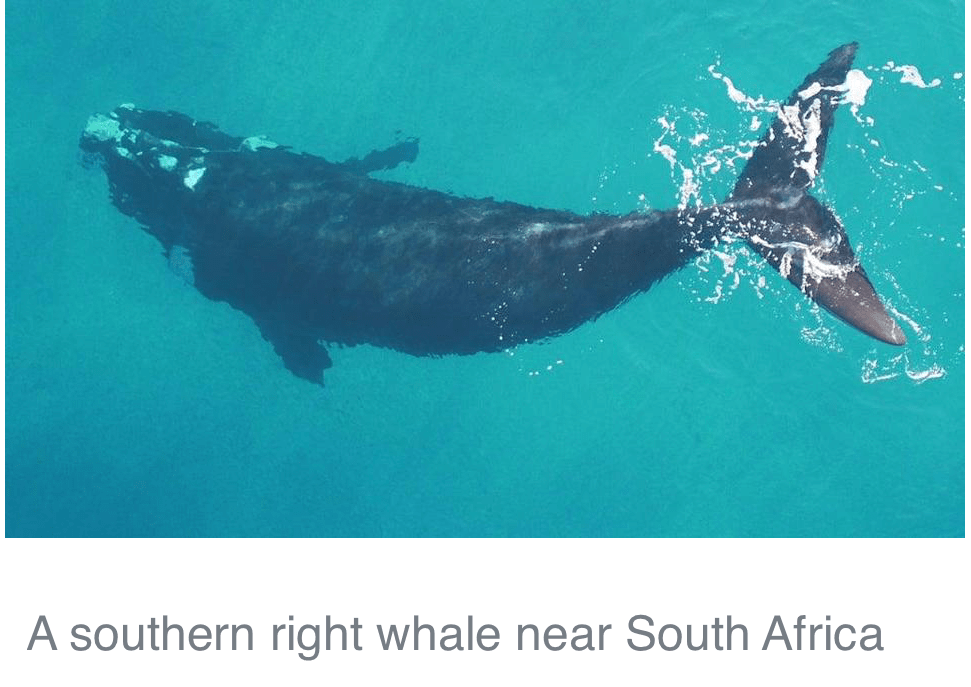
A word for whales. Whales are important as tiller of the oceans. They circulate nutrients that are essential parts of the food chain and in particular nutrients needed by phytoplankton. These serve the same function as leaves, absorbing carbon dioxide and sunlight to create oxygen. As we count on whales doing their bit to maintain the global ecosystem, so they should be able to count on us not to harm them. 

However as has been widely reported, various groups are launching a last-chance bid to stop Shell using shockwaves in the Wild Coast of South Africa – a fragile ecosystem that is a vital whale breeding ground. The applicants, which included Greenpeace Africa and fishing groups, had been seeking to stop the survey on the basis it could cause “irreparable harm” to the marine environment, especially to migrating humpback whales in the area. (Yahoo News)

Do check out this Green Peace petition:  https://pages.greenpeaceafrica.org/shell-wild-coast?_ga=2.165965239.820789156.1640103673-781902025.1640103673

Green Tau: issue 28 

22nd December 2021

Sugar sweet?

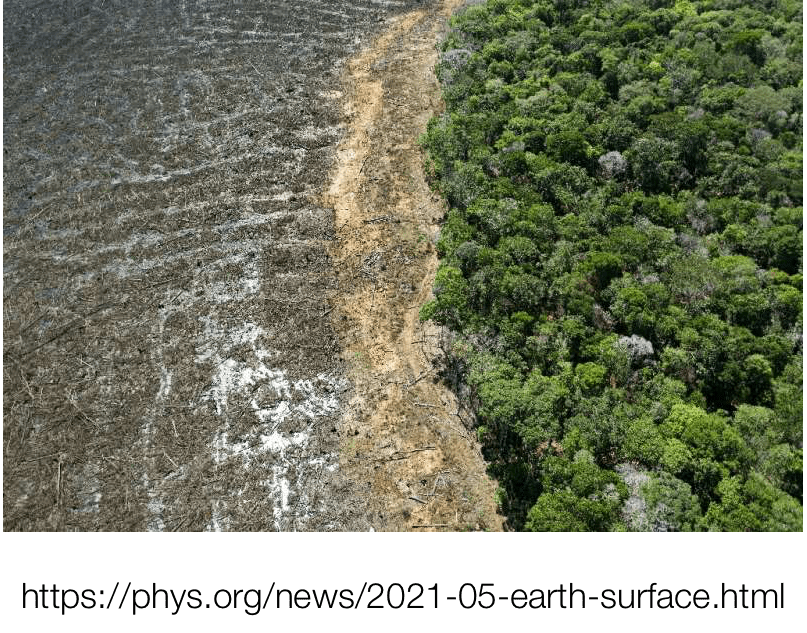
Sugar cane is the source of about 80% of the sugar consumed across the world. It is a plantation crop that goes back centuries and has a history linked with exploitation and slavery. As a plantation crop it has been responsible for the deforestation of tropical landscapes and as demand for sugar continues to increase this is still on going – especially in Brazil where sugar cane is also grown to produce the fuel ethanol: ‘The Atlantic Forest, or Mata Atlântica in Portuguese, is found on the Atlantic coast of Brazil. It should be full of life, supporting thousands of species of plants and animals, many of which are found nowhere else. It’s different from the Amazon rainforest but equally important. Around 500 years ago it would have covered an area of more than 1.5 million square kilometres. Now, more than 90% of it is gone, cleared mostly for timber, pasture and sugar.’ (https://www.nhm.ac.uk/discover/sugar-a-killer-crop.html)

 Sugar cane occupies approximately 2.4 million hectare world wide. 70% of production is for domestic use (which for example would include the production of ethanol in Brazil) but for some countries the production of sugar for export constitutes a significant part of their national income eg Cuba and Belize. Volatile global prices makes for great uncertainty for local growers/ plantation workers who can do little to control their incomes. Whilst the premium paid through the Fair Trade scheme undoubtedly helps, the production of fair trade sugar – 528,000 tonnes – is a fraction of the 200 million tonnes of sugar  produced globally (2019). 

Sugar cane as a crop, aside from the issue of deforestation, has unwanted adverse affects on people and the environment.

  • it requires large amounts of water, often taking the water away from other crops and  natural vegetation 
  • It requires large amounts of pesticides and fertilisers which flow into the water system damaging other ecosystems 
  • Before harvesting, old leaves are burnt off to assist the harvesting process. This kills wildlife, important natural organisms and pollutes the air. As nutrients in the leaves are burnt rather than being returned to the soil, the fertility of the soil is reduced requiring additional fertilisers to be used
  • It is an annual crop requiring the land to be cleared each year and the exposed soil is then susceptible to loss during the rainy season and with not roots to absorb moister, flooding too increases.
  • It is a labour intensive crop where child labour still happens.

Alternative sugar crops are grown, of which the main one is sugar beet – accounting for about 20% of world production – which is grown mainly in Europe. It too can be reliant on pesticides and fertilisers: organic sugar beet is grown in Europe but not as yet in Britain. Other sugar crops include coconut palms and oil palms where the sap is harvested. 

There is a further downside to all sugars: sugar damages our health, causing major problems such as heart disease, type 2 diabetes and tooth decay. The WHO urges that sugar consumer should be reduced to between 5 and 10% of a person’s daily calorie intake. The NHS advises sugar consumption be limited to less than 30g per day: https://www.nhs.uk/live-well/eat-well/how-does-sugar-in-our-diet-affect-our-health/ Yet sugar consumption globally is still rising. The USA tops the charts with an average consumption of 126.4g per person per day. Britain comes in at number 7 with 93.2g per day (2019).

As well as being concerned about the damage sugar growing causes to the environment and it’s work force, should we be acting to reduce the demand for this commodity?

“Too often, divisions in civil society can be exploited by powerful commercial interests. ‘Don’t go too hard on health, as it will threaten jobs’ or ‘Don’t raise pollution standards, as they’ll be undercut by another country somewhere’ or ‘Don’t mention labour pay rates, or we’ll drop the preferred status.’ Or ‘Don’t stop sugar beet as it’ll affect tourism brought by geese feeding on sugar beet tops in winter’. Such horse-trading happens in realpolitik, of course, but we think now is the time to take the sugar debate back to ecological public health basics: land, labour, capital, health and culture…We see this future food world as one where less not more sugar is produced and consumed, and land use and labour are liberated from the folly of sugar production. This is hardly a vital product. It has been injected into culinary culture on a scale it does not deserve. Nor should a sugar reduction strategy be compensated for by a growth in use of artificial sweeteners which industry constantly seeks. Artificials, whether relatively ‘old’ such as aspartame or ‘new’ such as stevia, merely normalise the sweetening of diet as well as maintain the processing industries’ option to sweeten a product to sell it.”  https://foodresearch.org.uk/wp-content/uploads/sites/8/2015/06/Does-Sugar-Pass-the-Environmental-and-Social-Test-23-june.pdf