Counting on …day 59

13th January 2022

It is widely acknowledged that the peaceful protests made by environmental and justice groups, including Extinction Rebellion, Fridays for Future school strikes, the Climate Action Coalition, the RSPB, Green Peace, Christian Aid etc, have raised public and government awareness of the climate crisis from being a very minor issue to one of the most pressing of the decade. Would we be where we are without such protests? The Government’s new policing bill currently being reviewed by the House of Lords before returning to the House of Commons is designed to severely restrict the right to peaceful protest. https://www.theguardian.com/world/2022/jan/13/green-activists-urge-labour-to-vote-against-policing-bill-climate-catastrophe

Take time to email your MP and urge them to do all they can to prevent this bill becoming law. https://www.greenpeace.org.uk/news/why-you-should-be-worried-about-the-new-policing-bill/

Counting on …day 58

11th January 2022

Monday and Tuesday are our local recycling days when the lorries and crew collect paper, & card, food waste, metal, glass and some plastics – as well as unrecycled waste that goes to landfill. It is a job the  crew do in all weathers, pulling and lifting boxes and bins into the back of the lorry, and in summer the food waste can be pretty smelly. It is a pretty thankless job: we would all be lost without it, but we are seldom out and about when the crew comes by to say thanks. We used to call them dustbin men, then refuse collectors, but neither of those describe their current role nor the important that role has in tackling climate change and ensuring scarce materials are recycled for future use. 

Perhaps we should call them “recyclists”. 

Counting on … day 54

7th January 2022

Real (as opposed to plastic) and rootless Christmas trees will  probably now be on their way for recycling. Most local authorities provide a collection service, taking the trees to be ‘chipped’ into small pieces which can then be turned into compost or used as a mulch.  Sometimes the trees may be put to  alternative uses such as securing sand dunes or stabilising river banks. You can recycle them at home,  leaving them in a corner of the garden where overtime they will decay and in the meantime may provide a shelter for birds and insects. Or you can speed up the process by chopping off the branches and – once the needles have gone brown – use them as mulch around plants that like an acid soil – eg raspberries. 

The trunk you can use to make, or to add to, a log pile for garden wild life. For more nature friendly ideas for the garden see – https://greentau.org/2021/10/04/eco-tips-10/

Counting on … day 52

5th January 2022

The Ethical Consumer’s Climate Gap Report highlights the importance of we as individuals making changes now so that we will as a nation be able to achieve net zero by 2030. One area where  significant change is needed is our diet. We may not all  need to become vegan, but we will all need to reduce our consumption of meat and dairy products. Substituting oat milk and vegan butter in our cooking is an easy option. Use oat milk for custard and white sauces etc. use vegan butter in cakes and pastries. 

Bird’s Custard is an egg free custard that was originally developed because Alfred Bird’s wife had an allergy to eggs. Make it with oat milk and it is vegan custard.

Green Tau: issue 29

Caring for creation with every meal – Use your LOAF!

What we eat impacts the world around us – the welfare of animals, the welfare of wildlife, the fair sharing of water, the  fertility of the soil, the  well being of those who grow and produce food. It also contributes to the climate crisis. Making step by step changes, we can better care for creation.

The organisation Green Christian has produced the nemonic LOAF – Local, Organic, Animal friendly, fairly traded – to help us buy and eat sustainably with care for the world. https://greenchristian.org.uk/gc-campaigns/loaf/

L locally grown, locally produced. 

Local reduces the carbon miles attached to our food. Local keeps us in touch with those who grow, make and sell our food. Growing our own keeps us in touch with the soil itself!

O organic.

Food, whether that is crops grown or animals raised, that is produced organically removes chemical fertilisers and pesticides from the environment where they cause damage to water supplies, wild life and human health. Instead organic farming works in harmony with the environment boosting its well being and biodiversity.

A animal friendly. 

Animals including birds and fish, should always be treated with care and respect. Factory farming for example, treats animals as profit-making commodities. Arable farming also has a responsibility to be animal friendly, including the wellbeing of birds and insects.

F fairly traded. 

Throughout the supply chain from farm labourer to shelf stacker, lorry driver to barista, each person deserves to be treated fairly.

In a previous issue of the Green Tau – https://greentau.org/2021/08/14/green-tau-issue-12/

I have written about food and our carbon footprint. The Ethical Consumer’s Climate Gap Report notes that to be on track for net zero we need to reduce the carbon footprint of our food by 15% by 2030. So far (ie since 2019) reductions have not even risen above 0%.  It is imperative that we do look at and adjust what we eat, to reduce waste, to reduce our carbon footprint and to reduce the negative impact we have on the environment. Eating sustainably we can safeguard our own futures and improve that of the world in which we live.

  1. Eat less meat and dairy, replacing these with plant-based alternatives. “Veganuary” makes this a good time to try different vegan options. See the Eco Tips page on swopping to a vegan diet – https://greentau.org/2021/10/12/eco-tips-11/
  2. Use local food shops. Buy locally produced food. 
  3. In supermarkets choose UK grown rather than imported fruit and vegetables. 
  4. Eat what’s in season – strawberries in May/ June, blueberries in July/ August. 
  5. Subscribe to a veg box – eg Riverford’s or Abel and Cole – or OddBox which fills its boxes with fruit and veg that would otherwise go to waste.
  6. Use local farmers’ markets 
  7. Expand the variety of fruits and vegetables that you buy. Biodiversity is an important way forward for farming – https://greentau.org/2021/10/08/the-green-tau-issue-20-2/
  8. Opt for UK produce over imports. Hodmedod sells UK grown beans and pulses rather than those that come from Canada/ China etc.  https://hodmedods.co.uk/
  9. Opt for organic produce.
  10. Opt for fair trade products. This article relates to chocolate – https://greentau.org/2021/12/11/green-tau-issue-26/
  11. Use refill shops – also known as bulk stores. Take your own containers or use the shop’s paper bags to buy loose ingredients such as beans and pulses, grains, dried fruit etc. 
  12. When buying meat, find a butcher who knows where the meat comes from and how it has been raised.
  13. Be prepared to pay more for meat and diary products that have been reared to a higher ethical standard.
  14. Use a milk delivery service such as Milk and More for both dairy and oat milk in refillable glass bottles.
  15. When buying fish, check whether it is sustainably sourced and/or farmed. Refer to the Marine Conservation Society’s guide as to which fish are not endangered.
  16. Plan your meals and your shopping to avoid throwing food away – https://greentau.org/2021/08/09/eco-tips-4/
  17. Keep a habit of saying Grace at meals. Appreciation and gratitude go together. 

Counting on … day 50

3rd January 2022

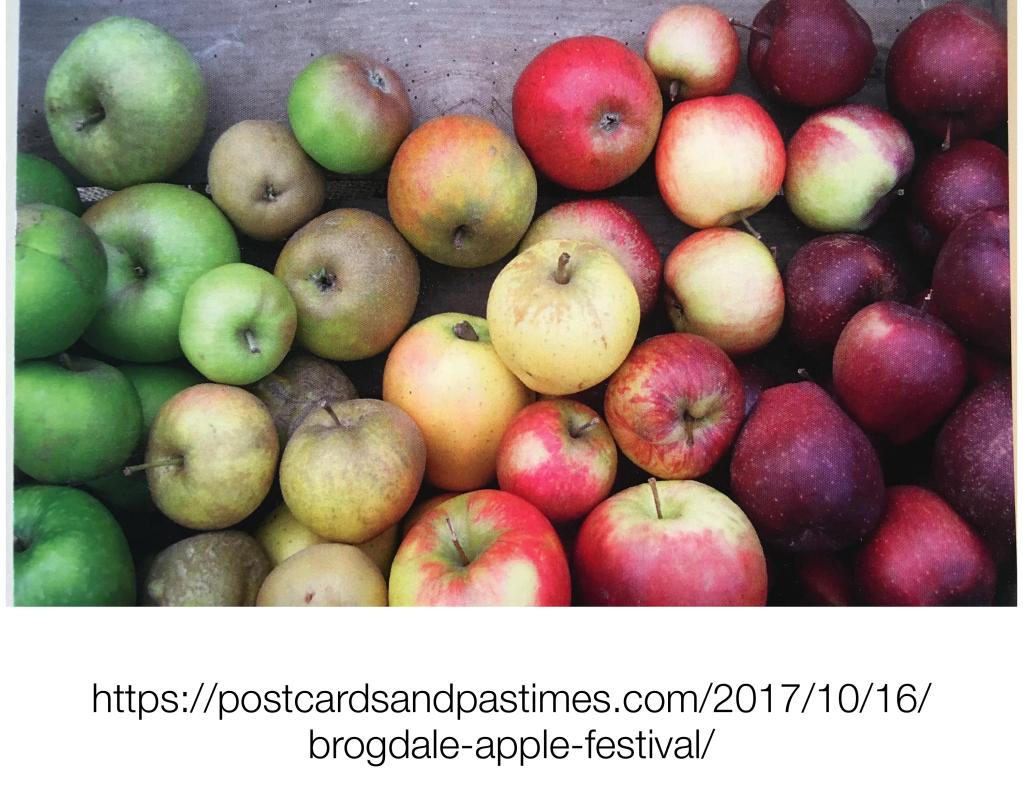
The National Fruit Collection is held at Brogdale in Kent. Of all their collections, the apple is the largest  – 2131 varieties that come from across the UK and from across the world too. There is here a rich diversity in size, taste, texture, colour and use. Diversity is good both for the pleasure it gives us as eaters of apples but also as a means of protecting apple trees against viruses and other calamities. 

Why not contact your local supermarket and ask them to stock a greater range of varieties of British grown apples? (And ideally not in plastic packaging!!)

Counting on … day 49

2nd January 2022

Winter is a time for pruning various plants including apple and pear trees. Pruning helps them stay healthy and concentrates the plant’s energy for the coming year. It also helps maintain a manageable shape.  Traditionally this accompanied by wassailing – blessing the trees and making loud cheerful music to re awaken them so that they would produce plenty of fruit. 

It is a good reminder that we do count on the fertility of fruit trees and their successful pollination by  bees and other insects to ensure a rich and varied diet.


Counting on … day 48

1st January 2022 

A day to give thanks for the charities and activist movements that we are counting on to make our lives more sustainable and the earth a happier place. 

For Friends of the Earth, the WWF, the National Trust, the Woodlands Trust, A Rocha, the RSPB , Green Christians, Practical Action, the UN, Traid Craft, the Climate Coalition, the Wildlife Trust, Christian Climate Action, Cafod, Christian Aid, the Wetlands Trust,  Extinction Rebellion and more.

Counting on …. Day 47

31st December 2021

Whilst we are still in 2021 some countries in the global south will already be in 2022.
One of the first is Kiribati a nation in the Pacific Ocean comprising 33 islands, and rising, at present, not much more than 2m above sea level. As the climate crisis and rising sea levels escalates so the future of life here diminishes – the islands  may be largely uninhabitable by 2030. The government of Kiribati has bought land in Fiji to safe guard some future for the islanders.  New Zealand permits 75 islanders a year to  settle there. But what the people really want is financial support for desalination plants to ensure fresh water, flood resistant seeds and plants, early storm warning systems, housing that can withstand periodic inundation, and support to preserve and maintain their special culture and language. Kiribati has made a negligible contribution to the climate crisis but stands to be its first victim. Reparations are needed now from those nations that have both created and benefitted from the fossil fuelled climate crisis. One agency that is giving support is the United Nations Pacific Office.