Counting On … 

15th November 2021

“Every year we produce about 3% more waste than the year before. This might not sound much but, if we carry on at this rate, it means that we will double the amount of waste we produce every 25 years.”

One of the facts from C B Environmental’s fact sheet – do check out the rest of the facts. 

If we aim to live sustainably then we must aim to use only our fair share of resources – both a fair share  when shared across the globe, and a fair share when measured across time. At present we we use the earth’s resources faster than they can be replenished. 

In 2019  each person in the UK on average threw away (via waste bins to landfill sites) 392kg of rubbish. (https://www.statista.com/statistics/322535/total-household-waste-volumes-in-england-uk-per-person/

How can we reduce that? 

  • Make a note of what you throw in the bin each week. 
  • Could any of it be recycled instead? 
  • Could any of it be avoided by buying alternative products? Eg ones with less packaging or with less non recyclable packaging. Or buy products with a longer life? Or buy less if what you buy is not being used?
  • Repeat and see if you can reduce the number of things going into the bin the next week.
  • Alternatively weight the rubbish that goes into your bin each week: Using the suggestions above, can you reduce it week on week?

The Green Tau: issue 25

14th November 2021

Governments and world leaders have not take action that matches up to the structures of the scientists. Now it is up to us as the people. We are not insignificant. We have money to spend – albeit not as much as governments and the top “5 percenters” – and we have voices with which to speak out. 

Consumer power saved dolphins from tuna nets, saved puffins by ending the use of sand eel oil in biscuits, saved veal calves and hens from cages, saved whales by ending the use of whale oil in cosmetics, saved minks from becoming fur coats …  Consumer power has swung behind campaigns to wear seat belts, to give up smoking, to end drink driving. Now consumer power is seeing the end of single use plastic straws and plastic bags. Consumer power is feeding the growth of organic and vegan foods, and the popularity of vintage clothing. Consumer power is even increasing the number of cycles on the roads.  

We can continue to use our money strategically to shape the world we want to live in. We can band together for greater effect. We can boycott products and service – even entire lifestyles – than damage our future. 

We can be influencers and game changers. We can set the example, we can be there trail blazers. We can show others – individuals like ourselves, small businesses and big businesses, schools, civic groups and faith centres, local councils and governments – that this is the way we want to live. 

We can write letters and petition. We can make posters and banners. We can write articles, we can blog and vlog. We can hold coffee mornings and parties. We can sing and we can be theatrical. We can inform and enthuse. We can demonstrate. We can speak out and we can speak up.

We can also be game changers by not spending money! Not everything we do, not everything we enjoy has to cost money. And things that are free seldom have a carbon footprint! A walk in the park. A chat with a friend. A wave to a neighbour. Giving presence not presents. Sharing and lending. Swopping and exchanging. Upcycling and cycling. Swishing and re fashioning. Repairing and recycling. So telling and singing. DIY and home baking. Growing and preserving. 

We may feel that as one individual we can’t make a difference. We may be unsure what is the best action we can take. We may fear that we might fall under the bewitchment of green wash. We may fear that our best intentions may prove to be unwittingly destructive. We may be overwhelmed by choices before us, the flood of information that is out there, that we don’t even know where to start. 

That is why we need to come together, to find like minded companions. To learn from one another, to encourage and support each other. To know that together we can make positive change a reality. 

Next week’s Eco Tips will list some of the many organisations and groups that can help you find answers and/ or provide a framework for eco living. 

Reflection for Remembrance Sunday

Sunday 14th November 2021

Collect: God, our refuge and strength, bring near the day when wars shall  cease and poverty and pain shall end, that earth may know the peace of heaven, through Jesus Christ our Lord, amen.

Daniel: 12:1-3  https://bible.oremus.org/?ql=503649379

Hebrews 10:11-14, 19-25 https://bible.oremus.org/?ql=503649490

Mark 13:1-8.  https://bible.oremus.org/?ql=503649562

Reflection 

Michael the great prince is more usually (for us) known as St Michael or as one of  the four archangels. These archangels are said to stand round the throne of God from where they watch over the four corners of the earth. Michael  also appears in the Book of Revelation where he engages in battle with a dragon which is Satan, ‘the great deceiver of the whole world’ and  drives him out of heaven. In pictures and statues Michael is often depicted with a sword or spear as he attacks Satan. 

Michael the archangel – on the basis of this passage from Daniel – has the particular role of protector of God’s people.  For the readers of the Book of Daniel the people of God were the Jews, and perhaps in particular those  exiled to Babylon and their descendants. For me,  God’s people are all people for all are part of God’s creation. If we were to create a contemporary representation of Michael  as the archangel who watches over the earth and protects God’s people, I wonder what symbols we use? 

Would we still see military arms as a way of protecting people?  Would we see confrontation as the way of subduing the great deceiver?

Or would we want tools that suggestion negotiation or justice? Mobile phones and cans of Irn Bru? Rainbow flags and circular seating plans? 

Would we want items that could protect people and build peaceable communities?  Things like food supplies, tents and roads, sanitation and drinking water, medicines and vaccines, seeds and solar panels?

Would we want arguments and adverts to reveal the deceits and green wash that hold sway across the world? Just and equal access to decision making processes? Scientific explanations rather  than political spin and one-up-manship?

Would we want words and actions that united people so that efforts to avoid war and distaste could flourish? 

Can we together tackle the crises that beset the world? Can we help each other, value and protect each other? 

Can we live and work within the divine plan that establishes heaven on earth?

The  passage from Hebrews , like that from Daniel, is imagining a time of salvation, of deliverance, when heaven on earth will be a reality. In Daniel it is a future event; in Hebrews it is an event that has taken place – a promise that has become a certainty through the life, death and resurrection of Jesus. As in previous weeks’ readings, this heavenly realm, this place where God’s rule prevails, is depicted as  being a heavenly of which the one reverenced by the Israelites during their time in the wilderness was but a temporal version. It is a sanctuary that all, having been sanctified by Jesus’s blood, may enter. It is a sanctuary in which all may be washed clean,  consciences cleared of evil. And such is the wellbeing that this destination  gives, that the writer urges us ‘provoke one another to love and good deeds, not neglecting to meet together, as is the habit of some, but encouraging one another…’  Just as we have the image  of Micheal intervening to thwart  the great deceiver and to actively protect God’s people, so here we have Jesus as the beacon encouraging us to nurture one another’s well being for that is how the rule of heaven is made real.

In Mark’s gospel the disciples are overwhelmed by the scale of the temple and the security and magnificence it projects. They are persuaded – maybe even conned/ brain washed – into see it as the 

promise of their salvation and security. Jesus attempts to help them to see things differently. He tells them that those stones, that temple, will not stand for ever and will not protect them. If Jesus is talking about the end of days, the disciples seem perhaps to imagine that they will be whisked out of the way of any impending danger. Not so. Rather they will be faced with famines and earthquakes and all manner of disasters before the kingdom, the rule of heaven becomes a reality. 

It can be easy or perhaps simplistic, to think when we hear of disasters, earthquakes and famines, to stand by and wait to see what happens. But I think the example of the archangel Michael, and the words of the writer of Hebrews, tell us that we must face down the deceptions of the great deceiver (in what ever form they may arise) and must proactively encourage good and loving deeds in all people. 

Today is Remembrance Sunday and we remember with love and sorrow those who lost their lives because of war. But war is not an acceptable disaster, it is not the acceptable answer to danger and sin. Remembrance Sunday is the occasion that prompts us to build peace, to be brought under the rule of heaven, and to encourage, in and for all, good and loving deeds.

Counting On …

Friday 12th November 2021

Who are we counting on to make a success of the COP26 conference? 

The biggest countries or the smallest? The richest or the poorest? Those with most to offer or those who are most vulnerable?

World leaders? Our politicians? Business leaders? Scientists? Investors and financiers? Charities and NGOs? Faith groups? Youth groups?

Ourselves? Ourselves alone or ourselves as communities?

Who is counting on the success of the conference in order to survive? Small islands? Indigenous peoples? The poor? The disadvantaged? Wildlife? Marine life? Plant life? Forests and woodlands? Glaciers and icecaps? Coral reefs? Alpine meadows? We in the developed countries? The comfortably middle class? Our children and grandchildren?

We are all linked as part of a finely balanced ecological network, where it is one for all and all for one. 

Do look back at past posts for ideas and thoughts about how we can be part of the solution, and do keep in touch as the Green Tau continues to address ecological issues. 

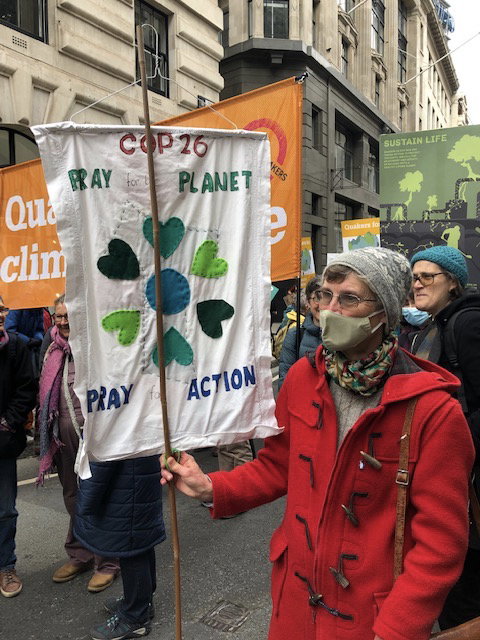
Climate March through London, 6th November 2021

Counting On …

Thursday 11th November 2021

Greening our cities will make them better places both for humans and other living beings, flora and fauna. And it will address the climate crisis reducing our dependency of carbon polluting structures and carbon polluting lifestyle choices.

“Recent studies have highlighted the importance of boosting green urban areas and connecting fragments of green space with ecological corridors to improve biodiversity and animal species dispersal within the urban landscape. If adequately designed, green corridors can improve urban ventilation, allowing for cooler air from outside to penetrate into the more densely built areas, and reducing thus the urban heat island effect. Urban green areas can also have positive effects for human health and climate change adaptation. The capacity of vegetation to retain water is an important flood prevention feature that can reduce peak discharges.. 

[Where] patches of urban woodlands are generally separated from each other, [this]  affects the ability of many woodland species to disperse, or move among different locations with similar habitats. Ecological corridors or connections between urban woodlands, gardens or other green spaces are recognised as a way to limit the negative effects of fragmentation.”

https://climate-adapt.eea.europa.eu/metadata/adaptation-options/green-spaces-and-corridors-in-urban-areas

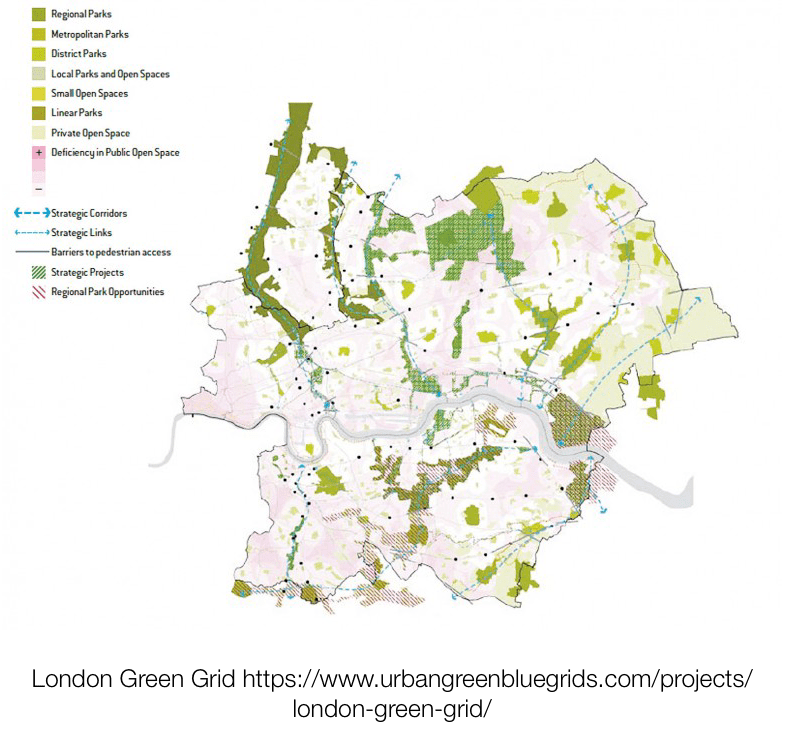
This concept is being developed in London, where there are already many parks and green corridors – the latter often following the course of the many small tributaries to the Thames. 

In July 2019 London because the world’s first National Urban Park. 45% of the city is green space which includes 3000 parks, 30,000 allotments, two national nature reserves a s 142 local nature reserves, 36 sites of special scientific interest and is home to about 13,000 different species of wildlife. London’s overall tree cover amounts to 21%  sufficient for it to be the world’s largest urban forest!  (The UN definition of a forest is anywhere with at least a 20% cover of trees.)

Cake and tray bake recipes

Vegan cakes and bakes: these are all easy to make and it is good to be able to provide vegan eats at church events and the like. It is also a good idea to offer plant based milks too.

Chocolate Cake

100g vegan margarine

150g sugar (I use brown)

1 tbsp chia or camelina seeds

25g cocoa

175g flour (I use spelt flour) plus 1 tsp baking powder and 1/2 tsp bicarbonate of soda 

50g dates 

Oat milk

Soak seeds in 3 tbsps warm water – they will gain jelly-like texture

Melt the margarine.

Chop the dates and add along with  the sugar, cocoa, raising agents and flour.

Add the seed mix (this is an egg replacement).

Add enough milk to bind to a soft dropping consistency. 

Tip into a tin (approx 300x200mm) lined with baking parchment.

Bake at 170C till  spongey and firm – about 20-25 minutes 

Flapjack

100g vegan margarine

3 tbsps of sugar (I use brown)

2 tbsps of syrup

200g oats or thereabouts  (NB use gluten free oats for a gluten free bake)

Melt the margarine. 

Add the sugar and syrup.

Add the oats – if it still seems very syrupy you can add some more oats.

Tip into a tin (approx 300x200mm) lined with baking parchment.

Bake at 170C till golden brown – about 20minutes . Cut into pieces whilst still hot.

Shortbread

200g vegan butter 

220g flour (I use white)

50g polenta 

50g sugar (I use white)

Rub the butter into the flour.

Add polenta and sugar and mix.

Tip into a tin (approx 300x200mm) lined with baking parchment.

Bake at 160C  till pale gold  – about 20minutes . Cut into pieces whilst still hot.

Rockbuns

75g vegan butter

220g flour (I use spelt flour) plus 1 tsp baking powder 

50g sugar

75g sultanas/ raisins/ currants

1 tbsp chia or camelina seeds

1tsp ground nutmeg

Oat milk 

Soak seeds in 3 tbsps warm water – they will gain jelly-like texture

Rub butter into flour.

Add nutmeg, sugar and dried fruit.

Add seed mix

Add enough milk to create a dry dough.

Place spoonfuls in ‘rocky’ lumps on a greased baking tray. This should make about 8.

Bake at 170C till golden  – about 15- 20minutes .

Counting On …

Wednesday 10th November 2021

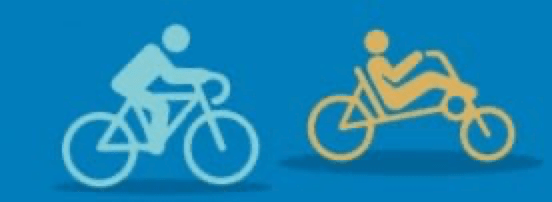
“Bike is best!” Whether you are young or old or somewhere in between.  Whether you are able bodied  or disabled. Whether you are super fit or just starting out. Whether it’s simply  for leisure or for  getting from A to B. Whether it is for deliveries or commuting or the school ‘run’.  

Active travel reduces carbon emissions, improves air quality and aids healthy living. What’s not to like?

And what is included in active travel? – walking, wheeling and cycling. The following extract comes from Wheels of Wellbeing, a charity  that promotes cycling for people with disabilities.

Walking:  foot/pedestrian-based mobility that may incorporate the support of aids to mobility such  as stick/s, cane/s, crutch/es, the arm of another person and/or assistance animal/s.

Wheeling: an equivalent alternative to foot/pedestrian-based mobility. Includes wheeled mobilities such as manual self- or assistant-propelled wheelchairs, including wheelchairs with power attachments or all-terrain attachments (such as the “Freewheel”), powered wheelchairs, mobility scooters (three and four-wheeled) and rollators. Some people rely on their cycle to move (at a pedestrian’s pace) through pedestrianised environments when it is not physically possible to walk/push their cycle. Some people use their cycle as a walking aid, by leaning on it (do not use crutches but need to lean in order to walk, due to pain etc. – they can dismount but cannot park their cycle). Some people use e-scooters (with or without a seat), to wheel/scoot through pedestrianised environment if they cannot walk unaided.

We recommend never using ‘walking’ on its own (as it likely reinforces ableist stereotypes in people’s minds) but always using ‘walking/wheeling’ together. Both words represent the action of moving at a pedestrian’s pace, whether or not someone is standing or sitting, walking/wheeling unaided or using any kind of aid to mobility, including walking aids / wheeled aids, personal assistants or support animals.

Cycling:  incorporates the action of moving at speed on a wide range of pedal- powered wheeled transport that may be powered with hands and/or feet, may transport one or more person, may or may not include e-assist and usually have between 2 and 4 wheels. 

Counting On …

Tuesday 9th November 2021

Today’s agenda at COP26 includes gender equality with a particular concern to ensure full equality for girls and women. Why might this be an important issue in combatting the climate crisis?

“A 2014 survey done as part of a push by Kenya’s government and the International Fund for Agricultural Development (IFAD) to cut poverty in the region found that 85% of land owned in the Upper Tana River drainage, in southeast Kenya, was in men’s names.

The research also found that women worked an average of 15 to 17 hours a day, while men worked six to seven hours.

Men, meanwhile, dominated decision making on what to plant and where, how much produce was sold and for what price. Women’s decisions mainly focused on what to cook for the family, and what crops to grow for consumption at home, the survey found.

Concerned that such restrictions could be holding back anti-poverty efforts, project officials in 2016 decided to try out GALS – a Gender Action Learning System developed in settings in Latin America, Asia and parts of Africa.

The system, now being used across Kenya and more broadly, helps men and women learn how to speak more respectfully and honestly to each other, and aims to cut domestic violence, achieve more equal property rights and give women and men a more balanced voice in decision making.

Those changes, backers say, can help boost food production in the poorest households and help ensure more sustainable harvests – a particular concern as climate change brings wilder weather that threatens crops.

In Tharaka Nithi County, Albert Thirika, a retired secondary school principal, now involves his wife in family decision making after undergoing the training – and is giving his daughters a bigger voice too.

“We have embraced dialogue in the family since learning of GALS. Initially I used to think as an individual, but today I think as a family member and this has sharpened my planning skills,” he said.

By working more closely together and sharing their income, the family has managed to buy a dairy cow and expand an existing banana plantation, he said.

His wife, Evelyn Mwembe Thirika, a retired nurse, now manages the family money, she said.

Albert Thirika also has made a once unthinkable change: He has given title to some of his family farmland to his two daughters as well as his two sons, and allowed them to choose the pieces they prefer. 

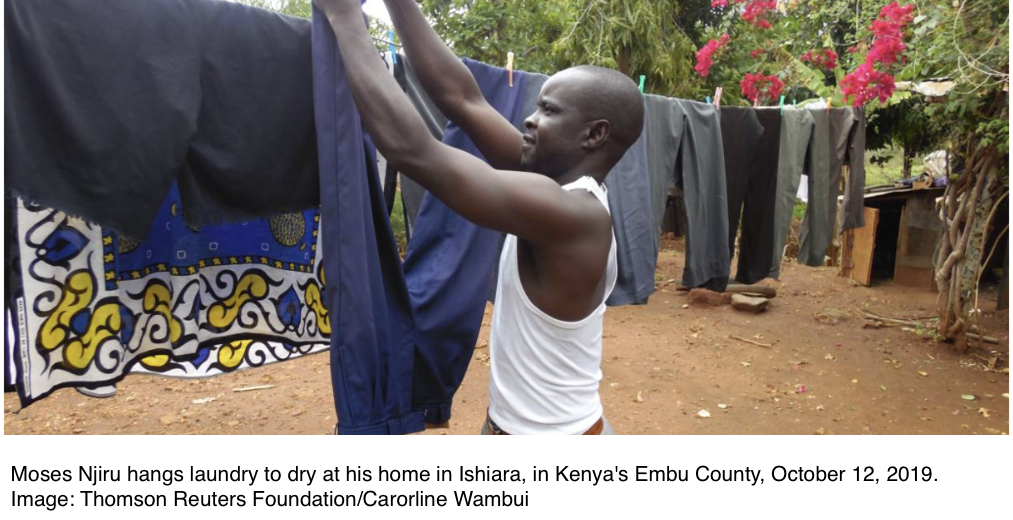
Njiru, meanwhile, since going through GALS training, has offered to let his wife go back to school to earn a full degree – something she hasn’t taken him up on yet.

He also has helped train more than 420 out of 600 members of a farmers’ water management and irrigation group he belongs to about the importance of striving for greater gender equality.

The training has reached community members as diverse as school principals, teachers and students, and church members, he said.

According to Gabriel Njue, the chair of the water management association, the group’s production of crops such as maize, beans, tomatoes and other vegetables has quadrupled since members underwent the gender training in late 2016.”

https://www.weforum.org/agenda/2019/11/kenyas-loosening-of-gender-roles-is-helping-to-beat-climate-change-this-is-how

Counting On …

8th November 2021

Today’s agenda at COP26 features adaptation, loss and damage. The extreme weather conditions we have seen in recent years – droughts and wildfires, floods and heat waves, storms and cold snaps – are here to stay as a direct consequence of the 1C warming that has already taken place. Current efforts at COP26 will hopefully constrain further rises in temperature to no more than 1.5C.

Across the globe, communities are and will have to adapt to the changes that are happening in weather patterns. In the UK we need plan how we cope with more frequent and deeper floods, spasmodic heat waves and irregular growing seasons. In the Pacific region where there are many low lying islands and around river deltas such as in Bangladesh, there is the need to plan for rising sea levels  which not only submerged land where people live but also salinates water used for drinking and farming. Many sub Saharan regions are faced with prolonged heat waves that make daily life and farming near impossible. Whilst other regions will feel the affects of drought as rivers that are normally fed during the summer by the slow melt of glaciers, dry up as the glaciers disappear altogether. 

Time and again, the solution lies with trees, whether that is trees that interrupt, and delay the speed with which falling rain becomes flood water, trees that stabilise coasts vulnerable to erosion, tree shade that reduces experienced daytime temperatures, or trees that provide shade for crops and whose roots retain moisture in the soil. 

 “Locally, trees provide most of their cooling effect by shading. How warm we feel actually depends less on local air temperature, and more on how much electromagnetic radiation we emit to, and absorb from, our surroundings. A tree’s canopy acts like a parasol, blocking out up to 90% of the sun’s radiation, and increasing the amount of heat that we lose to our surroundings by cooling the ground beneath us.All up, the shade provided by trees can reduce our physiologically equivalent temperature (that is, how warm we feel our surroundings to be) by between seven and 15°C, depending on our latitude. So it’s no surprise that, in the height of summer, people throng to the delicious coolness of the shade provided by London parks, Parisian boulevards, and Mediterranean plazas.

Trees can also cool down buildings – especially when planted to the east or west – as their shade prevents solar radiation from penetrating windows, or heating up external walls. Experimental investigations and modelling studies in the USA have shown that shade from trees can reduce the air conditioning costs of detached houses by 20% to 30%.”

https://theconversation.com/can-trees-really-cool-our-cities-down-44099

Sunday Reflection

7th November 2021, Third Sunday before Advent

Jonah 3:1-5, 10 (https://bible.oremus.org/?ql=503219101)

Hebrews 9:24-28 https://bible.oremus.org/?ql=503219165

Mark 1:14-20 https://bible.oremus.org/?ql=503219236

Reflection 

The next few weeks leading up to Advent Sunday and the start of a new church year, are called the Kingdom Season. In Greek (the language of the Gospels and Letters) the word typically translated as kingdom is βασιλεία/ basileia. Whilst the word can be translated as kingdom, it can equally be translated as sovereignty, rule, authority or reign. I prefer these alternatives partly because they are not gender specific, but also because they are not familiar and therefore make us think about what is being meant.

We only have part of the story of Jonah, but enough to understand its message. This reading has been specifically chosen for the season when we are reflecting on the theme of rule or sovereignty, but who is the ruler of Nineveh? What is the nature of the authority that holds sway in this city? Is there a human ruler? One is not mentioned. Rather it is God’s rule that ultimately prevails – even if here it does so by dint of threat. 

It is interesting that in this story  God expects a prophet to preach not only to those people who saw themselves as God’s people, but also to those who might have other ‘gods’. In God’s eyes they are all God’s people, worthy of God’s concern and love. That to me says two things that are important about God’s ‘kingdom’, God’s reign. First where God reigns, where God’s rule prevails, there is always scope for repentance and a fresh start. Second, God’s rule is there to benefit those who acknowledge God as their God and those who do not: God’s love and concern is for everyone – and that includes I believe, our flora and fauna brethren too. Indeed why would that love and concern not extend to all that God has created?

As this Sunday occurs in the middle of the COP26 global climate conference we might pause and reflect whether this passage from Jonah might be a direct message to us today. If we are familiar with the whole story, we will know that God had judged the behaviour of the people of Nineveh as having fallen short of the mark, such that they were in imminent threat of total destruction. Does that not echo our situation today? Will we respond with similar alacrity, repenting of the wrong of our past ways of life and eager to live a reformed life that will protect us from annihilation?

As noted previously, the writer of Hebrews focuses on the tabernacle, and its customs and custodians, (rather than the later temple) as the earthly and imperfect model of what is God’s intention for the world. The tabernacle in Exodus was certainly the earthly place where God resided – and in Ancient Greek, basileia means a royal palace. The tabernacle is an earthly token representing God’s kingdom/ rule/ reign. And so it is that the sanctuary/ the palace that Jesus enters is not earthly but heavenly. Jesus has opened the way to a heavenly rule, an era – or rather an eternity – in which God reigns. The assurance of sins forgiven, has already been given by Jesus; now we await that time when Jesus will save us by establishing God’s reign as a universal given. 

So to Mark’s gospel with its clarion call.

 ‘The time is completed and the reign of God is approaching. Revise your thinking and trust in the good news.’ 

How do we respond to that message? Are we ready to rethink the way we live in terms of God’s ways, God’s rule? Are we willing to trust in the good news that Jesus brings rather than the news told by our politicians, by financiers and economists, by business leaders and advertisers, by trend setters and Instagram? Could we with alacrity leave behind our previous way of living, our previous mode of employment and simply follow the example, the teaching of Jesus?

That I think is the challenge of the ‘kingdom season’ rather than it being a season when we imagine that in the future there may be a wonderful kingdom of peace and light. What might the fulfilment of this season look like?