Count Down

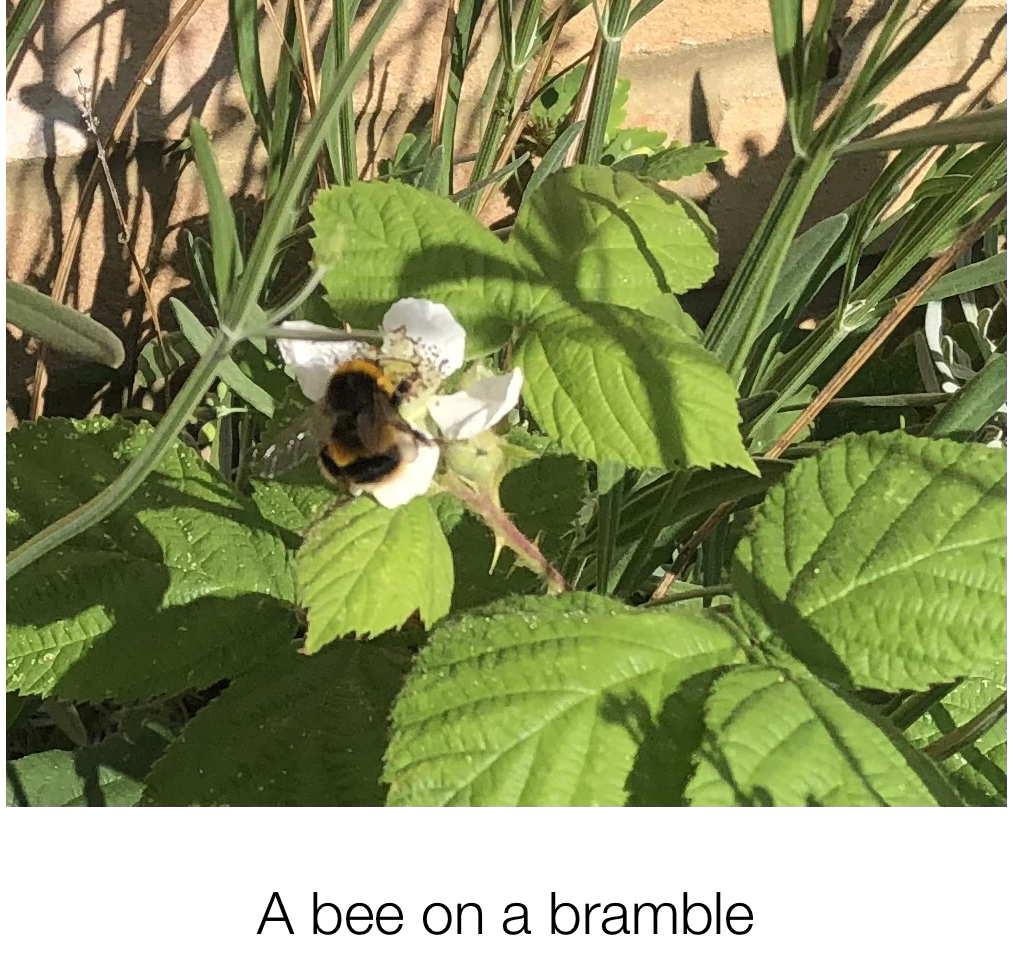
 Action 12: The COP26 climate conference will also be addressing the issues declining biodiversity. Those of us with gardens can be part of the solution. Bee numbers have fallen by an average of 7% in the last ten years, part of an ongoing decline. Europe wide 1 in 10 wild bee species are facing extinction. Grow bee friendly plants. Ensure accessible fresh water. Provide places where bee can overwinter or shelter – varying from areas of long grass to purpose made bee hotels. The following web site is useful: https://beefriendlytrust.org/creating-a-bee-friendly-space/

The Green Tau: issue 10

A question of justice: what is climate justice? Part 2

What then of climate justice?  What is the upright behaviour, the righteousness behaviour that God expects us to show vis a vis the climate?

Photo by Tobias Bju00f8rkli on Pexels.com

And God said, “Let there be lights in the dome of the sky to separate the day from the night; and let them be for signs and for seasons and for days and years, and let them be lights in the dome of the sky to give light upon the earth.” And it was so. God made the two great lights—the greater light to rule the day and the lesser light to rule the night—and the stars.  God set them in the dome of the sky to give light upon the earth, to rule over the day and over the night, and to separate the light from the darkness. And God saw that it was good.  And there was evening and there was morning, the fourth day. (Genesis 1:14-19)

The writer of Genesis tells us that the climate and its seasons, shaped by the sun, is a key part of the world God created. Both creation stories in Genesis give humankind a key role in occupying and caring for and tending the world that God created. Humans are given a role of responsibility vis a vis the fish of the sea, the birds of the air and all living things that move on the earth. They are given the task of cultivating the land and the plants which God intended should transform the earth from the bare form with which it began. And they are instructed to multiply and be fruitful ensuring generations of humans to come. 

Have we looked after all the fish, the birds and living things? The decline in biodiversity with a third  species threatened with extinction, suggests not. 

Have we cultivated the earth and maintained its greenness? The expansions of deserts, the destruction of rainforests and temperate woodlands, and the loss of native plants suggest not. 

Have we provided for the well being of generations to come? Currently the world is on track for an increase in global temperatures of some 3 to 5°C by the end of the century which would render large parts of the earth uninhabitable for humans – so no!

If we were to hold up a plumb line to measure how upright our living on the earth has been, we would see a world that is on the verge of collapse, a world which will be in a worst state than when we inherited it, and a world in which life for our children and grandchildren would be very bleak. 

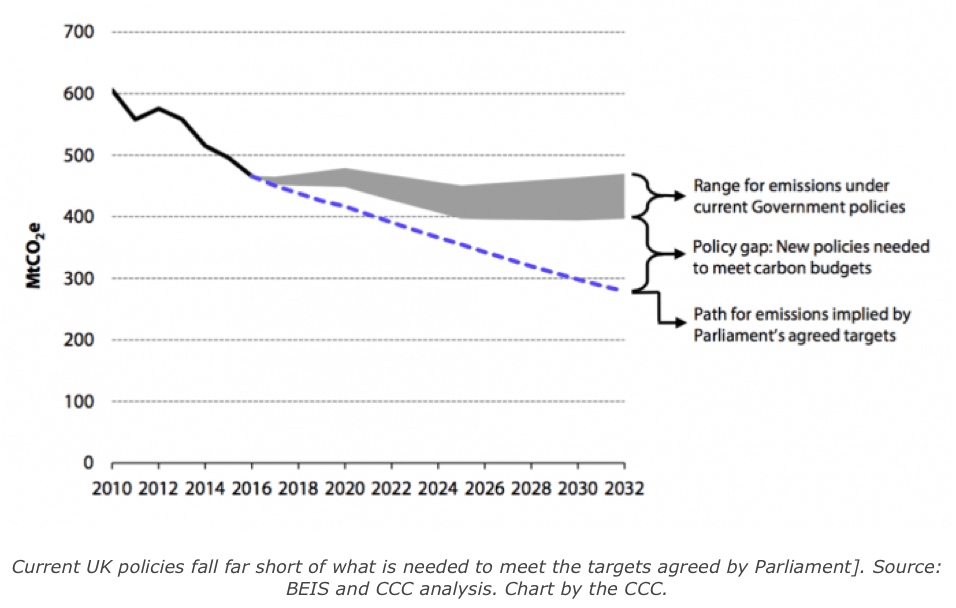
The diagram below is the equivalent of Amos’s plumb line. It was put together by the government’s Climate Change Committee  an independent, statutory body established under the Climate Change Act 2008) is part of their review of the progress being made tickling the climate crisis. It shows with a blue dotted line the target reduction in carbon emissions agreed by Parliament. The grey band shows the levels of emissions that  current policies will achieve. The gap between the two is the shortfall where new, firmer polices are needed. Just as plumb line measure how true a wall is, so this diagram shows how adrift we are of doing what is right for the climate and the world. 

Prophets like Amos and Jeremiah called out to those in power when  they were not meeting God’s standards. They also called out examples of wrong behaviour by merchants/ business leaders and those who abuse their power to oppress the vulnerable. They also called out those who falsely prophesied that all would be well and that no one need to repent and amend their patterns of behaviour! 

Climate justice requires us to call our government and business leaders  to account when policies and actions fail to address the climate crisis and rather allow the state of the earth to decline. We can write to our MPs and our local councillors asking what they are doing to avert the climate crisis, asking not just for wishful statements, but for concrete actions with measurable results. We can write to businesses, both multi nationals and our small, local businesses and ask  what they are doing to achieve net zero carbon by 2050. Kiss the Hippo, coffee roasters in Richmond is a carbon negative coffee company – https://kissthehippo.com/blogs/news/good-news-we-ve-gone-carbon-negative we can  sign petitions  and join one of the many groups campaigning on the climate crisis issue – eg Friends of the Earth, XR, 350.org

Climate justice requires us to look at our own lifestyles and measure whether they improve or damage the earth and the heritage that we will pass onto future generations. There are numerous suggestions on the internet about what we can do. This will be the topic of the next issue of the Green Tau.i

Count Down

 Action 11: Carry a keep cup when you go out.

In Britain we get through  2.5 billion single use coffee cups each year. Each cup – typically made of paper with a thin plastic layer – has a carbon footprint of 60.9g and that is before it leaves the cafe. Only 1 in 400 will be recycled with the remainder ending up in landfill, further adding to their carbon foot print. Each year single use coffee cups produce 152,000 tonnes of carbon dioxide – the equivalent to the output of 33,300 cars. 

https://www.theguardian.com/environment/2020/apr/26/why-britains-25-billion-paper-coffee-cups-are-an-eco-disaster

Count Down

 Action 10:. Swop oat milk for dairy milk. Dairy milk produces a carbon footprint of 3kg/ litre compared with 0.9kg/litre for oat milk (BBC carbon footprint calculator). Oats grow well in a temperate climate such as ours in Britain. Oatso, Made By Land and and Pure Oaty are all UK produced oat milks. Some oat milks are fortified with vitamins and minerals to mimic those in dairy milk but you can obtain these from other sources too. Using oat milk in coffee, on cereal, in cooking and baking is an easy way to reduce your carbon footprint!

You might try the equally delicious oat yogurts, fromage frais and creams that are available.

Count Down

 Action 9: Write to your local supermarket and ask what are their  plans for reducing their carbon emissions. What targets do they have and how will they measure their progress?

Morrisons have been proactive on this front. In 2019/20, they reduced operational carbon emissions by 28% (2017 baseline) and plan further reductions of 33% by 2025, 53% by 2030 and net zero by 2040 (2017 baseline). 

Count Down


 Action 8: The climate crisis is affecting the whole world. Sometimes in the UK it can seem as if the effects of the crisis are minimal – although recent flash floods and heat waves are changing this -so why not  choose a country somewhere else in the world -eg in the Pacific or the Arctic – and find out how life there is being changed.

Count Down

 Action 7: Growing your own food. One way of reducing the carbon footprint of what we eat is to grow our own food. A daily salad of 50g of lettuce eaten over the course of a year will create 10kg of carbon dioxide if UK grown, or 20kg if imported from Europe. Salads like cress, rocket and mustard are easy to grow at home on a window sill or in the garden. For extra colour grow nasturtiums – both leave and flowers are edible as are the seeds which can be pickled like capers.

Count Down

Action 4: Being self-informed, being curious about what is happening, where and why, helps us to have a better understanding of climate change. This week cut out any articles you find in the newspaper (cut and past if you read on line) about climate change and make a display with them. Looking at the overall picture may give you new insights. Why not share them?

Eco Tips

Recycling Plastics

The world’s resources are finite. The more we personally use, the less there is for others. We should reuse, repair and recycle what we do use. 
Plastic is conventionally made from oil but can be made from recycled plastic which has  both a smaller carbon footprint and allows virgin oil to be left in the ground together with its potential carbon emissions. 

Recycling plastics is a good thing.


Whilst all plastic can potentially be recycled, with some forms of plastic the process is deemed too expensive.  Plastics that can easily and cheaply be recycled are typically the ones that can go in your kerb side recycling bin  or in recycling points at super markets etc. Items made of several different plastics can be difficult to recycle but more and more business are making this possible. Costa Coffee collects coffee cups for recycling (typically made of paper with a thin plastic lining). Superdrug collects blister packs from pills etc for recycling. 

32% of all plastic in the UK was recycled in 2020: including 50% of plastic packaging and 77% of plastic drinks bottles. Plastic that is not recycled ends up in landfill sites or incinerators, or as pollution in rivers and the sea. There is scope for more and better recycling. Equally there is scope for reducing the amount of plastic that is in circulation. Do we need all that plastic packing? Do bananas need to come in plastic bags? Do we need drink coffee from throw away cups? Why aren’t sandwiches wrapped in paper? 

Good Plastic Recycling Practice

  1. Before throwing plastic in the land waste bin, check whether it could be recycled. If necessary contact the manufacturer. If enough people keeping asking, they may even swop to a more readily recycled plastic.
  2. Check the type of plastic you are recycling. Is it a recyclable plastic that can go in your kerb side  bin or do you need to take it to an alternative recycling point? The ‘wrong’ sort of plastic can contaminate the recycling process.
  3. Make sure the plastic is clean: rinse to remove traces of food, detergent etc. Dirty plastic can contaminate the recycling process.
  4. Stack plastic trays together to minimise the amount the of space they take up – this stops your recycling bin from overflowing and reduces the need for larger sized recycling  trucks.  Similarly flatten plastic bottles. Both these practices will prevent loose items of plastic being falling or being blown out of your bin.
  5. Twin your Bin and help improve recycling across the globe. https://www.bintwinning.org/ 

The Green Tau: Issue 9

A question of justice: what is climate justice? Part 1

What is justice?  

The Central Criminal Court of England and Wales, more commonly known as

the Old Bailey, is surmounted by a statute of Lady Justice. In one hand she holds a sword, and in the other, a set of scales. The scales remind us that justice requires the evidence of the case to be weighed and only if the evidence of guilt is more than the opposing evidence, is the accused found guilty. The sword symbolises the implementation of the judgement made – ie what punishment or reparations are due. Many images of Lady Justice also show her wearing a blindfold as a reminder that justice if to be given impartially, ie favouring no one person more than another.

But how do you know when an offence has been committed, something that requires the salve of justice? Most/all? countries have laws: laws that  lay down what is right or wrong, what is acceptable or unacceptable. Typically such laws will embrace not killing or injuring people, not stealing from others nor damaging what belongs to someone else.

Laws exist to both prevent certain actions and to prompt certain actions: driving at excess speeds and buying car insurance. Laws exist to protect rights and to impose obligations: House owners have the right to forbid someone to enter their property but if they do invite someone in, they have a  responsibility to ensure their safety. Laws exist to protect those who would otherwise have no rights: refugees have a right to safety, wives have the right to be protected against abusive husbands (and vice versa). Laws exist not just to protect the rights of humans: animals, plants, buildings can all be given legal protection.

Justice is the process by which laws are enforced. Justice judges whether or not, on the balance of evidence whether a law has been broken and whether or not the accused is guilty of that offence. Justice serves to maintain harmony in a nation by ensuring that the law of the land is followed.  But what if those laws have been chosen by a minority and applied to a majority who do not favour them? Will sticking to such laws create a contented society? Will they work to achieve the good of all society? What if those laws are out of date and support a social order that no longer exists. What if these laws support an economic system that is no longer viable? Good laws are as important as justice. Good laws tell us what is right.

The Greek word for justice, ‘dikaiosyni’, also has the meaning of equity and righteousness. Hebrew has two words that can be translated as justice, ‘mispah’ and ‘tzedaqah’. Mispah has more the meaning of executing justice or giving judgement, whilst tzedaqah has the meaning of righteousness and fairness.  In a similar way in English justice can also have the meaning of fairness. 

In the Old Testament justice and righteousness are frequently paired together as if you can’t have one without the other.:-

But let justice roll down like waters, and righteousness like an ever-flowing stream. (Amos 5:24)

Righteousness and justice are the foundation of your throne; steadfast love and faithfulness go before you. (Ps 89:14)

The days are surely coming, says the Lord, when I will raise up for David a righteous Branch, and he shall reign as king and deal wisely, and shall execute justice and righteousness in the land. (Jer 23:5).

I think that righteousness means God’s laws, God’s standards. Not just – or not even always – the laws laid down in the Old Testament, for they were laws given at a certain time and to a certain group of people – but something far greater than that.  God’s laws are holistic, an everlasting set of principles that are shaped by God’s love and rightness. They can be summarised, as Jesus did, as loving God and loving one’s neighbour – including all that is commensurate with love, and that takes a life time to discern!

Here I would like to backtrack to the idea that justice might have the meaning of fairness. Lady Justice wears a blindfold to ensure fair and impartial justice. With her blindfold on, her judgement is not influenced by the character or background of one on trial. Whether the accused is rich or poor, popular or despised, low class or high class, the judgement made, the justice received will be the same. But is impartiality the same as fairness? No, which is why when it comes to sentencing, the character and circumstances of the accused are taken into account. It is why fines may be proportionate to the accused’s income. This partiality is applied when sentencing not during the trial when the evidence is weighed in the scales. Justice can thus remain impartial – and I would like to suggest – sometimes unfair. 

If a person is so deficient in funds that they cannot buy food but instead steal, justice will find them guilty of theft. But if one were concerned with fairness, one might want to weigh in and ask why the person is so deficient of funds that they cannot afford to eat? And to ask in all fairness, how it is that society allows someone to go hungry when edible food is daily thrown away as waste?

God’s righteousness would suggest something very different. God’s righteousness would expect us to ensure that everyone has the means of earning or deserving sufficient funds, and would expect that come what may, all would be fed.

Thus says the Lord:   Maintain justice, and do what is right, for soon my salvation will come, and my righteousness will be revealed. (Isaiah 56:1) The word given as justice is mispah, and the words given as right and righteousness are tzedaqah. 

What then is justice from a theological or God-viewpoint? If secular justice is represented by Lady Justice and her weighing scales, then the biblical image of justice is, I think, the plumb line. A simple tool comprising a string and a weight which when suspended vertically uses gravity to show whether or not the things being judged – usually a wall – is true and upright and not in danger of collapsing. Amos sees this image as God shows him the short comings, the wrong doings of the nation of Israel.  

Here justice is not just a case of weighing up the evidence to see if the accused is guilty, but of measuring the quality of the accused’s behaviour. Has their behaviour been upright, morally correct, righteous even? Have they followed the precepts and the tenor of God’s will? Justice only has value if it is linked to a divine standard – an uprightness – of behaviour. Justice is doing what is right in accordance with God’s righteousness.

“I will make justice the measuring line and righteousness the plumb line” (Isaiah 28:17).