Proper 12

24th July 2022

Reflection (and readings below)

I am still shocked when I hear of climate activists who risk sitting in roads to highlight the emergency, or sit on oil tankers to prevent them moving, or blockade Amazon warehouses because of their casual treatment of workers, or break the glass doors of banks that support the fossil fuel industry, or of news agencies which obscure the truth. I am heart broken when I hear of them being arrested and imprisoned. Yet I see that they are following in the footsteps of the prophets of old, standing up against injustice, speaking truth to authority, and doing so in deeds just as much as in words. 

How can we not be shocked by today’s reading from Hosea. What bravery and self abasement did it take for Hosea to go and find and marry a prostitute? And not even a ‘reformed’ prostitute. Read carefully and you will notice that the first child Jezreel is certainly Hosea’s son, but are the next two children? And what of Gomer? Are we not shocked that she should be in such a position that prostitution is a viable and acceptable way of making a living? We wonder what choices she had had in life.

Through this lived narrative, God is pointing out to the people that they have behaved like a prostitute. They have not been faithful to God but have sought out other bodies to satisfy their needs and give them direction, to worship and imitate. They have spurned integrity and uprightness to follow whims and fancies, to chase after the illusions of wealth and happiness. God pulls no punches as to the severity of the consequences of their choices.

Whilst the passage from Hosea tells us of humanity’s inclination to stray away from God and from God’s way, the letter to the Colossians describes human lives rooted deep in God, built up and bound in place by a whole hearted faith in God through Jesus Christ, that allows for no deviation from the ways of God. It is a way of life that makes one fully alive! This sounds so amazing, I puzzle that we find it so difficult to live out in our own lives and to share with others – but I know that we do struggle. 

Last Saturday I took part in a Christian Aid event called Talking Climate Justice. During the two plus hours of talk,  questions and conversation, we focused on two issues: the climate crisis and climate justice. Both are integral to the Christian calling: the climate crisis because we humans have caused what is damaging the world God created, and climate justice because the effects of the crisis are disproportionately affecting those who contributed least to it, and because the distribution of resources is such that these same people have a disproportionately small share and are – financially – ill equipped to cope with the crisis. As those called to love God with our whole being and to love our neighbour as ourself, we are failing big time. We are like the people Hosea is addressing, whereas we want to be like the people Paul is addressing! How do we achieve the turn around we desire, both for the climate and for our neighbours across the globe?

The gospel gives us the answer: prayer and action. The Lord’s Prayer invites both. We are to hallow God, to declare God’s holiness in prayer. We are to seek God’s kingdom, to live according to that regime. We are to pray everyday for what we need – and be satisfied. We are to both seek forgiveness, and forgive, and make good where we are indebted. We are to ask, to search and to knock. When we knock, let us knock on the doors of businesses and institutions, corporations and governments. Let us keeping on knocking until they listen, until they open their doors to change and restitution. And when people demand change of us, we too must be willing to turn our lives round, binding them to the ways of God.

Hosea 1:2-10

When the Lord first spoke through Hosea, the Lord said to Hosea, “Go, take for yourself a wife of whoredom and have children of whoredom, for the land commits great whoredom by forsaking the Lord.” So he went and took Gomer daughter of Diblaim, and she conceived and bore him a son.

And the Lord said to him, “Name him Jezreel; for in a little while I will punish the house of Jehu for the blood of Jezreel, and I will put an end to the kingdom of the house of Israel. On that day I will break the bow of Israel in the valley of Jezreel.”

She conceived again and bore a daughter. Then the Lord said to him, “Name her Lo-ruhamah, for I will no longer have pity on the house of Israel or forgive them. But I will have pity on the house of Judah, and I will save them by the Lord their God; I will not save them by bow, or by sword, or by war, or by horses, or by horsemen.”

When she had weaned Lo-ruhamah, she conceived and bore a son. Then the Lord said, “Name him Lo-ammi, for you are not my people and I am not your God.”

Yet the number of the people of Israel shall be like the sand of the sea, which can be neither measured nor numbered; and in the place where it was said to them, “You are not my people,” it shall be said to them, “Children of the living God.”

Psalm 85

1 You have been gracious to your land, O Lord, *
you have restored the good fortune of Jacob.

2 You have forgiven the iniquity of your people *
and blotted out all their sins.

3 You have withdrawn all your fury *
and turned yourself from your wrathful indignation.

4 Restore us then, O God our Saviour; *
let your anger depart from us.

5 Will you be displeased with us for ever? *
will you prolong your anger from age to age?

6 Will you not give us life again, *
that your people may rejoice in you?

7 Show us your mercy, O Lord, *
and grant us your salvation.

8 I will listen to what the Lord God is saying, *
for he is speaking peace to his faithful people
and to those who turn their hearts to him.

9 Truly, his salvation is very near to those who fear him, *
that his glory may dwell in our land.

10 Mercy and truth have met together; *
righteousness and peace have kissed each other.

11 Truth shall spring up from the earth, *
and righteousness shall look down from heaven.

12 The Lord will indeed grant prosperity, *
and our land will yield its increase.

13 Righteousness shall go before him, *
and peace shall be a pathway for his feet.

Colossians 2:6-15

As you have received Christ Jesus the Lord, continue to live your lives in him, rooted and built up in him and established in the faith, just as you were taught, abounding in thanksgiving.

See to it that no one takes you captive through philosophy and empty deceit, according to human tradition, according to the elemental spirits of the universe, and not according to Christ. For in him the whole fullness of deity dwells bodily, and you have come to fullness in him, who is the head of every ruler and authority. In him also you were circumcised with a spiritual circumcision, by putting off the body of the flesh in the circumcision of Christ; when you were buried with him in baptism, you were also raised with him through faith in the power of God, who raised him from the dead. And when you were dead in trespasses and the uncircumcision of your flesh, God made you alive together with him, when he forgave us all our trespasses, erasing the record that stood against us with its legal demands. He set this aside, nailing it to the cross. He disarmed the rulers and authorities and made a public example of them, triumphing over them in it.

Luke 11:1-13

Jesus was praying in a certain place, and after he had finished, one of his disciples said to him, “Lord, teach us to pray, as John taught his disciples.” He said to them, “When you pray, say:

Father, hallowed be your name.
Your kingdom come.
Give us each day our daily bread.
And forgive us our sins,
for we ourselves forgive everyone indebted to us.
And do not bring us to the time of trial.”

And he said to them, “Suppose one of you has a friend, and you go to him at midnight and say to him, `Friend, lend me three loaves of bread; for a friend of mine has arrived, and I have nothing to set before him.’ And he answers from within, `Do not bother me; the door has already been locked, and my children are with me in bed; I cannot get up and give you anything.’ I tell you, even though he will not get up and give him anything because he is his friend, at least because of his persistence he will get up and give him whatever he needs.

“So I say to you, Ask, and it will be given you; search, and you will find; knock, and the door will be opened for you. For everyone who asks receives, and everyone who searches finds, and for everyone who knocks, the door will be opened. Is there anyone among you who, if your child asks for a fish, will give a snake instead of a fish? Or if the child asks for an egg, will give a scorpion? If you then, who are evil, know how to give good gifts to your children, how much more will the heavenly Father give the Holy Spirit to those who ask him!”

Environment Sunday 

17th July 2022

Our church is dedicating this Sunday to the Environment as well as holding baptisms. 

Readings 1 Corinthians 12. 12-27 (The Message)

Each of us is now a part of Christ’s resurrection body, refreshed and sustained at one fountain—his Spirit—where we all come to drink. The old labels we once used to identify ourselves—labels like Jew or Greek, slave or free—are no longer useful. We need something larger, more comprehensive. I want you to think about how all this makes you more significant, not less. A body isn’t just a single part blown up into something huge. It’s all the different-but-similar parts arranged and functioning together. If Foot said, “I’m not elegant like Hand, embellished with rings; I guess I don’t belong to this body,” would that make it so? If Ear said, “I’m not beautiful like Eye, transparent and expressive; I don’t deserve a place on the head,” would you want to remove it from the body? If the body was all eye, how could it hear? If all ear, how could it smell? As it is, we see that God has carefully placed each part of the body right where he wanted it. But I also want you to think about how this keeps your significance from getting blown up into self-importance. For no matter how significant you are, it is only because of what you are a part of. An enormous eye or a gigantic hand wouldn’t be a body, but a monster. What we have is one body with many parts, each its proper size and in its proper place. No part is important on its own. Can you imagine Eye telling Hand, “Get lost; I don’t need you”? Or, Head telling Foot, “You’re fired; your job has been phased out”? As a matter of fact, in practice it works the other way—the “lower” the part, the more basic, and therefore necessary. You can live without an eye, for instance, but not without a stomach. When it’s a part of your own body you are concerned with, it

makes no difference whether the part is visible or clothed, higher or lower. You give it dignity and honour just as it is, without comparisons. If anything, you have more concern for the lower parts than the higher. If you had to choose, wouldn’t you prefer good digestion to full-bodied hair? The way God designed our bodies is a model for understanding our lives together as a church: every part dependent on every other part, the parts we mention and the parts we don’t, the parts we see and the parts we don’t. If one part hurts, every other

part is involved in the hurt, and in the healing. If one part flourishes, every other part enters into the exuberance. You are Christ’s body— that’s who you are! You must never forget this.

Gospel Reading – John 4.13-14

Jesus said to her, ‘Everyone who drinks of this water will be thirsty again, but those who drink of the water that I will give them will never be thirsty. The water that I will give will become in them a spring of water gushing up to eternal life.’

Collect

Loving God, by whose great generosity we are granted the gift of life, so breathe on the spark of your presence within us, that we

 burn with a flame of love that banishes our fear, and lights up the world around us. We ask this in the name of Jesus, Light and life of the World. Amen.

Talk 

Baptism services remind us that we are all one community, one body in Christ. No one can say to someone else you don’t belong here, or go away, we don’t need you. We are all equal and important and necessary just as we are.

Today I want us to think about the world. 

Lots of people and lots of birds and animals, fish and insects and creepy crawlies and the list goes on –  live here.

What can you see?

A polar bear.   A sand martin.   An orang-utan.  A bee.   And a whale.

Orang-utans live in great tropical forests. They depend upon the forests for food and shelter, as a well as a  place to live and to play. But the forests where they live are being chopped down and cleared away to make space for acres and acres of palm oil plantations to make lipsticks and margerine, shampoo and pet food, sunscreen and bio diesel. When the forests go, the orang-utans have no where else to live. It seems as if we are saying to the orang-utans ‘Go away you don’t belong here’.

Polar bears live in the Arctic where they go hunting across the ice. They dive into cracks and holes in the ice to catch fish and seals. But climate change is making the world hotter and the ice is melting. Without the ice the polar bears cannot hung fish and seals. Instead they and their cubs starve. It seems as if we are saying to the polar bears, ‘If you can’t cope with climate change and melting ice caps, then we don’t need you.’

Sand martins spend the winters in Africa and the summers in Europe. In the spring they fly thousands of miles across the Sahara to Britain and in the autumn they fly the same thousands of miles back. But climate change is making the world hotter and when they fly over the Sahara Desert, the air is so hot that many martins simply cannot cope and they fall to the ground. It seems as if we are saying to the sand martin ‘If you can’t cope with climate change, then there’s no place here for you any more.’

Around the world in different oceans live whales. Whales get caught up in fishing tackle and crashed into by shipping. They are disoriented by noise from oil exploration. Every year fewer and fewer whales are born. It is as if we are saying to the whales, ‘Go away, we don’t need you’.  

But we do need whales! They are amazing creatures. In the oceans there tiny tiny things called phytoplankton that, like leaves on trees, convert carbon dioxide and sunlight into oxygen and energy. And phytoplankton provide food for slightly bigger plankton and the plankton provides food for all manner of other sea creatures – including whales. But there is one thing that phytoplankton needs and that is iron. And do you know where that iron comes from? Whale poo! If oceans are to remain healthy with phytoplankton providing oxygen and energy for plankton and seaweed, and  fish and other sea animals, then we need  whales.

What about bees? Bees live in lots of different parts of the world feeding on nectar from plants. But we have been getting rid of wild plants and hedgerows, and spraying fields with herbicides so that there is not enough food for the bees. And we have been spraying crops with pesticides that kill not just the ‘pests’ but the bees too. Every year there are fewer and fewer bees. It is as if we are saying to the bee, ‘Go away, we don’t need you.’ 

But we do need bees. Without bees to fertilise crops we won’t have apples and pears, or strawberries and cherries, or figs and kiwi fruits, or almonds, avocados, mangos …. the list goes on and on. 

If we are not going to say to bees and whales, to orang-utans and polar bears, to sand martins and to so many other amazing creatures – we don’t need you, you’re not part of our world, then we have to change the way we live. We are one body, we are one world.

Prayers

Take a look at your left foot. Think about people who cannot move freely, perhaps because of illness or disability; perhaps because of imprisonment; perhaps because they are women. Think too of animals that cannot move freely. May they be treated with compassion. May we be agents of change.

Lord in your loving kindness:

Hear our prayer. 

Now look at your other foot. Think about people who are having to flee from danger: from war and fighting,  from oppression and prejudice, from poverty, from floods , from wild fires, and from hunger. Think too of wildlife that is being forced out of its natural habitat. May they be protected and welcomed. May we be agents of change.

Lord in your loving kindness:

Hear our prayer. 

Now look at your hands. Think about people who use their hands to stack supermarket shelves, sew clothes, pick fruit and vegetables – especially those in poor working conditions. Think about people who use their hands to care for others:  cleaners, nurses, care workers. Think of those who use their hands to care for the environment. May they all be treated fairly, may they be valued and supported. May we be agents of change.

Lord in your loving kindness:

Hear our prayer. 

Now think of your bottom. Think of times when it is easier to sit back and do nothing, times when it is easier not to stand up for those in need: people in our own country who have to rely on food banks; people  in North Africa facing hunger as wheat prices rise; seabird colonies facing extinction because of bird flu, the world as it struggles with the climate crisis. Give us courage to act for we are all body. May we be agents of change.

Lord in your loving kindness:

Hear our prayer. 

Now think of your heart: think of all those you love and all who love you. We pray for those in need of healing and comfort: Angela Robinson, Jeane Dunsford, Alban Clarke, Joy Clarke, Lawrence Bell-Wright

We remember those who died recently: Pat West, Iris Lofting, Isabel Howlett, Hazel Acus, Anne Lawry, Peter Rivett.

and those who have died in past years: David Brown, Derek Marshall

Unite us all in your love.

Lord in your loving kindness:

Hear our prayer. 

Lastly try and look at the end of your nose. Think of those things which are hard to see, those things we would rather not see, those situations we would rather overlook: poverty, injustice, homelessness, hate, prejudice. Give us wisdom to understand ourselves and the world in which we live and to tend to its needs. May we be agents of change.

Lord in your loving kindness:

Hear our prayer. 

Merciful creator and Father

 accept these prayers for the sake of your son, our saviour Jesus Christ. Amen. 

Counting on …day 207 

8th June 2022

Sustainability takes many forms one of which concerns morality. Is it morally sustainable for the CEO of a business to take a pay rise approaching 300% whilst denying the basic living wage to those who working on the shop floor? This is a subject that has been taken up by Share Action, a charity that works oh share holders and campaigners to bring about beneficial change in listed companies. https://shareaction.org/news/weve-filed-a-living-wage-resolution-at-sainsburys-heres-why

If you  want to express your concern there is also a petition: https://act.38degrees.org.uk/act/sainsburys-living-wage-campaign-6.2022

The Green Tau: issue 41

11th May 2022

A question of food

Food is a daily necessity, yet for many it is unaffordable. Recent research  points out that in the UK 2 million people cannot afford to eat every day https://www.theguardian.com/society/2022/may/09/more-than-2m-adults-in-uk-cannot-afford-to-eat-every-day-survey-finds.   Is there a flaw in our food production and distribution system?

It seems to me that food production in the UK is caught between two objectives: that food should be produced as cheaply as possible, and that profits for the shareholders should be maximised. Producing food as cheaply as possible has been seen as a way of ensuring everyone can afford to eat. However producing food cheaply doesn’t necessarily make it affordable.

Reducing the cost of food can be achieved in various way:-

  • Industrialising processes whether that is the Chorleywood method of making bread or factory farming livestock
  • Large scale monoculture farming where land is cleared to grow single crops on a large scale – including the clearing of rain forests. 
  • Intensified farming where animals are kept in barns and fed high protein diets rather than having a free range lifestyle, foraging and grazing as they go – low intensive free range animal foraging requires a much greater area of land. On the other hand, eg high protein diets fed to indoor animals has to be grown somewhere.
  • Intensive use of pesticides, herbicides and fertilisers to maintain high crop yields. This can become an expensive option when the cost of these inputs rise.
  • Keeping costs down by paying low wages and/ or by employing people on a seasonal or zero hours basis only.  This applies throughout the food industry from the farmhand  to the supermarket check out.
  • Automation of processes whether that is robots picking crops or automated diary parlours miking cows.
  • Importing food from countries where labour costs are even lower. is of course a flaw here.

Many of these cost saving practices involve reducing wages and/ jobs. As wages and jobs fall  so the need for even cheaper food rises. There seems to be a flaw in the system!. Recently Ranjit Singh Boparan, the UK’s biggest poultry supplier of chicken, queried how it was that his industry could producing chickens that sold for less that a pint of beer – and whether such low prices could be maintained. In part he was questioning whether there were any ways in which costs can be cuts. Yet even at £2.66 (Tesco’s) for a chicken, chicken is still of the menu for a lot of people. 

During the year April 2021 to March 2022 the Trussell Trust (the UK’s largest food bank charity) distributed over 2.1 million emergency food parcel, an increase of 14 compared with the previous year. https://www.trusselltrust.org/news-and-blog/latest-stats/end-year-stats/

People who have to resort to food banks to eat, are not just people who are unemployed. They are also those who, because of disabilities and illness, receive disability benefits, those who are elderly and living on state pensions, those who are employed on zero hours contracts, and even those who are in full employment. The current minimum wage is £8.91 per hour for those over the age of 21. The Job Seekers Allowance is £77 a week for those 25 and over – depending on circumstances, this may be supplemented by Universal  Credit. The full basic State Pension is £141.85 per week. All of these are less than the minimum wage recommended by Living Wage Foundation – £9.90  (£11.05 in London). Whether even this figure will be sufficient at a time of sharply rising fuel costs (and the knock on effect that will have an all products) is yet to be seen.

We have created an economy that does not provide the poorest with the necessary financial resources to enable them to buy the daily food they need – let alone enough to pay for heating, period products, housing, travel etc. Why is this so? Because the economic model we use says that profits must take priority. If costs rise such that they risk profits, then costs must be reduced – even if that means reducing wages and employment opportunities. As a fig leaf, a vague promise is proffered that, by maintaining profits and ensuring that the economy continues to grows, the trickle down effect will – ultimately – increase the wealth of even the poorest in society.  No where does our economic system suggest that goods should be priced at a level that allows the workforce to be paid a genuinely fair wage – a wage such that they could afford the essentials of life including chicken and a pint of beer. 

If everyone was paid at levels of pay (including benefits and pensions) that allowed them to eat properly, heat their homes, pay for their accommodation etc,  then yes prices of some goods (such as chicken) would go up. And of course that proposed ‘fair’ level of pay would have to be sufficient for the recipients to pay those higher food (and other) prices. There would be a knock on for those already on higher incomes in that their day to day living costs too would go up – but usually the higher our income the smaller the proportion we spend on essentials such as food so the impact would be smaller the higher one’s income.  Would we not all feel more comfortable as a society knowing that everyone was being properly fed and that no one was benefiting because someone else was being underpaid? 

This reinvisiging of the economy is not a pipe dream but is to be found in the shape of Doughnut Economics. In her book, Doughnut Economics: Seven Ways to Think Like a 21st-Century Economist, Oxford University’s Kate Raworth argues for a radical overhaul of our traditional economic models: “Humanity’s 21st century challenge is to meet the needs of all within the means of the planet,” she says. “In other words, to ensure that no one falls short on life’s essentials … while ensuring that collectively we do not overshoot our pressure on Earth’s life-supporting systems, on which we fundamentally depend.”

Doughnut Economics challenges our existing profit orientated economics that sees economic growth as the only way forwards.  Doughnut Economics argues that we can have a more caring and more sophisticated economic model which has two key objectives. First that everyone should have a comfortable standard of living – one that meets all seven priorities of the UN Sustainable Development Goals. Second that all economic activity should be sustainable and not cause irreparable damage to life on earth – ensuring a stable climate, fertile soils, healthy oceans, a protective ozone layer, ample freshwater and abundant biodiversity. https://doughnuteconomics.org/about-doughnut-economics


This economic model would not only prioritise the needs of the 2 million in the UK who cannot afford to eat on a daily basis; it would also prioritise the needs of the 3 billion globally who are malnourished. And it would prioritise the well-being of chickens that are reared for less than the cost of a latte!

 Counting on …day 179

11th May 2022

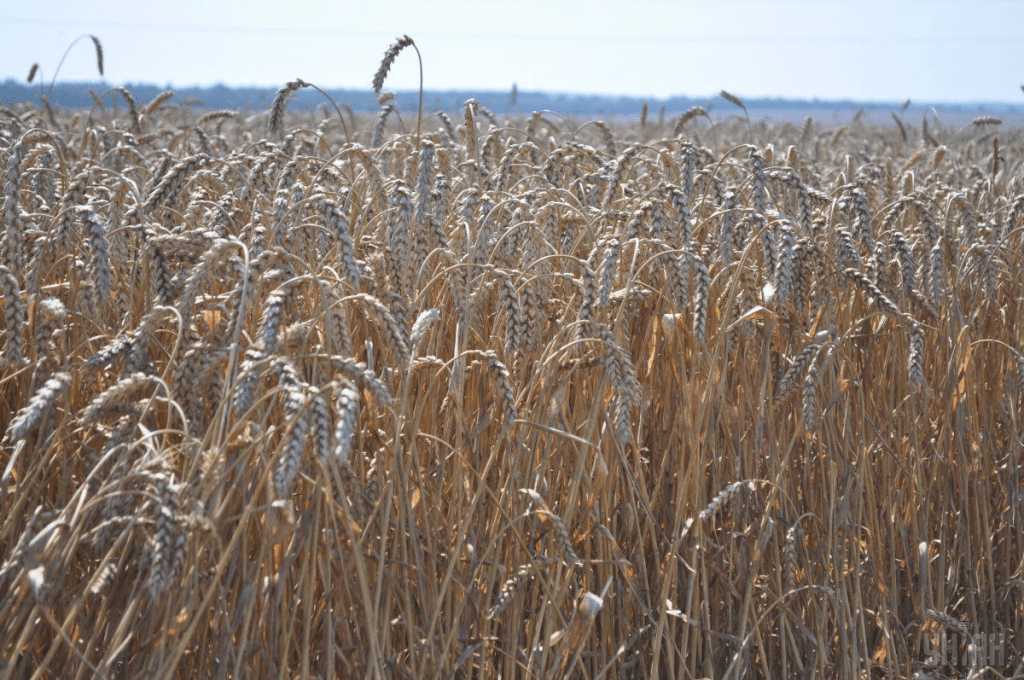
One victim of the war in Ukraine, is the global supply of wheat. Ukraine is usually a major exporter of wheat but this year will only produce a fraction of their normal harvest. This short fall in wheat supplies will affect many countries across the world – eg Lebanon, Egypt, Somalia and Laos. Across the globe wheat is grown not just for human consumption but as animal feed too. If more people followed a plant based diet, we would be better able to feed everyone. 

Counting on …day 142

5th April 2022

Being an ethical consumer means choosing to buy things that have a positive impact on our world and avoiding those that don’t – and the small items matter just as much as the big ones! So what about a cup of coffee? Be informed before you buy. 

Starbucks paid just £5.4m in UK corporation tax last year despite making a gross profit of £95m

(https://www.theguardian.com/business/2022/mar/30/starbucks-uk-corporation-tax-profit-administrative-expenses-royalties) despite paying its parent company £26.5m in royalties. In 2021 Starbucks received a tax credit worth £4.4m in the UK because of losses made during the pandemic in 2020  despite the coffee chain’s US parent company making a profit during the same period of $1.2bn (£870m). (https://www.theguardian.com/business/2021/jun/18/starbucks-received-uk-tax-credit-in-2020-despite-making-profit-in-us)

Green Tau: issue 38

29th March 2022

Am I Wealthy?

When we think of wealth our first thoughts are probably of piles of money – and if not actual notes and coins, them lots of zeros on one’s bank balance. When we talk about someone’s wealth, we do so in terms of pounds. According to The Times Rich List the wealthiest person in the UK for 2021 was Sir Leonard Blavatnik, with a wealth of £23 billion. The wealth of nations is also typically measured in pounds/ dollars etc. The wealthiest nation in the world is the United States with a gross domestic product of  $18.62 trillion. The UK stands in 5th position with $2.65 trillion. 

Although we talk in terms of pounds and dollars, these examples of wealth are not piles of money (whether as cash or bank balances). Rather they are investments in stocks and shares, investments in property, luxury yachts, art works etc – all of which can be expressed in monetary terms and could in theory be sold/ liquidated to provide cash. 

But are there other forms of wealth? 

Wealth has in the past had the meaning of happiness as well as financial riches, and the word developed from the Middle English ‘wele’ or ‘weal’ meaning well-being. 

As a resident of Richmond in south west London, many things have and do contribute to my well-being. They are a wealth that I have inherited through being a citizen of the UK.

  • I was born into stable middle class family. My childhood was happy with no traumatic events. My parents were supportive and encouraging. I had a happy extended family of grandparents, aunts and uncles. 
  • I spent my childhood in a rural part of the country where I learnt to appreciate the natural world.
  • Growing up I had the benefits of free health care (including dental care) and free education right through to my graduation from university. 
  • I continue to benefit from free healthcare – and can afford to access dental and other therapeutic treatments.
  • I am free to follow my chosen religion.
  • Even though I am a woman I can vote, I am free to work outside the home, and I can expect my husband to assist with domestic tasks and childcare.
  • I live in a country with reliable mains water, electricity and gas; with well maintained roads and a public transport network; with regular refuse collections; with dedicated emergency services and with a welfare and benefits system. I will in due course benefit from a state pension.
  • I live in a country with a respected police service and judicial system. 
  • I live in a country where bribery and corruption is not an every day occurrences.
  • I live in a country with well endowed schools, universities, museums and libraries. 
  • I live in a country with a free press. 
  • I live in a country where green spaces are protected, where there are rigorous standards for food quality and animal welfare. 

I am not saying that all the provision of all these in the UK is perfect and that there isn’t considerable scope for improvement, but compared to what is available for the average member of our global community, they are a significant source of wealth and wellbeing.

This wealth, from which I have and do benefit, arises from investments made by earlier generations and, to a lesser extent, from the current spending of tax revenues by the government and local authorities. It is a wealth that derives from the UK’s early investment in the Industrial Revolution, and from its exploitation of resources from other countries – either those which it colonised or those with which it arranged beneficial trading relationships. It is a wealth that has developed through the widespread use of, initially coal, and subsequently oil and gas, which has contributed significantly to the global climate crisis that we all now face. 

Is this wealth that I have something I can redistribute? I benefit from it but I don’t own it. I can’t realise its cash value and redistribute it. I can’t divide up or share my education or my good health, but I can use them to change the world. I can inform and campaign; I can recognise the injustices and inequalities that exist between people and across the world; I can volunteer and protest; I can influence by example; and I can effect change through my financial spending and donations.

Sunday next before Lent

27th February 2022

Exodus 34:29-35

Moses came down from Mount Sinai. As he came down from the mountain with the two tablets of the covenant in his hand, Moses did not know that the skin of his face shone because he had been talking with God. When Aaron and all the Israelites saw Moses, the skin of his face was shining, and they were afraid to come near him. But Moses called to them; and Aaron and all the leaders of the congregation returned to him, and Moses spoke with them. Afterward all the Israelites came near, and he gave them in commandment all that the Lord had spoken with him on Mount Sinai. When Moses had finished speaking with them, he put a veil on his face; but whenever Moses went in before the Lord to speak with him, he would take the veil off, until he came out; and when he came out, and told the Israelites what he had been commanded, the Israelites would see the face of Moses, that the skin of his face was shining; and Moses would put the veil on his face again, until he went in to speak with him.

Psalm 99

1 The Lord is King;
let the people tremble; *
he is enthroned upon the cherubim;
let the earth shake.

2 The Lord is great in Zion; *
he is high above all peoples.

3 Let them confess his Name, which is great and awesome; *
he is the Holy One.

4 “O mighty King, lover of justice,
you have established equity; *
you have executed justice and righteousness in Jacob.”

5 Proclaim the greatness of the Lord our God
and fall down before his footstool; *
he is the Holy One.

6 Moses and Aaron among his priests,
and Samuel among those who call upon his Name, *
they called upon the Lord, and he answered them.

7 He spoke to them out of the pillar of cloud; *
they kept his testimonies and the decree that he gave them.

8 O Lord our God, you answered them indeed; *
you were a God who forgave them,
yet punished them for their evil deeds.

9 Proclaim the greatness of the Lord our God
and worship him upon his holy hill; *
for the Lord our God is the Holy One.

2 Corinthians 3:12-4:2

Since, then, we have such a hope, we act with great boldness, not like Moses, who put a veil over his face to keep the people of Israel from gazing at the end of the glory that was being set aside. But their minds were hardened. Indeed, to this very day, when they hear the reading of the old covenant, that same veil is still there, since only in Christ is it set aside. Indeed, to this very day whenever Moses is read, a veil lies over their minds; but when one turns to the Lord, the veil is removed. Now the Lord is the Spirit, and where the Spirit of the Lord is, there is freedom. And all of us, with unveiled faces, seeing the glory of the Lord as though reflected in a mirror, are being transformed into the same image from one degree of glory to another; for this comes from the Lord, the Spirit.

Therefore, since it is by God’s mercy that we are engaged in this ministry, we do not lose heart. We have renounced the shameful things that one hides; we refuse to practice cunning or to falsify God’s word; but by the open statement of the truth we commend ourselves to the conscience of everyone in the sight of God.

Luke 9:28-36, [37-43a]

Jesus took with him Peter and John and James, and went up on the mountain to pray. And while he was praying, the appearance of his face changed, and his clothes became dazzling white. Suddenly they saw two men, Moses and Elijah, talking to him. They appeared in glory and were speaking of his departure, which he was about to accomplish at Jerusalem. Now Peter and his companions were weighed down with sleep; but since they had stayed awake, they saw his glory and the two men who stood with him. Just as they were leaving him, Peter said to Jesus, “Master, it is good for us to be here; let us make three dwellings, one for you, one for Moses, and one for Elijah”–not knowing what he said. While he was saying this, a cloud came and overshadowed them; and they were terrified as they entered the cloud. Then from the cloud came a voice that said, “This is my Son, my Chosen; listen to him!” When the voice had spoken, Jesus was found alone. And they kept silent and in those days told no one any of the things they had seen.

Reflection

Ascending Mount Sinai, Moses draws close to God. It is a transformative experience: God’s glory shines through him. But is is not just Moses’ appearance that has changed; so too has his understanding of God and what God desires. Moses comes back down from the mountain with a new teaching, a new way of living that is in accordance with God’s will. Moses presents this to the Israelites through the medium of the Law.

The psalmist presents God as king. A king is one who reigns, one who determines how people will live within the  bounds of his kingdom.  God’s kingdom, God’s rule, says the psalmist, is characterised, by justice, equity and righteousness. 

I think Paul in his letter to the Corinthians is being a bit harsh in its condemnation of the the Jews. But then we too can equally be blinkered especially if we do not expect to see or hear a different interpretation – and that is as true of what we may hear on the news as of what we hear from scripture. We need to question are assumptions and to be enquiring. 

What Paul does want to say is that when we see and hear through the medium of our relationship with Jesus, our understanding will be completely transformed. It will be a route to freedom, a route that will see us being daily transformed by the glory of God. 

As with Moses’ experience, so for the disciples. When they are in such close proximity to God’s presence, they are overwhelmed by God’s glory. When Moses came back down from the mountain, he brought with him the Law, enscribed on tablets of stone. When the disciples came down from the mountain, they return with Jesus. Jesus is the living embodiment of God’s will for humankind. In Jesus’s example and teaching, we learn what is God’s will for the world. And as God says, ‘This is my Son, my Chosen; listen to him!’

Today’s readings are about hearing and seeing differently – hearing and seeing as God, and not the world, would have us hear and see. If we did, we would experience the world as a place where justice and equity and righteousness flourish. 

Pause a moment. What would such a world be like? Would there be people going to bed hungry? Would there be people fearing the loss of freedom and citizenship? Would there be people exposed to bombs and bullets? Would there be widespread destruction of rain forests, the depletion of soils, the loss of habitat and extinction of plants and animals? Would there be extreme weather patterns caused by human exploitation? Would there be a super rich 1% and an impoverished 90%? Would there be families dependent on food banks,  people with no stable income, young people unable to afford  homes, old people unable to afford care? 

If we know Jesus Christ, if we have faith in his teachings, if we were to follow his example, then through us God’s Spirit would be transforming the world. We can see it happening in small ways.

A couple of week’s ago at Christ Church we heard about the work of Partners for Change transforming the lives of Ethiopian communities. This fortnight we are marking the work of the Fairtrade Foundation, seeing both how it transforms the lives of others and protects and enhances the natural environment, and are being reminded how we can actively participate in that change. In our intercessions today we will be praying for the work of Christians Against Poverty which provides support and life skills and encouragement for people whose lives have been eroded by debt. 

We can use the time and discipline Lent gives us to hear anew what Jesus teaches, to reshape our lives to express his love for the people we meet day by day, to care for the natural world in which we live, and to support the work that is bringing justice and equity and righteousness to prevail. Let God’s kingdom come on earth! 

Counting on …day 93 

13th February 2022

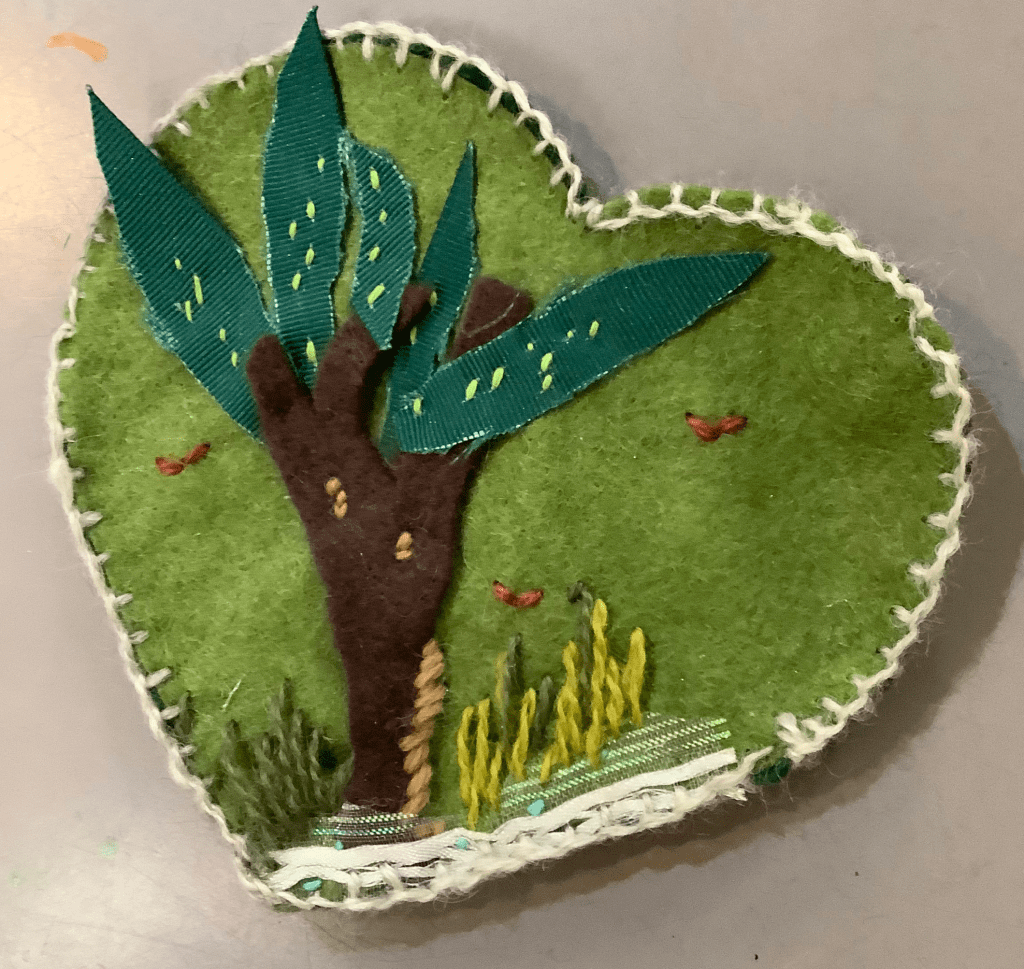
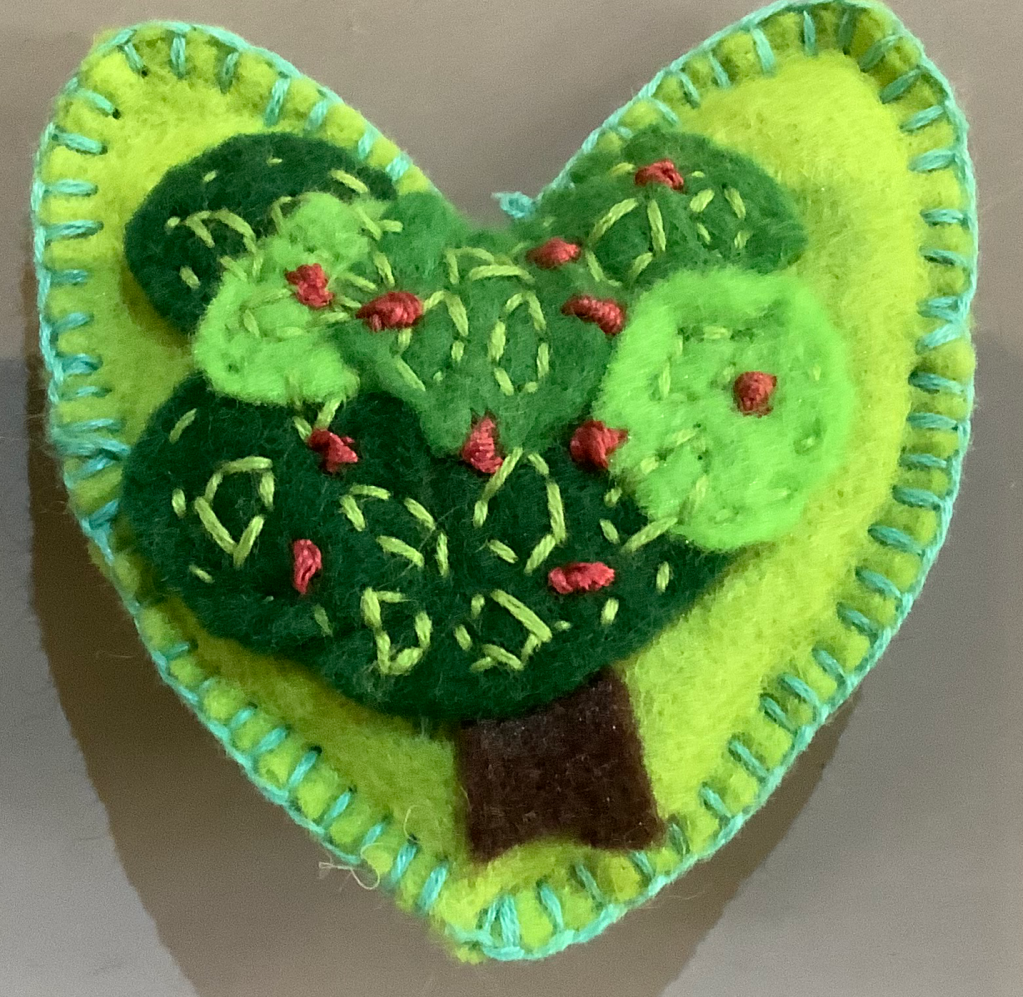
To “Show the Love” two hearts that were made yesterday are being dispatched, one to our local MP and one to our Local Councillor. The  hearts are a reminder to those who make them and those who receive them of the importance of caring for creation and of what we loose if we do not. 


Follow this link to take part https://www.theclimatecoalition.org/show-the-love

Third Sunday before Lent 

13th February 2022

Jeremiah 17:5-10

Thus says the Lord:

Cursed are those who trust in mere mortals
and make mere flesh their strength,
whose hearts turn away from the Lord.

They shall be like a shrub in the desert,
and shall not see when relief comes.

They shall live in the parched places of the wilderness,
in an uninhabited salt land.

Blessed are those who trust in the Lord,
whose trust is the Lord.

They shall be like a tree planted by water,
sending out its roots by the stream.

It shall not fear when heat comes,
and its leaves shall stay green;

in the year of drought it is not anxious,
and it does not cease to bear fruit.

The heart is devious above all else;
it is perverse–
who can understand it?

I the Lord test the mind
and search the heart,

to give to all according to their ways,
according to the fruit of their doings.

Psalm 1

1 Happy are they who have not walked in the counsel of the wicked, *
nor lingered in the way of sinners,
nor sat in the seats of the scornful!

2 Their delight is in the law of the Lord, *
and they meditate on God’s law day and night.

3 They are like trees planted by streams of water,
bearing fruit in due season, with leaves that do not wither; *
everything they do shall prosper.

4 It is not so with the wicked; *
they are like chaff which the wind blows away.

5 Therefore the wicked shall not stand upright when judgment comes, *
nor the sinner in the council of the righteous.

6 For the Lord knows the way of the righteous, *
but the way of the wicked is doomed.

1 Corinthians 15:12-20

Now if Christ is proclaimed as raised from the dead, how can some of you say there is no resurrection of the dead? If there is no resurrection of the dead, then Christ has not been raised; and if Christ has not been raised, then our proclamation has been in vain and your faith has been in vain. We are even found to be misrepresenting God, because we testified of God that he raised Christ–whom he did not raise if it is true that the dead are not raised. For if the dead are not raised, then Christ has not been raised. If Christ has not been raised, your faith is futile and you are still in your sins. Then those also who have died in Christ have perished. If for this life only we have hoped in Christ, we are of all people most to be pitied.

But in fact Christ has been raised from the dead, the first fruits of those who have died.

Luke 6:17-26

Jesus came down with the twelve apostles and stood on a level place, with a great crowd of his disciples and a great multitude of people from all Judea, Jerusalem, and the coast of Tyre and Sidon. They had come to hear him and to be healed of their diseases; and those who were troubled with unclean spirits were cured. And all in the crowd were trying to touch him, for power came out from him and healed all of them.

Then he looked up at his disciples and said:

“Blessed are you who are poor,
for yours is the kingdom of God.

“Blessed are you who are hungry now,
for you will be filled.

“Blessed are you who weep now,
for you will laugh.

“Blessed are you when people hate you, and when they exclude you, revile you, and defame you on account of the Son of Humanity. Rejoice in that day and leap for joy, for surely your reward is great in heaven; for that is what their ancestors did to the prophets.”

“But woe to you who are rich,
for you have received your consolation.

“Woe to you who are full now,
for you will be hungry.

“Woe to you who are laughing now,
for you will mourn and weep.

“Woe to you when all speak well of you, for that is what their ancestors did to the false prophets.”

Reflection 

Considering the news we hear and read and see each day, who would place much trust in mere mortals?

We seem, on the one hand, to be good at destroying the good things around us, and, on the either hand, to be completely oblivious to this. The net result being that we continue to destroy the world. We  have the misplaced belief that we mortals are doing the right thing!

Jeremiah’s description is that we are like a shrub in a desert – one that can’t  recognise relief when it comes. We are facing a climate crisis, an energy crisis and a poverty crisis. We could find relief by switching from fossil fuels to renewables; by shifting our investments, taxes, and subsidies from the ones that are  causing the problem to the other. We could insulate people’s homes, instal solar panels on their roofs and supply the cheaper green energy to make life easier for the poor. BUT we don’t! Instead we struggle trying to be a healthy in a place where there is no water and where the soil has been contaminated with salt. 

We pay people less than they need to survive  so that companies can sell their goods more cheaply and rake in the profits. We expect cheap food, and let supermarkets harass farmers to short change the soil and exploit their livestock. and then resent them being given subsistence benefits. We want things to be cheaper, happily ignoring the exploitation of workers. We avoid taxing the rich less they take their money elsewhere, yet complain when there aren’t enough nurses and teachers. We resent paying more for things that last, instead allowing the world to be a dumping ground for plastics, and electronic waste, uneaten food and hardly worn clothes.

Jeremiah is right: those who rely in mere mortals are cursed. We fail to realise that if it were not for our misplaced trust, we could be like trees growing by streams, like shrubs in a well water land, where the leaves would be green, providing shade from the heat. 

We could be living in a world where the poor are blessed; Where the hungry are fed; Where the distraught are consoled. We could be living in a world where resources are shared and the future protected, where health and opportunity are givens, a world of joy and contentment. A world where the word of God is followed and the Son is esteemed. 

Our challenge is to believe that with God, all this is possible. To believe is to act in accordance with that belief. If we believe that paying people a pittance is wrong, we should say so. If we believe people should be paid more, we must be willing to pay more. If we believe that God’s world is for everyone, we should share resources equally and willing taking less if we find we have been consuming too much.

“Blessed are those who trust in the Lord, whose trust is the Lord.”