Counting On …

4th November 2021

Replacing fossil fuel powered energy with alternative renewable energy is key to addressing the climate crisis. But as well as being green, renewable energy can also provide remote communities with the advantages of electrical power without the need for large scale infrastructure. This can enable some amazing projects!

Practical Action has installed “ solar powered pumps [that] lift water from the river and distribute it to reservoirs close to Nepal’s farming communities, where pipes are installed to  distribute water. Local reservoirs also naturally collect rain water, which is then turned into clean water and can be distributed too.

Even when the sun is at its hottest in the most arid regions of Nepal, it continues to provide the solar powered irrigation systems with energy – and gets water to crops when they need it most.

By having a reliable and safe source of water, farming communities can enjoy bigger harvests that produce enough to feed their families, with enough crops to spare for selling at a profit at the market.

Areas in Nepal that were previously famous for apple farming – but threatened due to climate change – are now viable spaces for orchards again, alongside crop and vegetable farming, according to local farmers. The use of solar pumps helps farming communities produce crops all year round, even during the dry season. The result is hugely positive. Not just financially, but environmentally and for the health of the farmers. Not only does it enable them to drink water safely, it means they can grow crops and enjoy a more balanced diet”. https://practicalaction.org/news-media/2021/03/09/how-solar-power-lifts-water/

Counting On …

3rd November 2021

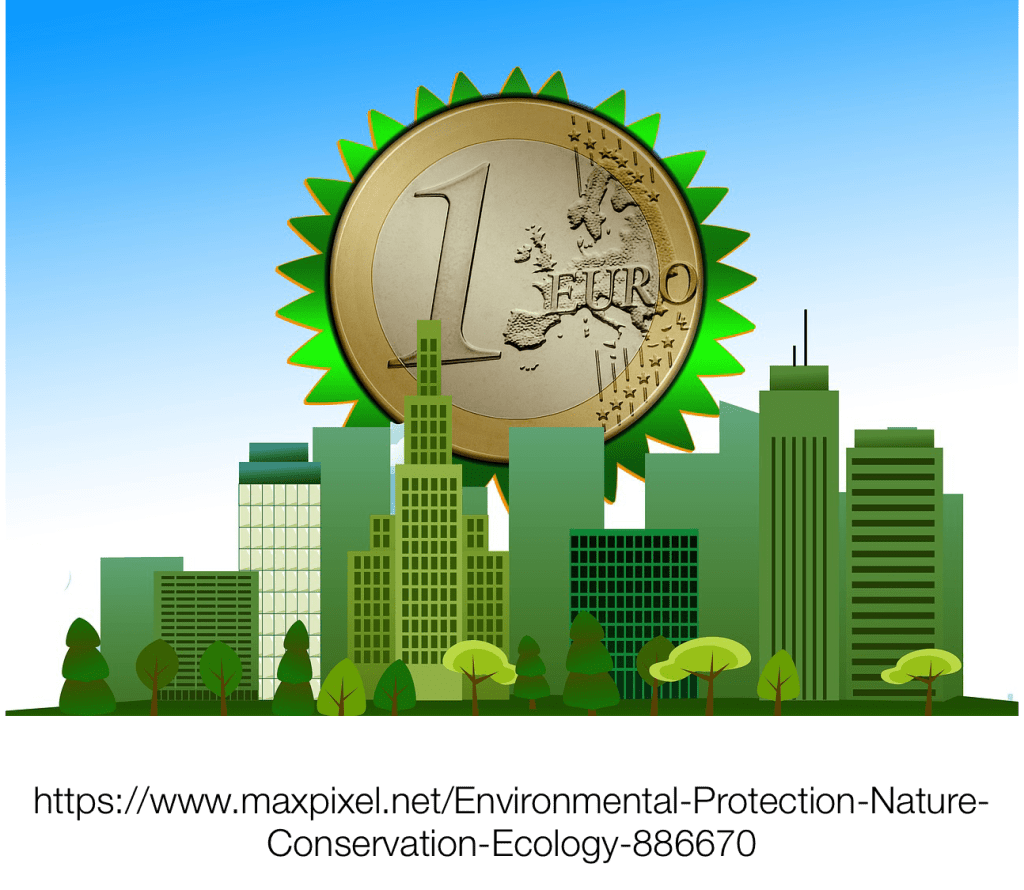
The topic for COP26 today is finance. 

In order to tackle climate change finance is needed, both state and private finance. This comes in the form of investment needed to facilitate the transfer from carbon-based to green technologies, and to train those who will work in these new industries; to transfer from animal based agriculture to plant based agriculture, and from a meat and diary based food industry to a plant based food industry; the need to invest in restoring, enlarging and maintaining  carbon sequestering land and seascapes; the need to adapt existing and build new infrastructure to cope with the changes in climate that are already happening such as flooding and heat waves, including paying for those individuals and groups who cannot afford to pay for these adaptions themselves; to develop the new systems and infrastructure needed to cope with the future changes in the climate which have already been locked into world and which may increase if global temperatures rise significantly above the current 1C increase.  

Poorer countries and small island states are in particular need of support from affluent countries like ours. The intention – although not yet the fact – is that developed nations will be supplying $1 billion to finance support for these more vulnerable nations. 

Sunday Reflection

24th October 2021, Proper 25

Jeremiah 31:7-9 (https://bible.oremus.org/?ql=501918569) Hebrews 7:23-28 (https://bible.oremus.org/?ql=501918639) Mark 10: 46-52 (https://bible.oremus.org/?ql=501913875)

Reflection 

The reading from Jeremiah is so upbeat and full of joy. God is bringing together all God’s people, from the very ends of the earth, those who have been disadvantaged and sidelined, the marginalised, the young and the old. God will bring them back together, console and lead them, caring for them as a loving parent. The passage begins with a call to the leaders that they should praise God and pray for salvation. Will our nations’ leaders do the same for us at COP26? There are plenty of people around the world waiting for a time of celebration!

The Letter to the Hebrews reminds us that we have in Jesus the ultimate companion, guide and priest. The one who will always be with us, who will always be the means of our salvation, and who will always intercede on our behalf. At times of seeming hopelessness, we need to be reminded of this certainty.

It is not often we learn the names of the people that Jesus encounters. We hear of the woman with haemorrhage but not her name, of the paralysed man – ditto, the Syro-Phonecian woman, Peter’s mother-in-law: all are anonymous. But here we know the man’s name and that of his father too, and we know where he lives: he is Bartimaeus, son of Timaeus, resident of Jericho.  He is a beggar so maybe life’s opportunities have passed him by. As a crowd gathers along the road side, people are less than generous towards Bartimaeus. They scold him for calling out to Jesus – are they embarrassed by him? Do they think people like him should be kept in the background? Do they think Jesus should only meet upright, ‘proper’ people?

If so, they have not been paying attention. Jesus is often sought out by the vulnerable, the excluded, the despised, and each time his response to them is always focused on their needs, full of love and compassion. Once Jesus has responded to Bartimaeus’s call, the crowd shifts its approach and now encourages Bartimaeus to get up and meet Jesus. How fickle a crowd can be!

Jesus’s question to Bartimaeus is interesting. He doesn’t assume that what Bartimaeus wants is sight – indeed may be Bartimaeus’s first desire was to be heard. People labelled as disabled, don’t always see their difference as something unwanted, as something they wish to be rid of. Rather what they may want acceptance and understanding, an place of equal standing in society. In this instance, Bartimaeus does want to regain his sight, he wants to see again. It transpires that what Bartimaeus doesn’t want to do is to stay where he is. He doesn’t want to remain by the roadside on the way into Jericho, the butt of people’s shifting opinions. He wants to go with Jesus, to follow him and become part of the transformative society that Jesus is creating. 

In that there is a message for us. What do we want, both for ourselves and our society – our world?  And can we be part of the change? Next Sunday sees the start of COP26 in Glasgow. Decisions made there have the potential to transform for the better, the lives of so many. Let us make sure our voices are heard, our wishes declared.

The Green Tau: issue 22

22nd October 2021

Green Finance

There is very little in this world that doesn’t somewhere along the line involve money – or as we might more politely phrase it, finance. Our response to the climate crisis is no exception. For whilst there are things we can do that don’t cost a single penny – like walking instead of taking the car, or turning down the thermostat, or not eating meat – there are many more things we need to do that do cost. We need to bring to a halt extraction of oil, coal and gas and instead create jobs and industries around  renewable energy, heat pumps, electrical vehicles and charging points. We need to invest in public transport and reduce considerable the aviation industry – and we need to invest in retraining and creating green jobs. We need to shift the emphasis of agriculture from animal to arable farming. We need to restore and expand the rewilding of land and seas so they can become larger,  more effective carbon sinks. We need to insulate our homes, offices, public buildings – even places of worship. We need improve provision for floods, droughts, wild fires, storms, heat waves and cold snaps, so that people, properties and ecosystems are protected. The list goes on and so does the need for finance.

However much these measures may cost, we must keep in mind what would be the cost of doing nothing: ie the cost of even more infrastructure to cope with ever increasing temperatures, and extreme weather conditions; the cost of relocating homes, businesses and whole communities as sea levels rise; the rising cost of food as all important pollinating and pest destroying insects are lost; the rising cost of food and water as water shortages rise; the loss of life from extreme weather events and the rising number of excess deaths from heat waves and cold snaps; the growing need to relocate whole communities as rising temperatures make large areas of land uninhabitable. 

And on the other hand we should keep in mind all the positive spin offs from investing in a greener world: better health as people walk and cycle more, eat less meat and dairy products, enjoy more green spaces that enhance mental well being, live in warmer, dryer homes, breathe less polluted air. 

So what is happening about finance to tackle the climate crisis? Here are some examples and policy statements for the global to the individual level.

*UN Climate Finance: ‘The Convention, the Kyoto Protocol and the Paris Agreement call for financial assistance from Parties with more financial resources to those that are less endowed and more vulnerable. This recognises that the contribution of countries to climate change and their capacity to prevent it and cope with its consequences vary enormously.’

‘According to October 2019 data from the World Bank , the world will need to make significant investment in infrastructure over the next 15 years –around US$90 trillion by 2030.  But it can recoup those investments. Transitioning to a green economy, it found, can unlock new economic opportunities and jobs. An investment of US$1, on average, yields US$4 in benefits.

‘In addition to reducing emissions, making infrastructure more resilient avoids costly repairs and minimises the wide-ranging consequences of natural disasters on the livelihoods and well-being of people, particularly the most vulnerable, as well as on businesses and economies.  And a shift  to low-carbon, resilient economies could create over 65 million net new jobs globally out to 2030.

‘Reaching net zero requires making good on the $100 billion annual climate finance commitment’ – at the time of writing it is hoped that developed nations will make good on their promise to supply this funding.  https://unfccc.int/topics/climate-finance/the-big-picture/introduction-to-climate-finance

  • International Monetary Fund: ‘Long term institutional investors can help with rebalancing and redistributing of climate related risks and maintaining financial stability. Hedging instruments (e.g., catastrophe bonds, indexed insurance) help insure against increasing natural disaster risk, and other financial instruments (e.g., green stock indices, green bonds, voluntary de-carbonisation initiatives) can help re-allocate investment to “green” sectors.’ https://www.imf.org/en/Topics/climate-change/green-finance

* World Economic Forum: Green finance is blossoming. Globally, the green bond market could be worth $2.36 trillion by 2023. It is regarded as a way of meeting the needs of environmentalism and capitalism simultaneously – but what is green finance and how does it work? Typical projects that fall under the green finance umbrella include:

  • Renewable energy and energy efficiency
  • Pollution prevention and control
  • Biodiversity conservation
  • Circular economy initiatives
  • Sustainable use of natural resources and land

https://www.weforum.org/agenda/2020/11/what-is-green-finance/

* The Bank of England: ‘Climate change affects our planet, our economy and our financial system. As such, climate change is relevant to the Bank of England’s central mission to promote the good of the people of the United Kingdom by maintaining monetary and financial stability.’

* All banks are likely to offer customers finances for green projects subject to their normal risks assessment. However some banks – green/ ethical banks – make finance such projects the main stay of their work and at the same time consciously choose not to invest in projects that are harmful to the environment. For example Triodos Bank claims to be ‘one of the most sustainable banks in the world. We make money work for positive social, environmental and cultural change.’

Good with Money notes that: ‘channelling money into companies and initiatives that solve big global problems may be a win-win scenario. For instance, well-run businesses fighting climate change are benefitting from public and private commitments to clean infrastructure. Some are even starting to outperform their badly-managed, polluting rivals, which means bigger profits for investors to put towards meaningful long-term goals.’ https://good-with-money.com/wp-content/uploads/2021/08/The-Good-Guide-to-First-Time-Investing-FINAL.pdf

*Pension providers, insurance companies, mortgage providers, investment and savings companies, all invest money for the benefit of their customers.  As consumers we can ask whether these funds are invested so as to benefit the environment or whether they are investing in companies that are damaging the environment, such as those in the fossil fuel industries. 

Make My Money Matter says: ‘Your pension is powerful. There’s £2.6 trillion in UK pensions – and that’s your money. But it’s being invested on your behalf, without your say. That means your hard-earned savings are likely driving deforestation and funding fossil fuels. As a result, your money has a carbon footprint – just like you.We’ve looked at how big that footprint is, and the answer is pretty scary. The carbon footprint of the average pension is 26 tonnes…’ https://makemymoneymatter.co.uk/21x/

* Personal spending: we, as consumers, can be seen as investors. When we choose what to spend our money on, we are expressing our preference, our support for that product or service, that market or industry. Whether we are buying petrol or a bus ticket, whether we are buying an air ticket or train ticket, whether we are buying locally grown apples or imported grapes, dairy milk or oat milk, we are influencing the way money will be invested and its impact on our environment. 

Sunday Reflection 

17th October 2021, proper 24

Isaiah 53:4-12 https://bible.oremus.org/?ql=501459221

Psalm 91:9-16 https://bible.oremus.org/?ql=501459312

Hebrews 5:1-10 https://bible.oremus.org/?ql=501459357

Mark 10:35-45 https://bible.oremus.org/?ql=501459405

Reflection

At the heart of today’s readings are two themes: suffering and service. 

‘He bore our infirmities, our diseases and was wounded because of our transgressions’, to paraphrase Isaiah. This passage from Isaiah, reveals the prophet’s understanding of how society can behave, how it deals with the little people when the rich and wicked hold sway. 

Today we can look around the world and see a myriad of little people, of plants and creatures that  bear the infirmities, diseases and wounds caused by our transgressions. Our failure to care for the planet, our failure to curb carbon emissions, our over-consumption of finite resources, our inability to share the earth’s bounty, our failure to protect habitats and ecosystems, our greed and hardness of heart that leads to conflict. Suffering is invariably caused by human failings, human greed, human ignorance and disinterest – now, back then in the days of the Jewish Exile, back in first century Palestine and in all the years since.

Yet Isaiah’s insight also reveals God’s commitment to the world, the suffering and injustice that God is willing to endure to bring about healing and redemption. No matter how much suffering human sinfulness causes, God does not give up on us but bears with us. This is a prophecy that is relived in the life of Jesus – and thereafter in the lives of his followers: for Jesus, the living word, is there alongside each person in their pain and suffering. He is with us in our darkest places and it is he who can bring us hope and consolation. 

“The righteous one, my servant, shall make many righteous” says the passage from Isaiah. And the passage from today’s gospel concludes “For the Son of Man came not to be served but to serve, and to give his life a ransom for many”. To serve is the vocation of the Son of Man. The word in Greek is ‘diakaneo’ and it is a word used frequently in the gospels. When Jesus heals Peter’s mother in law, she gets up and  ‘diakaneo’ or serves them, or as I have always imagined, cooks them a meal for I am sure that at the end of a sabbath spent healing and teaching, they were both hungry.

It is what the angels do for Jesus when the devil has finished tempting him in the wilderness, which again I am sure involved food and drink as well perhaps attending to his tired feet.

In the parable of the sheep and goats, in Matthew’s gospel, it is what the goats failed to do, when they do not see Jesus in the one who was hungry and thirsty, who was the stranger, who was naked, sick or in prison.

It is what the women disciples did for Jesus when they provided financial support. It is what Martha complained about when left to do it by herself while Mary just sat and listened. 

To serve – to diakaneo – is putting oneself at the disposal of another, to minister to their needs.  This suggests that to serve is also about being aware and sensitive to what people might be in need of – something Jesus was good at. He was able to intuit what someone needed and sometimes knowing what they needed, even though they themselves didn’t know: forgiving the sins of the paralysed man, knowing that Zacchaeus needed to be wanted, or persuading Martha that there were times when preparing a meal wasn’t the most important thing. 

What serving is not, is lording it over others, nor is it pulling rank, nor basking in glory. That is the way of tyrants – and sadly, it is nowadays often the way of politicians (not all) or of rich business leaders (again not all). Just for a moment imagine what the world would be like if all politicians and all business leaders saw their role as one of service, serving not just their nearest and dearest, but serving all. And what if we all equally saw our role as one of service too, serving both are fellow human beings and our fellow creatures, from earth worms to orang-utans. Would this not begin to look like heaven in earth? A world where each is served by and serves the needs of, others.

Jesus is realistic with his followers. He sees the mismatch between those who wish to lord it over others and those who wish to serve the common good. He knows the likelihood of pain and suffering to which the latter will be subject. For most of us who would wish to see service as the basis of life, such suffering will be the stress and anguished felt when we look at what is happening around the world: people stranded in the wrong side of the Afghan border, people caught in the cross fire in Lebanon, people stabbed to death for being of the wrong colour or creed, the continued investment in fossil fuels instead of renewables, people facing hunger for lack of money in a world of billionaires. Cor others the pain and suffering will be physical and sometimes fatal. 

When we are baptised, we are baptised into the death of Jesus; in baptism we are buried with him; and in baptism we are raised to newness of life (Romans 6:3,4). In baptism we take on the calling both to serve and to suffer, but we do so knowing that in all we do we share with Jesus, and that we are ceaselessly loved by God. In the words of today’s psalm, slightly adjusted, 

“They are bound to me in love,

therefore will I deliver them; 

I will protect them, because they know my Name.

They shall call upon me, and I will answer them; 

I am with them in trouble;

I will rescue them and bring them to honour.”

Count Down

 Action 85: Take part in the Global Day of Action on Saturday 6th November (midway through COP26). Locations of marches in different UK cities can be found here:-

 You can also opt to join in with one of the many charities that will be taking part – eg The Woodland Trust, CAFOD, TearFund, the RSPB etc – who will organise meeting points, banners and placards etc.

Taking part is a way of voting with our feet and showing the leaders how important the wellbeing of the climate and planet is. 

Count Down

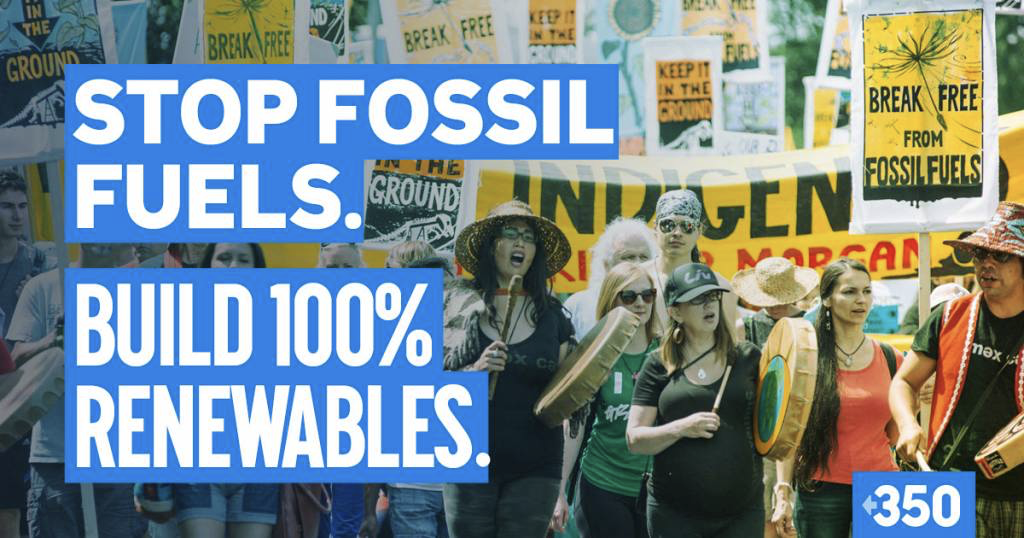
 Action 83: Seek Justice! 350.org is demanding that we the richer nations and businesses should act justly in response to the climate crisis: ie

  • Pay their fair share: Increase and fulfill climate finance pledges
  • Stop funding fossil fuels: End all support to the coal, oil and gas industry
  • Finance a just transition: Leave no country or worker behind to suffer. Invest money into proven solutions, green jobs & clean, renewable energy for everyone.

Falling in Love 34

A green tau/ cross


Today is the feast of St Francis, known as the patron saint of environmentalism. He was someone who was constantly falling in love with God, with the world around him, with all the diverse creatures and people he met – many of whom were despised by others – and with simplicity and poverty. Indeed he declared himself betrothed to Lady Poverty.

Let us follow his example of delighting all that is around us, of pursuing a life of simplicity, and of joyfully loving God.

The Green Tau: issue 18

Changing the Face of Business 

B Corps – Benefit Corporations – are the fair trade equivalent for businesses. Whilst remaining profit making concerns these are businesses that also undertake to meet certain in social and environmental standards. Their bottom line is threefold: profit, people and planet. 

To attain B Corp status companies are assessed against five categories:

  • Governance – the way their business is run internally
  • Workers – how they are treated and paid
  • Social sustainability – how they support or contribute to society, including charitable donations
  • Environmental – how they contribute to environmental sustainability 
  • Product – the social and environmental benefit of what they produce

Provided they meet the minimum standard, they are awarded B Corp certification. This is reviewed on a three yearly basis.

The benefit for the business is an enhanced brand image, and improved ability to recruit staff  and investors. The downside is the cost of obtaining certification which might exclude some small but ethical businesses.

There are 2778 B Corps world wide and 193 based in the UK. They include OddBox and Riverford veg boxes, Innocent and Danone drinks etc, Triodos and Coutts banks, Judes icecream, Lilly’s pet food, Volcano coffee roasters, Camden Town brewers, Vibro Barefoot shoes, and various media, marketing, and management companies. A full listing can be found here: https://bcorporation.uk/directory?search=&industry=&country=United%20Kingdom&state=&city=&page=5 

Social enterprises also aim to make a profit, which they then use to create positive social change through providing training and employment opportunities, supporting businesses in marginal areas, helping end homelessness, making donations to support communities in need etc. Increasingly social enterprises are focusing on environmental outcomes too. They tend to be small concerns, including repair workshops, bakeries, cafes, arts venues, grocery stores, gardening units, local energy generation, recycling units etc. Social Enterprise UK lists how you support these enterprises through what you buy: https://www.socialenterprise.org.uk/buysocial/where-can-i-buy-social/

The money in our pockets, like (or perhaps better than) our vote in an election, can change the world we live in.