Action 57: Second Hand September is a good reminder to us not to hoard things we don’t need or don’t use. These can be given a new lease of life in someone else’s home – so why not have a autumn clear out and feel less cluttered?


Action 57: Second Hand September is a good reminder to us not to hoard things we don’t need or don’t use. These can be given a new lease of life in someone else’s home – so why not have a autumn clear out and feel less cluttered?
17th September 2021
The Carbon Footprint of Things
Over the last few weeks Green Tau has looked at various aspects of our
individual/ household carbon footprint and how we might reduce it as part of the overall global target of achieving net zero by 2050.
The things we buy all have their own carbon footprint, whether that’s a pair of socks or a new car or a newspaper. The carbon footprint of things includes growing or producing the raw materials, be that iron, cotton, timber etc. Then there is the processing of those materials – turning iron into steel, spinning the cotton into yarn, timber into paper. And a further series of processes will transform those elements into the final product. Then there is the carbon footprint involved in transportation between the various stages of production and onwards to the warehouse and shop.
It is a complex chain with lots of variables which may explain why it is hard, as consumers, to establish the carbon footprint of most consumer goods. But here are a few:-
Can we reduce our carbon footprint when buying things? Yes.
We can do some research and find out which products might have a lower carbon footprint. For example organic cotton has a lower footprint than non organic cotton because it doesn’t use pesticides and fertilisers. Polyester items have double the carbon footprint of cotton ones, but some polyester fabrics are made from recycled plastic which is better than that made from oil. Synthetic fabrics such as viscose and rayon are made from cellulose – eg from wood or bamboo – but require a high chemical input which adds to their carbon footprint. Tencel on the other hand uses a process with a much smaller footprint.
We can consider the life span of the product. A lap top that only lasts 2 years is less environmentally friendly than one with a lifespan of 10 years as the initial carbon cost is spread over 10 rather than 2 years. We might at this point also consider how easily the product can be repaired. Some laptops are more readily repairable. Maybe the product is something we can repair ourselves such as darning a pair of socks or replacing a zip on a pair of trousers.
We can consider the running costs involved with the product. How much energy will it take to recharge different smart phones? How much energy will different flat screen TVs use? What about buying a hand powered alternative such as hand turned coffee grinder or a manual whisk?
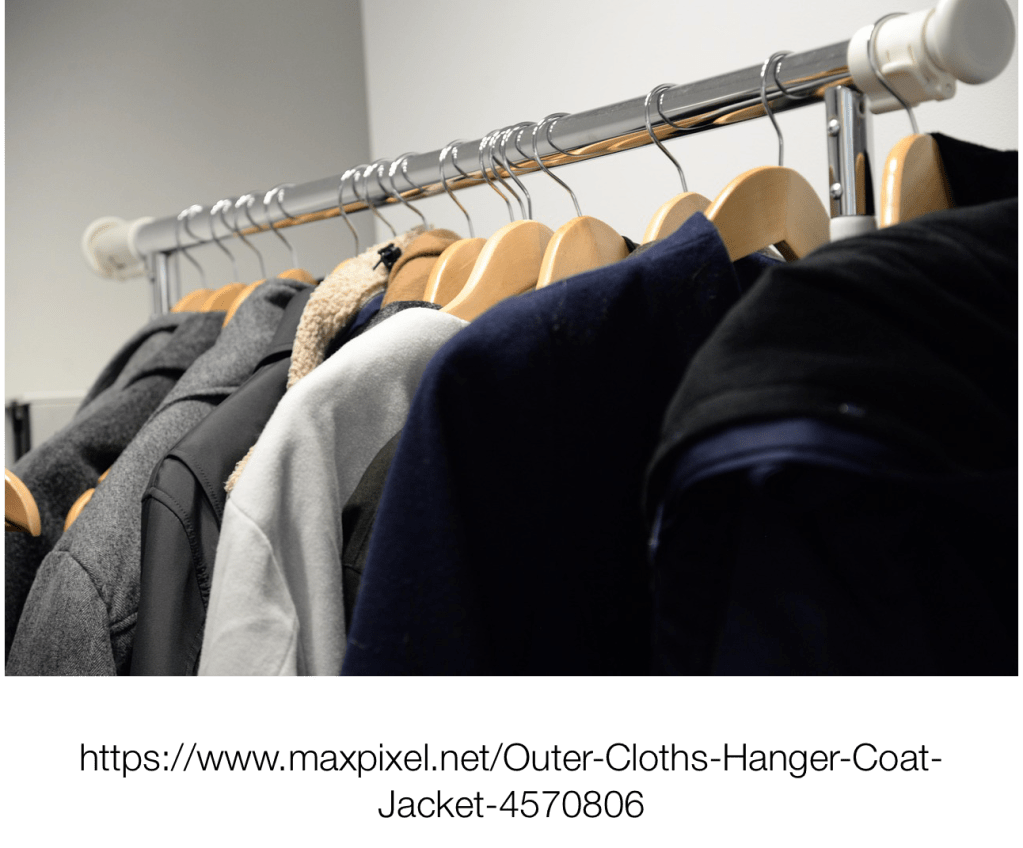
We might consider whether the product has an after life – ie can we pass on to someone else when we have finished with it? Books we have read can be passed onto a friend and donated to a charity shop. The same is true of clothes. Children’s clothes can be passed onto a younger sibling, or you might hold a ‘swishing event’ with friends.
We should also consider how the product will be recycled at the end of its life. Some clothes manufacturers and retailers will take back old clothes and recycle them. This is easier when the fabric is from a single rather than a blend of materials. Newspaper and books can ultimately be recycled with other paper products. Electrical goods are currently less readily recycled.
Alternatively we could borrow, rent or buy second hand. Equally we should consider whether we need the thing anyway! If we are to achieve net zero as a world, I am sure it means we will have to consume less, repairing and reusing what we do have.
10th September 2021
The Appliance of Science

Heating consumes most of our household energy and consequently carbon budget. Of the remainder some is used for heating water – for baths, showers etc – but most is used in the kitchen: about 60% on average. The typical kitchens contain a cooker, kettle, fridge and washing machine. There may also be a freezer and a tumble dryer. And then any number of smaller appliances which can take up so much space – coffee machine, blender, mixer, toaster, juicer, rice steamer, slow cooker, waffle maker, sandwich maker, bread maker, deep fat fryer, ice-cream maker, coffee grinder, electric whisk, soup maker, griddle …
Think of an average day in the kitchen. Boil the kettle for a hot drink: approx 25g CO2 per mug of hot water; pop bread in the toaster: 75g; microwave a bowl of porridge: another 25g; run the dishwasher: 275g (70 minute programme); run the washing machine: 400g (100 minute cycle) plus 20 minutes in the tumble dryer: 250g; brew a fresh coffee with the coffee machine: 50g; bake a cake: 750g; half an hour’s ironing: 350g; make supper (eg pasta, sauce and vegetables) using three hot plates 250g; put another load through the dishwasher: 275g; boil the kettle for a bedtime hot drink: 25g. That adds up to 2750g. Meanwhile the fridge is contributing 1250g per day and the freezer 750g, giving a total of 4750g.
If we move around the home, we have the computer and the TV which might each be another 250g CO2 per day, the vacuum cleaner, mobile phone chargers (most homes have more than one), internet hub, Alexa, hair dryer, pressure shower etc. Plus all the light fittings.
Perhaps it is not surprising that energy consumption in our homes accounts on average for 22% of the UK’s national carbon footprint. But if we are to achieve the UN’s targeted 45% reduction on CO2 emissions by 2030 – and net zero by 2050 – we need to find ways of reducing our personal footprint. We can change the way we use our household appliances and next week’s Eco Tips will look at ways of making efficiency savings.
We can use more energy efficient appliances – but is buying something new the best answer if that means throwing away equipment that is old but still working?
Every appliance we buy, large or small, has already produced a carbon footprint by virtue of its manufacturing, and distribution. Information on the size of these footprints is not readily forthcoming. This may in part be because often these appliance – or their components – are manufactured elsewhere in the world. Current accounting procedures would allocate these carbon costs to the country of production and not the country of consumption.
As well as considering the manufacturing carbon footprint of the appliance, we also need to consider the life span of the appliance. A fridge that has a life of 20 years will better repay its carbon footprint, than a fridge that is only used for 5 years. Sadly many appliances now seem to have a very short life. Whereas a fridge or cooker might have lasted 30+ years, modern day equivalents have an expected lifespan of 10 -13 years. Even then they may not serve their full span as in out throw away society, many are discarded as part of the popular pastime of kitchen refurbishment.
The UK has one of the highest rates of throwing away electrical appliances. In 2019 this was almost 24kg of waste per head. Less than 20% of our electrical waste (e waste) is currently recycled with the rest going to landfill with the potential harm of toxic chemicals leaking out, whilst at the same time failing to salvage valuable metals and other elements that could be reused. E waste will be a future topic for Green Tau.
NB Recent EU legislation requires that electrical appliances should a, be repairable and b, that manufacturers should provide spare parts for up to ten years after a model has gone out of production. The UK introduced similar legislation in July of this year, although manufacturers have a two year window in which to bring in these changes.
Life choices that bring blessings

“You have heard that it was said, ‘An eye for an eye and a tooth for a tooth.’ But I say to you, Do not resist an evildoer. But if anyone strikes you on the right cheek, turn the other also; and if anyone wants to sue you and take your coat, give your cloak as well; and if anyone forces you to go one mile, go also the second mile. Give to everyone who begs from you, and do not refuse anyone who wants to borrow from you. Matthew 5:38-42
The above comes from the Beatitudes: Jesus’s teaching to the crowds on the approach to life that would bring its own blessings.
An eye for an eye and a tooth for a tooth sounds very mercenary. A contractual arrangement in which neither side looses out. A fair’s fair deal that leaves no space for argument not for generosity. It has the feel of a fixed price market. Anyone who tried to pay more than the asking price would be a fool. Yet Jesus invites the listener to be that fool. To pay more than the asking price. To give more that is required or demanded. To act in a way that undermines the normal way of doing business. It is a radical counter-cultural way of being that will bring its own blessings.
In the world of the climate crisis, old ways of doing things will have to change, old traditions and old norms will be replaced by new ways. Heating homes with gas will be history; the supermarket run in the car and the lift to school will disappear; holidays won’t start at the airport; strawberries will be a treat for the summer not Christmas.
Change like this can be hard to accept. After a life time in which cars have become the default means of transport, it is hard to rethink in terms of walking times. After a life time in which air travel has become part and parcel of the holiday package, it is hard to rethink in terms of trains and local destinations. After a life time in which seasonal food describes food linked to sporting/ social events, it is hard to re shape our eating round a annual cycle of what is currently in peak production: raspberries in June, plums in August, avocados in February.
Change can be expensive as new practices, new products are scaled up and developed. The bonus of economies of scale take time to kick in, the benefits of lower energy bills will be felt gradually over the years whilst the initial cost of new equipment – heaters, electric cars, solar panels – may be steep.
Following Jesus’s teaching, we can become trend setters, living a new lifestyle, adopting ways that will curb GHG emissions and restrain the climate crisis. We can lead by example and do things that are not the norm, that are not (yet) fashionable. We can choose to walk or cycle that bit further than usual rather than going by car. We can refuse to buy the plastic wrapped fruit or sandwich. We can explore the UK rather than the world. We can decline avocados in summer and strawberries in winter.
Those of us with money can invest in carbon neutral technology, we can buy the eco friendly products and services, and we can do so generously, supporting producers as well as the climate. Train travel can be more expensive that going by car or plane, but we can choose the climate friendly option. Organic food may be more costly – now – but we can choose it over cheaper products that are less environmentally friendly.
Jesus asks that when we choose how to live, that we choose to think of the needs of others and be ready to meet their needs first. The results? A transformed world!

Action 43: Practice darning. It is a useful way of repairing socks, jumpers, woolly hats as well as small holes in other items of clothing. For an easy guide look at https://www.thesprucecrafts.com/how-to-darn-a-sock-1106645 or for inspirational darning https://tomofholland.com/2013/01/22/darning/


Action 41: Get involved in Oxfam’s Second Hand September. Buy only second hand clothes for 30 days or more. And donate your pre-loved items. Share your one-of-a-kind finds using #SecondHandSeptember and tag @OxfamGB.

https://www.oxfam.org.uk/get-involved/second-hand-september/

Action 28: Find out about new recycling options. Did you know Superdrug will take and recycle blister packs used for pills and tablets? Did you know the Co-op will take and recycle all soft/ scrunchable plastics such as biscuit wrappers and crisp packets?

Action 27: Do a survey of your dustbin. What are you throwing out? Could any of it be recycled, repaired or reused? Do some of the things that you buy come with too much pack again? Could you shop differently? What would it take to half the amount of rubbish you produce each week? What would it take to reduce it to zero?

Recycling Plastics

The world’s resources are finite. The more we personally use, the less there is for others. We should reuse, repair and recycle what we do use.
Plastic is conventionally made from oil but can be made from recycled plastic which has both a smaller carbon footprint and allows virgin oil to be left in the ground together with its potential carbon emissions.
Recycling plastics is a good thing.
Whilst all plastic can potentially be recycled, with some forms of plastic the process is deemed too expensive. Plastics that can easily and cheaply be recycled are typically the ones that can go in your kerb side recycling bin or in recycling points at super markets etc. Items made of several different plastics can be difficult to recycle but more and more business are making this possible. Costa Coffee collects coffee cups for recycling (typically made of paper with a thin plastic lining). Superdrug collects blister packs from pills etc for recycling.
32% of all plastic in the UK was recycled in 2020: including 50% of plastic packaging and 77% of plastic drinks bottles. Plastic that is not recycled ends up in landfill sites or incinerators, or as pollution in rivers and the sea. There is scope for more and better recycling. Equally there is scope for reducing the amount of plastic that is in circulation. Do we need all that plastic packing? Do bananas need to come in plastic bags? Do we need drink coffee from throw away cups? Why aren’t sandwiches wrapped in paper?
Good Plastic Recycling Practice

Organic September, Movember, Veganuary, No-Mow May and now, Plastic-free July. Most months have a focus on changing habits to create a better future. Plastic-free July advocates remove all plastic from our daily lives – from the tooth brush in the bathroom, the plastic fruit packet from the supermarket to the once ubiquitous plastic carrier bag. The use of the latter has fallen by 85% since the introduction of the plastic bag tax! Why is it desirable to get rid of plastic?
Plastic is made from oil, one of the main sources of carbon dioxide emissions causing global warming. Producing one tonne of plastic generates up to 2.5 tonnes of carbon dioxide (Material Economics, 2018). As the world’s use of plastic rises, so does its consumption of oil. In 2014 we the world produced 311 million tonnes of plastic. This figure is expected to triple by 2050. (World Economic Forum)
One way of reducing the carbon footprint of plastic is to reuse existing plastics. Some items such as PET bottles, widely used for soft drink, can be recycled repeatedly. This is closed loop recycling meaning that the plastic is recycled to create an identical replacement item. (Open loop recycling recycles plastics but produces a lower grade plastic for which an alternative use must be found). To be effective closed loop recycling depends upon consumers ensuring that they do put their plastics – washed and clean – in the correct recycling bin and upon manufactures using exclusively that recycled plastic. In the UK only 30% of plastics are recycled!
Plastic rubbish pollutes our streets, rivers, woodlands, and oceans. It doesn’t naturally decay and instead remains intact for 100s of years. Plastic that does tear and break down into smaller and smaller pieces still doesn’t decay. Micro plastic particle have been found polluting glaciers and icecaps, and polluting oceans where it is being ingested by sea birds and fish. Micro plastics are also found in the air we breathe and in the water we drink!
Current estimates suggest that 8 million tonnes of plastic end up in the oceans every year adding to the 150 million tonnes already there. Projects are now being set up to remove plastic waste from the oceans. In 2020 a 48 day expedition by the Ocean Voyage Institute removed 103 tons from the Great Pacific Garage Patch. Other projects are being developed to process such waste into reusable plastic based materials: Patagonia uses recycled marine polyester in its clothes, Parley Ocean Plastics supplies material for Adidas shoes and Waterhaul in Cornwall uses marine plastic to produce sunglasses.

This is till only ‘a drop in the ocean’! The better solution is not to use the plastic in the first place. Hence Plastic Free July! Why not start now?
Plastic Free July’s own web site is a good starting point as is that of Friends of the Earth and City to Sea. You will also find plenty of web sites looking to sell you plastic-free products – and possible more than you need! Our own personal experience of shifting to a – largely – plastic free lifestyle began by collecting all the plastic that came into the house over a two week period. Then for each item we looked to see if there was a plastic free alternative for the product itself or of buying the same product without the plastic packaging, or whether we actually could manage without the item altogether. Over the next few months we looked for tried different ways of shopping – going to farmers’ markets, refill stores, buying in bulk, taking our own washable box to the butchers or coffee jar to the roasters – until we found the best fit for our lifestyle. Even today we are still making adjustments as new options become available. We have also written to suppliers asking them to use plastic free packaging. Whilst I don’t often have anything positive to say about Amazon, they have developed a simple straightforward cardboard packet for their deliveries!
Our own shift towards plastic-free and zero waste living has reduced both the amount that goes into our recycling bins as well as what goes into our dustbin. The latter is currently needs emptying twice a year.
https://www.plasticfreejuly.org/get-involved/what-you-can-do/category/getting-started/
https://friendsoftheearth.uk/sustainable-living/how-go-almost-plasticfree-kitchen
 The Green Tau