Green Tau Issue 121

1 December 2025

Emergency resilience part-  1

How would – how will  – we cope with an emergency? The increasing scale of the climate and biodiversity – and the crisis in social injustice – means we may well be faced with any number of different and probably overlapping emergencies.

  • flooding that effects us and our homes directly or flooding that interrupts the services we rely upon – sewage disposal, clean drinking water, electricity, transport, access to shops, schools, medical centres, etc
  • Storms that damage our homes directly or which bring down trees blocking roads, cutting off power supplies and telephone cables, preventing access to shops, schools, medical centres etc. Storms are not limited to the winter months, and in summer months trees in full leave may catch more wind and be at a greater threat of falling. Hot, dry spells can put trees under stress increasing the likelihood that they may fall or loose branches. Whilst many parts of the UK now receive less rain than previously, it can more often come in a very intense rainfall where a significant amount of rain falls within a short time frame, and so trigger flooding.
  • Snow that likewise might disrupt services including electricity, transport, access to schools, shops, medical centres etc; which might actually block in our homes; and which when it may cause flooding and further disruption.
  • Cold snaps that can be particularly concerning for the old, the young and the frail, as people find it hard to keep warm. This will also be a particular concern for those with limited incomes who cannot afford to heat their homes. Like snow, frost and ice can make it more dangerous for people getting out and about – and again affecting particularly the old and frail. 
  • Heat waves are a particular concern for, again, the old, the young and the frail, whose bodies are less able to cope with high temperatures. And again people with limited incomes, living in small homes which may not have the capacity for through air currents or which may have large glass windows filling the majority of an outside wall, may particularly struggle to keep their homes cool. Such households are also less likely to have access to a garden and less likely to live in areas where tree-lined streets maintain lower temperatures.
  • Pandemic outbreaks are also more likely threats as global temperatures rise. Having experienced Covid we know how such an outbreak can create nationwide difficulties.

How will we know if an emergency is on the horizon? How much warning will we get? 

Keeping a check on the news and weather forecasts is a practical starting point.

You can sign up for weather alerts from the Met Office and from the UK Health Security Agency which can flag up weather conditions (such as heat waves) that may be a particular health risk. And everyone with a mobile 

phone will receive alerts from the Government in the case of  major emergencies. For more information visit the government webpage https://prepare.campaign.gov.uk/get-prepared-for-emergencies/alerts/

Emergency planning – local authorities will have emergency plans in place. Use a web search to find out what your local authority has in place. 

You will find that they in turn suggest that each household also prepares an emergency plans – what are the specific risks and difficulties that you might face? What is the best escape route from your home? Do you know where to turn off the water/ electricty/ gas supplies in your home? Who should you phone in an emergency?

If you get separated from other household members, where will you meet up? Are there two different places where you know you could be offered temporary accommodation? (And can you offer the same in reverse?) Do you have a first aid kit, emergency supplies, a Grab and Go bag? Are there neighbours you should look out for? Is there a community hub that would be a place to seek refuge?

Emergency planning will likely need to cover three different scenarios.

  1. Having to stay put in the home with no access to outside support. This might be the scenario if there were a heavy fall of snow or a period of very cold/ very hot weather, or the outbreak of a pandemic.
  2. Having to evacuate one’s home with little or no notice. This might be the scenario if there were a flash flood, a wild fire or a chemical leak.
  3. Not being able to get back home ( eg for those at work, at school, visiting friends etc) because transport has been disrupted by weather events or power outages etc.

The first scenario of staying put has given rise to the advice – given both here in the UK (low key) and across Europe (more loudly) – that households should maintain a stock of supplies that would meet their needs for 72 hours – three days.

The second scenario of having to leave in a rush, has given rise to the advice of preparing a Grab and Go bag.

The third scenario of not being able to get home is less often considered, but would probably give rise to something similar to the preparation of a Grab and Go bag – but who would want to carry that around? For those who regularly use a car, keeping a Grab and Go bag there would be a more convenient option. Maybe this option should be the Have to Hand kit?

72 Hour supplies – what might this include?

Food – this needs to be food with a long shelf life – dried and tinned as opposed to frozen (freezers don’t work during power cuts. If there were a power cut, it would also be sensible to ensure that much of the food is such that can be eaten with little or no cooking. Most tinned food can be eaten cold although some options may be more palatable than others. Oats can be eaten raw or after soaking. Dried fruit would be excellent as would biscuits, crackers and oat cakes, plus jam, yeast extract, nut butters etc. if you have a camping stove you would be able to make hot drinks and cook simple foods such as pasta, millet and quinoa. UHT milk and fruit juice, and tetrapacs of tofu and cream would be another addition. Pickles and saurkraut have a long shelf life, and you could also store bottled fruits and vegetables – maybe jars of olives? Dried food is another option – provided you have enough water. And a couple of bars of chocolate may be very welcome in an emergency!

To buy everything you need in one go might be too expensive but you could build up your stores over time. When you finish something you regularly use, replace it with two then you will have one to use and spare in hand. To ensure everything is in date, do use and replace what you have in your store cupboard on a regular basis. 

Hopefully even if you have to rely on your 72 hour supplies, there won’t be a power cut, and it would be sensible then to keep in your stores things you regularly use and enjoy. You might make sure you always have enough onions, root vegetables, apples and bananas to hand, packets of tea and coffee etc. If you do a big shop every week try and make sure that even on the day before you do that shop, you still have enough food to last 72 hours. Think of this as keeping a well maintained pantry! 

If you have pets, include in your stores enough food for them too.

Water – a minimum of 2.5-3 litres of drinking water per person per day is recommended by the World Health Organisation. You may also want to store extra water for washing etc – say 10 litres per person. You may have a cold water tank in your house that feeds the bathroom and toilets – if you don’t use the shower/ bath and only use waste water (eg washing up water) you may well have enough water there for hand and dish washing to last three days. But for drinking water you might store bottled water (make sure you keep checking it is  in date, or might refill clean demijohns with sufficient water for three days, and rotate and refill these on a daily basis. 

Another item you might add to your supplies would water sterilising tablets in case there is a risk that your tap water is temporarily tainted.

Medication – make you sure you always have at least three more day’s worth of any medication you take regularly. At the same time make sure you keep an upto date first aid kit, plus supplies of whatever painkillers, antihistamines, indigestion tablets, sore throat medications etc that you would normally use. As well as keeping an upto date first aid kit, add in a first aid manual and if you can, undertake some first aid training.

Torches and radio – in the event of a power cut, having fully charged torches and a radio will be useful and either spare batteries or opt for a windup torch/ radio. A fully charged power bank for recharging mobile phones would  also be useful. You might consider a solar powered power bank.

 Clothes etc –  you might want to stock up on extra layers so that in case of a power cut and/ or cold snap, you can keep warm – fleeces, woollen hats, extra thick socks, blankets and sleeping bags,  thermal underwear etc. Equally you may already have enough in your cupboards. Assuming you not coping with a power cut, but cold weather, hot water bottles are good for warming beds and making people feel cosy.

Wellington boots would be good and maybe a snow shovel.

In the summer, wet towels to hang over the windows can help cool your home – as can closing both curtains and windows in the morning before it gets hot and opening them in the evening to allow in cool air. Maybe some traditional paper fans would also be useful.

Hygiene – make sure you have a sufficiency of toilet paper, hygiene products, toothpaste etc to last three days – which perhaps really means don’t leave replenishing your normal stocks until the last minute. A bucket would be useful for collecting waste water from any washing of hands or plates, or for rainwater which can be used to flush toilets if the is an outage/ shortage of water. Another addition for your stores, would be hand wipes and sanitiser – again do check their dates and use and replace them as necessary. 

Entertainment – maintaining mental as well as physical health is important. Being stressed is wearing and doesn’t always help us to make good decisions. If we are housebound for three days we may also get bored. Books, playing cards, jigsaws are all self sufficient when it comes to electricity. Telling stories, playing words games, charades etc are also good options. And maybe pencils and paper for more games, doodles etc.

Grab and Go bag – what might that contain? The following suggestions come from West Berkshire Council.(1) 

Ideally they should fit into an easy to carry rucksack.

  • essential/prescribed medication, plus asthma and respiratory aids
  • hearing aids
  • glasses/contact lenses
  • useful phone numbers – have these as a paper copy in case your phone runs out of battery 
  • mobile phone and charger
  • house and car keys
  • money and credit cards
  • first aid kit
  • basic toiletries (for example: toothbrush and toothpaste, sanitary towels)

Other essential items (this will vary according to your needs and the weather):

  • supplies for babies and small children
  • food, milk formula, drinks you use, food bowls, sterile bottles, sterilising tablets
  • change of clothing
  • nappies and wipes
  • toys, books and activities
  • food and water (canned or dried food, snacks, bottled drinking water)
  • special food needs
  • clothing and equipment
  • warm, wind and rainproof clothing
  • strong shoes for outdoors
  • waterproof torch and spare batteries (check regularly)
  • radio and spare batteries (check regularly) (perhaps you could consider getting wind-up torches and radios)

Other items to consider:

  • copies of insurance documents
  • anti-bacterial hand wipes/gel
  • blankets and sleeping bags
  • sun hats and sunscreen
  • rubbish bags
  • thermos flask

The  Red Cross also suggests a whistle and pencil and paper. 

Another useful item might be a high viz vest. 

Some of these items I would keep permanently in handy bag – and check and replace items on a regular basis – but I’m not sure I would be able to justify keeping a separate set of waterproofs, clothes, phone charger etc there too. Maybe I could use the Grab and Go bag to store my phone charger when I’m not using it. Maybe I could keep the bag next to where I keep my waterproofs. Maybe I could keep spare blankets, sleeping bags etc in with my 72 hour supply pantry so that everything is one place ready to grab. 

Have to Hand kit – this sounds like it would be a subset of the Grab and Go bag, and might therefore contain some of the following.

  • essential/prescribed medication, plus asthma and respiratory aids
  • hearing aids, glasses/contact lenses – I always wear my varifocals. What I will do is put my spare glasses in the Grab and Go bag.
  • useful phone numbers – I will put these into my diary which I always take when going 
  • mobile phone and charger – these I do routinely carry when going out
  • house and car keys – ditto but for car keys substitute bike keys
  • money and credit cards – ditto
  • first aid kit – this I think would be more than I want to carry daily. When I am out and about in London I feel I can rely on there being first aid kits in shops, offices, stations etc.
  • basic toiletries (for example: toothbrush and toothpaste, sanitary towels) – 
  • Waterproofs if rain is forecast, and/or sunhat and sunscreen in summer
  • strong shoes for outdoors
  • waterproof torch and spare batteries (check regularly)
  • radio and spare batteries (check regularly) (perhaps you could consider getting wind-up torches and radios)
  • Snack and refillable bottle of water – plus the reuse cup I carry for coffee.
  • Pen 

( 1) https://www.westberks.gov.uk/article/40632/Creating-an-Emergency-grab-bag

Counting on … day 64

16th May 2025

I was particularly struck by the ‘Darn It’ workshop offered by the Totnes Climate Hub. I don’t darn particularly well, but I do darn a lot of things – socks, jumpers, T-shirts etc. By making things last longer, I become less dependent on access to shops for new items.

Repair Cafes are another scheme that can increase local community resilience. 

4th Sunday of Easter

11th May 2025

Reflection with readings below

Shepherds and sheep represent an interesting communal dynamic. A good shepherd is the one who knows both the way the flock behaves as a group and the characteristics of the individual sheep, the particular needs of the sheep and how that interacts with the  lie of the land and the time of year.

For the sheep there is their trusting relationship with the shepherd, as well as internal dynamics within the flock. Sheep are communal beings with strong social bonds,  often with a hierarchy led by a matriarch. Sheep will protect each, banding together to see off predators. Additionally the older sheep have a knowledge of the land  – the boundaries of their territory, where the best grass is, where to shelter in a  storm – and this localised knowledge is something they will pass on to their offspring.

Both the Psalmist and Jesus use the imagery of sheep and shepherd to describe the relationship that God desires to have with people. If we pay attention to God, stay alert to hear what God is telling us, if we follow where God leads – then God’s loving care for us will keep us safe. We benefit from God’s wisdom. The alternative scenario where we ignore God – ignoring what God is saying to us, ignoring where God is leading us – and end up falling into situations of harm and danger.

But Jesus’s teachings – and indeed much of the teachings of the Hebrew Scriptures – emphasises the importance of being a community that looks after each other (including the orphan, the widow and the alien).  God has created humans to live together as a flock, supporting and caring for each other.

In the first reading today, we hear the story of Dorcas and how much she is loved and revered by her community, and how much she has given to that community. This community is very much an example of a flock of sheep – one with Jesus as its Good Shepherd. 

Recently I joined a Green Christian zoom workshop on intentional communities. Part of the discussion highlighted that the climate crisis that we are facing is already changing weather patterns and putting us all at risk of the extreme events that upset daily life – floods, storms, heat waves, power cuts, food and water shortages, damage to buildings, disruption to transport and communications etc. In such situations there is clearly a benefit in having strong communities which care for each other, and localised communities that can be a source of local food, energy, support and comfort. And one hopes that Christian groups would be ideally placed to create and nurture such resilient communities. Following the parables of Jesus’s teachings we might even see church buildings as the equivalent of a sheep fold.

Acts 9:36-43

Now in Joppa there was a disciple whose name was Tabitha, which in Greek is Dorcas. She was devoted to good works and acts of charity. At that time she became ill and died. When they had washed her, they laid her in a room upstairs. Since Lydda was near Joppa, the disciples, who heard that Peter was there, sent two men to him with the request, “Please come to us without delay.” So Peter got up and went with them; and when he arrived, they took him to the room upstairs. All the widows stood beside him, weeping and showing tunics and other clothing that Dorcas had made while she was with them. Peter put all of them outside, and then he knelt down and prayed. He turned to the body and said, “Tabitha, get up.” Then she opened her eyes, and seeing Peter, she sat up. He gave her his hand and helped her up. Then calling the saints and widows, he showed her to be alive. This became known throughout Joppa, and many believed in the Lord. Meanwhile he stayed in Joppa for some time with a certain Simon, a tanner. 

Psalm 23 

1 The  Lord is my shepherd; *
I shall not be in want.

2 He makes me lie down in green pastures *
and leads me beside still waters.

3 He revives my soul *
and guides me along right pathways for his Name’s sake.

4 Though I walk through the valley of the shadow of death, I shall fear no evil; *
for you are with me;
your rod and your staff, they comfort me.

5 You spread a table before me in the presence of those who trouble me; *
you have anointed my head with oil,
and my cup is running over.

6 Surely your goodness and mercy shall follow me all the days of my life, *
and I will dwell in the house of the  Lord for ever.

Revelation 7:9-17

I looked, and there was a great multitude that no one could count, from every nation, from all tribes and peoples and languages, standing before the throne and before the Lamb, robed in white, with palm branches in their hands. They cried out in a loud voice, saying, 

“Salvation belongs to our God who is seated on the throne, and to the Lamb!”

And all the angels stood around the throne and around the elders and the four living creatures, and they fell on their faces before the throne and worshiped God, singing, 

“Amen! Blessing and glory and wisdom

and thanksgiving and honour

and power and might

be to our God forever and ever!
Amen.”

Then one of the elders addressed me, saying, “Who are these, robed in white, and where have they come from?” I said to him, “Sir, you are the one that knows.” Then he said to me, “These are they who have come out of the great ordeal; they have washed their robes and made them white in the blood of the Lamb.

For this reason they are before the throne of God,
and worship him day and night within his temple,
and the one who is seated on the throne will shelter them.

They will hunger no more, and thirst no more;
the sun will not strike them,
nor any scorching heat; 

for the Lamb at the centre of the throne will be their shepherd,
and he will guide them to springs of the water of life, 

and God will wipe away every tear from their eyes.”

John 10:22-30

At that time the festival of the Dedication took place in Jerusalem. It was winter, and Jesus was walking in the temple, in the portico of Solomon. So the Jews gathered around him and said to him, “How long will you keep us in suspense? If you are the Messiah, tell us plainly.” Jesus answered, “I have told you, and you do not believe. The works that I do in my Father’s name testify to me; but you do not believe, because you do not belong to my sheep. My sheep hear my voice. I know them, and they follow me. I give them eternal life, and they will never perish. No one will snatch them out of my hand. What my Father has given me is greater than all else, and no one can snatch it out of the Father’s hand. The Father and I are one.”

Advent 3

15th December 2024

Reflection with readings below

This weekend there was an item in the Guardian newspaper debating whether vibes – that hazy, unsubstantive, often populist, gut feeling – plays a bigger role than solid, definable facts in determine how we shop, what jobs we choose, how we react to the news or to crises, how we vote. 

“We are in the grip of “a crisis of seriousness”, writes cultural critic Ted Gioia. We behave like fractious toddlers, judging the world on whether it makes us smile. We care less for good over evil than for feelgood over everything else. We expect entertainment not just from the entertainment industry, but from politicians too, and politicians have fallen in line, feeding us election campaigns sugared with TikTok memes and merch.”

The first reading comes from the prophet Zephaniah. Zephaniah lived in the reign of king Josiah and was a contemporary of Jeremiah. At that time the northern kingdom of Israel had already been overrun by the Assyrian empire and most of its people have been deported to other parts of the world – although some had made it to safety of Judah. There was widespread practice of alien cults including those of Baal and Astarte. Political power globally was in flux, the Scythian empire was pressing in from the north, the Babylonian empire was in its ascendancy, and Egypt in the south was still a force to be reckoned with. 

What was the future for a people and a nation who believed in Yahweh? Who was going to be the dominant force in their lives? Whose moral agenda would prevail? To whom would they end up paying allegiance? Would they be unwilling occupants of another land, or oppressed residents in their own cities? It must have been a time of uncertainty. Were their responses shaped by vibes or facts? By fears or certainties? By apathy or confidence?

In steps Zephaniah. “Shout aloud!” says Zephaniah. “Rejoice! Exult with all your heart!” Why? Because God is with you, because God has not abandoned  you. Because God assures you that a better world is possible. God will renew you with love! God will save the lame – there will be healing for all whose lives have been damaged. God will provide a welcome for all who have been cast out. God will  restore those whose self image has been shamed.

I think God, through Zephaniah, is challenging the people not to be swept along by popular and transient vibes, or by self-fulfilling fear mongering. Rather God wants to restore in the people a sense of self worth that comes from knowing God, to restore a confidence in them that they should  continue to do what was right, to rebuild a sense of community that would see them through difficult times, and to remind them that ultimately it is God alone who has their well-being at heart.

Paul in his letter to the community at Philippi also encourages his listeners to “Rejoice!” And again to “Rejoice!” Their rejoicing should because God is near at hand, because God’s peace enfolds them, and because they can let their hearts and minds be shaped by Jesus Christ. Again it is not popular culture or the current whim or fad, but the experience and knowledge of Jesus Christ that is our best mentor as we continue to live in what can, at times, still be a troubled world.

Jesus is the Good News. Jesus – who came to Bethlehem that first Christmas, who came to the River Jordan where John was baptising, who still comes into our lives and into our world today – is the one whose judgment will enable us to be agents of a better world, of the heavenly ordered world that God envisages. 

So, “Rejoice!” Live as gospel people. Live lives shaped by the enduring will of God. Be strong in the face of worldly fads and insubstantial popular vibes.

Zephaniah 3:14-20

Sing aloud, O daughter Zion;
shout, O Israel! 

Rejoice and exult with all your heart,
O daughter Jerusalem! 

The Lord has taken away the judgments against you,
he has turned away your enemies. 

The king of Israel, the Lord, is in your midst;
you shall fear disaster no more. 

On that day it shall be said to Jerusalem:

Do not fear, O Zion;
do not let your hands grow weak.

The Lord, your God, is in your midst,
a warrior who gives victory; 

he will rejoice over you with gladness,
he will renew you in his love; 

he will exult over you with loud singing
as on a day of festival. 

I will remove disaster from you,
so that you will not bear reproach for it. 

I will deal with all your oppressors
at that time. 

And I will save the lame
and gather the outcast, 

and I will change their shame into praise
and renown in all the earth. 

At that time I will bring you home,
at the time when I gather you; 

for I will make you renowned and praised
among all the peoples of the earth, 

when I restore your fortunes
before your eyes, says the Lord. 

Canticle The First Song of Isaiah   

Isaiah 12:2-6

Surely, it is God who saves me; *
I will trust in him and not be afraid. 

For the Lord is my stronghold and my sure defence, *
and he will be my Saviour.

Therefore you shall draw water with rejoicing *
from the springs of salvation. 

And on that day you shall say, *
Give thanks to the Lord and call upon his Name; 

Make his deeds known among the peoples; *
see that they remember that his Name is exalted. 

Sing the praises of the Lord, for he has done great things, *
and this is known in all the world. 

Cry aloud, inhabitants of Zion, ring out your joy, *
for the great one in the midst of you is the Holy One of Israel. 

Philippians 4:4-7

Rejoice in the Lord always; again I will say, Rejoice. Let your gentleness be known to everyone. The Lord is near. Do not worry about anything, but in everything by prayer and supplication with thanksgiving let your requests be made known to God. And the peace of God, which surpasses all understanding, will guard your hearts and your minds in Christ Jesus.

Luke 3:7-18

John said to the crowds that came out to be baptised by him, “You brood of vipers! Who warned you to flee from the wrath to come? Bear fruits worthy of repentance. Do not begin to say to yourselves, ‘We have Abraham as our ancestor’; for I tell you, God is able from these stones to raise up children to Abraham. Even now the ax is lying at the root of the trees; every tree therefore that does not bear good fruit is cut down and thrown into the fire.”

And the crowds asked him, “What then should we do?” In reply he said to them, “Whoever has two coats must share with anyone who has none; and whoever has food must do likewise.” Even tax collectors came to be baptised, and they asked him, “Teacher, what should we do?” He said to them, “Collect no more than the amount prescribed for you.” Soldiers also asked him, “And we, what should we do?” He said to them, “Do not extort money from anyone by threats or false accusation, and be satisfied with your wages.”

As the people were filled with expectation, and all were questioning in their hearts concerning John, whether he might be the Messiah, John answered all of them by saying, “I baptise you with water; but one who is more powerful than I is coming; I am not worthy to untie the thong of his sandals. He will baptise you with the Holy Spirit and fire. His winnowing fork is in his hand, to clear his threshing floor and to gather the wheat into his granary; but the chaff he will burn with unquenchable fire.”

So, with many other exhortations, he proclaimed the good news to the people.

Counting on … day 20

20th January 2024

Support local businesses

Supporting local businesses, like shopping locally, is good for the local community. It improves the sense of belonging, the integratedness of the community. It – hopefully – employs local people (although this may be a problem if housing coast locally are out of the reach of many people). It keeps more money in the locally economy. All in all, it helps create a more friendly, resilient community where people want to live – and where people are happy. 

Resilient communities will become more and more important as we feel the impacts of climate change.

Further reading – https://www.localgov.co.uk/How-to-support-your-local-businesses-more-effectively-to-safeguard-their-future/56450

This article emphasises the importance of supporting locally owned businesses –  https://www.beemoneysavvy.com/support-local-businesses/

Counting on … day 287

23rd August 2022 

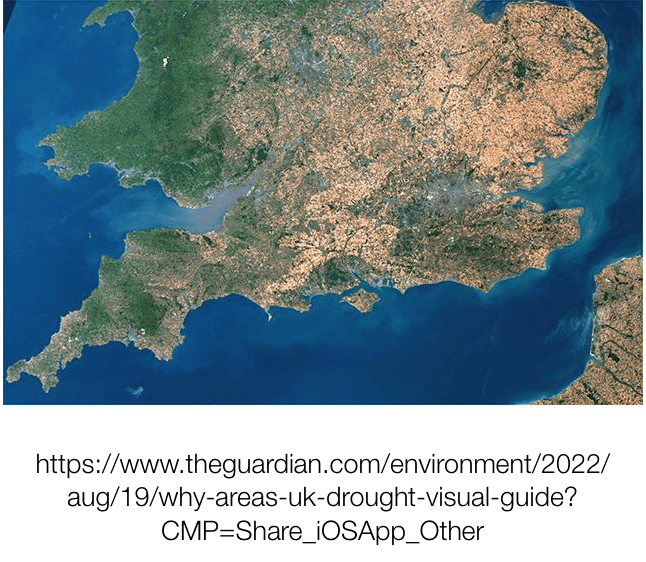
This summer is heat waves, drought and impending fuel crisis have highlighted our country’s  unpreparedness for the effects of climate change that we are already experiencing, let alone the ones that are to come. Much of the responsibility lies with our government and its influence over big business. To this end Greenpeace has set up a petition asking for action from the UK government: 

“You must do more to prevent climate change and protect us from the damaging impacts of extreme weather:
– Deliver a proper plan to make our buildings and infrastructure more resilient to extreme weather
– Improve national water storage to prevent future shortages
– Force water companies to reduce leaks and increase the efficiency of household and business water usage ”

If you would like to sign this go to – https://action.greenpeace.org.uk/uk-extreme-weather-climate-emergency-drought-floods?source=EM&subsource=ECCLREPEEM05MY&utm_source=newsletter&utm_medium=Email&utm_campaign=UK+Extreme+Weather+Aug+2022+PE+20220812&utm_term=Full+List

Lent Reflection

Graze Trees Landscape Mood Nature Fence Sky http://www.maxpixel

The poplar tree – populous nigra  – grows to a height of 30m and lives for about 200 years. It has distinctive triangular pointed leaves which provide food for many moth caterpillars, whilst its early spring catkins provide food for bees and other insects. Its white soft finely grained, shock resistant wood is traditionally used for matches, floor boards, carts and clogs, as well as nowadays for wine boxes, pallets and artificial limbs. 

The poplar tree has strong roots which gives its symbolic association with resilience, rootedness and security. 

‘I hereby command you: Be strong and courageous; do not be frightened or dismayed, for the Lord your God is with you wherever you go.’ Joshua 1:9

“I’m planting a tree to teach me to gather strength to me deepest roots.” Andrea Koehler Jones, The Wish Trees