Counting on … day 1.157

24th August 2023

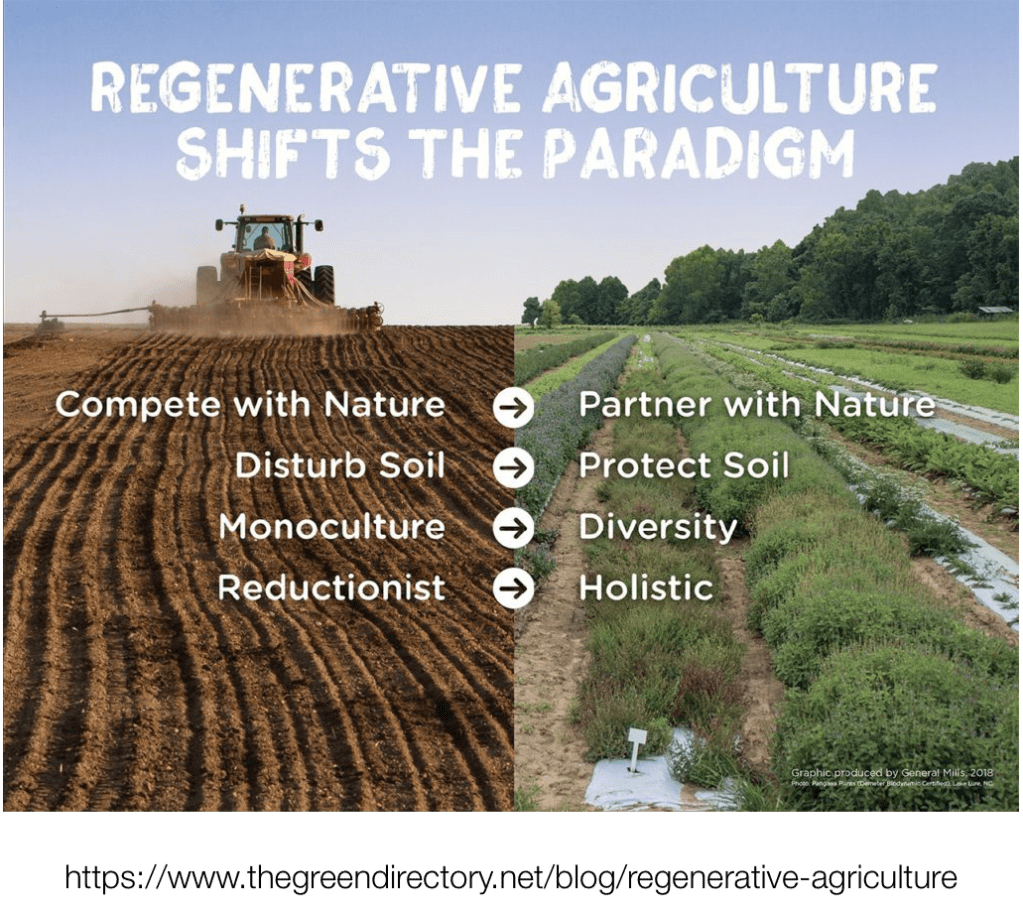
If agricultural expansion is to be reversed, it will need the combined efforts and cooperation of governments, farmers, consumers, commodity  traders, financiers, retailers, and environmental scientists. One of the most important areas to change will be that of meat production. 

‘Of all the world’s land surface, approximately 71% is ‘habitable land’; half of this land is used for agriculture. Currently, pastures used for grazing and land used to grow crops for animal feed account for 77% of agricultural land, thus comprising nearly 30% of the total land surface of the planet…If we combine pastures used for grazing with land used to grow crops for animal feed, livestock accounts for 77% of global farming land. While livestock takes up most of the world’s agricultural land it only produces 18% of the world’s calories and 37% of total protein.’ https://ourworldindata.org/global-land-for-agriculture

Across Europe governments are, to a greater or lesser extent, aiming to reduce meat production on farms and meat consumption amongst populations. The Irish government for example, is looking to reduce its dairy herd by 65000 animals per year over the next three years. The Dutch government is planning to reduce its cattle numbers for 30% by 2030. The Climate Change Committee in the UK has recommended livestock cuts  of 20-50% for  beef and lamb, whilst at the same time recommending a 20% reduction on meat and dairy in the UK diet.

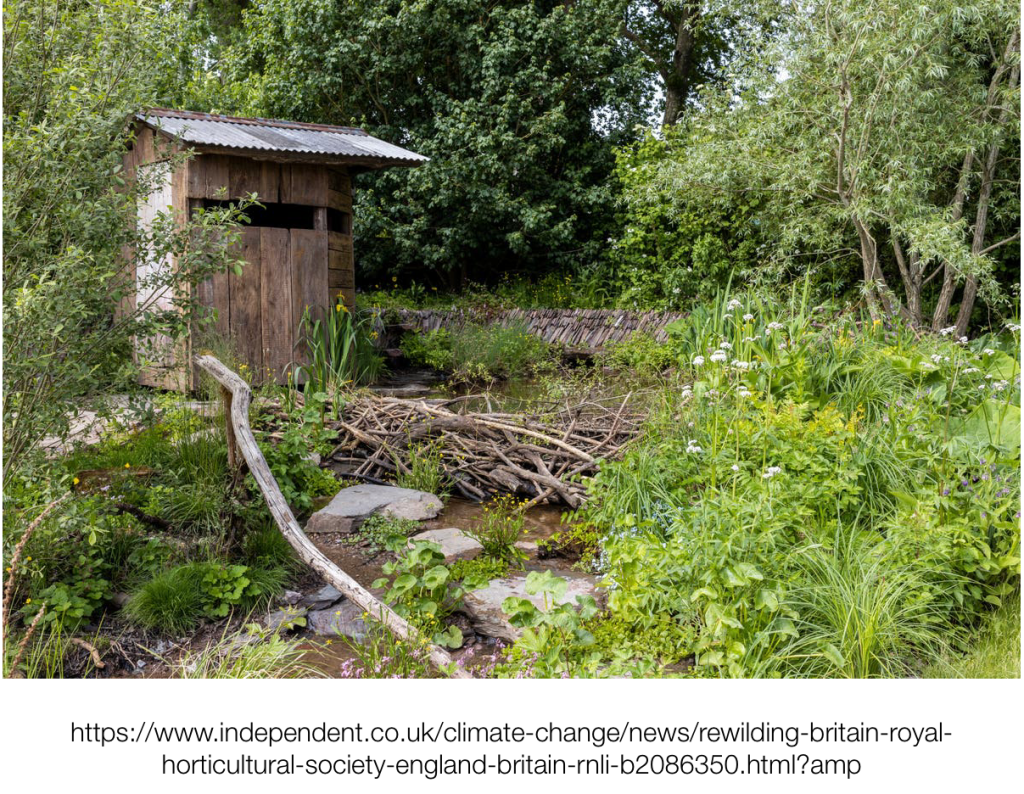
Reducing cattle numbers will free up more land for plant crops and so feed more people and/ or rewilding which will boost biodiversity.

Over the next few days I will be looking at easy ways of adapting to a more focused plant based diet.

For further info in farming, land use and biodiversity see

Counting on … day 1.136

31st July 2023

To keep sourdough starters healthy they need regularly depleting and refreshing – often more frequently than the demand for more bread. The sourdough starter can be used for things other than bread – such as crumpets.. It can also be used to provide the acidic element for soda bread or soda scones.

Soda farls made with sour dough starter

Heat a heavy frying pan. 

Mix 200g of plain flour with a two generous tablespoons of sourdough starter.  

Add 1/2 teaspoon of bicarbonate of soda and some grated nutmeg.

Stir in a handful of raisins. 

Mix with enough oat milk to a soft dough. 

Brush the frying pan with oil. Scope the dough out and into pan and Pat it with the back of a spoon to a roundish even shape – about 2cm deep.

Once the bottom is cooked and the edges are beginning to form, slide the soda bread onto a plate. Invert the pan on top, flip over so that the uncooked side of the soda bread is now face down in the pan.
Cook the second side.

You can vary the flavour by using dried cranberries, dried chopped apricots, diced apple etc instead of the raisins. And you can use cinnamon or cardamom instead of nutmeg.

Counting on … day 1.117

11th May 2023

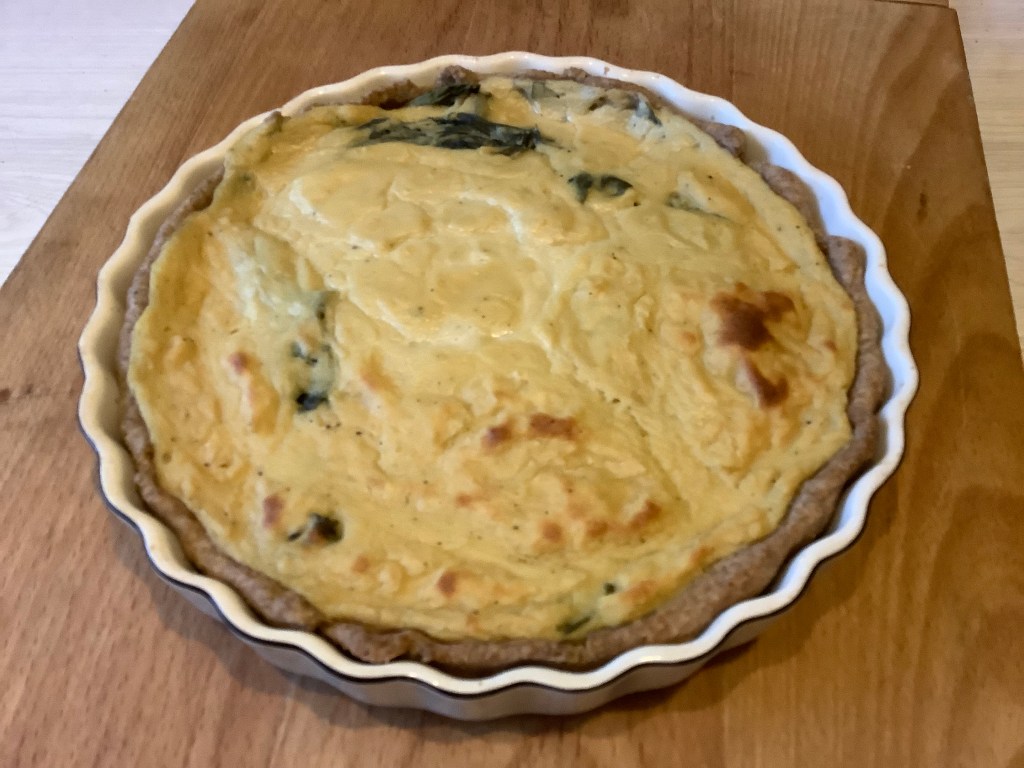
Vegan Quiche

Make a short crust pastry with 200g flour and 100g vegan butter. Use this to line a flan dish

Lightly cook a colander  full of green leaves (spinach, chard, dandelion, herbs etc).  This can be done easily in a microwave.

Make a white sauce using 3 level tablespoons of yellow pea flour and about 500ml of oat milk. (Again this can be done in a microwave). Flavour with yeast flakes and black pepper.

Sautée an onion in some oil. 

Place the onion in the encase of the flan, add the green leaves and pour the sauce over the top.

Bake at 200C for about half an hour or until the quiche is golden and the middle firm.

Counting on … day 1.111

5th  May 2023

Government and the farming industry is part of a system that needs to change if we are to adapt to climate change and forestall a worsening of the current climate crisis. Nevertheless individuals can also be part of the process of change. We can buy less meat and dairy products and more – and more varied – plant based foods – ideally those that are locally grown and organic. We can support through donations and volunteering, habitat restoration and re-wilding schemes.

Food insecurity & what we can do

28th March 2023

1. Ensuring people have a sufficient income to buy the food they need.


1b.. Growing our own food and enabling others to do likewise.


2. Taking action to limit keep rising global temperatures below 1.5C – curbing climate change will improve the chances of better harvests.


3.  Paying  a fair price for the food we eat. You might buy direct from a farm or a group of  farms, or via a local vegetable box scheme. You might support a local farmers’ market. You might buy from a local independent green grocer. Similarly you might buy milk etc from a milk round where the price reflects the cost to the farmer. For cheeses, look to buy from small scale producers via a local cheese shop. And again buying fair trade options for imported foods can help ensure a fair price for the producer. Alternatively look out for products – coffee beans and chocolate in particularly – that have been  sourced directly from the grower. These  are often available through local independent shops and cafés.

Another option would be to subscribe to the OddBox fruit and veg scheme which buys food stuffs that would otherwise go to waste because they are misshapen, because the supermarket doesn’t want the crop, or because the crop has been too large or too small for the supermarket buyer –  https://www.oddbox.co.uk/ 

4. Buying from local producers and local retailers helps to improve local supply chains. 

5. Again the best approach to improving global food security and ensuring there is enough food for everyone is to reduce – or cut out completely – animal products.

6. To support and encourage the maintenance of healthy soil, you might choose to buy organic produce (https://www.soilassociation.org/ ), or source items produced using  regenerative farming practices (https://regenerativefoodandfarming.co.uk/)

7. To improve the  security of our food supplies  through diversity, expand the range of foods you eat. Try different sorts and fruit and vegetables, different types of grain – emmer, einkorn, spelt, black barley  – and different sorts of nuts, spices etc. This can also improve your health – it is recommended that our diets should include 30 or more different types of fruit, vegetables, nuts, grains etc per week. See for example https://www.theguthealthdoctor.com/how-to-get-your-gut-loving-30-plant-points-a-week and https://www.theguardian.com/lifeandstyle/2022/may/15/go-with-your-gut-tim-spector-power-of-microbiome?CMP=Share_iOSApp_Other

Improving biodiversity as a whole is a good preventative against diseases that could ravaged farm production. You might therefore choose to grow more wild/ native plants in your garden, or choose plants that support and encourage biodiversity in terms of birds, insects, butterflies, and bats etc. many web sites have suggestions about improving the biodiversity of your garden including those of the RSPB and the Natural History Museum. You might want to support charities and organisations that encourage biodiversity and even extend that to the re-wilding of land, both in the UK – eg https://www.rewildingbritain.org.uk/explore-rewilding/what-is-rewilding – and overseas – https://www.cleanupthetropicaltimbertrade.org/about ,   https://wwf.panda.org/discover/our_focus/forests_practice/importance_forests/tropical_rainforest/ ,   http://savetheorangutan.org.uk/

Counting on … day 1.084

28th March 2023

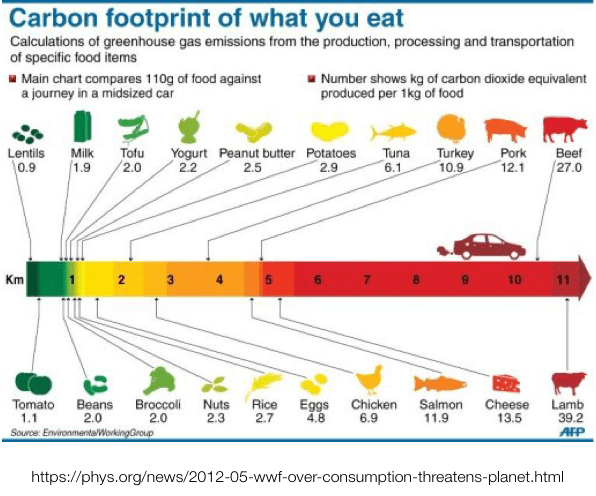
The Ethical Consumer magazine notes that ‘Cutting down on meat and dairy is one of the biggest ways you can reduce your personal carbon footprint. It can also help you avoid issues associated with factory farming, like the routine mutilation of animals or the cramped conditions they’re very often kept in.

If you have time, the cheapest and healthiest way of reducing meat and dairy is to cook from scratch using ingredients like beans, tofu and lentils, rather than relying on processed vegan foods. Processed foods also have a higher carbon footprint than cooking a meal from scratch.’

Counting on …day 1.074

17th March 2023

Drawing on both home grown food and OddBox food, earlier this week we had a ‘foraged soup in that I foraged the garden for green things and the remains of the OddBox, thus-

3 cloves of garlic and 3 shallots all sliced.

1 beetroot, 1 parsnip, 1 apple all diced

All these I softened in some rape seed oil. Then I added, 

A jar of cooked split green pea

A handful of red lentils

A teaspoon of miso

A colander of young dandelion and nettle leaves. 

I added water and left to simmer. Once cooked I liquidised everything to create a thick nourishing soup. 

Counting on …1.071

14th March 2023

“Cutting meat and dairy products from your diet could reduce an individual’s carbon footprint from food by two-thirds, according to the Oxford study, published in the journal Science.” https://www.bbc.co.uk/news/science-environment-46459714

Major institutions are helping people make this change in lifestyle by serving less or no meat in their canteens. In 2022 Stirling became the first UK university to ban the sale of meat in its campus food outlets. This year Cambridge University has voted to do likewise. Newcastle Hospitals has meat free Mondays, which is an approach followed by various schools and colleges. 

A different world is possible!

Counting on … day 1:011

11th January 2023

Swopping from animal to plant based foods can make a considerable reduction to our carbon footprint. According to Exeter Council’s website:-

  • 1 vegetarian day per week (52 days a year) can save nearly 100kgs of CO2 per year.
  • 1 vegetarian week per month (12 weeks a year) can save nearly 153kgs of CO2 per year.
  • 1 vegan day per week (52 days a year) can save nearly 143kgs of CO2 per year.
  • 1 vegan week per month (12 weeks a year) can save nearly 231kgs of CO2 per year.

The BBC has an interesting calculator that compares the footprint of different types of food – https://www.bbc.co.uk/news/science-environment-46459714

Further information – 

Counting on …. Day 424

31st December 2022

12 Days of Hope 

Tomorrow is the start of Veganuary. This annual campaign encouraging people to rescue their consumption of animal products. 600,000 people officially taking part in 2022, up on the 580,000 who took part in 2021. YouGov tracker data suggests 2-3% of the UK population are now vegan and 5-7% vegetarian – and growing!