Counting on … day 415

22nd December 2022

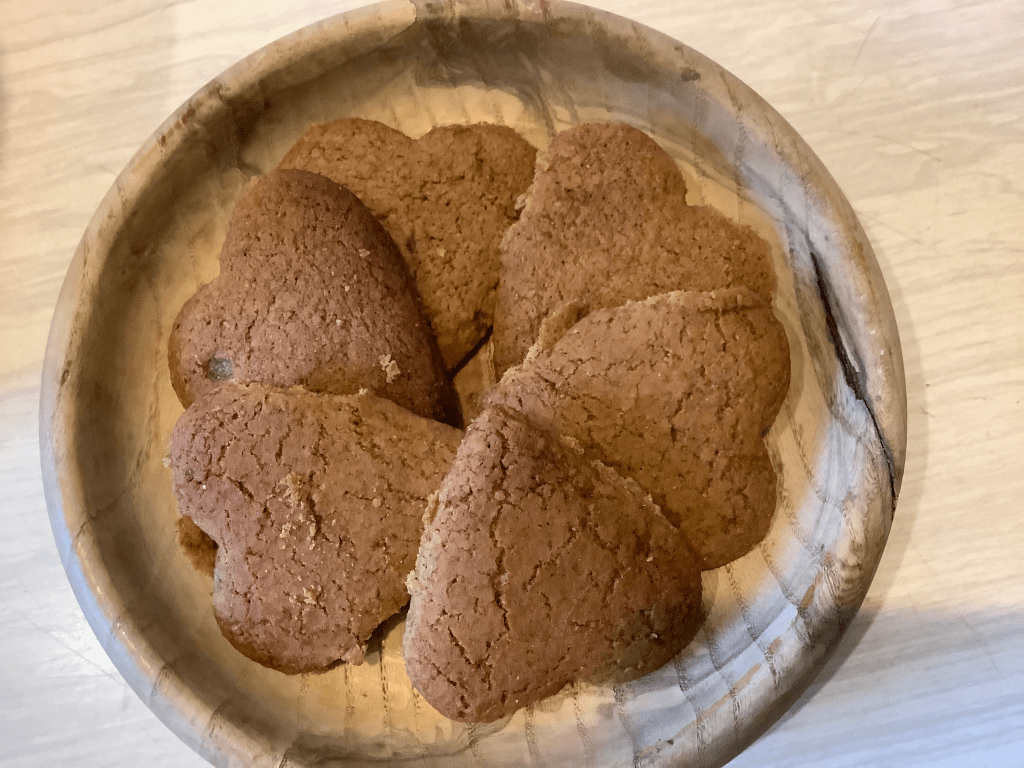
Ginger biscuits have the smell of Christmas. Rather than using just ginger, add other spices too such as cinnamon, allspice  and cardamon. 

The following is a simple recipe 

75g margerine, 2 tablespoons of sugar and 1 tablespoon of syrup. Melt these gently in the microwave. 

Add 225g plan in flour plus 1 tsp bicarbonate of soda and 1 tsp of more of your choice of spices. Mix and add oat milk/ the juice of an orange to bind as necessary to for a firming dough. 

Chill.

Roll out and cut into shapes. 

Bake at 180C until cooked. They will still be slightly soft but leave on the baking tray. This completes the cooking and gives rise to the term biscuit meaning twice cooked.

Counting on … day 410 

17th December 2022

Delegates at the Biodiversity COP are working to define what it is to be ‘nature positive’. I would hope it means a default of working with rather than against the natural environment wherever possible. One of the Guardian correspondents commented that little is being said about how we as individuals can be ‘nature positive’, adding “Dietary changes, for example, is one of the most significant things people reading this could do to reduce their impact on biodiversity, namely cutting meat consumption.”

Counting on … day 393

30th November 2022

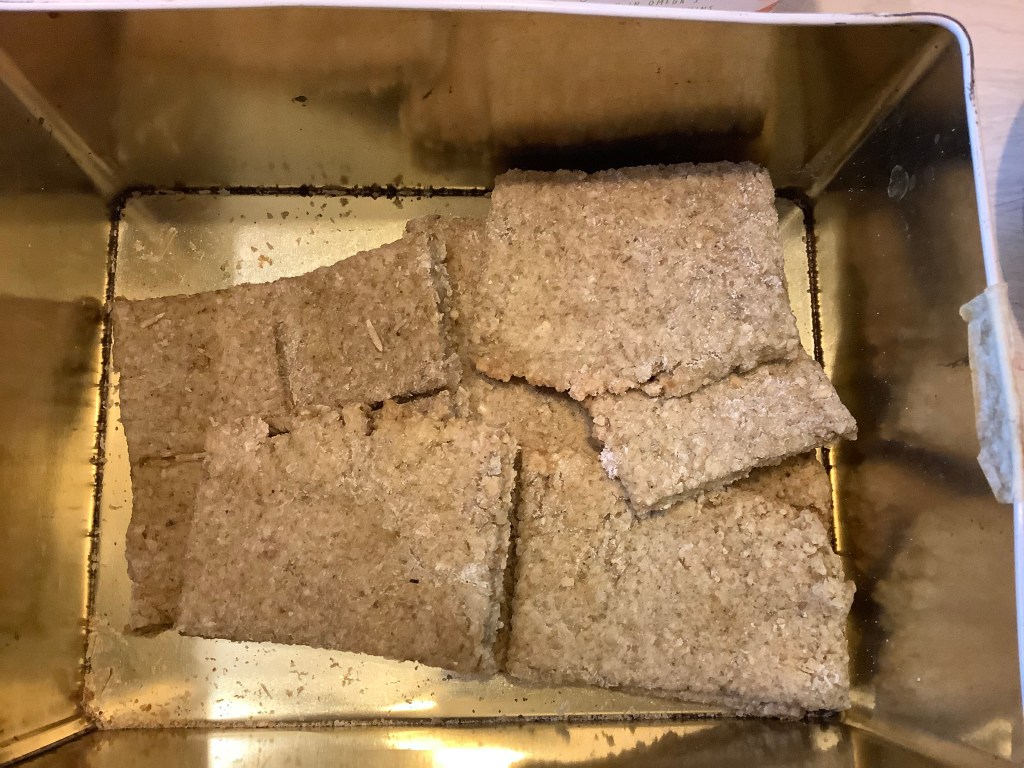
Another food associated with Scotland are oatcakes. I make these on the days when I am baking bread as they can go in the oven whilst the oven is warming up to the high temperature needed for the bread.

Oatcakes

In a bowl mix 2 tablespoons of flour (white, wholemeal, spelt or rye) and 8 tablespoons of oatmeal. Add a half teaspoon of bicarbonate of soda and a generous tablespoon of oil. If you wish, add a little salt/ black pepper/ chopped rosemary. 

Add sufficient boiling water to bind to a stiff dough.

Grease a baking tray and spread out the dough into a large rectangle (about 30x25cm) either patting it with well floured hands or using a rolling pin. 

Cut the dough into about 16 pieces (you don’t need to separate them as the mixture doesn’t spread).

Bake for 20 minutes or until firm at about 160-200C. Cool on the tray before removing to any air tight tin.

As a variation you incorporate sunflower or chia seeds etc. 

Counting on …. Day 392

29th November 2022

Tomorrow is the feast of St Andrew, patron saint of Scotland. Here is a recipe for vegan haggis, not entirely my own, but  having no note of the original recipe, I cannot credit its creator.

Haggis. Serves 2-3

50g  Puy lentils

50g pearl barley

oil 

1 large onion, finely chopped

1 large carrot, finely chopped

75g portobello mushrooms, finely chopped

½ tsp ground allspice

 ½ tsp ground black or white pepper

90g pinhead oatmeal

½ tbsp marmite

1½ tbsp brown sauce or treacle

Sauté the onion and carrot in a little oil till soft. Add the mushrooms and the spices. If need be add a little more oil.

Add the barley and lentils. Add about 400ml hot water and yeast extract. Feel free to add a sprig of thyme. 

Simmer until the mixture is very thick, adding more water if necessary. 

Heat the oven to 180C/350F/gas mark 4.

Stir in the oatmeal and brown sauce and tip into a greased loaf tin and cover with foil. Bake for 30 minutes, then remove the foil and bake for another 30. 

Leave for five minutes, then turn out and serve.

 Counting on .. day 365

31st October 2022

Can you challenge yourself to a plant-based November? With squashes and pumpkins and mushrooms and brassicas very much in season, lots of delicate and hearty meals await you. Try out a whole range of different plant-based proteins – fava beans, pinto beans, cannelloni beans, Puy lentils, Carlin peas, blue peas, black badger peas, tofu, walnuts, almonds …. I am sure you can have a different one each day!

Counting on … day 350

15th October 2022

Baking without using the oven. Ovens use a lot of energy, so  if you can avoid using them it helps reduce your carbon footprint. Instead you can use a heavy frying pan as a griddle and bake foods such as Welsh cakes, soda farls and potato farls, drop scones, griddle scones and Staffordshire oatcakes. 

Welsh cakes

250g plain or half and half plain and wholemeal plus baking powder

75g vegan butter

75g currants/ raisins

1 tbsp chia seeds soaked in a cup of hot water

1 tsp Nutmeg

A little oat milk

Lightly oil a flat based frying pan and set over a medium heat to warm up.

Rub the butter into the flour and add the remaining ingredients using enough oat milk to bind to a dough. Roll out about the thickness of a thumb and cut into rounds. 

Place the rounds into the pan. When they are browned on one side turn them over. 

Counting on …. Day 340

6th October 2022

According to Chatham House ‘a 15% reduction in pig and chicken consumption across the EU would have nullified the global grain shortage caused by the War in Ukraine.’ Eating less meat and dairy produce reduces demand for grain and other animal fodder, allowing production to be redirected to feeding people.  

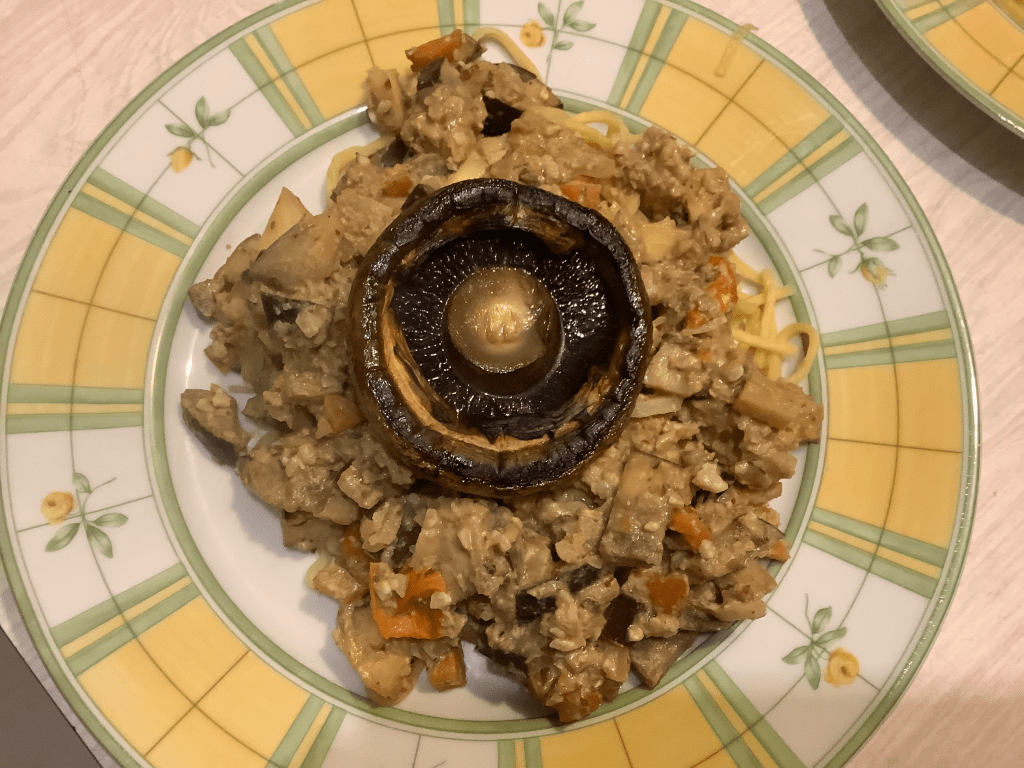
Aubergine with almonds

Chopped a couple of cloves of garlic and half an onion. Fry together with a chopped carrot and an aubergine, allowing the ingredients to cook and soften. 

Add 50g of chopped or roughly ground Spanish almonds.

Add a little miso sauce, a little tahini and enough water to bind into a sauce. 

Meanwhile cook some pasta  and (separately) fry a couple of portobello mushrooms.

This serves 2.

 Counting on… day 318 

24th September 2022

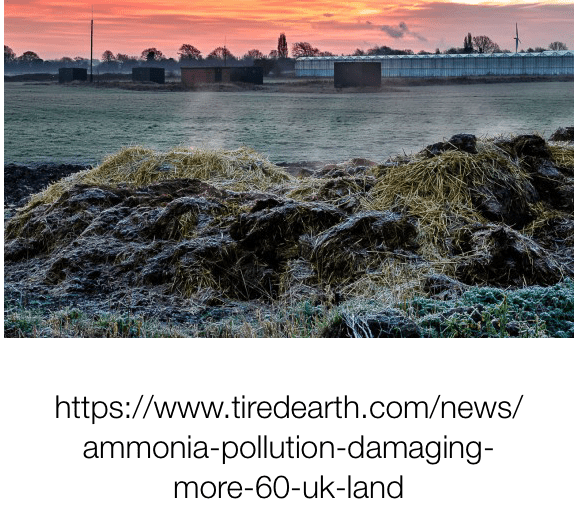
Manure and urine from farm animals is a major source of ammonia: in the UK 87% of ammonia released into the air comes from agriculture. Here ammonia reacts with other compounds in the air to form particulate matter that pollutes the air, irritating lungs and affect people’s breathing.  Ammonia also leads to the creation of smog, and the acidification of water and soil. It is harmful to plants and wildlife as well as humans. 

A particular concern at the moment is the health of the River Wye in Herefordshire. A large number of intensive chicken farms have been established in the Wye valley and the affluent from millions of chickens has created an algal bloom that is destroying the biodiversity of the river. 

This is another good reason for reducing our meat consumption. 

Green Tau: If we all became vegan, what would happen to the cows?

23rd September 2022

This seems to be a frequent concern amongst those who are not vegan. If people didn’t eat meat or drink milk, would cows become extinct? 

The question is one of genuine concern but raises some other questions in response. For example what life does a cow have? Dairy cows will commence their milking life aged 2 when their first calf will be removed from her care within hours of birth.  She will then give birth once year, being milked for ten months producing quantities of milk (on average 8000 litres) greatly in excess of what a calf would consume. After 2.5 -4 years, when her milking yields drop, she will be slaughtered. The usual life expectancy of a cow is 20 years. Of her offspring, males calves will have a limited life to be slaughtered as veal at 5 – 7 months. Of her female calves most will follow in this mother’s footsteps unless they are deformed or ill, in which case they too will be slaughtered. 

Very few farmed cattle enjoy a full life. By contrast cattle kept on re-wilded land, although smaller in number, live a much more natural life. In the Lake District re-wilding projects are in place at Haweswater, Ennerdale and the Lowther Estate, whilst in Sussex there is the now famous Knepp Estate. According to Rewilding Britain 112,166 hectares of land are now part of a re-wilding project. 

So no, cows would not become extinct but would be kept in much smaller numbers – just as rare breeds of many farm animals are being conserved. 

In 2020 there were 9.36 million head of cattle in the UK. It was not always so! Originally there were only the early forebears of cattle, the aurochs. Overtime cattle were domesticated and as the human population of the UK grew so did the number of cattle. Selective breeding improved and diversified the      cattle with some favoured for milk production and others for meat. As the human and domestic animal populations increased, so the amount of uncultivated land and wildlife decreased: the auroch was hunted to extinction in the UK about 3000 years ago; the brown bear became extinct in the 6th century whilst the wolf hung on until the 17th century. What is true for the UK is also true world wide. Whilst once humans and domesticated animals were once nonexistent, they now comprise 36% and 60% of the biomass of all mammals, leaving just 4% as wild animals (biomass measures the quantity of a species by its mass rather than its numerical quantity).

Rather than it being a question of ‘what would happen to all the cows?’ perhaps the question should be ‘what has happened to all the wild animals?’ The State of Nature Report of 2019noted that since the 1970s, 41% of UK wildlife has declined, and that 26% of the UK’s mammals are at risk of becoming extinct. Re-wilding more of our land would help reverse this decline and allow for the reintroduction of lost species such as the lynx and the stork.

Globally 77% of agricultural land is used to feed livestock, including both grazing land and the land used to grow animal feed. In the UK 40% of the land (9.74 million hectares) comprisespermanent grazing, 6%  temporary grazing (1 – 5 years) and 5%  rough grazing. Only 20% of the land is used for arable crops. Even so home grown animal feed is supplemented by imports – somewhere in the region of 50%.

Globally the 77% of land used for grazing and feeding farm animals, produces only 18% of the world’s food calories. At the same time this major land use contributes more than half of the carbon footprint of our global food production. If everyone globally were to eat the same amount of meat as the average British person (approx 85g per day), then the amount of farm land needed would have to increase – putting even more pressure on natural habitats and wildlife. And if everyone were to eat as much meat as the average American, we would run out of land.

Reducing our consumption of meat and dairy products would release more arable land for growing more sustainably a great variety of plant-based proteins with the potential to improve the diets and health of billions of people world wide (subject to a radical improvement of trade and wealth distribution systems). Research the by the UN suggests that with fewer cases of lower coronary heart disease, strokes, type 2 diabetes and some cancers, a global vegan diet would also result in 8.1 million fewer deaths per year worldwide.

Britons have in fact already reduced their meat consumption by 17% over the last decade. The Government’s Food Strategy has the target of reducing that by 30% by 2030. This target has been set  in recognition of the adverse affect meat production has on both climate change and the environment, as well as the link between the consumption of red and processed meat the risk of developing cardiovascular disease, type 2 diabetes and certain types of cancer.

Looking to the future, there will be fewer cows – but hopefully they will be enjoying a happier life – and instead more land used to restore greater biodiversity. 

Further reading