Counting on … day 222

26th November 2024

Is it possible to adopt a zero plastic lifestyle?

As with oil and gas, much of our economy is tied into the use of plastics – plastic has very many useful characteristics being light weight,  mouldable, waterproof, rustproof etc. To avoid plastic is therefore difficult – it is used in making shoes and clothes, household goods, toys, medical equipment, plumbing pipe etc. But there was a time when we didn’t have plastics but still made useful things, and we have many chemists and engineers who are developing plastic alternatives whilst retaining many of the advantages of plastic.

What we can do is to make a conscious effort to avoid plastic wherever possible. We don’t need to buy sweets or sandwiches or vegetables wrapped in plastic. We don’t need to buy plastic toothbrushes or combs or washing up bowls. We don’t need to use plastic cups and bottles. 

And whilst plastic recycling isn’t the answer, whilst we still have plastic in circulation, reusing what we already have (and keeping it in good condition) and recycling what we don’t need, is still a good thing to do. 

Counting on … day 209

7th November 2024

Zero waste is an umbrella title that encompasses avoiding plastic and other unnecessary packaging, and other means of reducing waste – which might for example include composting the outer leaves of cabbages and onion skins, or turning apple cores into cider vinegar. 

Going zero waste can revolutionise the way we live as consumers. Even if we can’t achieve a 100% target, we will be altering patterns of thinking both in ourselves and by those who supply us. This blog item reflects our household shift in this direction – https://greentau.org/2022/01/27/eco-tips-zero-waste/

Counting on … day 103

9th May 2024

One of the main ways we minimise waste is through using refill services. Our milk, including oat milk, is delivered to the door in refilled glass bottles. Apple and Bees – a local health food shop – has a refill service for laundry and washing up liquids – whilst from The Source store in Richmond we buy most of our groceries – sugar, dried fruit, grains, yeast flakes, salt and spices, as well as items such as nut butters (ground/ processed direct into your jar) olive oil, tahini and tamari – all into the refillable jars/ bottles and bags that we bring from home. And our local cafe and coffee roastery has a refill service for coffee beans. This means that there is very little that we need to buy that comes with additional packaging – typically items such as vegan butter and margerine, tin tomatoes, tofu, miso and yeast extract.  

Counting on … day 102

8th May 2024

Waste free and plastic free are closely linked as waste free includes plastic free but goes a step further exploring how we can reduce the unnecessary use – ie waste – of resources. Why do sandwiches/ cakes etc come in both a paper bag and a paper carrier bag? Why do toothpaste tubes comes in a cardboard box? Why do we reuse glass milk bottles but not glass wine bottles?

Looking for waste free options is another way in which we go about shopping and we can see the outcome in the frequency with which we put out our dustbin – maybe once or twice a year.

Counting on … day 5

5th January 2024

Refills for groceries and other household items

Following on from the principle that reducing waste is good, the growing market for refill shopping enables us to avoid single use plastic bottles and other packaging. One of the oldest schemes must be the refillable milk bottle – and this has been making  a  comeback over recent years, boosted by Covid.

Many milk delivery services offer more than just milk in refillable bottles with, for example, fruits juices, yogurts, washing up liquid, shampoo and even Coca Cola available in returnable, refillable bottles. (https://www.milkandmore.co.uk/)

There are also high street shops offering refill options for goods as diverse as sultanas , peanut butter, tahini and basimati rice. Locally in south west London I use the Source Bulk Food store – https://thesourcebulkfoods.co.uk/ . Whilst for coffee beans, our local Artisan Café, has its own refill scheme. 

Refill schemes are also being trialed by various supermarkets, coordinated  by the Refill Coalition group – https://www.refillcoalition.com/

Counting on … day 1.141

16th June 2023

Refill stores also supply dry goods for which you can take your own container or paper bags, or use the bags they provide. Goods available include spices (whole and ground), sugars and flours, rice, seeds, pulses, nuts, dried fruit, pasta, oats and other cereals, cocoa, etc. 

Shopping in this way cuts down on most or all packaging and allows us to pursue the ideal of zero waste. Refill stores often stock unpackaged bars of soap, deodorant etc. They equally often sell zero plastic options such as copper wire pan scrubbers, bamboo tooth brushes, rubber gloves, wooden dish mops etc. 

Refuse or avoid excess packaging. Producing things we don’t need is clearly a waste of resources. 

Saying no to the plastic bag, or looking for the least packaged items is a good starting point. If you feel a product has too much packaging or has non-recyclable packaging you could post the problematic packaging back to the manufacturer with a letter of explanation – it might nudge them to respond. For a lot of food items you can shop at the increasing number of refill shops where you can take in your own containers or use paper bags or make use of a milk delivery service. Milk and More for example delivers not just dairy milk in refill bottles but also oat milk, laundry and washing liquids, fruit juices etc.

For more information- https://greentau.org/2022/01/24/the-green-tau-issue-31/

Counting on …day 301

6th September 2022

Consuming less can also mean discarding. Do a survey of your dustbin. What are you throwing out? Could any of it be recycled, repaired or reused? Do some of the things that you buy come with too much packaging? Could you shop differently? What would it take to half the amount of rubbish you produce each week? What would it take to reduce it to zero? 

Counting on … day 239

10th July 2022

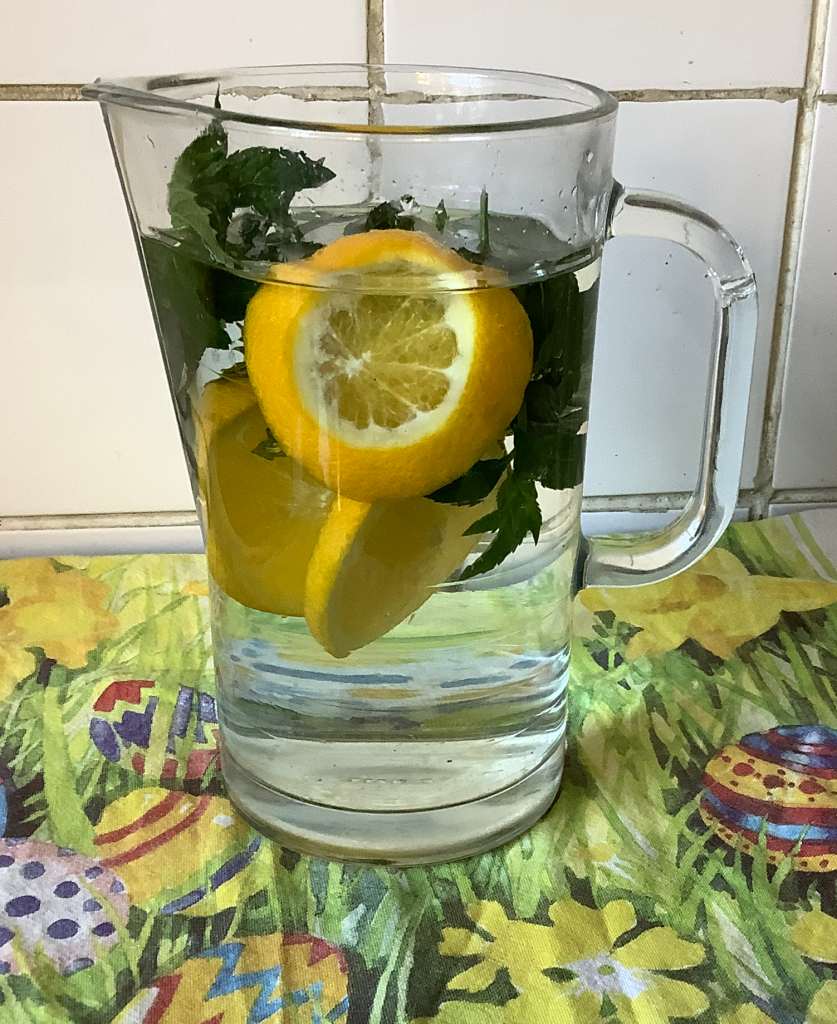
You see it in some cafés – for a cool drink, fill a jug with water and add strips of cucumber/ slices of lemon or orange/ sprigs of mint/ slices of root ginger/ even melon rinds. Keep the jug in the fridge – it will stand a few refills before the additions loose their flavour. (No sugar, and no bottles to recycle).

Counting on …day 233 

4th July 2022

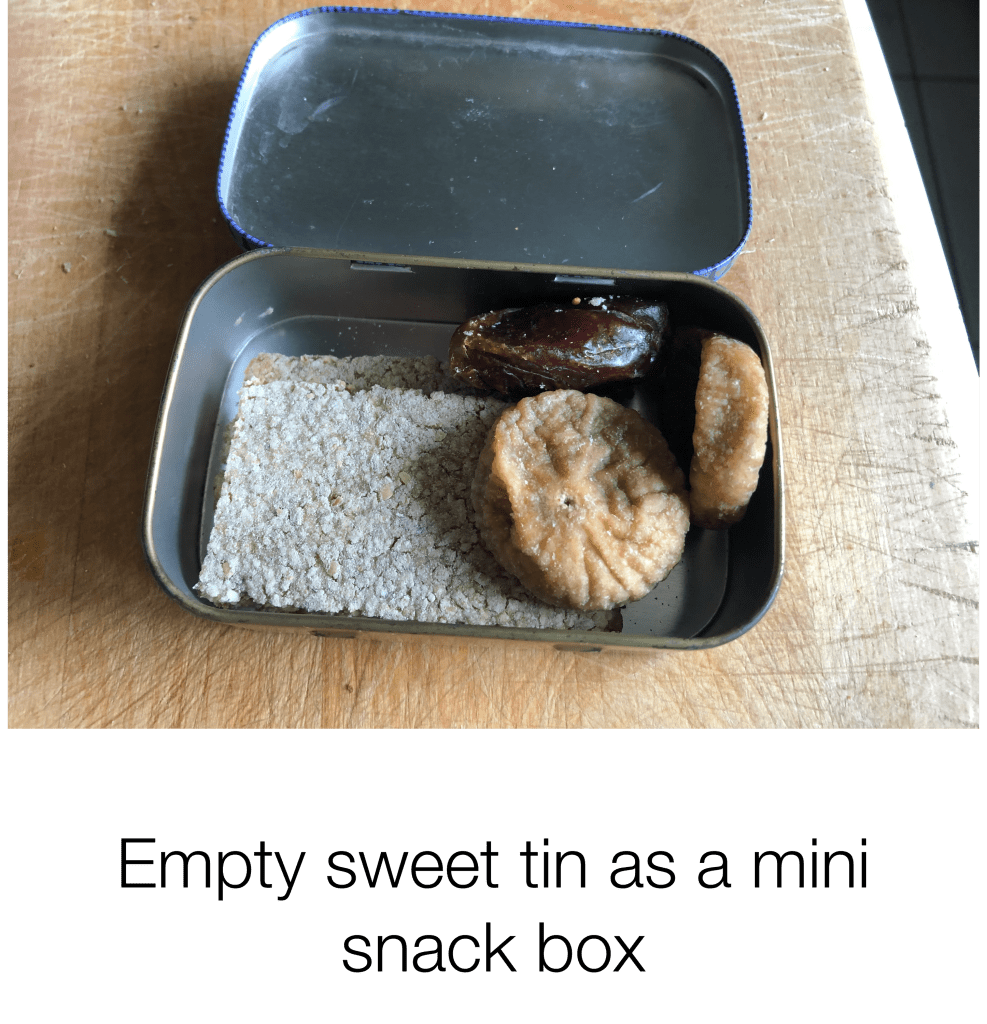
Small plastic packets for crisps and individually wrapped biscuits, sweets and ice creams and many other snacks proliferate and can often be seen as wind blown litter. Why not use the impetus of Plastic Free July to make a break and stop buying these products. Look for chocolate bars wrapped in paper and freshly served ice creams in cones. Prepare snacks in advance putting dried fruits and biscuits into reusable containers. Take a banana – they come with inbuilt packaging!