Proper 20

18th September 2022

Reflection (readings below)

“For the hurt of the people I am hurt. I mourn and dismay has taken hold of me” says Jeremiah. It is a cry many would empathise with, especially when one looks around at all the suffering already happening and all that is on the horizon as the climate crisis and the fuel and economic crises continue to grow in scale – the former fed by the latter into an ever deepening spiral.

Climate grief is now a recognised phenomena. It encompasses grief for what has already been lost, what is currently being lost and the ongoing threat of further loss going on into the future. Such loss is not just the loss of physical landscapes, plants and animals. It is also the loss of people’s livelihoods and traditions. It is the loss of actual lives. And it is grief for the loss of the futures that our children and grandchildren might have had but, now, will not have. There is no closure for this sort of grief and no traditions to help us cope. Jeremiah would certainly empathise with where we are, our plight and our sense of helplessness. 

Where then do turn for consolation? If we cannot find closure,  can we find a way of adjusting to the new realities of life? Can we find new ways of supporting each other? Can we adopt new ways of living and new economic models that will avert the worst scenarios? 

We can take a cue from the Letter of Timothy, and pray – with prayers of intercession and prayers of thanksgiving for everyone, including, but not just for, leaders and those in power. And not just to pray but to remember that in Jesus we have a mediator, someone who can help us understand both our problems and the possible solutions. 

Today’s gospel passage is one of a group of the parables including the Prodigal Son, the Lost Sheep and the Lost Coin. They all reference one who goes astray – sins – and point in each situation the possibility of finding a way back. They all also point to the importance of celebration when what was lost is found, when what was lost is restored. To this the parable of the Prodigal Son adds the importance of having generosity of heart and humility. 

In today’s parable we have a sacked manager – one who has certainly been accused of fraud – someone who has fallen short. He is unsure how he can cope with the change in circumstances this is forcing upon him. He thinks hard about the steps he can take to mitigate this. Where as before he was totally dependent on one person, his boss – from whom he gained his wealth – he is now going to be at the mercy of the many of his community. He asks himself with whom he needs to be on best terms – his ex boss or the community? Whose interests should he nourish to safeguard his own future?

Not unreasonably, he concludes that he has nothing to loose by no longer increasing the profits of  his boss and much to gain by improving the lives of everybody else. He chooses to serve – to love – his community rather than the sole interests of the rich man. And this is why he is subsequently commended for being shrewd. 

Jesus reminds us that we cannot seek to gain both wealth and God.  Are we in fact fraudulent stewards, given the way we have allowed the climate crisis to grow and escalate? Have we opted to exploit the environment for short term gain and convenience? Are we fraudulent stewards who have allowed – indeed enabled – the developed countries to continue to grow rich at the expense of less powerful nations? Have we pinned all our fortunes on the ongoing success of fossil fuels? How should we respond when that certainty of income and wellbeing that we have enjoyed is pulled from under our feet?

We certainly need to end our reliance on the singularity of fossil fuels. We need to be diversifying and finding simpler, less damaging ways of living. We need to be finding economic models that share risks and profits equitably. And I am sure we in the developed world need to be literally halving the debts of our comrades – the less powerful – around the world. (Later this month people of faith will be marking Loss and Damage Day which calls on the creation of an insurance pot funded by wealthy nations to support those at the sharp edge of climate change). 

And let’s do some rejoicing too when we find these new relationships, these new ways of living together with our fellow human beings and with nature.

Jeremiah 8:18-9:1

My joy is gone, grief is upon me,
my heart is sick.

Hark, the cry of my poor people
from far and wide in the land:

“Is the Lord not in Zion?
Is her King not in her?”

(“Why have they provoked me to anger with their images,
with their foreign idols?”)

“The harvest is past, the summer is ended,
and we are not saved.”

For the hurt of my poor people I am hurt,
I mourn, and dismay has taken hold of me.

Is there no balm in Gilead?
Is there no physician there?

Why then has the health of my poor people
not been restored?

O that my head were a spring of water,
and my eyes a fountain of tears,

so that I might weep day and night
for the slain of my poor people!

Psalm 79:1-9

1 O God, the heathen have come into your inheritance;
they have profaned your holy temple; *
they have made Jerusalem a heap of rubble.

2 They have given the bodies of your servants as food for the birds of the air, *
and the flesh of your faithful ones to the beasts of the field.

3 They have shed their blood like water on every side of Jerusalem, *
and there was no one to bury them.

4 We have become a reproach to our neighbours, *
an object of scorn and derision to those around us.

5 How long will you be angry, O Lord? *
will your fury blaze like fire for ever?

6 Pour out your wrath upon the heathen who have not known you *
and upon the kingdoms that have not called upon your Name.

7 For they have devoured Jacob *
and made his dwelling a ruin.

8 Remember not our past sins;
let your compassion be swift to meet us; *
for we have been brought very low.

9 Help us, O God our Saviour, for the glory of your Name; *
deliver us and forgive us our sins, for your Name’s sake.

1 Timothy 2:1-7

First of all, I urge that supplications, prayers, intercessions, and thanksgivings be made for everyone, for kings and all who are in high positions, so that we may lead a quiet and peaceable life in all godliness and dignity. This is right and is acceptable in the sight of God our Saviour, who desires everyone to be saved and to come to the knowledge of the truth. For

there is one God;
there is also one mediator between God and humankind,

Christ Jesus, himself human,
who gave himself a ransom for all

— this was attested at the right time. For this I was appointed a herald and an apostle (I am telling the truth, I am not lying), a teacher of the Gentiles in faith and truth.

Luke 16:1-13

Jesus said to the disciples, “There was a rich man who had a manager, and charges were brought to him that this man was squandering his property. So he summoned him and said to him, `What is this that I hear about you? Give me an accounting of your management, because you cannot be my manager any longer.’ Then the manager said to himself, `What will I do, now that my master is taking the position away from me? I am not strong enough to dig, and I am ashamed to beg. I have decided what to do so that, when I am dismissed as manager, people may welcome me into their homes.’ So, summoning his master’s debtors one by one, he asked the first, `How much do you owe my master?’ He answered, `A hundred jugs of olive oil.’ He said to him, `Take your bill, sit down quickly, and make it fifty.’ Then he asked another, `And how much do you owe?’ He replied, `A hundred containers of wheat.’ He said to him, `Take your bill and make it eighty.’ And his master commended the dishonest manager because he had acted shrewdly; for the children of this age are more shrewd in dealing with their own generation than are the children of light. And I tell you, make friends for yourselves by means of dishonest wealth so that when it is gone, they may welcome you into the eternal homes.

“Whoever is faithful in a very little is faithful also in much; and whoever is dishonest in a very little is dishonest also in much. If then you have not been faithful with the dishonest wealth, who will entrust to you the true riches? And if you have not been faithful with what belongs to another, who will give you what is your own? No slave can serve two masters; for a slave will either hate the one and love the other, or be devoted to the one and despise the other. You cannot serve God and wealth.”

Counting on …day 312 

18th September 2022

As we adapt to the reality of the climate crisis we may to pause catch our breath. Climate cafés can be a useful space for this. 

“What is a Climate Café? Perhaps you have recently begun to worry about what is happening to our climate and what this might mean for you, and for your family and friends? Or maybe you are an activist or professional in the climate world, used to feeling the pain of climate grief or anxiety and keeping it at bay by all the great work you do? A climate café is a simple, hospitable, empathetic space where anyone’s fears and uncertainties about our climate crisis can be safely expressed.  A space in which we would not talk about what we or others are doing or should be doing. We would just talk about climate change and how it is making us think and feel.” https://transitionliverpool.org/climate-cafes/

 Counting on …day 311

17th September 2022

Blister packs can be recycled at your local Superdrug branch. This is in partnership with Veolia. Simply take your empty packs to the pharmacy section and pst them in the collection box. 

‘Recycle at Boots’ provides a recycling point for other hard to recycle items such as make-up palettes, compacts, lipsticks, toothpaste tubes, lotion pumps, etc. All pharmacies should offer a recycling scheme for inhalers. 

 Counting on … day 310

16th September 2022

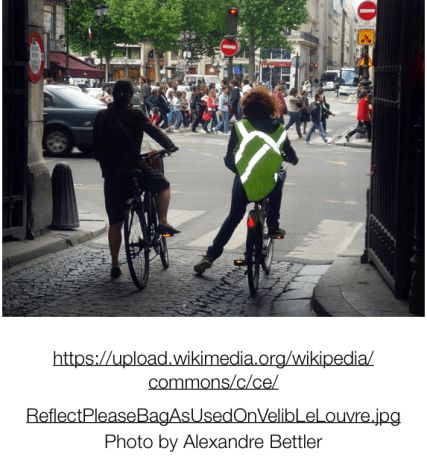
Check out high visibility clothing. With schools terms starting and the evenings drawing in, it is a good time to think about staying visible as both pedestrians and cyclists when it is dark. After dark even light coloured clothes do not make the wearer clearly visible to other road users.  Fluorescent markers on bags and coats, cycles, helmets, wrists and ankles are all good options.

The Green Tau: issue 52

Positive Tipping Points

Scientists have long predicted tipping points in the climate crisis, vis events that will be triggered by rising temperatures and which will be irreversible even if temperatures fell. EG a temperature increase of 1.5C will cause the Greenland ice sheet to melt. Even if temperatures subsequently fall back that ice sheet cannot be recreated – it was the product of thousands of years of cold temperatures. 

The widespread destruction of the Amazon rain forest is leading to another tipping point where the loss of tree cover, and thus the ability of the ecosystem to absorb water, such that other trees cannot grow.

But there are also positive tipping points. For decades the petrol car has ruled supreme. Roads and service stations have all been developed to facilitate the use of the petrol car. The more ecological option of an electric vehicle has been slow to take off. The initial cost of each vehicle was high as productions numbers were low and scale of economies as yet untapped. Recharging points were limited in number and far apart as low numbers of vehicle discouraged investment. All these factors deterred would-be consumers, and expansion was therefore slow. However in recent years, rising demand has boosted the impact of change. Soon a tipping point will be reached where the number of electric cars produced and used in the UK will exceed those reliant on fossil fuels. The number of charging points will exceed petrol pumps. Petrol stations and the huge carbon footprint of vehicular transport will become a thing of the past. 

At present domestic heating is another big contributor to our national carbon footprint. The use of heat pumps and solar panels,  and the equipping of houses with double glazing and insulation, will be the norm, with the economies of scale and the increasing number of qualified technicians ensuring the affordability of these options. There will also be the swing in social norms that means that everyone will expect such technologies and the alternatives of  gas and oil fired boilers will be seen as antediluvian.

Whilst the number of people who follow a vegan diet has increased significantly, absolute numbers are still low as a proportion of the total population. So whilst the availability of plant based milks in cafés is widespread, there is not yet a comparable selection of vegan cakes and sandwiches. Whilst  in restaurants there may be the option of a vegan burger and possibly risotto, we are still waiting for the time when the dishes at the top of the menu are vegan and meat based items are the minority fare at the bottom of the menu. But when that tipping point is reached and the vegan diet is the norm, the carbon footprint for our food will be reduced by more than a third.

In the past we have seen positive social tipping points past. We have moved from a society in which wearing seat belts in cars went from being the exception to the norm. We have moved from viewing a last drink for the road as acceptable, to one that deplores drink driving and where taking a taxi after an alcoholic evening is the norm.  We have seen the change in expectation of maybe one holiday a year, typically in the UK, to two or three holidays a year with at least one involving taking a flight to hotter climes. 

In Sweden ‘flygskam’- flight-shame – has led to a fall in the number of people taking domestic flights and an increase in those travelling by train. Here in the UK Flight Free aims to persuade people to give up flying, not through shaming them, but through providing people with both illustrative information that shows the damage and pollution air travel causes, and testimonies from people who have made the Flight Free pledge. 

In the Netherlands 43% of people cycle everyday compared with 4% in the UK. Whilst a government survey found having off-road and segregated cycle paths (55%), safer roads (53%), and well-maintained road surfaces for cycling (49%) were most likely to encourage people to cycle more, there has not been sufficient investment to significantly improve the cycling infrastructure. In terms of tipping points, the more cyclists there are on a route, the more confident other cyclist feel about joining them. And the greater the likelihood of more investment!

We can all be part of the tipping process. If we make the beneficial changes the climate needs and talk about them with friends and family, at church, in the work place, at the gym and in the café or bar, the desire for change will grow in momentum and change will happen.

 Counting on …day  309

15th September 2022

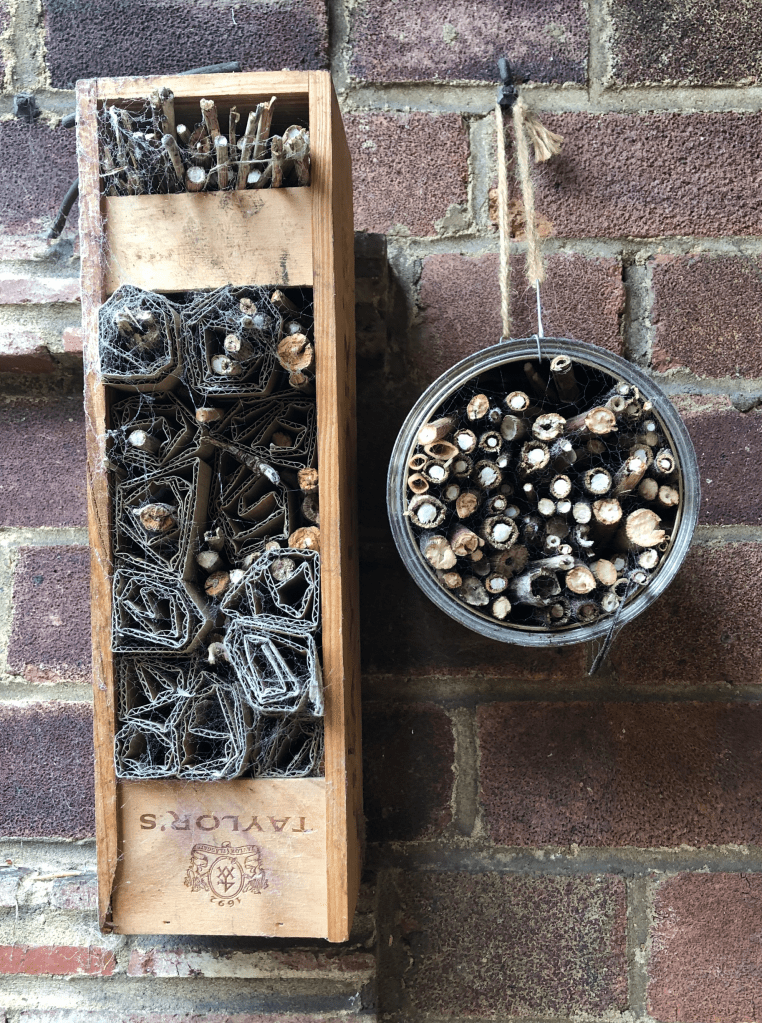
As we prepare for the colder months ahead, it is good to think about wildlife too. Why not make a bug hotel as a warm, safe place for overwintering insects. 

https://greentau.org/2021/10/25/bug-hotel/ or for one on a larger scale try – https://www.rspb.org.uk/get-involved/activities/nature-on-your-doorstep/garden-activities/build-a-bug-hotel/

Counting on … day 308

14th September 2022

 Knit or crochet something warm for winter: wrist warmers and beanies are  easiest if you are a beginner. You could try a beret, leg warmers, scarf or, if you have the time, a jumper. You might like to use yarn made from recycled cotton (t-shirts!) linen or silk,  or wool that comes from one of Britain’s rare breeds of sheep. 

 Counting on … day 307

13th September 2022

Whilst harvest is often celebrated in September, harvesting is ongoing throughout summer and autumn. To provide for the winter months, fruits and vegetables as they are harvested, can be preserved as jams, chutneys and pickles or they can be bottled. All these methods of preservation don’t need a freezer or fridge. Follow this link for chutney-making and other  preserves https://greentau.org/tag/chutney/

With a glut of apples, this can also be a good time to make mincemeat ready for Christmas. Find a recipe here – https://greentau.org/2021/09/09/count-down-47/

Counting on …day  306 

12th September 2022

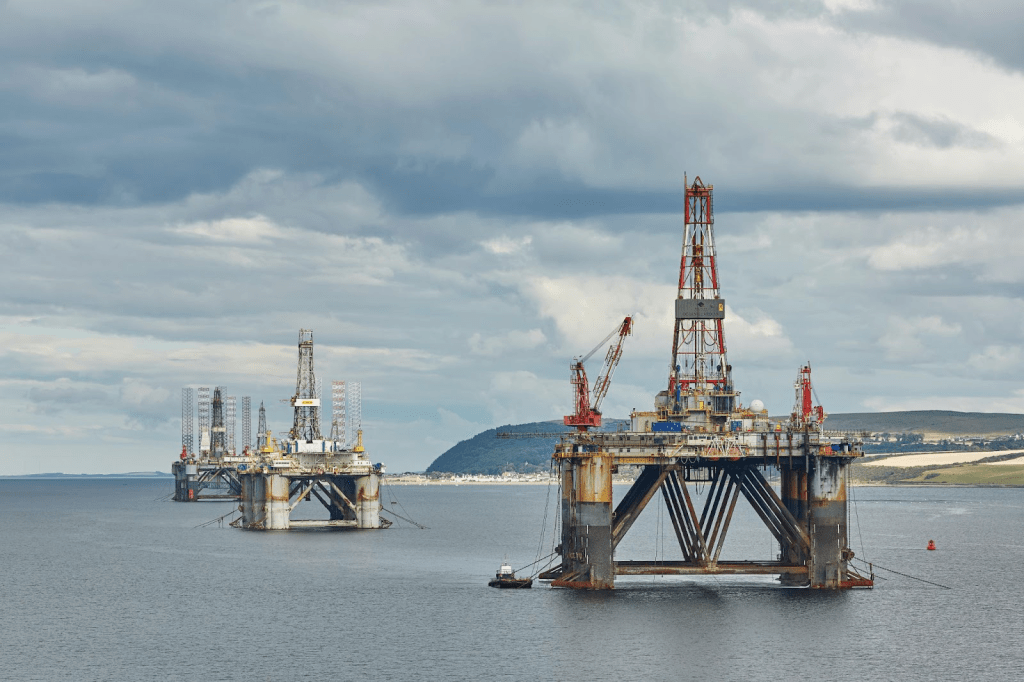
Another interesting article relating to the investments strategies of financial institutions focuses on those which are in eating in the development of North Sea oil and gas fields, such as Cambo and Jackdaw – https://www.ethicalconsumer.org/money-finance/what-does-cambo-oil-field-have-do-our-banking-choices

The thought that our money is being used to potentially develop these new oil and gas fields is devastating and suggests that both these institutions and our government are not serious in their commitment to reducing green house gases.

https://www.stopcambo.org.uk/updates/oil-gas-licensing

Proper 19

11th September 2022

Reflection 

The Church world wide is currently marking Creation-tide, and this first reading from Jeremiah could not be more pertinent. It sounds like prophecy for us today warning us of the impending climate crisis and decrying our foolishness in not taking action to ch age the way we behave.

Today’s gospel has two very familiar stories, that of The Lost Sheep and of The Lost Coin. (It was lucky that the woman chose to clean her house with a broom and not a vacuum cleaner!)

In the parables, both protagonists  make a concerted effort to find what they have lost and don’t give up until they are successful. Whilst the parables are told in response to criticism that Jesus eats with sinners, there is no suggestion that the lost sheep or the lost coin are in any way different from the other of their ilk. This perhaps reminds us that what ever we think of ourselves, we are all at heart the same, we are all sinners. God wants to save us all. God wants everything and everyone to be included in the Kingdom. If this is God’s commitment, then what is our reciprocal commitment to the everyone and everything of this earth? 

Each week we assert our belief that God is the creator of earth as well as heaven, yet humanity is weekly destroying what God has made. So far the world has seen five mass extinctions in which a high proportion of the earth’s biodiversity has been wiped out. The last such occurred 65.5 million years ago in which the dinosaurs became extinct. Scientists now reckon that we are on track for a 6th mass extinction which unlike the others, will be manmade. Currently 1 million species are facing extinction because of human activity. 

1 in 3 species of trees are facing extinction, including our native ash tree. According to a report by Kew Gardens in 2020,  two fifths of all plants face extinction (up on one in five in 2016). Researchers fear that we may be losing plant species more quickly than science can find, name and study them. Here in the UK one in ten wildlife species are facing extinction, including Scottish wild cats, pine martens, sky larks, natterjack toads and numerous moths, butterflies and beetles. 

Yet it doesn’t have to be this way. There are ongoing projects that show that conservation and reintroduction projects can help restore vulnerable populations. Creating wildlife corridors and joining together existing protected sites does boost biodiversity. Farming less intensively and with consideration for wildlife does help. Rewilding can amazing lead to the re-emerging of forgotten or lost ecosystems. The need for protection and conservation doesn’t just include land but the oceans too. Currently negotiations are underway – although they are struggling – to create a treaty that would protect 30% of the oceans and their biomass by 2030. Later this year there will be two more  COPs – global conferences, one focussed on containing the climate crisis, and one focusing on biodiversity. 

God’s concern is for everything and everyone, and our concern should be likewise. How are we responding to the plight of people in Pakistan whose homes and livelihoods have been washed away? How do respond to the plight of people likewise affected in Uganda, South Sudan, Senegal and Sierra Leone where exceptionally heavy seasonal rain has caused flooding? How do we respond to the plight of millions faced with hunger and starvation as the Horn of Africa enters its fifth year of drought? How do we respond to the pleas for assistance from small island states in the Pacific where rising sea levels are a major threat for where the highest land is only 2m above sea level?

How can we as Christians stand by and let these things happen unremarked upon and with no intervention? Charities and NGOs do provide some support and Christian Aid is currently launching a new drive to tackle climate injustice. Governments can – and should – be making a difference but can be slow and lacking in generosity. Many Christians are making a difference in their local areas, supporting work with food banks, supporting people faced with homelessness, and this winter we may see help being provided to create warm spaces. 

I think the message of Jesus’s parable is that whatever efforts we do make to go safeguard and support those at risk, those who are vulnerable and those who are lost, we need to do so with persistence. We need to be able to carry on protecting biodiversity, tackling climate change and reducing our carbon footprint, giving generously to those in need, lobbying governments to live up to expectation, volunteering  or however it is we pursue ways of bringing God’s rule into play here on earth. But equally, as in the parable, we need to celebrate each success we achieve and invite others to share in that celebrating. We are in this together, both us and God and all the heavenly angels!

Jeremiah 4:11-12, 22-28

At that time it will be said to this people and to Jerusalem: A hot wind comes from me out of the bare heights in the desert toward my poor people, not to winnow or cleanse– a wind too strong for that. Now it is I who speak in judgment against them.

“For my people are foolish,
they do not know me;

they are stupid children,
they have no understanding.

They are skilled in doing evil,
but do not know how to do good.”

I looked on the earth, and lo, it was waste and void;
and to the heavens, and they had no light.

I looked on the mountains, and lo, they were quaking,
and all the hills moved to and fro.

I looked, and lo, there was no one at all,
and all the birds of the air had fled.

I looked, and lo, the fruitful land was a desert,
and all its cities were laid in ruins
before the Lord, before his fierce anger.

For thus says the Lord: The whole land shall be a desolation; yet I will not make a full end.

Because of this the earth shall mourn,
and the heavens above grow black;

for I have spoken, I have purposed;
I have not relented nor will I turn back.

Psalm 14

1 The fool has said in his heart, “There is no God.” *
All are corrupt and commit abominable acts;
there is none who does any good.

2 The Lord looks down from heaven upon us all, *
to see if there is any who is wise,
if there is one who seeks after God.

3 Every one has proved faithless;
all alike have turned bad; *
there is none who does good; no, not one.

4 Have they no knowledge, all those evildoers *
who eat up my people like bread
and do not call upon the Lord?

5 See how they tremble with fear, *
because God is in the company of the righteous.

6 Their aim is to confound the plans of the afflicted, *
but the Lord is their refuge.

7 Oh, that Israel’s deliverance would come out of Zion! *
when the Lord restores the fortunes of his people,
Jacob will rejoice and Israel be glad.

1 Timothy 1:12-17

I am grateful to Christ Jesus our Lord, who has strengthened me, because he judged me faithful and appointed me to his service, even though I was formerly a blasphemer, a persecutor, and a man of violence. But I received mercy because I had acted ignorantly in unbelief, and the grace of our Lord overflowed for me with the faith and love that are in Christ Jesus. The saying is sure and worthy of full acceptance, that Christ Jesus came into the world to save sinners– of whom I am the foremost. But for that very reason I received mercy, so that in me, as the foremost, Jesus Christ might display the utmost patience, making me an example to those who would come to believe in him for eternal life. To the King of the ages, immortal, invisible, the only God, be honour and glory forever and ever. Amen.

Luke 15:1-10

All the tax collectors and sinners were coming near to listen to Jesus. And the Pharisees and the scribes were grumbling and saying, “This fellow welcomes sinners and eats with them.”

So he told them this parable: “Which one of you, having a hundred sheep and losing one of them, does not leave the ninety-nine in the wilderness and go after the one that is lost until he finds it? When he has found it, he lays it on his shoulders and rejoices. And when he comes home, he calls together his friends and neighbours, saying to them, `Rejoice with me, for I have found my sheep that was lost.’ Just so, I tell you, there will be more joy in heaven over one sinner who repents than over ninety-nine righteous persons who need no repentance.

“Or what woman having ten silver coins, if she loses one of them, does not light a lamp, sweep the house, and search carefully until she finds it? When she has found it, she calls together her friends and neighbours, saying, `Rejoice with me, for I have found the coin that I had lost.’ Just so, I tell you, there is joy in the presence of the angels of God over one sinner who repents.”