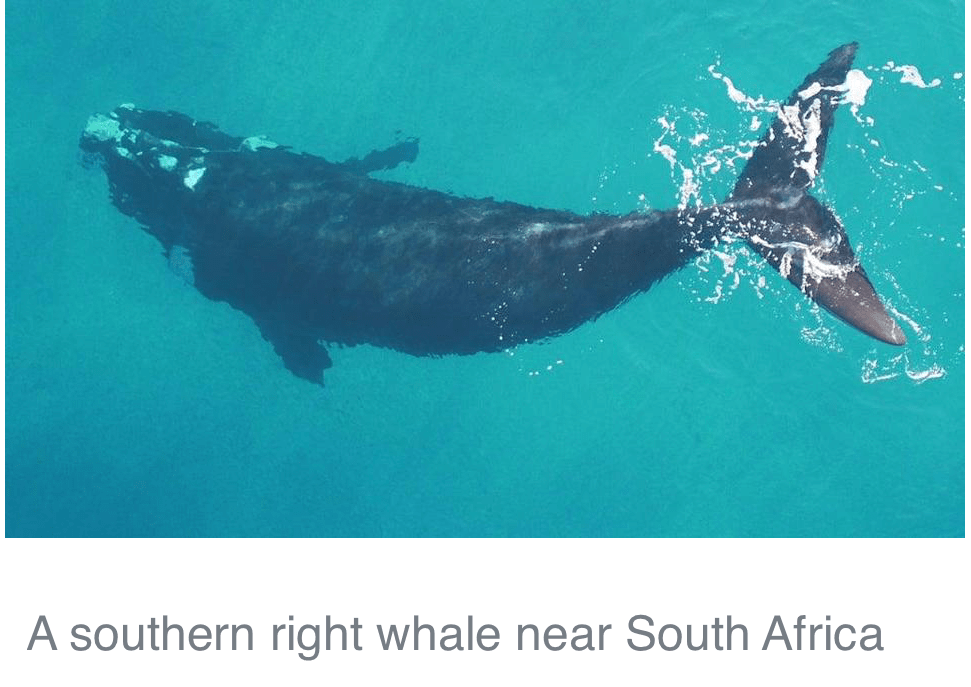
The whale that keeps on giving

The wide vast oceans, 

tropical balm and arctic chill,

teem with living things 

great and small 

And  here dwells the whale – 

God’s tiller of the sea –

formed to frolic in its deeps 

and traverse its lengths. 

From an infinitesimal nil 

to 200 tonnes of mammalian flesh, 

its life spans a century full.  

A life of daily gorging and expurgating 10, 

nay, 20 tonnes of krill 

replenishes the seas with iron,

and spins once more 

the phytoplankton’s oxygen giving, 

carbon absorbing wheel.

From the depths the whale

redistributes food, 

sustaining small fry 

that dare not dive so deep.

Migrating between distant poles 

and warmer summer seas, 

the whale spreads the bounty 

of each mouthful it digests

and spins once more

the global food chain’s thread. 

Under the whale’s ocean watch, 

krill and plankton multiply, 

and so God’s worker feeds 

5000 mouths and more.

Its leviathan frame

 a maritime conveyor belt

of sequestered carbon 

that gracefully sweeps the seas 

till finally at whale fall

 it sinks to rest –

a carbon store 

for evermore 

upon the ocean bed.

Counting on … day 32

16th December 2021

Tackling the causes of global warming requires all of us to undertake changes in the way we live. In particular we need to make changes in the way we consume and in how much we consume. We are encouraged to be conscientious about how we shop: shopping locally, avoiding excess packaging, buying fairly traded products, supporting businesses that pay the Living Wage etc. In Sheen we have both a refill shop, a Saturday market, and an Amazon supermarket! It is up to us to make the right choices to shape the high street we want – and we have to count on each other doing the right thing too!

Green Tau: issue 27

15th December 2021

“Palm oil piece”

Palm oil comes from the palm oil tree which grows in tropical regions of the world. Its fruit – both flesh and kernel – are processed to extract the oil. The oil is attractive for many reasons. 

It contains no trans fats making it healthier than other oils.  It is a good (and affordable) source of vitamins A and E and antioxidants. It is resistant to oxidisation giving it, and things made with it, a long shelf life. It is a highly productive crop: where sunflowers produce 0.7 tonnes of oil per hectare, palm oil produces 4 or more tonnes. It can be used to make a wide range of products from soap to biscuits, toothpaste to icecream, lipsticks to pizzas, pet foods to chocolate. Some is also used as a bio fuel.

Not surprisingly it is in high demand. Global production has increased from about 2 million tonnes in 1960 to 70 + tonnes in 2018 (https://ourworldindata.org/palm-oil). Production on this scale has led to vast areas of land being repurposed for palm oil plantations – with individual plantations covering 10,000 hectares (approximately 10,000 international rugby pitches or a little smaller than Jersey).  

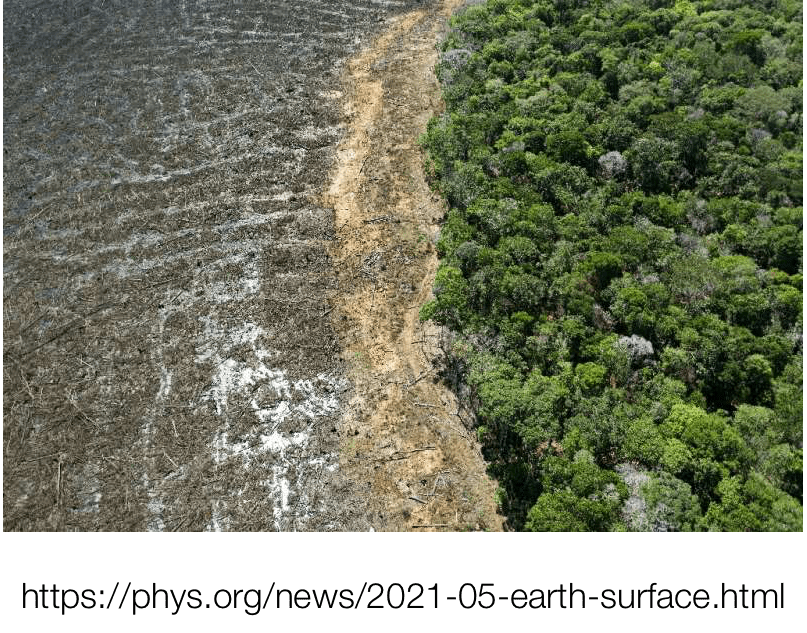
Monoculture on this scale comes with many environmental issues, that lead to droughts, wild fires and flooding – and require widespread use of fertilisers and pesticides which pollute both water supplies and the air.  These detrimental effects are further compounded when the land cultivated involves the destruction of native forests. An estimates 5% of tropical deforestation is attributable directly to oil palm plantations  although on a positive note, the annual loss is decreasing as countries and companies respond to public criticism (https://palmoilalliance.eu/palm-oil-deforestation/).

In places such as Borne and Sumatra much of the land is covered with virgin forest which is home to many plant and animal species and notable home to large mammals such as orangutans, tigers, rhinos and elephants. Expansion of human enterprises removed the equivalent large mammals many centuries ago. One hopes that we will not allow the same to happen again.

On the other hand palm oil production is an important cash crop for many developing economies. As with the cultivation of cocoa beans (https://greentau.org/2021/12/11/green-tau-issue-26/) the profitability of this crop often does not benefit the workers on the ground. In response to both this and the threat to biodiversity – especially orangutans – some consumers and manufacturers actively avoid palm oil. The following logos are used  by

https://www.palmoilfreecertification.org/

Iceland Foods and the https://orangutanalliance.org/

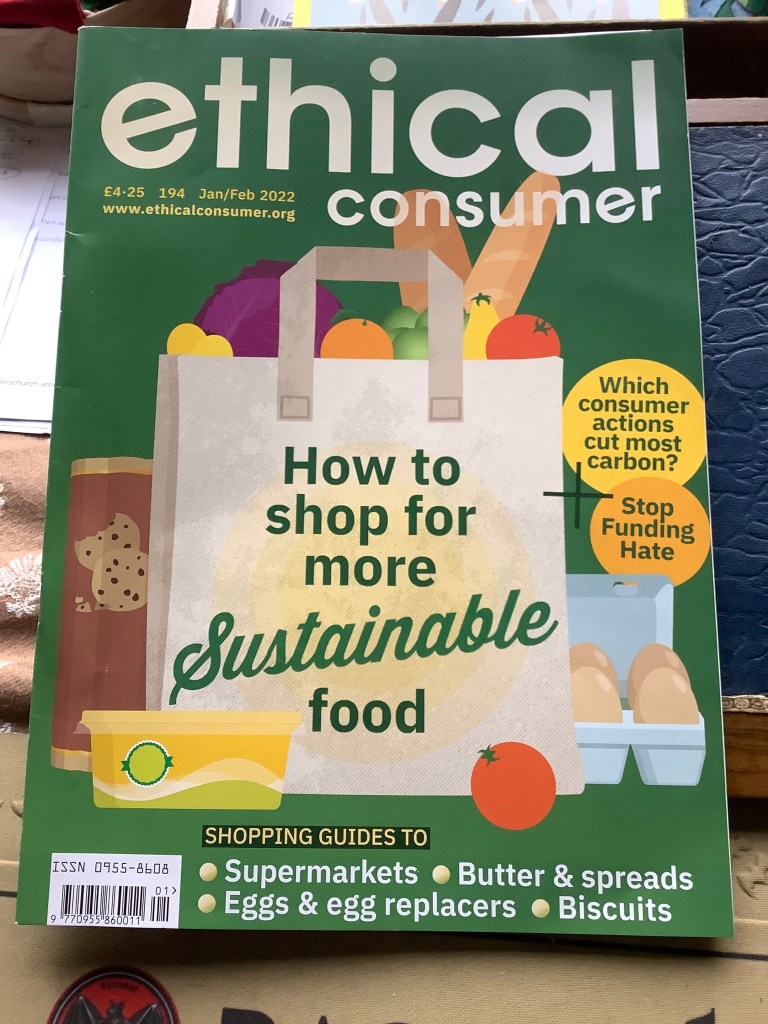
Ethical Consumer has produced a list of manufacturers who avoid the use of palm oil – or use  sustainably sourced palm oil: https://www.ethicalconsumer.org/palm-oil/palm-oil-free-list

The main industry certification scheme for sustainable palm oil is provided by

The Roundtable on Sustainable Palm Oil. However its scheme is not always transparent, and includes companies who are working towards sustainable production. As with cocoa beans, companies can use the certification if they pay the premium that pays for sustainable production somewhere within the supply chain. For more information see https://www.ethicalconsumer.org/food-drink/what-rspo

Traidcraft for one, did not feel that RSPO assured a fair trade product. They have established their own small scale certification platform, Fair Palm through their work with Serendipalm in Ghana. Here oil palm growers use regenerative farming techniques growing a mix of trees and shrubs that provides a range of sustainable – organically grown – crops. In addition the processing of the palm oil fruits is kept small scale so as to employ people rather than automated machines. This video clip shows the process of change from monoculture to agroforestry:  https://youtu.be/moRmOu634rk

If consumer power has already seen a reduction in the rate of deforestation , continuing consumer power should be able to demand truly sustainable and fairly traded palm oil. Careful research will be needed  as the presence of palm oil products may not always be obvious. Palm oil may be hidden under the general title of ‘vegetable oil’ or may be given a chemical name such as aluminium stearate, ammonium Lauretta sulphate, capric glyceride, or ascobyl palmitate. Ethical Comsumer’s palm oil list will help you evaluate which products you wish to buy and which you might prefer to avoid. 

Counting on … day 31

14th December 2021

It is a month since the end of COP26  on climate change. It can seem as if it was something that happened in a different time. It can feel as if it was blip that changed nothing.  Various environmental and faith groups have since then held reflections, trying to evaluate what happened. One of these took place at the the a Franciscan friary at Hilfield. Below is a link to a YouTube recording of their gathering. The first part by Andy Lester of A Rocha gives a very concise overview of what the COP objectives were and how they were and were not met. Both A Rocha and Franciscans are identified by their concern for the world and its environment,  and  for justice. Both agree that faith groups have an important role to play in standing up for the well-being of the environment and all our brethren. 

Counting On … day 30

13th December 2021

Shop small, shop locally. Supporting small and local businesses is good for the local community and for the environment. Local book shops, for example, are more likely to treat staff suppliers and customers with respect, to pay their taxes – and their shop window also to certainly brightens up the high street! These are the shops and local businesses we count on to make life good. Much more rewarding than buying books from Amazon. 

Ethical Consumer recommends using local food suppliers in their recent report on eating at Christmas.  

https://www.ethicalconsumer.org/ethical-christmas/eat-ethically-christmas

Sunday Reflection: third in Advent

12th December 2021

The Collect 

Stir up your power, O Lord, and with great might come among us; and, because we are sorely hindered by our sins, let your bountiful grace and mercy speedily help and deliver us; through Jesus Christ our Lord, to whom, with you and the Holy Spirit, be honour and glory, now and for ever. Amen.

Zephaniah 3:14-20

Sing aloud, O daughter Zion;
shout, O Israel!

Rejoice and exult with all your heart,
O daughter Jerusalem!

The Lord has taken away the judgments against you,
he has turned away your enemies.

The king of Israel, the Lord, is in your midst;
you shall fear disaster no more.

On that day it shall be said to Jerusalem:

Do not fear, O Zion;
do not let your hands grow weak.

The Lord, your God, is in your midst,
a warrior who gives victory;

he will rejoice over you with gladness,
he will renew you in his love;

he will exult over you with loud singing
as on a day of festival.

I will remove disaster from you,
so that you will not bear reproach for it.

I will deal with all your oppressors
at that time.

And I will save the lame
and gather the outcast,

and I will change their shame into praise
and renown in all the earth.

At that time I will bring you home,
at the time when I gather you;

for I will make you renowned and praised
among all the peoples of the earth,

when I restore your fortunes
before your eyes, says the Lord.

Canticle: Isaiah 12:2-6

Surely, it is God who saves me; *
I will trust in him and not be afraid.

For the Lord is my stronghold and my sure defence, *
and he will be my Saviour.

Therefore you shall draw water with rejoicing *
from the springs of salvation.

And on that day you shall say, *
Give thanks to the Lord and call upon his Name;

Make his deeds known among the peoples; *
see that they remember that his Name is exalted.

Sing the praises of the Lord, for he has done great things, *
and this is known in all the world.

Cry aloud, inhabitants of Zion, ring out your joy, *
for the great one in the midst of you is the Holy One of Israel.

Philippians 4:4-7

Rejoice in the Lord always; again I will say, Rejoice. Let your gentleness be known to everyone. The Lord is near. Do not worry about anything, but in everything by prayer and supplication with thanksgiving let your requests be made known to God. And the peace of God, which surpasses all understanding, will guard your hearts and your minds in Christ Jesus.

Luke 3:7-18

John said to the crowds that came out to be baptised by him, “You brood of vipers! Who warned you to flee from the wrath to come? Bear fruits worthy of repentance. Do not begin to say to yourselves, ‘We have Abraham as our ancestor’; for I tell you, God is able from these stones to raise up children to Abraham. Even now the ax is lying at the root of the trees; every tree therefore that does not bear good fruit is cut down and thrown into the fire.”

And the crowds asked him, “What then should we do?” In reply he said to them, “Whoever has two coats must share with anyone who has none; and whoever has food must do likewise.” Even tax collectors came to be baptised, and they asked him, “Teacher, what should we do?” He said to them, “Collect no more than the amount prescribed for you.” Soldiers also asked him, “And we, what should we do?” He said to them, “Do not extort money from anyone by threats or false accusation, and be satisfied with your wages.”

As the people were filled with expectation, and all were questioning in their hearts concerning John, whether he might be the Messiah, John answered all of them by saying, “I baptise you with water; but one who is more powerful than I is coming; I am not worthy to untie the thong of his sandals. He will baptise you with the Holy Spirit and fire. His winnowing fork is in his hand, to clear his threshing floor and to gather the wheat into his granary; but the chaff he will burn with unquenchable fire.”

So, with many other exhortations, he proclaimed the good news to the people.

Reflection 

The collect calls out to God, “Stir up your power!” This is not about Christmas puddings. It has a feeling of a whirl wind, a tornado, that will rip through us. A feeling of an electrical force that will spin things into motion. A centrifuge that will separate pure from dross. In the gospel John summons up the same prospect: Now is the time to act! Something is coming for which you have not yet prepared! That which is fruitless, that which shows no penitence or regret, will be cut away and destroyed. Radically alter your lives now before it is too late! For the messiah is coming with wind and fire and will stir up and sift you, shaking out all that is chaff – separating it from what is good. 

Think how that can transform not just us, but the whole world! At the same time, does this sound rather too scary? Do we want to be stripped of our chaff? Do we want to radically change the way we live? Do we feel that there is anything in us worthy enough to remain?

The words from Zephaniah sound equally radical but in a different way for Zephaniah tells us that God will rejoice over us! God’s love for us must be incredibly huge and incredibly forgiving. Looking at the state of the world, the ways in which we have damaged it, the ways in which we harm our selves and one another through our failure to love, through our greed and selfishness, is it credible that God will rejoice over us? Yes says Zephaniah, God will rejoice over us and will renew us with love, restore

Ing what has been  lost, healing what has been damaged and making us a praiseworthy part of creation. 

Where John suggests practical actions people can take – being generous with what we have, not being greedy, not abusing any power or authority we have – the writer of Philippians commends attitudes: being gentle, joyful and prayerful. Let’s be guided by both these figures and let the transformative power of God work in ourselves and the world we inhabit. 

 Counting On …day 29

12th December 2021

Take a walk somewhere green. It should re-energise you and let you see why it is that we want to protect the natural world. 

Here in Richmond Park, cattle are brought in each year to graze some of the land., a practice that has being going on now for about ten years. As cattle have different grazing patterns from deer, their presence can encourage a greater diversity of wild plants that can thrive on the local acidic soils. 

Green Tau: issue 26 

11th December 2021

The ethics of chocolate 

One of the many treats we associate with Christmas is chocolate. In the UK we spend about £325 a year, supporting an industry worth around £4 billion. However at the other end of the story cocoa farmers in Ghana and the Côte d’Ivoire (the largest producers of cocoa beans) may earn as little as 75p a day – or about half what is needed to cover the essentials of food, housing, health car and education – and some cocoa plantations are known to use child slave labour.  This hardly seems fair! Why is it so?

  • Large cocoa companies buy through a global commodity supply system – a sort of global wholesale market. This system is designed to ensure a stable cocoa supply at the lowest possible price. It is not designed to have regard for the sustainability and well being of individual cocoa growers.
  • Whilst cocoa companies can opt to buy certified eco or sustainable beans. This certification process does not mean that the beans they actually buy is eco/ sustainable but that somewhere an equivalent amount of beans has been so produced. This process lacks transparency.
  • Few large cocoa companies have direct links with the bean growers so there are no shared or common interests. 
  • Global cocoa prices do, despite the global commodity supply system, fluctuate as intermediate  traders buy and sell cocoa options. Such traders operate on a short term basis whilst bean growers must operate on a minimum five year basis: it takes five years before a cocoa tree produces its fruit.
  • Poorly paid bean growers do not have money to invest in fertilisers or to learn new farming techniques so as to improve their productivity. Often they themselves are poorly educated because they too grew up in times of poverty when free education etc was not widely available.
  • The impact of climate change – hotter and wetter weather – damages productivity. The changes in weather allows new pests and diseases to develop which damage the crop. 
  • Large cocoa plantations are focused on the  profit made from their sole crop. Such plantations do not diversify into other cash crops that can be grown along side cocoa trees nor into crops that produce food for the workers. Both of these options could help workers survive poor harvests and down turns in commodity prices. Instead workers from large plantations are  readily sacked when these things happen.
  • Small scale growers do not have the money to invest in new  cocoa  varieties that are more productive and/ or more adapted to the changing climate.
  • Much of the profit derives from the sale of chocolate comes from the value added during the manufacture of the chocolate rather than from the production of the beans. However the economies of many cocoa growing countries is still shaped by the patterns of the colonial era which sees these countries as exporters of raw commodities to the west. 
  • Chocolate manufacturing involves a high level of investment in factories, machinery and transport, including refrigeration. Chocolate manufacture also relies on accessing supplies of sugar and milk which may need to be imported with the possibility of additional tariffs. 
  • Climate change is causing bean growers to move to land at higher altitudes. Here existing forest cover is destroyed to plant cocoa trees.
  • When cocoa tree age and productivity declines, many growers simply plant clear existing forest cover and plant new trees which thrive initially on the fresh soil. Long term however the loss of this forest exacerbates both  the climate crisis and the loss of biodiversity which adversely impacts the health and wellbeing of the local population. 

In a recent report, the Ethical Consumer magazine recommends that consumers should check up on the chocolate they buy: 

Does it come from a company where the manufacturer of the chocolate is closely linked to the grower of the cocoa beans?

Is it made from organically grown cocoa and sugar?

Is the production of the beans linked to deforestation and/ or slave labour?

Are the producers of the cocoa beans paid a fair income?

Is the chocolate manufactured in the country where the beans are grown?

The Rain Forest Alliance and Fair Trade are both organisations  set up to ensure the welfare of those who grow the beans and to ensure the environmental sustainability of the farming methods used. They can provide a direct link between supplier and producer. They also provide a certification system which helps the consumer to buy sustainable chocolate products. 

Sustainably  and fairly produced chocolate will cost more than the cheaper alternatives, but this is just  one way in which we can make our money work to improve and protect life on the earth.

For more information watch this informative YouTube programme: https://youtu.be/-XbP4cn8xhU

Further reading: https://newrepublic.com/article/156569/challenge-sustainable-chocolate

https://www.bbc.co.uk/news/world-africa-56687427

https://www.ethicalconsumer.org/food-drink/shopping-guide/ethical-chocolate

Counting On … day 28

11th December 2021

As well as fir comes, seed heads and dried leaves, paper makes a good material for Christmas decorations. It is easy to get hold off and easy to recycle and doesn’t damage the environment. The following YouTube episode demonstrates how to make a paper star – do feel free to fast forward past the introduction.