Counting on … 180

5th November 2025

The Planetary Health Diet surely offers  win win win solutions, tackling both the issues of climate change, of poor health, of social justice, and of the need for sustainable landuse. 

Climate change – reducing greenhouse gas emissions by 17% (1) 

Health – lowering risks of type 2 diabetes, cardiovascular disease, cognitive decline, obesity and various cancers, saving around 15,000,000 premature deaths a year (2)

Land use – by reducing the demand for meat and dairy, more land would be released for both horticulture (fruit and vegetables) and for wildlife restoration. “Widespread adoption of the diet would require a two-thirds increase in fruit, vegetable and nut production and allow for a one-third reduction in livestock meat production, compared to 2020 levels” (3)

Social justice – switching more resources from producing meat and dairy to the production of fruit, vegetables and pulses etc, would produce enough food to feed the world’s projected population of 10 billion. Although at the same time, questions of distribution (can the food be accessed?), poverty (can people afford the food?) and food waste would also need to be addressed. (4)

Why then is this diet only followed by 1% of people?

Can we as individuals help by adopting the diet ourselves, by talking about it with friends and colleagues, promoting awareness through churches, health clubs etc, by writing to local councillors and MPS?

Useful links to share re diet and planetary health 

https://youtu.be/iWHAE-mw7ao?si=XEJF0-0ciMlv10QW – This consumer-friendly video explores all the nuances of a healthy climate friendly diet and gives a clear summary

https://eatforum.org/campaign/our-cultures-our-meals-cooking-for-planetary-health/ – this web page had beautiful images of meals that match the PHD – most appetising – plus recipes here: https://eatforum.org/eat-lancet/recipes/

  1. https://phys.org/news/2024-08-planetary-health-diet-emissions-environmental.pdf

(2) https://www.foodnavigator.com/Article/2025/10/06/eat-lancet-20-whats-changed/

(3) https://www.carbonbrief.org/eat-lancet-report-three-key-takeaways-on-climate-and-diet-change/

(4) https://www.unep.org/news-and-stories/story/how-feed-10-billion-people

Counting on … 179

4th November 2025

Planetary Health Diet

The EAT-LancetCommission is a global, interdisciplinary group of world-leading researchers with expertise in nutrition, health, agriculture, sustainability, social justice, and policy – working together towards a healthy, sustainable, and just food system. (1) In 2019 this group’s research developed the Planetary Health Diet being a diet that is both healthier for us and for the planet.  It is a dietary outline that can be adapted to suit different cultural traditions and different social contexts – in other words it is a diet that everyone could follow with out difficulty. 

“The PHD is rich in plants: whole grains, fruits, vegetables, nuts, and legumes comprise a large proportion of foods consumed, with only moderate or small amounts of fish, dairy, and meat recommended.” (2)

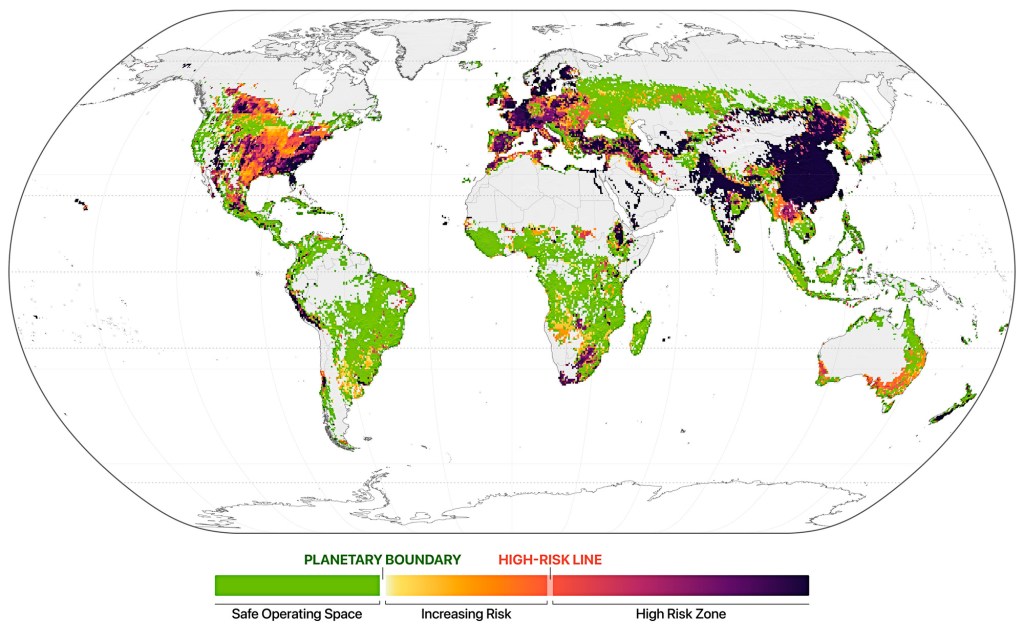
This year their research was updated producing the 2025 EAT-Lancet Commission Report. This report demonstrates that the PHD could both bring the human behaviour back within safe planetary boundaries as well as cutting greenhouse gas emissions. 

This 2025 report outlines eight areas where transformation can lead to positive outcomes.  Protect and promote traditional healthy diets –

  • Create accessible and affordable food environments that increase demand for healthy diets
  • Implement sustainable production practices that store carbon, create habitat, and improve water quality and availability
  • Halt agricultural conversion of intact ecosystems
  • Reduce food loss and waste
  • Secure decent working conditions across the food system
  • Ensure meaningful voice and representation for food systems workers
  • Recognise and protect marginalised groups (3)
  1. https://eatforum.org/eat-lancet

(2) https://eatforum.org/eat-lancet/the-planetary-health-diet/

(3) https://eatforum.org/update/eat-lancet-commission-warns-food-systems-breach-planetary-limits/

Counting on … 178

3rd November 2025

With COP30 a week away, what are the system changes we need to protect the Earth’s  planetary boundaries?

Biodiversity integrity – life forms in all their variety are key to our wellbeing and survival. We re reliant on functioning ecosystems for clean air and water, for food and medicines, for clothing and shelter. And functioning ecosystems depend on there being both a diversity of and a sufficient number of, plants, animals, insects, bacteria etc. For example, without fungi and earth worms, plant roots, decaying leaves etc the fertility of the soil will be depleted and food supplies diminished. 

We humans, through both excessive use of some resources and through a failure to conserve others, have so diminished the integrity of the Earth’s biodiversity framework, that it is now in the danger zone: that planetary boundary has been exceeded. It is something that has been apparent for years, and in 2022 the nations of the world drew up the Kunming-Montreal biodiversity framework outlining how the Earth’s biodiversity could be restored. From this agreement came the undertaking that nations would by 2030 restore and protect the biodiversity of 30% of the land and of the seas in their control.(1) This is an ambitious target given how reluctant people and organisations are to change the way they live and do business. It is an issue that needs to be kept at the top of the agenda for all international and national decision makers. In a recent blog, it was noted that the “the impact of biodiversity risks to the UK economy and financial institutions are equal or greater than climate risks.” (2)

  1. https://www.unep.org/resources/kunming-montreal-global-biodiversity-framework

(2) https://blog.actuaries.org.uk/2025/9/nature-at-risk-models-at-fault-why-biodiversity-cant-wait/

Further info on the importance of biodiversity – https://www.bbc.co.uk/news/explainers-60823267

Feast of All Saints

2nd November 2025

Reflection with readings below

All Saints tide is a time for celebrating what it is to be a holy community, a community shaped by God. It is a community that stretches back to the beginning of time when God first created living beings. It is a community that encompasses both past generations and the generations to come.

Each generation has in turn taken from and given back to the earth with the intention of passing on a better future for the generations to come.  Each generation has been guided by sages and prophets – by those who have learnt from the past,  by those who can see into the future and by those in tune with the wisdom of God. Not every generation has succeeded in passing on a better life to their offspring, but overtime we can see how life has improved for many people.

However now in the first few decades of the 21st century, human greed and folly – and to an extent – human ignorance, look set to hand onto our children and our children’s children, a much more depleted, more polluted, more damaged world than our parents handed onto us. 

Of the nine planetary boundaries that ensure a comfortable and sustainable existence, seven have been exceeded. In terms of climate change we are now heading for 2C of heating and ever increasing extreme weather events. In terms of the oceans, acidity levels and rising temperatures are already causing the bleaching of coral reefs. In terms of water systems, over extraction of ground water, shifting rainfall patterns and loss of glaciers is already leading to water shortages. Many parts of the world had seen significant losses of biodiversity which is leading to the collapse of ecosystems that maintain soil fertility, ensure clean air and water, pollinate crops etc. Of the various novel chemicals we have introduced, plastic nano particles are now to be found in very part of the planet from the icecaps of mountains to the bottom of ocean trenches, and even in the cells in our bodies. And all this is due to human activity. 

What is perhaps more distressing is that most people are either unaware or unconcerned about this! 

The Letter to the Ephesians talks about the inheritance we have received in Christ. The gospel that Jesus taught, the power of healing that he brought, the gifts of wisdom that he shared, weren’t just for that generation but for all generations. The gospel message is even today the hope of salvation, the hope that we can turn things around and hand on to the next generations a world that is being healed and restored. And we must make sure that that message is heard, that that wisdom is relearnt, and that the damage we have caused is healed. 

The words of today’s Gospel – the Beatitudes – is a reminder how far apart God’s ways and humanity’s ways have become. And how radically we must change direction. “Love your enemies, do good to those who hate you, bless those who curse you, pray for those who abuse you. If anyone strikes you on the cheek, offer the other also; and from anyone who takes away your coat do not withhold even your shirt. Give to everyone who begs from you; and if anyone takes away your goods, do not ask for them again. Do to others as you would have them do to you.” 

How can we find ways of putting these directions into practice? How can we find ways – with stories and parables, with positive actions – to enthuse others to hear and respond? How can we transform a whole generation? The church,  as Jesus’s agents of change, has a lot of work to do! 

Let’s sing praises to God as we celebrate All Saints Tide, as we celebrate all who have gone before us. And let’s pray for God’s blessing as we determine to pass on a goodly inheritance to the generations to come.

Daniel 7:1-3,15-18

In the first year of King Belshazzar of Babylon, Daniel had a dream and visions of his head as he lay in bed. Then he wrote down the dream: I, Daniel, saw in my vision by night the four winds of heaven stirring up the great sea, and four great beasts came up out of the sea, different from one another. 

As for me, Daniel, my spirit was troubled within me, and the visions of my head terrified me. I approached one of the attendants to ask him the truth concerning all this. So he said that he would disclose to me the interpretation of the matter: “As for these four great beasts, four kings shall arise out of the earth. But the holy ones of the Most High shall receive the kingdom and possess the kingdom for ever—for ever and ever.”

Psalm 149

1 Hallelujah!
Sing to the Lord a new song; *
sing his praise in the congregation of the faithful.

2 Let Israel rejoice in his Maker; *
let the children of Zion be joyful in their King.

3 Let them praise his Name in the dance; *
let them sing praise to him with timbrel and harp.

4 For the Lord takes pleasure in his people *
and adorns the poor with victory.

5 Let the faithful rejoice in triumph; *
let them be joyful on their beds.

6 Let the praises of God be in their throat *
and a two-edged sword in their hand;

7 To wreak vengeance on the nations *
and punishment on the peoples;

8 To bind their kings in chains *
and their nobles with links of iron;

9 To inflict on them the judgment decreed; *
this is glory for all his faithful people.
Hallelujah!

Ephesians 1:11-23

In Christ we have also obtained an inheritance, having been destined according to the purpose of him who accomplishes all things according to his counsel and will, so that we, who were the first to set our hope on Christ, might live for the praise of his glory. In him you also, when you had heard the word of truth, the gospel of your salvation, and had believed in him, were marked with the seal of the promised Holy Spirit; this is the pledge of our inheritance toward redemption as God’s own people, to the praise of his glory.

I have heard of your faith in the Lord Jesus and your love toward all the saints, and for this reason I do not cease to give thanks for you as I remember you in my prayers. I pray that the God of our Lord Jesus Christ, the Father of glory, may give you a spirit of wisdom and revelation as you come to know him, so that, with the eyes of your heart enlightened, you may know what is the hope to which he has called you, what are the riches of his glorious inheritance among the saints, and what is the immeasurable greatness of his power for us who believe, according to the working of his great power. God put this power to work in Christ when he raised him from the dead and seated him at his right hand in the heavenly places, far above all rule and authority and power and dominion, and above every name that is named, not only in this age but also in the age to come. And he has put all things under his feet and has made him the head over all things for the church, which is his body, the fullness of him who fills all in all.

Luke 6:20-31

Jesus looked up at his disciples and said:

“Blessed are you who are poor,
for yours is the kingdom of God.

“Blessed are you who are hungry now,
for you will be filled. 

“Blessed are you who weep now,
for you will laugh. 

“Blessed are you when people hate you, and when they exclude you, revile you, and defame you on account of the Son of Man. Rejoice in that day and leap for joy, for surely your reward is great in heaven; for that is what their ancestors did to the prophets.” 

“But woe to you who are rich,
for you have received your consolation. 

“Woe to you who are full now,
for you will be hungry. 

“Woe to you who are laughing now,
for you will mourn and weep. 

“Woe to you when all speak well of you, for that is what their ancestors did to the false prophets.

“But I say to you that listen, Love your enemies, do good to those who hate you, bless those who curse you, pray for those who abuse you. If anyone strikes you on the cheek, offer the other also; and from anyone who takes away your coat do not withhold even your shirt. Give to everyone who begs from you; and if anyone takes away your goods, do not ask for them again. Do to others as you would have them do to you.

God’s love encompasses all

1st November 2025

For the earth will be filled with the knowledge of the glory of the Lord, as the waters cover the sea. Habakkuk 2:14

You Lord, are the source of all good things: 

We praise you.

You call us to tend and care for your creation: 

May we strive to do your will.

You have made us as brothers and sisters with all that lives: 

May we live together in peace.

A reading from Genesis 1:1-2, 9-10, 20, 31

In the beginning when God created the heavens and the earth,  the earth was a formless void and darkness covered the face of the deep, while a wind from God swept over the face of the waters. And God said, ‘Let the waters under the sky be gathered together into one place, and let the dry land appear.’ And it was so. God called the dry land Earth, and the waters that were gathered together he called Seas. And God saw that it was good. And God said, ‘Let the waters bring forth swarms of living creatures, and let birds fly above the earth across the dome of the sky.’ God saw everything that he had made, and indeed, it was very good. And there was evening and there was morning, the sixth day.

Response
As the oceans encompass the earth, 

so the Lord’s love encompasses creation.

As the seas fill the depths, 

so the Lord’s love fills the hearts of all.

As the waves constantly wash upon the shore, 

so the Lord’s love constantly washes upon our souls.

As the oceans are home to many creatures, 

so the Lord creates a home for every living thing. 

As the seas produces a rich harvest, 

so the Lord provides food so that all may eat. 

As the waves embody the energy of the sun and wind, 

so the Lord energises the world.

More than the sounds of many waters, 

than the mighty breakers of the sea, 

the Lord on high is mighty. Psalm 93:4

Counting on … 177

31st October 2025

When I googled (using Ecosia) “How much single use plastic is bought for Halloween” the first response was from Amazon: “Buy Halloween Plastic: Shop Halloween Plastic Now”!!!

I’m sure it doesn’t occur to people as they decorate their homes with hazard tape, fake gossamer cobweb material, plastic bones and the like, that much (if not all) of this plastic is going to end up polluting the environment. 

Even as it hangs there, fluttering in the wind, it will be shedding micro-particles (especially the cobweb material that will likely snag on twigs), and gathered up and binned next week it will invariably end up in landfill where micro- and nano-plastic particles will leak into the air and the water system. En route bits of plastic will be blown away to ‘decorate’ tree and fences, or be ‘eaten’ by animals, or will wrap themselves in a stranglehold around other creatures.

Nor do I think it occurs to them how this sale and purchase of single use plastic feeds the profits of oil industries seeking to find ongoing markets for their lethal product. Nor do I think it occurs to them that many of these items will have been made in sweat shops in far distant parts of the world.

Counting on … 176

30th October 2025

Private jets – 3

For climate activists there is also the issue of justice. The increasing use and ownership of private jets represents the growing gap between the wealthiest and the poorest. This gap is socially unjust but doubly so, because the richer you are the bigger your carbon footprint. And the bigger your carbon footprint the more the damage you cause to the environment, the greater the impacts of adverse weather events, pollution, food and water shortages on the poorest. 

“If everyone used private jets and superyachts like 50 of the world’s richest billionaires, the remaining carbon budget to stay within 1.5C would be burned up in just two days” quotes Oxfam’s report, From Poverty to Power (2024). The report looked at data on the luxury transport consumption of 50 of the world’s richest people and found that their  consumption emissions totalled more that the poorest 2% of the world’s population (155 million people).  

Amongst its recommendations, Oxfam’s report included –

  • Taxing the super-rich to curb their excessive consumption and investment emissions, and their role in propping up polluting industries.
  • Banning or punitively taxing carbon-intensive luxury consumptions, starting with private jets, superyachts, sports utility vehicles (SUVs), and frequent air travel.
  • Regulating corporations and investors to radically and fairly reduce their carbon emissions. (1)

There is also an issue for economists trying to address net zero. In a series produced by The Guardian, entitled The Great Carbon Divide, the economist Thomas Piketty says “Questions of social and economic class must be at the centre of our response to the climate crisis, to address the huge inequalities between the carbon footprints of the rich and poor and prevent a backlash against climate policies. Regulations will be needed to outlaw goods and services that have unnecessarily high greenhouse gas emissions, such as private jets, outsized vehicles, and flights over short distances.” (2) 

(1) https://frompoverty.oxfam.org.uk/billionaire-pollutocrats-what-we-can-do/

(2) https://www.theguardian.com/environment/2023/nov/22/ban-private-jets-to-address-climate-crisis-says-thomas-piketty?CMP=Share_iOSApp_Other

Counting on … 175

29th October 2025

Private jets -2

For climate activists there are three clear reasons for wishing to ban private jets.

  1. On a per passenger basis they are the most polluting mode of transport
  2. Private jets represent a most unequal form of transport. They are the domain of a small elite – whilst 80% of the world’s population have never flown. (There are about 22,000 to 23,000 private jets worldwide). 
  3. They are a wasteful and unsustainable mode of transport, carrying a small number of passengers, flying short distances, making them fuel-inefficient. (1) 

As a status item, with a growing wealthy elite in not just Europe and North America but globally, there is the potential risk that private jet use and ownership will rise, increasing their impact on the environment. 

“In recent years, the private aviation market has experienced unprecedented growth. Once seen as a luxury reserved for billionaires and celebrities, private jets are now becoming a practical choice for entrepreneurs, corporations, and even affluent families. The reasons behind this surge are multifaceted—ranging from convenience and privacy to safety and efficiency” !! (2) 

In the UK (second most frequent private jet flyer after the USA)  flights in private jets have increased fourfold between 2020 and 2022 – from 19,000 to 90,000 flights a year. 

You can sign Greenpeace’s petition calling for a ban on private jets here: 

  1. https://www.greenpeace.org/international/story/69392/3-reasons-why-we-need-to-ban-private-jets/
  2. https://www.entrepreneurshiplife.com/soaring-demand-for-private-jets/
  3. https://simpleflying.com/uk-private-aviation-statistics/

Counting on … 174

28th October 2025

Private Jets -1

The International Council of Clean Transport report on greenhouse gas pollution found that private jets accounted for only 2%-4% of annual aviation emissions. (1) Are private jets as a sub sector of the aviation industry worth targeting?

Would limiting (eg by higher taxation) or banning private jets be a popular move for a government? Are the people who fly in private jets people a significant group within the electorate? 

Are those who can afford private jets, also paying large amounts in tax – or are private jets tax deductible? 

Are they movers and shakers in driving the economy and creating jobs? 

Does the private jet industry itself create a significant number of jobs? 

The current Labour government has increased air passenger duty (APD) which includes ordinary commercial flights and flights on private jets. The tax on the latter is increasing by 50% such that the  most expensive rate for private jet flyers will increase from £607 to £673 in 2025, reaching £1,141 per passenger by April 2026. 

“Those individuals who travel in larger more luxurious private jets may see a bigger increase,” the government said. “The additional increase to the higher rates ensures that APD costs as a proportion of the hiring costs for private jets are more in line with APD on commercial airlines as a proportion of airfares. The increase to the higher rate will ensure that users of private jets continue to make a fair contribution to the public finances.” (2)

Will this be sufficient to curb private jet flights? 

The Green Party has proposed  “a ban on all private jets taking off or landing at UK airports. They say this form of transportation, favoured by a super-rich elite, is the ultimate symbol of ‘climate inequality’ where the richest 1% of the population produce as much planet warming pollution each year as 5 billion people making up the poorest two-thirds of the global population.” (3) 

(1) https://theicct.org/wp-content/uploads/2025/06/ID-349-–-Private-jets_report_final.pdf

(2) https://www.independent.co.uk/travel/news-and-advice/budget-2024-private-jet-tax-rise-b2638927.html

(3) https://greenparty.org.uk/2023/11/28/green-party-calls-for-ban-on-private-jets-the-ultimate-symbol-of-climate-inequality/

Information on campaign groups opposing private jets

Counting on … 173

27th October 2025

A good example of the link between high income consumers and high carbon footprints, is air travel. Aviation accounts for 2.5% of global CO2 emissions (2) yet in anyone year only 5-10% of the world’s population boards a plane.  And even within that minority who do fly, most of the flights are undertaken by an even smaller percentage of frequent flyers. In the UK (a country producing the third highest level of air flight emissions after the US and China) 70% of flights are taken by just 15% of the population. (1)

Does it have to be this way?

No – there are alternatives to air travel. Rail travel has a significantly smaller carbon footprint, and for travel within Europe and potentially across other continents, is practical mode of transport. However current investment plans and tax/ subsidy policies favour air travel over rail. 

Government policies could start with the premise that the number of air flights needs to be reduced (or at the least kept at current levels). Shaping policies around that would include developing alternative modes of transport for people and goods, enabling manufactures to adapt to different transport network, encouraging different models of tourism.

  1. https://www.ecowatch.com/frequent-flyer-emissions-2651292287.html
  2. https://ourworldindata.org/global-aviation-emissions

For information on flight free travel – https://flightfree.co.uk/