The Green Tau: issue 39

4th April 2022

If gardens became nature reserves

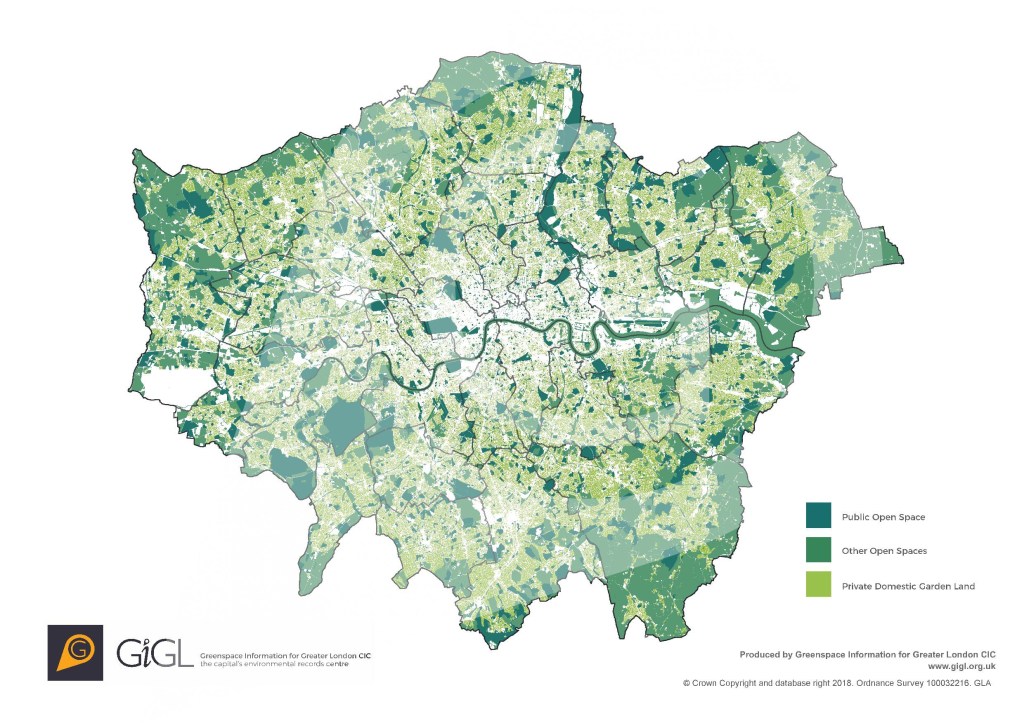
Did you know that the ordinary domestic garden makes up one third of all green space in London? 

According to Greenspace Information for Greater London, GiGL roughly  47% of Greater London is ‘green’, of which 33% is natural habitats within open space and an additional 14% is estimated to be vegetated private, domestic garden land. https://www.gigl.org.uk/keyfigures/ This is not just true of London, but for the whole country. According to the RHA ‘Private garden space in Britain cover about 728,900 hectares so their potential as a haven for wildlife is considerable’.   If each garden were actively managed as a nature reserve just think what an impact that would have on biodiversity and environmental wellbeing!

https://www.gigl.org.uk/wp-content/uploads/OpenSpace-POS-PrivateGardens2018.jpg

Domestic gardens can offer a diversity of plants and micro habitats making them ideal environments for a wide diversity of insects and beetles, birds and other small creatures. 

A diverse range of plants can not only provide food and shelter for a great number of birds, insects and other creatures, they can also be chosen to provide a year round supply of blooms that ensure  constant supply of food for insects – and a good supply of insects will ensure food for other creatures further up the food chain.

A variety of height and density of plants and planting, including trees and bushes, climbers and creepers, ground cover and grasses will again meet the needs of diverse range of fauna. Areas of both shade and sun, warm hollows and places giving shelter from the wind will be appreciated. Further micro habitats can be provided with the addition of ponds or bog gardens, log piles and dry stone walls.

Encouraging wildlife is also about avoiding things that can cause damage such as pesticides, herbicides and slug pellets, and the use of peat which comes at the expense of peat bogs which are an exceedingly valuable habitat in their own right. 

Many creatures will need more than the space offered by one garden. Their normal habits maybe to move or roam over a wide area – hedgehogs for example can travel up to 2km as part of their nighttime forays. Whilst robins may guard one garden as their territory, other birds such as swallows, long tail tits, and jackdaws will feed across a much wider area. Gardens can act as corridors and stepping stones linking one garden to the next as well as linking into wider green spaces such as parks and commons. Small holes at ground level will allow hedgehogs to travel from one garden to the next, whilst trees, shrubs and climbers will provide safe stopping off places for small birds.

Gardens also benefit our own well being. The National Open Gardens Scheme identifies 5 ways in which we can benefit from our gardens – https://ngs.org.uk/gardens-and-health-week/

  1. Do something (physical) – gardening itself, or playing, doing yoga, making a bug hotel, painting
  2. Do nothing! Spend time relaxing, just observing what’s there, de-stressing 
  3. Be alone – your garden can be an escape form the  demands of world and work. Find a quiet corner that is your personal retreat.
  4. Be sociable – share the garden with friends, chat over the fence, take tea together, eat meals outside, play games 
  5. Go natural – look at the shapes and colours, absorb the scents, feel the textures, listen to the sounds

For those without gardens, house plants can be equally beneficial and rewarding – https://ngs.org.uk/a-haven-of-houseplants/

Gardens are places to grow food and make us aware of the journey from fork to plate. Growing food encourages us to eat more healthily. Growing your own salads, herbs and soft fruits can significantly reduce the carbon footprint of what you eat.

Gardens can also protect us from some of the effects of the climate crisis. Gardens with plenty of vegetation will add moisture to the air making it feel comfortable during hot weather and trees of course provide shade as do climbing plants trained over pergolas. Climbing plants can shade walls from the sun and keep the building cooler, whilst plants trained around windows can cast shade that cools the room inside.  Gardens are good at both absorbing rainwater especially if there plenty of soft areas – lawns, flowerbed and vegetable plots – rather than hard surfaces such as pavements, patios and compressed soil. Gardens with plenty of plants are good at slowing the rate at which water drains into the water table as leaves and roots trap and delay the rain. Longer grass is better in this respect than short grass, and will equally better withstand periods of drought. Both absorbing and delaying the rate of water  flow reduces the risk of flooding. You can even be proactive by emptying water butts in advance of heavy rainfall. 

Gardens are natural carbon sinks. Trees, plants and lawns all absorb carbon as they grow. So does a well tended soil. This is a soil that is not over worked or compacted but rather is well supplied with hummus that makes the soil home for a multitude of worms, beetles, bugs, bacteria and fungi, all busily absorbing carbon and releasing nutrients into the soil. Further ideas for reducing the carbon footprint of your garden include composting garden and uncooked vegetable food waste, recycling canes and flower pots etc, growing plants from seeds, and using hand rather than power tools – https://www.gardenersworld.com/how-to/grow-plants/how-to-reduce-your-carbon-footprint-in-the-garden/ Or visit the RHS web site https://www.rhs.org.uk/gardening-for-the-environment/low-carbon-gardening/the-low-carbon-garden 

“When we garden, not only do we make the world a more beautiful place, we also improve local biodiversity, cool overheated cities, mop up pollution and mitigate against flooding, all while improving our own health and well-being, which together have been shown to directly determine how effectively our society functions. Plants are key solutions to pretty much every major problem that faces our species today.” https://www.theguardian.com/lifeandstyle/2022/feb/26/green-planet-how-gardening-can-save-the-world

Green Tau: issue 38

29th March 2022

Am I Wealthy?

When we think of wealth our first thoughts are probably of piles of money – and if not actual notes and coins, them lots of zeros on one’s bank balance. When we talk about someone’s wealth, we do so in terms of pounds. According to The Times Rich List the wealthiest person in the UK for 2021 was Sir Leonard Blavatnik, with a wealth of £23 billion. The wealth of nations is also typically measured in pounds/ dollars etc. The wealthiest nation in the world is the United States with a gross domestic product of  $18.62 trillion. The UK stands in 5th position with $2.65 trillion. 

Although we talk in terms of pounds and dollars, these examples of wealth are not piles of money (whether as cash or bank balances). Rather they are investments in stocks and shares, investments in property, luxury yachts, art works etc – all of which can be expressed in monetary terms and could in theory be sold/ liquidated to provide cash. 

But are there other forms of wealth? 

Wealth has in the past had the meaning of happiness as well as financial riches, and the word developed from the Middle English ‘wele’ or ‘weal’ meaning well-being. 

As a resident of Richmond in south west London, many things have and do contribute to my well-being. They are a wealth that I have inherited through being a citizen of the UK.

  • I was born into stable middle class family. My childhood was happy with no traumatic events. My parents were supportive and encouraging. I had a happy extended family of grandparents, aunts and uncles. 
  • I spent my childhood in a rural part of the country where I learnt to appreciate the natural world.
  • Growing up I had the benefits of free health care (including dental care) and free education right through to my graduation from university. 
  • I continue to benefit from free healthcare – and can afford to access dental and other therapeutic treatments.
  • I am free to follow my chosen religion.
  • Even though I am a woman I can vote, I am free to work outside the home, and I can expect my husband to assist with domestic tasks and childcare.
  • I live in a country with reliable mains water, electricity and gas; with well maintained roads and a public transport network; with regular refuse collections; with dedicated emergency services and with a welfare and benefits system. I will in due course benefit from a state pension.
  • I live in a country with a respected police service and judicial system. 
  • I live in a country where bribery and corruption is not an every day occurrences.
  • I live in a country with well endowed schools, universities, museums and libraries. 
  • I live in a country with a free press. 
  • I live in a country where green spaces are protected, where there are rigorous standards for food quality and animal welfare. 

I am not saying that all the provision of all these in the UK is perfect and that there isn’t considerable scope for improvement, but compared to what is available for the average member of our global community, they are a significant source of wealth and wellbeing.

This wealth, from which I have and do benefit, arises from investments made by earlier generations and, to a lesser extent, from the current spending of tax revenues by the government and local authorities. It is a wealth that derives from the UK’s early investment in the Industrial Revolution, and from its exploitation of resources from other countries – either those which it colonised or those with which it arranged beneficial trading relationships. It is a wealth that has developed through the widespread use of, initially coal, and subsequently oil and gas, which has contributed significantly to the global climate crisis that we all now face. 

Is this wealth that I have something I can redistribute? I benefit from it but I don’t own it. I can’t realise its cash value and redistribute it. I can’t divide up or share my education or my good health, but I can use them to change the world. I can inform and campaign; I can recognise the injustices and inequalities that exist between people and across the world; I can volunteer and protest; I can influence by example; and I can effect change through my financial spending and donations.

The Green Tau: issue 37 

17th March 2022

Natural Wealth

We usually think of wealth in terms of money. Maybe we have an image of a vault full of coins and precious jewels like that of Harry Potter’s at Gringotts Bank.  Today I want to focus on natural wealth by which I mean the stock of natural resources that the earth provides for us. These natural resources range from water, air and soil,  plants and animals, to rocks and minerals.  The World Bank describes these things as being ‘natural capital’   which points to their use as means of generating something more. This is not an inappropriate concept. It fits with the repeated phrase used in Genesis chapter 1, ‘Be fruitful and multiply’. In creating the world, God was creating a thing that would grow and reproduce, diversify and abound, prosper and flourish.

What the two terms, natural wealth and natural capital, may point to is that natural resources can be misused  diminishing wealth and productivity. Let’s look at a couple of examples.

Soil

Soil is a natural resource to be found in all parts of the world. It should be valued as a key part of the world’s natural wealth. Soil enables plants to grow. Without plants we would starve and so too would all other creatures. Without plants, our atmosphere would suffer: carbon dioxide would cease to be absorbed and oxygen produced. Soil absorbs water preventing flash floods. Soil is home to wealth of biodiversity – moles, worms, ants, mites, fungus, bacteria etc. it is the nesting place for puffins and shearwaters, for rabbits and foxes.

Soil was not created ready formed. Soil is the result of the erosion of rocks creating small mineral particles; the decaying  of plant and animal remains; the addition by water of further chemicals; and the digging, mixing, tilling action of creatures as diverse as ants and worms, birds and badgers. When soil is being newly formed such as on lava outcrops or newly exposed rock surfaces, or where shores have been exposed, pioneer species of plants will begin the soil making process, to be replaced overtime by other plants, insects and animals as the soil’s fertility increases. 

However the wealth of the soil can be lost. If it looses its protective plant covering, it can be blown or washed away. If its goodness is used to grow successive generations of plants without that goodness being replaced, it becomes a non-fertile dust. If is infused with poisons (pesticides, herbicides etc) the biodiversity within the soil will lost and with it the ability of the soil to process and absorb decaying plant and animal material that gives the soil its fertility.  If it is overridden by heavy equipment, its structure is crushed, spaces for air and water are lost and with it, the soil’s ability to support life forms. Across the world, as self destructive as it may seem, humans misuse the soil: deforestation; monoculture; use of increasingly large and heavy farm equipment; use of insecticides, herbicides and overuse of artificial fertilisers; destruction of the infrastructure for biodiversity (hedgerows, verges, copses); over grazing etc. All these contribute to the destruction of the soil. 

All soil, cultivated or not, needs to be protected. Where it is cultivated it needs to be carefully tended and fed, and its structure and maintained. 

Forests

Forests are another key part of the natural wealth of the planet. Forests stabilise and protect soils. They are home to a great variety of different plants (more than just trees!), animals, birds, insects and many other living things. They provide humans with timber for building (homes, railway tracks,  bridges etc), for furniture, tools boxes. Timber for making paper and card, for making fabrics (eg viscose). Fruit, nuts and saps for food, as well as saps that are used to make rubber and resins. Many forest plants have medicinal uses. Forests provide shade which can be used to protect vulnerable crops (eg shade grown coffee). Tree cover can protect the soil for either drying out or being washed away, and sylvan farming techniques utilise this value of forests. Forests slow the flow of water so reducing the risks or scale of flooding. Forests absorb carbon and contribute considerably counterbalancing the excesses of carbon dioxide generated by human lifestyles.

And yet the wealth of our forests is being diminished. 

‘Forests cover 31 percent of the global land area – 4.06 billion hectares… Between  2015 and 2020, the rate of deforestation was estimated at 10 million hectares per year, down from 16 million hectares per year in the 1990s.  Agricultural expansion continues to be the main driver of deforestation and forest degradation and the associated loss of forest biodiversity… Large-scale commercial agriculture (primarily cattle ranching and cultivation of soya bean and oil palm) accounted for 40 percent of tropical deforestation between 2000 and 2010, and local subsistence agriculture for another 33 percent.’  https://www.fao.org/state-of-forests/en/

Oil

Oil, like coal and gas, is a substance formed over many millennia in very precise circumstances that coincided hundreds of millennia ago. It is a highly adaptable material that can be used not just as an energy source, but also to make products as diverse as lipstick and fertilisers, and of course, plastic. Plastic has proved a very useful material being cheap, light, non perishable, highly mouldable etc. However oil was formed by locking away carbon deposits over hundreds of thousands of year but which we are now released into the atmosphere in just three centuries. This rate of release is far more greater than the ability of the atmosphere to safely contain it. Oil has become the biggest human pollutant. Oil extraction, through oil leaks etc is also a cause of  localised pollution. And in addition we are now aware of the polluting effects of the plastics we have produced – micro particles of plastic have been found in all parts of the planet as well as in animals, fish, birds and human beings. Oil whilst appearing to offer many benefits, has and continues to damage the earth.

Unlike soils, which can be rescued and regenerated, and forests that can be replanted and restored, oil – and other minerals that we extract from the earth – is a non renewable resource. For those those things for which oil-based products are beneficial, we should make every effort to recycle and reuse all that we do have.

Natural wealth is a gift from God, a gift of creation. We should not squander or degrade it. Rather we should cherish and nurture it. This should determine how we use that wealth, how we care for the soils and the forests, how we use – or rather don’t use oil -and how we recycle and reuse plastic items.

Whilst the level of care given to our natural wealth may vary between nations (and this could be for any number of reasons such as economic policies, poverty, heritage), the distribution of natural wealth across the planet is independent of  national boundaries and its distribution could be viewed as inequitable. Some countries have large areas of fertile soil conducive to growing wheat, corn or rice. Others have soils and climates conducive to the growth of forests. Some countries have large reserves of minerals such as iron ore, lithium and gold. Some countries have large reserves of fossil fuels. Some have tides, rivers and reservoirs suitable for producing hydro electricity, or climates suitable for wind and solar power. More recently we have realised that some countries have reserves of natural wealth that excel as carbon sinks: forests, peat bogs, mangroves, kelp forests. What we have not perhaps resolved is how we share this global wealth fairly – other than through economic markets – or how we share the responsibility of caring for this wealth, and ensuring that we pass it on us diminished to future generations.  

Whilst wealth and money are not, per se, the same thing, putting a monetary value on natural wealth helps countries and people to recognise the value of natural wealth and to shape their actions accordingly. The World Bank has been working on an Ecosystem Accounting framework that allows countries to assess the services contributed by natural wealth and give them a monetary value. By having a standardised system countries can  calculate how the natural wealth contributes to their GDP. “This is a huge step towards seeing nature as an economic asset that needs to be managed and preserved to ensure sustainable growth. For example, the Government of Cambodia asked the World Bank to provide the economic rationale behind preserving 65% of the country’s forests as protected land. While some benefits were  obvious, it did not have the economic analysis to fully justify such a  wide-ranging decision. Using ecosystem accounting, the World Bank team supported the Government of Cambodia in quantifying a suite of services that forests offer  –  water, agriculture and hydropower, ecotourism and carbon storage – for the Pursat River Basin in the Cardamom Mountains in Cambodia. The analysis revealed that economic gains from preserving the forests was five times higher than cutting them down for charcoal production or agriculture. It also found that the benefits to other economic sectors derived from forest ecosystems are 20 times higher than the cost of maintaining them”. https://blogs.worldbank.org/voices/giant-leap-towards-measuring-natures-contributions-economy

The British Government, too, is developing the use of ecosystem accounting. ‘The Office for National Statistics estimate that England’s woods and forests deliver a value of services estimated at £2.3 billion annually. Of this figure, only a small proportion – 10% – is in timber values. The rest of the value derives from other more ‘hidden’ benefits to society, such as human recreation and air pollution removal, which improve health, and carbon sequestration which can help combat climate change’. https://www.gov.uk/government/news/natural-capital-tool-launched-to-help-protect-the-environment If followed through, this should ensure that we – as a nation, as a society, as landowners and as business enterprises –  do actually value and safeguard our forests and woodlands. 

As individuals we can speak out for and protect our world’s natural wealth –

  • Be an ethical consumer 
  • Be an ethical investor whether that is with direct investments or via investments made on your behalf by your pension fund provider, insurers, bank etc.
  • Support nature conservation schemes, nature friendly farming research, alternative energy etc
  • Be a campaigner, make your voice heard 
  • Visit and enjoy local nature reserves and green or blue spaces. 

Visit https://greentau.org/2022/02/24/eco-tips/ for more  tips on being a sustainable consumer.

Green Tau: issue 36

8th March 2022

Suddenly the war in Ukraine is revealing anew our (in the UK and across the world) dependency in gas and oil and our lack of self reliance in the supply of energy. This week the IPCC issued its most recent support on the world’s position vis a vis the climate crisis and things are not looking good. We are as individuals, companies and governments are not reducing our carbon emissions at anything like the rate needed to safeguard a comfortable future, nor are we doing enough to adapt to those dangers of climate change that are already locked in by our current lifestyles. Surly this is the time to be urgently and radically addressing our production and consumption of carbon emitting energy.

The Need for Fossil Fuel Divestment

Oil and coal both began their existence about 300 million years ago as dead plant materials or marine life. When conditions allowed for anaerobic decay, the first stage of formation began. Later after another 200 millions of years of compression by overlying layers of debris, and exposure to high temperature found at geological depths, the decaying material slowly formed either seams of coal, or reservoirs of oil and/or gas. 

The earliest records of coal being mined and burnt date back to about 200BCE when it was being traded in China as a fuel. In the UK coal was mined and used by the Romans to heat water for their baths as well as for smelting metal.  In the mediaeval period the burning of coal in London was prohibited because of the issues of pollution. It was in the 1700s that the demand for coal rapidly increased as part of the industrial revolution – and has continued to increase across the world. Peak coal production probably  occurred in 2013, when 8 billion tonnes was demanded. Since then global demand has been declining but that is not to gainsay that in some countries demand for coal is still rising. 

The use of oil in the form of asphalt and pitch has been in use for at least 4000 years whilst the refining of crude oil to create, initially, lubricating oil, dates back to 1848. Since then the processing of oil has led to the creation of all sorts of materials – plastics, paints, fabrics, lipstick and nail varnish, weed killers and fertilisers – as well as its use a fuel for heating and for powering all manner of vehicles. Demand for oil has been even greater than that for coal. Peak oil is widely considered to be  imminent but as the date can only be seen in hindsight, its actual date is not yet clear. World oil production was 88.4  million barrels a day in 2020 and 99.5 in 2019.

Coal, oil and gas are major emitters of carbon dioxide and other greenhouse gases that are the root cause of the climate crisis. To contain the adverse affects of the crisis, these emissions need to be reduced to a net zero level by 2050. The International Energy Agency produced in  2021 a report –  Net Zero by 2050: a Roadmap for the Global Energy Sector – outlining the means by which such a target can be achieved. These include an end, as of 2021, to any further investment in new fossil fuel projects, no further sales of new internal combustion engine cars after 2035, and a net zero emissions global electricity sector by 2040.  By 2050 fossil fuel use would be solely in goods where the carbon produced can be embodied, such as recyclable plastics, and in a limited number of areas where  carbon emissions can be captured and where there is no other alternative resource.  (https://www.iea.org/news/pathway-to-critical-and-formidable-goal-of-net-zero-emissions-by-2050-is-narrow-but-brings-huge-benefits) The IEA was clearing stating that no new oil and natural gas fields were needed in this net zero pathway – all necessary supplies of fossil fuels can be met from existing extraction sites.

The imperative is to invest in alternative renewable energies, materials and technologies. Many Christians, individuals and organisations, are doing this as part of their commitment to the care of God’s creation. In the run up to COP26 37 faith institutions in Britain affirmed their decision to divest from fossil fuels investments – ie that they would withdraw from any investments that supported fossil fuels and would maintain that position thereafter. This groups included the Catholic Bishops’ Conference of Scotland; the Central Finance Board of the Methodist Church; the Presbyterian Church of Wales; the Presbyterian Church in Ireland; 15 Catholic dioceses in the UK and Ireland, including the Archdioceses of Glasgow, St Andrews & Edinburgh, Birmingham and Southwark; and from the Church of England, the Dioceses of Truro and Sodor & Man. This latter group has since been joined by the dioceses of Bristol, Oxford, Norwich and Durham. (https://brightnow.org.uk/news/global-faith-divestment-announcement-cop26/)

Bright Now, part of Operation Noah, campaigns on the issue of fossil fuel divestment and actively  encourages all parishes and churches to get involved in this campaign, which has at its heart the care of God’s creation. In the parish where I live, Parish funds are (in common with most Anglican churches) invested with CCLA Investment Management Limited, part of The CBF Church of England investment Fund – and as of July 2020, CCLA no longer holds any fossil fuel investments. However my local diocese, The Diocese of Southwark, which holds money on behalf of its parishes, has approximately £2.7 million in fossil fuel investments. This is the largest such holding pertaining to any of the Anglican Dioceses. 

As individuals we may feel we have no fossil fuel investments but (as with my church connections) it is highly likely that we do, even if only indirectly. Many of the companies who supply us with mortgages, insurance, pensions etc also hold investments in fossil fuels. The campaign group, Make My Money Matter, contends that swopping our pensions to a green provider is the most powerful thing we can do to reduce carbon emissions – UK pension funds invest £2.6 trillion on our behalf! (https://makemymoneymatter.co.uk/21x/) It is important that we as consumers ask how our money is being used when we hand it over to the care of others. Our money should be being used to create a better, kinder, just and peaceful world. 

The Green Tau: preparing for Lent


1st March 2022

Lent is the forty day season of preparation for Easter; preparation for the new life that we share with Christ through his resurrection.

Lent is marked by Christians as a time of self examination, penitence, self denial and moderation, spiritual discipline (usually involving prayer and study/ reading) and alms giving. More generally it is seen as a time for giving up on a luxury we enjoy or giving up on a vice which has become an unwanted habit. The climate crisis has prompted some to use Lent as a season for fasting from carbon. 

Lent begins with Jesus in the wilderness, where with nothing to eat, he is totally reliant on his relationship with God. We might also think of other wilderness. The wilderness that lay outside the Garden of Eden, where Adam and Eve faced the challenge of tending and filling the earth so that it might bloom and flourish as it had in the garden planted by God. The wilderness between Egypt (where the prevailing system had been one of slavery and oppression) and the Promised Land. Here too the exiles had to learn to trust and learn from God how they should live, how they should adapt to a new environment. 

Lent can therefore be the time when we should  focus on how we tend and care for the environment, on how we pay attention  and respond to God’s will, so that we can flourish in harmony with God’s gift of creation.  

Jesus’s time in the wilderness occurs straight after he has been baptised by John in the Jordan. John too had chosen to locate himself in the wilderness, knowing its  symbolic status as a place of encounter with God and a place of repentance. John called on the people to own up to their sins, to change the way they lived, to transform their lifestyles, and to prepare the ground for the new era – the new creation – that the Messiah was bringing. John’s challenge was tough: the rich were to share their wealth, officials were not to cheat, and soldiers were not to abuse their power. Every tree that did not bear good fruit would be chopped down and burnt!

Should we too see Lent as the time to call truth to power? To point to both what is wrong in the way we live  and to what the dire consequences will be? Is it time to stand up in the wilderness calling on everyone to prepare for a new way of life, a new beginning, a fresh start? John and Jesus were charismatic activists. They spoke out, they told stories, they acted out their message. They spoke the truth. They healed and consoled people. And they showed people the right way.  

This Lent we need to be up front and open in talking about the climate crisis. We need to talk about it with our friends and neighbours. We need to both console and inspire. We need to show in our daily lives how we can live differently. We need to repeatedly demand change from those in power, MPs and local councillors, business leaders and investors, local businesses, manufacturers and retailers. We need to be vocal in our churches and in the streets (a poster in your window or on your gatepost). Now is the time to repent and change if we are to avert great disaster and instead to welcome in a new age of hope.

Jesus answered, ‘The first is, “Hear, O Israel: the Lord our God, the Lord is one; you shall love the Lord your God with all your heart, and with all your soul, and with all your mind, and with all your strength.”  The second is this, “You shall love your neighbour as yourself.” There is no other commandment greater than these.’ Mark 12:29-31

Keep these words that I am commanding you today in your heart.  Recite them to your children and talk about them when you are at home and when you are away, when you lie down and when you rise. Bind them as a sign on your hand, fix them as an emblem on your forehead, and write them on the doorposts of your house and on your gates. Deuteronomy 6:6-9

At core the message is simple: Love God, love your neighbour. Learn these words, teach them to your children, talk about them, repeat them at home and abroad, know them you sleep and when you rise, imprint them on your heart, display them on your gate post and door post, wear them on your sleeve. 

Green Tau issue 35

22nd February 2022

What is a circular economy? 

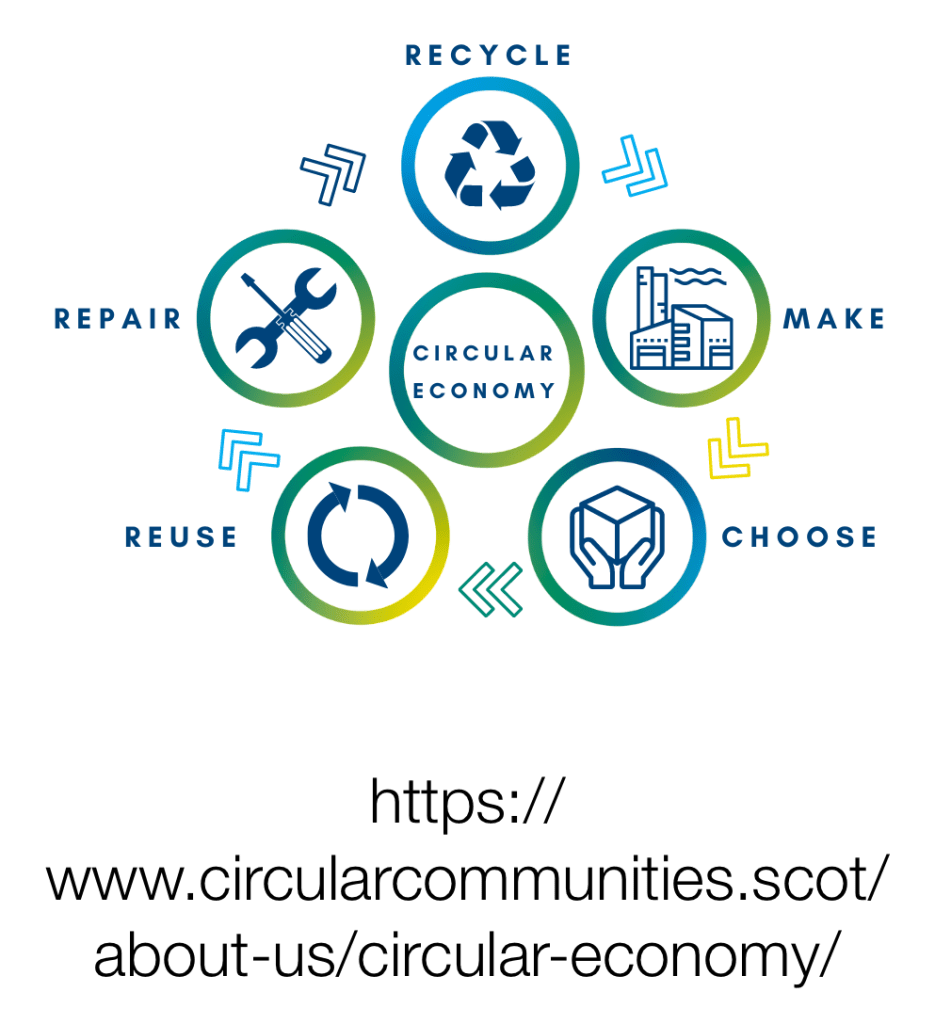
It is easier to describe its opposite. A non circular economy is that takes, makes and throws away. For example, chop down a tree, make its wood into a sheet of paper and then, after a single use, throw the paper away. Another example would be taking oil out of the ground, making it into a plastic cup  and then, after a single use, throwing it away.

In a circular economy the ‘throw away’ section is discarded. Instead the product is reused or recycled or repurposed so that its value is not lost. In a circular economy the sheet of paper after its initial use, may be reused (writing on the back of it), possible repurposed (used to wrap a parcel) and then recycled. Being recycled the waste paper may become a fresh sheet of (recycled) paper. Going back into the economy that sheet of paper can be recycled 6 or so times before the fibres become too short. At that point the sheet of paper might be recycled as a lower grade material and become a paper bag, a news paper, a cardboard box etc. Ultimately this paper based waste product can be composted and its nutrients returned to the soil. 

In a circular economy the intention is not only to ensure the reuse of waste material (really it is not waste but ‘raw’ material) but also to ensure that there is no waste of energy and water.  Recycling paper uses about 70% less energy and water than making virgin paper and produces about 70% less air pollution. If the paper mill has solar panels, say, it operate with zero loss of energy. If it can clean, reuse and/ or  return its water to the water system, it can operate without loss to the water system.

A circular economy seeks to regenerate natural resources. In the case of paper this would be planting and maintaining woodland to ensure supplies of wood for future generations who wish to make and use paper. Not all resources can be regenerated. Once fossil oil has been extracted from the earth, more cannot be generated. Oil was created 300 million years ago when climatic conditions were particularly suitable for its formation. The formation itself took place over 200 million years during which time climatic conditions were again suitable. Oil is finite resource. 

Is the rate at which we using the earth’s resources sustainable? Bluntly, no! If we compare the amount of resources we use each year against the rate at which those resources can be replaced, then we have not been living within our means since 1970. Each year the Global Footprint Network calculates the resources we use against the capacity of the earth to regenerate its resources and pin points that day in which the two coincide. In 1970 that date was 31st December. Since then this date – Earth Overshoot Day – has rapidly receded global consumption has exceeded the rate of regeneration. In 2021, it fell on July 29. Our current lifestyle is unsustainable. Moving to a circular economy is one way of addressing this problem. 

The development of a circular economy, both globally and locally, is happening. We see it in recycling schemes where plastic bottles are collected, processed and remade into new bottles. We see it with clothing manufacturers where clothes no longer required by the user are returned and either re sold or recycled to create new cloth. There are schemes which reuse and repurpose old furniture. There are even companies that reuse and repurpose unwanted kitchen units. Some projects are small, others large but they are all a step in the right direction. As consumers we need to step up and activity choose to be part of the circular economy.

Further reading: https://www.chathamhouse.org/2021/06/what-circular-economy

Green Tau issue 34 

Fancy a Refill?

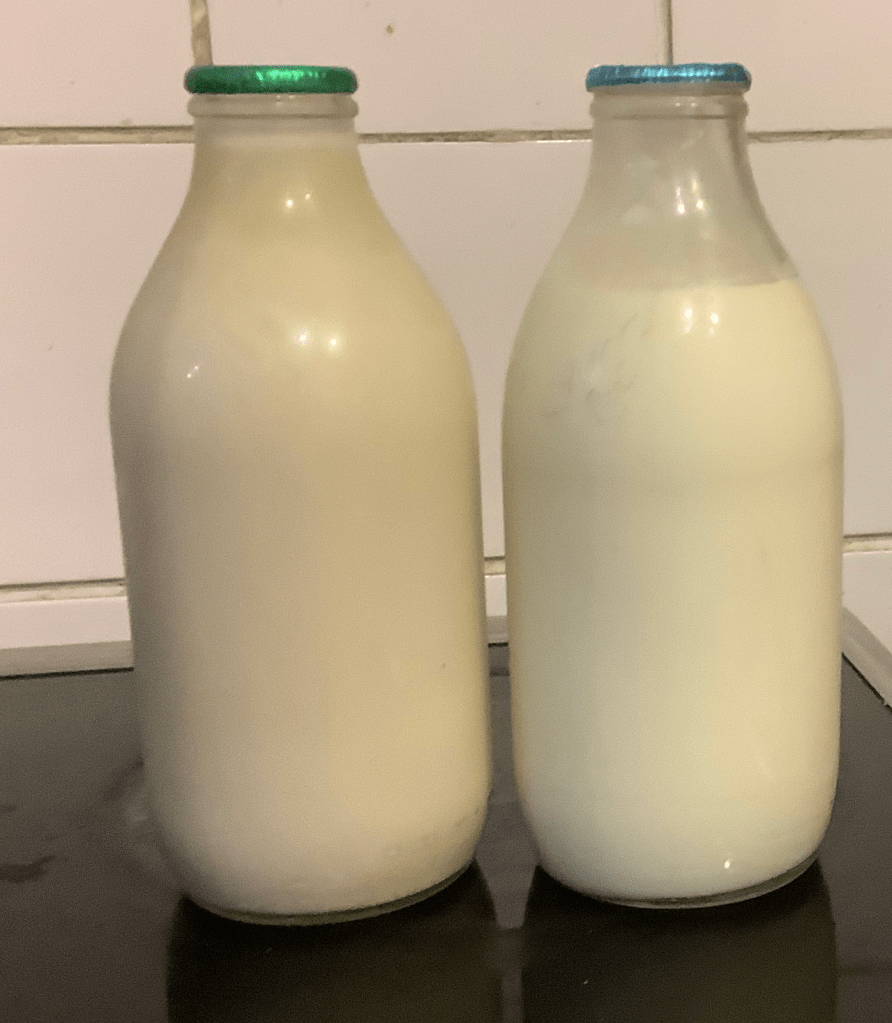
Buying milk in glass bottles that are returned empty and refilled has a long

tradition in the UK. The glass bottles can be used 50 or more times although the average reuse may be closer to 20. The system is facilitated by the door to door delivery of milk and simultaneous collection of the empties, which are then returned to the dairy where they will be cleaned and refilled. 

This refill system avoids the production of waste or hard to recycle materials. It is more efficient than putting milk into plastic containers which are, once empty, collected by a waste collection service, sent to various recycling facilities before being remade – ideally – into a new plastic milk carton. Currently plastic milk cartons are made of 40% recycled plastic and 60% virgin plastic. 

In the past beer and fizzy drinks were sold in bottles with a deposit that was repaid when the bottle was returned. These bottles were returned to the manufacturer and refilled. This practice continues today in countries such as Germany. (Having bought a bottle of beer on a German train, I then found in the corridor a specially designed cupboard into which the empties slotted for their safe return). Whilst we are still waiting for this approach to be reintroduced in Britain, there is a growing number of local outlets where you can refill your bottles with beers, wine and milk etc.

Milk delivery services are branching out and supplying not just dairy milk in refillable bottles but also plant based milks, and fruit juices. Milk and More has partnered with ‘Fill’ to supply refillable bottles of cleaning products: empty bottles are simply returned for reuse along with ones empty milk bottles. Here in Sheen the Micro Beer shop has a changing selection of beers on tap each week – buy one of their beer bottles or take your own sealable 1 litre bottle. Apple and Bees offers red and white refills from Borough Wines. The Source Bulk store in Richmond has oat milk on tap and Gilcombe Farm brings a churn of its raw milk to the Barnes Farmers’ Market – again buy one of their bottles or bring your own.

Can other food stuffs be sold in reusable containers? Yes. 

Tesco has teamed up with Loop. In selected stores customers can buy a range of products sold in reusable containers, paying a deposit which is refunded when the empty container is returned for reuse. The Loop range includes items such as peanut butter and jam, pasta and rice, porridge oats and muesli, tea bags and dishwasher tablets, ketchup and face cream. Abel and Cole offer a similar scheme for their customers, supplying lentils, pasta, rice, oats, dates, quinoa, raisins and chocolate buttons, in returnable reusable containers. 

There are a growing net of refill/ bulk stores which stock terms in bulk allowing customers to decant and buy as much as they want. Typically the store either provides paper bags for the produce or invites consumers to bring their own bags or containers. The latter provides the more desirable zero waste outcome. Various supermarkets (Aldi, Asda, The Central England Cooperative, M&S, Morrisons and Waitrose) are also experimenting with the refill concept – either along the lines of bulk stores with items dispensed into paper bags etc, or wit products sold in returnable containers. 

Local for East Sheen, Culver and Nelson has a refill section for various dry goods. The Source Bulk store in Richmond sells both dry goods,  liquid commodities such as oil, vinegar, maple syrup, and tamari sauce, as well honey and nut butters etc dispensed into reusable jars. Both The Source and Apple and Bees sell liquid cleaning products – washing up liquid, laundry detergent, hair shampoo, liquid soap, toilet cleaner – as refills.

Beyond food there are other items that can be bought as refills such as ink for fountain pens and ink for printers (eg Epson). 

Green Tau issue 33

10th February 2022

What happens to the plastic in our recycling bin?

Each week, here in the Borough of Richmond, our black recycling boxes with their mix of metal glass, metal and plastics are collected and taken away. What happens next?

The collected waste is transported to a materials recovery facility in Mansfield where iron and aluminium, glass and different plastics are extracted via various mechanisms including magnetic drums, weight and size sifting, infra red detection and hand sorting. Once sorted the recyclable plastic is compacted into bales and dispatched on the next stage of its recycling journey.  

At the recycling facility in Leeds, the plastic waste is sorted according to the type of plastic – HDPE (high density polypropylene, PET (Polyethylene terephthalate) – and according to the form of the plastic – bottles or tubs, semi rigid or film. From here the sorted plastic goes to reprocessing plants either in the UK or elsewhere in Europe. The waste plastic is turned into either flakes or pellets which can then be used to make new plastic items, either totally or partially replacing virgin plastic.

From Richmond’s waste, PET bottles are recycled in the UK where they are reprocessed as new PET bottles. HDPE plastic (such as milk cartons) are sent to plants either in the UK or in Belgium where they are reprocessed into moulded items such as containers, pipes or packaging. The semi rigid pots, tubs and trays made of polypropylene (PP)  are recycled either in the UK or elsewhere in Europe. The recycling process includes thoroughly cleaning the plastic to remove any contamination (you should still clean your plastic before putting it in the recycling bin). The recycled plastic are pelleted into a form that can be used to make imitation wooden items such as garden furniture. However new plants are being built which can produce food-grade recycled polypropylene (rPP).

“Packaging producer Berry is building a new polypropylene (PP) recycling facility in Leamington, United Kingdom, that  will produce food-grade materials with a target purity standard of 99.9 percent..Packaging produced from this rPP material will result in 35 percent less CO2 emissions, [&] require 50 percent less water consumption” https://www.recyclingtoday.com/article/berry-uk-polypropylene-recycling-plant/

Soft plastics such as crisp packets, biscuit wrappers, breakfast cereal bags, frozen vegetables bags etc are not – at present -collected by local authorities. Most supermarkets will collect plastic carrier bags for recycling and an increasing number are now also making provision to collect and recycle all soft plastic packaging. These items are made from LDPE (low density poly ethylene). Being lightweight and flimsy they need different recycling equipment from that used for the denser more rigid HDPE. To recycle LDPE new recycling plants are being built.

  “Yes Recycling is currently constructing a new facility in Glenrothes, to specialise in dealing with hard-to-recycle soft plastics – including cellophane, bread wrappers and film lids – which would previously have been added to landfill, burned or exported for processing… Financed in part with a loan from Triodos Bank, the new plant will be capable of processing 15,000 tonnes of soft plastic each year, giving the waste a new life by turning it into plastic flakes and pellets for manufacture, as well as a pioneering alternative to plywood, developed over the past 12 years, that can be used in construction.” https://www.triodos.co.uk/articles/2022/saying-yes-to-recycling—how-a-pioneering-new-facility-is-tackling-plastic-waste  The recycling plant is co-owned by the Morrisons supermarket chain.

To close the loop, we should expect to be able to buy products in bottles and containers made of recycled plastic. As of September 2021 all plastic bottles of 500ml or less for Coca-Cola will be made of  100% recycled plastic and will continue to be fully recyclable. 

Hellman’s squeezable mayonnaise bottles are also made of 100% recycled plastic whilst Persia laundry liquid bottles are made of 70% recycled plastic. Both brands are owned by Unilever. 

As consumers we can ask producers to both supply products in recyclable packaging and ask  that such packaging itself be made from recycled material. Equally we can seek out products that do not require additional packaging or that can be dispensed into refillable containers. This avoids the need to collect and recycle the packaging which – as can be seen above -can involved shipping waste over long distances and through various stages of processing. 

Green Tau Issue 32

Why Recycle? 

Recycling has over the years become a more topical subject, linked to a growing

awareness of concern for the environment, and in particular concerns about climate change. Over the last decade recycling rates in the Uk have been increasing. In 2010/11 42% of waste (that is waste from households) was recycled. Recycling rates reached a peak in 2019/20 of 45.5% – but last year they fell back to under 44% (a rate last recorded in 2012/13).  2020/21 also saw a small increase (1.3%) in the total volume of household waste.

Why do we seek to recycle more? How does it help the environment? How does it impact on climate change?

Reasons for recycling:

  • Reduces  the space needed for landfill. It is better for the environment if land is kept in its natural state rather than being filled with waste. The experience of the covid pandemic has shown us the value of green spaces.
  • Reduces the risk of pollution. Landfill as a means of waste disposal leads to air and water pollution as obnoxious chemicals and particulates escape. Landfill creates long term pollution as  toxic chemicals remain lodged in the soil. As materials rot, landfill sites become a source of methane one of the more powerful green house gases. Disposing of waste by incineration causes pollution, both from poisonous chemicals and from particulates that cause lung diseases. Incineration also produces greenhouse gas emissions that cause climate change. Un-disposed or improperly disposed waste creates litter. Litter is an eye sore and detracts from people’s quality of life. Litter can harbour and spread desirable bacteria etc. Litter can blocked drains and rivers, leading to flooding. It can be consumed by animals causing injury or death. Through the food chain, micro quantities of plastic are now being found in the bodies of all living creatures, including ourselves. 
  • Recycling conserves limited natural resources. There comes a point at which the supply of natural sources of materials – iron ore, helium gas, lithium etc -will run out. Then we will have to rely on reusing these materials.
  • NB Helium gas cannot be manufactured. It has to be carefully mined as once released into the atmosphere, its light weight means that it floats straight out into the outermost part of the atmosphere. Helium is an essential gas used in the operating of MRI scanners – we cannot afford to use it in party balloons.
  • Recycling conserves energy used in producing raw materials. Aluminium in particular requires large amounts of energy to extract the metal from the bauxite. Far less energy is needed to create fresh aluminium from pre-used aluminium.
  • Recycling can save or earn money. Metals such as gold and aluminium obviously have a high scrap value, but as too do other materials such as glass, plastics, paper and card although the economies of scale vary.
  • Recycling allows for the replenishment of natural resources. Recycling – ie composting – food waste allows the nutrients in the waste to be returned to the soil to maintain its fertility. 
  • Recycling materials can avoid the destruction of habitats. Using recycled paper and cardboard avoids the need to cut down trees and the associated destruction of woodland habitats.
  • Recycling reduces pollution. Using recycled plastic to make a bottle cause far less pollution than would be  involved in first extracting and transporting oil, and  then in processing the oil to  turn it into a plastic ready for making into a bottle.
  • Recycling can save water. Making clothes from recycled cotton uses less water than growing cotton to produce new cotton. Recycling paper uses less water than making paper from timber. 
  • Recycling can reduce transport costs and emissions. If the recycling takes place locally, it avoids the costs of transporting raw materials from further away. The converse is also true. Recycling is not energy efficient of the materials to be recycled are sent far away/ overseas to be recycled before being returned as new products. 
  • Recycling only works if people then buy the recycled product. Recycling paper, but never buying and using recycled paper does not help. Recycling plastic bottles only helps if we then buy drinks/ laundry liquids etc in recycled plastic bottles. Recycling aluminium foil only helps if we then buy recycled aluminium foil. We need to close the loop!

Recycling does benefit the environment and does limit some of our production of carbon dioxide emissions. Why then are recycling rates so low? Can we afford financially and environmentally to throw away more then 50% of our household waste?

See also:-

Recycling eco tips https://greentau.org/2021/12/20/eco-tips-16/

Stewardship of things https://greentau.org/2021/09/20/eco-tips-8/

The ins and outs of packaging https://greentau.org/2021/08/16/eco-tips-packaging/

Zero waste https://greentau.org/2022/01/27/eco-tips-zero-waste/

Green Tau: issue 30

The challenge of rising sea levels for Pacific islands.

20th January 2022

Last week the Green Tau focused on Richmond and the likely effects of the increased risk of flooding arising from climate change. This week the focus will be on Tarawa, one of the 33 atolls that makes up the Pacific nation of Kiribati.  

Tarawa is one of the largest of Kiribati atolls and is home to one 60,000  people, about 53% of the total population. Seen from above, Tarawa is a long thin strip of land that curves to form two sides of a triangle, in the middle of which is a lagoon. (Atolls are islands created by volcanic action. The former crater forms a dip in the middle). The third side of the triangle is below sea level and is home to a coral reef. It has a very long coast line in proportion to its land area. The land is flat and low lying, rising to about 2-3m above sea level.  Beaches on the lagoon side tend to be wider and shallower than this on the ocean side.

Scientific research suggests that the rise in average sea levels for Tarawa, by 2100,  will be between 0.5  (if the global temperature increase is kept below 1.5C) to 1.2m (if the increase in the worst case is 5-6C). Present projections suggest we are on track for a 2.7C temperature rise – and a projected sea level rise for Tarawa of 0.6m. High tide is typically 1.2m above the mean sea level, but is subject to variation. For example tide levels rise during periods when the El Niño weather system is dominant because the high pressure lifts sea levels. Because of its shape, with along coast lines and narrow low lying land mass, Tarawa – like many similar atolls and islands – is very vulnerable to rising seas levels. The people of Tarawa can see that before the end of this century they may no longer have an island on which to live! 

Sea levels also rise markedly when drive by cyclones. The Republic of Kiribati used not to be affected by tropical cyclones but with increasing global temperatures and changing weather patterns, this is no longer so. Not only do cyclones produce flooding with high waves, but the strong winds are particularly destructive to low lying lands such as on Tarawa with the winds breaking sea defences, ripping up vegetation and blowing away soil. (Soil depths are already shallow because these volcanic atolls are relatively youthful in geological terms). 

Tarawa is located on the Equator and it has a tropical rainforest climate. It rains on average every other day, with a high of rainfall of about 300mm a month in January and a minimum of 100mm in September. This ensures that the  water table is regularly topped up.  However the land above sea level at Tarawa is narrow, with saline after on both sides. Rising sea levels leads to the contamination of freshwater supplies with salt. This reduces water for drinking etc as well as damaging agricultural crops and plant life generally. 

Rising global temperature affect not just the air but also ocean temperatures. Since preindustrial times, global sea surface temperatures have risen by 0.7C. The rate of increase has risen in recent decades and particularly so in the last 6 years. Temperatures rises are not uniform and have been more marked in the southern Pacific waters. The IPCC predicts sea temperatures may rise by 1.2 to 3.2C by 2100 (depending on our ability to reduce carbon emissions). Rising sea temperatures affect marine life generally and reefs in particular. Temperature rises in the region of 1C can cause the bleaching of coral reefs. This draining of colour shows that the coral is stressed, and is likely to die.  Associated with heat rises accentuated by El Niño, Tarawa has had repeated incidences of coral bleaching. When coral reefs die and break down, they no longer protect local shores from erosion nor protect lagoons from destructive waves that destroy the particular ecology of those calmer waters. The loss of coral reefs also leads to losses  of  marine biodiversity.

Tarawa and the rest of the atolls in the Republic of Kiribati are not alone in facing these devastating effects of climate change. In 1990 they and other similarly vulnerable countries formed the Alliance of Small Island States to give themselves collectively a more voluble voice in discussion and proposals around the climate crisis. The AOSIS was a particularly strong presence at the Paris Climate Conference in 2015. Their voice was also heard at the Glasgow COP last year although because of covid fewer delegates were able to attend. One of those unable to travel was the former President of Kiribati, Anote Tong. Speaking from home, he told ITV News that beyond 2030 “our very existence might be in jeopardy”. 

In 2012 Tong bought a 2700 hectare estate on the island of Vanue Levu in Fiji as a refuge for the citizens of Kiribati, plus a further 2000 hectares in 2014. Between 2003 and 2015 the Kiribati Adaptation Plan was executed using money raised by the United Nations from wealthy donors such as Australia This included projects such as planting mangrove palms to limit coastal erosion, strengthening sea wall defences, and installing rainwater butts to help safeguard fresh water supplies. 

In 2020 the new President of Kiribati, Taneti Maamau, announced plans, in conjunction with China, to artificially build up parts of Tarawa, to raise them above projected sea level rises.

In the mean time other adaptations projects are on going to improve the islanders’ living standards and build up their resilience in the face of flooding. These include encouraging islanders to develop traditional food gardens to protect against sudden food shortages (much of Kiribati’s food is imported), developing fish management schemes to prevent over fishing, and increasing provision shade to protect people from adverse temperatures. Consideration is now being given to using the land bought in Fiji to provide food for Kiribati. It seems that due to poverty, the people of Kiribati are not well equipped to cope with the extra demands and risks of the climate crisis. Equally important are these projects designed to improve their living standards, health and well being.