Green Tau: issue 30

Flooding in the Thames is a threat that comes from both upstream and downstream

12th January 2022 

World wide action to avert the worst effects of the climate crisis are aiming to keep global temperature rises to 1.5C. Whilst that is the target spoken about by governments and businesses, Climate Action Tracker, analysing actual actions being taken, predict that we are on track for a global temperature rise of 2.7C (https://www.bbc.co.uk/news/science-environment-59220687). This level of temperature rise will lead to a faster melting of ice caps and glaciers, causing sea levels to rise  and more extremes bouts of weather, increasing the severity and frequency of floods.

Here in south east England sea levels are projected to rise by approximately 1.4m  – a little under a meter if the  temperature rise is brought below 1.5C (https://www.metoffice.gov.uk/research/news/2019/uk-sea-level-projections-to-2300). The Met office also predicts that 1 in 10,000-year flood events are likely to occur more than once a year by 2300. 

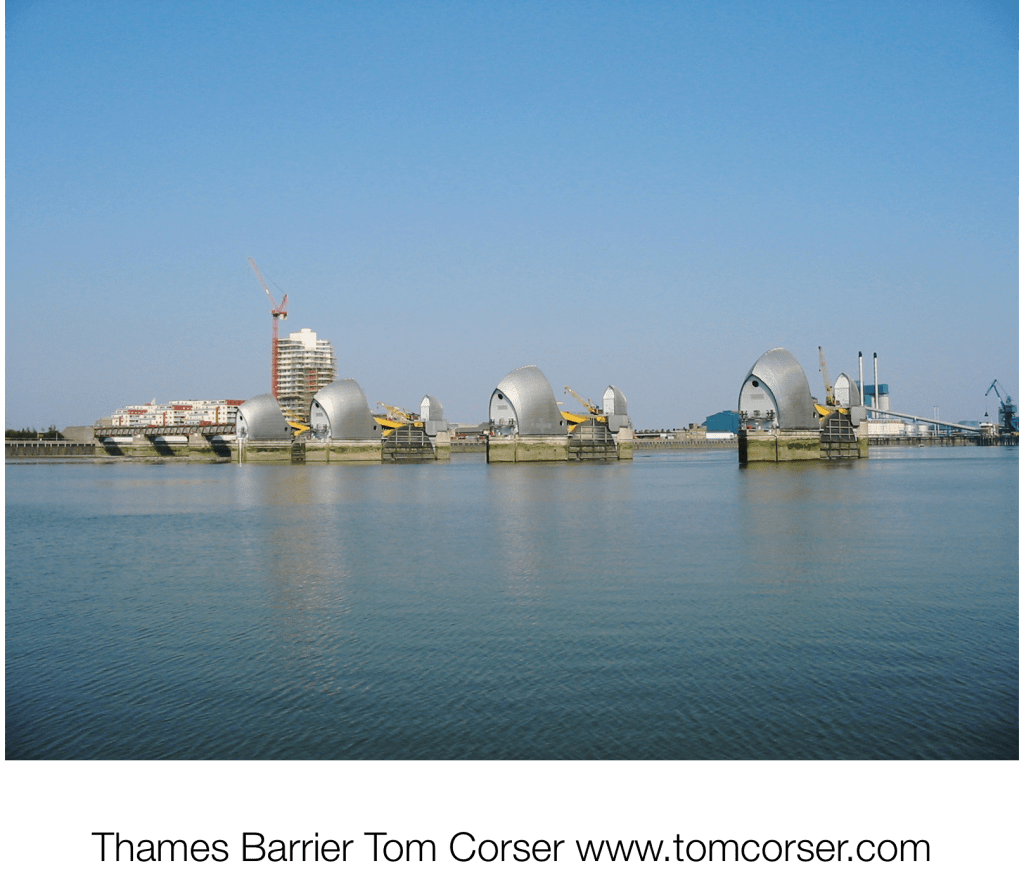
The Thames is tidal all the way up to Teddington Lock. At present the Thames Barrier is raised when ever there is a high tide that threatens to flood London. High tides are caused not just by the movement of the moon, nor by rising global sea levels. They are are also affected by weather systems. For example the height of a tide coming in from the North Sea can be increased by an on shore wind or by  a low pressure system over the sea. Rising global temperatures that are causing rising sea levels and more frequent and intense weather systems means that the time will come when  the Barrier will no longer be able to hold back an incoming high tide. The Corporation of  London is considering plans to tackle this, including increasing the height of the Barrier and raising the height of the walls that bound the Thames – eg  along The Embankment – by a further meter. There is debate as to whether this should be with glass so as not to obstruct the view of or from the river. 

When the Barrier is raised to slow an incoming high tide, the water that is held back has to go somewhere – that is somewhere in the Thames estuary downstream of the Barrier. There is a flood storage area at Tilbury and on both sides of the Estuary there are area of marshland and farmland where flood waters can flow. These are in between  other at risk built-up areas which have their own flood defences. Such provision will need to be reviewed as tide levels rise.

The Thames Barrier is also closed when there is a risk of flooding upstream. The Thames has a large  drainage basin that extends all the way up into Oxfordshire and the Cotswolds. Heavy and/ or persistent rain anywhere in the area can raise river levels  such that places such as Windsor, Thames Ditton, Richmond, Hammersmith risk being flooded. In such circumstances the Barrier can be raised at low tide, to prevent sea waters entering the lower part of the Thames so creating a reservoir where high volumes of water from upstream and be stored until the risk of flooding is lowered. The protection offered by this scheme is not going to be sufficient to cope with predicted rises in water levels due to the climate crisis.

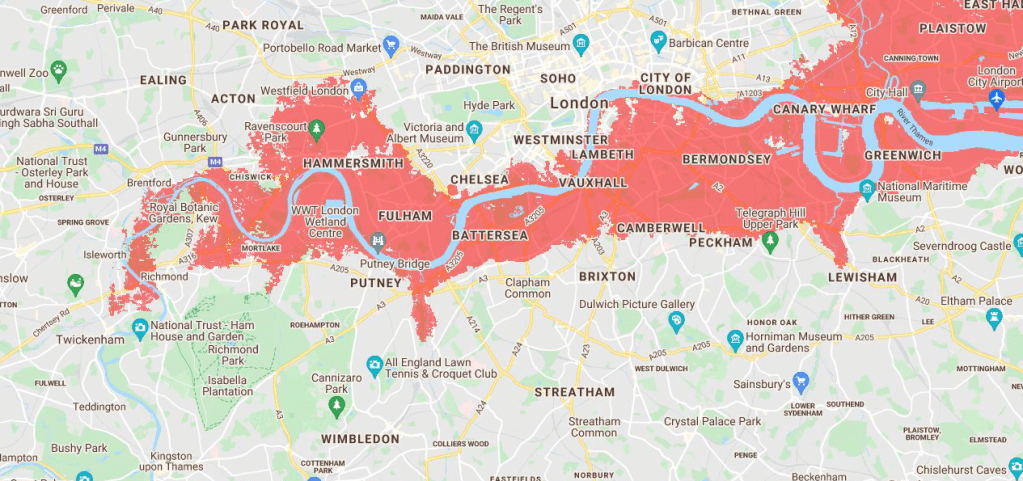
The following map shows areas of London that will lie below the anticipated annual flood level based on the IPCC’s climate change forecasts. (https://sealevel.climatecentral.org/maps/


Boroughs along the Thames, such as Richmond, are having to develop plans to both limit or avert factors that contribute towards the risk of flooding and to constrain the adverse effects such flooding will cause. In part they will be dependant upon actions take by other people and organisations further upstream. For example, if further a.one the Thames, houses are built on the flood plain, then water that might otherwise be held or absorbed by that flood plain, will instead flow on down stream exacerbating the problem in Richmond. Similarly if surfaces that are currently – eg covered with grass and other vegetation – are replaced by hard surfacing such as tarmac, then again more water will flow more rapidly off the land and into the river. In a similar way areas of woodland are cleared, then less water will held in the land and instead will add to the volume in the river. Conversely recreating water meadows to allow flood waters to accumulate safely up stream, replacing hard surfaces with soft one, and planting trees, can all help reduce the volume and speed with which water drains off the land and into the river. In the Old Deer Park there are plans for the ‘re-wilding ’ of the land allowing formation of seasonal ponds/ lagoons and the growth of water-loving plants that increase the water absorbing capacity of the land. You can read more about this here – http://thames-landscape-strategy.org.uk/what-we-do/rewilding-arcadia/

Green Tau: issue 29

Caring for creation with every meal – Use your LOAF!

What we eat impacts the world around us – the welfare of animals, the welfare of wildlife, the fair sharing of water, the  fertility of the soil, the  well being of those who grow and produce food. It also contributes to the climate crisis. Making step by step changes, we can better care for creation.

The organisation Green Christian has produced the nemonic LOAF – Local, Organic, Animal friendly, fairly traded – to help us buy and eat sustainably with care for the world. https://greenchristian.org.uk/gc-campaigns/loaf/

L locally grown, locally produced. 

Local reduces the carbon miles attached to our food. Local keeps us in touch with those who grow, make and sell our food. Growing our own keeps us in touch with the soil itself!

O organic.

Food, whether that is crops grown or animals raised, that is produced organically removes chemical fertilisers and pesticides from the environment where they cause damage to water supplies, wild life and human health. Instead organic farming works in harmony with the environment boosting its well being and biodiversity.

A animal friendly. 

Animals including birds and fish, should always be treated with care and respect. Factory farming for example, treats animals as profit-making commodities. Arable farming also has a responsibility to be animal friendly, including the wellbeing of birds and insects.

F fairly traded. 

Throughout the supply chain from farm labourer to shelf stacker, lorry driver to barista, each person deserves to be treated fairly.

In a previous issue of the Green Tau – https://greentau.org/2021/08/14/green-tau-issue-12/

I have written about food and our carbon footprint. The Ethical Consumer’s Climate Gap Report notes that to be on track for net zero we need to reduce the carbon footprint of our food by 15% by 2030. So far (ie since 2019) reductions have not even risen above 0%.  It is imperative that we do look at and adjust what we eat, to reduce waste, to reduce our carbon footprint and to reduce the negative impact we have on the environment. Eating sustainably we can safeguard our own futures and improve that of the world in which we live.

  1. Eat less meat and dairy, replacing these with plant-based alternatives. “Veganuary” makes this a good time to try different vegan options. See the Eco Tips page on swopping to a vegan diet – https://greentau.org/2021/10/12/eco-tips-11/
  2. Use local food shops. Buy locally produced food. 
  3. In supermarkets choose UK grown rather than imported fruit and vegetables. 
  4. Eat what’s in season – strawberries in May/ June, blueberries in July/ August. 
  5. Subscribe to a veg box – eg Riverford’s or Abel and Cole – or OddBox which fills its boxes with fruit and veg that would otherwise go to waste.
  6. Use local farmers’ markets 
  7. Expand the variety of fruits and vegetables that you buy. Biodiversity is an important way forward for farming – https://greentau.org/2021/10/08/the-green-tau-issue-20-2/
  8. Opt for UK produce over imports. Hodmedod sells UK grown beans and pulses rather than those that come from Canada/ China etc.  https://hodmedods.co.uk/
  9. Opt for organic produce.
  10. Opt for fair trade products. This article relates to chocolate – https://greentau.org/2021/12/11/green-tau-issue-26/
  11. Use refill shops – also known as bulk stores. Take your own containers or use the shop’s paper bags to buy loose ingredients such as beans and pulses, grains, dried fruit etc. 
  12. When buying meat, find a butcher who knows where the meat comes from and how it has been raised.
  13. Be prepared to pay more for meat and diary products that have been reared to a higher ethical standard.
  14. Use a milk delivery service such as Milk and More for both dairy and oat milk in refillable glass bottles.
  15. When buying fish, check whether it is sustainably sourced and/or farmed. Refer to the Marine Conservation Society’s guide as to which fish are not endangered.
  16. Plan your meals and your shopping to avoid throwing food away – https://greentau.org/2021/08/09/eco-tips-4/
  17. Keep a habit of saying Grace at meals. Appreciation and gratitude go together. 

Green Tau: issue 28 

22nd December 2021

Sugar sweet?

Sugar cane is the source of about 80% of the sugar consumed across the world. It is a plantation crop that goes back centuries and has a history linked with exploitation and slavery. As a plantation crop it has been responsible for the deforestation of tropical landscapes and as demand for sugar continues to increase this is still on going – especially in Brazil where sugar cane is also grown to produce the fuel ethanol: ‘The Atlantic Forest, or Mata Atlântica in Portuguese, is found on the Atlantic coast of Brazil. It should be full of life, supporting thousands of species of plants and animals, many of which are found nowhere else. It’s different from the Amazon rainforest but equally important. Around 500 years ago it would have covered an area of more than 1.5 million square kilometres. Now, more than 90% of it is gone, cleared mostly for timber, pasture and sugar.’ (https://www.nhm.ac.uk/discover/sugar-a-killer-crop.html)

 Sugar cane occupies approximately 2.4 million hectare world wide. 70% of production is for domestic use (which for example would include the production of ethanol in Brazil) but for some countries the production of sugar for export constitutes a significant part of their national income eg Cuba and Belize. Volatile global prices makes for great uncertainty for local growers/ plantation workers who can do little to control their incomes. Whilst the premium paid through the Fair Trade scheme undoubtedly helps, the production of fair trade sugar – 528,000 tonnes – is a fraction of the 200 million tonnes of sugar  produced globally (2019). 

Sugar cane as a crop, aside from the issue of deforestation, has unwanted adverse affects on people and the environment.

  • it requires large amounts of water, often taking the water away from other crops and  natural vegetation 
  • It requires large amounts of pesticides and fertilisers which flow into the water system damaging other ecosystems 
  • Before harvesting, old leaves are burnt off to assist the harvesting process. This kills wildlife, important natural organisms and pollutes the air. As nutrients in the leaves are burnt rather than being returned to the soil, the fertility of the soil is reduced requiring additional fertilisers to be used
  • It is an annual crop requiring the land to be cleared each year and the exposed soil is then susceptible to loss during the rainy season and with not roots to absorb moister, flooding too increases.
  • It is a labour intensive crop where child labour still happens.

Alternative sugar crops are grown, of which the main one is sugar beet – accounting for about 20% of world production – which is grown mainly in Europe. It too can be reliant on pesticides and fertilisers: organic sugar beet is grown in Europe but not as yet in Britain. Other sugar crops include coconut palms and oil palms where the sap is harvested. 

There is a further downside to all sugars: sugar damages our health, causing major problems such as heart disease, type 2 diabetes and tooth decay. The WHO urges that sugar consumer should be reduced to between 5 and 10% of a person’s daily calorie intake. The NHS advises sugar consumption be limited to less than 30g per day: https://www.nhs.uk/live-well/eat-well/how-does-sugar-in-our-diet-affect-our-health/ Yet sugar consumption globally is still rising. The USA tops the charts with an average consumption of 126.4g per person per day. Britain comes in at number 7 with 93.2g per day (2019).

As well as being concerned about the damage sugar growing causes to the environment and it’s work force, should we be acting to reduce the demand for this commodity?

“Too often, divisions in civil society can be exploited by powerful commercial interests. ‘Don’t go too hard on health, as it will threaten jobs’ or ‘Don’t raise pollution standards, as they’ll be undercut by another country somewhere’ or ‘Don’t mention labour pay rates, or we’ll drop the preferred status.’ Or ‘Don’t stop sugar beet as it’ll affect tourism brought by geese feeding on sugar beet tops in winter’. Such horse-trading happens in realpolitik, of course, but we think now is the time to take the sugar debate back to ecological public health basics: land, labour, capital, health and culture…We see this future food world as one where less not more sugar is produced and consumed, and land use and labour are liberated from the folly of sugar production. This is hardly a vital product. It has been injected into culinary culture on a scale it does not deserve. Nor should a sugar reduction strategy be compensated for by a growth in use of artificial sweeteners which industry constantly seeks. Artificials, whether relatively ‘old’ such as aspartame or ‘new’ such as stevia, merely normalise the sweetening of diet as well as maintain the processing industries’ option to sweeten a product to sell it.”  https://foodresearch.org.uk/wp-content/uploads/sites/8/2015/06/Does-Sugar-Pass-the-Environmental-and-Social-Test-23-june.pdf

Green Tau: issue 27

15th December 2021

“Palm oil piece”

Palm oil comes from the palm oil tree which grows in tropical regions of the world. Its fruit – both flesh and kernel – are processed to extract the oil. The oil is attractive for many reasons. 

It contains no trans fats making it healthier than other oils.  It is a good (and affordable) source of vitamins A and E and antioxidants. It is resistant to oxidisation giving it, and things made with it, a long shelf life. It is a highly productive crop: where sunflowers produce 0.7 tonnes of oil per hectare, palm oil produces 4 or more tonnes. It can be used to make a wide range of products from soap to biscuits, toothpaste to icecream, lipsticks to pizzas, pet foods to chocolate. Some is also used as a bio fuel.

Not surprisingly it is in high demand. Global production has increased from about 2 million tonnes in 1960 to 70 + tonnes in 2018 (https://ourworldindata.org/palm-oil). Production on this scale has led to vast areas of land being repurposed for palm oil plantations – with individual plantations covering 10,000 hectares (approximately 10,000 international rugby pitches or a little smaller than Jersey).  

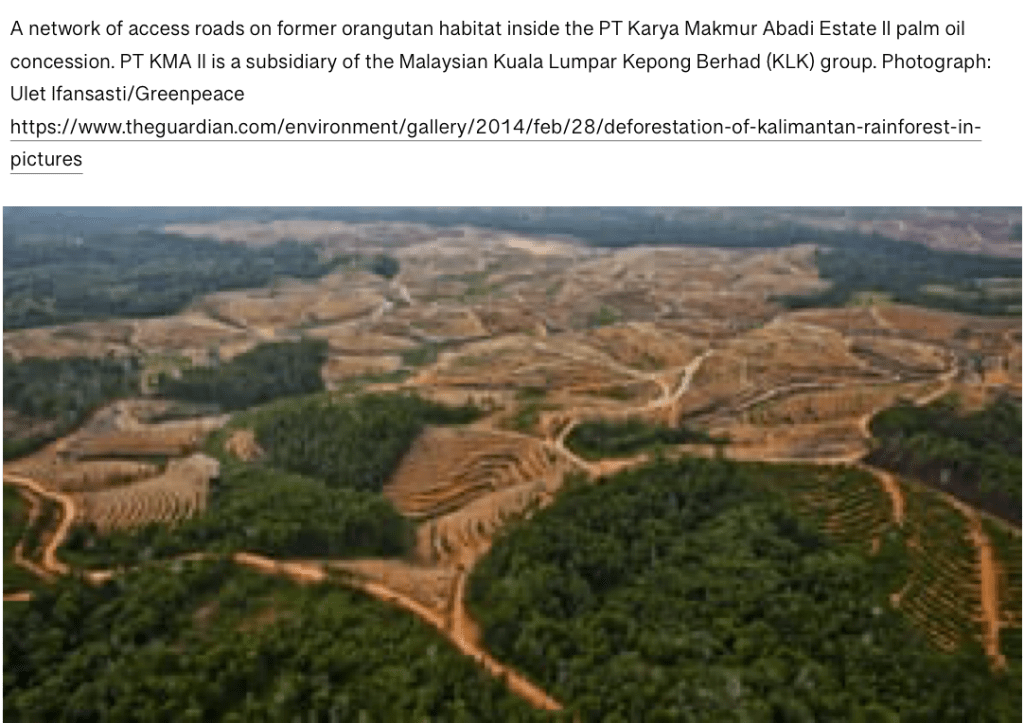
Monoculture on this scale comes with many environmental issues, that lead to droughts, wild fires and flooding – and require widespread use of fertilisers and pesticides which pollute both water supplies and the air.  These detrimental effects are further compounded when the land cultivated involves the destruction of native forests. An estimates 5% of tropical deforestation is attributable directly to oil palm plantations  although on a positive note, the annual loss is decreasing as countries and companies respond to public criticism (https://palmoilalliance.eu/palm-oil-deforestation/).

In places such as Borne and Sumatra much of the land is covered with virgin forest which is home to many plant and animal species and notable home to large mammals such as orangutans, tigers, rhinos and elephants. Expansion of human enterprises removed the equivalent large mammals many centuries ago. One hopes that we will not allow the same to happen again.

On the other hand palm oil production is an important cash crop for many developing economies. As with the cultivation of cocoa beans (https://greentau.org/2021/12/11/green-tau-issue-26/) the profitability of this crop often does not benefit the workers on the ground. In response to both this and the threat to biodiversity – especially orangutans – some consumers and manufacturers actively avoid palm oil. The following logos are used  by

https://www.palmoilfreecertification.org/

Iceland Foods and the https://orangutanalliance.org/

Ethical Consumer has produced a list of manufacturers who avoid the use of palm oil – or use  sustainably sourced palm oil: https://www.ethicalconsumer.org/palm-oil/palm-oil-free-list

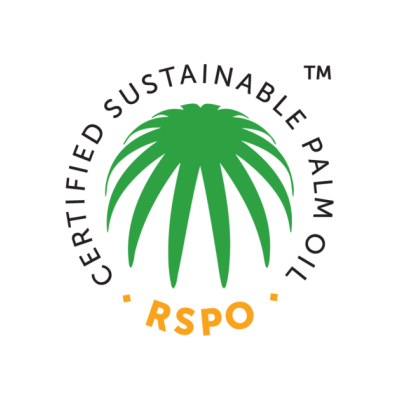
The main industry certification scheme for sustainable palm oil is provided by

The Roundtable on Sustainable Palm Oil. However its scheme is not always transparent, and includes companies who are working towards sustainable production. As with cocoa beans, companies can use the certification if they pay the premium that pays for sustainable production somewhere within the supply chain. For more information see https://www.ethicalconsumer.org/food-drink/what-rspo

Traidcraft for one, did not feel that RSPO assured a fair trade product. They have established their own small scale certification platform, Fair Palm through their work with Serendipalm in Ghana. Here oil palm growers use regenerative farming techniques growing a mix of trees and shrubs that provides a range of sustainable – organically grown – crops. In addition the processing of the palm oil fruits is kept small scale so as to employ people rather than automated machines. This video clip shows the process of change from monoculture to agroforestry:  https://youtu.be/moRmOu634rk

If consumer power has already seen a reduction in the rate of deforestation , continuing consumer power should be able to demand truly sustainable and fairly traded palm oil. Careful research will be needed  as the presence of palm oil products may not always be obvious. Palm oil may be hidden under the general title of ‘vegetable oil’ or may be given a chemical name such as aluminium stearate, ammonium Lauretta sulphate, capric glyceride, or ascobyl palmitate. Ethical Comsumer’s palm oil list will help you evaluate which products you wish to buy and which you might prefer to avoid. 

Green Tau: issue 26 

11th December 2021

The ethics of chocolate 

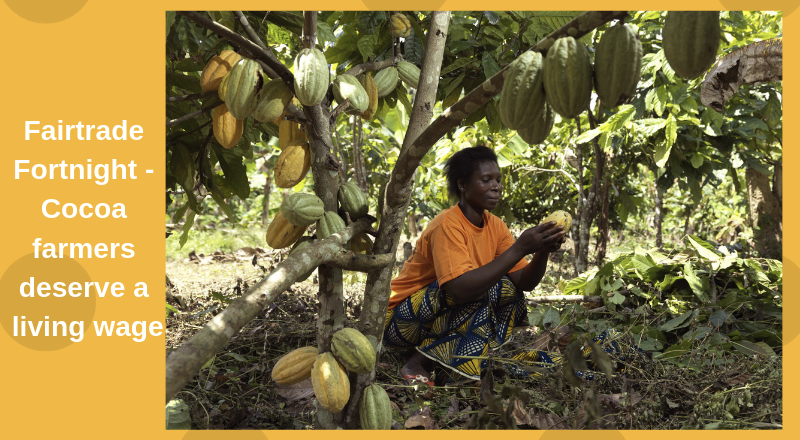
One of the many treats we associate with Christmas is chocolate. In the UK we spend about £325 a year, supporting an industry worth around £4 billion. However at the other end of the story cocoa farmers in Ghana and the Côte d’Ivoire (the largest producers of cocoa beans) may earn as little as 75p a day – or about half what is needed to cover the essentials of food, housing, health car and education – and some cocoa plantations are known to use child slave labour.  This hardly seems fair! Why is it so?

  • Large cocoa companies buy through a global commodity supply system – a sort of global wholesale market. This system is designed to ensure a stable cocoa supply at the lowest possible price. It is not designed to have regard for the sustainability and well being of individual cocoa growers.
  • Whilst cocoa companies can opt to buy certified eco or sustainable beans. This certification process does not mean that the beans they actually buy is eco/ sustainable but that somewhere an equivalent amount of beans has been so produced. This process lacks transparency.
  • Few large cocoa companies have direct links with the bean growers so there are no shared or common interests. 
  • Global cocoa prices do, despite the global commodity supply system, fluctuate as intermediate  traders buy and sell cocoa options. Such traders operate on a short term basis whilst bean growers must operate on a minimum five year basis: it takes five years before a cocoa tree produces its fruit.
  • Poorly paid bean growers do not have money to invest in fertilisers or to learn new farming techniques so as to improve their productivity. Often they themselves are poorly educated because they too grew up in times of poverty when free education etc was not widely available.
  • The impact of climate change – hotter and wetter weather – damages productivity. The changes in weather allows new pests and diseases to develop which damage the crop. 
  • Large cocoa plantations are focused on the  profit made from their sole crop. Such plantations do not diversify into other cash crops that can be grown along side cocoa trees nor into crops that produce food for the workers. Both of these options could help workers survive poor harvests and down turns in commodity prices. Instead workers from large plantations are  readily sacked when these things happen.
  • Small scale growers do not have the money to invest in new  cocoa  varieties that are more productive and/ or more adapted to the changing climate.
  • Much of the profit derives from the sale of chocolate comes from the value added during the manufacture of the chocolate rather than from the production of the beans. However the economies of many cocoa growing countries is still shaped by the patterns of the colonial era which sees these countries as exporters of raw commodities to the west. 
  • Chocolate manufacturing involves a high level of investment in factories, machinery and transport, including refrigeration. Chocolate manufacture also relies on accessing supplies of sugar and milk which may need to be imported with the possibility of additional tariffs. 
  • Climate change is causing bean growers to move to land at higher altitudes. Here existing forest cover is destroyed to plant cocoa trees.
  • When cocoa tree age and productivity declines, many growers simply plant clear existing forest cover and plant new trees which thrive initially on the fresh soil. Long term however the loss of this forest exacerbates both  the climate crisis and the loss of biodiversity which adversely impacts the health and wellbeing of the local population. 

In a recent report, the Ethical Consumer magazine recommends that consumers should check up on the chocolate they buy: 

Does it come from a company where the manufacturer of the chocolate is closely linked to the grower of the cocoa beans?

Is it made from organically grown cocoa and sugar?

Is the production of the beans linked to deforestation and/ or slave labour?

Are the producers of the cocoa beans paid a fair income?

Is the chocolate manufactured in the country where the beans are grown?

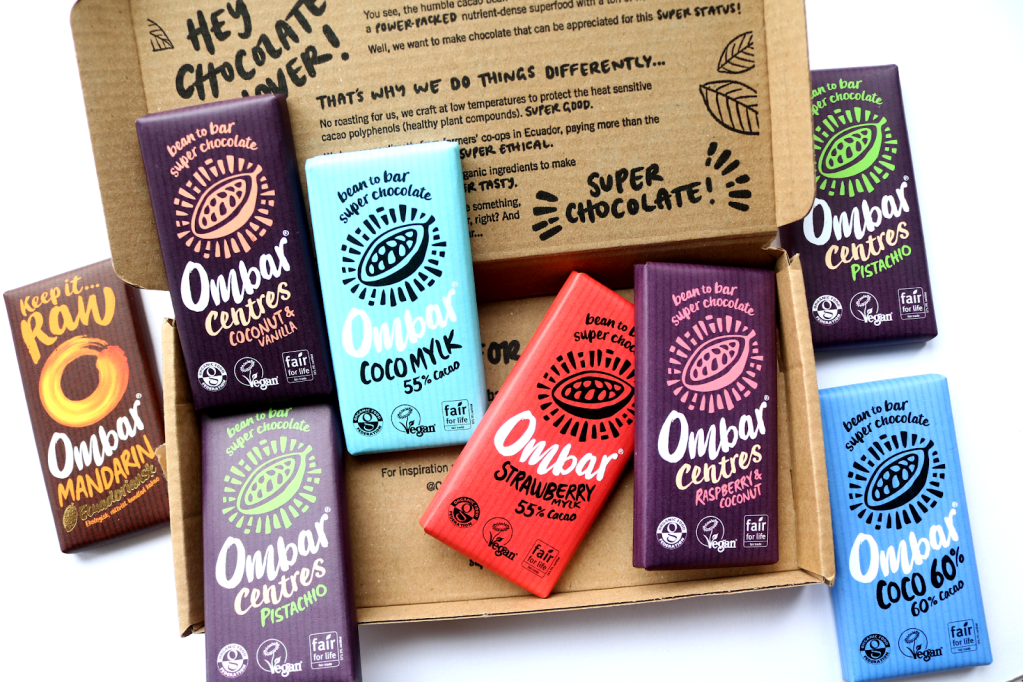
The Rain Forest Alliance and Fair Trade are both organisations  set up to ensure the welfare of those who grow the beans and to ensure the environmental sustainability of the farming methods used. They can provide a direct link between supplier and producer. They also provide a certification system which helps the consumer to buy sustainable chocolate products. 

Sustainably  and fairly produced chocolate will cost more than the cheaper alternatives, but this is just  one way in which we can make our money work to improve and protect life on the earth.

For more information watch this informative YouTube programme: https://youtu.be/-XbP4cn8xhU

Further reading: https://newrepublic.com/article/156569/challenge-sustainable-chocolate

https://www.bbc.co.uk/news/world-africa-56687427

https://www.ethicalconsumer.org/food-drink/shopping-guide/ethical-chocolate

The Green Tau: issue 25

Murdo Madleod/ The Guardian

8th December 2021

The first issue of Green Tau included a quote from  Paul’s Letter to the Romans – “Hope does not disappoint us, because God’s love has been poured into our hearts through the Holy Spirit that has been given to us” (Romans 5:5). – and a quote from the Guardian: “Change is Possible. hope is Power.”

This issue was written looking forwards – without much optimism – to COP26. Six month later I am not sure much has changed. 

But there still has hope. As long as we have hope, however small, then there is something to strive for. Later in his letter Paul suggests that by its nature what we hope for is something we can’t see, for if we could see it, what would our hope be about? (Romans 8:24). Here I think I disagree with Paul. I think in order to have hope we have to have some idea of what it is we are hoping for, however vague or indistinct that vision might be. If our hope is for life after death, we have to have some – however tenuous – understanding of what that life might be: eg a life free of fear and pain, a life of joy etc.

In terms of the climate crisis, I think we have to have some kind of vision, some sort of imagination, of what the world would be like if we could alleviate the crises. Perhaps a vision of  a world where there are great expanses and multiple pockets of re wilded landscape; a world teeming with different plant and animal species; a world of clean air and un-polluted water; a world where there are no extremes of wealth and poverty; a world where there is neither industrial farming nor industrial fishing … and so on. If we didn’t have any such vision, then we what would be hoping for? And if we had nothing to hope for, why would we bother trying to change things?

Hope is important because it becomes our inspiration, a catalyst, a source of energy. And hope that is shared multiplies it’s effect. As a group sharing one hope, we can share the burden of keeping that little flame of hope alive. We can share the load of working for change. We can back each other. We can become each other’s supporters. We can take turns carry each other when the effort becomes too overwhelming. 

It is therefore important that we come together with our neighbours, with our church and faith communities, with local campaign groups, business groups – and work together and share the vision . 

One such group of local businesses came together in Glasgow to create a visual sign, a sculpture, of what hope was, post COP26. “The Hope Sculpture started as a conversation with Ramboll and became a gift from 50 companies to Glasgow. It is a testament to the power of collaboration and dedication to deliver a better future” said the artist Steuart Padwick. His sculpture comprises a 20m tall beacon, on top of which is a child. The child’s arms reach out as if embracing its surroundings, hopeful of a green, better future. It is constructed using low carbon, reclaimed, recycled or sustainable materials, of which, almost all were locally sourced. (https://ramboll.com/media/rgr/gift-of-hope-low-carbon-sculptures-legacy-to-glasgow-and-cop26)

We are often reminded in the Bible how cause and effect spread between generations. From the Book of Exodus when the people are embarking on a new life travelling with God into a new land, a journey surrounded by threat but focused on a great hope for a better future: “I, the LORD, am a God who is full of compassion and pity, who is not easily angered and who shows great love and faithfulness. I keep my promise for thousands of generations and forgive evil and sin; but I will not fail to punish children and grandchildren to the third and fourth generation for the sins of their parents.” Exodus 34: 6-7. And in the prophetic words of Mary in the Gospel of Luke, as once again humanity begins a new journey and a new relationship with God: “He shows mercy from generation to generation to all who honour him”. Luke 1: 50 

What we do now in our time will have consequence for generations to come. And maybe that is where  our hope does the environment, for the world, has to lie. We will not turn round the crises we face in one generation. We can only be the instigators of a new way of life, a new journey, that will have repercussions for generations to come. To keep our hope alive, maybe we also need some short term projects where we will be able to see effort rewarded. One of the Advent readings from Isaiah was not a prophesy for the long term, foretelling the coming of the saviour, and for the short term, foretelling a time of peace that would come about in a matter of years.  

“Therefore the Lord himself will give you a sign. Look, the virgin is with child and shall bear a son, and shall name him Immanuel.  He shall eat curds and honey by the time he knows how to refuse the evil and choose the good.  For before the child knows how to refuse the evil and choose the good, the land before whose two kings you are in dread will be deserted”. Isaiah 7:13-16.

Maybe we need to focus too on changes that we can bring about by the time this year’s new borns are  eating solid foods – or maybe at primary school learning about right and wrong, giving us a five year time frame. Reducing the numbers of petrol and diesel vehicles on our roads and this reducing air pollution. Changing our UK diets such that eating meat is an occasional treat, leading to a reduction in the factory farming of animals, and an increase in land set aside for rewilding. Halving our carbon footprints, such that global temperature rises are still below 1.5C.

Together let’s us maintain – and work for – the hope of  better, greener future.

Green Tau: issue 24

E-waste 

29th November 2021

Material Focus estimates that as a result of Black Friday and Cyber Monday 5 million electrical items will either be thrown away or will simply be hoarded unused in a drawer or at the back of the cupboard.

https://www.theguardian.com/environment/2021/nov/26/e-waste-black-friday-uk-shoppers-donated-recycled-material-focus-campaign

What makes us so wasteful? 

Is it the power of advertising? Is it the ‘keeping up with the Jones’s’? Can we not create an alternative fashion message that says sustainability is best, that longevity is beautiful, that minimalism is key?

Is it the lure of cheap bargains? 

But perhaps they’re only cheap for those who buy now, with purchasers during the rest of the year making up the shortfall via higher prices? Perhaps only cheap when we don’t take into account the cost arising from damage to the environment? Perhaps only cheap because large numbers of the workforce have received pitifully low wages?

Is it the built in obsolescence of the items we buy? Phones whose batteries die after a few years? Software that can’t be updated? Things that cannot be repaired?

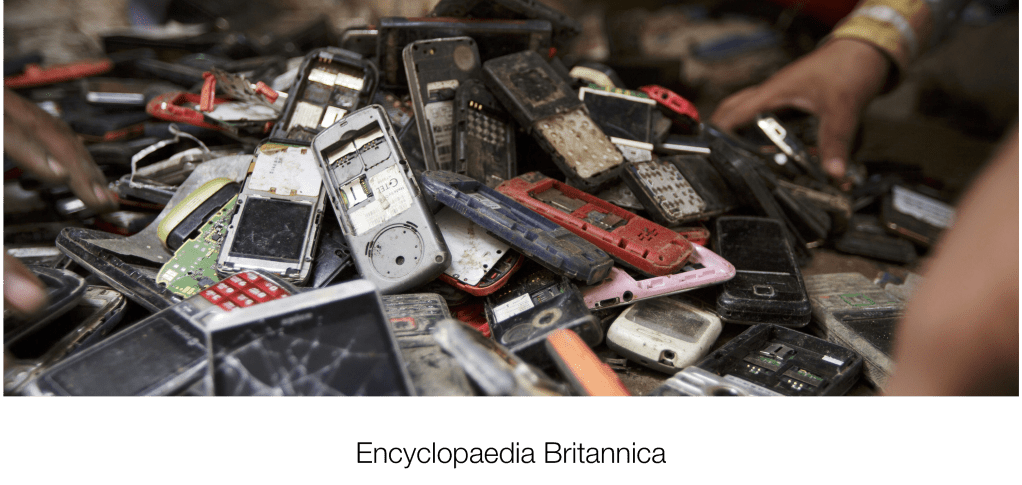
All this electrical and electronic waste is termed e-waste*, waste that ends up in landfill sites. There it can be a cause of pollution as poisonous chemicals leak out into the soil and water systems. And at the same time, it throws away valuable metals such as gold and silver, platinum, copper and cobalt,  necessitating the mining of such metals in parts of the world where the safety of the workers and the environment receive little attention. (Maybe in years to come we shall be excavating land fill sites to recover valuable re sources.)

Globally the UK is one of the biggest producers of e-waste, second only to

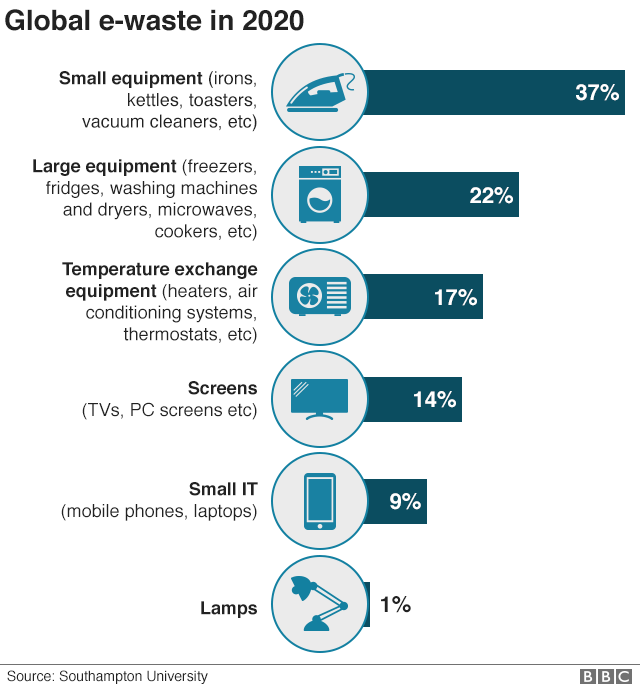
Norway. Each of us on average generates some 23kg of e-waste whilst the European average is just 16kg. We might think e-waste is dominated by  last year’s iPhone but surprisingly it is items like kettles and irons that contribute most. Perhaps these are items are not designed to have a long life, or maybe because they’re are relatively cheap we don’t bother repairing them. 

How can we reduce e-waste?

  1. We can continue to use the items we already rather than being swayed into upgrading to the next model.
  2. We can seek to repair items when they break. We can find a professional repairer to do this or we can carry out our own repair (but don’t fiddle with the electrical wires and connections etc unless you are qualified: in correctly wired appliances can kill). The Restart project based in London has both a directory of repairers –https://therestartproject.org/repairdirectory/ – and offers Repair Parties where people can be guided to carry out simple repairs – https://therestartproject.org/
  3. We can also make sure that we maintain what we own: descaling kettles and irons, cleaning touch screens, removing fluff from washing machines etc.
  4. If we have items that work but which we no longer need, we can pass them on to someone who will use them, either through free cycle web sites, eBay, or by donating them to charities. This particularly applies to smart phones, tablets, laptops plus cables and chargers. Again Restart can direct you accordingly – https://therestartproject.org/where-to-donate-your-computer/
  5. When items become un-useable they should not go into landfill but be recycled. This is becoming increasingly easy –  https://www.recycleyourelectricals.org.uk/electrical-recycling-near-me/ Here in the Borough of Richmond, small electrical items can be recycled at local libraries whilst bigger items can be taken to the Townmead Recycling Centre.  Electrical items large and small can also be recycled at Curry’s PC World store in Twickenham. 
  6. We can campaign, asking manufacturers to produce items that are durable and repairable – check out this web site – https://10yearphone.com/
  7. We can also continue to press the government to legislate for a circular economy. This YouTube clip shows that progress is being made – https://www.youtube.com/watch?v=90k2Tk-BUIA

*(I feel there should be another e-waste descriptor for electronic junk mail, all those unwanted adverts, the photos we store in the cloud and never look at, films and books we download but don’t watch or read, the unnecessary emails we send – especially those long chains of emails that don’t need to re-forward the previous messages, or the send-all emails when only a few people need the message! These all have their own – albeit small – carbon footprint). 

0.3g CO2e: A spam email
4g CO2e: A proper email
50g CO2e: An email with long and tiresome attachment

https://www.bbc.com/future/article/20200305-why-your-internet-habits-are-not-as-clean-as-you-think

The Green Tau: issue 25

14th November 2021

Governments and world leaders have not take action that matches up to the structures of the scientists. Now it is up to us as the people. We are not insignificant. We have money to spend – albeit not as much as governments and the top “5 percenters” – and we have voices with which to speak out. 

Consumer power saved dolphins from tuna nets, saved puffins by ending the use of sand eel oil in biscuits, saved veal calves and hens from cages, saved whales by ending the use of whale oil in cosmetics, saved minks from becoming fur coats …  Consumer power has swung behind campaigns to wear seat belts, to give up smoking, to end drink driving. Now consumer power is seeing the end of single use plastic straws and plastic bags. Consumer power is feeding the growth of organic and vegan foods, and the popularity of vintage clothing. Consumer power is even increasing the number of cycles on the roads.  

We can continue to use our money strategically to shape the world we want to live in. We can band together for greater effect. We can boycott products and service – even entire lifestyles – than damage our future. 

We can be influencers and game changers. We can set the example, we can be there trail blazers. We can show others – individuals like ourselves, small businesses and big businesses, schools, civic groups and faith centres, local councils and governments – that this is the way we want to live. 

We can write letters and petition. We can make posters and banners. We can write articles, we can blog and vlog. We can hold coffee mornings and parties. We can sing and we can be theatrical. We can inform and enthuse. We can demonstrate. We can speak out and we can speak up.

We can also be game changers by not spending money! Not everything we do, not everything we enjoy has to cost money. And things that are free seldom have a carbon footprint! A walk in the park. A chat with a friend. A wave to a neighbour. Giving presence not presents. Sharing and lending. Swopping and exchanging. Upcycling and cycling. Swishing and re fashioning. Repairing and recycling. So telling and singing. DIY and home baking. Growing and preserving. 

We may feel that as one individual we can’t make a difference. We may be unsure what is the best action we can take. We may fear that we might fall under the bewitchment of green wash. We may fear that our best intentions may prove to be unwittingly destructive. We may be overwhelmed by choices before us, the flood of information that is out there, that we don’t even know where to start. 

That is why we need to come together, to find like minded companions. To learn from one another, to encourage and support each other. To know that together we can make positive change a reality. 

Next week’s Eco Tips will list some of the many organisations and groups that can help you find answers and/ or provide a framework for eco living. 

The Green Tau: issue 24

5th November 2021

Green Wash or Green Tonic

Half way through the COP26 climate conference and what has been delivered? Green wash or green tonic? Or is it like the mushroom in Alice and Wonderland and it depends from which side you are eating? 

It may be several months before we know whether what we have been given is a green tonic that will invigorate and rapidly promote growth in our transition to a sustainable global lifestyle; or whether it was in fact a green wash of carefully chosen words that don’t actually mean what they say, or don’t actually lead to any action.

Thursday was set aside for discussions and agreements on energy. It should be strikingly clear that fossil fuels in every shape and form can do nothing other than add to the climate crisis. They are termed ‘fossil’ fuels because they are the carbon content of plants and animal remains laid down/ locked away millennia ago. They are stores of carbon intended to be released gradually over not just millennia but eons of time, but which became the miracle power source for the industrial revolution. Carbon dioxide has been released into the atmosphere at a far faster rate than the planet can re-absorb. It is like a bath tub where the overflow is way too small to cope when the taps are open at full bore. Our carbon dioxide bath is all but overflowing and the consequences will be the total loss of icecaps, ice sheets and glaciers that will cause summer water shortages; rising sea levels that will drown not just towns but whole countries; rapidly rising temperatures, expanding deserts, diminishing  agricultural output and the consequential increase in deaths across the globe. Current atmospheric CO2 levels stand at 413.96 ppm compared with the preindustrial level of 280 ppm and predicted maximum, after which climate change becomes uncontrollable, of 440 ppm.

40 countries have pledged to phase out coal-fired power stations by 2030 – or 2040 if they are one of the smaller economies. Note this doesn’t phase out all use of coal, nor does it phase out gas fired power stations, nor the use of oil, petrol, aviation fuel etc. In the UK we have 3 remaining coal fire power stations, which will be phased out by 2025. But we also have 30+ gas fired power stations, and, despite legal challenges, the government has given the go ahead for what will be the largest gas fired power plant at the Drax power station in Yorkshire.

20 countries, including the UK, have agreed to stop providing finance for overseas fossil fuel developments by 2022, and to divert the funds to clean energy projects. However earlier this year the International Energy Association had already announced that the world had already reached the maximum number fossil fuel extracting operations that would be compatible with the 1.5C temperature rise target. Why then provide another year’s worth of funding to develop even more? And why has the UK government given approval for a new coal mine in Cumbria and and oil extraction from the seas around the Hebrides?

Green Tau: issue 23

30th October 2021

Count me in?

This weekend COP26 starts. The coming together of interested parties from all over the world: government leaders, NGOs, scientists, economists, financiers, environmentalists, charities, development agencies – and if not inside the talks, then certainly present, protest groups – with the target of addressing the climate crisis:- 

agreeing and undertaking to implement and finance the action needed to contain the expansion of greenhouse gases in the atmosphere,

to limit further increases in global temperatures, 

to enable countries and communities to undertake adaptations to farming and                                             infrastructure, housing and businesses: 

to enable populations to live with the already built-in effects of climate change (rising sea levels, droughts, floods, wild fires, heat waves and cold snaps, storms and changing seasons)

and to do so in a way that is fair to all nations and all people.

Looking at past achievements, we are expecting a lot of COP26. If we are expecting a lot from the conference delegates then it must be right to expect a lot of ourselves too.

How far will we go? How far will we go in changing our lifestyle to protect the planet? How far will we go in curbing our consumption of limited resources? How far we we go in be willing to pay the true cost of what we buy?

Change has to begin somewhere. If no one takes the first step, then nothing happens, but if someone makes that first step them change can begin.  It can seem really hard to make changes when everyone  around you seems to be ignoring the problem and continuing as if no action is needed. How can we make change easier?

Be confident that you are doing the right thing. 

Be proud to be a trend setter.

Get the support of like minded people. 

Be an encouragement to others.

Raise awareness of why change is needed.

Raise awareness of the consequences of doing nothing.

Find ways in which change becomes satisfying, rewarding, even fun.

Keep focused on why change is necessary. 

See the positives you are achieving – and talk about them to others! 

Be proud to be part of the change.