Sunday Reflection

22nd August 2021 – Proper 16: Joshua 24:1-2a,14-18, Psalm 34:15-22, Ephesians 6:10-20, John 6:56-69


The passage from Joshua comes towards the end of the book and towards the end of Joshua’s own life. The Israelites have settled in the promised land, each tribe in its own territory and peace has been established. Joshua calls together all the tribes and their leaders for one last exhortation that they live according to the ways ordained by God. It is as if they are again standing for the first time on the threshold of a new land, on the threshold of a new life. They are enjoined to leave behind old ways of living, old gods and old allegiances.  

Do we need to reimagine ourselves as being on the threshold of a new beginning, a new of life? Is this how we should be approaching the COP26 climate conference? Then nations and NGOs, communities and other parties, will gather to make agreements about new ways of living in a carbon neutral world, to affirm ways of ensuring worldwide biodiversity, setting up funds to enable everyone to be part of the new future. We will all need to stand alongside one another as let go of old ways of doing things, as we leave behind of old habits, and forsake our reliance on fossil fuels. 

If so should we not now be reassessing our lives, preparing how we can make and sustain the necessary changes we must make, and encouraging and supporting each other, and above all celebrating with joy our new greener, cleaner, kinder future?

May God bless our endeavours – for “The righteous cry, and the Lord hears them and delivers them from all their troubles.”

I would not wish to say that the current climate crisis is either the work of God or the work of the ‘devil’. The world God has created is beautiful and complex. It is a world in which things evolve and continue to re create in new and diverse forms. It is a world in which cause and consequence exist. It is a world which is continuing to develop over time. It is a world in which God has created humankind as a being with intelligence, imagination, determination, and with an awareness of right and wrong. It is a being with unique skills and possibilities, and it is a being which can choose to have an affinity with God. 

Depending how we use these attributes, we are capable of doing great good or of doing great harm. When we – and/ or others – are not in tune with God, our actions can become so mired in greed, dishonesty, hatred, apathy, and prejudice, we can describe our situation as being evil and bedevilled. We can feel as if we are struggling with forces or powers beyond our comprehension. Perhaps this is when we need to put on the armour of God, to refurnish our lives with the gifts of God, to be open to God in prayer and to be constant in seeking channels through which God’s Spirit can flow. 

If this seems hard to grasp, we need to recall the words of Simon Peter, “Lord, to whom can we go? You have the words of eternal life. We have come to believe and know that you are the Holy One of God.”

Green Tau: issue 13

Reducing carbon emissions: Transport

21st August 2021

Transport in the UK (the getting from a to b and back rather than the transporting of goods) accounts for about 20% of the average person’s carbon footprint. If we are to achieve net zero by 2050, reducing – or actually zeroing – transport emissions is critical.  

There are two key means of transport which are already carbon neutral: walking and cycling. Whilst long distance walking or cycling may not be the most practical ways of getting around, they are ideal means of making all those short journeys. Approximately 60% of journeys of less than 2 miles are currently made by car. Walking and cycling are not just good for the climate, they are good for our health too!

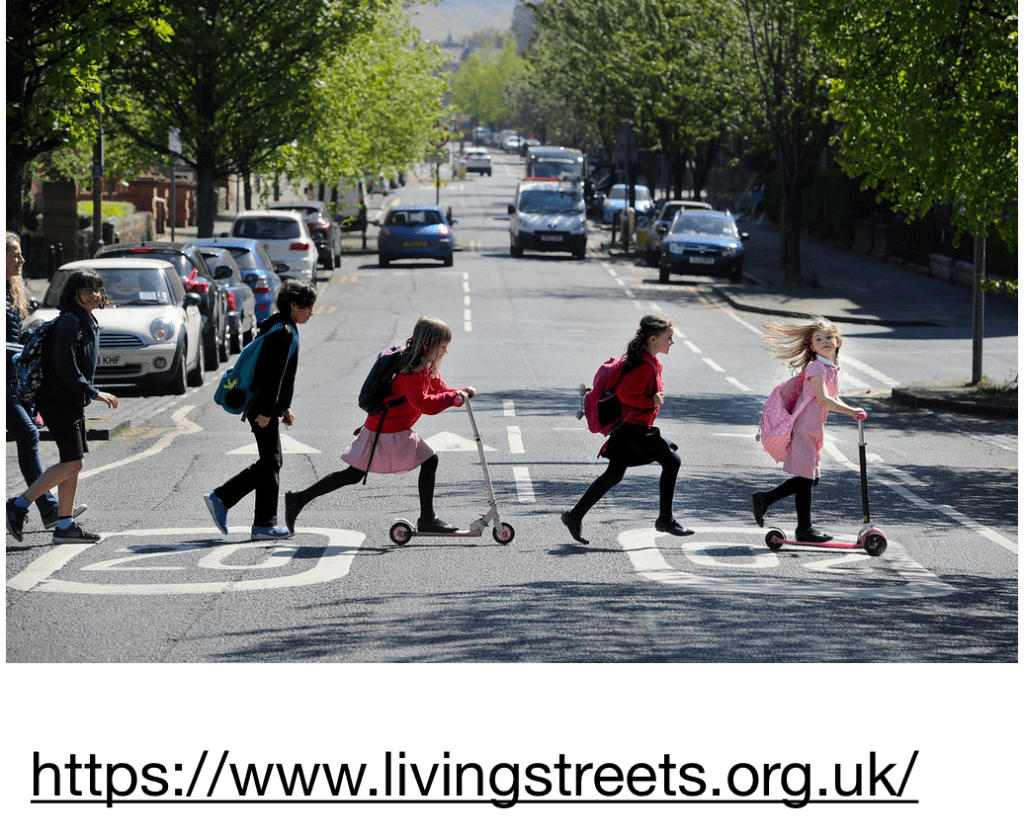
As well as walking and cycling ourselves, we can also be active in pressing our local authority and the government to do more to support cycling with the provisions of cycle lanes, cycle parking, cycling courses, subsidised cycles for those with disabilities and for those on low incomes. Living Streets is a charity that promotes and enables walking. One of its aims is to increase the number of children walking or cycling to school. A generation ago, 70% of pupils walked or cycled to school; now it is less than 50%.

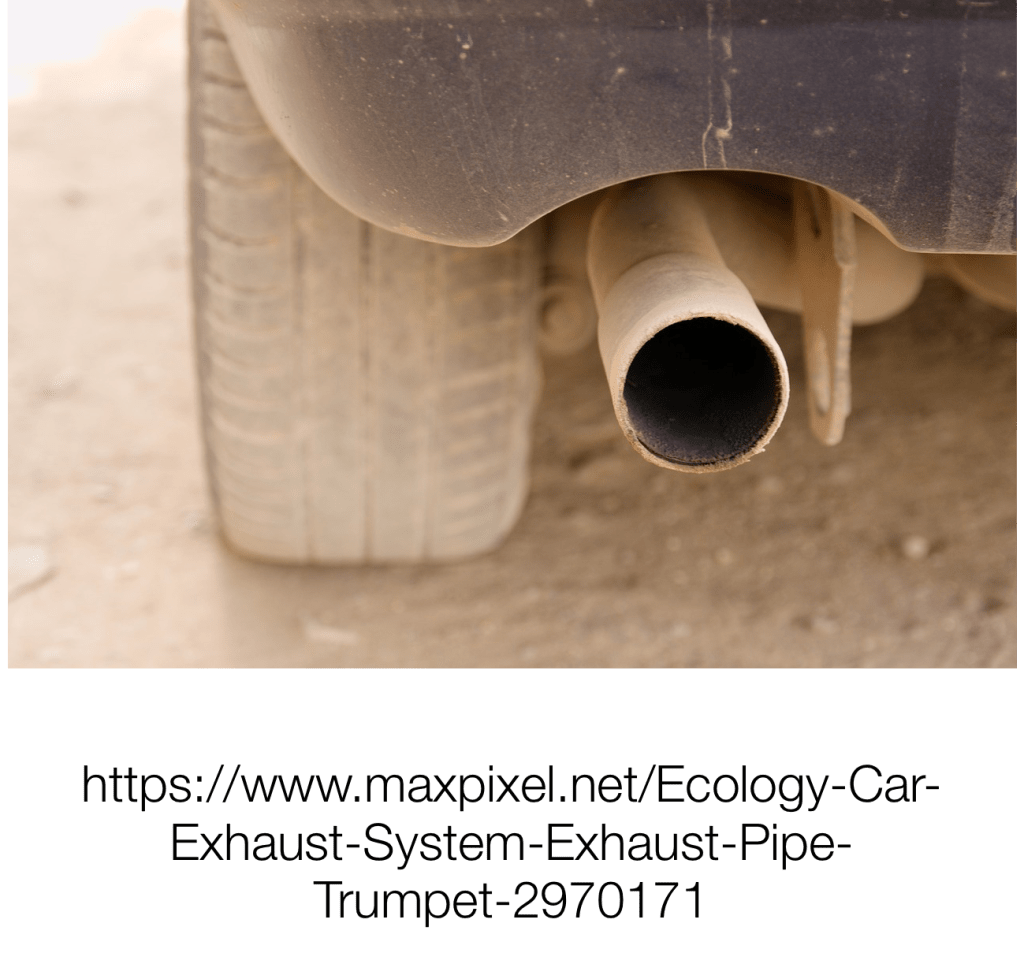
There are 32,697,408 cars on the road in the UK – and most are quite literally on the road – parked that is! Only 0.5% meet the ultra low emissions standard, ie hybrid vehicles that produce less than 75 grams of CO2 per kilometre from the tail pipe and electric vehicles that produce zero emissions. In other words most cars in the UK are heavy polluters both in terms of greenhouse gas emissions and in terms of air polluting chemicals and particulates. Air pollution caused the deaths of 15,000 people in 2019.

Reducing or eliminating the use of fossil fuel cars will substantially reduce the UK’s carbon footprint. Where journeys cannot be made on foot or by cycle, public transport offers a more carbon efficient alternative, whilst at the same time reducing congestion on roads. Most of Transport for London’s bus fleet are either electric or meet the ultra low emissions standard. Ideally similar policies should be  implemented in other parts of the country. This is dependent upon Government disposition and funding. Levelling up should include levelling up access to frequent, reliable and affordable public transport. 

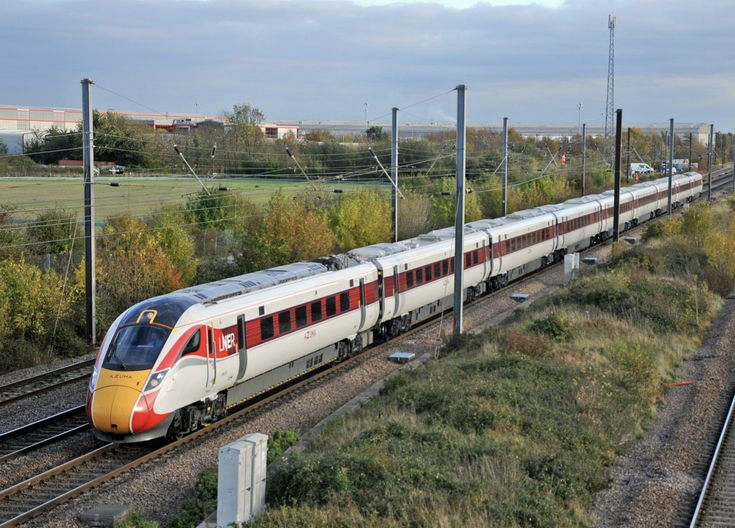
Public transport includes trams (electric), coaches and trains. Disappointingly only 38% of the UK rail network is currently electrified compared with 55% in France and 100% in Switzerland.  Nevertheless for UK rail passengers emissions average out at 35g per passenger km. This compares with 100g (small fossil fuel car) and 200g (large fossil fuel car) per car per km. Rail travel will

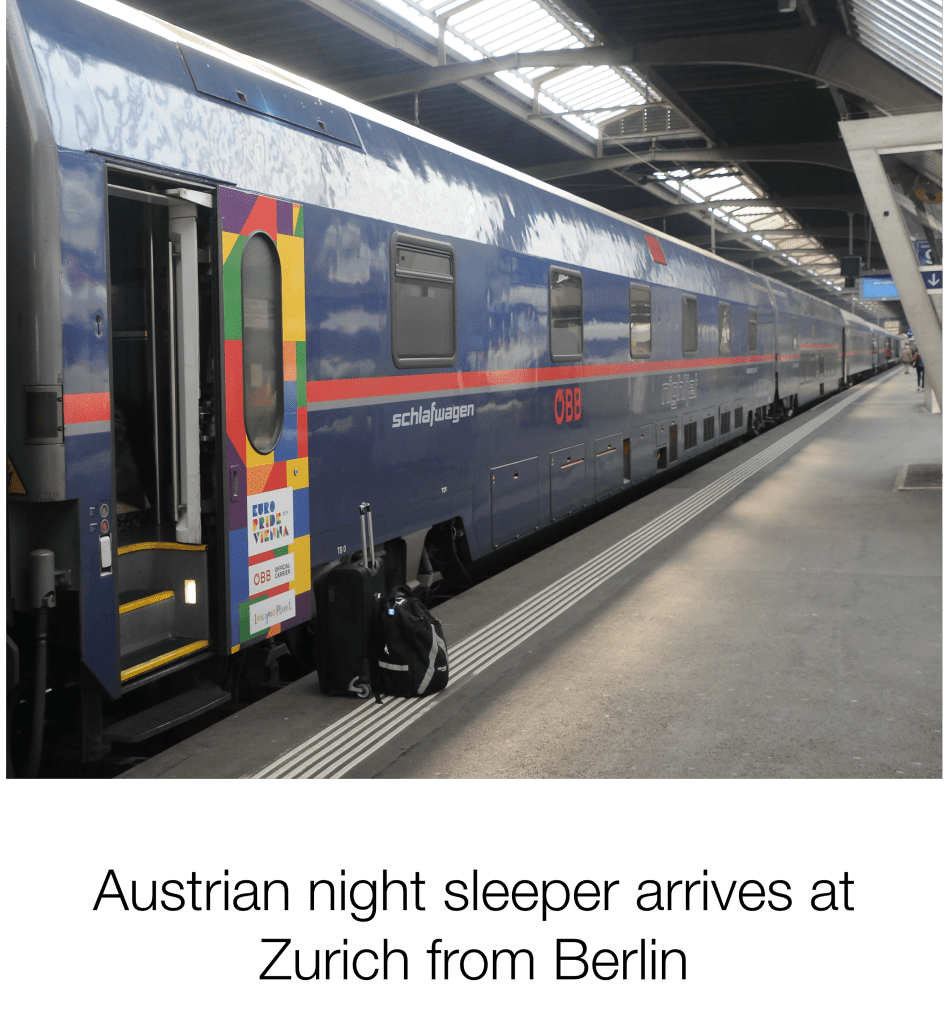
need to continue to grow to achieve net zero targets, replacing not only car journeys but air flights too. Short haul flights give rise to a particularly high level of emissions – 254g per passenger km. Travelling from London to Berlin by plane has a carbon footprint of 160kg compared with 40kg by train. Even by train, the journey can be made in a day, and increasingly there is now the option of making the journey overnight.

Long haul flights are an even greater concern vis a vis net zero targets. A return flight from London to New York emits around 3.3 tonnes of CO2 per person – ie about one third of the average carbon footprint for someone living in Britain. It is hard to see how continuing to make such journeys can be compatible with a net zero target – yet many people will have good reasons for wanting to do so – eg to visit close family. Some companies offer carbon offsetting packages where you pay to enable someone else to reduce their carbon emissions, or where you pay to plant trees etc that will at some future date absorb sufficient CO2 to equal what you have already generated. What it does not do is to eliminate or reduce carbon emissions in the  present moment.

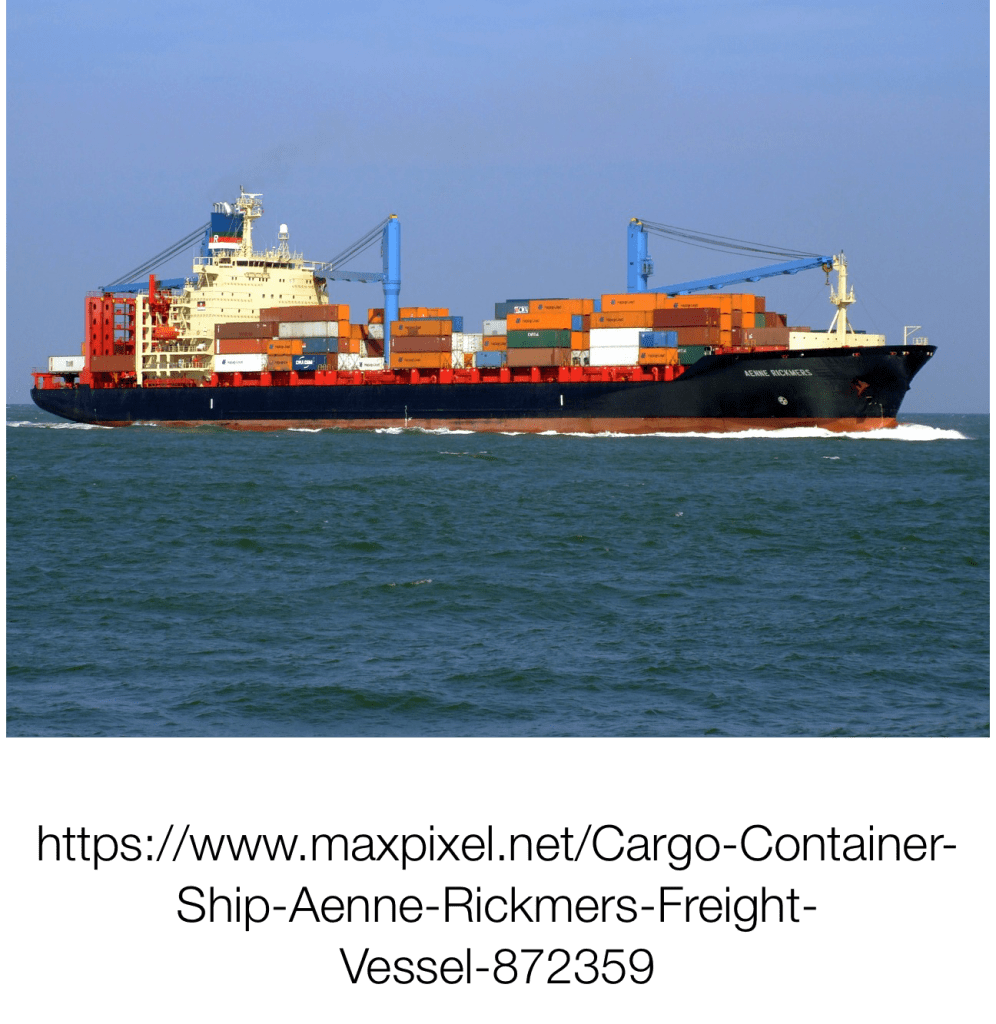
One alternative to long haul flights might be to travel by ship where destinations involve crossing oceans (it is possible to travel London to Singapore by train!) You can travel as a passenger on board a cargo ship: Liverpool to Newark takes  11 nights and costs from £1300.  Whilst the carbon footprint of cargo ships is not great – 3 to 15 grams of CO2 per tonne cargo per km – the add on cost per passenger is minimal. 

Reducing our carbon footprint to achieve net zero is demanding and will involve both substantial changes to the way we travel and imaginative ones too!

Count Down

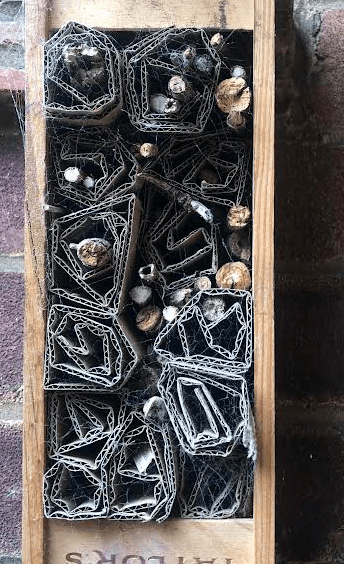
 Action 30: Make a bug hotel. Insects and other mini beasts in our gardens do need places of shelter, places to rest and, come with winter, places to, hibernate.  Without human intervention/ obstruction these small creatures would seek shelter in nocks and crannies offered by dead plants, the bark of trees, fallen deadwood etc. Much of environment lacks such places partly because we tend to keep things tidy and all surfaces clear of obstruction. We can compensate by purposefully creating insect-friendly spaces: eg by not cutting back and clearing dead plants, and/or by building bug hotels. The RSPB and other environmental charities have instructions for these:

https://www.rspb.org.uk/get-involved/activities/nature-on-your-doorstep/garden-activities/build-a-bug-hotel/

Count Down

Action 29: Plan next year’s holiday? Since air travel comes with a  disproportionate carbon footprint, why not see where you might go travelling by train: Berlin? Moscow? Venice? The Alps? The Fiords? Or maybe closer to home: Tenby? St Ives? Scarborough? Brighton? Fort William? Windermere? Maybe plan a grand railway tour. 

Green Tau Reflection

Life choices that bring blessings 

“You have heard that it was said, ‘An eye for an eye and a tooth for a tooth.’ But I say to you, Do not resist an evildoer. But if anyone strikes you on the right cheek, turn the other also;  and if anyone wants to sue you and take your coat, give your cloak as well; and if anyone forces you to go one mile, go also the second mile. Give to everyone who begs from you, and do not refuse anyone who wants to borrow from you. Matthew 5:38-42

The above comes from the Beatitudes: Jesus’s teaching to the crowds on the approach to life that would bring its own blessings. 

An eye for an eye and a tooth for a tooth sounds very mercenary. A contractual arrangement in which neither side looses out. A fair’s fair deal that leaves no space for argument not for generosity. It has the feel of a fixed price market. Anyone who tried to pay more than the asking price would be a fool. Yet Jesus invites the listener to be that fool. To pay more than the asking price. To give more that is required or demanded. To act in a way that undermines the normal way of doing business. It is a radical counter-cultural way of being that will bring its own blessings.

In the world of the climate crisis, old ways of doing things will have to change, old traditions and  old  norms will be replaced by new ways. Heating homes with gas will be history; the supermarket run in the car and the lift to school will disappear; holidays won’t start at the airport; strawberries will be a treat for the summer not Christmas.

Change like this can be hard to accept. After a life time in which cars have become the default means of transport, it is hard to rethink in terms of walking times. After a life time in which air travel has become part and parcel of the holiday package, it is hard to rethink in terms of trains and local destinations. After a life time in which seasonal food describes food linked to sporting/ social events, it is hard to re shape our eating round a annual cycle of what is currently in peak production: raspberries in June, plums in August, avocados in February. 

Change can be expensive as new practices, new products are scaled up and developed. The bonus of economies of scale take time to kick in, the benefits of lower energy bills will be felt gradually over the years whilst the initial cost of new equipment – heaters, electric cars, solar panels – may be steep.  

Following Jesus’s teaching, we can become trend setters, living a new lifestyle, adopting ways that will curb GHG emissions and restrain the climate crisis. We can lead by example and do things that are not the norm, that are not (yet) fashionable. We can choose to walk or cycle that bit further than usual rather than going by car. We can refuse to buy the plastic wrapped fruit or sandwich. We can explore the UK rather than the world. We can decline avocados in summer and strawberries in winter. 

Those of us with money can invest in carbon neutral technology, we can buy the eco friendly products and services, and we can do so generously, supporting producers as well as the climate. Train travel can be more expensive that going by car or plane, but we can choose the climate friendly option. Organic food may be more costly – now – but we can choose it over cheaper products that are less environmentally friendly.

Jesus asks that when we choose how to live, that we choose to think of the needs of others and be ready to meet their needs first. The results? A transformed world!

Count Down

 Action 27: Do a survey of your dustbin. What are you throwing out? Could any of it be recycled, repaired or reused? Do some of the things that you buy come with too much pack again? Could you shop differently? What would it take to half the amount of rubbish you produce each week? What would it take to reduce it to zero? 

Questioning our smallness

Loving God, we strive to follow your ways of righteousness and justice in the world.

Yet we feel small and inept, and lay before you our dilemma.

Will you stand by if humanity continues to ignore your ways, following a path instead that leads to self destruction?

Will you stand by if 5000 choose not to follow the crowd? For the sake of the few, will you protect us all from self destruction?

Lord have mercy.

But loving God, Will you stand by if only 500 choose not to follow the crowd? For the sake of the few, will you protect us all from self destruction?

Lord have mercy.

But loving God, Will you stand by if only 50 choose not to follow the crowd? For the sake of the few, will you protect us all from self destruction?

Lord have mercy.

Loving God, strengthen our resolve to do what is right, to stand up for the marginalised, to safeguard creation and protect life, even when we feel small and ineffective. 

Give us the confidence to share our concerns and our hopes for the planet, so that we can encourage and welcome others to follow the path of righteousness and justice.

Amen.

Count Down

Action 26: Last week’s IPCC report issued  us a code red  warning: if we do not act now and act with sufficient magnitude, we will not be able to avert the  already escalating climate emergency. Britain as the host nation of the COP26 conference in Glasgow should be leading the way putting in place not only strategies but actions too to ensure we achieve, nationally and globally, the 2050 net zero emissions target. Write to Alok Sharma the appointed President for COP26, and ask what is happening.

Eco Tips: Packaging

Become savvy.
Give packaging a long, hard look.
Is it necessary? Is it recyclable? Is there an alternative? Can you take your own packaging – be that a shopping basket, cloth bag or box?

There is little  – if anything – that we consume that does not have a carbon footprint which is why when we seek to reduce our carbon footprint, we should be reviewing everything that we consume. And that includes the packaging. Whether what you buy comes in a plastic bag or a paper one, whether it comes in a plastic tray or a cardboard punnet, whether it comes in a plastic bottle or a glass jar, whether it is wrapped in tissue paper or bubble wrap – that packaging will have a carbon footprint. If the packaging is excessive or simply unnecessary,  then we increase our carbon footprint with no gain or merit. Our aim should be to avoid unnecessary packaging and where packing is needed, to seek out packing that can  – and will be – recycled. 

Packaging Scenarios 

1. Some packaging is necessary: imagine taking home a pint of milk with no packaging! Milk is usually sold in plastic or glass or tetra-pacs containers – and in fact all these can be recycled (although the loop for tetra-pacs is not yet fully closed), whilst glass milk bottles can be reused some 60 to 70 times before being recycled. 

2. But some packaging is not. Do apples need to come in plastic bags (even if they are a compostable plastic substitute)? Loose fruit and vegetables can simply be picked up, weighed and popped into you own shopping bag/ basket.  

3. For some items such as strawberries and raspberries,  the packing prevents the items becoming damaged and potentially inedible . The carbon footprint of the packing may outweigh the carbon footprint of wasted food. Punnets are often made of PET plastic which can be fully recycled into a new punnet but the film on top is not so readily recycled –  the Co op has just introduced a recycling scheme which accepts all scrunchable plastics. 

4. Some packaging is excessive! Biscuits that come in a plastic tray inside a plastic sleeve, inside a cardboard box …. Refusing to buy such items  is the best response – and can feeling very satisfying. You might instead make you own ‘up-market’ biscuits with zero packaging

5. Some packaging cannot be recycled such as polystyrene or, in the case of black plastic, is routinely incinerated/ sent to landfill because the recycling machinery finds black hard to detect! 

6. But if fruit and vegetables can be bought packaging free, what about other things such as pasta or dried fruit? Soap or washing up liquid? There is a growing number of refill stores where customers can buy loose goods, decanting what they want into either their own reusable jar or  container, or into a paper bag.