The Green Tau: issue 46

System Change?

4th August 2022
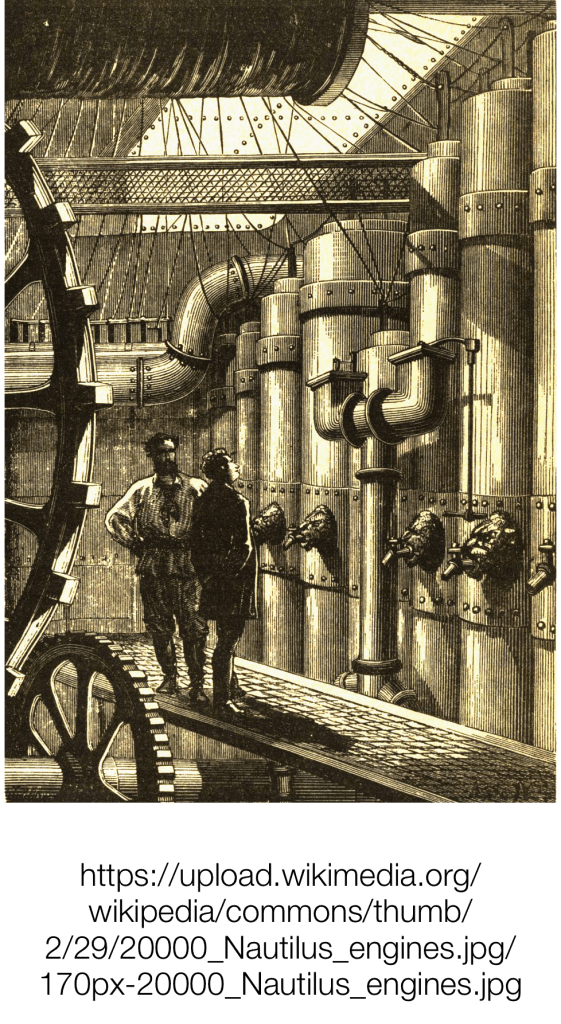
Steam Punk is based on the scenario of an alternative history in which steam power, steam engines and hand cranked machines reigned supreme, preventing the development of electrical power and the petrol engine. Might there be scope for Cycle Punk, an alternative history in which peddle power dominates with pedal powered kettles and mobile phones as well as the straightforward two wheel mode of transport?

The way economies and societies work -a product of convenience, economies of scale and inertia – is such that a preferred system will prevail whether that is the energy system, transport system, voting system, or  communications system. The systems or products that are not adopted are not necessarily a worse choice, just different as was the case between VHS and Betamax for video recorders. But once a system is established it is hard to change, because everything is geared to it, business and society have bought into it, lifestyles are built around it, and investment perpetuates it as the safe bet.

In the UK we have favoured a transport system based on private cars over one based on public cars, buses and trains. Our infrastructure favours the former. Our lifestyles have been shaped by the former. Our businesses are geared to the former. Our investment is predicated on its continuation. To change the system would need radical change in all these areas. 

Our energy system is based on the use of cheap fossil fuels. Our agricultural system is based on the production of cheap food, especially cheap animal products. Our manufacturing system is based in the use of cheap labour – as is our hospitality sector. Our investment system on the other hand is based on maximising profits for the few. 

The size and scale of such systems prevent us from seeing or experiencing anything different. Their market share precludes new entrants with alternative ideas. The systems prevent the use of better, more appropriate technologies.

In the UK fuel bills are rising out of all proportion to the cost of production, yet swopping to an alternative system seems nigh impossible. For people struggling financially, there is no spare cash to replace a gas boiler with a heat pump. There is no spare cash to install double glazing and reduce dependency on central heating. There is no comprehensive public transport network to remove reliance on the private car. There is insufficient investment in alternative energy and the odds are increasingly stacked against such investments as the return on fossil fuel investment sky rockets as fuel prices – but not costs – continue to rise.

The Democratic Republic of the Congo drawing on the power of the River Congo has the capacity to generate 100,00MW of hydro electric power compared with its existing capacity of 2792MW (https://www.usaid.gov/powerafrica/democratic-republic-congo). Yet this requires investment. The DRC is a nation struggling to meet the needs of its people, and the government is currently auctioning fossil fuel rights to explore and extract oil from under its rainforests, a move that will generate money now rather than longer term pay back of hydro power.

Africa as a whole has great potential for the generation of solar power, and which if provided via small scale projects can provide electricity to areas far removed from the grid. Yet whilst solar power has still to be developed in countries such as Algeria, Angola, Egypt, Ethiopia, Ghana, Morocco, Namibia, Nigeria and Tanzania (https://commodityinside.com/reports/solar-energy-market-in-africa/) the big oil companies are developing new oil and gas fields in Angola, South Africa, Ghana, Gabon, Egypt, Namibia and Kenya. 

Understanding that we are to a greater or lesser extent trapped in a system lets us be realistic about our situation, our predicament. It also helps us understand what will be needed to bring about change. 

Changes in government policy to favour the new system and tax changes and rules  to discourage the old.

Changes in global policies as advocated by the World Bank, the UN etc.

Changes in investment strategies and business plans.

Developments in new technology.

Changes in public opinion that will support all these. 

This is where we come in. We can, even in small ways, be the trigger or the irritant that initiates and propels change. We can make a difference – by talking with friends and neighbours, by loving as if we were already part of the new system, by campaigning, by pressing businesses and politicians, by voting with our money, by investing and by pestering those institutions investing on our behalf, by supporting charities, by standing up. As Christians we are well suited to this. We have that calling to be different, to be countercultural, to be willing to go the extra mile, to act for the wellbeing of the other.

The global system of slavery did come to an end when public opinion had changed. They did it then. We can do it now. 
Counting on …day 266 

4th August 2022

It is surprising that more cafes don’t serve vegan food. Many cakes and biscuits can as easily be made with margerine as with butter and would instantly become vegan – flapjack and Anzac biscuits for example.  And egg is an easily replaces ingredient in brownies and tray bakes. It maybe the perception that people might avoid foods labelled vegan but research shows that the more vegan options available, the more people will choose vegan items! So make a point of asking for vegan food when in cafés and restaurants and ease the change: we will all benefit!

Proper 12

24th July 2022

Reflection (and readings below)

I am still shocked when I hear of climate activists who risk sitting in roads to highlight the emergency, or sit on oil tankers to prevent them moving, or blockade Amazon warehouses because of their casual treatment of workers, or break the glass doors of banks that support the fossil fuel industry, or of news agencies which obscure the truth. I am heart broken when I hear of them being arrested and imprisoned. Yet I see that they are following in the footsteps of the prophets of old, standing up against injustice, speaking truth to authority, and doing so in deeds just as much as in words. 

How can we not be shocked by today’s reading from Hosea. What bravery and self abasement did it take for Hosea to go and find and marry a prostitute? And not even a ‘reformed’ prostitute. Read carefully and you will notice that the first child Jezreel is certainly Hosea’s son, but are the next two children? And what of Gomer? Are we not shocked that she should be in such a position that prostitution is a viable and acceptable way of making a living? We wonder what choices she had had in life.

Through this lived narrative, God is pointing out to the people that they have behaved like a prostitute. They have not been faithful to God but have sought out other bodies to satisfy their needs and give them direction, to worship and imitate. They have spurned integrity and uprightness to follow whims and fancies, to chase after the illusions of wealth and happiness. God pulls no punches as to the severity of the consequences of their choices.

Whilst the passage from Hosea tells us of humanity’s inclination to stray away from God and from God’s way, the letter to the Colossians describes human lives rooted deep in God, built up and bound in place by a whole hearted faith in God through Jesus Christ, that allows for no deviation from the ways of God. It is a way of life that makes one fully alive! This sounds so amazing, I puzzle that we find it so difficult to live out in our own lives and to share with others – but I know that we do struggle. 

Last Saturday I took part in a Christian Aid event called Talking Climate Justice. During the two plus hours of talk,  questions and conversation, we focused on two issues: the climate crisis and climate justice. Both are integral to the Christian calling: the climate crisis because we humans have caused what is damaging the world God created, and climate justice because the effects of the crisis are disproportionately affecting those who contributed least to it, and because the distribution of resources is such that these same people have a disproportionately small share and are – financially – ill equipped to cope with the crisis. As those called to love God with our whole being and to love our neighbour as ourself, we are failing big time. We are like the people Hosea is addressing, whereas we want to be like the people Paul is addressing! How do we achieve the turn around we desire, both for the climate and for our neighbours across the globe?

The gospel gives us the answer: prayer and action. The Lord’s Prayer invites both. We are to hallow God, to declare God’s holiness in prayer. We are to seek God’s kingdom, to live according to that regime. We are to pray everyday for what we need – and be satisfied. We are to both seek forgiveness, and forgive, and make good where we are indebted. We are to ask, to search and to knock. When we knock, let us knock on the doors of businesses and institutions, corporations and governments. Let us keeping on knocking until they listen, until they open their doors to change and restitution. And when people demand change of us, we too must be willing to turn our lives round, binding them to the ways of God.

Hosea 1:2-10

When the Lord first spoke through Hosea, the Lord said to Hosea, “Go, take for yourself a wife of whoredom and have children of whoredom, for the land commits great whoredom by forsaking the Lord.” So he went and took Gomer daughter of Diblaim, and she conceived and bore him a son.

And the Lord said to him, “Name him Jezreel; for in a little while I will punish the house of Jehu for the blood of Jezreel, and I will put an end to the kingdom of the house of Israel. On that day I will break the bow of Israel in the valley of Jezreel.”

She conceived again and bore a daughter. Then the Lord said to him, “Name her Lo-ruhamah, for I will no longer have pity on the house of Israel or forgive them. But I will have pity on the house of Judah, and I will save them by the Lord their God; I will not save them by bow, or by sword, or by war, or by horses, or by horsemen.”

When she had weaned Lo-ruhamah, she conceived and bore a son. Then the Lord said, “Name him Lo-ammi, for you are not my people and I am not your God.”

Yet the number of the people of Israel shall be like the sand of the sea, which can be neither measured nor numbered; and in the place where it was said to them, “You are not my people,” it shall be said to them, “Children of the living God.”

Psalm 85

1 You have been gracious to your land, O Lord, *
you have restored the good fortune of Jacob.

2 You have forgiven the iniquity of your people *
and blotted out all their sins.

3 You have withdrawn all your fury *
and turned yourself from your wrathful indignation.

4 Restore us then, O God our Saviour; *
let your anger depart from us.

5 Will you be displeased with us for ever? *
will you prolong your anger from age to age?

6 Will you not give us life again, *
that your people may rejoice in you?

7 Show us your mercy, O Lord, *
and grant us your salvation.

8 I will listen to what the Lord God is saying, *
for he is speaking peace to his faithful people
and to those who turn their hearts to him.

9 Truly, his salvation is very near to those who fear him, *
that his glory may dwell in our land.

10 Mercy and truth have met together; *
righteousness and peace have kissed each other.

11 Truth shall spring up from the earth, *
and righteousness shall look down from heaven.

12 The Lord will indeed grant prosperity, *
and our land will yield its increase.

13 Righteousness shall go before him, *
and peace shall be a pathway for his feet.

Colossians 2:6-15

As you have received Christ Jesus the Lord, continue to live your lives in him, rooted and built up in him and established in the faith, just as you were taught, abounding in thanksgiving.

See to it that no one takes you captive through philosophy and empty deceit, according to human tradition, according to the elemental spirits of the universe, and not according to Christ. For in him the whole fullness of deity dwells bodily, and you have come to fullness in him, who is the head of every ruler and authority. In him also you were circumcised with a spiritual circumcision, by putting off the body of the flesh in the circumcision of Christ; when you were buried with him in baptism, you were also raised with him through faith in the power of God, who raised him from the dead. And when you were dead in trespasses and the uncircumcision of your flesh, God made you alive together with him, when he forgave us all our trespasses, erasing the record that stood against us with its legal demands. He set this aside, nailing it to the cross. He disarmed the rulers and authorities and made a public example of them, triumphing over them in it.

Luke 11:1-13

Jesus was praying in a certain place, and after he had finished, one of his disciples said to him, “Lord, teach us to pray, as John taught his disciples.” He said to them, “When you pray, say:

Father, hallowed be your name.
Your kingdom come.
Give us each day our daily bread.
And forgive us our sins,
for we ourselves forgive everyone indebted to us.
And do not bring us to the time of trial.”

And he said to them, “Suppose one of you has a friend, and you go to him at midnight and say to him, `Friend, lend me three loaves of bread; for a friend of mine has arrived, and I have nothing to set before him.’ And he answers from within, `Do not bother me; the door has already been locked, and my children are with me in bed; I cannot get up and give you anything.’ I tell you, even though he will not get up and give him anything because he is his friend, at least because of his persistence he will get up and give him whatever he needs.

“So I say to you, Ask, and it will be given you; search, and you will find; knock, and the door will be opened for you. For everyone who asks receives, and everyone who searches finds, and for everyone who knocks, the door will be opened. Is there anyone among you who, if your child asks for a fish, will give a snake instead of a fish? Or if the child asks for an egg, will give a scorpion? If you then, who are evil, know how to give good gifts to your children, how much more will the heavenly Father give the Holy Spirit to those who ask him!”

 Counting on … day 252

21st July 2022

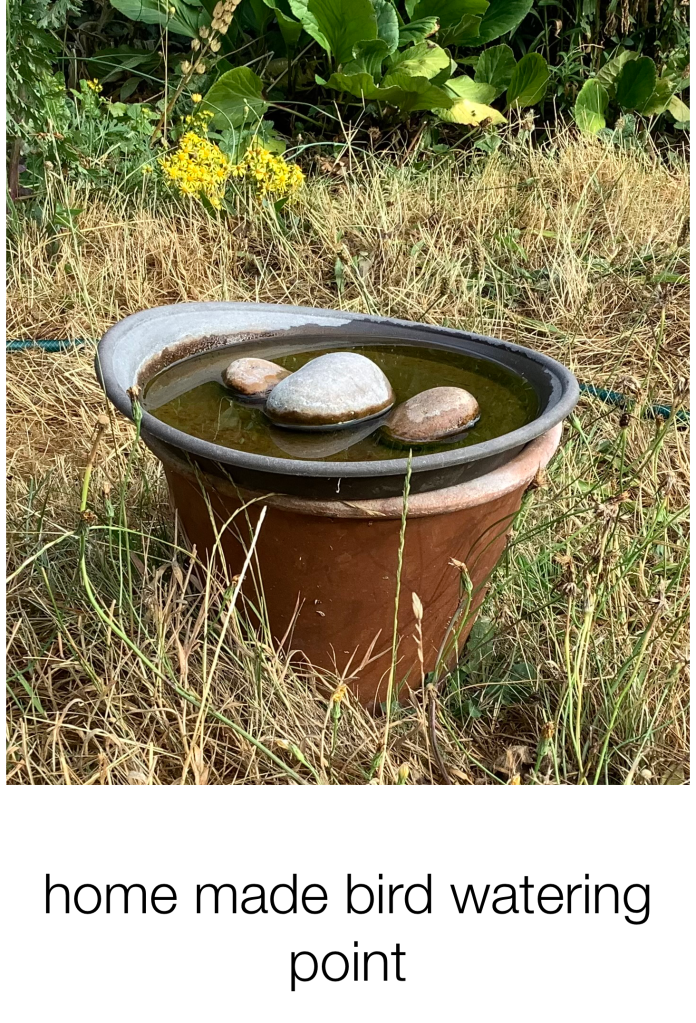
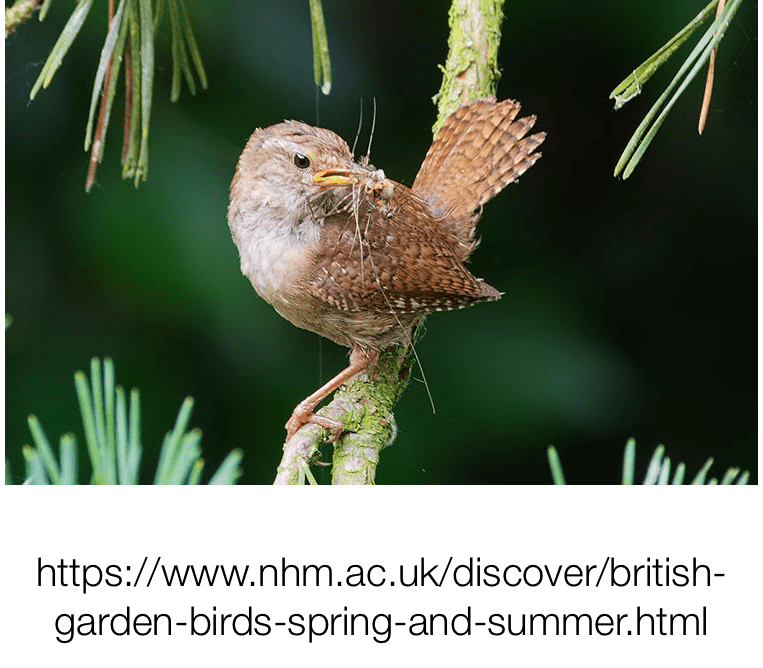
For those of us with outdoor spaces and gardens, there is much we can do to help support biodiversity. Like us, wildlife too needs help to cope with the extremes of weather – see the link below. 

I have also noticed many shops and houses putting out bowls of water for passing dogs.

The Green Tau: issue 44

An addendum to Sunday’s reflection

On Sunday (17th July) with a focus on the environment, we looked at the plight of five creatures threatened by our human lifestyle choices. And it is not just these creatures whose futures are threatened but ours too as we all part of one interconnected ecosystem.

What action can we take to change these prospects?

“Orang-utans live in great tropical forests. They depend upon the forests for food and shelter, as a well as a  place to live and to play. But the forests where they live are being chopped down and cleared away to make space for acres and acres of palm oil plantations to make lipsticks and margarine, shampoo and pet food, sunscreen and bio diesel. When the forests go, the orang-utans have no where else to live. It seems as if we are saying to the orang-utans ‘Go away you don’t belong here’.”

By carefully choosing what we do and don’t buy we can reduce the pressure on forests such as those where orang-utans live. We can avoid products that use palm oil or we can seek out producers who follow a code of conduct that requires them to protect indigenous wild life and farming communities.

It takes a bit of effort but research via the internet and especially using web sites created by ethical and environmental groups such as The Ethical Consumer and the Fair Trade movement can gives us the information we need to make better choices. We may conclude that some of things we have been buying are not really essential and that buying less is another way of taking action. We can also investigate the sourcing of other crops such as cocoa, sugar cane and soya which can be equally detrimental to the environment. NB the vast expansion of soya beans as a crop goes not to create soya milk, but as fodder for the world’s escalating meat farms.

“Polar bears live in the Arctic where they go hunting across the ice. They dive into cracks and holes in the ice to catch fish and seals. But climate change is making the world hotter and the ice is melting. Without the ice the polar bears cannot hunt fish and seals. Instead they and their cubs starve. It seems as if we are saying to the polar bears, ‘If you can’t cope with climate change and melting ice caps, then we don’t need you.’”

“Sand martins spend the winters in Africa and the summers in Europe. In the spring they fly thousands of miles across the Sahara to Britain and in the autumn they fly the same thousands of miles back. But climate change is making the world hotter and when they fly over the Sahara Desert, the air is so hot that many martins simply cannot cope and they fall to the ground. It seems as if we are saying to the sand martin ‘If you can’t cope with climate change, then there’s no place here for you any more.’”

The climate crisis is rapidly increasing and is causing and exacerbating many other problems. We can each take action by changing our lifestyle to reduce our carbon footprint. There are many books and web sites on ways and means. The principal areas of change we can make in our individual lives are in Transport: not flying, rescuing significantly our dependence on cars and instead using public transport, cycling and walking. 

Food: eating locally produced, seasonal, organic food, and replacing meat with plant based meals

Heat and electricity: reducing demand by insulating our homes (which also helps keep them cool in the summer) and turning down the thermostat, using renewal sources of energy,  reducing the frequency with which we wash ourselves and our clothes, and reducing our dependence on so many high energy consuming appliances

Consumption: the things we buy and consume all have a carbon footprint. We can consume less including  less packaging, we can repair and reuse what we do have, when we do buy new we can seek out things that are ecologically and ethically made, and we can make sure that everything is recycled at the end of its lifecycle.

But we won’t be able to make the necessary reduction in carbon emissions on our own. We are locked into systems that make it impossible – rail travel  is made more expensive than air travel through taxation, regions outside London and especially rural areas are inadequately provided with public transport, people’s incomes are often too low to allow for investment in insulation and home improvements that would reduce energy costs, large fossil fuel companies across the globe continue receive tax subsidies, manufacturers are not required to pay for the cost of collecting and recycling their products, the true  value of nature is not included in investment decisions, our pensions fund  not only fossil fuel investment but also the destruction of forests for palm oil and soya crops … the list goes on. We need to engage with and support environmental groups that call for system change.

“Around the world in different oceans live whales. Whales get caught up in fishing tackle and crashed into by shipping. They are disoriented by noise from oil exploration. Every year fewer and fewer whales are born. It is as if we are saying to the whales, ‘Go away, we don’t need you’.”

But we do need whales! They are amazing creatures. In the oceans there tiny tiny things called phytoplankton that, like leaves on trees, convert carbon dioxide and sunlight into oxygen and energy. And phytoplankton provide food for slightly bigger plankton and the plankton provides food for all manner of other sea creatures – including whales. But there is one thing that phytoplankton needs and that is iron. And do you know where that iron comes from? Whale poo! If oceans are to remain healthy with phytoplankton providing oxygen and energy for plankton and seaweed, and  fish and other sea animals, then we need  whales.”

“What about bees? Bees live in lots of different parts of the world feeding on nectar from plants. But we have been getting rid of wild plants and hedgerows, and spraying fields with herbicides so that there is not enough food for the bees. And we have been spraying crops with pesticides that kill not just the ‘pests’ but the bees too. Every year there are fewer and fewer bees. It is as if we are saying to the bee, ‘Go away, we don’t need you.’ 

But we do need bees. Without bees to fertilise crops we won’t have apples and pears, or strawberries and cherries, or figs and kiwi fruits, or almonds, avocados, mangos …. the list goes on and on.”

The loss of biodiversity is immense and accelerating. We can support biodiversity locally by the way we use our gardens, growing wild life friendly plants, providing food and water  for birds and insects, by avoiding the use of pesticides and herbicides and peat.  We can help by supporting local and international organisations that protect and conserve biodiversity. And as above, we can use our spending money to influence change.

Saving the environment is a numbers game, so talk about the actions you take with friends and family, with shopkeepers and suppliers, with local councillors and MPs, and encourage them to take action too.

Environment Sunday 

17th July 2022

Our church is dedicating this Sunday to the Environment as well as holding baptisms. 

Readings 1 Corinthians 12. 12-27 (The Message)

Each of us is now a part of Christ’s resurrection body, refreshed and sustained at one fountain—his Spirit—where we all come to drink. The old labels we once used to identify ourselves—labels like Jew or Greek, slave or free—are no longer useful. We need something larger, more comprehensive. I want you to think about how all this makes you more significant, not less. A body isn’t just a single part blown up into something huge. It’s all the different-but-similar parts arranged and functioning together. If Foot said, “I’m not elegant like Hand, embellished with rings; I guess I don’t belong to this body,” would that make it so? If Ear said, “I’m not beautiful like Eye, transparent and expressive; I don’t deserve a place on the head,” would you want to remove it from the body? If the body was all eye, how could it hear? If all ear, how could it smell? As it is, we see that God has carefully placed each part of the body right where he wanted it. But I also want you to think about how this keeps your significance from getting blown up into self-importance. For no matter how significant you are, it is only because of what you are a part of. An enormous eye or a gigantic hand wouldn’t be a body, but a monster. What we have is one body with many parts, each its proper size and in its proper place. No part is important on its own. Can you imagine Eye telling Hand, “Get lost; I don’t need you”? Or, Head telling Foot, “You’re fired; your job has been phased out”? As a matter of fact, in practice it works the other way—the “lower” the part, the more basic, and therefore necessary. You can live without an eye, for instance, but not without a stomach. When it’s a part of your own body you are concerned with, it

makes no difference whether the part is visible or clothed, higher or lower. You give it dignity and honour just as it is, without comparisons. If anything, you have more concern for the lower parts than the higher. If you had to choose, wouldn’t you prefer good digestion to full-bodied hair? The way God designed our bodies is a model for understanding our lives together as a church: every part dependent on every other part, the parts we mention and the parts we don’t, the parts we see and the parts we don’t. If one part hurts, every other

part is involved in the hurt, and in the healing. If one part flourishes, every other part enters into the exuberance. You are Christ’s body— that’s who you are! You must never forget this.

Gospel Reading – John 4.13-14

Jesus said to her, ‘Everyone who drinks of this water will be thirsty again, but those who drink of the water that I will give them will never be thirsty. The water that I will give will become in them a spring of water gushing up to eternal life.’

Collect

Loving God, by whose great generosity we are granted the gift of life, so breathe on the spark of your presence within us, that we

 burn with a flame of love that banishes our fear, and lights up the world around us. We ask this in the name of Jesus, Light and life of the World. Amen.

Talk 

Baptism services remind us that we are all one community, one body in Christ. No one can say to someone else you don’t belong here, or go away, we don’t need you. We are all equal and important and necessary just as we are.

Today I want us to think about the world. 

Lots of people and lots of birds and animals, fish and insects and creepy crawlies and the list goes on –  live here.

What can you see?

A polar bear.   A sand martin.   An orang-utan.  A bee.   And a whale.

Orang-utans live in great tropical forests. They depend upon the forests for food and shelter, as a well as a  place to live and to play. But the forests where they live are being chopped down and cleared away to make space for acres and acres of palm oil plantations to make lipsticks and margerine, shampoo and pet food, sunscreen and bio diesel. When the forests go, the orang-utans have no where else to live. It seems as if we are saying to the orang-utans ‘Go away you don’t belong here’.

Polar bears live in the Arctic where they go hunting across the ice. They dive into cracks and holes in the ice to catch fish and seals. But climate change is making the world hotter and the ice is melting. Without the ice the polar bears cannot hung fish and seals. Instead they and their cubs starve. It seems as if we are saying to the polar bears, ‘If you can’t cope with climate change and melting ice caps, then we don’t need you.’

Sand martins spend the winters in Africa and the summers in Europe. In the spring they fly thousands of miles across the Sahara to Britain and in the autumn they fly the same thousands of miles back. But climate change is making the world hotter and when they fly over the Sahara Desert, the air is so hot that many martins simply cannot cope and they fall to the ground. It seems as if we are saying to the sand martin ‘If you can’t cope with climate change, then there’s no place here for you any more.’

Around the world in different oceans live whales. Whales get caught up in fishing tackle and crashed into by shipping. They are disoriented by noise from oil exploration. Every year fewer and fewer whales are born. It is as if we are saying to the whales, ‘Go away, we don’t need you’.  

But we do need whales! They are amazing creatures. In the oceans there tiny tiny things called phytoplankton that, like leaves on trees, convert carbon dioxide and sunlight into oxygen and energy. And phytoplankton provide food for slightly bigger plankton and the plankton provides food for all manner of other sea creatures – including whales. But there is one thing that phytoplankton needs and that is iron. And do you know where that iron comes from? Whale poo! If oceans are to remain healthy with phytoplankton providing oxygen and energy for plankton and seaweed, and  fish and other sea animals, then we need  whales.

What about bees? Bees live in lots of different parts of the world feeding on nectar from plants. But we have been getting rid of wild plants and hedgerows, and spraying fields with herbicides so that there is not enough food for the bees. And we have been spraying crops with pesticides that kill not just the ‘pests’ but the bees too. Every year there are fewer and fewer bees. It is as if we are saying to the bee, ‘Go away, we don’t need you.’ 

But we do need bees. Without bees to fertilise crops we won’t have apples and pears, or strawberries and cherries, or figs and kiwi fruits, or almonds, avocados, mangos …. the list goes on and on. 

If we are not going to say to bees and whales, to orang-utans and polar bears, to sand martins and to so many other amazing creatures – we don’t need you, you’re not part of our world, then we have to change the way we live. We are one body, we are one world.

Prayers

Take a look at your left foot. Think about people who cannot move freely, perhaps because of illness or disability; perhaps because of imprisonment; perhaps because they are women. Think too of animals that cannot move freely. May they be treated with compassion. May we be agents of change.

Lord in your loving kindness:

Hear our prayer. 

Now look at your other foot. Think about people who are having to flee from danger: from war and fighting,  from oppression and prejudice, from poverty, from floods , from wild fires, and from hunger. Think too of wildlife that is being forced out of its natural habitat. May they be protected and welcomed. May we be agents of change.

Lord in your loving kindness:

Hear our prayer. 

Now look at your hands. Think about people who use their hands to stack supermarket shelves, sew clothes, pick fruit and vegetables – especially those in poor working conditions. Think about people who use their hands to care for others:  cleaners, nurses, care workers. Think of those who use their hands to care for the environment. May they all be treated fairly, may they be valued and supported. May we be agents of change.

Lord in your loving kindness:

Hear our prayer. 

Now think of your bottom. Think of times when it is easier to sit back and do nothing, times when it is easier not to stand up for those in need: people in our own country who have to rely on food banks; people  in North Africa facing hunger as wheat prices rise; seabird colonies facing extinction because of bird flu, the world as it struggles with the climate crisis. Give us courage to act for we are all body. May we be agents of change.

Lord in your loving kindness:

Hear our prayer. 

Now think of your heart: think of all those you love and all who love you. We pray for those in need of healing and comfort: Angela Robinson, Jeane Dunsford, Alban Clarke, Joy Clarke, Lawrence Bell-Wright

We remember those who died recently: Pat West, Iris Lofting, Isabel Howlett, Hazel Acus, Anne Lawry, Peter Rivett.

and those who have died in past years: David Brown, Derek Marshall

Unite us all in your love.

Lord in your loving kindness:

Hear our prayer. 

Lastly try and look at the end of your nose. Think of those things which are hard to see, those things we would rather not see, those situations we would rather overlook: poverty, injustice, homelessness, hate, prejudice. Give us wisdom to understand ourselves and the world in which we live and to tend to its needs. May we be agents of change.

Lord in your loving kindness:

Hear our prayer. 

Merciful creator and Father

 accept these prayers for the sake of your son, our saviour Jesus Christ. Amen. 

Feast of St Thomas

3rd July 2022

Reflection

Habakkuk, like Thomas, has a question for God. We have to go back to the first chapter in Habakkuk to learn what it is. Habakkuk is dismayed at what he sees happening in the world around him, where it seems that wrongdoing is being rewarded, and that the wicked thrive. He has repeatedly called on God for help. Whilst it seems as if God’s response is slow in coming, Habakkuk is still hopeful that God is noting all that is happening and will mete out judgment and punishment accordingly. So it is that today’s reading begins with Habakkuk faithfully stationed at his Watch post. God replies that a time of salvation and satisfaction will come. Habakkuk should not doubt because there will be a resolution in due time. God has a vision for how things will be and it will vindicate the faith of the righteous. 

We may have a lot of sympathy for Habakkuk, for looking round the world today it does seem as if things are going from bad to worse. There are heat waves of unprecedented scale across the globe. Even in Europe rivers such as the Po are dried up due to a lack of rain and snowfall. Harvests of rice in Italy and Spain are threatened. The war in Ukraine has disrupted grain supplies, hiking the prices worldwide and putting millions of people in Africa and the Middle East at risk of starvation. Floods in Bangladesh, in Brazil and Peru. Record temperatures in the arctic and Antarctic. Again triggered by the war in Ukraine, a rush to reopened coal power stations and to explore and tap new oil and gas fields in complete opposition to undertakings made last November to reduce carbon emissions. Amongst the global South foreign debts are rocketing, and  Sri Lanka is effectively bankrupt.

It is not surprising that António Guterres, president of the UN, has warned that humanity is facing a prefect storm of crises, widening inequality between the north and south, which he describes as ‘morally unacceptable’!

Do we, can we, still believe that God is concerned and that God wills a just and equitable solution? And how is such a resolution to be brought into effect if humans continue wilfully and carelessly to frustrate efforts by a minority that would curb the effects of the climate crisis and provide for the well being of all peoples and living things? 

Can we take hope from the example of Thomas? He, not unreasonably, has been asking for evidence before he can believe what is surely unbelievable? Thomas is neither too frightened nor too timid to express his doubts. Perhaps it would do us good to openly express our concerns about a) the dire state of the world, and b) our lack of hope that things can improve? Once we are honest with ourselves, it should be easier for God to find ways of reassuring us. We do want to be able to echo Thomas, shouting out with assurance, ‘My Lord and my God!’

The suggestion from psalm 117 is that we should praise God and in that way be reassured of God’s faithfulness. The letter to the Ephesians reminds us that we are not just the household of God but also a spiritual dwelling place for God. Our faith, our commitment to God, are important and are means by which the world can be transformed. We have a moral duty to live and act according to God’s will, and to do that which establishes heaven on earth.

Habakkuk 2:1-4

I will stand at my watch-post,
   and station myself on the rampart;
I will keep watch to see what he will say to me,
   and what he will answer concerning my complaint.
Then the Lord answered me and said:
Write the vision;
   make it plain on tablets,
   so that a runner may read it.
For there is still a vision for the appointed time;
   it speaks of the end, and does not lie.
If it seems to tarry, wait for it;
   it will surely come, it will not delay.
Look at the proud!
   Their spirit is not right in them,
   but the righteous live by their faith.

Psalm 117

Praise the Lord, all you nations!
   Extol him, all you peoples!
For great is his steadfast love towards us,
   and the faithfulness of the Lord endures for ever.
Praise the Lord!

Ephesians 2:19-22

So then you are no longer strangers and aliens, but you are citizens with the saints and also members of the household of God, built upon the foundation of the apostles and prophets, with Christ Jesus himself as the cornerstone. In him the whole structure is joined together and grows into a holy temple in the Lord; in whom you also are built together spiritually into a dwelling-place for God.

John 20:24-29

But Thomas (who was called the Twin), one of the twelve, was not with them when Jesus came. So the other disciples told him, ‘We have seen the Lord.’ But he said to them, ‘Unless I see the mark of the nails in his hands, and put my finger in the mark of the nails and my hand in his side, I will not believe.’

A week later his disciples were again in the house, and Thomas was with them. Although the doors were shut, Jesus came and stood among them and said, ‘Peace be with you.’ Then he said to Thomas, ‘Put your finger here and see my hands. Reach out your hand and put it in my side. Do not doubt but believe.’ Thomas answered him, ‘My Lord and my God!’ Jesus said to him, ‘Have you believed because you have seen me? Blessed are those who have not seen and yet have come to believe.’

Counting on …day 175 

7th May 2022 

According to the recent review, the  State of the World’s Birds, 48% of bird species populations are in decline, 39% are stable,  6% showing increases whilst a further 7% have unknown trends. The major cause of decline in bird populations is the growing footprint of human consumption. Alexander Lee, of the Metropolitan University Manchester and leader of the review, says that people should not feel helpless: “We all have connections [to birds]. If a company is associated with deforestation in Brazil, don’t buy stuff from them,” he said. “And if everyone spares as much land as possible within their gardens for nature, then that adds up to quite a large area. Another lever is voting – we get the politicians we vote for.”

https://www.theguardian.com/environment/2022/may/05/canaries-in-the-coalmine-loss-of-birds-signals-changing-planet

Green Tau Reflection

Good Friday 2022

Ignorant, blinkered or obtuse?

19 Then the high priest questioned Jesus about his disciples and about his teaching. 20 Jesus answered, ‘I have spoken openly to the world; I have always taught in synagogues and in the temple, where all the Jews come together. I have said nothing in secret. 21 Why do you ask me? Ask those who heard what I said to them; they know what I said.’ 22 When he had said this, one of the police standing nearby struck Jesus on the face, saying, ‘Is that how you answer the high priest?’ 23 Jesus answered, ‘If I have spoken wrongly, testify to the wrong. But if I have spoken rightly, why do you strike me?’ John chapter 19

I studied this passage with my Lent group. Jesus rightly tells the high priest, and those in authority with him, that he has spoken openly and that if anyone had wanted to know what he was teaching, they would only have to pay attention. It’s clear from the gospel that both Jesus’s, and, before him, John the Baptist’s, activities have been followed by those in authority. The puzzling question is why is it that those in authority, those who have lived and worked – and worshipped – within the religious establishment, do not realise who Jesus is and do not understand the message of his teaching? 

  • Are they ignorant? In terms of facts, no they cannot be ignorant. Jesus has been teaching openly, and they themselves have been following him. 
  • Are they ignorant in terms of understanding? Do they simply not understand what the facts mean? Do they simply not understand that Jesus is ‘of God’, as a son to a father, and that what he teaches comes straight from God?
  • Are they blinkered? Are they so sure that God cannot inhabit human form, that their minds and eyes are closed to any such possibility? There are certainly many examples of people and cultures that blinkered. In the 19th century explorers who came across the bronze sculptures of Benin, could not imagine that an African could have created such art works and therefore they must have been the work of a lost civilisation. At the same time many women who wished their writing to be accepted, has to assume a male pseudonym.
  • Are they so enmeshed in a culture and system – largely of their own making – that they cannot see or imagine any different way of doing things? Does this culture and system so embrace every part of their life, their past and their future, that there is no room for any alternative?
  • Are they self righteous? Are they so sure that they are right, that their understanding of the world and their interpretation of what is happening is right, that they cannot envisage an alternative view point?
  • Are they obtuse? Do they just not want to hear or believe or countenance anything that involves change?

When Jesus is then brought before Pilate, it seems as if Pilate is at least willing to explore what it is that Jesus represents, what it is that he is about. Pilate does at least lift the edge of the curtain so as to speak, to see what might be happening. Then the opportunity becomes engulfed in matters that Pilate finds more pressing. The discussion is foreclosed. 

The story of Good Friday tells us whilst the obstinacy, the short sightedness and narrow mindedness of those in authority led directly to Jesus’s execution, God’s capacity for salvation exceeded everyone’s dreams. 

God’s kingdom, God’s rule, is present here and now on earth for those who wish to be part of it, yet complete salvation is still a work in progress, and humanity faces many trials and ills. One of the most pressing is the climate crisis. With only a handful of years grace remaining before catastrophes overwhelm us, we sense we have a last chance to transform the ways in which we live so as to truly care for one another and the whole of creation. The message seems so clear. The message has been so oft repeated. The route maps to safety so clearly plotted. How is it then that those in authority do not understand, do not respond, do not take action? How can they be so obstinate, so obtuse, so short sighted? 

Must we brace ourselves for further tragedy? Is our only consolation that Christ will be with us? Let us pray and act for change. Let us strive for conversion. 

 Counting on … day 145

8th April 2022

Tomorrow Extinction Rebellion will be standing up for action to halt the climate crisis. Be brave and show your support, if not with for XR, then with other climate action groups or even just as one individual showing solidarity with all the other individuals who are equally passionate about saving our world.