Counting on … day 1.066

9th March 2023

In Scotland a local community has bought land from the Buccleuch estate in order to rewild the land restoring its habitat to support enhanced biodiversity. 

THE STORY SO FAR

Who: Langholm Initiative: Margaret Pool (former Chair); Jenny Barlow (Estate Manager)
Where & when: Dumfries and Galloway, Scotland, from 2019
What: Community buyout of former grouse moor to be managed as a nature reserve
How: Clearing conifer plantations; creating new woodlands; conserving precious habitats and fostering nature recovery, planning new sustainable economic activities
Future potential income: Tourism, educational and research activities, regenerative farming, possible renewable power
Ecosystem benefits: Nature recovery on over-grazed hillsides; conservation of rare valley woodland; peat restoration; wetland conservation; soil recovery; flood prevention. https://www.rewildingbritain.org.uk/explore-rewilding/meet-the-rewilders/meet-the-rewilders-langholm

A different world is possible!
 Counting on … day 306

11th September 2022

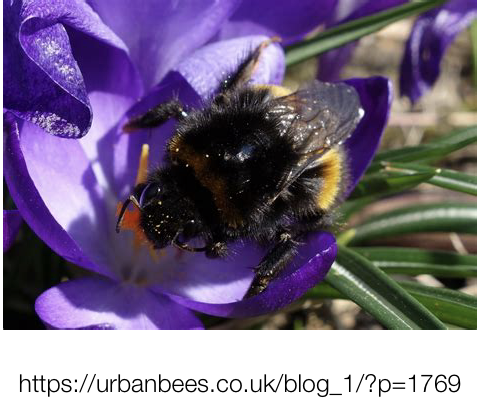
Autumn is the best time to plant spring bulbs. Flowering from January onwards, these flowers are a real boon for insects looking for nectar, especially those that don’t hibernate or have come out of hibernation early. I am always surprised and amazed when I see bumblebees in January. 

Counting on … day 210 

11th June 2022

This morning to my great delight we were visited by a family of greater spotted woodpeckers – mum, dad and junior. Junior has a red patch on the top of his head, dad has the same patch but at the back of his head and mum has a plain head. They settled on the palm tree from where the two adults flew back and forth to the feeder bringing their offspring a succession of tasty snacks. 

The day before I had spotted a newt in the pond, a resident I had not seen for the last few years.

Both filled me with joy and I realise how much  I count on these moments of encouragement. 

 Counting on …day 185

17th May 2022

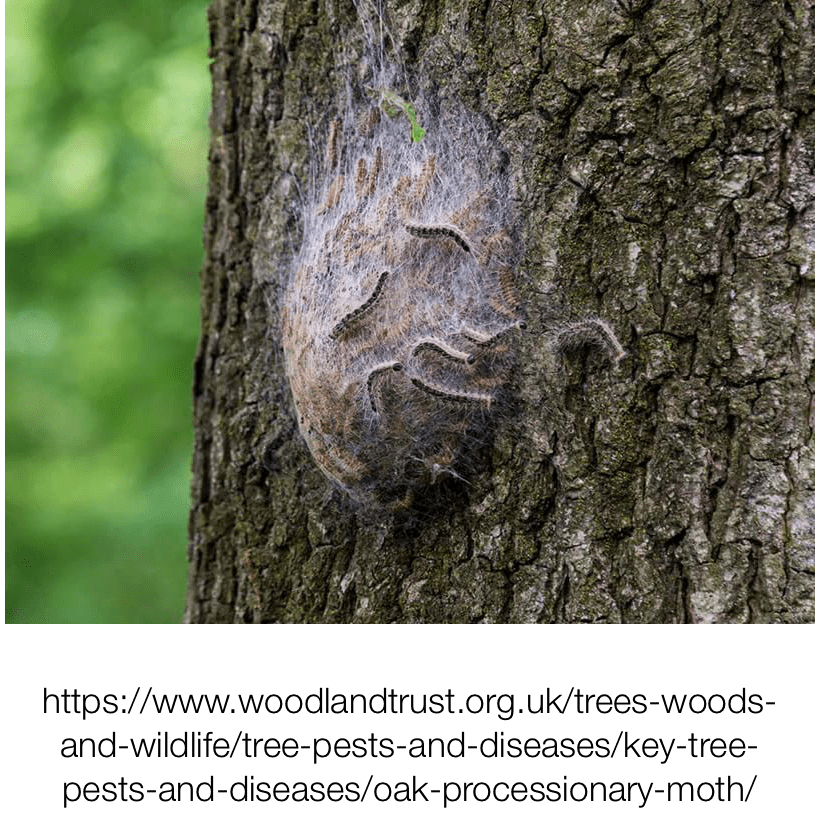
The public are being urged to keep an eye out for any signs of disease in local trees, as the UK launches a hi-tech, £5.8m tree laboratory to fight the spread of pests and diseases. The UK is especially vulnerable to the growing spread of plant pathogens because of warmer, wetter winters, and because it is a hub for global trade. The public can report sightings via the Tree Alert site, and a specialist will come and look at the tree, or send samples for further testing. One pest that affects Richmond Park is the oak procession are moth.

“First identified in London in 2006, it probably arrived on imported live wood. It has since been found in some surrounding counties. The caterpillars will be emerging over the next three months. They are black with long white hairs and move in long nose-to-tail processions, which give them their name. The nests are usually the shape of a dome or teardrop and are around the size of a tennis ball. They strip bark off oak trees and cause them to lose their leaves. The caterpillars can cause rashes and breathing difficulties, and should not be touched.”

https://www.newsbreak.com/news/2602005258609/how-to-spot-bark-beetles-and-deadly-fungus-the-uk-s-new-tree-saving-lab-needs-your-help

Lent Reflection

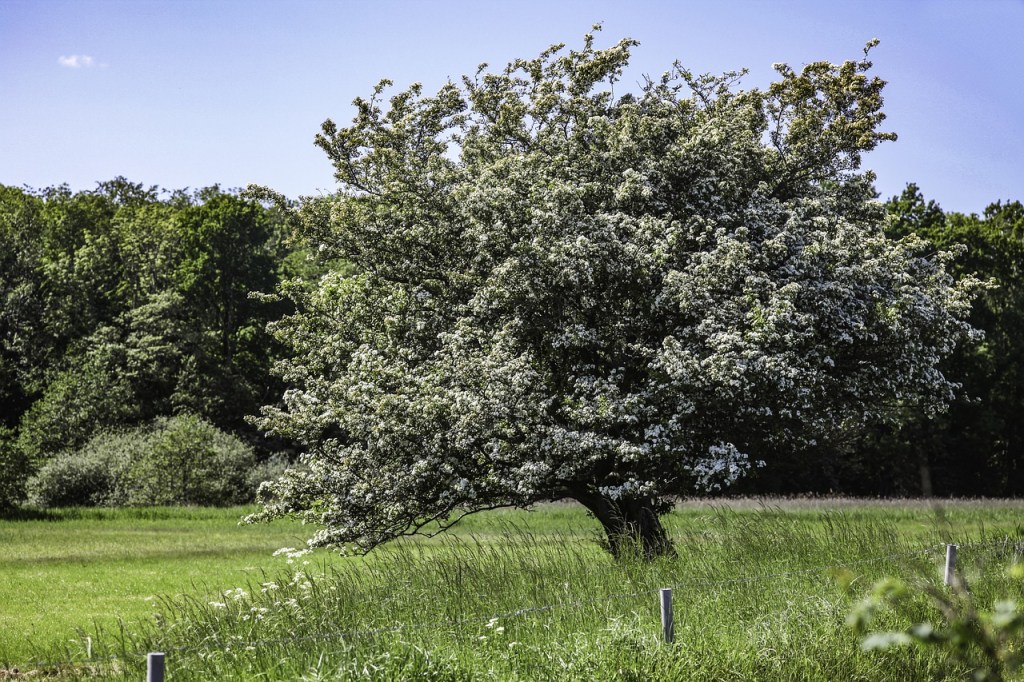
Meadow Sky Summer Landscape Sun Tree Hawthorn http://www.maxpixel

The hawthorn tree – crataegus monogyna – is native to Britain and grows to a height of 15m. It has a shrubby shape which provides safety for nesting birds. The hawthorn bears white, and sometime pink, blossom in May and hence is also known as a May tree. It can provide food for 300 different insects, and its fruit, haws, are eaten by various birds and small mammals. 

The early green leaves can be eaten freshly picked – known as ‘bread and cheese’ or as a salad. Its haws can be made into jellies and sauces. Hawthorn is widely used for hedging and provides good shelter for livestock. The wood is used for carving and for veneers.

Symbolically hawthorn represents hope.

But those who hope in the LORD will renew their strength. They will soar on wings like eagles; they will run and not grow weary, they will walk and not be faint. Isaiah 40:31

Love is a magical shelter where you will feel yourself safe beneath it. Mehmet Murat ildan 

Counting on … day 118 

10th March 2022

Spring is a good time for foraging. Plants are beginning to sprout and it is often the newest, youngest leaves or shoots that are sweetest. Our garden is a quasi wild garden, so I can forage there for dandelion leaves – good for salads, or for use as spinach – and nettles whose young leaves are good in soups. 

Nettles are an important food for various caterpillars. Dandelion flowers are an important food source for various insects including bees, whilst their seeds are popular with goldfinches.