‘You are the Lord, you alone; you have made heaven, the heaven of heavens, with all their host, the earth and all that is on it, the seas and all that is in them. To all of them you give life, and the host of heaven worships you.’ Nehemiah 9:6
Christ is the image of the invisible God, the firstborn of all creation;for in him all things in heaven and on earth were created, things visible and invisible, whether thrones or dominions or rulers or powers—all things have been created through him and for him. Colossians 1:15-16
Creator God, forgive us
when we have failed to love all that you create;
when we do not treat creation with respect.;
when we have sought to impose our will – and not yours.
As we wait for the coming of your Son,
help us to show him honour by honouring creation,
to show him care by caring for creation,
and to show him love by loving creation.
Amen.
As the world’s leaders focus on the importance of biodiversity, may we all seek to understand better the importance of biodiversity and the role it plays in our daily lives.
The whale that keeps on giving
The wide vast oceans,
tropical balm and arctic chill,
teem with living things
great and small
And here dwells the whale –
God’s tiller of the sea –
formed to frolic in its deeps
and traverse its lengths.
From an infinitesimal nil
to 200 tonnes of mammalian flesh,
its life spans a century full.
A life of daily gorging and expurgating 10,
nay, 20 tonnes of krill
replenishes the seas with iron,
and spins once more
the phytoplankton’s oxygen giving,
carbon absorbing wheel.
From the depths the whale
redistributes food,
sustaining small fry
that dare not dive so deep.
Migrating between distant poles
and warmer summer seas,
the whale spreads the bounty
of each mouthful it digests
and spins once more
the global food chain’s thread.
Under the whale’s ocean watch,
krill and plankton multiply,
and so God’s worker feeds
5000 mouths and more.
Its leviathan frame
a maritime conveyor belt
of sequestered carbon
that gracefully sweeps the seas
till finally at whale fall
it sinks to rest –
a carbon store
for evermore
upon the ocean bed.
The Lord’s Prayer.
NB Over the last century whale numbers have declined by an average of 64% of which the worst losses have been of blue whales, down by 99%. Scientists are experimenting with reinvigorating the biodiversity of the oceans by the application of artificial whale poo.
The big oil companies are expanding their exploitation of gas and oil reserves in response to the short falls in supply from Russia. The rapid rise in gas prices is prompting some African nations to consider developing the gas reserves under their land. To explore and develop these reserves investment is needed and, it seems, is readily available from western investors.
In some ways it is not illogical. If you are a company whose raison d’être is finding, extracting and selling oil, that if you hear of new oil deposits, you go after them. Ditto if you are an investment company that has always invested in oil because it has always earns large dividends, then that is what you keep on doing. People and companies are wary of change, or perhaps become so immersed in the comfort of where they are, that they don’t look outside their own silo to be aware that change is already happening. This can be short sighted. Vis a vis oil, there are two black clouds on the horizon. Peak oil – that point in. Time when demand for oil will start to drop and co to use to drop. Many commentators suggest that we have already passed peak oil back in 2019. The decline in oil use arises when cars switch from petrol to electrical power (something that is happening aster than expected), as more plastics are made from recycled plastic rather than virgin oil, as users of oil become more efficient in their use of an expensive raw material, and as users find renewable energy is cheaper. The second dark cloud is the climate crisis. As concern about the crisis takes root more people, companies and countries are going to be cutting back on their use of oil in an attempt to limit global temperature rises. If such moves are not successful then the world will experience rising sea levels, widespread drought, extremes of weather and widespread loss of life and incomes. And this of itself will severely reduce demand for oil. Either way it seems that long term the future for the oil industry is not good – but for in the short term their dominance of the global economic systems shields them. This has been highlighted by the war in Ukraine. So the oil industry continues to be heavily subsidised by governments. “Since the Paris Agreement, the government has provided £13.6 billion in subsidies to the UK oil and gas industry. From 2016 to 2020 companies received £9.9 billion in tax relief for new exploration and production, including £15 million of direct grants for exploration, and £3.7 billion in payments towards decommissioning costs.” https://www.ethicalconsumer.org/energy/paid-pollute-fossil-fuel-subsidies-uk-what-you-need-know
So we are seeing large numbers of oil companies and oil investors focusing on exploring and extracting oil and gas from the African continent. Despite the long term risks of declining demand, these companies seem convinced that there is money to be made. The idea of making rich profits from oil is certainly seen as attractive by some governments in Africa – oil would seem to offer rewards in licence fees and taxes. But who will benefit? Possibly governments, big businesses, banks and the like. Probably not the ordinary person in the street, the small scale farm or business, and definitely not the rich biodiverse natural environment.
Given the high price of oil, the availability of more oil will more likely benefit the big users of oil in the western world, not the person on the street in Luganda or Accra or Windhoek, not the small farm and the rural villager, nor the small businesses. What they need is cheap and accessible electricity , electricity that can be produced locally without reliance on an expensive national grid, electricity that comes from local wind turbines and solar panels? What they need is a move away from polluting vehicles and power plants. What they don’t need is the pollution and disturbance caused by drilling for oil, building pipeline and running oil refineries.
What the nations of Africa do need is investment in renewable energy. Ideally not in large projects such as hydro electric dams but in multiple smaller scale projects that will connect to and supply local towns and communities.
“The potential for wind and solar is 400 times larger than Africa’s total fossil fuel reserves and it comes pollution-free and creates more jobs, but there is finance gap…That is why there is so much attention at this COP to changing the global capital allocation system,” Mr Gore
What the nations of Africa need is protection for their remaining areas of natural habitat – rain forests, wetlands and savannahs. Again this is an area in need of large scale investment that will protect habitats and provide sustainable incomes for local people.
“The area of land allocated to oil and gas activity in Africa is set to quadruple, threatening critical forests that help combat climate change, according to a new report by two environmental groups. Rainforest Foundation UK and Sacramento, California-based Earth InSight used mapping technology to show that gas and oil blocks overlap with about 30% of the continent’s dense tropical forests and more than a third of the Congo Basin, the world’s second-largest rainforest after the Amazon. The Democratic Republic of Congo, which accounts for about 60% of the basin, launched a bidding round in July for 30 oil and gas permits, several of which overlap with the basin. Congo, one of the world’s poorest countries, has defended its right to explore for oil and develop its economy.” KBloomberg UK
Can the big fossil fuel companies reinvent themselves? Can they recalibrate their raison d’être as energy companies? Can they become suppliers of renewable energy technology that can enable communities to control their own energy sources? Can they create new business models that can invest the money from our banks, pensions funds and insurers, to protect and enhance the natural environment?
Therefore the LORD God sent them out of the Garden of Eden, to cultivate the ground from which they were taken. After sending them out, the LORD God stationed mighty cherubim to the east of the Garden of Eden. And the Lord God placed a sword of flame that turned back and forth to protect the way to the tree of life. Genesis 3: 23-24
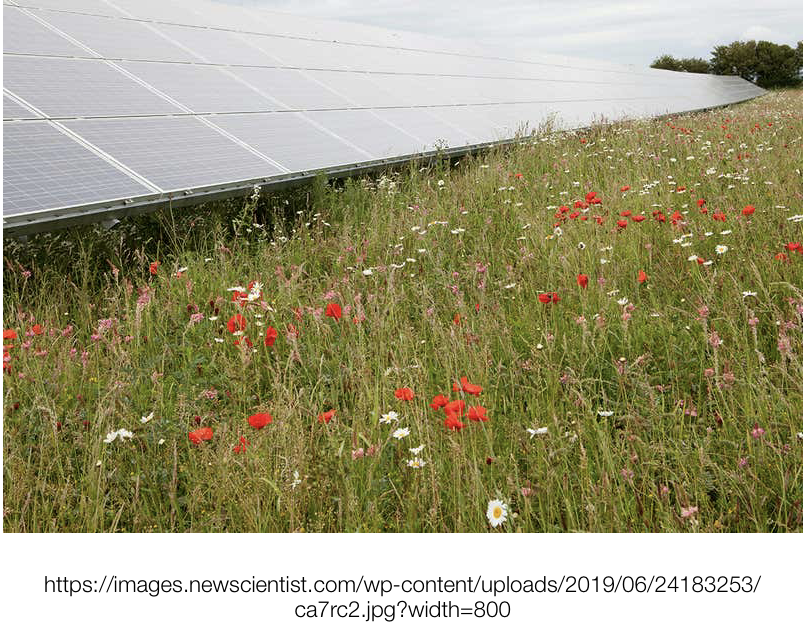
Solar farms in the UK are also producing a diversity of additional benefits. Creacombe solar farm in Devon reports “ In essence, a solar farm is a nature reserve that is left largely untouched for 25 years, resulting in huge benefits for wildlife and biodiversity [and will] help to reverse the decline in wildlife due to intensive farming practices [with]
Wildflower meadows sown across the site,
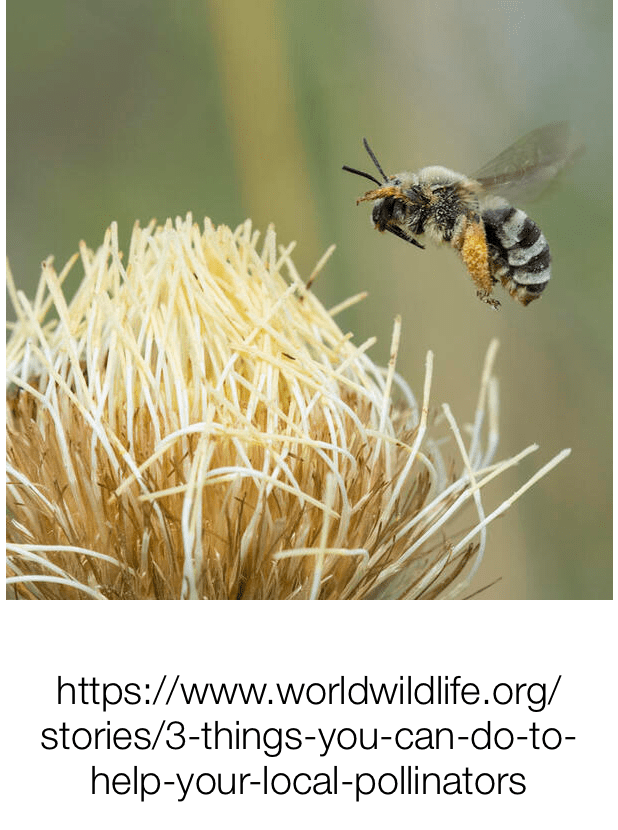
Bee hotels and hives for honey bees and solitary bees to take advantage of the pollen and nectar.
Hibernacula for small mammals and birds, with areas outside the fence line being left as coarse grassland.
O what joy! The first baby bison in thousands of years has be born in the UK at the Knepp rewilding project. The three female bison arrived at the project in July but unknown to everyone one was carrying a calf.
Sometimes it is hard to get a feel for the scale of the things we are trying to achieve. This reports comes via The Guardian: “The UK is one of more than 100 countries committed to protecting “30×30” as a way to halt the destruction of the natural world. However, just 3.22% of land in England and 8% of the sea is being properly protected and managed for nature, according to the report from the environmental charities coalition Wildlife and Countryside Link (WCL).”
The Wildife and Countryside Link is a coming together of 66 wildlife related organisations whose combined membership exceeds 8 million. Hopefully this will give this new grouping a powerful voice.
The natural world and its ecosystems are our life support system providing us with oxygen, clean air, water, food, medicines etc that keeps us all alive. They reduce flooding, even out extreme temperatures, and ensure rainfall. They maintain our well-being – being in nature, seeing blue and/ or green landscapes are known to improve mental and physical health. To diminish the natural world is to diminish what makes life enjoyable and possible. To severely diminish the natural world is to severely compromise life to the point of extinction.
The natural world depends for its vitality on its biodiversity – those the numerous and varied life forms that co-exist in an interconnected web. Reducing biodiversity – whether through the diminution in number of any species or through the extinction of individual species – reduces the health of the natural world and thus the viability of life on this planet.
Do we value the natural environment and its biodiversity? In economic terms do we ascribe to the natural environment – to its natural resources on which we are so dependent – an appropriate financial value? When we build a road do we put a sufficient price on what we will loose through the initial and ongoing damage to the natural environment that it will cause? If we did we might be shocked at how expensive road building is! The WWF calculates the value globally of nature as a capital benefit as being at least US$125 trillion every year. A UK Government study in 2010 reported:-
The benefits that inland wetlands bring to water quality are worth up to £1.5billion per year to the UK;
Pollinators are worth £430million per year to British agriculture;
The amenity benefits of living close to rivers, coasts and other wetlands is worth up to £1.3billion per year to the UK; and
The health benefits of living with a view of a green space are worth up to £300 per person per year.
Are we, as a nation and a world, encouraging biodiversity and caring for the natural environment? Sadly no.
Scientists working with the Natural History Museum have carried out a survey to measure biodiversity levels across the globe. 100% represents areas where the natural level of biodiversity is intact, where human interaction has not diminished the number or diversity of species. Such areas of pristine biodiversity only exist in remote parts of the Arctic plus a few isolated pockets in the rain forests. At the other extreme there are many areas in, for example the USA, Argentina and New Zealand, where biodiversity has been diminished by nearly 50%. The global average stands at 75%. The safe level – sufficient to guarantee the health and well-being of humans – is 90%!
What causes this loss of biodiversity?
Changes in land use
This includes clearing forests to create plantations or farm land; clearing pasture to create arable land; switching to monocultural farming; digging up hedges; using large tracts of grassland for sheep or cattle (another form of monoculture); clearing vegetation to create mines and quarries. In many places, particularly in Europe the initial change from wild to farm land will have happened a thousand plus years ago – since the 1500s 133 species have become extinct in the UK. However in the last hundred years there has been a marked acceleration in the loss of biodiversity. The State of Nature 2019 report revealed a 41% decline amongst UK species since 1970.
Urbanisation
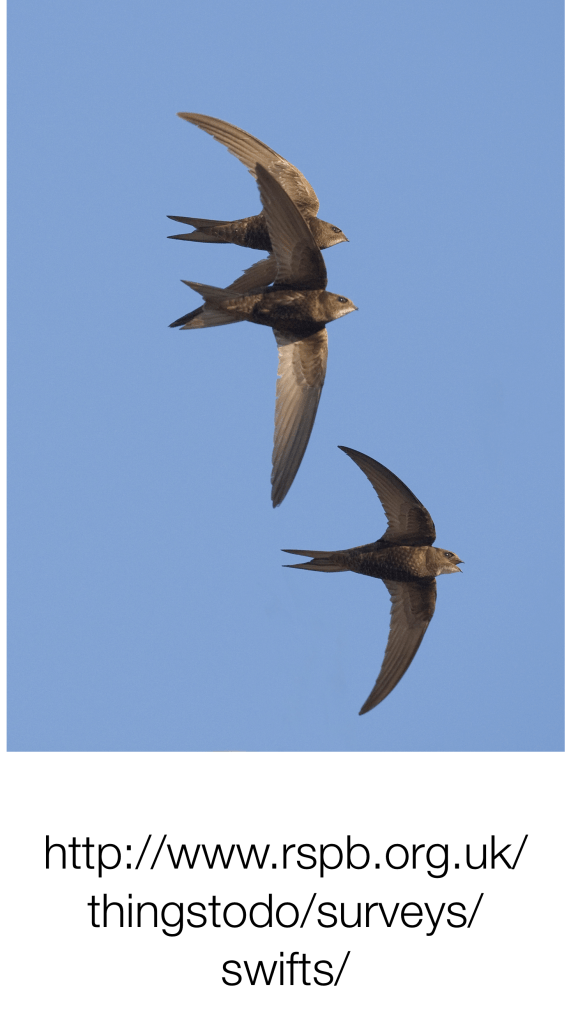
This is a particular variation of changing land use, and includes not just building houses, commercial and industrial buildings but also transport infrastructure. In Britain the swift population has declined by 38% since 1985 as new and modernised buildings no longer provide suitable nesting spaces.
Buildings and infrastructure not only diminish wildlife habitats, they also fragment existing habitats so preventing species from migrating and/or limiting their gene pools. A rising to the Biologist magazine, everywhere volunteers in Henley on Thames carry upwards of 5000 toads across the A4155 from the ponds where they overwinter to the ponds where they spawn. (https://thebiologist.rsb.org.uk/biologist-features/toads-on-roads)
Pollution
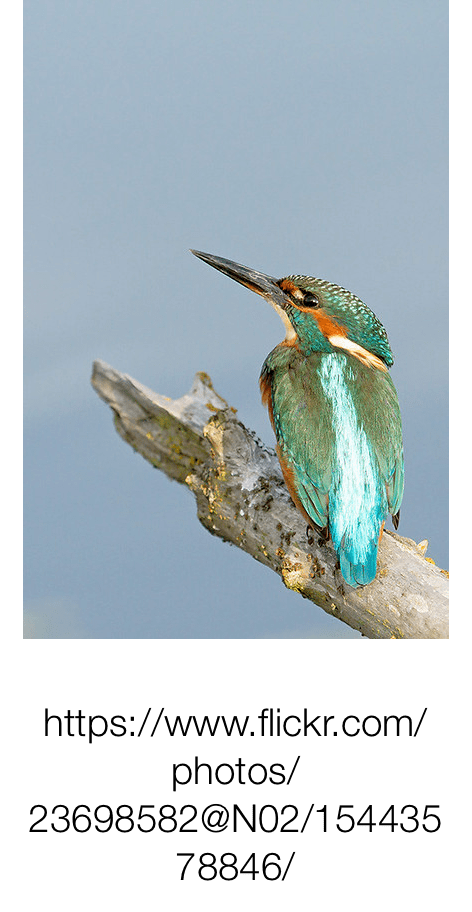
Pollution damages or kills species. Pollution includes not just pollution of water, land and air but also noise pollution. This particularly affects marine creatures. Swift populations have also been affected by the decline in insects. A German study found that insect numbers had declines by 76% since 1990, undoubtably affected by the increasing use of pesticides. The river Wye suffers from excess quantities of phosphates leaking into the river from factory-sized chicken farms that populate the valley. This by-product of chicken faeces kills plants such as water crowfoot, and by taking oxygen from the water, kills local fish and the wildlife that relies on these fish for food, such as kingfishers and otters.
Overkill
Whether hunting or fishing, overkill diminishes numbers right up to the point of extinction, as was seen with beavers (16th century) and wolves (18th century) in the UK. Globally the great auk became extinct in the 1850s (last two were killed in Iceland) and the western black rhino was declared extinct in 2011, whilst only two northern white rhino still exist – both female.
Invasive species
With global travel, non native species have spread around the globe and often proof invasive in their new locations. Japanese knotweed is a particular problem in Britain, whilst rats have threatened wildlife on the Scilly Isles.
Global warming
Many species are sensitive to climate change, and whilst they might overtime be able to adapt or migrate, the speed of change is such that many cannot adapt fast enough and instead decline rapidly in number. Such species include the Adélie penguin in the Antarctic and the North Atlantic cod, as well as alpine plants such as snow pearlwort, drooping saxifrage and mountain sandwort which are all nature to Scotland.
Armed conflict
This is not something we often think of, but armed conflict destroys not just infrastructure but wildlife too and often expended armaments lead to long term pollution of soil, air and water. In marine situations, conflict is a cause of noise pollution too. The Eastern gorilla, which inhabits Congo, Rwanda, and Uganda, is at risk due to fighting in the region. The Ukraine is critical resting spot for migratory birds like the curlew sandpiper. Russia’s invasion of Ukraine coincided with the springtime migration. Fighter jets roared over nature refuges and birds, susceptible to sound, were scared away from their normal resting grounds.
At the Earth Summit held in Rio de Janeiro in 1992 then Convention on Biological Diversity was set up having three main goals: the conservation of biodiversity; the sustainable use of its components; and the fair and equitable sharing of its benefits. In 2010 the signatories of the CBD agreed a set of 20 global targets, with a 10 year time frame, to halt global loss. The Government’s Sixth National Report, published in 2019, showed the UK had missed 14 of its 20 targets.
In 2021 Natural England, Natural Resources Wales, NatureScot, Northern Ireland Environment Agency and the Joint Nature Conservation Committee launched a new report – Nature Positive 2030 – which laid out how the rate of biodiversity loss could be reversed. It called on national and local governments, landowners, businesses and others to:-
protect existing wildlife habitats – Meadows are one of the rarest habitats in the UK, with 97% of this habitat lost in Britain since World War II. English Heritage properties have some of the last remaining meadows, and is maintaining these to provide much needed habitat for a wide range of flora and fauna such as wildflowers and butterflies. In the Royal Parks, land is being established as wildlife meadows including areas in both Green Park and Hyde Park in central London.
invest in new habitat restoration projects – of the south coast England’s largest seagrass restoration project has planted around 3.5 hectares of seagrass, whilst another project has planted approximately 1.2 million seagrass seeds across 20,000m2 in Pembrokeshire, Wales. Seagrass provides a vital habitat for a diversity of marine life and an excellent absorber of CO2.
create nature networks – the Somerset Wildlife Trust recently bought Honeygar Farm in the Avalon Marshes. The aim is to rewild the land as wetland enhancing its biodiversity and increasing the connectivity between nearby nature reserves. The land now forms part of the newly designated “super nature reserve” covering 15,000 acres of the Somerset landscape.
integrate biodiversity as an integral part of all development plans – the NHBC Foundation, with the RSPB and Barratt Developments has produced a report ‘Biodiversity in new housing developments: creating wildlife-friendly communities’ to show how design concepts, practical solutions and best practice case studies can ensure that new homes are built in a way that enhances wildlife, develops climate resilience, and improves people’s health and wellbeing.
give preference at every opportunity for nature-based solutions for climate change mitigation – In Richmond’s Old Deer Park, land which regularly floods is to be rewilded with a network of creeks, wetlands, bogs, and reedbeds, a mosaic of wet habitats that could sustain more wildlife and better hold excess river water. This is part of the Thames Landscape Strategy and aims to reduce the extent and impact of flooding in the Thames valley.
Similar projects are and need to be taking place at scale across the globe.
COP15
However many countries lack the necessary funding. For others the short-term economics may make it more attractive to sell licenses to rich companies who will exploit the land, than to conserve the biodiversity and natural richness of their land. The provision of external funding for the countries is one of the issues that is to be addressed at the concluding part of COP15 which is due to take place in Montreal this December (the biodiversity COP as opposed to the climate change COP27 taking place in November in Egypt).
It is equally important that wealthy nations do not export its biodiversity loss to lower-income countries – ie if in the UK we rewild agricultural land, we need to ensure that at the same time we restructure our food production to maintain – and ideally improve – our home-grown production rather than just importing more food from other countries to make up any shortfall. In particular this will mean increasing plant based foods and reducing our consumption of animal products. (The former requires far less arable land than the latter).
There is a lot for government and big businesses to do to achieve the necessary improvements in biodiversity but we as individuals through volunteering and fundraising, through petitions and protests, as gardeners and as consumers, can be part of the solution too.
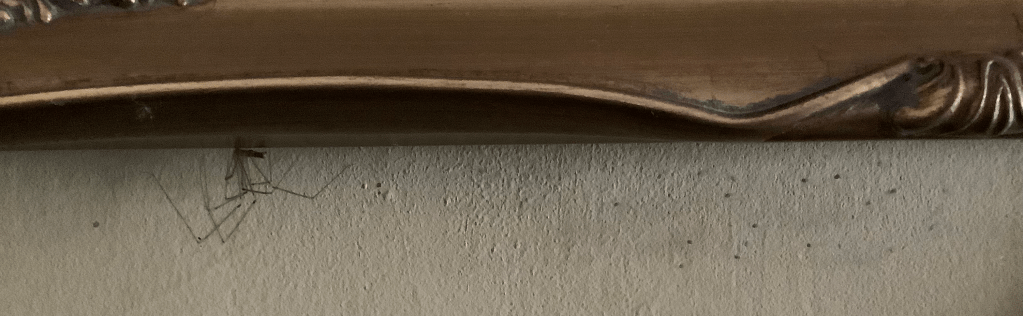
If you’re not too precious about house work, you may find you helping biodiversity. This cobweb underneath a picture is home to a nursery of teeny tiny spiders – they are the very small dots. You can see mum to the left.
“Help create the People’s Plan for Nature by sharing your thoughts about the future of nature in the UK. What do you love about nature in the UK? What would you miss if it disappeared?”
Join the conversation and share your views as part of a nationwide initiative organised by WWF, the National Trust and the RSPB. Use the link below.
Our insights will help resource the planned People’s Assembly which is to tasked with producing the People’s Plan for Nature by the spring of 2023.










 The Green Tau