One of the largest sources of carbon dioxide that contributes to our domestic carbon footprint comes from heating our homes. We can reduce this part of our carbon footprint by turning down the heating in our homes and/or reducing the number of hours we have the heating on. Of course it is important that we don’t get cold. We can keep warm by wearing extra layer of clothes and by taking regular exercise. Today’s activity is a nice extra – a hand warmer.
For this you will need a piece of cotton fabric – about 14x28cm. Fold this in half with the pattern on the inside. Sew the fabric together alone two sides.
Turn the fabric right side out so that the rough edges are inside what is now a pocket.
Fill the pocket with uncooked rice. Use a sheet of paper to make a funnel so that you can more easily pour in the rice. Fill about half full.
Tuck the unseen edges inside and stitch the sides together. Use small stitches so that the rice can’t escape.
To use the hand-warmer, place in a microwave and heat for a minute. It should be warm to hold.
You can reuse the hand-warmer several times but do be careful: over time the rice will bake and might eventually burn and scorch the hand-warmer.
All of have to find ways of reducing our carbon footprints. One area of life which can have a large footprint is transport. Diesel, petrol and aviation fuel all produce large amounts of carbon dioxide. On the other hand walking and cycling have a zero carbon footprint. If you – like me -enjoy cycling, you might want to encourage other people to cycle too.
Today’s project is to make a tag to go on the back of your bicycle.
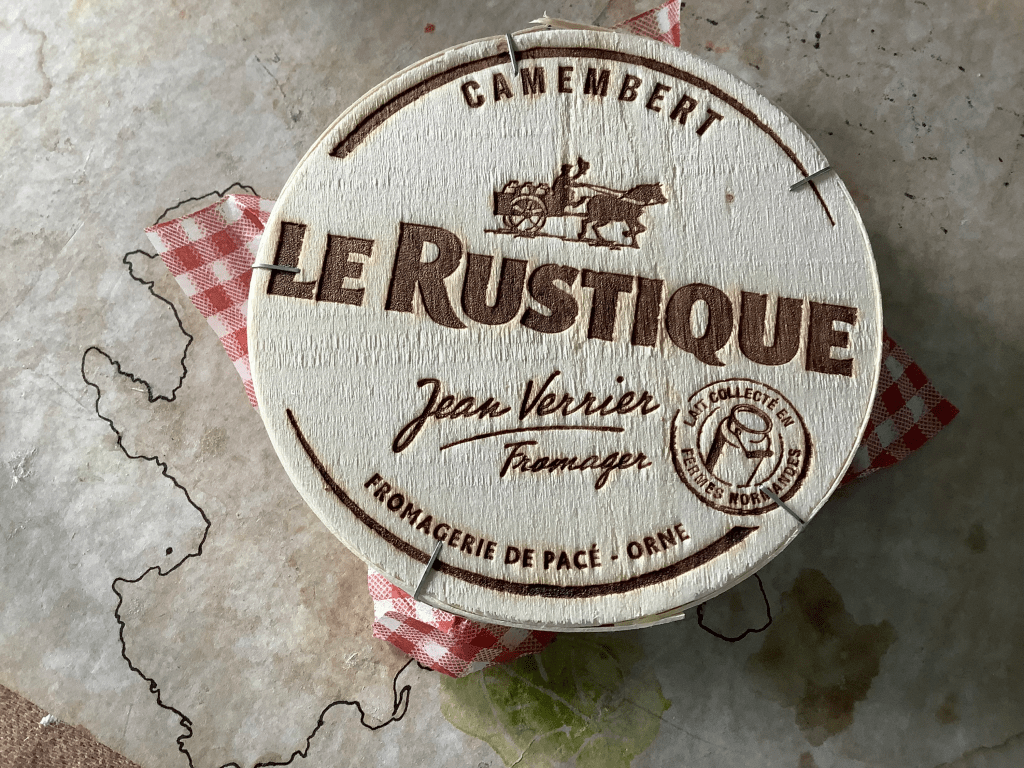
For this you will need the wooden lid from a empty box of Camembert cheese. Carefully remove the staples that fasten it to its sides.
Choose two of these holes that are opposite each other and mark them with a pen. Imagine a horizontal line between these two spots so that you can orientate your tag.
Use the lid to draw a circle on a piece of paper. On this piece of paper draw a design for your tag.
Once your are happy with your design, use permanent felt tip-pens to draw your design onto the wooden circle.
Thread to paper clips through each of the holes and then hook the paper clips around the metal supports under your cycle saddle.
Every time you go for a ride, people will see your tag and will think, Cycling is a good way to travel!
Action 95: Heating our homes is one of the biggest components of our domestic carbon footprint. This autumn the weather is still quite mild. Why not see how long you can keep warm with out turning the heating on? And thereafter see just how many hours it needs to be in each day to keep you warm? On the Eco Tips page you will fin suggestions for alternative ways of keeping warm, including thermal underwear.
How we use, spend or save our money, makes a difference.
Protect peat bogs: don’t buy composts that contain peat, instead buy peat-free varieties or make your own.
re peat, ask whether the mushrooms, herbs, salads, you are buying are grown in peat – or not
Buy bee friendly (and insect/ butterfly friendly) seeds and flowers to promote local biodiversity.
If you have space, buy and plant fruit bushes/ trees and enjoy fresh fruit.
Even if you only have a windowsill buy seeds so that you can grow your own herbs and salads.
Use local shops and local suppliers so that your money supports jobs for local people and the local economy.
Buy locally produced food so as to reduce supply lines and their associated carbon footprint. Avoid foods bought in by air freight.
Buy organic food to prevent more soils and waterways from being polluted by nitrates and pesticides.
Buy organic foods to prevent insects, birds and small mammals being poisoned by pesticides.
Buy organic foods to prevent wild plants and creatures being killed off by herbicides.
Buy plant-based foods from sustainable sources in preference to meat and dairy products – these have a larger carbon footprint.
Avoid products that come with excess packaging – even if it is recyclable, the whole process is unnecessarily using up time and resources!
Swop/ buy second hand items to cut back on waste and conserve scarce resources.
Maintain and/ or repair things to make them last longer or find a professional to do this for you. NB Anything electrical should only be mended by a professional; ditto boilers etc.
Buy gas and/or electricity from a green supplier and support the transfer to renewable energy.
Buy a cycle and good wet weather clothes and be an active traveller. Fewer cars on the roads reduces CO2 levels and air pollution and creates quieter, less congested neighbourhoods.
Where you go by rail rather than air, buy a train ticket. Where you can go by bus rather than drive, buy a bus ticket. Opt for the greenest travel option.
Avoid companies that don’t pay a living wage to their employees, who don’t pay their taxes, and offer minimal support for a greener world. Instead spend your money supporting companies that treat people and the environment with respect.
Do buy wonky and misshapen fruit and vegetables and limit what goes to waste.
Do buy insulation for your home, thermal linings for your curtains, and low energy light bulbs.
Do consider a heat pump over a boiler. The former is more energy efficient and has a much smaller carbon footprint.
Don’t buy food you won’t eat, clothes your won’t wear or appliances that just take up space.
Don’t buy new when a good second hand option is available.
Don’t use banks/ insurers/ pension fund providers that invest funds in the fossil fuel industries.
Do seek out companies that actively invest to support a green economy.
Do support wild life funds, re-wilding and habitat conservation projects.
Do enjoy the outdoors and green spaces – often access is free!
Action 94: Review your spending. Go through your bank statement of credit card bill. Where are you spending your money? Who is benefitting from it? Is it promoting greener, sustainable businesses or activities, or is it propping up carbon greedy businesses? Is it supporting businesses or activities that have respect for their employees and their suppliers? Is it helping our society transition to a more sustainable, more equitable world?
Action 93: A week to go until the start of the COP26 conference on climate change. We shall be expecting a lot from world leaders: radical plans, actions and financial input. We too need to be part of the solution. What radical action could you take to make your life style more sustainable?
The dangers of the climate crisis are real, but we can all be part of the solution. The single most important thing we can do is to reduce our carbon footprint to net zero.
Today’s activity is about things go down. In this case a marble – but hopefully it will also be your carbon footprint too!
For this activity you will need a cereal packet, some thin card – eg another food packet – a stapler, scissors and glue. To finish you will need a flat board such as a cork table mat or chopping board, and some tape.
Cut the thin card (mine is a cake packet) into three strips that are a little longer than the width of the cereal packet and about 6cm wide. This you bend into box-shaped gutter. The side of my packet comes ready folded into this shape.
Fold and staple the flaps at one end of the gutter.
At the other cut a gap in the base of the gutter and then fold and staple the end flaps.
Once all three gutters have been made, glue these to the side of the cereal packet. Angle the gutters so that they slope downhill with the gap/ hole at the lower end.
It may help if you unstick the bottom of the cereal packet so that you can lay it flat.
Cut out triangles of plain paper to fill the gaps between the gutters. On these you draw some pictures or write a message – as I chose to do. Glue these onto the cereal packet.
To make the marble run stable, we are going to fix it to a flat board – I used an old chopping board. If you haven’t already, unstick the bottom flaps of the cereal packet and spread them out. Place the cereal packet on the board and tape the flaps down. Now your marble run should be stable. If it still a bit wobbly put a packet of sugar or a tin of baked beans inside the cereal packet to weigh it down.
Action 86 : Plan now for a less materialistic Christmas. Shortages in the shops might be a blessing in disguise encouraging us to plan for a celebration focused on people rather than lots of food and presents. Think about what you most enjoy about celebrating Christmas.
Last week we looked at the tendency for agriculture to a) expand into virgin territory at the expense of flora and fauna biodiversity, and b) to be concentrated around a narrow number of crops and animal species. Agricultural practices are the source of further challenges.
In a drive to be more productive and more economic, many agricultural businesses have gone for the large scale – large farms, large fields, large machinery – creating landscapes that devoid of trees and hedges and instead are vast tracts of identical crops. Monoculture does not support biodiversity. Fields of rape may provide near endless quantities of flowers that are attractive to pollinators, but once they have flowered there is a dearth of food sources for those pollinators. With their demise, comes the demise of other birds and animals that rely on them as part of the food chain.
Monoculture also provides a good environment for the spread of plant diseases and the proliferation of weeds – the latter might be suppressed by a diversity of plants, some overshadowing the weeds, or by insects and larvae that might feed on them. The net result is that to sustain monoculture, crops must be sprayed with pesticides and herbicides, neither of which is good for biodiversity. For the soil this can be a particular problem. Soils rely on insects, beetles, and many micro-organisms to keep the soil rich with nutrients and to maintain a good soil structure. Soils that become damaged or depleted of nutrients become reliant on the addition of chemical fertilisers to maintain their productivity. However these can be damaging to biodiversity, especially when nitrates are washed through the soil into local water ways where they form algae blooms and damage both flora and fauna.
Whilst agriculture can be part of the biodiversity problem, it can also be part of the solution.
Regenerative Agriculture
Whilst the term ‘regenerative agriculture’ was first used in the early 1980s as concept that aimed to make agriculture not just sustainable, but positively beneficial for the environment. However it has only more recently gained popularity.
There is as yet to fixed definition of what regenerative agriculture is, nor how it is to be practiced. Terra Genesis International working in Thailand has determined its principles as:-
Progressively improve whole agroecosystems (soil, water and biodiversity)”
“Create context-specific designs and make holistic decisions that express the essence of each farm”
“Ensure and develop just and reciprocal relationships amongst all stakeholders”
“Continually grow and evolve individuals, farms, and communities to express their innate potential”
What I think is interesting here is the inclusion of the people involved in farming and their communities.
No or low tillage, ie not ploughing the soil or removing the remnants of the previous before sowing, and maintaining some form of vegetative cover at all times. This helps to keep both CO2 and water in the soil, rather than it escaping into the atmosphere.
Diversifying what is grown using mixed planting, intercropping (including sylvan agriculture which grows crops in between trees), and relay cropping. There is a focus on growing more of what is needed locally which minimises the distance food has to be transported.
Using animals as part of crop rotation.
Not over grazing fields.
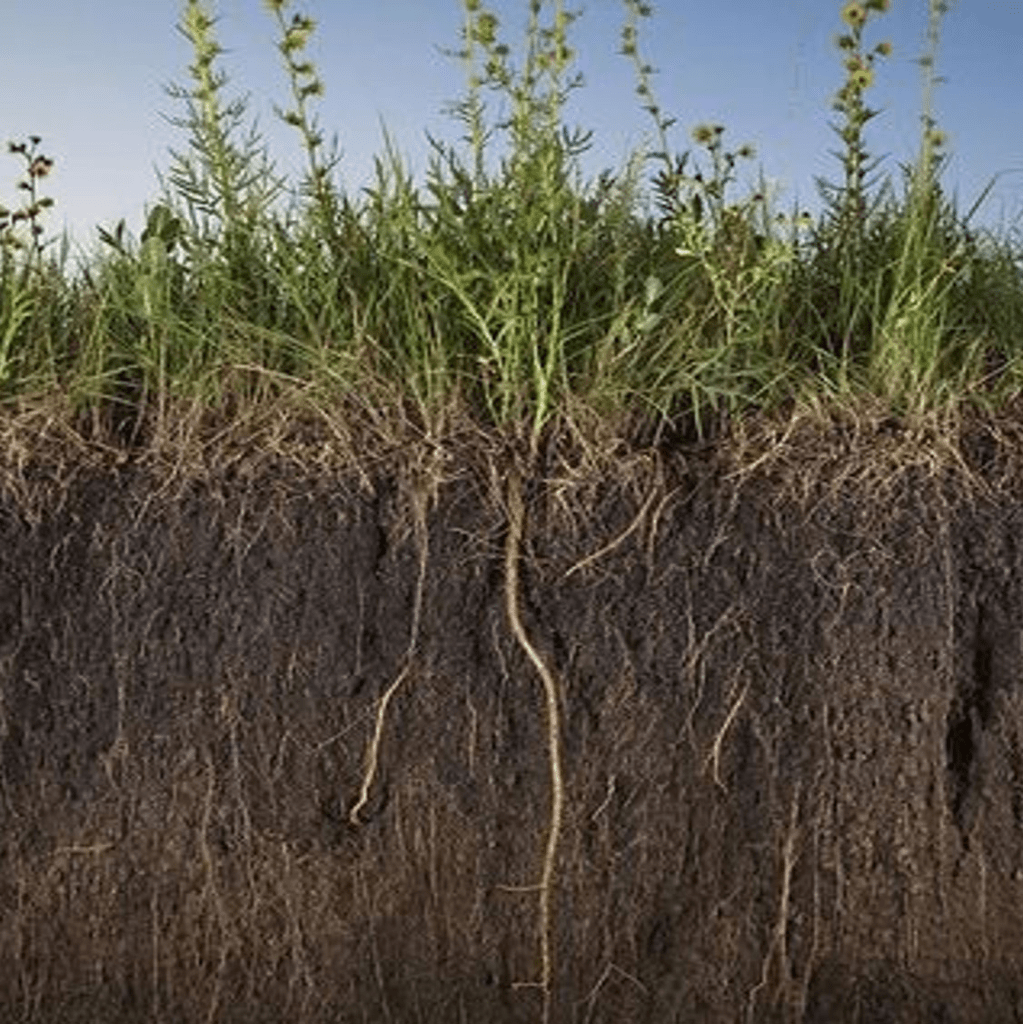
Stimulating micro-organisms in the soil by maintaining living roots in the soil at all times and by adding organic compost.
Avoiding the use of chemicals on the land and minimising antibiotics given to animals – sometimes these are used to stimulate growth rather than for treating diseases.
Adding tree, perennials and wild flowers to the landscape.
Rewilding areas of landing and creating corridors between them.
Such agricultural practices not only benefits biodiversity, they also improved get capacity of the soil to sequester carbon, reduce the carbon emissions of the farming industry, assist with flood prevention and reduce the water needed by farms.
If you are interested in regeneratively farmed produce, google to see what’s available locally. On a larger scale companies such as Ben and Jerry, Nestle and McDonalds are seeking to source their ingredients from regenerative farmers.
The longer we are able to use an appliance or piece of equipment, the more we recuse it’s carbon footprint: the carbon footprint of manufacture is spread over a greater number of years, and the carbon footprint of recycling it is deferred.
Before buying anything new, do some research to discover which make or model is most efficient to use, is durable and easy to repair.
Regular cleaning. Dirt and dust can all damage surfaces and wear moving parts.
Keeping your oven and hot plates clean, prevents burnt on food from reducing their heating capacity. Ditto for irons.
Remove crumbs from toasters – they can catch fire!
Dust the cooling coil of your fridge so that it can operate efficiently. (Working efficiently saves on energy and prevents premature wear of motor). NB there may also be a vent at the back off your microwave where dust can also build up.
Regularly defrost freezers and ice compartments to enable them to work efficiently.
Ensure there is a sufficient air space around both fridges and microwaves so excess heat can dissipate easily and enabling them to run efficiently.
Remove dust from ports and keyboards on mobile phones, tablets and computers.
Clean screens on mobile phones, tablets etc to maintain their touch sensitivity. Fingers are naturally greasy.
Invest in a protective case for your phone or tablet
Keep mobile phones, tablets etc up to date with software updates.
Remove unused apps as they will be a drain on your battery life.
Avoid letting mobiles phones, tablets etc get too hot (don’t leave them in the sun) not too cold.
Ideally don’t overcharge your batteries not let them run completely flat. The ideal is between 20% and 90%.
Replace the battery in your phone etc rather than buying new.
To conserve your battery turn off phones etc when not in use – eg at night time.
Clean seals around the doors of fridges, ovens and washing machines etc.
Replace seals when they do wear out.
Descale washing machines: the harder your water, the more frequently this will be needed.
Avoid over or under loading your washing machine.
Measure out laundry liquid – too much can lead to a build up in the machine
Empty pockets before washing to ensure small coins etc don’t get into your washing machine where they might cause damage.
Clean out the drain filter from your washing machine to prevent damage to the pump and / or flooding.
Descale kettles.
With LED televisions you can prolong the life of the screen by reducing the background level of lighting and by limiting the number of hours you watch.
Organise an annual maintenance check for your boiler.
Writing this, I am reminded that I should keep my gardening tools clean and the wooden handles re- oiled.














 The Green Tau