Counting on …day 250

19th July 2022

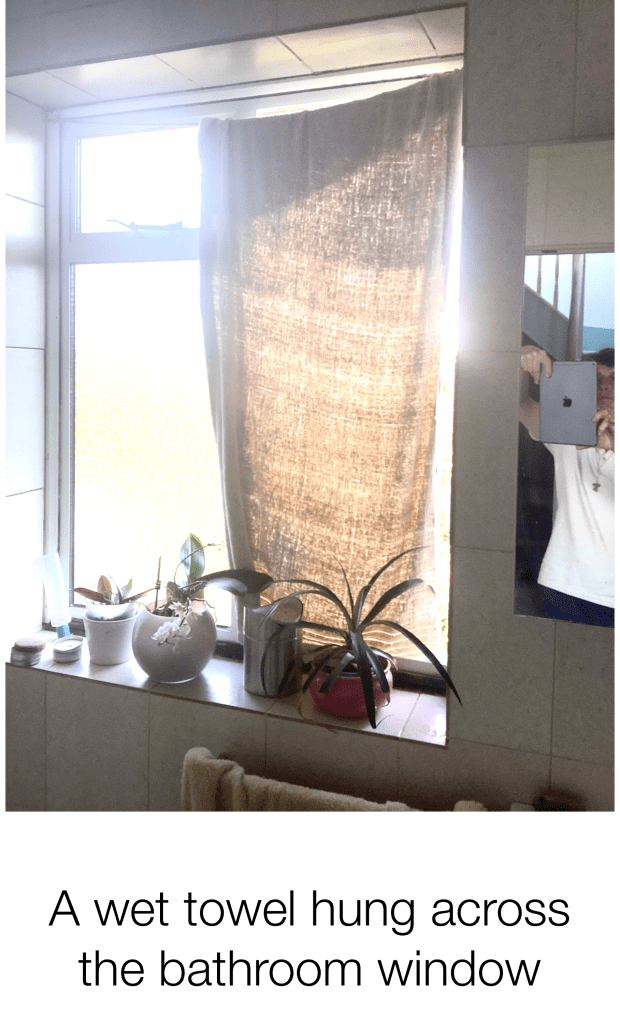
We have to find means of adapting as best we can to cope with the challenges of our increasingly hot climate. This morning’s air was still warm so when we opened the windows this morning to cool the house, we drew the curtains across and sprayed them with water. As the air coming into the house will dry the curtains and so cool the house. 

The Green Tau: issue 44

An addendum to Sunday’s reflection

On Sunday (17th July) with a focus on the environment, we looked at the plight of five creatures threatened by our human lifestyle choices. And it is not just these creatures whose futures are threatened but ours too as we all part of one interconnected ecosystem.

What action can we take to change these prospects?

“Orang-utans live in great tropical forests. They depend upon the forests for food and shelter, as a well as a  place to live and to play. But the forests where they live are being chopped down and cleared away to make space for acres and acres of palm oil plantations to make lipsticks and margarine, shampoo and pet food, sunscreen and bio diesel. When the forests go, the orang-utans have no where else to live. It seems as if we are saying to the orang-utans ‘Go away you don’t belong here’.”

By carefully choosing what we do and don’t buy we can reduce the pressure on forests such as those where orang-utans live. We can avoid products that use palm oil or we can seek out producers who follow a code of conduct that requires them to protect indigenous wild life and farming communities.

It takes a bit of effort but research via the internet and especially using web sites created by ethical and environmental groups such as The Ethical Consumer and the Fair Trade movement can gives us the information we need to make better choices. We may conclude that some of things we have been buying are not really essential and that buying less is another way of taking action. We can also investigate the sourcing of other crops such as cocoa, sugar cane and soya which can be equally detrimental to the environment. NB the vast expansion of soya beans as a crop goes not to create soya milk, but as fodder for the world’s escalating meat farms.

“Polar bears live in the Arctic where they go hunting across the ice. They dive into cracks and holes in the ice to catch fish and seals. But climate change is making the world hotter and the ice is melting. Without the ice the polar bears cannot hunt fish and seals. Instead they and their cubs starve. It seems as if we are saying to the polar bears, ‘If you can’t cope with climate change and melting ice caps, then we don’t need you.’”

“Sand martins spend the winters in Africa and the summers in Europe. In the spring they fly thousands of miles across the Sahara to Britain and in the autumn they fly the same thousands of miles back. But climate change is making the world hotter and when they fly over the Sahara Desert, the air is so hot that many martins simply cannot cope and they fall to the ground. It seems as if we are saying to the sand martin ‘If you can’t cope with climate change, then there’s no place here for you any more.’”

The climate crisis is rapidly increasing and is causing and exacerbating many other problems. We can each take action by changing our lifestyle to reduce our carbon footprint. There are many books and web sites on ways and means. The principal areas of change we can make in our individual lives are in Transport: not flying, rescuing significantly our dependence on cars and instead using public transport, cycling and walking. 

Food: eating locally produced, seasonal, organic food, and replacing meat with plant based meals

Heat and electricity: reducing demand by insulating our homes (which also helps keep them cool in the summer) and turning down the thermostat, using renewal sources of energy,  reducing the frequency with which we wash ourselves and our clothes, and reducing our dependence on so many high energy consuming appliances

Consumption: the things we buy and consume all have a carbon footprint. We can consume less including  less packaging, we can repair and reuse what we do have, when we do buy new we can seek out things that are ecologically and ethically made, and we can make sure that everything is recycled at the end of its lifecycle.

But we won’t be able to make the necessary reduction in carbon emissions on our own. We are locked into systems that make it impossible – rail travel  is made more expensive than air travel through taxation, regions outside London and especially rural areas are inadequately provided with public transport, people’s incomes are often too low to allow for investment in insulation and home improvements that would reduce energy costs, large fossil fuel companies across the globe continue receive tax subsidies, manufacturers are not required to pay for the cost of collecting and recycling their products, the true  value of nature is not included in investment decisions, our pensions fund  not only fossil fuel investment but also the destruction of forests for palm oil and soya crops … the list goes on. We need to engage with and support environmental groups that call for system change.

“Around the world in different oceans live whales. Whales get caught up in fishing tackle and crashed into by shipping. They are disoriented by noise from oil exploration. Every year fewer and fewer whales are born. It is as if we are saying to the whales, ‘Go away, we don’t need you’.”

But we do need whales! They are amazing creatures. In the oceans there tiny tiny things called phytoplankton that, like leaves on trees, convert carbon dioxide and sunlight into oxygen and energy. And phytoplankton provide food for slightly bigger plankton and the plankton provides food for all manner of other sea creatures – including whales. But there is one thing that phytoplankton needs and that is iron. And do you know where that iron comes from? Whale poo! If oceans are to remain healthy with phytoplankton providing oxygen and energy for plankton and seaweed, and  fish and other sea animals, then we need  whales.”

“What about bees? Bees live in lots of different parts of the world feeding on nectar from plants. But we have been getting rid of wild plants and hedgerows, and spraying fields with herbicides so that there is not enough food for the bees. And we have been spraying crops with pesticides that kill not just the ‘pests’ but the bees too. Every year there are fewer and fewer bees. It is as if we are saying to the bee, ‘Go away, we don’t need you.’ 

But we do need bees. Without bees to fertilise crops we won’t have apples and pears, or strawberries and cherries, or figs and kiwi fruits, or almonds, avocados, mangos …. the list goes on and on.”

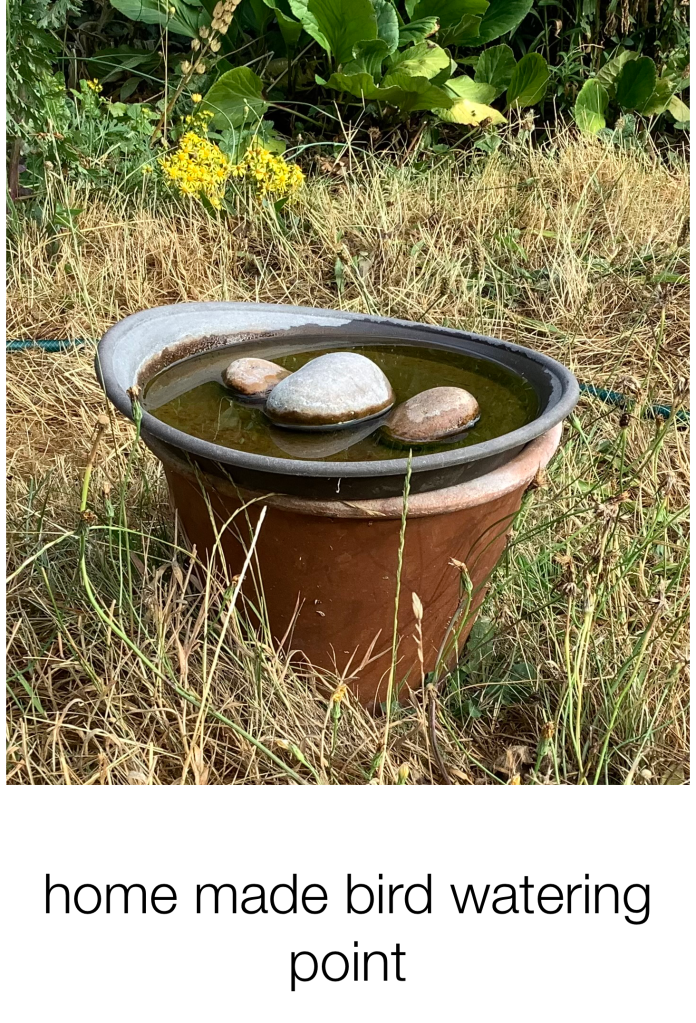
The loss of biodiversity is immense and accelerating. We can support biodiversity locally by the way we use our gardens, growing wild life friendly plants, providing food and water  for birds and insects, by avoiding the use of pesticides and herbicides and peat.  We can help by supporting local and international organisations that protect and conserve biodiversity. And as above, we can use our spending money to influence change.

Saving the environment is a numbers game, so talk about the actions you take with friends and family, with shopkeepers and suppliers, with local councillors and MPs, and encourage them to take action too.

Environment Sunday 

17th July 2022

Our church is dedicating this Sunday to the Environment as well as holding baptisms. 

Readings 1 Corinthians 12. 12-27 (The Message)

Each of us is now a part of Christ’s resurrection body, refreshed and sustained at one fountain—his Spirit—where we all come to drink. The old labels we once used to identify ourselves—labels like Jew or Greek, slave or free—are no longer useful. We need something larger, more comprehensive. I want you to think about how all this makes you more significant, not less. A body isn’t just a single part blown up into something huge. It’s all the different-but-similar parts arranged and functioning together. If Foot said, “I’m not elegant like Hand, embellished with rings; I guess I don’t belong to this body,” would that make it so? If Ear said, “I’m not beautiful like Eye, transparent and expressive; I don’t deserve a place on the head,” would you want to remove it from the body? If the body was all eye, how could it hear? If all ear, how could it smell? As it is, we see that God has carefully placed each part of the body right where he wanted it. But I also want you to think about how this keeps your significance from getting blown up into self-importance. For no matter how significant you are, it is only because of what you are a part of. An enormous eye or a gigantic hand wouldn’t be a body, but a monster. What we have is one body with many parts, each its proper size and in its proper place. No part is important on its own. Can you imagine Eye telling Hand, “Get lost; I don’t need you”? Or, Head telling Foot, “You’re fired; your job has been phased out”? As a matter of fact, in practice it works the other way—the “lower” the part, the more basic, and therefore necessary. You can live without an eye, for instance, but not without a stomach. When it’s a part of your own body you are concerned with, it

makes no difference whether the part is visible or clothed, higher or lower. You give it dignity and honour just as it is, without comparisons. If anything, you have more concern for the lower parts than the higher. If you had to choose, wouldn’t you prefer good digestion to full-bodied hair? The way God designed our bodies is a model for understanding our lives together as a church: every part dependent on every other part, the parts we mention and the parts we don’t, the parts we see and the parts we don’t. If one part hurts, every other

part is involved in the hurt, and in the healing. If one part flourishes, every other part enters into the exuberance. You are Christ’s body— that’s who you are! You must never forget this.

Gospel Reading – John 4.13-14

Jesus said to her, ‘Everyone who drinks of this water will be thirsty again, but those who drink of the water that I will give them will never be thirsty. The water that I will give will become in them a spring of water gushing up to eternal life.’

Collect

Loving God, by whose great generosity we are granted the gift of life, so breathe on the spark of your presence within us, that we

 burn with a flame of love that banishes our fear, and lights up the world around us. We ask this in the name of Jesus, Light and life of the World. Amen.

Talk 

Baptism services remind us that we are all one community, one body in Christ. No one can say to someone else you don’t belong here, or go away, we don’t need you. We are all equal and important and necessary just as we are.

Today I want us to think about the world. 

Lots of people and lots of birds and animals, fish and insects and creepy crawlies and the list goes on –  live here.

What can you see?

A polar bear.   A sand martin.   An orang-utan.  A bee.   And a whale.

Orang-utans live in great tropical forests. They depend upon the forests for food and shelter, as a well as a  place to live and to play. But the forests where they live are being chopped down and cleared away to make space for acres and acres of palm oil plantations to make lipsticks and margerine, shampoo and pet food, sunscreen and bio diesel. When the forests go, the orang-utans have no where else to live. It seems as if we are saying to the orang-utans ‘Go away you don’t belong here’.

Polar bears live in the Arctic where they go hunting across the ice. They dive into cracks and holes in the ice to catch fish and seals. But climate change is making the world hotter and the ice is melting. Without the ice the polar bears cannot hung fish and seals. Instead they and their cubs starve. It seems as if we are saying to the polar bears, ‘If you can’t cope with climate change and melting ice caps, then we don’t need you.’

Sand martins spend the winters in Africa and the summers in Europe. In the spring they fly thousands of miles across the Sahara to Britain and in the autumn they fly the same thousands of miles back. But climate change is making the world hotter and when they fly over the Sahara Desert, the air is so hot that many martins simply cannot cope and they fall to the ground. It seems as if we are saying to the sand martin ‘If you can’t cope with climate change, then there’s no place here for you any more.’

Around the world in different oceans live whales. Whales get caught up in fishing tackle and crashed into by shipping. They are disoriented by noise from oil exploration. Every year fewer and fewer whales are born. It is as if we are saying to the whales, ‘Go away, we don’t need you’.  

But we do need whales! They are amazing creatures. In the oceans there tiny tiny things called phytoplankton that, like leaves on trees, convert carbon dioxide and sunlight into oxygen and energy. And phytoplankton provide food for slightly bigger plankton and the plankton provides food for all manner of other sea creatures – including whales. But there is one thing that phytoplankton needs and that is iron. And do you know where that iron comes from? Whale poo! If oceans are to remain healthy with phytoplankton providing oxygen and energy for plankton and seaweed, and  fish and other sea animals, then we need  whales.

What about bees? Bees live in lots of different parts of the world feeding on nectar from plants. But we have been getting rid of wild plants and hedgerows, and spraying fields with herbicides so that there is not enough food for the bees. And we have been spraying crops with pesticides that kill not just the ‘pests’ but the bees too. Every year there are fewer and fewer bees. It is as if we are saying to the bee, ‘Go away, we don’t need you.’ 

But we do need bees. Without bees to fertilise crops we won’t have apples and pears, or strawberries and cherries, or figs and kiwi fruits, or almonds, avocados, mangos …. the list goes on and on. 

If we are not going to say to bees and whales, to orang-utans and polar bears, to sand martins and to so many other amazing creatures – we don’t need you, you’re not part of our world, then we have to change the way we live. We are one body, we are one world.

Prayers

Take a look at your left foot. Think about people who cannot move freely, perhaps because of illness or disability; perhaps because of imprisonment; perhaps because they are women. Think too of animals that cannot move freely. May they be treated with compassion. May we be agents of change.

Lord in your loving kindness:

Hear our prayer. 

Now look at your other foot. Think about people who are having to flee from danger: from war and fighting,  from oppression and prejudice, from poverty, from floods , from wild fires, and from hunger. Think too of wildlife that is being forced out of its natural habitat. May they be protected and welcomed. May we be agents of change.

Lord in your loving kindness:

Hear our prayer. 

Now look at your hands. Think about people who use their hands to stack supermarket shelves, sew clothes, pick fruit and vegetables – especially those in poor working conditions. Think about people who use their hands to care for others:  cleaners, nurses, care workers. Think of those who use their hands to care for the environment. May they all be treated fairly, may they be valued and supported. May we be agents of change.

Lord in your loving kindness:

Hear our prayer. 

Now think of your bottom. Think of times when it is easier to sit back and do nothing, times when it is easier not to stand up for those in need: people in our own country who have to rely on food banks; people  in North Africa facing hunger as wheat prices rise; seabird colonies facing extinction because of bird flu, the world as it struggles with the climate crisis. Give us courage to act for we are all body. May we be agents of change.

Lord in your loving kindness:

Hear our prayer. 

Now think of your heart: think of all those you love and all who love you. We pray for those in need of healing and comfort: Angela Robinson, Jeane Dunsford, Alban Clarke, Joy Clarke, Lawrence Bell-Wright

We remember those who died recently: Pat West, Iris Lofting, Isabel Howlett, Hazel Acus, Anne Lawry, Peter Rivett.

and those who have died in past years: David Brown, Derek Marshall

Unite us all in your love.

Lord in your loving kindness:

Hear our prayer. 

Lastly try and look at the end of your nose. Think of those things which are hard to see, those things we would rather not see, those situations we would rather overlook: poverty, injustice, homelessness, hate, prejudice. Give us wisdom to understand ourselves and the world in which we live and to tend to its needs. May we be agents of change.

Lord in your loving kindness:

Hear our prayer. 

Merciful creator and Father

 accept these prayers for the sake of your son, our saviour Jesus Christ. Amen. 

 Counting on … day 242

13th July 2022

Urban areas are generally hotter than their nearby rural areas. Buildings and vehicles all add heat to their local micro climate, whilst vegetation reduces temperatures. Not driving cars during hot weather is one small way of keeping the air cooler. You too will probably feel cooler walking on the shady of side of the street rather than being sat in a hot metal box.

 Counting on … day 241

12th July 2022

Double glazing also keeps excess heat out! When the outside temperature is hotter than inside, closing the windows and drawing the curtains can help insulate rooms from high temperatures outside. On the other hand if you can open several windows causing a flow of air through the room, the movement of air may feel more comfortable. 

Feast of St Thomas

3rd July 2022

Reflection

Habakkuk, like Thomas, has a question for God. We have to go back to the first chapter in Habakkuk to learn what it is. Habakkuk is dismayed at what he sees happening in the world around him, where it seems that wrongdoing is being rewarded, and that the wicked thrive. He has repeatedly called on God for help. Whilst it seems as if God’s response is slow in coming, Habakkuk is still hopeful that God is noting all that is happening and will mete out judgment and punishment accordingly. So it is that today’s reading begins with Habakkuk faithfully stationed at his Watch post. God replies that a time of salvation and satisfaction will come. Habakkuk should not doubt because there will be a resolution in due time. God has a vision for how things will be and it will vindicate the faith of the righteous. 

We may have a lot of sympathy for Habakkuk, for looking round the world today it does seem as if things are going from bad to worse. There are heat waves of unprecedented scale across the globe. Even in Europe rivers such as the Po are dried up due to a lack of rain and snowfall. Harvests of rice in Italy and Spain are threatened. The war in Ukraine has disrupted grain supplies, hiking the prices worldwide and putting millions of people in Africa and the Middle East at risk of starvation. Floods in Bangladesh, in Brazil and Peru. Record temperatures in the arctic and Antarctic. Again triggered by the war in Ukraine, a rush to reopened coal power stations and to explore and tap new oil and gas fields in complete opposition to undertakings made last November to reduce carbon emissions. Amongst the global South foreign debts are rocketing, and  Sri Lanka is effectively bankrupt.

It is not surprising that António Guterres, president of the UN, has warned that humanity is facing a prefect storm of crises, widening inequality between the north and south, which he describes as ‘morally unacceptable’!

Do we, can we, still believe that God is concerned and that God wills a just and equitable solution? And how is such a resolution to be brought into effect if humans continue wilfully and carelessly to frustrate efforts by a minority that would curb the effects of the climate crisis and provide for the well being of all peoples and living things? 

Can we take hope from the example of Thomas? He, not unreasonably, has been asking for evidence before he can believe what is surely unbelievable? Thomas is neither too frightened nor too timid to express his doubts. Perhaps it would do us good to openly express our concerns about a) the dire state of the world, and b) our lack of hope that things can improve? Once we are honest with ourselves, it should be easier for God to find ways of reassuring us. We do want to be able to echo Thomas, shouting out with assurance, ‘My Lord and my God!’

The suggestion from psalm 117 is that we should praise God and in that way be reassured of God’s faithfulness. The letter to the Ephesians reminds us that we are not just the household of God but also a spiritual dwelling place for God. Our faith, our commitment to God, are important and are means by which the world can be transformed. We have a moral duty to live and act according to God’s will, and to do that which establishes heaven on earth.

Habakkuk 2:1-4

I will stand at my watch-post,
   and station myself on the rampart;
I will keep watch to see what he will say to me,
   and what he will answer concerning my complaint.
Then the Lord answered me and said:
Write the vision;
   make it plain on tablets,
   so that a runner may read it.
For there is still a vision for the appointed time;
   it speaks of the end, and does not lie.
If it seems to tarry, wait for it;
   it will surely come, it will not delay.
Look at the proud!
   Their spirit is not right in them,
   but the righteous live by their faith.

Psalm 117

Praise the Lord, all you nations!
   Extol him, all you peoples!
For great is his steadfast love towards us,
   and the faithfulness of the Lord endures for ever.
Praise the Lord!

Ephesians 2:19-22

So then you are no longer strangers and aliens, but you are citizens with the saints and also members of the household of God, built upon the foundation of the apostles and prophets, with Christ Jesus himself as the cornerstone. In him the whole structure is joined together and grows into a holy temple in the Lord; in whom you also are built together spiritually into a dwelling-place for God.

John 20:24-29

But Thomas (who was called the Twin), one of the twelve, was not with them when Jesus came. So the other disciples told him, ‘We have seen the Lord.’ But he said to them, ‘Unless I see the mark of the nails in his hands, and put my finger in the mark of the nails and my hand in his side, I will not believe.’

A week later his disciples were again in the house, and Thomas was with them. Although the doors were shut, Jesus came and stood among them and said, ‘Peace be with you.’ Then he said to Thomas, ‘Put your finger here and see my hands. Reach out your hand and put it in my side. Do not doubt but believe.’ Thomas answered him, ‘My Lord and my God!’ Jesus said to him, ‘Have you believed because you have seen me? Blessed are those who have not seen and yet have come to believe.’

Counting on day 230 

1st July 2022

According to the UN’s Global Climate Action newsletter, declining biodiversity is an increasingly acute problem. “The faster we degrade and lose biodiversity, the worst climate change, and the food crisis, will grow. The sooner we act to protect, conserve, sustainably use and regenerate nature within the 2020s, the stronger our chances of reaching net zero emissions before 2050 and becoming resilient to impacts we can’t hold back.” 

Reducing our consumption of meat will alleviate declining biodiversity by reducing the pressure on the amount of farm land needed to produce the food we eat and freeing up land that can be re-wilded.

Proper 7: 

19 June 2022

Reflection 

We may not believe in demonic forces nowadays but we are certainly aware that there are many  things that have an unhealthy level of control over our lives. Social media, diets, cars, pollution, throw away convenience, anxiety, fashion, alcohol, gambling, climate change, elitism, poverty, oil, tax evasion, futures markets, housing costs, racism, low wages, depression – the list goes on. For all our progress, life is still tough for many people. 

It was to such people, those who were finding life tough, those on the edge of society, the sick and the vulnerable, that Jesus brought his message of good news, of salvation. Here in today’s gospel we have just such an encounter. Jesus is able to break through the barriers that have prevented Legion from communicating with his fellow countrymen. He has been able to get to heart of Legion’s problem and together they removed the burden, the barrier of his illness. Jesus stays with him until others come who will continue the healing process, reintegrating Legion back into the community. Jesus leaves Legion with a task, a reason to carry on. 

The reading from Isaiah describes the frustrations of a prophet trying to speak to a ‘rebellious people’ – by which I think is meant people who rebel against God’s ways. The passage tells how these people are living their lives, with the traditions and routines of their daily life that keep or distract them from God, things that entrap them, snaring them in unholiness.  (The effects of these entrapments are probably not much different from those things blight our daily lives). Yet the prophet’s persistence – a persistence that comes as a gift or a power from God – reflects God’s ongoing concern and desire that the all humans should be encouraged and enabled to live according to God’s values, and that creation should be healed and humanity restored to its right mind. The last few lines add a measure of hope, that there will be found sufficient goodness in humankind to achieve God’s vision for the world. 

Who are our prophets today? Are they people like David Attenborough and Greta Thunberg, George Monbiot and Jack Munro? Are they groups like Extinction Rebellion? Groups like Amnesty, 38 Degrees, and  The Trussel Trust? Do we take time to listen to their messages, to measure and explore what is being said, to discern where God’s will may lie? Equally are we ready to hear God’s message, are we able set aside some of the barriers that trap us and weigh us down? Like Legion can we break free from our past and find renewal and healing?

Paul, writing to Galatians, remind us that for all of us our baptism represents a new beginning, a fresh start. In baptism we are all one – baptism is the ultimate In levelling up! What ever our past, where ever we have come from and however we have come – raised and bred as part of the establishment, or refugee fleeing a hostile environment, someone who has pulled themselves up by their boot straps or someone who has never managed to hold down a job – we are all equal as ‘children of God’. Like Legion, our restoration is shown in that we have all been clothed with Christ. And, like Legion, we are all commissioned to spread the Good News of Jesus Christ to our own communities.

As we look around the world – like the prophet Isaiah – we see the threats and obstacles that block the freedom of life: heat waves that are keeping one third of US citizens confined to their homes; 7.1 million people displaced by fighting in Ukraine; a third of people in Sudan facing starvation; 3.9 million children living in poverty in the UK; half the population of Chile living with water shortages. Are we sufficiently enraged as Christians, sufficiently enraged as were the prophets, sufficiently enraged as humans, to stand up and say this is not how God wants the world to be? How are we to bring Good News to our communities and to the world?

Isaiah 65:1-9

I was ready to be sought out by those who did not ask,
to be found by those who did not seek me.

I said, “Here I am, here I am,”
to a nation that did not call on my name.

I held out my hands all day long to a rebellious people,

who walk in a way that is not good,
following their own devices;

a people who provoke me
to my face continually,

sacrificing in gardens
and offering incense on bricks;

who sit inside tombs,
and spend the night in secret places;

who eat swine’s flesh,
with broth of abominable things in their vessels;

who say, “Keep to yourself,
do not come near me, for I am too holy for you.”

These are a smoke in my nostrils,
a fire that burns all day long.

See, it is written before me:
I will not keep silent, but I will repay;

I will indeed repay into their laps
their iniquities and their ancestors’ iniquities together,

says the Lord;

because they offered incense on the mountains
and reviled me on the hills,

I will measure into their laps
full payment for their actions.

Thus says the Lord:

As the wine is found in the cluster,
and they say, “Do not destroy it,
for there is a blessing in it,”

so I will do for my servants’ sake,
and not destroy them all.

I will bring forth descendants from Jacob,
and from Judah inheritors of my mountains;

my chosen shall inherit it,
and my servants shall settle there.

Psalm 22:18-27

18 Be not far away, O Lord; *
you are my strength; hasten to help me.

19 Save me from the sword, *
my life from the power of the dog.

20 Save me from the lion’s mouth, *
my wretched body from the horns of wild bulls.

21 I will declare your Name to my brethren; *
in the midst of the congregation I will praise you.

22 Praise the Lord, you that fear him; *
stand in awe of him, O offspring of Israel;
all you of Jacob’s line, give glory.

23 For he does not despise nor abhor the poor in their poverty;
neither does he hide his face from them; *
but when they cry to him he hears them.

24 My praise is of him in the great assembly; *
I will perform my vows in the presence of those who worship him.

25 The poor shall eat and be satisfied,
and those who seek the Lord shall praise him: *
“May your heart live for ever!”

26 All the ends of the earth shall remember and turn to the Lord, *
and all the families of the nations shall bow before him.

27 For kingship belongs to the Lord; *
he rules over the nations.

Galatians 3:23-29

Now before faith came, we were imprisoned and guarded under the law until faith would be revealed. Therefore the law was our disciplinarian until Christ came, so that we might be justified by faith. But now that faith has come, we are no longer subject to a disciplinarian, for in Christ Jesus you are all children of God through faith. As many of you as were baptised into Christ have clothed yourselves with Christ. There is no longer Jew or Greek, there is no longer slave or free, there is no longer male and female; for all of you are one in Christ Jesus. And if you belong to Christ, then you are Abraham’s offspring, heirs according to the promise.

Luke 8:26-39

Jesus and his disciples arrived at the country of the Gerasenes, which is opposite Galilee. As he stepped out on land, a man of the city who had demons met him. For a long time he had worn no clothes, and he did not live in a house but in the tombs. When he saw Jesus, he fell down before him and shouted at the top of his voice, “What have you to do with me, Jesus, Son of the Most High God? I beg you, do not torment me” — for Jesus had commanded the unclean spirit to come out of the man. (For many times it had seized him; he was kept under guard and bound with chains and shackles, but he would break the bonds and be driven by the demon into the wilds.) Jesus then asked him, “What is your name?” He said, “Legion”; for many demons had entered him. They begged him not to order them to go back into the abyss.

Now there on the hillside a large herd of swine was feeding; and the demons begged Jesus to let them enter these. So he gave them permission. Then the demons came out of the man and entered the swine, and the herd rushed down the steep bank into the lake and was drowned.

When the swineherds saw what had happened, they ran off and told it in the city and in the country. Then people came out to see what had happened, and when they came to Jesus, they found the man from whom the demons had gone sitting at the feet of Jesus, clothed and in his right mind. And they were afraid. Those who had seen it told them how the one who had been possessed by demons had been healed. Then all the people of the surrounding country of the Gerasenes asked Jesus to leave them; for they were seized with great fear. So he got into the boat and returned. The man from whom the demons had gone begged that he might be with him; but Jesus sent him away, saying, “Return to your home, and declare how much God has done for you.” So he went away, proclaiming throughout the city how much Jesus had done for him.

The Green Tau: issue 43 

“MAKING SUSTAINABLE LIVING THE DEFAULT OPTION”

– strap line for the UN’s Earth Day. 


What is sustainable living? And how do we go about it? Something that is sustainable is something that can keep on going for a lengthy period of time without diminishment. We might look at household budget and apply the Micawber principle: 

“Annual income twenty pounds, annual expenditure nineteen, nineteen and six, result happiness.  Annual income twenty pounds, annual expenditure twenty pounds ought and six, result misery.”

As long as the required input is equal or less than output, the budget is sustainable. When what is consumed exceeds what is coming in, the budget is no longer sustainable. Sustainable living is the same: our lifestyle is sustainable if what we consume is equal to or less than resources we use. 

Let’s us taking heating for our homes as an example. 

If say we were to heat our homes with a wood burning stove, for that to be sustainable, we would need sufficient mature woodland to produce each year the wood we would burn. (This is not taking into account the cost to society of the pollution to the air). 

What if we hear our homes with oil and gas? That is ‘sustainable’ only in the short term as both these fossil fuels are non renewable. Once they are gone, they are gone. They cannot be replaced. Aside from air pollution, the major problem with soil fuels is the amount of carbon dioxide that they release into the atmosphere. It is a rate that far exceeds the rate at which it can be absorbed by the planet. This is why heating our homes with fossil fuels is not sustainable in either the short or long term. 

The most sustainable way of heating our homes is not to use any fuel but rather to build/ refurbish them with insulation levels that make extra heat (over and above our own body heat) unnecessary. Houses equipped to this standard are known as a “passivhaus” – https://www.passivhaustrust.org.uk/

Retrofitting is not without its financial cost which puts it out of reach for many people. (Sadly our government doesn’t understand that the whole nation would all benefit if insulating homes was state funded). Nevertheless any improvement we can make to the insulation of our homes will reduce our carbon footprint and energy bills and therefore makes heating our homes more sustainable: https://energysavingtrust.org.uk/insulating-your-home-back-to-the-basics/

A related area to that of heating, is electricity. What determines the sustainability of electricity?

Electrical production can be divided into two categories, renewable and non-renewable. Non-renewable electricity comes from power stations powered by coal/ gas/ oil. These fossil fuels are finite and cannot be replaced. Because of the scale of their carbon emissions, using them is highly destructive due to the adverse effects they cause of climate change and air pollution. Electricity produced by a fossil fuel driven generator is similarly non-renewable. 

Renewable electricity is produced using wind, solar, tidal or geothermal energy. These sources of energy are not diminished through use; they are available on an ongoing basis. In other words, they are sustainable.

Less easy to define is electricity produced using nuclear energy and that produced using biofuels such as wood chips, sugar cane etc. The amount of nuclear fuel needed in proportion to the energy generated is minuscule which is why nuclear power is often included along side renewables, but there are huge problem surrounding the safety of nuclear power stations and the disposal of nuclear waste that raises questions about its sustainability. 

Wood chips and sugar cane are both renewable resources but using them as an energy source is questionable. In a world where many go hungry and where more and more of the world’s natural or wild landscape is being lost, is it sustainable to use scarce land resources to grow crops for fuel rather than food?  

Questions around the sustainability of energy sources also apply to the sustainability of different forms of transport. The most sustainable means of transport is walking. It’s what we are designed for and uses no more energy than that required to feed us. The same is true of cycling, although according to Mike Berners Lee in his book, How Bad are Bananas, suggests that, depending on whether our diet is made up of beef burgers or bananas, a battery powered bicycle may have a lower carbon footprint! As above any transport reliant on fossil fuels – whether that is a petrol car, a diesel train or a plane – is not sustainable. Electric powered transport where the source of electricity is renewable is more sustainable but there are downsides to consider. Electric vehicles rely on batteries which are made from non renewable minerals such as lithium and cobalt – and cobalt in particularly comes predominantly from mines where employee welfare is minimal.

In sparsely populated areas, transport systems that rely on buses or trains may need to develop on-demand rather than time-tabled services, in order to make their use of limited resources sustainable. 

Plants are a naturally renewable resource but that doesn’t make all food equally sustainable. Factors to take into account include water, fertilisers, transport to markets, food waste, and whether the plants are feeding us directly or indirectly. Some crops such as rice, strawberries, blue berries and almonds,  require large amounts of water. In water sensitive regions irrigating such crops may divert water away from supplies used by local people for growing staple foods, as well as for drinking. It may also divert water away from aquifers and wetlands regions thus damaging local flora and fauna. In such circumstances, these crops cannot be classified as sustainable.

Fertilisers, especially artificial ones, use up limited non-renewable mineral resources, as well as contributing large amounts of carbon dioxide to the atmosphere. In addition the run off from fertilisers damages water courses and kills plants and creatures, compounding existing biodiversity losses. 

Where foods are imported over longer distances – and especially so when the mode of transport includes airfreight -will consume more resources and in particular will increase the food’s carbon footprint. Imported Spanish  strawberries, out of season avocados and air freighted asparagus are a few examples of unsustainable foods. In some instances the sustainability of a product becomes questionable when it takes over land used to grow staple foods for the local population or where it involves the clearance of indigenous wild vegetation such as the clearance of tropical rainforest to grow sugar cane. 

The majority of farm land globally is used not to feed people directly but to grow food for animals intended for human consumption.  It takes 100 x more land to produce 1kg of beef than to produce the equivalent in plant based food. In terms of feeding the global population a diet with high levels of meat consumption is not sustainable.

Plants as a renewable resource are also used for making things – clothes and fabrics, paper and furniture, rubber, paints etc. As with plants brown for food, similar questions about sustainability arise. Cotton for example is a heavy user of water – water abstracted for cotton growing was the major factor causing the disappearance of the Aral Sea. The growth in demand for palm oil used in products as diverse as lipstick and margerine, has led to the clearance of vast areas of natural habitat including mangroves. Demand for paper has seen naturally biodiverse forests replaced with monoculture pine plantations. 

The sustainability of every product we use needs to be measured in terms of renewability, carbon footprint, water footprint, impact on biodiversity, impact on local populations, the working conditions for those who grow, produce or sell, transport footprint, and the ease with which at the end of its life it can be recycled or disposed. Sustainability may begin as a question about individual lifestyle but quickly becomes a question about global sustainability.