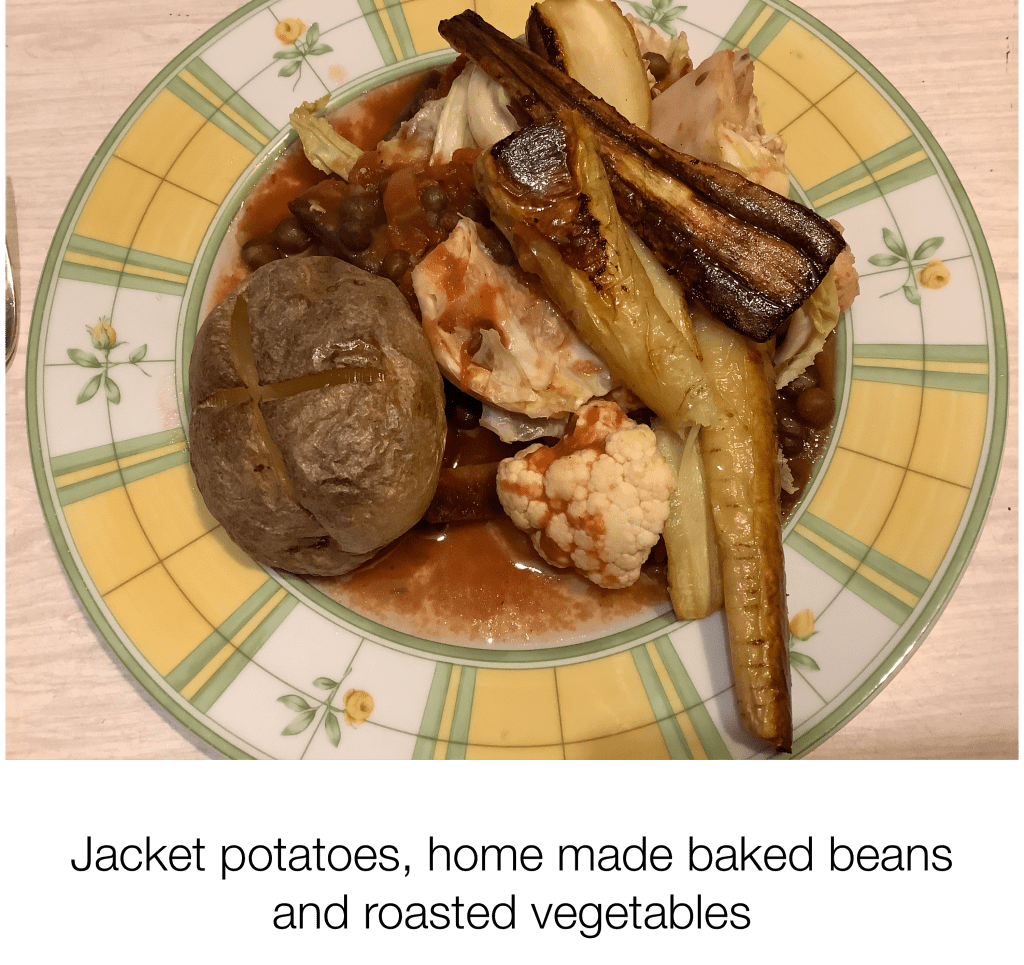
17th June 2022
The hot weather is back. Here are last year’s tips for keeping cool: https://greentau.org/2021/07/14/eco-tip-how-to-keep-cool-in-hot-weather/

17th June 2022
The hot weather is back. Here are last year’s tips for keeping cool: https://greentau.org/2021/07/14/eco-tip-how-to-keep-cool-in-hot-weather/
“MAKING SUSTAINABLE LIVING THE DEFAULT OPTION”

– strap line for the UN’s Earth Day.
What is sustainable living? And how do we go about it? Something that is sustainable is something that can keep on going for a lengthy period of time without diminishment. We might look at household budget and apply the Micawber principle:
“Annual income twenty pounds, annual expenditure nineteen, nineteen and six, result happiness. Annual income twenty pounds, annual expenditure twenty pounds ought and six, result misery.”
As long as the required input is equal or less than output, the budget is sustainable. When what is consumed exceeds what is coming in, the budget is no longer sustainable. Sustainable living is the same: our lifestyle is sustainable if what we consume is equal to or less than resources we use.
Let’s us taking heating for our homes as an example.
If say we were to heat our homes with a wood burning stove, for that to be sustainable, we would need sufficient mature woodland to produce each year the wood we would burn. (This is not taking into account the cost to society of the pollution to the air).
What if we hear our homes with oil and gas? That is ‘sustainable’ only in the short term as both these fossil fuels are non renewable. Once they are gone, they are gone. They cannot be replaced. Aside from air pollution, the major problem with soil fuels is the amount of carbon dioxide that they release into the atmosphere. It is a rate that far exceeds the rate at which it can be absorbed by the planet. This is why heating our homes with fossil fuels is not sustainable in either the short or long term.
The most sustainable way of heating our homes is not to use any fuel but rather to build/ refurbish them with insulation levels that make extra heat (over and above our own body heat) unnecessary. Houses equipped to this standard are known as a “passivhaus” – https://www.passivhaustrust.org.uk/

Retrofitting is not without its financial cost which puts it out of reach for many people. (Sadly our government doesn’t understand that the whole nation would all benefit if insulating homes was state funded). Nevertheless any improvement we can make to the insulation of our homes will reduce our carbon footprint and energy bills and therefore makes heating our homes more sustainable: https://energysavingtrust.org.uk/insulating-your-home-back-to-the-basics/
A related area to that of heating, is electricity. What determines the sustainability of electricity?
Electrical production can be divided into two categories, renewable and non-renewable. Non-renewable electricity comes from power stations powered by coal/ gas/ oil. These fossil fuels are finite and cannot be replaced. Because of the scale of their carbon emissions, using them is highly destructive due to the adverse effects they cause of climate change and air pollution. Electricity produced by a fossil fuel driven generator is similarly non-renewable.

Renewable electricity is produced using wind, solar, tidal or geothermal energy. These sources of energy are not diminished through use; they are available on an ongoing basis. In other words, they are sustainable.
Less easy to define is electricity produced using nuclear energy and that produced using biofuels such as wood chips, sugar cane etc. The amount of nuclear fuel needed in proportion to the energy generated is minuscule which is why nuclear power is often included along side renewables, but there are huge problem surrounding the safety of nuclear power stations and the disposal of nuclear waste that raises questions about its sustainability.
Wood chips and sugar cane are both renewable resources but using them as an energy source is questionable. In a world where many go hungry and where more and more of the world’s natural or wild landscape is being lost, is it sustainable to use scarce land resources to grow crops for fuel rather than food?
Questions around the sustainability of energy sources also apply to the sustainability of different forms of transport. The most sustainable means of transport is walking. It’s what we are designed for and uses no more energy than that required to feed us. The same is true of cycling, although according to Mike Berners Lee in his book, How Bad are Bananas, suggests that, depending on whether our diet is made up of beef burgers or bananas, a battery powered bicycle may have a lower carbon footprint! As above any transport reliant on fossil fuels – whether that is a petrol car, a diesel train or a plane – is not sustainable. Electric powered transport where the source of electricity is renewable is more sustainable but there are downsides to consider. Electric vehicles rely on batteries which are made from non renewable minerals such as lithium and cobalt – and cobalt in particularly comes predominantly from mines where employee welfare is minimal.
In sparsely populated areas, transport systems that rely on buses or trains may need to develop on-demand rather than time-tabled services, in order to make their use of limited resources sustainable.
Plants are a naturally renewable resource but that doesn’t make all food equally sustainable. Factors to take into account include water, fertilisers, transport to markets, food waste, and whether the plants are feeding us directly or indirectly. Some crops such as rice, strawberries, blue berries and almonds, require large amounts of water. In water sensitive regions irrigating such crops may divert water away from supplies used by local people for growing staple foods, as well as for drinking. It may also divert water away from aquifers and wetlands regions thus damaging local flora and fauna. In such circumstances, these crops cannot be classified as sustainable.

Fertilisers, especially artificial ones, use up limited non-renewable mineral resources, as well as contributing large amounts of carbon dioxide to the atmosphere. In addition the run off from fertilisers damages water courses and kills plants and creatures, compounding existing biodiversity losses.
Where foods are imported over longer distances – and especially so when the mode of transport includes airfreight -will consume more resources and in particular will increase the food’s carbon footprint. Imported Spanish strawberries, out of season avocados and air freighted asparagus are a few examples of unsustainable foods. In some instances the sustainability of a product becomes questionable when it takes over land used to grow staple foods for the local population or where it involves the clearance of indigenous wild vegetation such as the clearance of tropical rainforest to grow sugar cane.
The majority of farm land globally is used not to feed people directly but to grow food for animals intended for human consumption. It takes 100 x more land to produce 1kg of beef than to produce the equivalent in plant based food. In terms of feeding the global population a diet with high levels of meat consumption is not sustainable.

Plants as a renewable resource are also used for making things – clothes and fabrics, paper and furniture, rubber, paints etc. As with plants brown for food, similar questions about sustainability arise. Cotton for example is a heavy user of water – water abstracted for cotton growing was the major factor causing the disappearance of the Aral Sea. The growth in demand for palm oil used in products as diverse as lipstick and margerine, has led to the clearance of vast areas of natural habitat including mangroves. Demand for paper has seen naturally biodiverse forests replaced with monoculture pine plantations.
The sustainability of every product we use needs to be measured in terms of renewability, carbon footprint, water footprint, impact on biodiversity, impact on local populations, the working conditions for those who grow, produce or sell, transport footprint, and the ease with which at the end of its life it can be recycled or disposed. Sustainability may begin as a question about individual lifestyle but quickly becomes a question about global sustainability.

13th June 2022
To ‘put your skin in the game’ is a business term that describes someone’s commitment to a project. Last Saturday cyclists literally bared their skin as part the WNBR London Naked Bike Ride. The campaigns objectives are to: protest against the global dependency on oil, curb car culture! obtain real rights for cyclists, demonstrate the vulnerability of cyclists on city streets, and celebrate body freedom.
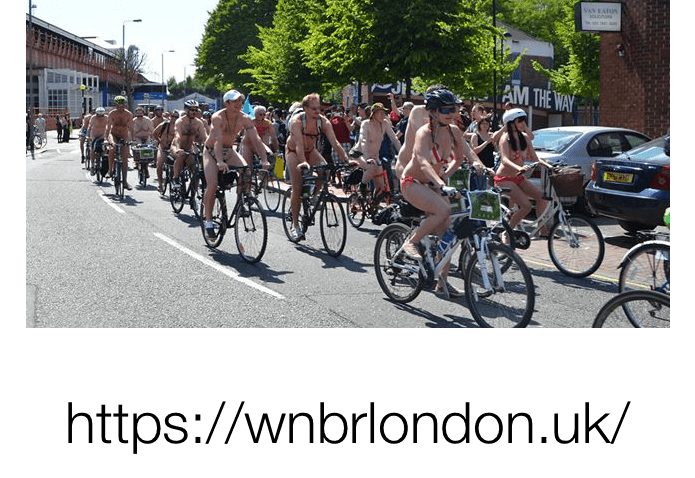
NB cycling without protective clothing makes you vulnerable if you have an accident. Helmets protect your head and neck. Clothing protects your skin from the abrasive nature of the road’s surface.
5th June 2022
Reflection
The account of Pentecost from Acts is full of visual and auditory images, amongst which language is prominent. The word translated as tongues – as in tongues of fire – has in Greek, as in English, the dual meaning of both the physical tongue in our mouth and the language spoken by people. The effect of this anointing with the Holy Spirit is that the disciples can speak in many and various languages. The writer of Acts suggests a goodly selection from various localities – Parthia and Media, Pontus and Egypt, Libya and Crete. It is not always different localities that produce different languages. Different fields of employment, social classes, age groups and generations can all have their own language, which may be unintelligible to those outside the group. Such groups may have not just their own verbal language but also their own body language. Here in the passage from Acts it is not just verbal languages that the disciples express but body language too – a body language that some mistake as drunkenness.
I know I would struggle to communicate both verbally and bodily the language of a night club, and my lack of fluency would stand out a mile! I am equally sure that to someone unused to staid middle class Anglicanism might struggle to hear the good news in our Sunday Holy Communion. It is hard to learn someone else’s language if it’s not something you usually encounter. Maybe the Holy Spirit is inviting us to get out and about more, to learn new languages and to share our own more widely.
I am sure that environmentalists also have their own niche verbal and body language – which is great for talking with one another but maybe is not so good for talking to those outside that community. If we are to be effective evangelists -whether for the gospel or for the environment – we need to learn the language of those we wish to communicate with. What is the language – the words, the actions – that I need to use if I want business leaders and financiers to understand the urgent message about the climate crisis, about the loss of bio-diversity, about the need for climate reparations?
Today’s psalm celebrates the joy and diversity of creation, of God’s handiwork. Have we yet developed a modern day language that can fully describe how amazing creation is? Have we found the right languages that can enable others to see creation as such a unique and special gift – one that none of us should want to damage? We have seen that David Attenborough has a real gift with words and images that inspire awe and wonder – do we need more people fluent in such bio-awesome language to create a world in which no one would dream of carelessly or pointlessly damaging the environment? Do our churches, does our liturgy, speak with awe and love for God’s creation?
When we cry ‘Abba, Father’ do we understand that as children of God, that all of humanity are as brother and sister to us? That the Iranian struggling to breath because climate-change induced sand storms is our brother? That the Malian farmer struggling to irrigate her crops is our sister? That the children of Kiribati whose island is being invaded by the sea, are our siblings too? Jesus’s command is that we love one another: for what Jesus says and does, is what the Father says and does. Both Father and Son speak the same language. It is a language that is both so complex and so simple, that everyone who listens out for it can understand it. It is a language that we have not fully learnt to speak but which the Holy Spirit is ever ready to teach.
May we with humility and eagerness invite the Holy Spirit to overfill and inspire us this Pentecost.
Acts 2:1-21
When the day of Pentecost had come, the disciples were all together in one place. And suddenly from heaven there came a sound like the rush of a violent wind, and it filled the entire house where they were sitting. Divided tongues, as of fire, appeared among them, and a tongue rested on each of them. All of them were filled with the Holy Spirit and began to speak in other languages, as the Spirit gave them ability.
Now there were devout Jews from every nation under heaven living in Jerusalem. And at this sound the crowd gathered and was bewildered, because each one heard them speaking in the native language of each. Amazed and astonished, they asked, “Are not all these who are speaking Galileans? And how is it that we hear, each of us, in our own native language? Parthians, Medes, Elamites, and residents of Mesopotamia, Judea and Cappadocia, Pontus and Asia, Phrygia and Pamphylia, Egypt and the parts of Libya belonging to Cyrene, and visitors from Rome, both Jews and proselytes, Cretans and Arabs– in our own languages we hear them speaking about God’s deeds of power.” All were amazed and perplexed, saying to one another, “What does this mean?” But others sneered and said, “They are filled with new wine.”
But Peter, standing with the eleven, raised his voice and addressed them, “Men of Judea and all who live in Jerusalem, let this be known to you, and listen to what I say. Indeed, these are not drunk, as you suppose, for it is only nine o’clock in the morning. No, this is what was spoken through the prophet Joel:
`In the last days it will be, God declares,
that I will pour out my Spirit upon all flesh,
and your sons and your daughters shall prophesy,
and your young men shall see visions,
and your old men shall dream dreams.
Even upon my slaves, both men and women,
in those days I will pour out my Spirit;
and they shall prophesy.
And I will show portents in the heaven above
and signs on the earth below,
blood, and fire, and smoky mist.
The sun shall be turned to darkness
and the moon to blood,
before the coming of the Lord’s great and glorious day.
Then everyone who calls on the name of the Lord shall be saved.’ “
Psalm 104:25-35, 37
25 O Lord, how manifold are your works! *
in wisdom you have made them all;
the earth is full of your creatures.
26 Yonder is the great and wide sea
with its living things too many to number, *
creatures both small and great.
27 There move the ships,
and there is that Leviathan, *
which you have made for the sport of it.
28 All of them look to you *
to give them their food in due season.
29 You give it to them; they gather it; *
you open your hand, and they are filled with good things.
30 You hide your face, and they are terrified; *
you take away their breath,
and they die and return to their dust.
31 You send forth your Spirit, and they are created; *
and so you renew the face of the earth.
32 May the glory of the Lord endure for ever; *
may the Lord rejoice in all his works.
33 He looks at the earth and it trembles; *
he touches the mountains and they smoke.
34 I will sing to the Lord as long as I live; *
I will praise my God while I have my being.
35 May these words of mine please him; *
I will rejoice in the Lord.
37 Bless the Lord, O my soul. *
Hallelujah!
Romans 8:14-17
All who are led by the Spirit of God are children of God. For you did not receive a spirit of slavery to fall back into fear, but you have received a spirit of adoption. When we cry, “Abba! Father!” it is that very Spirit bearing witness with our spirit that we are children of God, and if children, then heirs, heirs of God and joint heirs with Christ– if, in fact, we suffer with him so that we may also be glorified with him.
John 14:8-27
Philip said to Jesus, “Lord, show us the Father, and we will be satisfied.” Jesus said to him, “Have I been with you all this time, Philip, and you still do not know me? Whoever has seen me has seen the Father. How can you say, `Show us the Father’? Do you not believe that I am in the Father and the Father is in me? The words that I say to you I do not speak on my own; but the Father who dwells in me does his works. Believe me that I am in the Father and the Father is in me; but if you do not, then believe me because of the works themselves. Very truly, I tell you, the one who believes in me will also do the works that I do and, in fact, will do greater works than these, because I am going to the Father. I will do whatever you ask in my name, so that the Father may be glorified in the Son. If in my name you ask me for anything, I will do it.
“If you love me, you will keep my commandments. And I will ask the Father, and he will give you another Advocate, to be with you forever. This is the Spirit of truth, whom the world cannot receive, because it neither sees him nor knows him. You know him, because he abides with you, and he will be in you.”
“I have said these things to you while I am still with you. But the Advocate, the Holy Spirit, whom the Father will send in my name, will teach you everything, and remind you of all that I have said to you. Peace I leave with you; my peace I give to you. I do not give to you as the world gives. Do not let your hearts be troubled, and do not let them be afraid.”
29th May 2022
Reflection.
I spent a couple of hours on Monday and a few more on Tuesday with Christian Climate Action who had organised a 24 hour vigil outside the Methodist Central Hall where the Shell AGM was taking place. Like Paul and his companions, their vigil reflected their conviction that they were acting in the service of Jesus Christ, that they were witnessing to his love for the world and his wish for all to share in the gift of salvation. Whilst there were no earthquakes, there were frequent heavy outbreaks of thunder, lightning and torrential rain – umbrellas only have a limited effectiveness!
There were many passers by, some oblivious to the plight of the earth and the acute necessity of the protest, others vaguely or deeply interested, whilst others were clearly affronted by anything that threaded the status quo – all responses with which Paul as an evangelist would have been familiar. Not that Paul, nor Climate Christian Action, supported anarchy. The security guards and the police ‘supervising’ the demonstration responded in kind to the politeness of those taking part.
What really stands out in the passage from Acts and amongst those taking part at the vigil was the commitment to serving God. Note the words of the slave girl, “These are slaves of the Most High God, who proclaim to you a way of salvation”. For Paul that salvation meant equality of all – free and slave, Jew and Gentile, rich and poor – and the vision of a world in which love and care for one other was universal. These are the very same aims of those protesting against the leadership and direction of Shell and other oil companies. For the continuing and expanding production of fossil fuels is the cause of global heating and climate change which is already killing and harming people across the world – from excess heat in the Indian sub-continent, from flooding in South Africa, Australia and Brazil, from droughts in the Sehal, Kenya, Argentina and California, to name but a few – and is decimating bio-diversity, melting icecaps and glaciers whilst at the same time creating huge profits for investors and shareholders. As Christians we are tasked with calling out inequality and injustice when we see it. We are tasked with responding to the needs of others, even or rather especially, those trapped in places where life is hard and support is limited. As last week we heard how Paul responded to the cry for help from the people of Macedonia, so today we we are called to respond to the cry for help that comes from Bangladesh and the Maldives, from Venezuela and the Lebanon and so many more countries. Jesus said that just as he and his Father were one, so they and we should be as one so that the world may see glory of God, see the salvation that is possible, know the power of love to heal and restore all things anew.
Acts 16:16-34
With Paul and Silas, we came to Philippi in Macedonia, a Roman colony, and, as we were going to the place of prayer, we met a slave girl who had a spirit of divination and brought her owners a great deal of money by fortune-telling. While she followed Paul and us, she would cry out, “These men are slaves of the Most High God, who proclaim to you a way of salvation.” She kept doing this for many days. But Paul, very much annoyed, turned and said to the spirit, “I order you in the name of Jesus Christ to come out of her.” And it came out that very hour.
But when her owners saw that their hope of making money was gone, they seized Paul and Silas and dragged them into the marketplace before the authorities. When they had brought them before the magistrates, they said, “These men are disturbing our city; they are Jews and are advocating customs that are not lawful for us as Romans to adopt or observe.” The crowd joined in attacking them, and the magistrates had them stripped of their clothing and ordered them to be beaten with rods. After they had given them a severe flogging, they threw them into prison and ordered the jailer to keep them securely. Following these instructions, he put them in the innermost cell and fastened their feet in the stocks.
About midnight Paul and Silas were praying and singing hymns to God, and the prisoners were listening to them. Suddenly there was an earthquake, so violent that the foundations of the prison were shaken; and immediately all the doors were opened and everyone’s chains were unfastened. When the jailer woke up and saw the prison doors wide open, he drew his sword and was about to kill himself, since he supposed that the prisoners had escaped. But Paul shouted in a loud voice, “Do not harm yourself, for we are all here.” The jailer called for lights, and rushing in, he fell down trembling before Paul and Silas. Then he brought them outside and said, “Sirs, what must I do to be saved?” They answered, “Believe on the Lord Jesus, and you will be saved, you and your household.” They spoke the word of the Lord to him and to all who were in his house. At the same hour of the night he took them and washed their wounds; then he and his entire family were baptised without delay. He brought them up into the house and set food before them; and he and his entire household rejoiced that he had become a believer in God.
Psalm 97
1 The Lord is King;
let the earth rejoice; *
let the multitude of the isles be glad.
2 Clouds and darkness are round about him, *
righteousness and justice are the foundations of his throne.
3 A fire goes before him *
and burns up his enemies on every side.
4 His lightnings light up the world; *
the earth sees it and is afraid.
5 The mountains melt like wax at the presence of the Lord, *
at the presence of the Lord of the whole earth.
6 The heavens declare his righteousness, *
and all the peoples see his glory.
7 Confounded be all who worship carved images
and delight in false gods! *
Bow down before him, all you gods.
8 Zion hears and is glad, and the cities of Judah rejoice, *
because of your judgments, O Lord.
9 For you are the Lord,
most high over all the earth; *
you are exalted far above all gods.
10 The Lord loves those who hate evil; *
he preserves the lives of his saints
and delivers them from the hand of the wicked.
11 Light has sprung up for the righteous, *
and joyful gladness for those who are truehearted.
12 Rejoice in the Lord, you righteous, *
and give thanks to his holy Name.
Revelation 22:12-14,16-17,20-21
At the end of the visions I, John, heard these words:
“See, I am coming soon; my reward is with me, to repay according to everyone’s work. I am the Alpha and the Omega, the first and the last, the beginning and the end.”
Blessed are those who wash their robes, so that they will have the right to the tree of life and may enter the city by the gates.
“It is I, Jesus, who sent my angel to you with this testimony for the churches. I am the root and the descendant of David, the bright morning star.”
The Spirit and the bride say, “Come.”
And let everyone who hears say, “Come.”
And let everyone who is thirsty come.
Let anyone who wishes take the water of life as a gift.
The one who testifies to these things says, “Surely I am coming soon.”
Amen. Come, Lord Jesus!
The grace of the Lord Jesus be with all the saints. Amen.
John 17:20-26
Jesus prayed for his disciples, and then he said. “I ask not only on behalf of these, but also on behalf of those who will believe in me through their word, that they may all be one. As you, Father, are in me and I am in you, may they also be in us, so that the world may believe that you have sent me. The glory that you have given me I have given them, so that they may be one, as we are one, I in them and you in me, that they may become completely one, so that the world may know that you have sent me and have loved them even as you have loved me. Father, I desire that those also, whom you have given me, may be with me where I am, to see my glory, which you have given me because you loved me before the foundation of the world.
“Righteous Father, the world does not know you, but I know you; and these know that you have sent me. I made your name known to them, and I will make it known, so that the love with which you have loved me may be in them, and I in them.”
25th May 2022
Over the last 24 hours I spent about 6 hours supporting the Christian Climate Action vigil outside the Methodist Central Hall, the venue for this year’s Shell AGM. I didn’t stay overnight as some brave souls did but came and went in stints. My companions were deeply committed to the environmental cause: that we humans need to wake up to the damage we are causing to the wonderful creation God has provided and of which we are an integral part: truly we are brothers and sisters, kith and kin with every other living thing. Yet our human unabated consumption of fossil fuels is producing carbon dioxide in such quantities that we are changing the climate, wiping out plant and animal species, melting ice caps and glaciers, and consigning our fellow humans to poverty, ill health and death.
Our presence, as well as being peaceful and prayerful, was intended to raise people’s awareness of the climate crisis and the role that large oil companies, such as Shell, play. To put this in context, CO2 emissions for the entire globe in 2021 were 36.3 bn tonnes, and of this Shell contributed 1.299 bn tonnes. To avert the worsening affects of climate change, CO2 emissions need to be reduced by 43% by 2030, and to zero by 2050. This is a huge challenge for us all but one which will be hard to achieve if the fossil fuel industries continue to invest in expanding oil and gas production rather than shifting to the production of renewable energy.
As I prayed, I admit I had little hope that my prayers were going to effect an about-turn on the plans that Ben van Beurden, the Shell CEO, has for the company. However I did have a slither of hope that our prayers and our presence might influence the hearts and minds of the shareholders. Perhaps there might be a stirring in their conscience about the effects that fossil fuel are having on the planet. Perhaps they might begin to ask questions about the sense of pursuing profits from oil if it results in a world that becomes uninhabitable. Perhaps they might question why the company was not protecting their future by investing in renewable energy. Perhaps they would question the leadership being offered when such a large CO2 producer choose not to follow the global strategy agreed at COP26?
So I prayed. In my mind I envisaged the Holy Spirit like a dove flying around above the heads of the shareholders in the Methodist Central Hall, perhaps pausing to whisper in someone’s ear. I envisaged a scene similar to that of Pentecost, of the room where all the disciples were gathered, with the wind of the Spirit inspiring and energising those present. I imagined little flames might hover above people’s heads and that they might have the experience of the disciples on the road to Emmaus, of something warm burning within them.
Outside the building drums and the call and reply of protestors rose and fell like a storm. Inside the hall, the sound would, I guess, be deadened and I thought of the still small voice in the storm encounter by Elijah. And I thought of the story of Jonah and the storm he encountered and which manhandled him (with the help of a whale) to the shores of Nineveh. There to his surprise and chagrin, the people listened to the message and repented.
And I prayed. I envisaged the call of the evangelists, repent and believe. Repent – a change of heart, a turning around of the way we think, a conversion of the way we do things – and believe. Believe that there is a better future, that we can look forward to a new and brighter future, where things will be green and beautiful, just and fair, where we will live in peace together. As well as seeking a new way of living – repentance – we need to offer a vision of the better world in which we can all live: the kin-dom of God.
22nd May 2022
Reflection
“God …come to us. Let your ways be known upon earth, your saving health among all nations.” Thus begins today’s psalm, followed by the passage from the Book of Revelation which shows us a vision of what the earth could look like of God’s ways, God’s reign, was universally practiced. That is an image of hope we need to hold onto when we hear of the suffering caused by war, by free markets, by religious intolerance, by climate change. The world does not have to be so – if only we transform the way we live and the systems we live by to align with God’s will.
The reading from Acts tell us of a call for help from Macedonia. We are not told what is the cause of their plight not what has prompted them to seek help from God/ Paul. Paul and his companions are in no doubt that what the Macedonians need is the Good News. Why? Because the message of the Good News is that God’s kingdom is at hand. The Good News assures people that they are loved by God and by their fellows, and that this love is not just words. The Good News is about practical, on the ground transformations that ‘heal the sick, cure diseases, excise demons, raise the dead to life’. The Good News doesn’t just sort out individual problems, it tackles the systems too. Fo example, where Jesus tackled the system that said you shouldn’t heal people on the Sabbath, the Good News today tackles the system that lets healthcare be a postcode lottery, that lets private companies make vast profits from Covid while failing reward NHS staff, that lets private heath care grow whilst underfunding public hospitals, that lets CEO’s double their income while care workers struggle to earn the living wage.
We, as Christians, should not close our ears to the cries for help that come from all over the world, that come from every corner of the UK, that come not just from our fellow human beings but from our brothers and sisters in creation – wildlife and domesticated animals, trees and plants, seas and oceans … Our response should be active – as was Paul’s. We are called to share the Good News – both it’s message and its actions. We must heal and transform both the lives of individuals and the systems in which they – and we – live. The time between Ascension Day (this Thursday) and Pentecost is now marked by global ‘Thy Kingdom Come’ campaign. Let’s use this time to begin, or resume with even greater passion, the transformation of lives and systems that will bring in the universal Kingdom of God.
Acts 16:9-15
During the night Paul had a vision: there stood a man of Macedonia pleading with him and saying, “Come over to Macedonia and help us.” When he had seen the vision, we immediately tried to cross over to Macedonia, being convinced that God had called us to proclaim the good news to them.
We set sail from Troas and took a straight course to Samothrace, the following day to Neapolis, and from there to Philippi, which is a leading city of the district of Macedonia and a Roman colony. We remained in this city for some days. On the sabbath day we went outside the gate by the river, where we supposed there was a place of prayer; and we sat down and spoke to the women who had gathered there. A certain woman named Lydia, a worshiper of God, was listening to us; she was from the city of Thyatira and a dealer in purple cloth. The Lord opened her heart to listen eagerly to what was said by Paul. When she and her household were baptised, she urged us, saying, “If you have judged me to be faithful to the Lord, come and stay at my home.” And she prevailed upon us.
Psalm 67
1 May God be merciful to us and bless us, *
show us the light of his countenance and come to us.
2 Let your ways be known upon earth, *
your saving health among all nations.
3 Let the peoples praise you, O God; *
let all the peoples praise you.
4 Let the nations be glad and sing for joy, *
for you judge the peoples with equity
and guide all the nations upon earth.
5 Let the peoples praise you, O God; *
let all the peoples praise you.
6 The earth has brought forth her increase; *
may God, our own God, give us his blessing.
7 May God give us his blessing, *
and may all the ends of the earth stand in awe of him.
Revelation 21:10, 22-22:5
In the spirit the angel carried me away to a great, high mountain and showed me the holy city Jerusalem coming down out of heaven from God.
I saw no temple in the city, for its temple is the Lord God the Almighty and the Lamb. And the city has no need of sun or moon to shine on it, for the glory of God is its light, and its lamp is the Lamb. The nations will walk by its light, and the kings of the earth will bring their glory into it. Its gates will never be shut by day– and there will be no night there. People will bring into it the glory and the honour of the nations. But nothing unclean will enter it, nor anyone who practices abomination or falsehood, but only those who are written in the Lamb’s book of life.
Then the angel showed me the river of the water of life, bright as crystal, flowing from the throne of God and of the Lamb through the middle of the street of the city. On either side of the river is the tree of life with its twelve kinds of fruit, producing its fruit each month; and the leaves of the tree are for the healing of the nations. Nothing accursed will be found there any more. But the throne of God and of the Lamb will be in it, and his servants will worship him; they will see his face, and his name will be on their foreheads. And there will be no more night; they need no light of lamp or sun, for the Lord God will be their light, and they will reign forever and ever.
John 5:1-9
After Jesus healed the son of the official in Capernaum, there was a festival of the Jews, and Jesus went up to Jerusalem.
Now in Jerusalem by the Sheep Gate there is a pool, called in Hebrew Beth-zatha, which has five porticoes. In these lay many invalids– blind, lame, and paralysed. One man was there who had been ill for thirty-eight years. When Jesus saw him lying there and knew that he had been there a long time, he said to him, “Do you want to be made well?” The sick man answered him, “Sir, I have no one to put me into the pool when the water is stirred up; and while I am making my way, someone else steps down ahead of me.” Jesus said to him, “Stand up, take your mat and walk.” At once the man was made well, and he took up his mat and began to walk. Now that day was a sabbath.
18th May 2022
This is Christian Aid week. The work Christian Aid supports includes projects to assist people affected by climate change and to make their communities more resilient. Their recent report Scorched Earth focuses on drought caused by global heating. Many large cities around the globe – from London to Cape Town, Phoenix to New Delhi – face running out of water. Whilst the problem is wide spread, the means for resolving it are not. “Cities in poorer countries are also far more vulnerable than those in richer countries as they have fewer resources to adapt to the water shortages. The lack of state funds and infrastructure makes it harder to import water and ensure it reaches those that need
it. Urban drought is yet another example of the injustice of climate change impacting most the people who have done least to cause it.” https://www.christianaid.org.uk/sites/default/files/2022-05/Scorched-Earth-2022.pdf
Countries that have contributed least to the climate crisis are often the least well financed making the contribution we make all the more important. https://www.christianaid.org.uk/give/ways-to-donate
15th May 2022
Acts 11:1-18
Now the apostles and the believers who were in Judea heard that the Gentiles had also accepted the word of God. So when Peter went up to Jerusalem, the circumcised believers criticised him, saying, “Why did you go to uncircumcised men and eat with them?” Then Peter began to explain it to them, step by step, saying, “I was in the city of Joppa praying, and in a trance I saw a vision. There was something like a large sheet coming down from heaven, being lowered by its four corners; and it came close to me. As I looked at it closely I saw four-footed animals, beasts of prey, reptiles, and birds of the air. I also heard a voice saying to me, `Get up, Peter; kill and eat.’ But I replied, `By no means, Lord; for nothing profane or unclean has ever entered my mouth.’ But a second time the voice answered from heaven, `What God has made clean, you must not call profane.’ This happened three times; then everything was pulled up again to heaven. At that very moment three men, sent to me from Caesarea, arrived at the house where we were. The Spirit told me to go with them and not to make a distinction between them and us. These six brothers also accompanied me, and we entered the man’s house. He told us how he had seen the angel standing in his house and saying, `Send to Joppa and bring Simon, who is called Peter; he will give you a message by which you and your entire household will be saved.’ And as I began to speak, the Holy Spirit fell upon them just as it had upon us at the beginning. And I remembered the word of the Lord, how he had said, `John baptised with water, but you will be baptised with the Holy Spirit.’ If then God gave them the same gift that he gave us when we believed in the Lord Jesus Christ, who was I that I could hinder God?” When they heard this, they were silenced. And they praised God, saying, “Then God has given even to the Gentiles the repentance that leads to life.”
Psalm 148
1 Hallelujah!
Praise the Lord from the heavens; *
praise him in the heights.
2 Praise him, all you angels of his; *
praise him, all his host.
3 Praise him, sun and moon; *
praise him, all you shining stars.
4 Praise him, heaven of heavens, *
and you waters above the heavens.
5 Let them praise the Name of the Lord; *
for he commanded, and they were created.
6 He made them stand fast for ever and ever; *
he gave them a law which shall not pass away.
7 Praise the Lord from the earth, *
you sea-monsters and all deeps;
8 Fire and hail, snow and fog, *
tempestuous wind, doing his will;
9 Mountains and all hills, *
fruit trees and all cedars;
10 Wild beasts and all cattle, *
creeping things and winged birds;
11 Kings of the earth and all peoples, *
princes and all rulers of the world;
12 Young men and maidens, *
old and young together.
13 Let them praise the Name of the Lord, *
for his Name only is exalted,
his splendour is over earth and heaven.
14 He has raised up strength for his people
and praise for all his loyal servants, *
the children of Israel, a people who are near him.
Hallelujah!
Revelation 21:1-6
I saw a new heaven and a new earth; for the first heaven and the first earth had passed away, and the sea was no more. And I saw the holy city, the new Jerusalem, coming down out of heaven from God, prepared as a bride adorned for her husband. And I heard a loud voice from the throne saying,
“See, the home of God is among mortals.
He will dwell with them as their God;
they will be his peoples,
and God himself will be with them;
he will wipe every tear from their eyes.
Death will be no more;
mourning and crying and pain will be no more,
for the first things have passed away.”
And the one who was seated on the throne said, “See, I am making all things new.” Also he said, “Write this, for these words are trustworthy and true.” Then he said to me, “It is done! I am the Alpha and the Omega, the beginning and the end. To the thirsty I will give water as a gift from the spring of the water of life.”
John 13:31-35
At the last supper, when Judas had gone out, Jesus said, “Now the Son of Man has been glorified, and God has been glorified in him. If God has been glorified in him, God will also glorify him in himself and will glorify him at once. Little children, I am with you only a little longer. You will look for me; and as I said to the Jews so now I say to you, ‘Where I am going, you cannot come.’ I give you a new commandment, that you love one another. Just as I have loved you, you also should love one another. By this everyone will know that you are my disciples, if you have love for one another.”
Reflection
The reading from Acts describes how Peter had to completely change his understanding of God and the world. All the principles and practices on which he had based his relationship with God, all that bound him as a member of the Jewish community, were being challenged. Perhaps one might even say, undermined. No longer was there a code that distinguished between what one should or should not eat – and by extension how one should shop, how and with whom one should dine; perhaps even who one should invite into your home. No longer was there exclusivity in being one of God’s people. No longer was there a them and us.
And yet not everyone understood that this was God’s way. Not everyone understood that what God had achieved through Jesus Christ, the salvation that had been wrought, was for anyone and everyone with no restrictions. The challenge Peter is facing in this passage is not just that of coming to terms with the turning upside down of his religion, but also of having to explain this to his contemporaries – most of whom did not see it the way he did. Did Peter feel perhaps as many of us feel about the climate crisis? Did he struggle to work out how he could explain to his contemporaries that everything was changing, that the rules were going to be different, that how people went about their daily lives was going to have to change, that sticking with the old ways, the traditional ways was not going to help?
For the Christian climate activist the challenge is how to persuade people that the climate crisis is real and pressing, that we cannot continue with our old lifestyles and expect to cope, that we cannot ignore the plight of the vulnerable – those affected by rising food prices and or starvation, those affected by droughts and floods, wild fires and heat waves – and that we must make our voices heard when governments and big businesses pursue policies that increase their vulnerability. Like Peter, we have to find a way of winning over hearts and minds in persuading people to accept the new situation in which we find ourselves. We have to speak eloquently and calmly, yet with determination.
If the reading from Acts is telling us that God is the God of both Jew and Gentile, then today’s psalm is telling us that God is the God not just of people but of all that lives and moves and – even – just exists in creation. We are all of God’s making, are all valued, and are all called to praise God. The reading from Revelation presents us with the hope of a new heaven and a new earth, for the first heaven and first earth will have passed away. Are we to expect this physical earth to be replaced with a new physical earth? Or is it that we are to expect the first way in which the earth existed will be replaced with a new way of doing things? Maybe as a hotel might be re-created or re-formed under a new management?Just as Peter was invited to see his old world of kosher and non-kosher practices as having passed away and replaced with a new world diversity and inclusivity? Is this new order not what climate activists are hoping for? A new earth in which all of creation is respected and cared for in ways which God desires?
‘Just as I have loved you, you also should love one another’ says Jesus. We are called to follow Jesus’s example, his at pattern of living – for that is the way by which a new earth and a new heaven will come into being. As Peter experienced, following a new way means leaving behind the old way, allowing that first earth to pass away. Letting go of the past is not easy; it can feel like stepping into the unknown. But we are not alone, we are not without an example to follow, we are not without God”s presence to both heal and strengthen us.
13th May 2022
Eating less meat is good for the environment, for the climate and for releasing resources to ensure everyone across the globe can be fed. An environmental newsletter, The Conversation, provides tips to help people reduce the amount of meat they eat, based on research by the LEAP team (Livestock, Environment and People) at the University of Oxford.