Green Tau: issue 29

Caring for creation with every meal – Use your LOAF!

What we eat impacts the world around us – the welfare of animals, the welfare of wildlife, the fair sharing of water, the  fertility of the soil, the  well being of those who grow and produce food. It also contributes to the climate crisis. Making step by step changes, we can better care for creation.

The organisation Green Christian has produced the nemonic LOAF – Local, Organic, Animal friendly, fairly traded – to help us buy and eat sustainably with care for the world. https://greenchristian.org.uk/gc-campaigns/loaf/

L locally grown, locally produced. 

Local reduces the carbon miles attached to our food. Local keeps us in touch with those who grow, make and sell our food. Growing our own keeps us in touch with the soil itself!

O organic.

Food, whether that is crops grown or animals raised, that is produced organically removes chemical fertilisers and pesticides from the environment where they cause damage to water supplies, wild life and human health. Instead organic farming works in harmony with the environment boosting its well being and biodiversity.

A animal friendly. 

Animals including birds and fish, should always be treated with care and respect. Factory farming for example, treats animals as profit-making commodities. Arable farming also has a responsibility to be animal friendly, including the wellbeing of birds and insects.

F fairly traded. 

Throughout the supply chain from farm labourer to shelf stacker, lorry driver to barista, each person deserves to be treated fairly.

In a previous issue of the Green Tau – https://greentau.org/2021/08/14/green-tau-issue-12/

I have written about food and our carbon footprint. The Ethical Consumer’s Climate Gap Report notes that to be on track for net zero we need to reduce the carbon footprint of our food by 15% by 2030. So far (ie since 2019) reductions have not even risen above 0%.  It is imperative that we do look at and adjust what we eat, to reduce waste, to reduce our carbon footprint and to reduce the negative impact we have on the environment. Eating sustainably we can safeguard our own futures and improve that of the world in which we live.

  1. Eat less meat and dairy, replacing these with plant-based alternatives. “Veganuary” makes this a good time to try different vegan options. See the Eco Tips page on swopping to a vegan diet – https://greentau.org/2021/10/12/eco-tips-11/
  2. Use local food shops. Buy locally produced food. 
  3. In supermarkets choose UK grown rather than imported fruit and vegetables. 
  4. Eat what’s in season – strawberries in May/ June, blueberries in July/ August. 
  5. Subscribe to a veg box – eg Riverford’s or Abel and Cole – or OddBox which fills its boxes with fruit and veg that would otherwise go to waste.
  6. Use local farmers’ markets 
  7. Expand the variety of fruits and vegetables that you buy. Biodiversity is an important way forward for farming – https://greentau.org/2021/10/08/the-green-tau-issue-20-2/
  8. Opt for UK produce over imports. Hodmedod sells UK grown beans and pulses rather than those that come from Canada/ China etc.  https://hodmedods.co.uk/
  9. Opt for organic produce.
  10. Opt for fair trade products. This article relates to chocolate – https://greentau.org/2021/12/11/green-tau-issue-26/
  11. Use refill shops – also known as bulk stores. Take your own containers or use the shop’s paper bags to buy loose ingredients such as beans and pulses, grains, dried fruit etc. 
  12. When buying meat, find a butcher who knows where the meat comes from and how it has been raised.
  13. Be prepared to pay more for meat and diary products that have been reared to a higher ethical standard.
  14. Use a milk delivery service such as Milk and More for both dairy and oat milk in refillable glass bottles.
  15. When buying fish, check whether it is sustainably sourced and/or farmed. Refer to the Marine Conservation Society’s guide as to which fish are not endangered.
  16. Plan your meals and your shopping to avoid throwing food away – https://greentau.org/2021/08/09/eco-tips-4/
  17. Keep a habit of saying Grace at meals. Appreciation and gratitude go together. 

Counting on … day 48

1st January 2022 

A day to give thanks for the charities and activist movements that we are counting on to make our lives more sustainable and the earth a happier place. 

For Friends of the Earth, the WWF, the National Trust, the Woodlands Trust, A Rocha, the RSPB , Green Christians, Practical Action, the UN, Traid Craft, the Climate Coalition, the Wildlife Trust, Christian Climate Action, Cafod, Christian Aid, the Wetlands Trust,  Extinction Rebellion and more.

Counting on …. Day 47

31st December 2021

Whilst we are still in 2021 some countries in the global south will already be in 2022.
One of the first is Kiribati a nation in the Pacific Ocean comprising 33 islands, and rising, at present, not much more than 2m above sea level. As the climate crisis and rising sea levels escalates so the future of life here diminishes – the islands  may be largely uninhabitable by 2030. The government of Kiribati has bought land in Fiji to safe guard some future for the islanders.  New Zealand permits 75 islanders a year to  settle there. But what the people really want is financial support for desalination plants to ensure fresh water, flood resistant seeds and plants, early storm warning systems, housing that can withstand periodic inundation, and support to preserve and maintain their special culture and language. Kiribati has made a negligible contribution to the climate crisis but stands to be its first victim. Reparations are needed now from those nations that have both created and benefitted from the fossil fuelled climate crisis. One agency that is giving support is the United Nations Pacific Office.

 Counting on ….day 46

30th December 2021

As well as counting on ourselves, as consumers, to make changes, we should be counting on our  government and councils to make changes too. Chose a topic close to your heart (re-wilding, cycle lanes, biodiversity etc) and write to your local council and/MP and ask them how they are going to effect the change to a more sustainable world. 

Counting on … day 45 

29th December 2021

A New Year’s resolution is a good way of setting our own targets for a more sustainable, climate friendly life-style. What will you choose?

Buying from sustainable sources. Consuming smaller quantities of higher quality goods. Giving up the private car. Furnishing our wardrobe from pre- loved sources. Supporting tree planting, bog restoration and re-wilding projects. Volunteering. Switching to green energy suppliers, and ethical banks, insurance, mortgage  and pension providers. 

Counting on … day 44

28th Deecember 2021

A message from the COP26 Coalition: ’Because of our collective action, the climate justice movement is more powerful, educated and connected than ever before. Our movements are growing by the day. Climate justice is no longer on the fringes – it’s now been brought to the centre of every struggle. We’ll continue to build power and challenge governments and corporations across the world.

Across the world and across movements, we are seeing a new wave of resistance, global solidarity and grassroots organising. The world is at a crossroad as the crisis of climate, covid pandemic and inequality further exposes the inequalities within and between our societies. We can either intensify the crisis to the point of no return, or lay the foundations for a just world where everyone’s needs are met.

The era of injustice is over, the time for climate justice is now.’

Counting on … day 40 

24th December 2021 

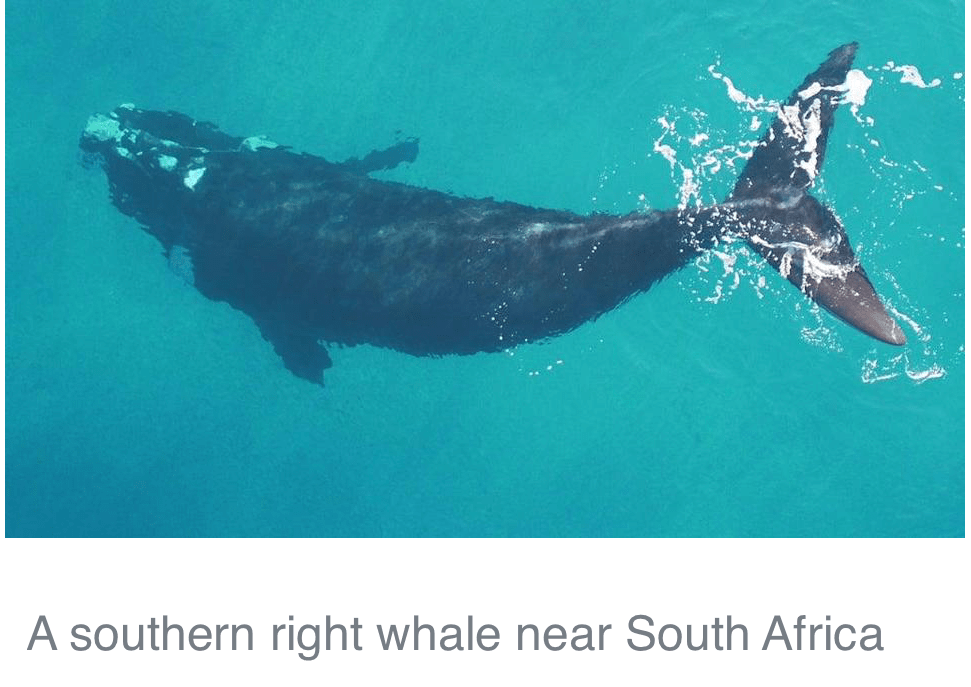
A word for whales. Whales are important as tiller of the oceans. They circulate nutrients that are essential parts of the food chain and in particular nutrients needed by phytoplankton. These serve the same function as leaves, absorbing carbon dioxide and sunlight to create oxygen. As we count on whales doing their bit to maintain the global ecosystem, so they should be able to count on us not to harm them. 

However as has been widely reported, various groups are launching a last-chance bid to stop Shell using shockwaves in the Wild Coast of South Africa – a fragile ecosystem that is a vital whale breeding ground. The applicants, which included Greenpeace Africa and fishing groups, had been seeking to stop the survey on the basis it could cause “irreparable harm” to the marine environment, especially to migrating humpback whales in the area. (Yahoo News)

Do check out this Green Peace petition:  https://pages.greenpeaceafrica.org/shell-wild-coast?_ga=2.165965239.820789156.1640103673-781902025.1640103673

Green Tau: issue 28 

22nd December 2021

Sugar sweet?

Sugar cane is the source of about 80% of the sugar consumed across the world. It is a plantation crop that goes back centuries and has a history linked with exploitation and slavery. As a plantation crop it has been responsible for the deforestation of tropical landscapes and as demand for sugar continues to increase this is still on going – especially in Brazil where sugar cane is also grown to produce the fuel ethanol: ‘The Atlantic Forest, or Mata Atlântica in Portuguese, is found on the Atlantic coast of Brazil. It should be full of life, supporting thousands of species of plants and animals, many of which are found nowhere else. It’s different from the Amazon rainforest but equally important. Around 500 years ago it would have covered an area of more than 1.5 million square kilometres. Now, more than 90% of it is gone, cleared mostly for timber, pasture and sugar.’ (https://www.nhm.ac.uk/discover/sugar-a-killer-crop.html)

 Sugar cane occupies approximately 2.4 million hectare world wide. 70% of production is for domestic use (which for example would include the production of ethanol in Brazil) but for some countries the production of sugar for export constitutes a significant part of their national income eg Cuba and Belize. Volatile global prices makes for great uncertainty for local growers/ plantation workers who can do little to control their incomes. Whilst the premium paid through the Fair Trade scheme undoubtedly helps, the production of fair trade sugar – 528,000 tonnes – is a fraction of the 200 million tonnes of sugar  produced globally (2019). 

Sugar cane as a crop, aside from the issue of deforestation, has unwanted adverse affects on people and the environment.

  • it requires large amounts of water, often taking the water away from other crops and  natural vegetation 
  • It requires large amounts of pesticides and fertilisers which flow into the water system damaging other ecosystems 
  • Before harvesting, old leaves are burnt off to assist the harvesting process. This kills wildlife, important natural organisms and pollutes the air. As nutrients in the leaves are burnt rather than being returned to the soil, the fertility of the soil is reduced requiring additional fertilisers to be used
  • It is an annual crop requiring the land to be cleared each year and the exposed soil is then susceptible to loss during the rainy season and with not roots to absorb moister, flooding too increases.
  • It is a labour intensive crop where child labour still happens.

Alternative sugar crops are grown, of which the main one is sugar beet – accounting for about 20% of world production – which is grown mainly in Europe. It too can be reliant on pesticides and fertilisers: organic sugar beet is grown in Europe but not as yet in Britain. Other sugar crops include coconut palms and oil palms where the sap is harvested. 

There is a further downside to all sugars: sugar damages our health, causing major problems such as heart disease, type 2 diabetes and tooth decay. The WHO urges that sugar consumer should be reduced to between 5 and 10% of a person’s daily calorie intake. The NHS advises sugar consumption be limited to less than 30g per day: https://www.nhs.uk/live-well/eat-well/how-does-sugar-in-our-diet-affect-our-health/ Yet sugar consumption globally is still rising. The USA tops the charts with an average consumption of 126.4g per person per day. Britain comes in at number 7 with 93.2g per day (2019).

As well as being concerned about the damage sugar growing causes to the environment and it’s work force, should we be acting to reduce the demand for this commodity?

“Too often, divisions in civil society can be exploited by powerful commercial interests. ‘Don’t go too hard on health, as it will threaten jobs’ or ‘Don’t raise pollution standards, as they’ll be undercut by another country somewhere’ or ‘Don’t mention labour pay rates, or we’ll drop the preferred status.’ Or ‘Don’t stop sugar beet as it’ll affect tourism brought by geese feeding on sugar beet tops in winter’. Such horse-trading happens in realpolitik, of course, but we think now is the time to take the sugar debate back to ecological public health basics: land, labour, capital, health and culture…We see this future food world as one where less not more sugar is produced and consumed, and land use and labour are liberated from the folly of sugar production. This is hardly a vital product. It has been injected into culinary culture on a scale it does not deserve. Nor should a sugar reduction strategy be compensated for by a growth in use of artificial sweeteners which industry constantly seeks. Artificials, whether relatively ‘old’ such as aspartame or ‘new’ such as stevia, merely normalise the sweetening of diet as well as maintain the processing industries’ option to sweeten a product to sell it.”  https://foodresearch.org.uk/wp-content/uploads/sites/8/2015/06/Does-Sugar-Pass-the-Environmental-and-Social-Test-23-june.pdf

Green Tau: issue 27

15th December 2021

“Palm oil piece”

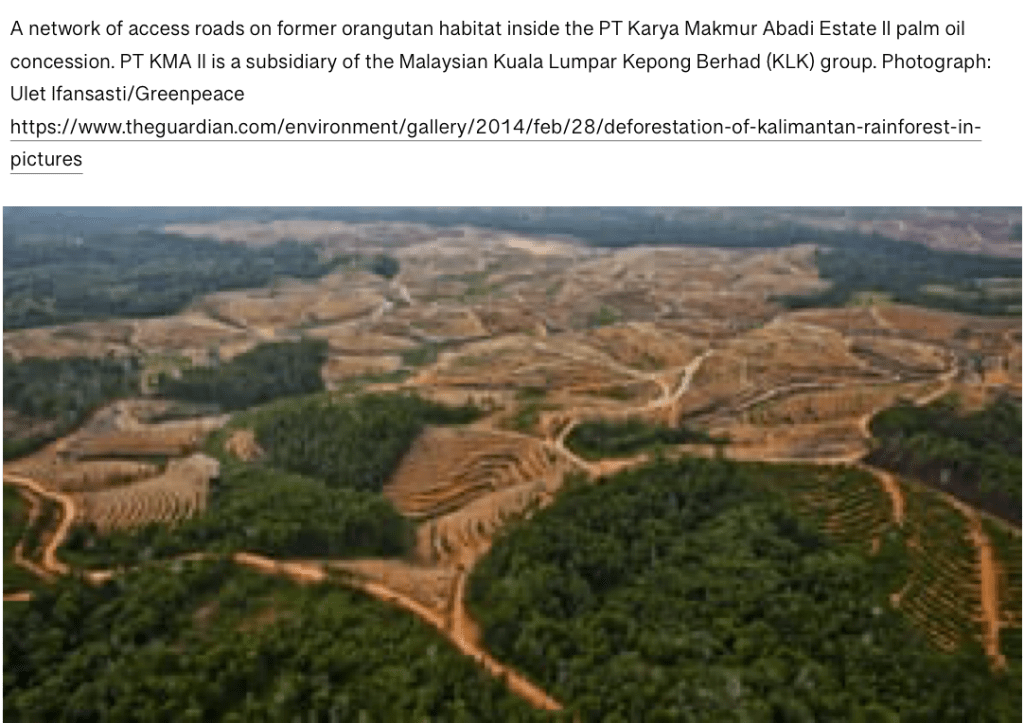
Palm oil comes from the palm oil tree which grows in tropical regions of the world. Its fruit – both flesh and kernel – are processed to extract the oil. The oil is attractive for many reasons. 

It contains no trans fats making it healthier than other oils.  It is a good (and affordable) source of vitamins A and E and antioxidants. It is resistant to oxidisation giving it, and things made with it, a long shelf life. It is a highly productive crop: where sunflowers produce 0.7 tonnes of oil per hectare, palm oil produces 4 or more tonnes. It can be used to make a wide range of products from soap to biscuits, toothpaste to icecream, lipsticks to pizzas, pet foods to chocolate. Some is also used as a bio fuel.

Not surprisingly it is in high demand. Global production has increased from about 2 million tonnes in 1960 to 70 + tonnes in 2018 (https://ourworldindata.org/palm-oil). Production on this scale has led to vast areas of land being repurposed for palm oil plantations – with individual plantations covering 10,000 hectares (approximately 10,000 international rugby pitches or a little smaller than Jersey).  

Monoculture on this scale comes with many environmental issues, that lead to droughts, wild fires and flooding – and require widespread use of fertilisers and pesticides which pollute both water supplies and the air.  These detrimental effects are further compounded when the land cultivated involves the destruction of native forests. An estimates 5% of tropical deforestation is attributable directly to oil palm plantations  although on a positive note, the annual loss is decreasing as countries and companies respond to public criticism (https://palmoilalliance.eu/palm-oil-deforestation/).

In places such as Borne and Sumatra much of the land is covered with virgin forest which is home to many plant and animal species and notable home to large mammals such as orangutans, tigers, rhinos and elephants. Expansion of human enterprises removed the equivalent large mammals many centuries ago. One hopes that we will not allow the same to happen again.

On the other hand palm oil production is an important cash crop for many developing economies. As with the cultivation of cocoa beans (https://greentau.org/2021/12/11/green-tau-issue-26/) the profitability of this crop often does not benefit the workers on the ground. In response to both this and the threat to biodiversity – especially orangutans – some consumers and manufacturers actively avoid palm oil. The following logos are used  by

https://www.palmoilfreecertification.org/

Iceland Foods and the https://orangutanalliance.org/

Ethical Consumer has produced a list of manufacturers who avoid the use of palm oil – or use  sustainably sourced palm oil: https://www.ethicalconsumer.org/palm-oil/palm-oil-free-list

The main industry certification scheme for sustainable palm oil is provided by

The Roundtable on Sustainable Palm Oil. However its scheme is not always transparent, and includes companies who are working towards sustainable production. As with cocoa beans, companies can use the certification if they pay the premium that pays for sustainable production somewhere within the supply chain. For more information see https://www.ethicalconsumer.org/food-drink/what-rspo

Traidcraft for one, did not feel that RSPO assured a fair trade product. They have established their own small scale certification platform, Fair Palm through their work with Serendipalm in Ghana. Here oil palm growers use regenerative farming techniques growing a mix of trees and shrubs that provides a range of sustainable – organically grown – crops. In addition the processing of the palm oil fruits is kept small scale so as to employ people rather than automated machines. This video clip shows the process of change from monoculture to agroforestry:  https://youtu.be/moRmOu634rk

If consumer power has already seen a reduction in the rate of deforestation , continuing consumer power should be able to demand truly sustainable and fairly traded palm oil. Careful research will be needed  as the presence of palm oil products may not always be obvious. Palm oil may be hidden under the general title of ‘vegetable oil’ or may be given a chemical name such as aluminium stearate, ammonium Lauretta sulphate, capric glyceride, or ascobyl palmitate. Ethical Comsumer’s palm oil list will help you evaluate which products you wish to buy and which you might prefer to avoid. 

Counting on … day 31

14th December 2021

It is a month since the end of COP26  on climate change. It can seem as if it was something that happened in a different time. It can feel as if it was blip that changed nothing.  Various environmental and faith groups have since then held reflections, trying to evaluate what happened. One of these took place at the the a Franciscan friary at Hilfield. Below is a link to a YouTube recording of their gathering. The first part by Andy Lester of A Rocha gives a very concise overview of what the COP objectives were and how they were and were not met. Both A Rocha and Franciscans are identified by their concern for the world and its environment,  and  for justice. Both agree that faith groups have an important role to play in standing up for the well-being of the environment and all our brethren.