The Green Tau: issue 20

Biodiversity and food production 
Last week’s Green Tau weekly began a mini series looking at biodiversity. We noted that despite the relative smallness of humanity in terms of global biomass, we humans are dramatically and drastically altering the planet’s biodiversity. This week I want to look at the impact food production has on biodiversity. 

Over the millennia humans have domesticated both animals and plants, selecting and breeding species, and developed farming practices that would best provide food. In the process, humans extended their control over land that had previously been wild, which in turn has limited the land available for wild animals and plants. 1000 years ago, less than 4% of habitable land was farmed. This increased over the centuries, and particularly so from the mid 1800, when the area of farmed increased from under 25%  to the current 50%. (Habitable land is land not covered by glaciers, 10%, nor barren land such as deserts, sand dunes, bare rock, salt flats etc, 19%). In Europe the area of farmed land is now declining slightly, whereas it is continuing to expand in Africa, Asia, China and parts of South America.

Currently there is much media coverage about the clearance of the rain forests in Brazil to create new agricultural land plus accompanying access roads. This process destroys unique habitats with the loss of many plants, animals, birds and insects etc. It also destroys the millennia old way of life of indigenous people.  It is easy to see how such expansion of farming land exacerbates biodiversity loss. The same problem also arises in Africa, Asia and China. Mangroves have also been cleared to make way for shrimp farms, palm oil plantations and rice fields. 

A perhaps previously ignored consequence of expanding farming into previous areas of wilderness, is the increased contact between wild and domesticated animals. This allows diseases to spread more rapidly between the different species. What might be an insignificant virus infecting a wild animal can become a highly infectious virus in domestic animals. These virus can then spread to humans. Such zoonotic diseases include the Ebola virus, SARS and the current Covid 19.

Over the millennia, much of the UK has also been deforested to make way for farm land. Tree coverage  in the UK stands at about 12% which is much lower than most other countries in Europe. Top of the league is Finland with over 50% tree cover; Spain and Portugal are around 35%; France, Germany and Switzerland around 30%. As trees provide a great many habitats for other plants, birds, animals and insects, as well being good stores of carbon, the government’s climate advisers now recommend  tree cover should be increased to 17-19%. As well as planting new trees, it is also important that existing trees are protected: it takes many years for a tree to reach maturity and whilst they are still saplings they do not provide much habitat for other wild life. 

It is not only trees that have been cleared to make way for farming in the UK. Wetland areas such as marshes and bogs, have been drained. This destroyed the unique habitats of many different plants, insects and animals. In the same way, clearing hedgerows has had a detrimental affect on biodiversity. There is now a growing awareness of the importance of restoring and maintaining a diverse range of habitats to support different plants and creatures. Where the area of a particular habitat becomes too small, it may fail to maintain populations of plants and creatures at a viable level. However creating a corridors between habitats enables larger populations to be supported. Hedgerows perform this task on a small scale, as can railway lines and road verges.

Not only has farmland been expanding over the centuries, but what is farmed has changed. Increasing global trade, colonialism and the intensification of farming, has produced a agricultural system that now grows a very limited number of plant species. Two thirds of the world’s food comes from just nine plants: sugar cane, maize, rice, wheat, potatoes, soybeans, oil-palm fruit, sugar beet and cassava. 

Such a concentration makes our food supply vulnerable to the effects of climate change and diseases. This year’s durum wheat crop has been much reduced because of  exceptionally dry conditions in Canada (the harvest is down by a third) and wet ones in Europe. Nearly half of all the bananas grown in the world are one variety, Cavendish, even though there are approximately 999 other varieties. The Cavendish banana is now threatened by a fungus which could wipe it out.  

This over concentration on a limited number of species has meant that many local and older plant varieties have been marginalised – another form of biodiversity loss. However the value of such plants is now being recognised. They can provide alternative crops better suited to local growing conditions and/or changing climatic conditions. Such species include quinoa, which  can be grown at high altitudes, teff which like quinoa can be grown at high altitudes and where water supplies are limited, millet which can tolerate high temperatures, and einkorn which needs less nitrogen – ie can grow in less fertile soils – than wheat.

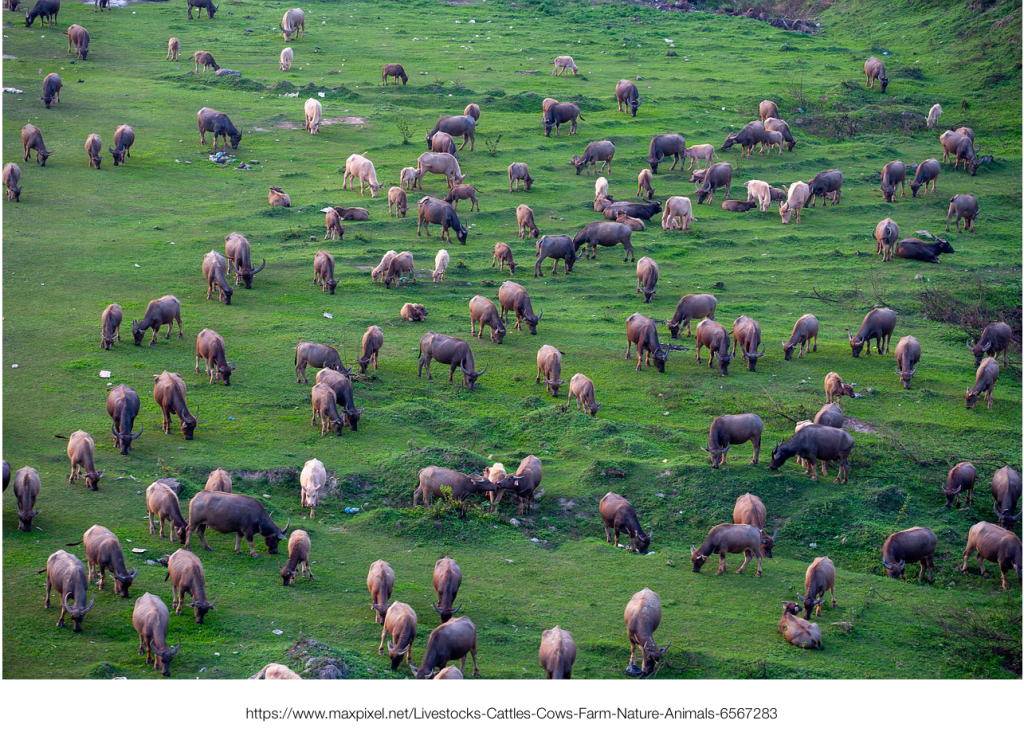
The same pattern of concentration occurs in animal farming too. Nearly all the world’s diary cows are based on one single breed, the Holstein. As with arable crops, there are advantages of protecting and promoting rare and ancients breeds of farm animals. But in terms of biodiversity what is more incredible is the sheer biomass of farm animals. They account for 60% of all mammals on the planet (of which cattle and buffalo  account for 40%); we humans account for 36% whilst the remaining wild mammals a mere 4%.

Globally 77% of agricultural land is used to raise livestock. This includes land used to grow animal feed. Yet this 77% produces less than  20% of the world’s calories. Land used for livestock could be better used to produce plant based food that would feed a greater number of people and/ or rewilded to increase biodiversity. Factoring in the carbon footprint of livestock, especially cattle, there are even more benefits to be gained from reducing livestock levels. 

Count Down

 Action 77: Plant cuttings. It is not conventional but I take cuttings of plants in the autumn: rosemary, sage, and penstemon. I find a soft side shoot and pull it away from the main stalk so that it has a ‘heel’ – ie a bit of the harder stalk comes away with it. I then remove  any leaves from the bottom half of the shoot and place it in a bottle of clean water. I keep the water topped up/ and or change it if it looks green. After a couple of weeks, roots will begin to form. When there are several long roots, I pot the new plant up and over winter it indoors ready to plant out next spring. 

Count Down

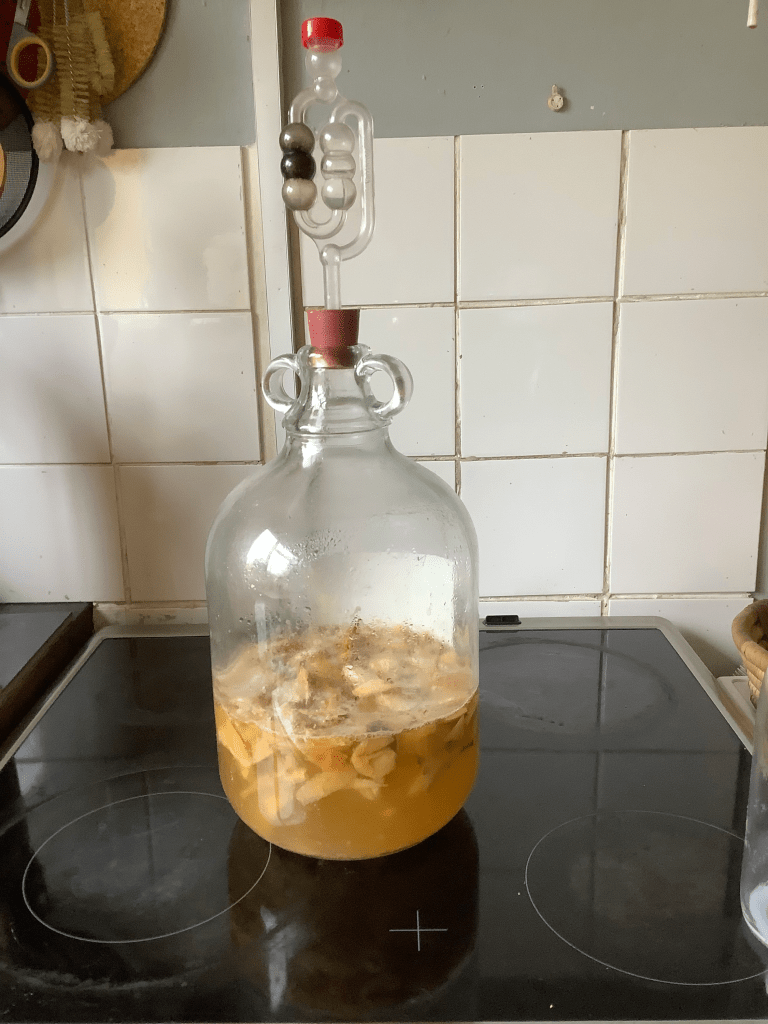
Action 76: Have ago at making your own cider vinegar. Start with a large class jar – the best is demi  john. As you use apples, put the cores into the jar. Add a little water and a sugar lump and leave the jar open so that natural yeasts can start the fermentation process. As you add more apple cores, add more water. I aim for about half to two thirds water to apple mixture. Add more sugar: I add two or three sugar lumps (teaspoons of sugar are just as good but potentially messier) for every cup of water (approx 200ml). Once a bit of froth is developing on top of the apple mixture, I then insert wine valve. If  you don’t have one, then cover the jar with a loose lid or muslin cloth to keep out any fruit flies. 

Once the jar is 3/4 full leave for two or three weeks. Then strain the liquid into a clean jar and cover with muslin. Leave so that more natural yeast can start the souring process. A ‘crust’ may form on top or fine strands of mucus. This is beginnings of the vinegar agent or ‘mother’. This make take several weeks: do t despair. Eventually it will form a glutinous disk that sinks to the bottom of the jar. 

Test your vinegar – if it tastes good, bottle it. Save the mother, keeping it submerged in some of the vinegar you have made. Next time you can add the mother to your new batch of fermented apple juice and the vinegar transformation will be quicker.

Count Down

Action 75: Split established perennial plants to create new plants. Plants  such as golden rod, Japanese anemones, daisies, cranesbill, echinops  and the like, expand their root base each year and spread out. In the autumn you can uproot them and then pull or cut them in half and replant each part as a new plant – or share them with neighbours. Whilst the autumn weather is still mild, they will happily re-establish themselves. 

Rejoice!

May my heart be an altar  

pure and simple

where I praise God.

Not in oil fields 

but in wheat fields 

does my heart rejoice.

Not stuck behind the wheel

but freely on two wheels

does my heart rejoice.

Not coddle by a boiler 

but warmed by the sun 

does my heart rejoice.

Not gorging on steak 

but feasting on beans 

does my heart rejoice.

Not jetting above the earth 

but swimming in the water 

does my heart rejoice. 

Nor gasping on fumes 

but smelling fresh rain 

does my heart rejoice.

Not imprisoned by concrete 

but shaded by trees 

does my heart rejoice.

Not deafened but explosions 

but transfixed by bird song 

does my heart rejoice.

Not by hoarding everything 

but sharing with all 

does my heart rejoice.

.

Accept my praise, 

and my joy, 

Lord of my heart.

Falling in Love 34

A green tau/ cross


Today is the feast of St Francis, known as the patron saint of environmentalism. He was someone who was constantly falling in love with God, with the world around him, with all the diverse creatures and people he met – many of whom were despised by others – and with simplicity and poverty. Indeed he declared himself betrothed to Lady Poverty.

Let us follow his example of delighting all that is around us, of pursuing a life of simplicity, and of joyfully loving God.

Sustaining local biodiversity  

Whilst urban areas are less biodiversity than wild areas, they do offer a

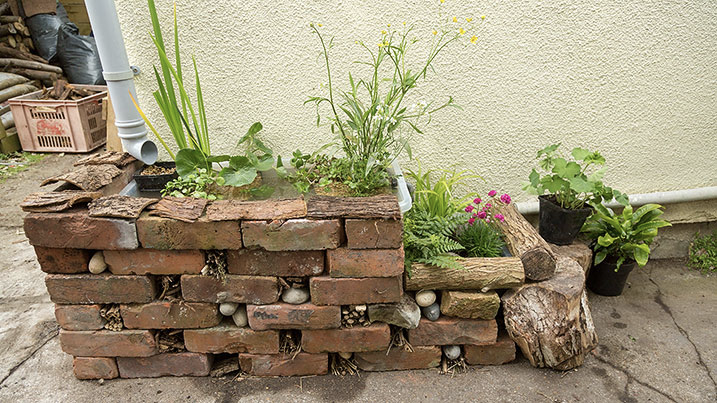
surprising range of different habitats and particularly in relation to parks and gardens, a diverse range of trees and flowering plants. This can be very beneficial for insects and species reliant on them. Whether we have a garden, a balcony or just a window sill, we can add to the biodiversity of where we live.

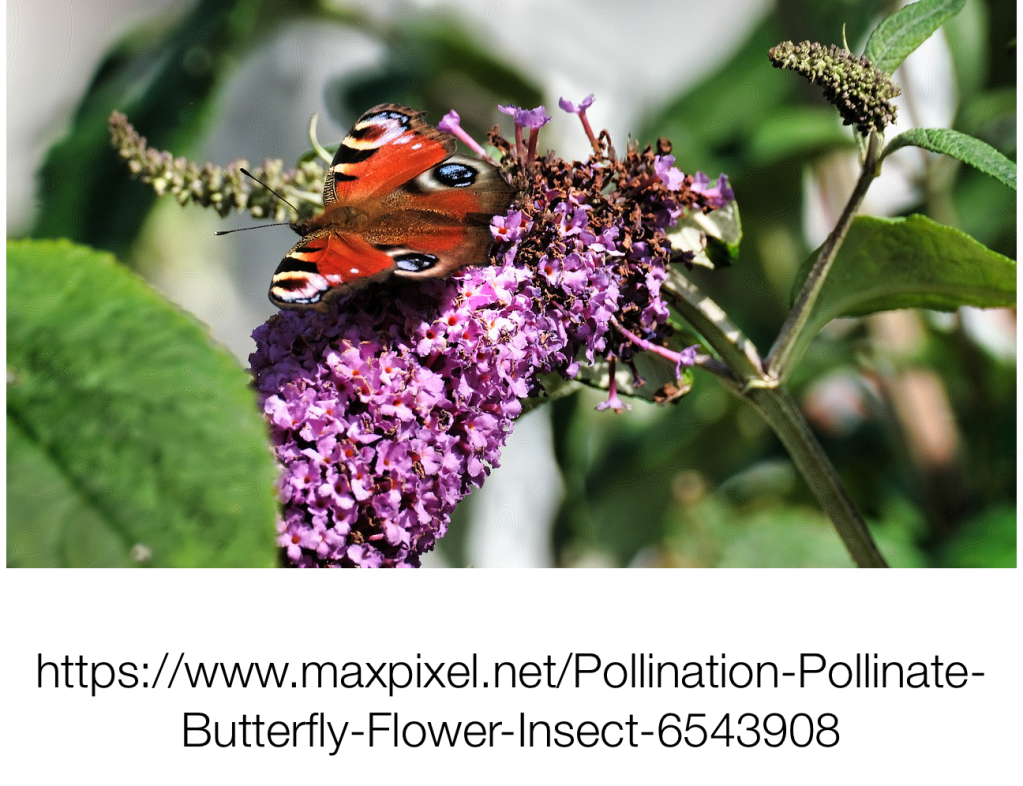
  • Opt for a selection of plants that ensures that throughout the seasons something is in bloom – this is beneficial for insects, such as bumble bees, that do not hibernate.
  • Avoid using pesticides. By their nature they are poisonous to some creatures and may well be killing off a food supply which something else needs. Without aphids, lady birds can starve. Ditto caterpillars and small birds.
  • Don’t buy or use peat: depleting peat bogs both depletes the biodiversity of another habitat, it also destroys a highly effective carbon store.
  • Again if you have space, why not install a green roof?
  • Plant a tree/ trees or a hedge. These provide a whole range of habitats for different insects, birds and other creatures.
  • If you haven’t got a garden, see if you can give any support for your local park or green space. Some will have programmes for volunteers. 
  • Or consider supporting a wildlife charity such as the Woodland Trust, the Wildfowl and Wetlands Trust, or your local Wildlife Trust.
  • Visit parks and gardens that support biodiversity and be inspired. Or visit a Rewilding project. 

Count Down

Action 73: World Habitat Day – this year the UN Habitat’s theme  is  Accelerating urban action for a carbon-free world.  Cities are responsible for some 70 percent of global carbon dioxide emissions with transport, buildings, energy, and waste management accounting for the bulk of urban greenhouse gas emissions. The future of our planet depends on national, regional and local governments and organisations, communities, academic institutions, the private sector and all relevant stakeholders working together to create sustainable, carbon-neutral, inclusive cities and towns.

 Check out your local authority’s climate action plan – does it seem up to the challenge?

Sunday Reflection

3rd October 2021, fifth Sunday in creationtide

Genesis 2:18-24

Then the Lord God said, ‘It is not good that the man should be alone; I will make him a helper as his partner.’ So out of the ground the Lord God formed every animal of the field and every bird of the air, and brought them to the man to see what he would call them; and whatever the man called each living creature, that was its name. The man gave names to all cattle, and to the birds of the air, and to every animal of the field; but for the man there was not found a helper as his partner. So the Lord God caused a deep sleep to fall upon the man, and he slept; then he took one of his ribs and closed up its place with flesh. And the rib that the Lord God had taken from the man he made into a woman and brought her to the man. Then the man said,

‘This at last is bone of my bones

   and flesh of my flesh;

this one shall be called Woman,

   for out of Man this one was taken.’ 

Therefore a man leaves his father and his mother and clings to his wife, and they become one flesh.

Hebrews 1:1-4, 2: 5-12

Long ago God spoke to  our ancestors in many and various ways by the prophets, but in these last days he has spoken to us by a Son, whom he appointed heir of all things, through whom he also created the worlds. He is the reflection of God’s glory and the exact imprint of God’s very being, and he sustains all things by his powerful word. When he had made purification for sins, he sat down at the right hand of the Majesty on high, having become as much superior to angels as the name he has inherited is more excellent than theirs.

Now God did not subject the coming world, about which we are speaking, to angels. But someone has testified somewhere,

‘What are human beings that you are mindful of them,

   or mortals, that you care for them? 

You have made them for a little while lower than the angels;

   you have crowned them with glory and honour, 

   subjecting all things under their feet.’

Now in subjecting all things to them, God left nothing outside their control. As it is, we do not yet see everything in subjection to them, but we do see Jesus, who for a little while was made lower than the angels, now crowned with glory and honour because of the suffering of death, so that by the grace of God he might taste death for everyone.

It was fitting that God, for whom and through whom all things exist, in bringing many children to glory, should make the pioneer of their salvation perfect through sufferings. For the one who sanctifies and those who are sanctified all have one Father. For this reason Jesus is not ashamed to call them brothers and sisters, saying,

‘I will proclaim your name to my brothers and sisters,

   in the midst of the congregation I will praise you.’

Mark 10:2-16

Some Pharisees came, and to test him they asked, ‘Is it lawful for a man to divorce his wife?’ He answered them, ‘What did Moses command you?’ They said, ‘Moses allowed a man to write a certificate of dismissal and to divorce her.’ But Jesus said to them, ‘Because of your hardness of heart he wrote this commandment for you. But from the beginning of creation, “God made them male and female.” “For this reason a man shall leave his father and mother and be joined to his wife, and the two shall become one flesh.” So they are no longer two, but one flesh. Therefore what God has joined together, let no one separate.’

Then in the house the disciples asked him again about this matter. He said to them, ‘Whoever divorces his wife and marries another commits adultery against her; and if she divorces her husband and marries another, she commits adultery.’

People were bringing little children to him in order that he might touch them; and the disciples spoke sternly to them. But when Jesus saw this, he was indignant and said to them, ‘Let the little children come to me; do not stop them; for it is to such as these that the kingdom of God belongs. Truly I tell you, whoever does not receive the kingdom of God as a little child will never enter it.’ And he took them up in his arms, laid his hands on them, and blessed them.

Reflection

At the moment I am each week creating a short film for a series called Space on Sunday. These episodes are for young families in the temporary absence of Sunday School, and each week include a story related to the Sunday’s readings. I looked at this Sunday’s selection and it occurred to me that their overall theme was asking the question, What is it to be human? And for what purpose did God create us?

I think God, who loves the world they created, wanted to create a being that could love the world too. And in many ways God created a being that was God-like: humans have the ability to love the whole of creation; we can learn to understand and comprehend its diversity and its interconnectedness. Humans have the ability to be creative and imaginative, and we can take pleasure from things of beauty.  We can visualise what things were like in the past and what they could be like in the future. Humans can create and value relationships. We can not only produce off-spring but can plan and work to create a better future for them. 

 I think God created us to be co-creators of the ongoing development of the world as a living organism. And I think God created us as beings who can be in relationship with God. 

Turning to the readings. The extract from Genesis tells us that humans were not created to be either alone/ lonely nor to be left to cope on their own. Instead it is God’s intention that we should have helpers and partners. Helpers are not restricted to fellow humans, but include creatures – to which we could also add inanimate things such as the sun, wind and water which provide us with the power. 

The passage from Hebrews reminds us that in Jesus we have the perfect pattern or model of what a human should be. Further it reminds us that in Jesus we see the image of God, and that through his death and resurrection, Jesus redeems, or resurrects, that bit of God’s glory that exists somewhere in all of us, and so we are all called brothers and sisters of the one Heavenly Father. 

 Mark’s gospel gives us an example of the difference between how humans can be and how they should be; the difference between human weakness and God’s ambition for us. This is followed by an example of human narrowness and God’s openness. To be truly human is to be truly open to God.