Counting on … day 67

15th March 2024

The UK government runs a National Adaptation Programme which assesses the risks arising from climate change and how best we can adapt to reduce of cope with these risks – as well as building on any opportunities where we can gain from change. These plans are reviewed and every five years a new National Adaptation Programme is produced. NAP3 covers the period from 2023 to 2028. It includes items such as:

  • “protecting the natural environment
  • supporting business in adapting to climate change
  • adapting infrastructure (for example, our electricity networks and railways)
  • protecting buildings and their surroundings (for example, from hotter temperatures)
  • protecting public health and communities
  • mitigating international impacts on the UK (for example, on food supplies imported from abroad)”

https://www.gov.uk/government/publications/third-national-adaptation-programme-nap3/understanding-climate-adaptation-and-the-third-national-adaptation-programme-nap3

But are the plans sufficiently stringent? 

“Julia King, chair of the adaptation subcommittee of the CCC, said: “The evidence of the damage from climate change has never been clearer, but the UK’s current approach to adaptation is not working. The national adaptation plan published last July, known as Nap3, was the third in a series of five-yearly updates in response to an assessment of climate risks, required under the 2008 Climate Change Act, from the Department for Environment, Food and Rural Affairs.

“But the CCC found that although it was an improvement on previous efforts, the new plan was still inadequate and required improvement before the next scheduled update in 2028.

“King said: “Defra needs to deliver an immediate strengthening of the government’s programme, with an overhaul of its integration with other government priorities such as net zero and nature restoration. We cannot wait another five years for only incremental improvement.”” https://www.theguardian.com/environment/2024/mar/13/uk-climate-crisis-plans-fall-far-short-of-what-is-required-ccc-says?CMP=Share_iOSApp_Other

For further reading – https://www.bbc.co.uk/news/science-environment-66148239

Counting on … day 50

21st February 2024

1.5C is the level of warming within which we should be trying to stay if we are to avoid an unbearably worse deterioration of the global climate. This figure is the product of over 6,000 scientific references, and was prepared by 91 authors from 40 countries. https://en.wikipedia.org/wiki/Special_Report_on_Global_Warming_of_1.5_°C

This is not to say that even with global warming at 1.5C there won’t be adverse effects. The extreme hot summer temperatures, floods, wild fires, droughts, and storms that we have experienced over the last few years will now be the norm. Glaciers, sea ice and ice caps will continue to melt and disappear, causing rivers to dry up in the summer, and elsewhere raising sea levels. The change in climate is already altering natural habitats reducing numbers of plants, birds, animals, insects etc, and having similar adverse effects on agriculture. Food and water security are already being threatened. Warming oceans is reducing marine life. All this will increase as temperatures rise.

Each fraction of a degree of further global warming  will accentuate these problems for all life forms. The charts show  how much greater would be the effects of 2C warming over 1.5C. 


Green Tau: issue 87

8th February 2024

What is the purpose of running a business?

A business is an enterprise that sells something it makes or sells a service it provides. It can be a one person operation or a multinational employing thousands. 

The business operation will incur costs and will remain viable provided it covers those costs. The business may need capital to get started or to expand it operation, and it may need loans to balance out peaks and troughs in its cash flow. Usually the business will over time earn more from what it sells than its costs and so makes a profit. Such profits are usually kept by the people owning the business. In some cases that might be some or all of the people who work in the business, in some cases it might be both employees and customers (eg a cooperative), and in some cases it might be external shareholders.

The success of a business is usually equated with its ability to make a profit. A successful business makes large profits, less successful businesses make smaller profits, and those that make no profit close down. 

But is profit the only way of measuring success? What about customer satisfaction? What about being a good employer? What about the business’s contribution to the stability and wellbeing of the local community? 

Thames Water makes high profits and has the worst for receiving complaints from customers. Might a more successful water company be one that best provides what customer need – clean, reliable drinking water?

Amazon is highly profitable company but many of its employees are both poorly paid and subject to stressful working conditions. Employees feel they are being constantly monitored and that even taking time to go to the toilet is counted against them. Might a  successful company be one that provides long term secure employment that gives job satisfaction, wages that support comfortable living standards, and credible pension? It could be us or our neighbour or our children who are looking for gainful employment.

Small rural communities – and increasingly deprived urban communities – are finding that they have no local bank, fresh food shops, dental surgery etc as the pressure to maintain profits pushes business to leave an area or to downsize. This is not good for the local community and can become a spiral where the more businesses leave, the more quickly the area becomes depressed and the more other businesses leave. With the businesses go local jobs. The heart of the community is quickly lost. Might a successful business be one that adds vitality to its community, is valued by local people and keeps jobs and money circulating with the community?

Actually in all three of these scenarios one might feel that the customer’s wishes were not be valued by the businesses. What has happened to the understanding that ‘the customer is always right’? How often have you been held on a phone call to have the oft repeated – but barely credible – ‘Your call is important to us’ automatically relayed to you? 

It does seem that the idea that the main purpose of a business is to make a profit does not benefit the consumer nor the community. Further what we are now increasingly seeing, is that the primacy of profit is also detrimental to the environment. 

In Herefordshire the large number of industrial scale chicken farms has led to high levels of effluent running into the River Wye, polluting it with phosphorus and killing its wildlife. 

In Spain strawberry growers have been abstracting so much water for their crops, that the Doñana national park – a renowned wetland area – is being depleted of water threatening the survival of many plants and creatures including flamingos, spoonbills and the glossy ibis. 

Globally the burning of fossil fuel products has triggered an escalating climate crisis threatening all forms of life, whilst the fossil fuel companies have continued to make recording breaking profits. 

One approach to this problem is to replace the traditional bottom line of ‘loss or profit’ with a ‘triple bottom line’ which measures the business’s impact over three area: economic, environmental and  social – or the 3Ps: people, planet and profit. It is however harder to find ways of measuring the loss and profit aspects of people and planet, and of doing so in a way that allows for comparison across businesses. How do we put a price on community stability or clean air?

Suffolk Libraries commissioned a research company to assess the value of their libraries. Using surveys, focus groups and modelling, the researchers found ways of measuring the social impact of the services the libraries offered that translated into monetary values. They concluded that for every £1 spent, the social value gained was £6.07.

The environmental impact of a business might be measured in terms of carbon emissions, or in terms of the cost of making good damage to the environment. If the chicken farms in Herefordshire has to pay the cost of cleaning and revitalising the River Wye, it would make a significant impact on the bottom line of their businesses. In 2021 local MPs wrote to the government asking for £15 million to clean up the river.

One  organisation that has developed a way of measuring  better business

practices is B Lab. This not-for-profit international organisation has developed a certification system that “measures a company’s entire social and environmental performance. From supply chain and input materials to charitable giving and employee benefits, B Corp Certification verifies that a business is meeting high standards of social and environmental performance, transparency, and accountability.” Successful businesses become certified as B Corps. (For more info – https://bcorporation.uk/)

The campaign for better business practices is ongoing and seeks to include not just those businesses with a conscience, but to extend the expectation of good practice in all the 3Ps, to all businesses. B Lab UK and a coalition of more than 2400 businesses, is campaigning to amend Section 172 of the Companies Act. At present this section directs  businesses should prioritise the success – ie the profitability – of the company for the benefit of its members – ie shareholders. The proposed amendment would direct that businesses should prioritise the purposes – ie the social, economic and environmental impacts – of the company. (For more info – https://betterbusinessact.org/   and https://thehumanbusiness.co.uk/better-business-act/)

 Change in the way businesses operate is both possible and achievable.

Counting on …. Day 28

28th January 2024

Support campaigns that mitigate the climate crisis

We know many of the causes of the climate crisis and by addressing these, we can reduce the scale and impact of the climate crisis. However such  mitigation is not always popular when they threaten vested interests. Solutions are possible but sometimes it is necessary to campaign to win over government support and to give a voice to marginalised groups.  

The biggest contribution to the climate crisis comes from the fossil fuel industry and the burning of its products. Traditionally the fossil fuel industry has produced huge profits for investors, with no obligation to make recompense for the pollution caused. They are multi national organisations which exert great pressure on governments and the public through lobbying and advertising.

Nevertheless campaign groups are able to affect change in the practices of fossil fuel companies that benefit the climate. 

Climate Action Network explains  how they “successfully stopped the Cambo oil field by making Shell pull out of the project. No one act alone stopped this project. From direct action to legal pressure, political lobbying to media scrutiny, local community outreach to online actions – every act added up to force the industry to face a ‘death knell’ for fossil fuel extraction in the North Sea. And we can do it again.” 

Now they are continuing to campaign against the government’s decision to approve the development of the Rosebank oil field – You can support the case by adding your name here.

I am part of Christian Climate Action and regularly campaign against companies, projects and practices that contribute to the climate crisis – https://christianclimateaction.org/

You can also be a campaigner by joining groups such as Friends of the Earth, Greenpeace and the RSPB.

For more information on Rosebank – https://www.theguardian.com/environment/2024/jan/04/uk-government-admits-rosebank-oil-will-not-be-kept-in-uk-to-boost-energy-security?CMP=Share_iOSApp_Other

 Counting on … day 305

10th September 2022

Refocusing our environmental lifestyle should also include our finances. We can in small ways influence the environmental protection that financial world gives through our choice of bank, mortgage lender, insurance provider and pension fund. All these financial institutions invest money (our money in fact) to gain a return that finances their product. Where they invest their money can impact the environment. For example if they invest in companies that produce fossil fuels, they are financing the continued production of green house gases. If they invest in companies that manufacture plastic packaging, they are financing the continued production of the commonest form of litter. If they invest in companies that produce tobacco, they are financing the continued production of an addictive and carcinogenic commodity. 

For more insight into the environmental issues around banks see this Ethical Consumer report. They also provide ratings for different financial institutions covering current accounts, savings accounts and mortgages etc. To access these you will need to be a subscriber. 

https://www.ethicalconsumer.org/money-finance/how-your-bank-could-be-funding-global-deforestation-climate-disaster

For more information on pensions and pension funds see https://makemymoneymatter.co.uk/ which strongly advocates swopping your pension as the most effective way of tackling climate change. (However if, like me, you don’t have a portable pension this won’t be possible. Nevertheless you can still keep asking your pension provider to adopt an environmentally responsible approach to its investment strategy). 

Good with Money is another useful website  https://good-with-money.com/

Counting on …day 299 

4th September 2022

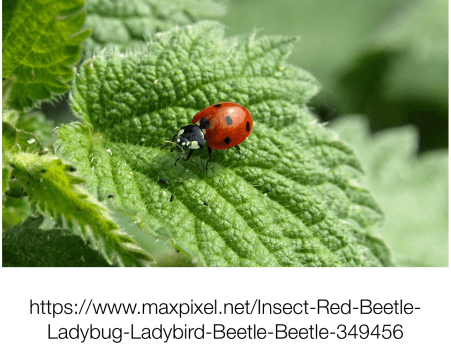
Environmentally kind resolutions can include our gardens – making space and caring for nature. You might set aside part of your garden for wildlife. Climate  change places extra pressures on wildlife so give them a helping hand by encouraging wild plants (weeds) to colonise part of your garden. Nettles are very good for ladybirds and butterflies, dandelions flowers are good for bees and dandelion seeds are tasty food for goldfinches.

For further thoughts see  https://greentau.org/2022/04/04/the-green-tau-issue-39/ and 

Laudate Si: discussion notes 3

“…humanity has changed profoundly, and the accumulation of constant novelties exalts a superficiality which pulls us in one direction… Let us refuse to resign ourselves to this, and continue to wonder about the purpose and meaning of everything.” Section 113

  1. Let’s wonder. What is the purpose and meaning of creation? 

2. Is creation God’s gift to us to do with it what ever we want? 

Has it been given to us so that we can benefit from it, in return for tending it?

Has it been given to us so that we can continue to work with God as co-creators of a still evolving creation?

3. Is creation a stockpile of resources from which we can pick and choose individual bits with no regard for the rest?

If we harvest all the sand eels to make fish oils, do we have a responsibility for puffins and other creatures that rely on sand eels for food?

If we chop down the forest to create grazing land, do we have a responsibility for plants and animals that will die because the land will dry out?

If we replace jungle with palm oil plantations, do we have a responsibility to re-home the orang-utans who lived there?

4. In an ideal world, governments would collaborate and legislate to protect the environment, and to prevent such abuse and misuse of resources. As we do not live in such a world, what can we as individuals and as groups do to protect the environment?

5. Pope Francis reminds us, section 115, that not only has God given us the earth, God has also given us the gift of our fellow human beings. Do we treat them any better than the way we treat rest of creation? 

Can you think of examples of humans been treated as commodities, or as a means to an end?

6. If we fail to treat all human beings with respect and care, are we surprised that humans struggle to care for the environment?

7. Conversely can we properly care for the environment, if we do not also care for the humans who inhabit the same space? 

Can we protect African elephants unless we also pay attention to the needs of the local farmers and businesses who occupy the same land? Can we protect mangroves from clearance for shrimp fisheries unless we provide alternative employment opportunities? Can we rewild grouse moors unless we provide alternative employment for local people?

8. Pope Francis, in section 124, reminds us that God created the first humans not to do nothing, but to tend and till the earth, ie to work. Their work was to assist what grew in the garden and to benefit each other’s well being – and presumably that of the animals too. To work gainfully is a Godly calling – a vocation – for humanity. 

In what ways do you feel that your life fulfils that vocation?

9. “Work should be the setting for this rich personal growth, where many aspects of life enter into play: creativity, planning for the future, developing our talents, living out our values, relating to others, giving glory to God.” Section 127

Do all people have access to such opportunities? Do all people find in their work the means of glorifying God? What prevents people experiencing work in these ways?

Could it equally be that case that some people become so overwhelmed by work, that these benefits are lost?

10. We are learning to understand the concept of sustainable development, and of the sustainable use of resources. Should we also be thinking in terms of sustainable employment?

What might that look like? How might it give a sense of meaning and purpose to life?

11. How might we measure this? In terms of a living wage, of job satisfaction, of the degree of autonomy in making decisions, quality of the working environment, levels of team work and co working?

12. How might we as residents of a comfortable suburb, enable or promote sustainable employment for a greater number of people? 

What questions or reassurances might we seek from employers and producers? How might we use our purchasing power to good effect?

Thank you God

for giving us a vocation 

to be tillers and carers of the earth.

Remind us that it is a vocation we share with 

all that lives on this planet

so that we may be attentive to the needs and gifts of all.

Amen

Proper 16

21st August 2022

(The readings follow on after the reflection)

Reflection 

Both the psalm and the passage from Jeremiah concur: God is our creator, the source of being and of our ongoing existence from the beginning. Throughout life God is present and is our sustainer, our rock and stronghold, our hope – and the one who calls us to act. The writer of Hebrews describes the otherness of God – but this is not an otherness that is fearsome and terrifying. Rather it is an otherness reflected in joyful festivities and community and new beginnings and the saving grace of Jesus. Ours is a God who offers hope and salvation!

The passage from Hebrews presents us with a God who can and will transform the world. And in the gospel, we see Jesus doing just that. He transform the life of the woman with a deformed back (and presumably changes too the life of her family) and he transforms the local people’s understanding of God’s law, showing them a different way of interpreting the law and understanding the nature of the world God has in mind.

From our first reading comes the word of the Lord saying “ pluck up and to pull down, destroy and  overthrow, build and plant”. And that is what Jesus does in the gospel reading. He ‘plucks up and pulls down’ the traditional understanding of the law and ‘builds and plants’ something new and life enhancing in its place. Jeremiah, to whom the Lord had been speaking, was given the  hard task of taking that message to the people of Judah. Jeremiah knew that the people had strayed away from correctly understanding and living according to God’s word. He knew that if they continued this way of living that they would be overrun by one of the competing superpowers that then ruled the world. Jeremiah was nevertheless convinced that whatever evil befell God’s people, there would be a time of renewal and restoration – of ‘building and planting’ according to God’s will. 

Sadly Jeremiah did not see this renewal in his own life time,  but he believed that it would happen. Later in the book, it tells how Jeremiah bought some land in Jerusalem – even though the city was about to be overrun by the invading force of the Assyrian army – to show his confidence that there would be a future for God’s people in that city. Jeremiah showed the kind of faith we heard of a few weeks ago in the Letter to the Hebrews – ‘faith [that] is the assurance of things hoped for, the conviction of things not seen’.

 Our hope is that the world will withstand the worst ravages of the climate crisis, and be restored –  be re-built and planted – as intended by God. To demonstrate our faith in this is to actively live as if that future were happening now. We are called to,show how the world could, and can, be transformed. The way we live should be an example of sustainable living. The way we live should demonstrate care for creation, care for wildlife and live stock (including the welfare of donkeys and oxen), and care for our fellow humans especially those whose lives are stunted by the complaints – the ills – of our current age. Those affected by drought and wildfires, by floods and the denuding of the soil. Those affected by disease and war. Those affected by poverty and discrimination. Those affected by rising sea levels and receding rivers.

That is what groups such as Christian Climate Action and Christian Aid are campaigning for. It is what groups like Toilet Twinning and Practical Action are working for on the ground. It is what A Rocha does in enabling Christians to be environmentally aware.
This is what we as Christian communities – churches – can be embracing and supporting. We need to show the confidence that Jesus showed in healing the woman – doing what is right, regardless of what others may be saying, regardless of convention says, because doing what is right is what God wants. We need to show confidence in demonstrating how the world God gave us can be healed.

Jeremiah 1:4-10

The word of the Lord came to me saying,

“Before I formed you in the womb I knew you,
and before you were born I consecrated you;
I appointed you a prophet to the nations.”

Then I said, “Ah, Lord God! Truly I do not know how to speak, for I am only a boy.” But the Lord said to me,

“Do not say, ‘I am only a boy’;
for you shall go to all to whom I send you,
and you shall speak whatever I command you,
Do not be afraid of them,
for I am with you to deliver you,

says the Lord.”

Then the Lord put out his hand and touched my mouth; and the Lord said to me,

“Now I have put my words in your mouth.
See, today I appoint you over nations and over kingdoms,
to pluck up and to pull down,
to destroy and to overthrow,
to build and to plant.”

Psalm 71:1-6

1 In you, O Lord, have I taken refuge; *
let me never be ashamed.

2 In your righteousness, deliver me and set me free; *
incline your ear to me and save me.

3 Be my strong rock, a castle to keep me safe; *
you are my crag and my stronghold.

4 Deliver me, my God, from the hand of the wicked, *
from the clutches of the evildoer and the oppressor.

5 For you are my hope, O Lord God, *
my confidence since I was young.

6 I have been sustained by you ever since I was born;
from my mother’s womb you have been my strength; *
my praise shall be always of you.

Hebrews 12:18-29

You have not come to something that can be touched, a blazing fire, and darkness, and gloom, and a tempest, and the sound of a trumpet, and a voice whose words made the hearers beg that not another word be spoken to them. (For they could not endure the order that was given, “If even an animal touches the mountain, it shall be stoned to death.” Indeed, so terrifying was the sight that Moses said, “I tremble with fear.”) But you have come to Mount Zion and to the city of the living God, the heavenly Jerusalem, and to innumerable angels in festal gathering, and to the assembly of the firstborn who are enrolled in heaven, and to God the judge of all, and to the spirits of the righteous made perfect, and to Jesus, the mediator of a new covenant, and to the sprinkled blood that speaks a better word than the blood of Abel.

See that you do not refuse the one who is speaking; for if they did not escape when they refused the one who warned them on earth, how much less will we escape if we reject the one who warns from heaven! At that time his voice shook the earth; but now he has promised, “Yet once more I will shake not only the earth but also the heaven.” This phrase, “Yet once more,” indicates the removal of what is shaken– that is, created things– so that what cannot be shaken may remain. Therefore, since we are receiving a kingdom that cannot be shaken, let us give thanks, by which we offer to God an acceptable worship with reverence and awe; for indeed our God is a consuming fire.

Luke 13:10-17

Now Jesus was teaching in one of the synagogues on the sabbath. And just then there appeared a woman with a spirit that had crippled her for eighteen years. She was bent over and was quite unable to stand up straight. When Jesus saw her, he called her over and said, “Woman, you are set free from your ailment.” When he laid his hands on her, immediately she stood up straight and began praising God. But the leader of the synagogue, indignant because Jesus had cured on the sabbath, kept saying to the crowd, “There are six days on which work ought to be done; come on those days and be cured, and not on the sabbath day.” But the Lord answered him and said, “You hypocrites! Does not each of you on the sabbath untie his ox or his donkey from the manger, and lead it away to give it water? And ought not this woman, a daughter of Abraham whom Satan bound for eighteen long years, be set free from this bondage on the sabbath day?” When he said this, all his opponents were put to shame; and the entire crowd was rejoicing at all the wonderful things that he was doing.

Environment Sunday 

17th July 2022

Our church is dedicating this Sunday to the Environment as well as holding baptisms. 

Readings 1 Corinthians 12. 12-27 (The Message)

Each of us is now a part of Christ’s resurrection body, refreshed and sustained at one fountain—his Spirit—where we all come to drink. The old labels we once used to identify ourselves—labels like Jew or Greek, slave or free—are no longer useful. We need something larger, more comprehensive. I want you to think about how all this makes you more significant, not less. A body isn’t just a single part blown up into something huge. It’s all the different-but-similar parts arranged and functioning together. If Foot said, “I’m not elegant like Hand, embellished with rings; I guess I don’t belong to this body,” would that make it so? If Ear said, “I’m not beautiful like Eye, transparent and expressive; I don’t deserve a place on the head,” would you want to remove it from the body? If the body was all eye, how could it hear? If all ear, how could it smell? As it is, we see that God has carefully placed each part of the body right where he wanted it. But I also want you to think about how this keeps your significance from getting blown up into self-importance. For no matter how significant you are, it is only because of what you are a part of. An enormous eye or a gigantic hand wouldn’t be a body, but a monster. What we have is one body with many parts, each its proper size and in its proper place. No part is important on its own. Can you imagine Eye telling Hand, “Get lost; I don’t need you”? Or, Head telling Foot, “You’re fired; your job has been phased out”? As a matter of fact, in practice it works the other way—the “lower” the part, the more basic, and therefore necessary. You can live without an eye, for instance, but not without a stomach. When it’s a part of your own body you are concerned with, it

makes no difference whether the part is visible or clothed, higher or lower. You give it dignity and honour just as it is, without comparisons. If anything, you have more concern for the lower parts than the higher. If you had to choose, wouldn’t you prefer good digestion to full-bodied hair? The way God designed our bodies is a model for understanding our lives together as a church: every part dependent on every other part, the parts we mention and the parts we don’t, the parts we see and the parts we don’t. If one part hurts, every other

part is involved in the hurt, and in the healing. If one part flourishes, every other part enters into the exuberance. You are Christ’s body— that’s who you are! You must never forget this.

Gospel Reading – John 4.13-14

Jesus said to her, ‘Everyone who drinks of this water will be thirsty again, but those who drink of the water that I will give them will never be thirsty. The water that I will give will become in them a spring of water gushing up to eternal life.’

Collect

Loving God, by whose great generosity we are granted the gift of life, so breathe on the spark of your presence within us, that we

 burn with a flame of love that banishes our fear, and lights up the world around us. We ask this in the name of Jesus, Light and life of the World. Amen.

Talk 

Baptism services remind us that we are all one community, one body in Christ. No one can say to someone else you don’t belong here, or go away, we don’t need you. We are all equal and important and necessary just as we are.

Today I want us to think about the world. 

Lots of people and lots of birds and animals, fish and insects and creepy crawlies and the list goes on –  live here.

What can you see?

A polar bear.   A sand martin.   An orang-utan.  A bee.   And a whale.

Orang-utans live in great tropical forests. They depend upon the forests for food and shelter, as a well as a  place to live and to play. But the forests where they live are being chopped down and cleared away to make space for acres and acres of palm oil plantations to make lipsticks and margerine, shampoo and pet food, sunscreen and bio diesel. When the forests go, the orang-utans have no where else to live. It seems as if we are saying to the orang-utans ‘Go away you don’t belong here’.

Polar bears live in the Arctic where they go hunting across the ice. They dive into cracks and holes in the ice to catch fish and seals. But climate change is making the world hotter and the ice is melting. Without the ice the polar bears cannot hung fish and seals. Instead they and their cubs starve. It seems as if we are saying to the polar bears, ‘If you can’t cope with climate change and melting ice caps, then we don’t need you.’

Sand martins spend the winters in Africa and the summers in Europe. In the spring they fly thousands of miles across the Sahara to Britain and in the autumn they fly the same thousands of miles back. But climate change is making the world hotter and when they fly over the Sahara Desert, the air is so hot that many martins simply cannot cope and they fall to the ground. It seems as if we are saying to the sand martin ‘If you can’t cope with climate change, then there’s no place here for you any more.’

Around the world in different oceans live whales. Whales get caught up in fishing tackle and crashed into by shipping. They are disoriented by noise from oil exploration. Every year fewer and fewer whales are born. It is as if we are saying to the whales, ‘Go away, we don’t need you’.  

But we do need whales! They are amazing creatures. In the oceans there tiny tiny things called phytoplankton that, like leaves on trees, convert carbon dioxide and sunlight into oxygen and energy. And phytoplankton provide food for slightly bigger plankton and the plankton provides food for all manner of other sea creatures – including whales. But there is one thing that phytoplankton needs and that is iron. And do you know where that iron comes from? Whale poo! If oceans are to remain healthy with phytoplankton providing oxygen and energy for plankton and seaweed, and  fish and other sea animals, then we need  whales.

What about bees? Bees live in lots of different parts of the world feeding on nectar from plants. But we have been getting rid of wild plants and hedgerows, and spraying fields with herbicides so that there is not enough food for the bees. And we have been spraying crops with pesticides that kill not just the ‘pests’ but the bees too. Every year there are fewer and fewer bees. It is as if we are saying to the bee, ‘Go away, we don’t need you.’ 

But we do need bees. Without bees to fertilise crops we won’t have apples and pears, or strawberries and cherries, or figs and kiwi fruits, or almonds, avocados, mangos …. the list goes on and on. 

If we are not going to say to bees and whales, to orang-utans and polar bears, to sand martins and to so many other amazing creatures – we don’t need you, you’re not part of our world, then we have to change the way we live. We are one body, we are one world.

Prayers

Take a look at your left foot. Think about people who cannot move freely, perhaps because of illness or disability; perhaps because of imprisonment; perhaps because they are women. Think too of animals that cannot move freely. May they be treated with compassion. May we be agents of change.

Lord in your loving kindness:

Hear our prayer. 

Now look at your other foot. Think about people who are having to flee from danger: from war and fighting,  from oppression and prejudice, from poverty, from floods , from wild fires, and from hunger. Think too of wildlife that is being forced out of its natural habitat. May they be protected and welcomed. May we be agents of change.

Lord in your loving kindness:

Hear our prayer. 

Now look at your hands. Think about people who use their hands to stack supermarket shelves, sew clothes, pick fruit and vegetables – especially those in poor working conditions. Think about people who use their hands to care for others:  cleaners, nurses, care workers. Think of those who use their hands to care for the environment. May they all be treated fairly, may they be valued and supported. May we be agents of change.

Lord in your loving kindness:

Hear our prayer. 

Now think of your bottom. Think of times when it is easier to sit back and do nothing, times when it is easier not to stand up for those in need: people in our own country who have to rely on food banks; people  in North Africa facing hunger as wheat prices rise; seabird colonies facing extinction because of bird flu, the world as it struggles with the climate crisis. Give us courage to act for we are all body. May we be agents of change.

Lord in your loving kindness:

Hear our prayer. 

Now think of your heart: think of all those you love and all who love you. We pray for those in need of healing and comfort: Angela Robinson, Jeane Dunsford, Alban Clarke, Joy Clarke, Lawrence Bell-Wright

We remember those who died recently: Pat West, Iris Lofting, Isabel Howlett, Hazel Acus, Anne Lawry, Peter Rivett.

and those who have died in past years: David Brown, Derek Marshall

Unite us all in your love.

Lord in your loving kindness:

Hear our prayer. 

Lastly try and look at the end of your nose. Think of those things which are hard to see, those things we would rather not see, those situations we would rather overlook: poverty, injustice, homelessness, hate, prejudice. Give us wisdom to understand ourselves and the world in which we live and to tend to its needs. May we be agents of change.

Lord in your loving kindness:

Hear our prayer. 

Merciful creator and Father

 accept these prayers for the sake of your son, our saviour Jesus Christ. Amen.