Proper 7: 

19 June 2022

Reflection 

We may not believe in demonic forces nowadays but we are certainly aware that there are many  things that have an unhealthy level of control over our lives. Social media, diets, cars, pollution, throw away convenience, anxiety, fashion, alcohol, gambling, climate change, elitism, poverty, oil, tax evasion, futures markets, housing costs, racism, low wages, depression – the list goes on. For all our progress, life is still tough for many people. 

It was to such people, those who were finding life tough, those on the edge of society, the sick and the vulnerable, that Jesus brought his message of good news, of salvation. Here in today’s gospel we have just such an encounter. Jesus is able to break through the barriers that have prevented Legion from communicating with his fellow countrymen. He has been able to get to heart of Legion’s problem and together they removed the burden, the barrier of his illness. Jesus stays with him until others come who will continue the healing process, reintegrating Legion back into the community. Jesus leaves Legion with a task, a reason to carry on. 

The reading from Isaiah describes the frustrations of a prophet trying to speak to a ‘rebellious people’ – by which I think is meant people who rebel against God’s ways. The passage tells how these people are living their lives, with the traditions and routines of their daily life that keep or distract them from God, things that entrap them, snaring them in unholiness.  (The effects of these entrapments are probably not much different from those things blight our daily lives). Yet the prophet’s persistence – a persistence that comes as a gift or a power from God – reflects God’s ongoing concern and desire that the all humans should be encouraged and enabled to live according to God’s values, and that creation should be healed and humanity restored to its right mind. The last few lines add a measure of hope, that there will be found sufficient goodness in humankind to achieve God’s vision for the world. 

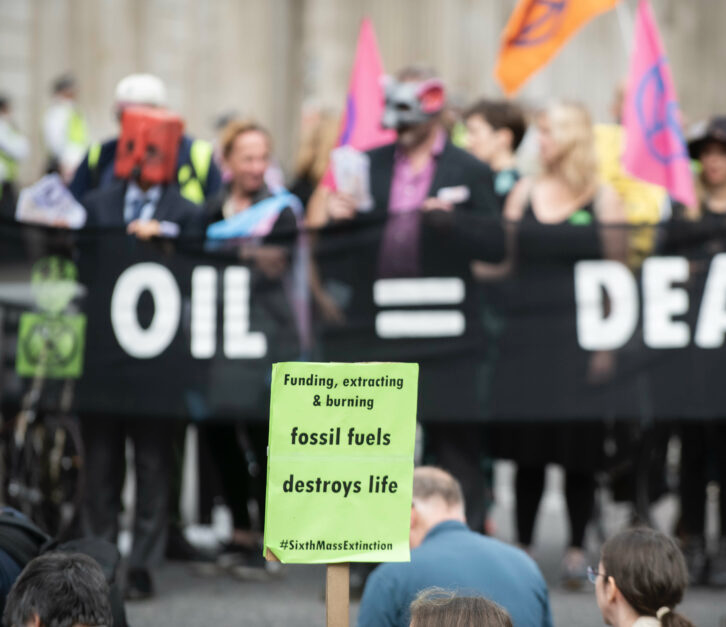
Who are our prophets today? Are they people like David Attenborough and Greta Thunberg, George Monbiot and Jack Munro? Are they groups like Extinction Rebellion? Groups like Amnesty, 38 Degrees, and  The Trussel Trust? Do we take time to listen to their messages, to measure and explore what is being said, to discern where God’s will may lie? Equally are we ready to hear God’s message, are we able set aside some of the barriers that trap us and weigh us down? Like Legion can we break free from our past and find renewal and healing?

Paul, writing to Galatians, remind us that for all of us our baptism represents a new beginning, a fresh start. In baptism we are all one – baptism is the ultimate In levelling up! What ever our past, where ever we have come from and however we have come – raised and bred as part of the establishment, or refugee fleeing a hostile environment, someone who has pulled themselves up by their boot straps or someone who has never managed to hold down a job – we are all equal as ‘children of God’. Like Legion, our restoration is shown in that we have all been clothed with Christ. And, like Legion, we are all commissioned to spread the Good News of Jesus Christ to our own communities.

As we look around the world – like the prophet Isaiah – we see the threats and obstacles that block the freedom of life: heat waves that are keeping one third of US citizens confined to their homes; 7.1 million people displaced by fighting in Ukraine; a third of people in Sudan facing starvation; 3.9 million children living in poverty in the UK; half the population of Chile living with water shortages. Are we sufficiently enraged as Christians, sufficiently enraged as were the prophets, sufficiently enraged as humans, to stand up and say this is not how God wants the world to be? How are we to bring Good News to our communities and to the world?

Isaiah 65:1-9

I was ready to be sought out by those who did not ask,
to be found by those who did not seek me.

I said, “Here I am, here I am,”
to a nation that did not call on my name.

I held out my hands all day long to a rebellious people,

who walk in a way that is not good,
following their own devices;

a people who provoke me
to my face continually,

sacrificing in gardens
and offering incense on bricks;

who sit inside tombs,
and spend the night in secret places;

who eat swine’s flesh,
with broth of abominable things in their vessels;

who say, “Keep to yourself,
do not come near me, for I am too holy for you.”

These are a smoke in my nostrils,
a fire that burns all day long.

See, it is written before me:
I will not keep silent, but I will repay;

I will indeed repay into their laps
their iniquities and their ancestors’ iniquities together,

says the Lord;

because they offered incense on the mountains
and reviled me on the hills,

I will measure into their laps
full payment for their actions.

Thus says the Lord:

As the wine is found in the cluster,
and they say, “Do not destroy it,
for there is a blessing in it,”

so I will do for my servants’ sake,
and not destroy them all.

I will bring forth descendants from Jacob,
and from Judah inheritors of my mountains;

my chosen shall inherit it,
and my servants shall settle there.

Psalm 22:18-27

18 Be not far away, O Lord; *
you are my strength; hasten to help me.

19 Save me from the sword, *
my life from the power of the dog.

20 Save me from the lion’s mouth, *
my wretched body from the horns of wild bulls.

21 I will declare your Name to my brethren; *
in the midst of the congregation I will praise you.

22 Praise the Lord, you that fear him; *
stand in awe of him, O offspring of Israel;
all you of Jacob’s line, give glory.

23 For he does not despise nor abhor the poor in their poverty;
neither does he hide his face from them; *
but when they cry to him he hears them.

24 My praise is of him in the great assembly; *
I will perform my vows in the presence of those who worship him.

25 The poor shall eat and be satisfied,
and those who seek the Lord shall praise him: *
“May your heart live for ever!”

26 All the ends of the earth shall remember and turn to the Lord, *
and all the families of the nations shall bow before him.

27 For kingship belongs to the Lord; *
he rules over the nations.

Galatians 3:23-29

Now before faith came, we were imprisoned and guarded under the law until faith would be revealed. Therefore the law was our disciplinarian until Christ came, so that we might be justified by faith. But now that faith has come, we are no longer subject to a disciplinarian, for in Christ Jesus you are all children of God through faith. As many of you as were baptised into Christ have clothed yourselves with Christ. There is no longer Jew or Greek, there is no longer slave or free, there is no longer male and female; for all of you are one in Christ Jesus. And if you belong to Christ, then you are Abraham’s offspring, heirs according to the promise.

Luke 8:26-39

Jesus and his disciples arrived at the country of the Gerasenes, which is opposite Galilee. As he stepped out on land, a man of the city who had demons met him. For a long time he had worn no clothes, and he did not live in a house but in the tombs. When he saw Jesus, he fell down before him and shouted at the top of his voice, “What have you to do with me, Jesus, Son of the Most High God? I beg you, do not torment me” — for Jesus had commanded the unclean spirit to come out of the man. (For many times it had seized him; he was kept under guard and bound with chains and shackles, but he would break the bonds and be driven by the demon into the wilds.) Jesus then asked him, “What is your name?” He said, “Legion”; for many demons had entered him. They begged him not to order them to go back into the abyss.

Now there on the hillside a large herd of swine was feeding; and the demons begged Jesus to let them enter these. So he gave them permission. Then the demons came out of the man and entered the swine, and the herd rushed down the steep bank into the lake and was drowned.

When the swineherds saw what had happened, they ran off and told it in the city and in the country. Then people came out to see what had happened, and when they came to Jesus, they found the man from whom the demons had gone sitting at the feet of Jesus, clothed and in his right mind. And they were afraid. Those who had seen it told them how the one who had been possessed by demons had been healed. Then all the people of the surrounding country of the Gerasenes asked Jesus to leave them; for they were seized with great fear. So he got into the boat and returned. The man from whom the demons had gone begged that he might be with him; but Jesus sent him away, saying, “Return to your home, and declare how much God has done for you.” So he went away, proclaiming throughout the city how much Jesus had done for him.

The Green Tau: issue 41

11th May 2022

A question of food

Food is a daily necessity, yet for many it is unaffordable. Recent research  points out that in the UK 2 million people cannot afford to eat every day https://www.theguardian.com/society/2022/may/09/more-than-2m-adults-in-uk-cannot-afford-to-eat-every-day-survey-finds.   Is there a flaw in our food production and distribution system?

It seems to me that food production in the UK is caught between two objectives: that food should be produced as cheaply as possible, and that profits for the shareholders should be maximised. Producing food as cheaply as possible has been seen as a way of ensuring everyone can afford to eat. However producing food cheaply doesn’t necessarily make it affordable.

Reducing the cost of food can be achieved in various way:-

  • Industrialising processes whether that is the Chorleywood method of making bread or factory farming livestock
  • Large scale monoculture farming where land is cleared to grow single crops on a large scale – including the clearing of rain forests. 
  • Intensified farming where animals are kept in barns and fed high protein diets rather than having a free range lifestyle, foraging and grazing as they go – low intensive free range animal foraging requires a much greater area of land. On the other hand, eg high protein diets fed to indoor animals has to be grown somewhere.
  • Intensive use of pesticides, herbicides and fertilisers to maintain high crop yields. This can become an expensive option when the cost of these inputs rise.
  • Keeping costs down by paying low wages and/ or by employing people on a seasonal or zero hours basis only.  This applies throughout the food industry from the farmhand  to the supermarket check out.
  • Automation of processes whether that is robots picking crops or automated diary parlours miking cows.
  • Importing food from countries where labour costs are even lower. is of course a flaw here.

Many of these cost saving practices involve reducing wages and/ jobs. As wages and jobs fall  so the need for even cheaper food rises. There seems to be a flaw in the system!. Recently Ranjit Singh Boparan, the UK’s biggest poultry supplier of chicken, queried how it was that his industry could producing chickens that sold for less that a pint of beer – and whether such low prices could be maintained. In part he was questioning whether there were any ways in which costs can be cuts. Yet even at £2.66 (Tesco’s) for a chicken, chicken is still of the menu for a lot of people. 

During the year April 2021 to March 2022 the Trussell Trust (the UK’s largest food bank charity) distributed over 2.1 million emergency food parcel, an increase of 14 compared with the previous year. https://www.trusselltrust.org/news-and-blog/latest-stats/end-year-stats/

People who have to resort to food banks to eat, are not just people who are unemployed. They are also those who, because of disabilities and illness, receive disability benefits, those who are elderly and living on state pensions, those who are employed on zero hours contracts, and even those who are in full employment. The current minimum wage is £8.91 per hour for those over the age of 21. The Job Seekers Allowance is £77 a week for those 25 and over – depending on circumstances, this may be supplemented by Universal  Credit. The full basic State Pension is £141.85 per week. All of these are less than the minimum wage recommended by Living Wage Foundation – £9.90  (£11.05 in London). Whether even this figure will be sufficient at a time of sharply rising fuel costs (and the knock on effect that will have an all products) is yet to be seen.

We have created an economy that does not provide the poorest with the necessary financial resources to enable them to buy the daily food they need – let alone enough to pay for heating, period products, housing, travel etc. Why is this so? Because the economic model we use says that profits must take priority. If costs rise such that they risk profits, then costs must be reduced – even if that means reducing wages and employment opportunities. As a fig leaf, a vague promise is proffered that, by maintaining profits and ensuring that the economy continues to grows, the trickle down effect will – ultimately – increase the wealth of even the poorest in society.  No where does our economic system suggest that goods should be priced at a level that allows the workforce to be paid a genuinely fair wage – a wage such that they could afford the essentials of life including chicken and a pint of beer. 

If everyone was paid at levels of pay (including benefits and pensions) that allowed them to eat properly, heat their homes, pay for their accommodation etc,  then yes prices of some goods (such as chicken) would go up. And of course that proposed ‘fair’ level of pay would have to be sufficient for the recipients to pay those higher food (and other) prices. There would be a knock on for those already on higher incomes in that their day to day living costs too would go up – but usually the higher our income the smaller the proportion we spend on essentials such as food so the impact would be smaller the higher one’s income.  Would we not all feel more comfortable as a society knowing that everyone was being properly fed and that no one was benefiting because someone else was being underpaid? 

This reinvisiging of the economy is not a pipe dream but is to be found in the shape of Doughnut Economics. In her book, Doughnut Economics: Seven Ways to Think Like a 21st-Century Economist, Oxford University’s Kate Raworth argues for a radical overhaul of our traditional economic models: “Humanity’s 21st century challenge is to meet the needs of all within the means of the planet,” she says. “In other words, to ensure that no one falls short on life’s essentials … while ensuring that collectively we do not overshoot our pressure on Earth’s life-supporting systems, on which we fundamentally depend.”

Doughnut Economics challenges our existing profit orientated economics that sees economic growth as the only way forwards.  Doughnut Economics argues that we can have a more caring and more sophisticated economic model which has two key objectives. First that everyone should have a comfortable standard of living – one that meets all seven priorities of the UN Sustainable Development Goals. Second that all economic activity should be sustainable and not cause irreparable damage to life on earth – ensuring a stable climate, fertile soils, healthy oceans, a protective ozone layer, ample freshwater and abundant biodiversity. https://doughnuteconomics.org/about-doughnut-economics


This economic model would not only prioritise the needs of the 2 million in the UK who cannot afford to eat on a daily basis; it would also prioritise the needs of the 3 billion globally who are malnourished. And it would prioritise the well-being of chickens that are reared for less than the cost of a latte!

Prayers for the ecosystems of Europe

Friday 29th April 2022 

The earth is the LORD’s and the fullness thereof, the world and those who dwell therein. Psalm 24:1

You Lord, are the source of all good things: 

We praise you.

You call us to tend and care for your creation: 

May we strive to do your will.

You have made us as brothers and sisters with all that lives: 

May we live together in peace.

A Reading Ephesians 2:8-10 (The Living Bible)

Because of God’s  kindness, you have been saved through trusting Christ. And even trusting is not of yourselves; it too is a gift from God. Salvation is not a reward for the good we have done, so none of us can take any credit for it. It is God himself who has made us what we are and given us new lives from Christ Jesus; and long ages ago God prepared that we should spend these lives in helping others.

To conclude the series we started in Lent, today’s prayers focus on Europe. 

Europe is the western peninsula of the “supercontinent” of Eurasia  and is  is divided from Asia by a series of watersheds, including the Ural River. It is bordered by the Arctic Ocean to the north, the Atlantic Ocean to the west, and the Mediterranean, Black, and Caspian Seas to the south. Europe has been a dominant economic, social, and cultural force throughout recorded history, exerting influence (for good and ill) beyond its own territories. The North European Plain extends from the southern United Kingdom east to Russia. It is crossed by many navigable rivers, including the Rhine, Weser, Elbe, Oder, and Vistula. The climate supports a wide variety of seasonal crops. These physical features allowed for early communication, travel, and agricultural development. The Central Uplands extend east-west and are heavily wooded. They are lower in altitude than the Alpine region to the south. This region includes a few active volcanoes.  The continents forests were drastically reduced as a result of intense urbanisation throughout human history. Intense trade introduced many species, which often overtook native plants. The forests and grasslands of western and central Europe have been almost completely domesticated, with crops and livestock dominant. Today, around 15 percent of Europes animal species are threatened or endangered, mainly by habitat loss, pollution, overexploitation, and competition from invasive species. https://www.nationalgeographic.org/encyclopedia/europe-physical-geography/

Glory to God,

Creator of rivers and streams, lakes and mountains. 

We praise you for the majesty of the Alps, their glittering snowy peaks 

and the frozen waters stored in their glaciers. 

 Glory to God, 

Creator of forests and plains:

We thank you for the vast lands where we can grow crops, for hillsides where we grow vines, and for meadows where sheep and cattle may graze.

Glory to God

Creator of rocks and minerals:

We thank you for the wealth of raw materials with which we can make so much; 

we thank you for fast flowing waters that provide us with energy.

Glory to God, 

Creator of  curiosity and ingenuity:

We thank you for the wisdom we have learnt from the study of your world; thank you for the skills we have learnt in harnessing the resources you have given us.

Forgive us when we have misused that wisdom; forgive us when we have used those skills for ill. 

Merciful God,

Creator of human kind, 

Forgive our greed that has mined land and sea for fossil fuels, jeopardising our future.

Forgive our greed that industrialises farming, destroying soils and draining lakes. 

Forgive our greed that turns animals into commodities and disregards their sentient nature. 

Forgive our greed for consumer goods that strips the earth’s reserves.

Merciful God,

Creator of our brothers and sisters:

Forgive the casualness with which we let the rich grow richer 

and the poor poorer.

Forgive the casualness with which we let the rich break the laws 

and yet still penalise the poor.

Forgive the carelessness with which we discard what we buy 

ignoring the meagre pay of those who labour. 

Guiding God,

Source  of all wisdom, 

Transform our hearts and minds, turn the direction of our hands and feet 

so that with alacrity and commitment we will reform our lives 

and live only in harmony with your creation. 

Amen.

The Grace

Prayers for the ecosystems of North America

Friday 8th April 2022

Happy are those  who do not follow the advice of the wicked. They are like trees planted by streams of water, which yield their fruit in its season,  their leaves do not wither. In all that they do, they prosper. Ps 1:1a,3

You Lord, are the source of all good things: 

We praise you.

You call us to tend and care for your creation: 

May we strive to do your will.

You have made us as brothers and sisters with all that lives: 

May we live together in peace.

A Reading Proverbs 22:16-18

Oppressing the poor in order to enrich oneself, and giving to the rich, will lead only to loss. The words of the wise: Incline your ear and hear my words, and apply your mind to my teaching; for it will be pleasant if you keep them within you  if all of them are ready on your lips.

Each Friday during Lent we will focus on a different continent; this week North America

North America extends from the tiny Aleutian Islands in the northwest to the Isthmus of Panama in the south. The continent includes the enormous island of Greenland in the northeast and the small island countries and territories that dot the Caribbean Sea and western North Atlantic Ocean. In the far north, the continent stretches halfway around the world, from Greenland to the Aleutians. But at Panama’s narrowest part, the continent is just 50 km across. North America can be divided into five physical regions: the mountainous west, the Great Plains, the Canadian Shield, the varied eastern region, and the Caribbean. Mexico and Central America’s western coast are connected to the mountainous west, while its lowlands and coastal plains extend into the eastern region. Within these regions are all the major types of biomes in the world. https://www.nationalgeographic.org/encyclopedia/north-america-physical-geography/

Glory to God 

Creator of successions of mountains ranges:

We praise you for the awe and wonder of these regions, 

their reminder that we are but humans.

We marvel at the power of water to carve out canyons 

and the power of water to generate energy.

Glory to God

Creator of forests and plains:

We praise you for the richness of their biodiversity, for tall prairie grasses and even taller trees; 

for the smallest grasshoppers to the mighty bison, 

for the whistling marmots and black bears that huff and grunt.

Glory to God

Creator of rivers, lakes and wetlands:

We praise you for the Great Lakes and the fresh water they contain, 

for the Mississippi River and the fertile soil it nurtures, 

and for the wetlands of the Everglades, the 360 plus species of bird  

and the plump grandeur of the manatees.

Glory to God, 

Creator of tundra and ice: 

We praise you for the ingenuity of life that adapts to the extremes of climate and geography.

We marvel at the diversity of life – lichens and moss, polar bears and caribou, 

and the many migrating birds such as the Arctic tern.

Merciful God,

Creator of human kind, 

Forgive our greed that has mined land and sea for fossil fuels, jeopardising our future.

Forgive our greed that industrialises farming, destroying soils and draining lakes. 

Forgive our greed that turns animals into commodities and disregards their sentient nature. 

Forgive our greed for consumer goods that strips the earth’s reserves.

Merciful God,

Creator of our brothers and sisters:

Forgive the casualness with which we let the rich grow richer 

and the poor poorer.

Forgive the casualness with which we let the rich break the laws 

and yet still penalise the poor.

Forgive the carelessness with which we discard what we buy 

ignoring the meagre pay of those who labour. 

Guiding God,

Source  of all wisdom, 

Transform our hearts and minds, turn the direction of our hands and feet 

so that with alacrity and commitment we will reform our lives 

and live only in harmony with your creation. 

Amen.

The Grace

The Green Tau: issue 39

4th April 2022

If gardens became nature reserves

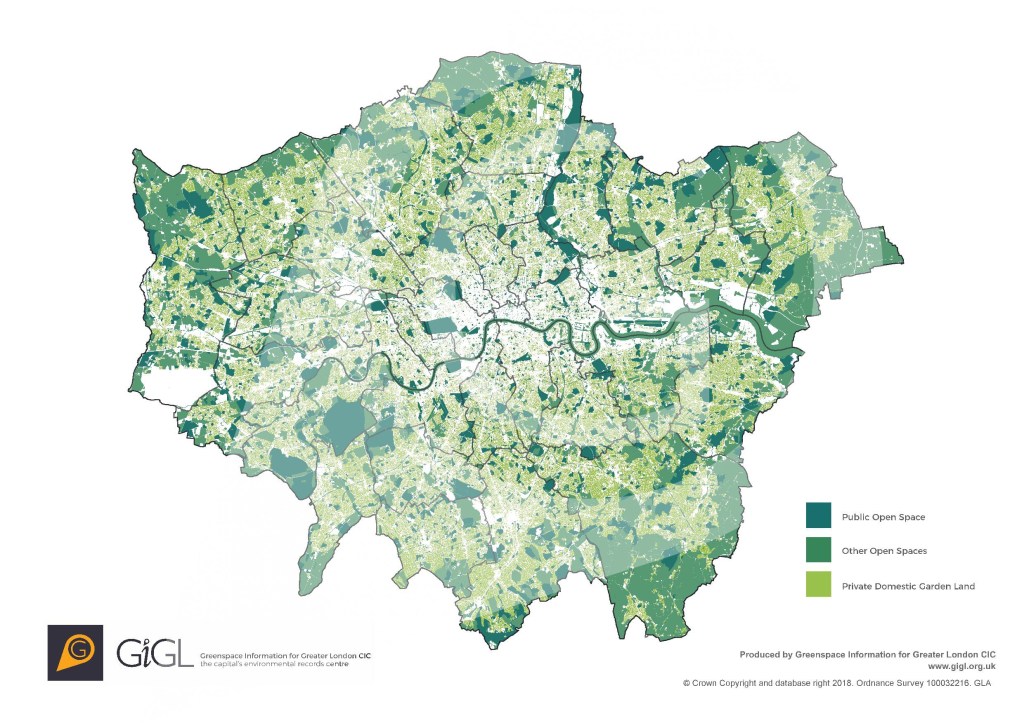
Did you know that the ordinary domestic garden makes up one third of all green space in London? 

According to Greenspace Information for Greater London, GiGL roughly  47% of Greater London is ‘green’, of which 33% is natural habitats within open space and an additional 14% is estimated to be vegetated private, domestic garden land. https://www.gigl.org.uk/keyfigures/ This is not just true of London, but for the whole country. According to the RHA ‘Private garden space in Britain cover about 728,900 hectares so their potential as a haven for wildlife is considerable’.   If each garden were actively managed as a nature reserve just think what an impact that would have on biodiversity and environmental wellbeing!

https://www.gigl.org.uk/wp-content/uploads/OpenSpace-POS-PrivateGardens2018.jpg

Domestic gardens can offer a diversity of plants and micro habitats making them ideal environments for a wide diversity of insects and beetles, birds and other small creatures. 

A diverse range of plants can not only provide food and shelter for a great number of birds, insects and other creatures, they can also be chosen to provide a year round supply of blooms that ensure  constant supply of food for insects – and a good supply of insects will ensure food for other creatures further up the food chain.

A variety of height and density of plants and planting, including trees and bushes, climbers and creepers, ground cover and grasses will again meet the needs of diverse range of fauna. Areas of both shade and sun, warm hollows and places giving shelter from the wind will be appreciated. Further micro habitats can be provided with the addition of ponds or bog gardens, log piles and dry stone walls.

Encouraging wildlife is also about avoiding things that can cause damage such as pesticides, herbicides and slug pellets, and the use of peat which comes at the expense of peat bogs which are an exceedingly valuable habitat in their own right. 

Many creatures will need more than the space offered by one garden. Their normal habits maybe to move or roam over a wide area – hedgehogs for example can travel up to 2km as part of their nighttime forays. Whilst robins may guard one garden as their territory, other birds such as swallows, long tail tits, and jackdaws will feed across a much wider area. Gardens can act as corridors and stepping stones linking one garden to the next as well as linking into wider green spaces such as parks and commons. Small holes at ground level will allow hedgehogs to travel from one garden to the next, whilst trees, shrubs and climbers will provide safe stopping off places for small birds.

Gardens also benefit our own well being. The National Open Gardens Scheme identifies 5 ways in which we can benefit from our gardens – https://ngs.org.uk/gardens-and-health-week/

  1. Do something (physical) – gardening itself, or playing, doing yoga, making a bug hotel, painting
  2. Do nothing! Spend time relaxing, just observing what’s there, de-stressing 
  3. Be alone – your garden can be an escape form the  demands of world and work. Find a quiet corner that is your personal retreat.
  4. Be sociable – share the garden with friends, chat over the fence, take tea together, eat meals outside, play games 
  5. Go natural – look at the shapes and colours, absorb the scents, feel the textures, listen to the sounds

For those without gardens, house plants can be equally beneficial and rewarding – https://ngs.org.uk/a-haven-of-houseplants/

Gardens are places to grow food and make us aware of the journey from fork to plate. Growing food encourages us to eat more healthily. Growing your own salads, herbs and soft fruits can significantly reduce the carbon footprint of what you eat.

Gardens can also protect us from some of the effects of the climate crisis. Gardens with plenty of vegetation will add moisture to the air making it feel comfortable during hot weather and trees of course provide shade as do climbing plants trained over pergolas. Climbing plants can shade walls from the sun and keep the building cooler, whilst plants trained around windows can cast shade that cools the room inside.  Gardens are good at both absorbing rainwater especially if there plenty of soft areas – lawns, flowerbed and vegetable plots – rather than hard surfaces such as pavements, patios and compressed soil. Gardens with plenty of plants are good at slowing the rate at which water drains into the water table as leaves and roots trap and delay the rain. Longer grass is better in this respect than short grass, and will equally better withstand periods of drought. Both absorbing and delaying the rate of water  flow reduces the risk of flooding. You can even be proactive by emptying water butts in advance of heavy rainfall. 

Gardens are natural carbon sinks. Trees, plants and lawns all absorb carbon as they grow. So does a well tended soil. This is a soil that is not over worked or compacted but rather is well supplied with hummus that makes the soil home for a multitude of worms, beetles, bugs, bacteria and fungi, all busily absorbing carbon and releasing nutrients into the soil. Further ideas for reducing the carbon footprint of your garden include composting garden and uncooked vegetable food waste, recycling canes and flower pots etc, growing plants from seeds, and using hand rather than power tools – https://www.gardenersworld.com/how-to/grow-plants/how-to-reduce-your-carbon-footprint-in-the-garden/ Or visit the RHS web site https://www.rhs.org.uk/gardening-for-the-environment/low-carbon-gardening/the-low-carbon-garden 

“When we garden, not only do we make the world a more beautiful place, we also improve local biodiversity, cool overheated cities, mop up pollution and mitigate against flooding, all while improving our own health and well-being, which together have been shown to directly determine how effectively our society functions. Plants are key solutions to pretty much every major problem that faces our species today.” https://www.theguardian.com/lifeandstyle/2022/feb/26/green-planet-how-gardening-can-save-the-world

 Counting on … day 141

4th April 2022

Taking care of our mental well-being is important. It keeps us better and

happier and our friends and families too. The Blue Prescribing Project aims to help people actively look after their mental well-being through developing closer links with nature. The Project is designed and delivered by the Mental Health Foundation and the Wildfowl and Wetlands Trust, and is currently operating at the London Wetlands Centre. https://www.wwt.org.uk/our-work/projects/blue-prescribing

For enquiries and referrals please contact blueprescriptions@wwt.org.uk

Gardens as nature reserves

4th April 2022

Gardens are our very own nature reserve right on our doorstep!  

There are many ways in which we can boost their biodiversity and make them even more environmentally friendly (space permitting).

  • Let your garden grow wild at the edges
  • Choose plants so that there is always something in flower throughout the year.
  • Create different habitats with trees and shrubs, ground-cover and climbers
  • Maintain plant cover over all the soil to protect; have different layers of planting. 
  • Use intercropping techniques, sowing fast growing vegetables between those that need more space, eg radishes between cabbages, or eggplant daises between leeks. 
  • Install a water butt 
  • Leave seeds heads and dead stalks in place over winter
  • Use hand tools rather than power tools 
  • Plant some soft fruit bushes or strawberries or rhubarb

P

  • Plant a fruit tree

Prayers for the ecosystems of Asia

Week of 1st April

Happy are those  who do not follow the advice of the wicked. They are like trees planted by streams of water, which yield their fruit in its season,  their leaves do not wither. In all that they do, they prosper. Ps 1:1a,3

You Lord, are the source of all good things: 

We praise you.

You call us to tend and care for your creation: 

May we strive to do your will.

You have made us as brothers and sisters with all that lives: 

May we live together in peace.

A Reading Psalm 95: 1-5

O come, let us sing to the Lord;
    let us make a joyful noise to the rock of our salvation!

Let us come into his presence with thanksgiving;
    let us make a joyful noise to him with songs of praise!

For the Lord is a great God,
    and a great King above all gods.

In his hand are the depths of the earth;
    the heights of the mountains are his also.

The sea is his, for he made it,
    and the dry land, which his hands have formed.

Each Friday during Lent we will focus on a different continent; this week Asia. 

Asia (the eastern half of the Eurasian supercontinent) is the largest of the world’s continents, covering approximately 30 percent of the Earth’s land area. It is also the world’s most populous continent, with roughly 60 percent of the total population. It comprises five major physical regions: mountain systems; plateaus; plains, steppes, and deserts; freshwater environments; and saltwater environments. The Himalayas are so vast that they are composed of three different mountain belts. The northernmost belt, known as the Great Himalayas, has the highest average elevation and includes Mount Everest, which stands at 8,849m. The glaciers of the Tibetan Plateau contain the largest volume of ice outside the poles and feed Asia’s largest rivers. Approximately 2 billion people depend on the rivers. Lake Baikal is the deepest lake in the world, containing 20 percent of the world’s unfrozen freshwater. It is also the world’s oldest lake, at 25 million years old.  https://www.nationalgeographic.org/encyclopedia/asia/

Glory to God 

Creator of mountains and glaciers:

We praise you for the awe and wonder of these regions, 

their reminder that we are but humans.

We thank you for the life giving water they provide for peoples far below.

Glory to God

Creator of rivers and wetlands:

We praise you for the Tigris and the Euphrates, 

for the Fertile Crescent and the roots of human civilisation.

We praise you for the  Ganges and Brahamaputra rivers, 

and for the biodiversity of the Sundarban wetland with its huge mangrove forest. 

Glory to God, 

Creator of Steppes and deserts:

We praise you the ingenuity of animals and peoples, adapting to the extremes of climate.

We praise you for yaks and bactrian camels and for livelihoods sustained by trade.

Glory to God, 

Creator of flora and fauna:

We praise you for rich diversity of flora, for the many fruit trees – oranges and peaches –

and the beautiful flowers of China – roses and camellias, peonies and hibiscus. 

We praise you for  the wildlife of the Sundarban wetlands  – birds and  monkeys, monitor lizards and Bengal tigers. 

Merciful God,

Creator of human kind, 

Forgive our greed that destroys ancient forests in favour of logging for timber and wood pulp. 

Forgive our greed that destroys biodiverse rain forests in favour of oil palm plantations.

Merciful God,

Creator of our brothers and sisters:

Forgive the casualness with which we ignore their plight when faced with war and oppression, 

their poverty  when corporate greed takes away their livelihoods 

and their hunger when climate change decimates their crops.

Merciful God, 

Creator of climates and seasons,

Forgive our foolishness that creates both drought and flood.

Forgive our foolishness that destroys mangroves that protect shorelines 

and the forests that stabilise soils and lock in carbon

Guiding God,

Source  of all wisdom, 

Transform our hearts and minds, turn the direction of our hands and feet 

so that with alacrity and commitment we will reform our lives 

and live only in harmony with your creation. 

Amen.

The Grace

Counting on …day 138 

1st April 2022 

‘Climate change is a threat to human well-being and planetary health. Any further delay in concerted anticipatory global action on adaptation and mitigation will miss a brief and rapidly closing window of opportunity to secure a liveable and sustainable future for all’ –  from February’s IPCC report. 

The time is now and we need to take action. Earlier this month Extinction Rebellion wrote to the Government highlighting the situation: ‘Every day the UK government fails to act makes our common future more bleak, our prospects more terrifying.’ Extinction Rebellion is calling for an end of the fossil fuel economy and is inviting everyone to take part and join in the demonstrations taking place on 9th April.

 Counting on ….day 137

31st March 2022 

This May, 5th, London’s local councils will be up for re-election. It is important that our local councillors know which things actually matter to us. The London Cycling Campaign has created an email letter to send to candidates asking them to prioritise various cycling matters that will create greener and pleasanter neighbourhoods. Richmond Council is already instigating many of these proposals but there is always scope for more if councillors feel it is something g we really want. 

https://action.lcc.org.uk/climate-safe-streets