Counting on … day 7

9th January 2025

How we travel and use transport can feature large in our use of the Earth’s resources. We know that flying has a huge negative impact on the climate and on air quality, and that therefore the less we fly the better. As we start thinking about our summer holidays, now is a good time to explore all the amazing holidays that don’t involve air flights. And we might equally consider signing the Flight Free Pledge – https://flightfree.co.uk/

Green Tau: issue 98

Walking the Talk

24th November 2024

A few weeks ago, whilst I and others were holding our weekly Earth Vigil outside Parliament, a passerby stopped to quiz us. In transpired that he was not interested in the wellbeing of the environment and rather wanted to justify his position by proving that we were hypocrites. 

His line was that we could not be taken seriously in calling for a rescinding of the Rosebank licence whilst possessing shoes, clothes, rucksacks etc made from plastics/ ie oil. He would not listen to our response that we were constrained by what one could buy in a world that is still heavily embedded in using oil. Even as our economies transitions away from oil, it is still going to take a while before sufficient alternatives take over from plastic. As one person interjected, “When Edison was designing the lightbulb he had to rely on candle light!” (Or possibly gas). 

But what really incensed me was that I do try and do everything I can to live ecologically. I wear second hand clothes, darn my socks, patch my rucksack and my trainers, shop at a refill shop, avoid buying anything in a plastic wrapper, don’t fly, eat a vegan diet that includes wonky and unwanted fruit and vegetables, source beans and pulses grown in the UK. And flour for my bread is milled in a proper windmill in Cambridgeshire!

I do do all I can to walk the talk! 

And it’s not easy especially when you feel your are a minority of one. When we are away from our normal locality – and especially so when on holiday in Switzerland (we go by train) – it feels as if everyone else is saying, why are you so awkward?  What difference can it make whether or not you eat a little cheese, eat a cake made with butter, an ice cream made with milk? Will eating a croissant make any difference to the world? 

When I stay with family and they make a special dish just for me, I feel I awkward and think I must seem very pedantic.

Or when others are discussing their past and future holidays, a quick (and let’s agree in the present tax regime, cheap) flight to Italy/ Turkey/Spain, or a leisurely holiday exploring Japan, Korea and Malaysia, or a winter trip to sunny Oz. Am I grouch or a kill joy because I won’t fly? And this is where I do feel guilty: am I being really selfish as I know my husband would love for us to travel the world?

So why is it important to tread this lonely path? 

Firstly because unless someone starts, no one will ever start. I maybe the first not to fly amongst our friends but hopefully I won’t be the last.

Secondly because the more people take these steps the easier it will be for other to follow. If I always ask for a vegan cake when I’m buying a coffee, then hopefully in a few years time, vegan cakes will be the norm on cafes. Plant based milks are pretty much standard nowadays! (But why then current trend of charging extra?)

Thirdly because the more people are seen to be travelling by train not plane, or eating humous not cheese, or carrying a keep cup rather than using a single use throw away cup, the more normal such behaviour becomes.

Fourth as such patterns of behaviour become normalised – even popular – so businesses and governments will change their thinking. 

Fifthly because eventually the world could change for the better! 

Yet I am not hopeful that any of this will happen fast enough to prevent the huge catastrophe that the climate crisis is forming. And that makes it a very hard path to tread. I am making life awkward for myself and my husband and my friends and family with only a very small chance that it will make life better for them.  But equally I know that not trying would be even more hurtful. 

And finally, yes I do it because it makes me feel just a little bit better; that I am at least doing something rather than nothing.

Green Tau: issue 96

Walking the Talk

28th October 2024

A few weeks ago, whilst I and others were holding our weekly Earth Vigil outside Parliament, a passerby stopped to quiz us. In transpired that he was not interested in the wellbeing of the environment and rather wanted to justify his position by proving that we were hypocrites. His line was that we could not be taken seriously in calling for a rescinding of the Rosebank licence whilst possessing shoes, clothes, rucksacks etc made from plastics – ie oil. He would not listen to our response that we were constrained by a world that is still heavily embedded in using oil even as it transitions away from oil, such that there is not always a readily available non plastic alternative.

But what really incensed me was that I do try and do everything I can to live ecologically. I wear second hand clothes, darn my socks, patch my rucksack and my trainers, shop at a refill shop, avoid buying anything in a plastic wrapper, don’t fly, eat a vegan diet that includes wonky and unwanted fruit and vegetables, and beans and pulses grown in the UK. 

I do do all I can to walk the talk! 

And it’s not easy especially when you feel your are a minority of one. When we are away from our normal locality – and especially so when on holiday in Switzerland – it feels as if everyone else is saying, why are you so awkward?  What difference can it make whether or not you eat a little cheese, eat a cake made with butter, an icecream made with milk? Will eating a croissant make any difference to the world? When I stay with family and they make a special dish just for me, I feel I awkward and think I must seem so very pedantic.

Or when others are discussing their past and future holidays, a quick (and let’s agree in the present tax regime, cheap) flight to Italy/ Turkey/Spain, or a leisurely holiday exploring Japan, Korea and Malaysia, or a winter trip to sunny Oz. Am I grouch or a kill joy because I won’t fly? And this is where I do feel guilty: am I being selfish, as I know my husband would love for us to travel the world?

So why is it important to tread this lonely path? 

Firstly because unless someone starts, no one will ever start. I maybe the first not to fly amongst our friends but hopefully I won’t be the last.

Secondly because the more people take these steps the easier it will be for other to follow. If I always ask for a vegan cake when I’m buying a coffee, then hopefully in a few years time, vegan cakes will be the norm on cafes. Plant based milks are pretty much standard nowadays! 

Thirdly because the more people are seen to be travelling by train not plane, or eating humous not cheese, or carrying a keep cup rather than using a single use throw away variety , the more normalised such behaviour becomes.

Fourth as such patterns of behaviour become normalised – even popular – so businesses and governments will change their thinking. 

Fifthly because eventually the world could change for the better! 

However I am not hopeful that any of this will happen fast enough to prevent the huge catastrophe that the climate crisis is brewing. And that makes it a very hard path to tread. I am making life awkward for myself and my husband and my friends and family with only a very small chance that it will make life better for them.  But equally I know that not trying would be even more hurtful. 

Green Tau: Issue 93

21st August 2024

Should we give up flying for the sake of the planet? 

I recently took part in a radio show where this was the topic being discussed. I am someone who for the last 20 years (I think) has deliberately chosen – for environmental reasons – not to fly. The other panellist was a pilot for a charity that flies people and resources in and out of remote islands in Asia. Two extremes but actually we both agreed that there were some instances when flying was a good thing – such as providing medical support for people, which could be for remote islanders in the Pacific, islanders living off the coasts of Scotland or for medical emergencies where an air ambulance can rapidly transfer people to hospital. Equally flying might be a key way of getting resources, food and medicines to areas cut off from other modes of transport after natural and other disasters. 

However such instances do not make up the bulk of air travel across the world, nor are they applicable to the majority of locations worldwide. Most flights are scheduled flights, mostly carrying passengers. 

According to a report by the International Air Transport Association (IATA), in 2023,  there were 36 million aircraft departures, conveying some 4497 million scheduled passengers plus cargo. Measured in terms of revenue, scheduled passengers generated $646 billion and cargo $138 billion. (1)

Aviation accounts for 2.5% of global CO₂ emissions. However  its impact on global warming is even more because of the impact of planes at high altitude affecting the concentration of other atmospheric gases and pollutants. (2) 

If 2.5% of global emissions seems small, we need to remember that these emissions come from just 10% of the world’s population – nine out ten people don’t fly and that is almost always because it is an unaffordable luxury. 

 Yet air travel is predicted to continue to increase – ISTA predicts a 3.8% increase in passenger numbers every year, resulting in 4 billion extra passenger journeys by 2043. (1) Is this sensible – indeed justifiable – given the impact that this would have on the amount of carbon held in the atmosphere and its impact on accelerating the rise in global temperatures and the impact of that on daily life for most people?

Even if planes become more efficient in burning fuel, and even if sustainable aviation fuel (SAF) becomes a reality at scale, can the airline industry increase flights and at the same time reducing emissions? Not so according to the predictions of the consultants Bain and Company:-

“We estimate that the airline industry’s current decarbonisation measures will result in a net 3.4% increase in its global CO2 emissions by 2030 vs. 2019 levels. This is based on the outlook that a 23% reduction in CO2 emissions per RPK (thanks to fleet renewal and sustainable aviation fuel usage) would be more than offset by a 36% increase in global RPK [revenue passenger kilometres – the number of paying passengers multiplied by the total distance traveled]. It would require an additional carbon tax equivalent to 5% of average ticket prices worldwide in order for the industry to maintain its 2019 C02 emissions volume in 2030, according to our forecast.” (3) 

The conclusion must then be that the 10% of us who do fly, should think twice about doing so. We should stop flying to safeguard our own future, to safe guard the future of the next generation, and to safeguard the lives of the 90% who are not even contributing to the problem. As Christians we have the command that we should love our neighbour as ourself which includes each and every neighbour on the other side of the world who does or doesn’t fly. And caring for our neighbour will include conserving aviation fuel for those planes and helicopters providing emergency aid and access for those remote and inaccessible places 

Of course our worry is that while we may make the sacrifice of not flying, no one else will and therefore our actions will not have any safeguarding affect! That is a good reason to sign the Flight Free Pledge (4) to generate a groundswell of people committed to not flying. It also becomes a good reason to talk about not flying, to create then social norm that flying is the exception not the norm, to expound the advantages of travelling instead by train – comfort, legroom, no congested airport lounges, less stress, seeing more of the countryside, sleepers for night travel, on board restaurants…

The other concern is cost. Whilst air travel is prohibitively expensive for most people, train travel can be equally prohibitive. Governments across the world need to be encouraged to impose taxes and operation rules to restrict air travel and to make train travel more affordable. To do so will be cost effective if it enables us to bring down emissions and properly tackle the climate crisis. 

Yes absolutely we should give up flying to save the planet! 

  1. https://www.iata.org/en/iata-repository/publications/economic-reports/global-outlook-for-air-transport-june-2024-report/
  2. https://ourworldindata.org/global-aviation-emissions
  3. https://www.bain.com/insights/air-travel-forecast-interactive/
  4. https://flightfree.co.uk/why_flight_free/

Counting on … day 112

22nd May 2024

Some years ago, I took the decision not to fly and Paul has fallen in with this, even though he still regrets the places he may not now visit, and listens with a bit of envy when others tell of their latest overseas holiday. 

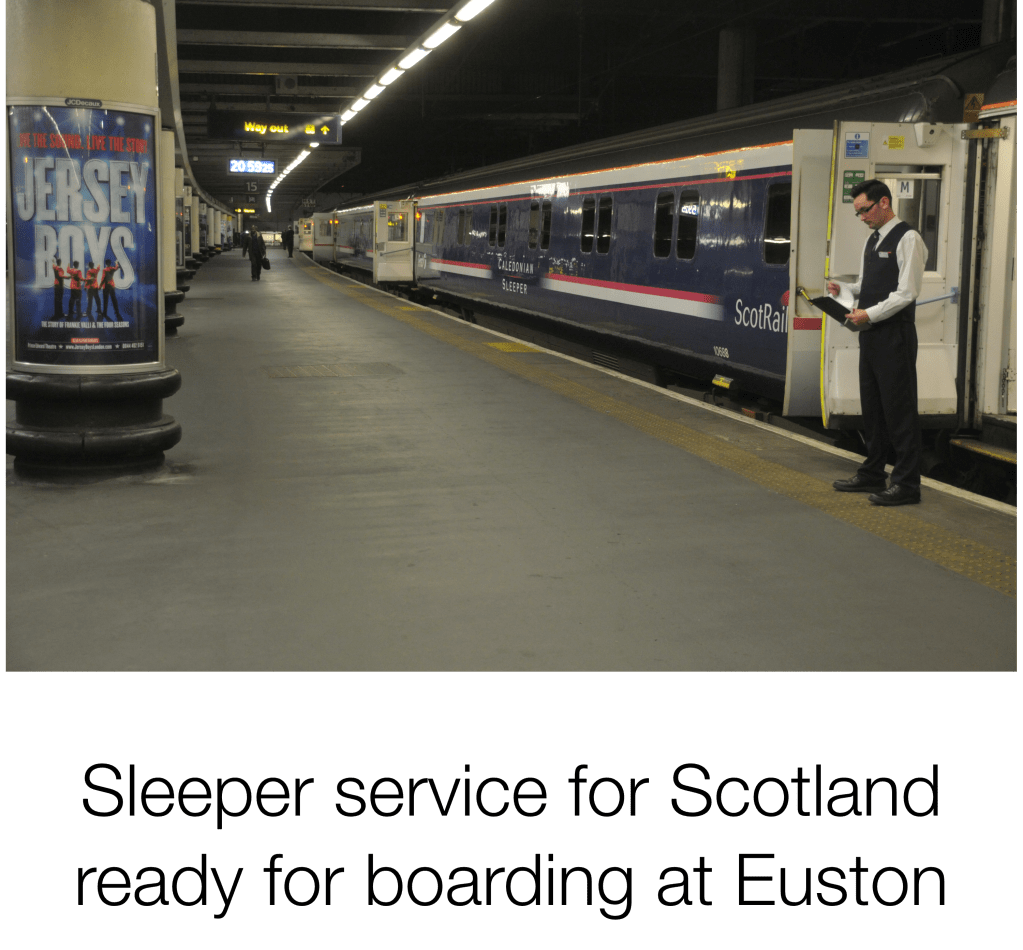
What we do do is to travel by train, both here in the UK and across Europe – and have done for many years, both with all three children from when they were young, to now when it is just two of us. You can, from London,  reach Berlin and the Swiss Alps within the day – alternatively there are now a growing number of sleep services across Europe.

Counting on … day 7

7th January 2024

Fly less/ don’t fly

Fly less or even quit flying although their. For longer journeys and holidays, let the train take the strain! It is amazing how far you can travel both in the UK and across Europe by train (and ferry) and there are an increasing number of sleeper trains allowing you to arrive at your destination in time for breakfast with a whole day ahead of you! 

If you plan to ski this winter in Europe, plan ahead and take the train.

Why not make a flight free pledge? https://flightfree.co.uk/

For more info – https://ourworldindata.org/travel-carbon-footprint

Personal experiences – https://greentau.org/2022/07/04/eco-tips-living-sustainably-and-travel/

Counting on … day 1:007 

7th January 2023 

With new sleeper services coming on board later this spring, there are even

more ways of getting around Europe without flying. I have once again sign the Flight Free Pledge for 2023. You too can do this at https://flightfree.co.uk/

You can also sign a petition I have set up asking for an end to internal UK air flights – https://petition.parliament.uk/petitions/629859

Counting on … 406

13th December 2022

‘France has been given the green light to ban short haul domestic flights. The European Commission has approved the move which will abolish flights between cities that are linked by a train journey of less than 2.5 hours. The decision was announced on Friday. The changes are part of the country’s 2021 Climate Law and were first proposed by France’s Citizens’ Convention on Climate – a citizens’ assembly tasked with finding ways to reduce the country’s carbon emissions’. https://www.euronews.com/green/2022/12/02/is-france-banning-private-jets-everything-we-know-from-a-week-of-green-transport-proposals?utm_source=newsletter&utm_medium=green_newsletter&_ope=eyJndWlkIjoiMTJjMTk2MDNmOWI2YTEwZmZmMTQ0ODYyMWQ3NDJhNDcifQ==

Does this sound like an excellent idea! 

Count Down

Action 29: Plan next year’s holiday? Since air travel comes with a  disproportionate carbon footprint, why not see where you might go travelling by train: Berlin? Moscow? Venice? The Alps? The Fiords? Or maybe closer to home: Tenby? St Ives? Scarborough? Brighton? Fort William? Windermere? Maybe plan a grand railway tour.