Counting on … day 108

14th July 2025

The UK has committed to protect 30% of land and sea for nature by 2030 (30by30), to support the global 30by30 target agreed at the UN Biodiversity Summit (COP15) in 2022. (1) Currently just over 14% of land in England meets this target so achieving this goal will require significant change and input from landowners and government. 

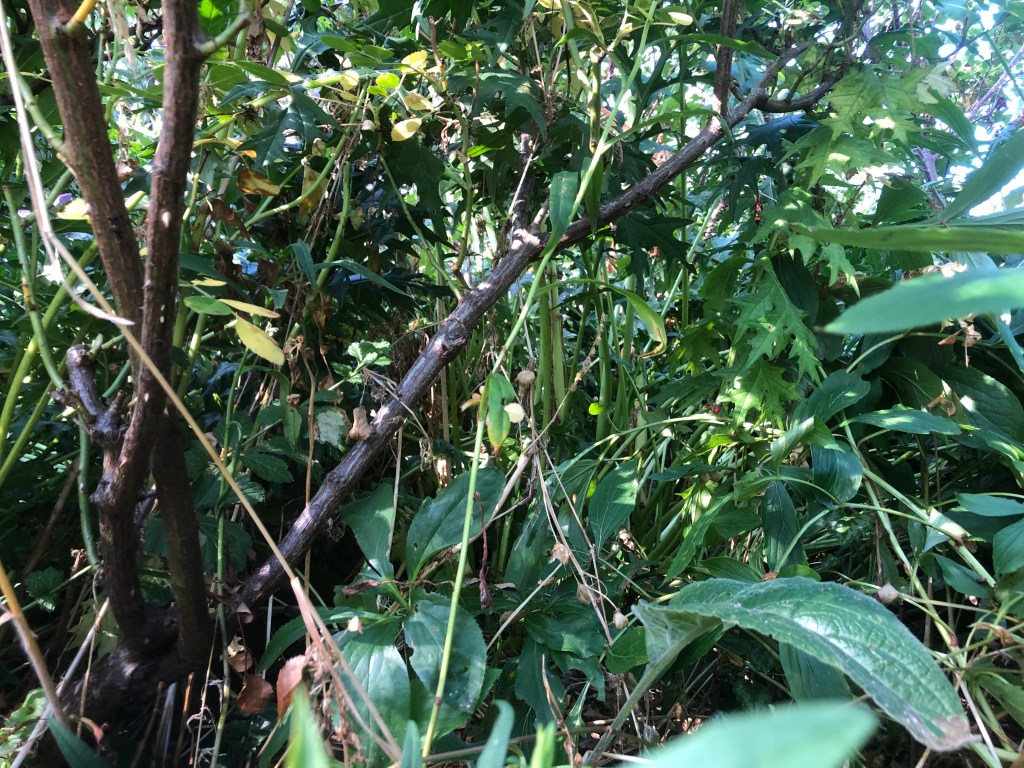
Gardens can make a small contribution. Rewilding part of a garden is not to waste one’s garden but to create a space where wildlife – be that insects, beetles, birds etc or wild plants (often discarded for being weeds) can thrive. Collectively wild spaces in gardens can provide green corridors for wild life. 

  1. https://www.gov.uk/government/publications/criteria-for-30by30-on-land-in-england/30by30-on-land-in-england-confirmed-criteria-and-next-steps

Further information

https://greentau.org/2022/04/04/the-green-tau-issue-39/ (Since writing this blog, the green proportion of Greater London is now almost 50%)

Counting on … day 32

14th February 2025

Grey water is water that has been used for washing hands, bathing, washing clothes, washing vegetables etc. Grey water systems that collect and treat grey water, often combining it with collected rainwater, can be plumbed in to flush toilets but these can be expensive, especially when retrofitted. 

In summer months, we may already practice grey water harvesting – collecting water from showers and washing machines to water the garden. Ideally such water should not be stored from more than a day because pathogens from what we have washed may multiply especially when the water is warm.

The Centre for Alternative Technologies has this advice about washing machine water – “If you wish to irrigate with water from a washing machine then use a low-sodium detergent, because sodium damages plants and degrades soil (liquid detergents usually contain less salt than powders). Avoid phosphorus as well, because this causes algal blooms if it collects in ponds or rivers. Otherwise, the water has only very small and well diluted quantities of pathogens or grease and therefore these should not be of concern.” https://cat.org.uk/info-resources/free-information-service/water-and-sanitation/rain-and-grey-water/

And the RHS says – “Plants can be watered with shower, bath, kitchen and washing machine water (from rinse cycles), collectively referred to as ‘grey’ water. It varies in quality and may contain contaminants such as soap and detergent. Fortunately, soil and potting composts are effective at filtering them out, and the residues can sometimes act as a mild fertiliser. To minimise bacterial growth, grey water should be saved for only 24 hours, unless filtered through a reed bed or professionally designed system. It is best applied by watering can; grease and fibres can clog irrigation systems.” https://www.rhs.org.uk/science/gardening-in-a-changing-world/water-use-in-gardens/using-grey-water

In our home, we collect hand wash water and use it to flush the toilet when ‘yellow’ and use the toilet flush when ‘brown’. 

Blessings for Creation

28th September 2024

(You may wish to adapt these prayers to suit your local green spaces, nature reserves, parks etc)

Bless the Lord, O my soul, 

and all that is within me bless his holy name.

Bless the Lord, O my soul, 

and forget not all his benefits;

Bless the Lord, all you works of his,

in all places of his dominion; 

bless the Lord, O my soul.

Ps 103: 1-2, 22

Reading: And I heard every creature in heaven and on earth and under the earth and in the sea, and all that is in them, saying, “To him who sits on the throne and to the Lamb be blessing and honour and glory and might forever and ever!” Revelation 5:13

Response:
Everliving God, the heavens declare your praise and yet cannot contain your glory. 

We join with all creation in honouring you.

for frosty mornings and blue skies, 

and the fresh air we breathe:

We bless you, creator God;

for robins, sparrows and starlings, 

and all who visit our gardens:

We bless you, creator God;

For strong limbed trees and supple saplings, 

and all the strength they embody:

We bless you, creator God;

For fruits and roots, and leaves and shoots, 

and all the nourishment they provide:

We bless you, creator God;

For cats and dogs, our companionable friends, 

and foxes  and deer, our wilder friends:

We bless you, creator God;

For winter flowers and bumble bees, 

for winter’s work and rest: 

We bless you, creator God!

Let’s  offer intercessions for the well being of our local environment 

We pray for the work of the Wetlands Trust protecting birds and their habitats, and we give thanks for our local Wetlands reserve.

We pray for the work of Kew Gardens and the Millennium Seed Bank, for their work in protecting and nurturing plants and we give thanks for beauty of the gardens.

We pray for the work of the park rangers maintaining the wildness of Richmond Park with its great diversity of plant and animal life. We pray too for the work of Holly Lodge enabling the Park to be accessible to all.

We pray for those who work to protect the biodiversity of the Thames, and we give thanks for the wildlife returning to its waters.

We pray for the Friends of Sheen Common and of Palewell Common and for their safeguarding of these local green oases. We give thanks for joy that comes from playing and running, from playing sports and walking dogs.

We pray too for local gardeners and keepers of allotments, and for all who put out food and water for birds. We give thanks for the beauty of the front gardens we walk past.

As we notice the wonders of creation that surround us, 

we pray that what we see we will love,

and that what we love, we will protect, 

and that what we protect, will be blessed by God. 

Amen

Counting on … day 174

19th September 2024

Of all the green space in London, a little under a third comprises private gardens. (1) How we use our gardens can contribute positively or negatively to improving biodiversity. Solid decking and brick/ concrete driveways prevent wildlife from creating a home, whilst using pesticides and herbicides kill wildlife. On the other hand mowing lawns  infrequently (No Mow May etc), planting a year-round range bee friendly plants, and including a mix of of shrubs, trees and plants of different sizes can create a variety of well fed habitats for wild life. (2)

(1) https://www.gigl.org.uk/our-data-holdings/keyfigures/

(2) https://www.woodlandtrust.org.uk/blog/2023/04/increase-garden-biodiversity/

Counting on … day 100

6th May 2024

We are lucky enough to have a good sized garden. Not being successful growers of vegetables, we have chosen to make the garden more of a wildlife haven. We don’t use pesticides, herbicides or fertilisers – other than home made compost. Nor do we use peat. This approach also means we aren’t buying things that come in plastic bottles, bags or containers. 

Over the years we have planted a number of fruit trees – apple, plum, pear, cherry, fig – as well as having raspberries, strawberries, rhubarb, currant and gooseberry bushes and a grape vine. In between the fruit grows a mix of herbs, self seeding salads and green leaf crops, bulbs, and wild flowers. Other flower beds are a mix of roses, herbs, and perennial plants, whilst the lawns remain uncut for most of the year. I have tried to transform these into meadows by transplanting into the grass suitable plants such as buttercups, plantain, ox eye daisies and sorrel etc. The garden also has a pond with flags, buttercups and pond weed, and is home to small pond creatures including dragon fly larvae. Usually there is frogspawn but none this year, which is disappointing. 

We replenish a number of bird feeders daily and have a bee hotel and a dead hedge all to encourage more wildlife.

further reading –

https://greentau.org/tag/gardens

Counting on … day 1.183

29th September 2023

When did you last here a cuckoo? When did you last watch swifts somersault in the air? In the skies above Sheen this summer, I didn’t see any swifts. 

The Natural History Museum reported this year ‘Bird populations in the UK continue to freefall as the government moves further away from achieving its own targets to protect nature. Between 2015 and 2020 almost half of all bird species declined, with woodland bird species being the most affected… Campaigners say the government is in danger of missing out on their own targets set out in the Environment Act, which was passed into law in 2021 and requires a halt in species decline by 2030.’ (1)

Cuckoos and swifts are not included in this as they are migratory birds,  coming here to breed in the summer, but they face the same problems as our resident birds: habitat loss especially in rural areas with more intensive farming practices, use of pesticides and herbicides, and climate change.

We can be part of the solution by ensuring that our gardens are wildlife friendly places and by supporting organisations such as the RSPB and WWT in creating wildlife reserves.

https://www.rspb.org.uk/birds-and-wildlife/advice/gardening-for-wildlife/creating-a-wildlife-friendly-garden/

(1) https://www.nhm.ac.uk/discover/news/2023/april/almost-half-of-all-uk-bird-species-in-decline.html

Counting on … day 1.129

16th July 2023

We can be part of the solution too creating wetland areas in our gardens, on a balcony, at church or school. Wetland areas help absorb carbon dioxide. They slow the flow of water into drains and rivers  helping to prevent flooding. They provide for greater biodiversity.

The WET has a guide for creating domestic wetlands from a pond in a pot to a bog garden. 

Counting on …. Day 1.157

2nd July 2023

The psalmists often tell of God being a refuge for us, a place of safety. 

Gardens can be a refuge, a place of safety  for insects and small creatures especially if we let plants grow with an abandon that creates shelter spaces away from predators, and  safe corridors through and between gardens. If we let plants go to seed, and if we ignore aphids and similar ‘pests’ we are providing a supply of food. Regularly refreshed water bowls provide drinking water and bathing,   and patches of damp earth can provide building material for birds and insects. 

And such gardens can for us too be a place of refuge and safety, a place to be with God.

Counting on …day 1.113

17th May 2023

Yorkshire Rewilding comments “Whether you have a patio, an allotment, a grand estate or oodles of passion, you CAN make a difference. Rewilding works at every scale. The real power lies in joining the dots — connecting the places and people working towards a common goal: a Yorkshire teeming with life at every level.” https://www.yorkshirerewildingnetwork.org.uk/

The same is true for other areas. Here in Richmond parks and various streams and rivers, including the Thames forms a network of green spaces and green corridors which favours biodiversity. Richmond is also an area with plenty of gardens and allotments and they too could be areas for re-wilding and nature positive cultivation. The London Wildlife Trust writes “There are over three million gardens in Greater London – 3,267,174 to be precise. That’s an area of 37,942.09 hectares*. In the face of climate change and habitat fragmentation, this massive expanse of green space has enormous untapped potential for both people and wildlife. However, worrying research by London Wildlife Trust shows that London’s gardens are changing from green to grey.”

They also have plenty of practical suggestions – https://www.wildlondon.org.uk/campaigns/garden-living-london